Personal Quest Update: The Beginning of the End for the Penny & World Button Battery Day

As I noted in a blog in 2012, I had advocated for removal of the penny due to frequent ingestions (starting more than 20 years ago) (link: “Watch for change in the stools”). Now it appears I will finally get my wish.

RP Jones, Reuters, 5/22/25: US Treasury unveils plan to end production of penny coin

An excerpt:

In recent weeks, Republican and Democratic lawmakers introduced separate bills in the House of Representatives and the Senate calling for an end to penny production. The change means that businesses will have to start rounding the prices of cash transactions up or down to the nearest five-cent nickel as the number of pennies in circulation dwindles.

The Treasury’s penny phase-out plan was first reported by the Wall Street Journal…The cost of producing the penny has risen from 1.3 cents per coin to 3.69 cents over the past 10 years, according to the Treasury. It said stopping production will lead to immediate annual savings of $56 million. The penny was first issued by the government in 1793

Related article:

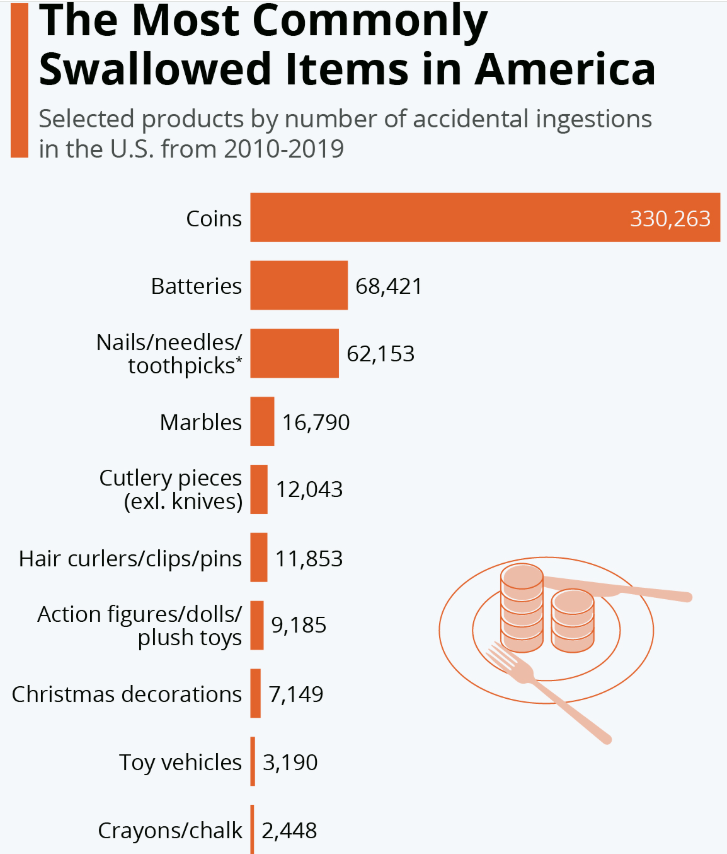
K Bucholtz, Statista 6/11/20: The Most Commonly Swallowed Objects in America

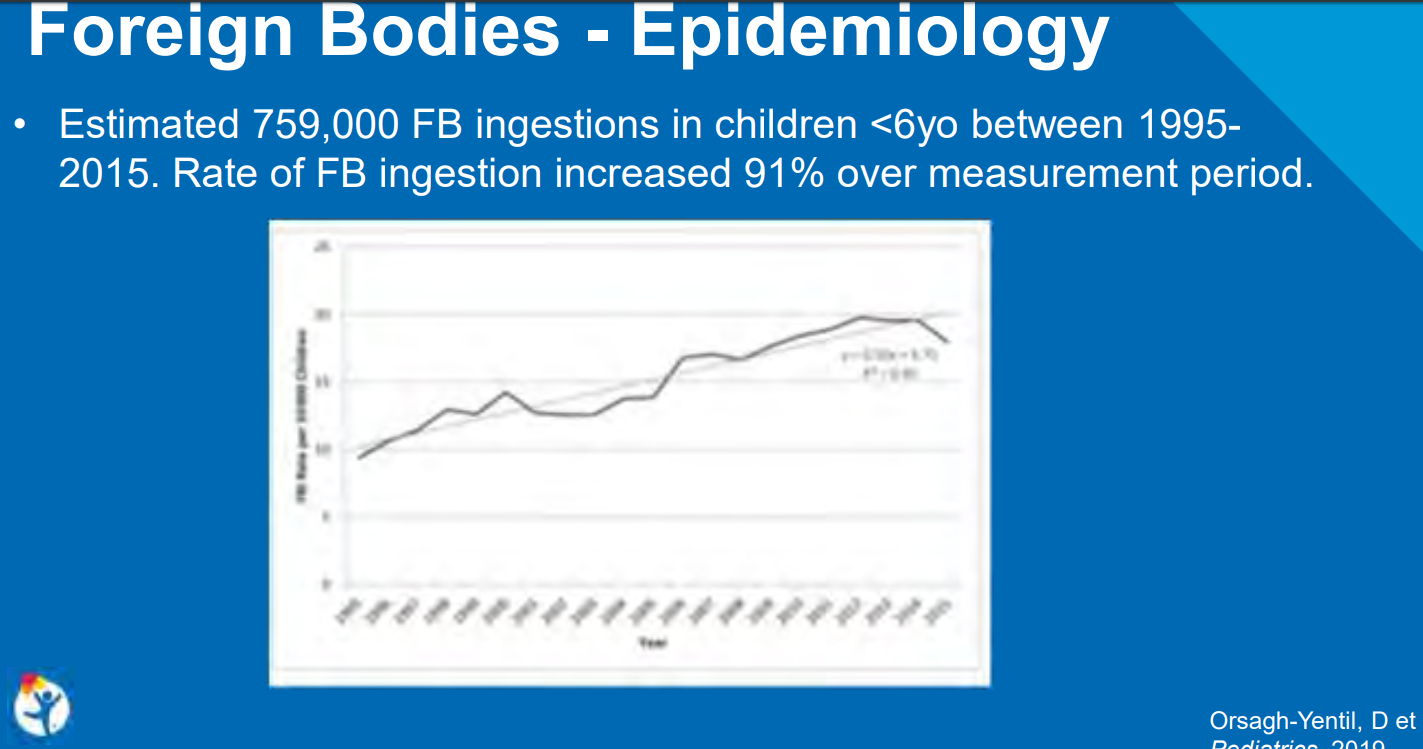
The following statistic will delight fans of obscure facts and overbearing bureaucracy: According to the U.S. Consumer Product Safety Commission, more than 850,000 accidental ingestions of everyday objects were recorded in the U.S. between 2010 and 2019. ..Coins topped the list of accidental ingestions, with around 33,000 being recorded each year (more might go unreported).

*According to the U.S. Consumer Product Safety Commission, 

My take: While this is a step in the right direction, there are still 114 billion pennies currently in circulation in the U.S. according to the Reuters article. Perhaps, other coins will be ingested less in the coming years too as so many business transactions are via smartphones and credit cards.


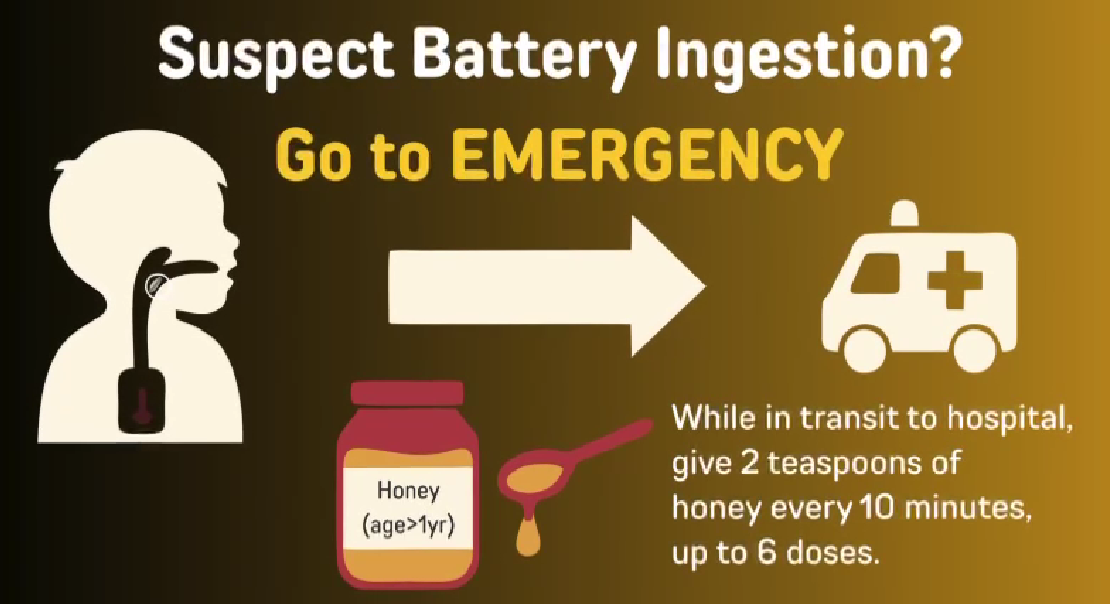
Button batteries are a much more serious ingestion than a coin. For World Button Battery Day, here’s a link to a 3 minute video from FISPGHAN. FISPGHAN Button Battery Video

The video provides a simple explanation of the problem though at times it is not certain who the target audience is. Particularly the first part feels like a video for kids rather than for parents. Thanks to Ben Gold for sharing this link.

Aso, Link: FISPGHAN Button Battery Website

Related blog posts:

Also, A Few Years Ago –Button Battery Changes

It turns out that Duracell has been trying to reduce button battery ingestions for a few years (in 2020) by coating the sides of the batteries with a bitter tasting no-toxic chemical. I only recently found out about this. “Duracell uses Bitrex, a non-toxic, man-made substance that’s considered the world’s most bitter, to create the coating. The coating is harmless if consumed, but it’s designed to encourage children to spit out the battery immediately.” (Anecdotally, one of our endoscopy nurses said she tried the battery and she did not think it was very bitter.) The packaging is also very difficult to open without scissors.

Advice from their website: “If your child swallows a battery, go to the emergency room.
If you have other questions or concerns, call 1-800-498-8666 or visit www.batteryingestionhotline.com.”

Related blog posts:

Case report: Spondylodiscitis After Button Battery Ingestion

Chris Fritzen and Erica Riedesel passed along a case report: a 16 mo presented to our hospital system with coughing, gagging and hematemesis after an unwitnessed FB ingestion; she was emergently taken to the OR where a button battery was noted to be densely adherent to the posterior wall of the upper thoracic esophagus and removed with a flexible endoscope. Postoperatively, she received 7 days of ampicillin/sulbactam. 14 days after presentation, an MRI revealed esophageal injury was evident at T3 level as well as an abnormal signal was seen within the esophagus spanning C7-T4. In addition, there was edema and enhancement of the intervertebral disc space at T1-T2 and T2-T3 consistent with spondylodiscitis. Prior reports (see below) have emphasized the need for antimicrobial coverage for Staphylococcus and upper respiratory pathogens. Children with spondylodiscitis may present with refusal to walk or limping, back or leg pain, and local stiffness of the neck/spine.

My take: Spondylodiscitis is another rare complication following button battery ingestion.

References:

  • NEO Grey et al. Pediatr Radiol 2021; 51:1856–1866. In this report, 1 of 23 children had spondylodiscitis. Other complications: esophageal perforation (n=11), tracheoesophageal fistula (n=3)
  • V Kieu et al. J Pediatr 2014; 164: 1500-1501. Highlights increased risk from unwitnessed button battery ingestions.
  • H Eshaghi et al. Pediatr Emer Care 2013;29: 368Y370. Spondylodiscitis: A Rare Complication of Button Battery Ingestion in a 10-Month-Old Boy

Related blog posts:

Disclaimer: This blog, gutsandgrowth, assumes no responsibility for any use or operation of any method, product, instruction, concept or idea contained in the material herein or for any injury or damage to persons or property (whether products liability, negligence or otherwise) resulting from such use or operation. These blog posts are for educational purposes only. Specific dosing of medications (along with potential adverse effects) should be confirmed by prescribing physician.  Because of rapid advances in the medical sciences, the gutsandgrowth blog cautions that independent verification should be made of diagnosis and drug dosages. The reader is solely responsible for the conduct of any suggested test or procedure.  This content is not a substitute for medical advice, diagnosis or treatment provided by a qualified healthcare provider. Always seek the advice of your physician or other qualified health provider with any questions you may have regarding a condition.

Mitigation Efforts for Button Batteries

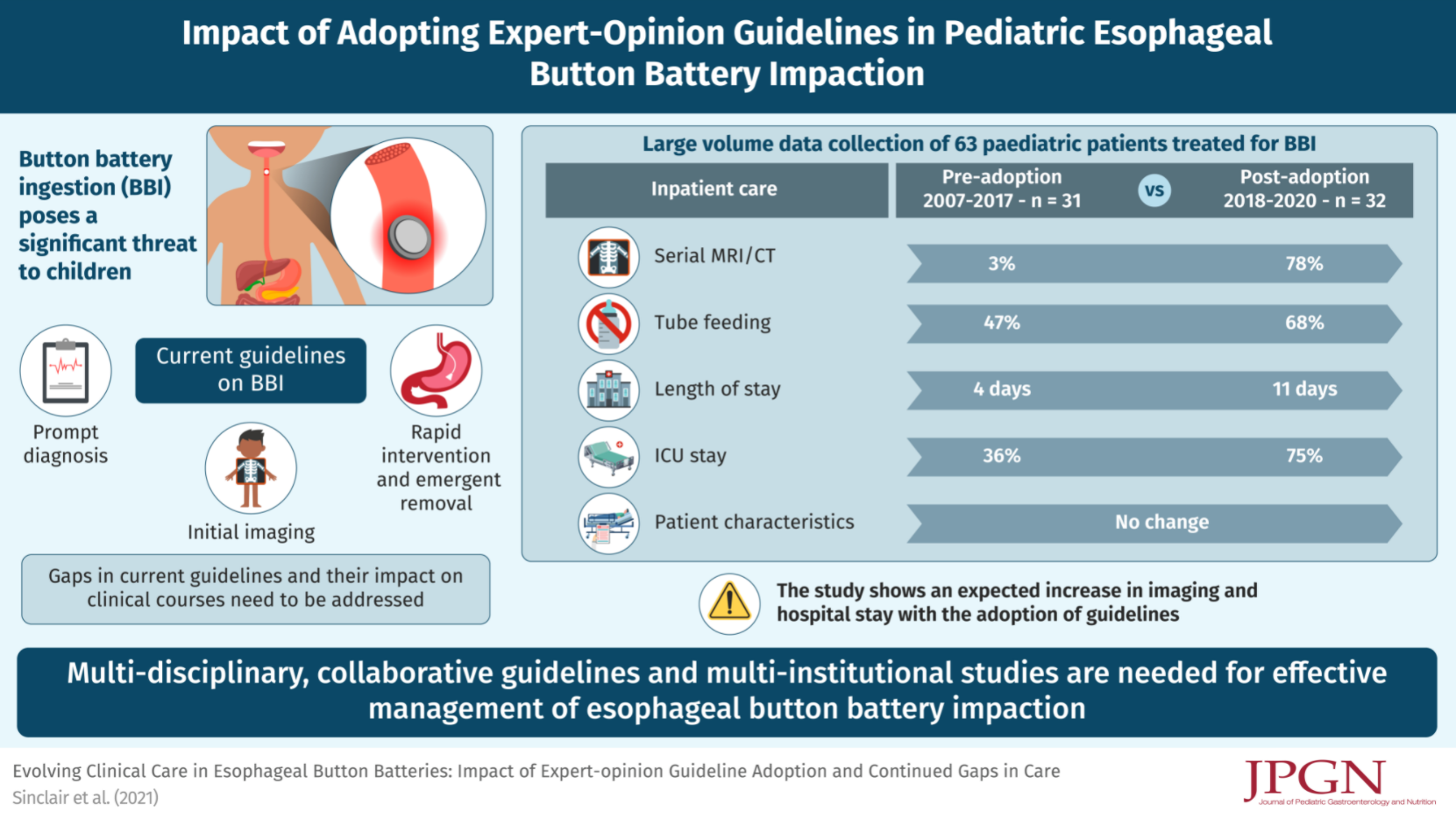
EM Sinclair et al. JPGN 2022; 74: 236-243. This retrospective study (n=63) describes the increased utilization of cross-sectional imaging, adoption of acetic acid irrigations, increased intensive care/hospitalizations after the implementation of consensus institutional guidelines for button battery management (see visual abstract below). An estimate in the increase in costs would have been a good addition to this study.

One of the references (EM Sinclair et al. J Pediatr Surg Case Rep 2021; 66: 101782. doi: 10.1016/j.epsc.2021.101782. Open Access: Development and repair of aorto-esophageal fistula following esophageal button battery impaction: A case report) describes one of the goals of prolonged hospitalization, namely preventing catastrophic bleeding. In this case report, though, the 6 yo had been discharged 12 days after presentation and represented on day 25 with hematemesis from a new aorto-esophageal fistula, requiring emergent cardiac catheterization with successful, life-saving aortic stent placement; “however a multidisciplinary approach to procedure planning is necessary with availability of surgical support for open repair if necessary.” This report has a lot of good images. The discussion notes that the National Capital Poison Center (NCPC) database reports a total 64 deaths in children following button battery ingestion worldwide since 1977; 61% (39/64) of which were due to documented arterio-esophageal fistulae (the actual numbers of deaths is likely much higher). This report also highlights the fact that serial MRIs “may not predict the development of severe complications.”

Related blog posts:

#NASPGHAN19 Postgraduate Course (Part 1)

Here are some selected slides and notes from this year’s NASPGHAN’s postrgraduate course.  My notes from these lectures may contain errors in omission or transcription.

Link to the full NASPGHAN PG Syllabus 2019

8:00 – 9:00 Module 1 – Endoscopy

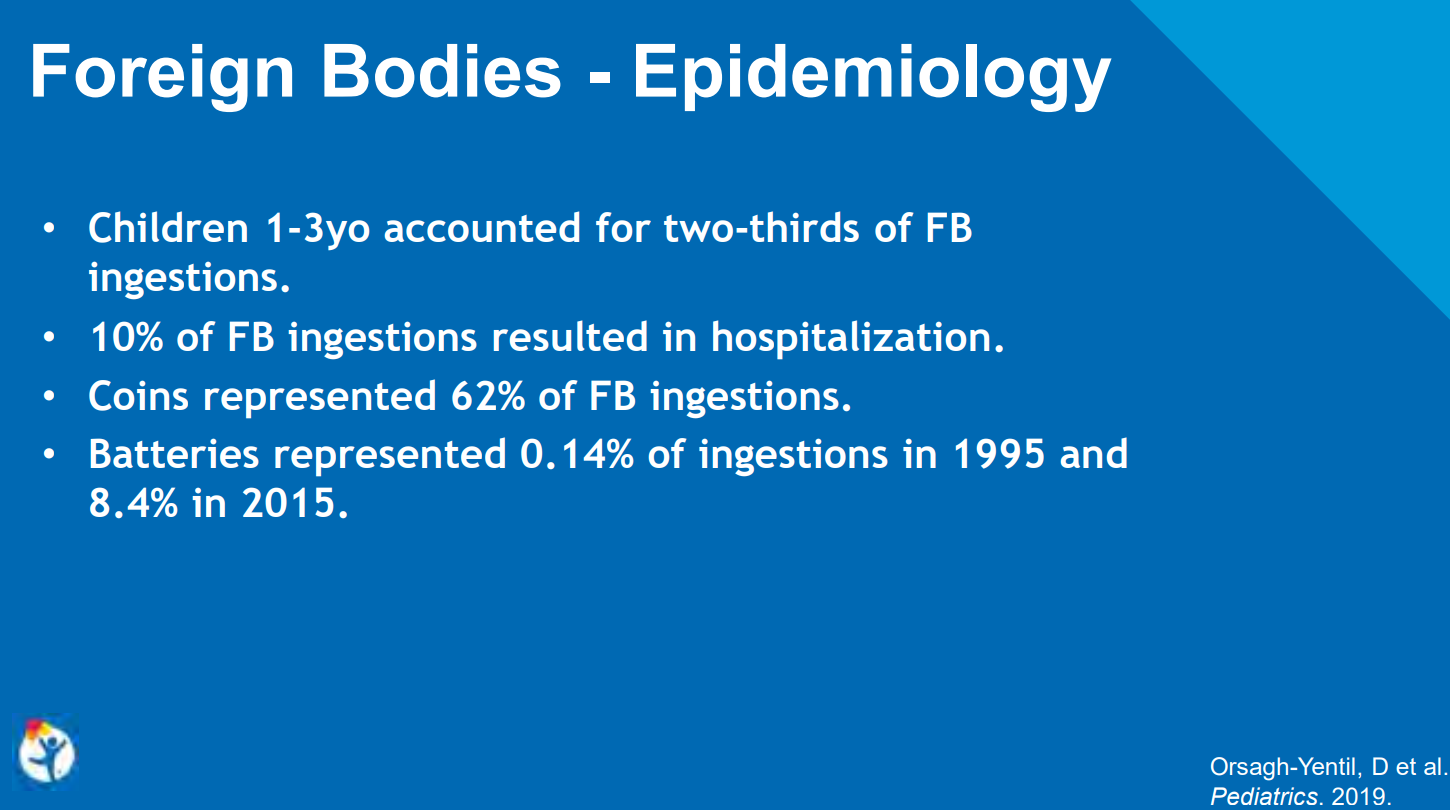
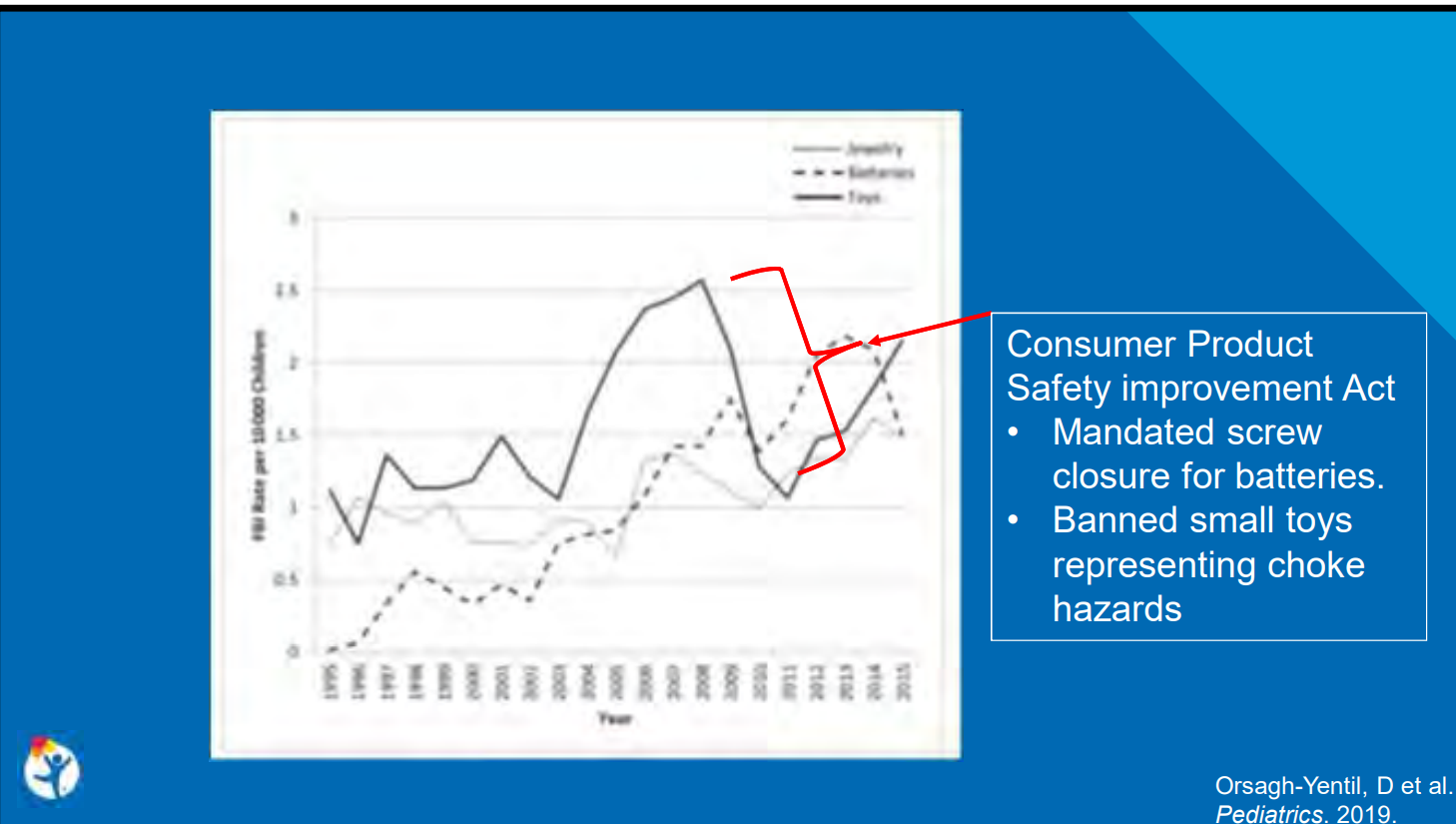
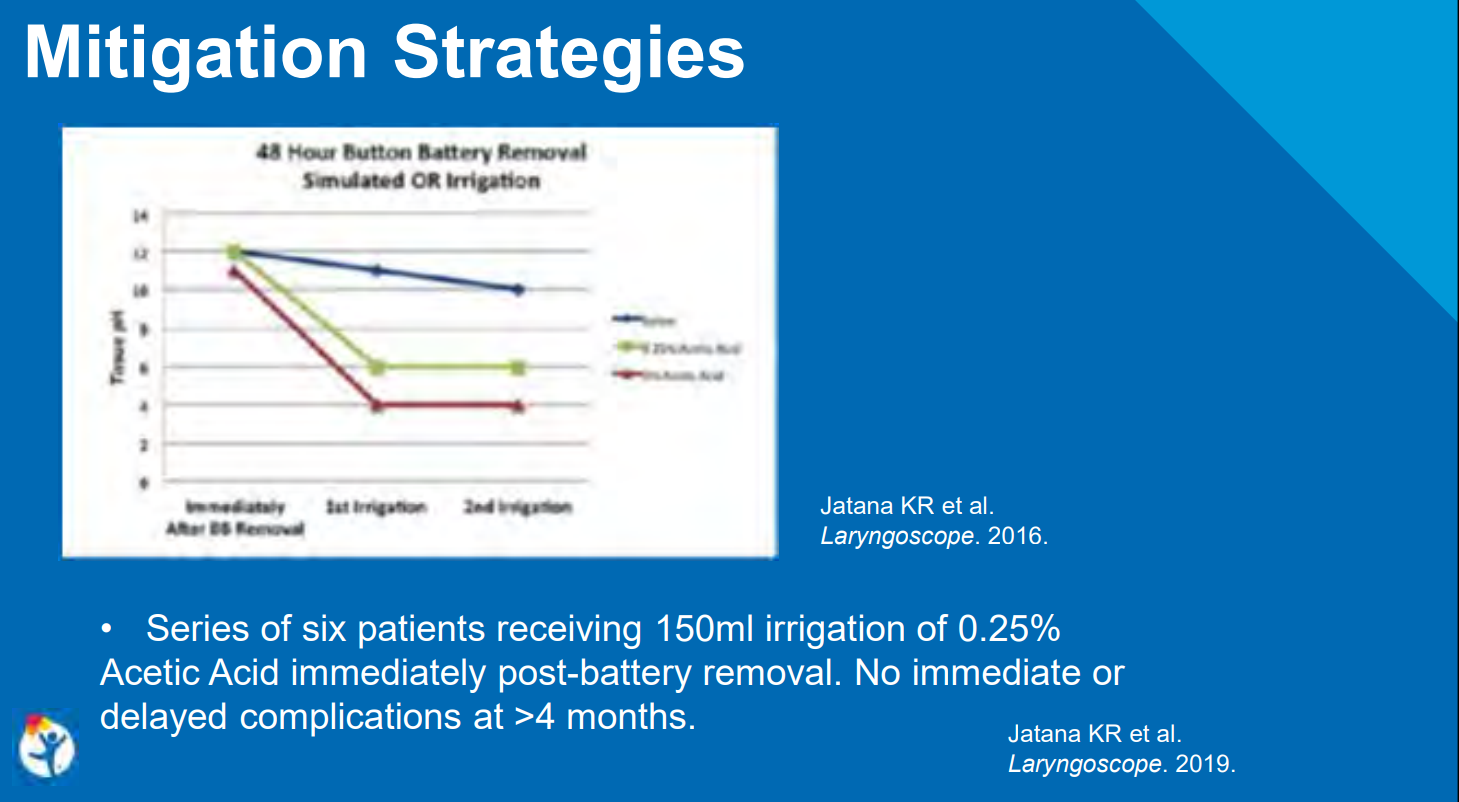
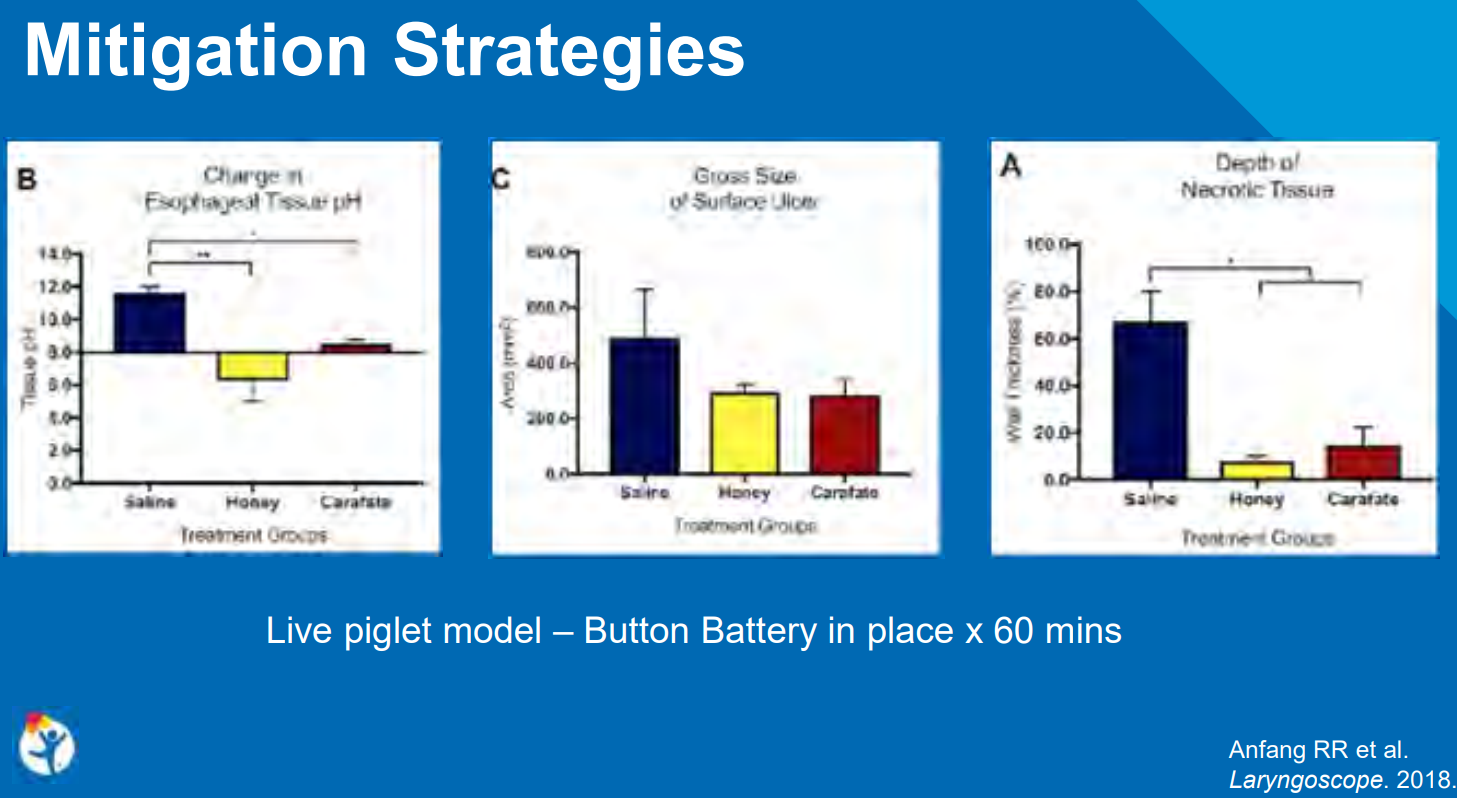
11  David Brumbaugh, MD, Children’s Hospital Colorado  Management of foreign bodies

Related blog posts:

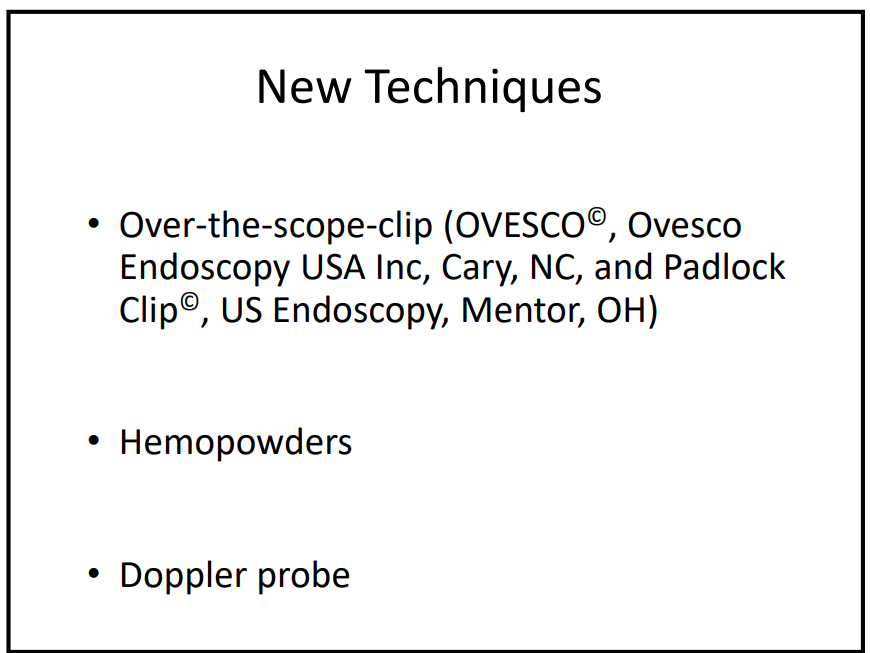
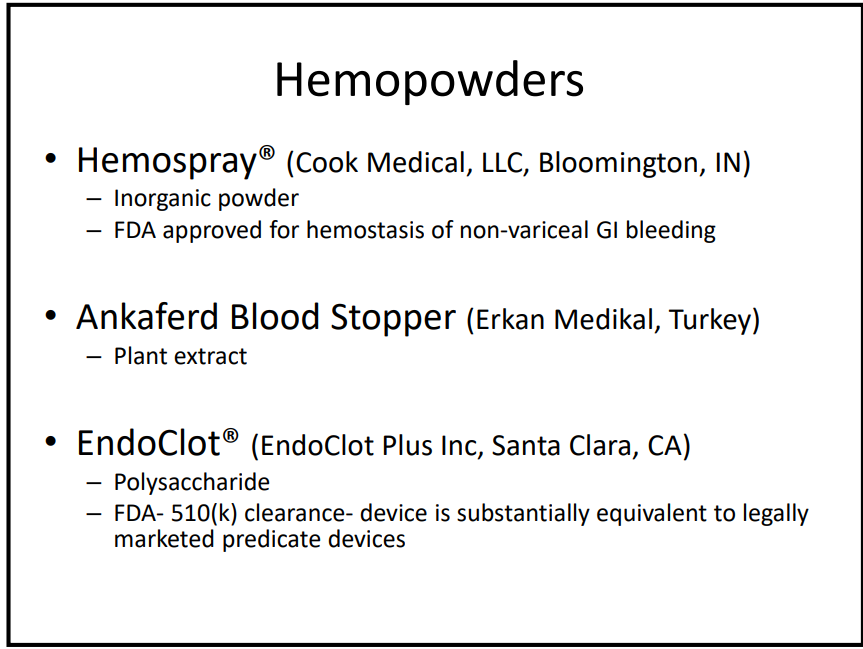
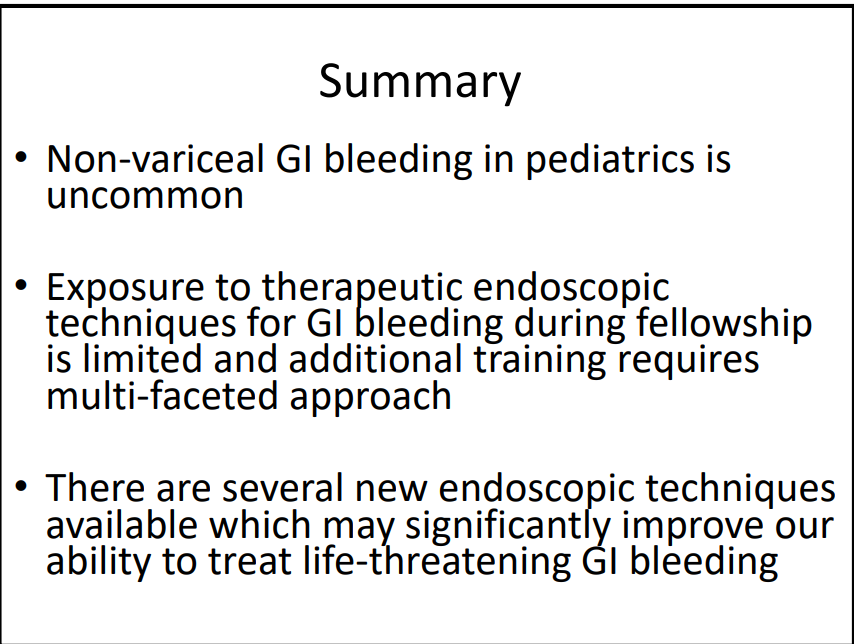
22 Petar Mamula, MD, Children’s Hospital of Philadelphia Advanced endoscopic techniques for gastrointestinal bleeding

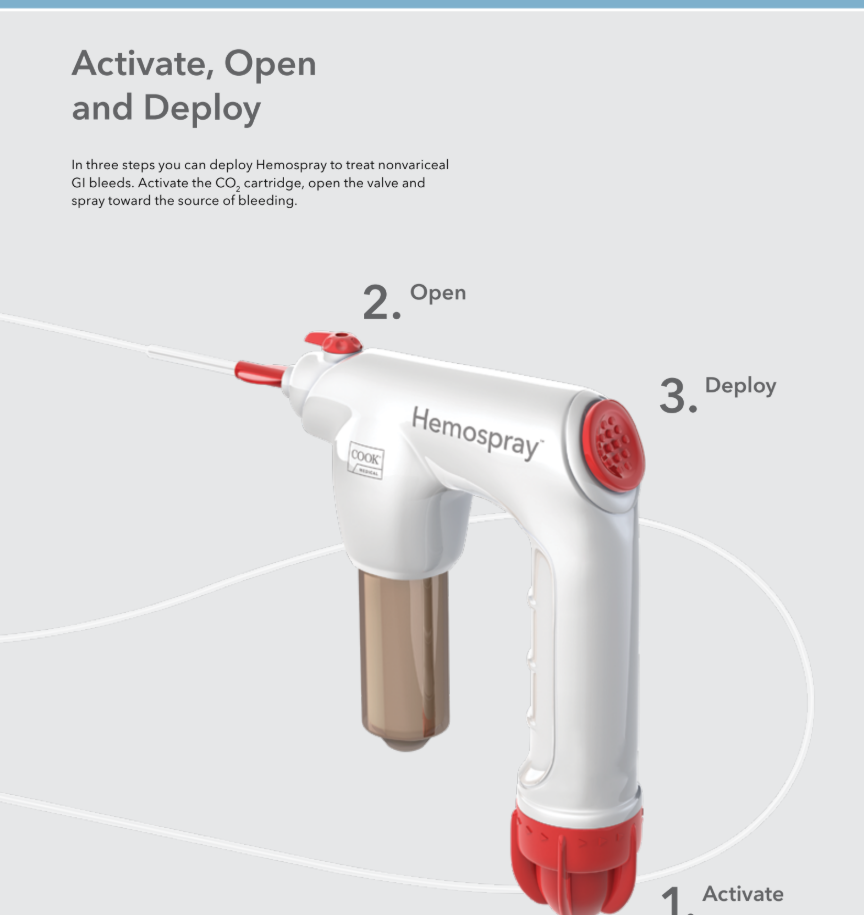
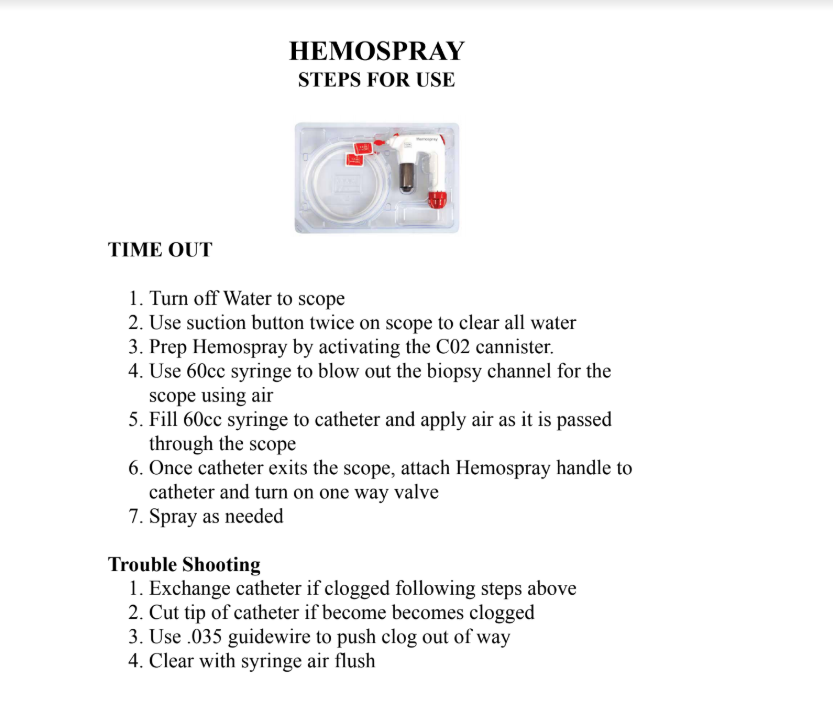
This talk had some terrific videos (not available in syllabus) and useful practical points.  For example, with cautery, the speaker recommended not just quickly taping the lesion, count for several seconds when applying.  For hemospray, the speaker considers this technically much easier but is using this mainly as a backup option.

Here are two screenshots (not from lecture) which provide information from manufacturer on Hemospray use (link to PDF on Hemospray Manufacturer’s PDF on Hemospray)

Related blog posts:

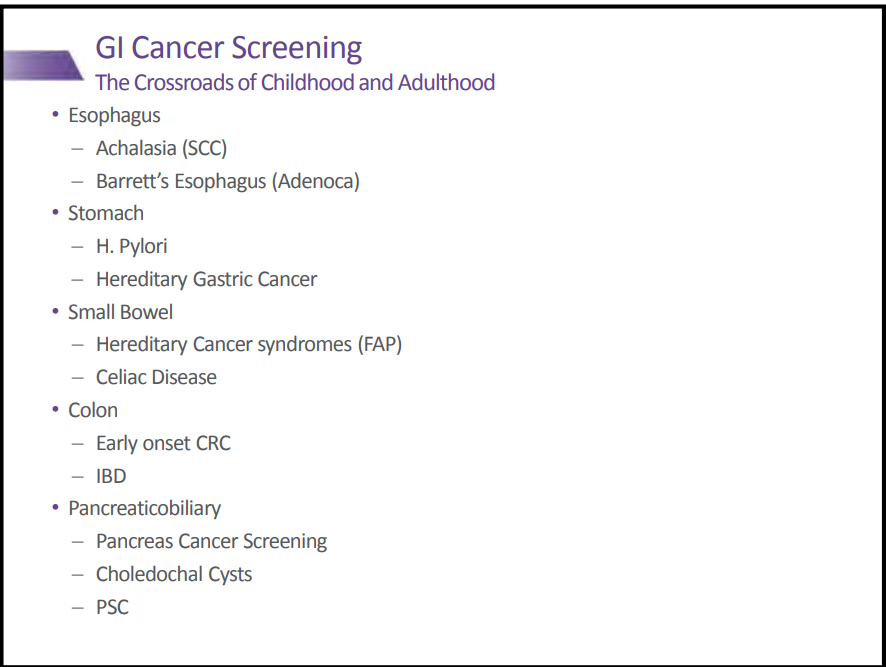
36 Srinadh Komanduri, MD, Northwestern Medicine  Cancer screening top to bottom

Some of the key points:

  • IBD and colorectal cancer (CRC) screening 8-10 years after disease onset
  • ~10% of CRC in general population occurs between 20-49 years
  • Chromoendoscopy results in higher detection rates of dysplasia

Related blog posts:

Disclaimer: NASPGHAN/gutsandgrowth assumes no responsibility for any use or operation of any method, product, instruction, concept or idea contained in the material herein or for any injury or damage to persons or property (whether products liability, negligence or otherwise) resulting from such use or operation. The discussion, views, and recommendations as to medical procedures, choice of drugs and drug dosages herein are the sole responsibility of the authors. Because of rapid advances in the medical sciences, the Society cautions that independent verification should be made of diagnosis and drug dosages. The reader is solely responsible for the conduct of any suggested test or procedure. Some of the slides reproduced in this syllabus contain animation in the power point version. This cannot be seen in the printed version.

Foreign Bodies in Children -Expert Guidance

The NASPGHAN Endoscopy Committee has published a very helpful “Management of Ingested Foreign Bodies” Report (Kramer RE et al. JPGN 2015; 60: 562-74).  At the current time, one way to access a PDF of the report is the following CME link on the NASPGHAN website (no login required): Management of Ingested Foreign Bodies -Clinical Report

Some key definitiions from the report.

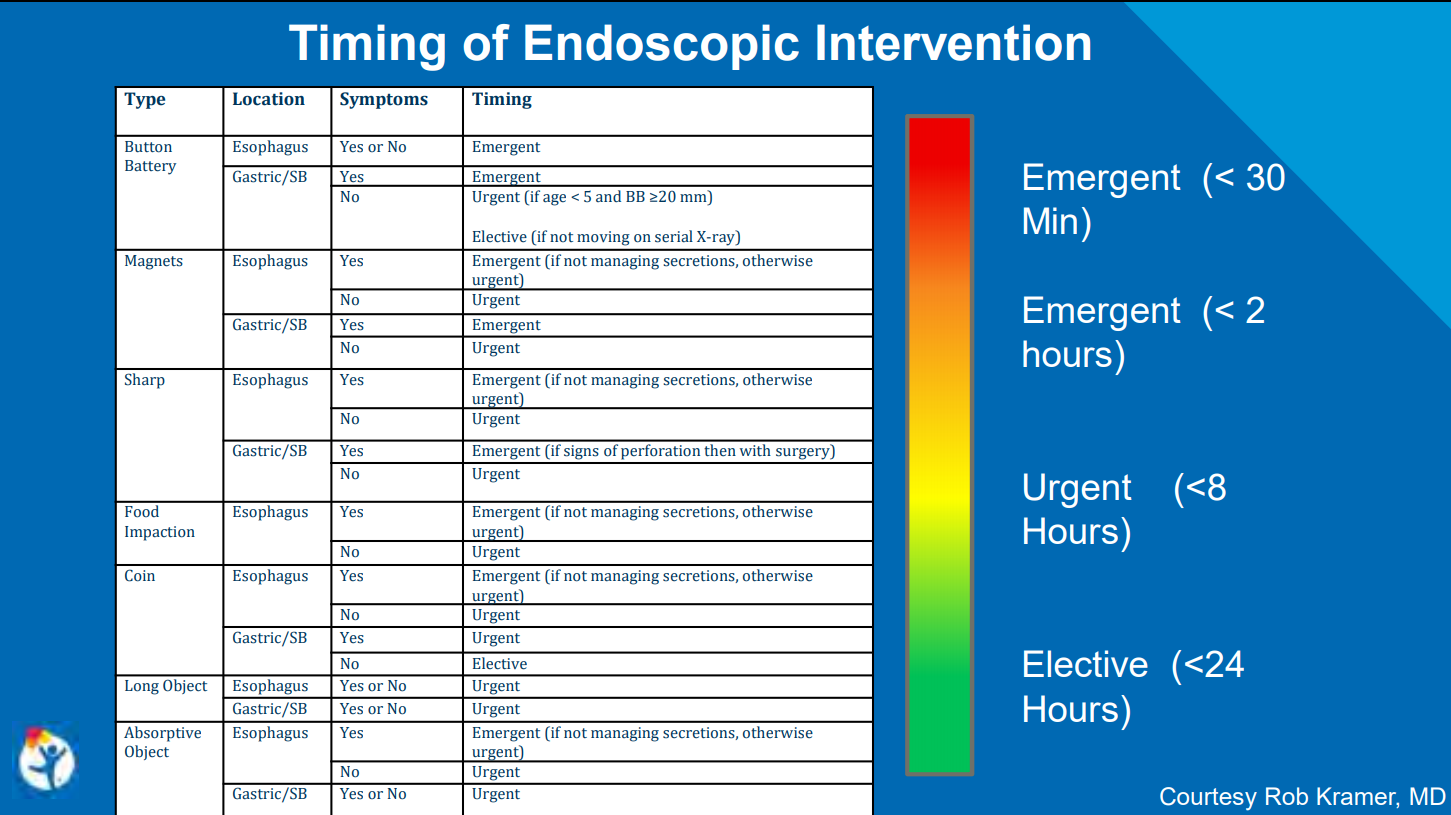
  • Emergent removal <2 hours from presentation regardless of NPO status
  • Urgent removal <24 hours from presentation following usual NPO guidelines

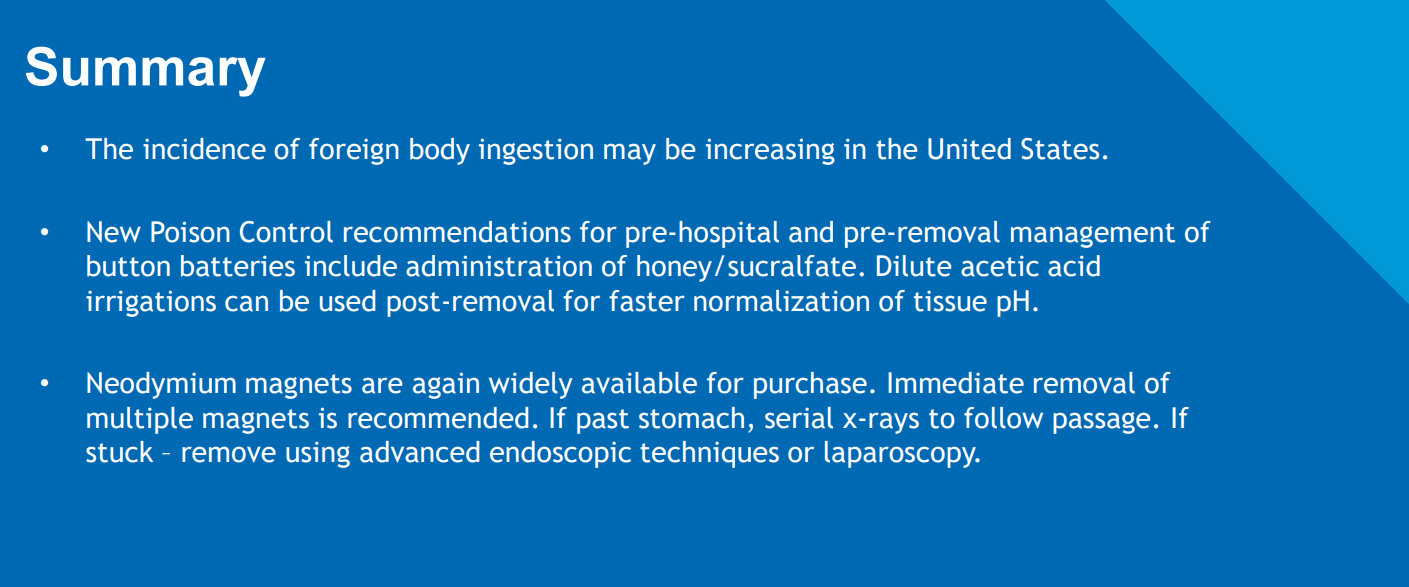
As a general rule, all symptomatic ingestions in the esophagus require emergent removal if feasible.  Most gastric ingestions do not require emergent removal, exceptions include multiple magnets, sharp objects in stomach (possibly with surgery), and possibly absorptive objects (due to obstruction).

1. Button Batteries:

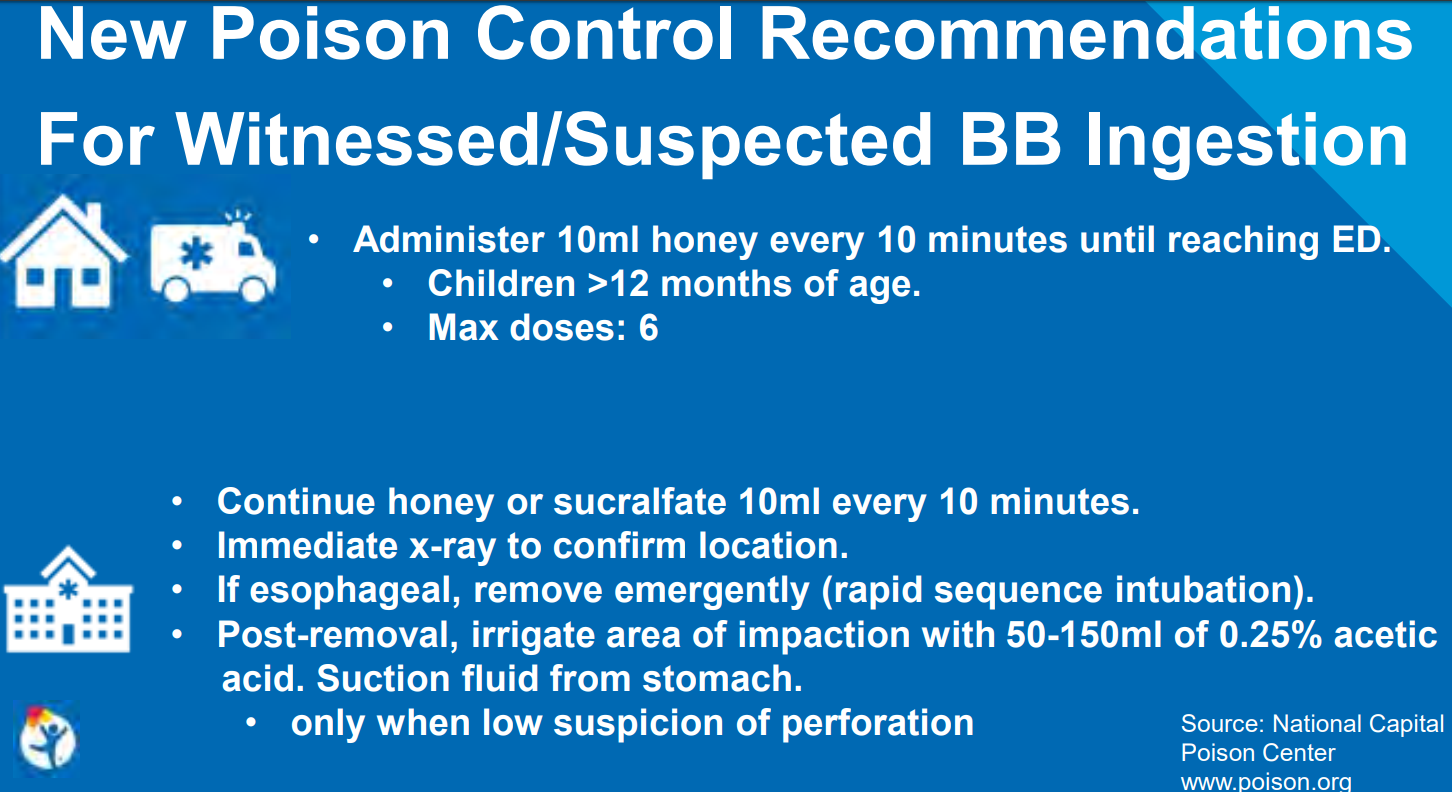
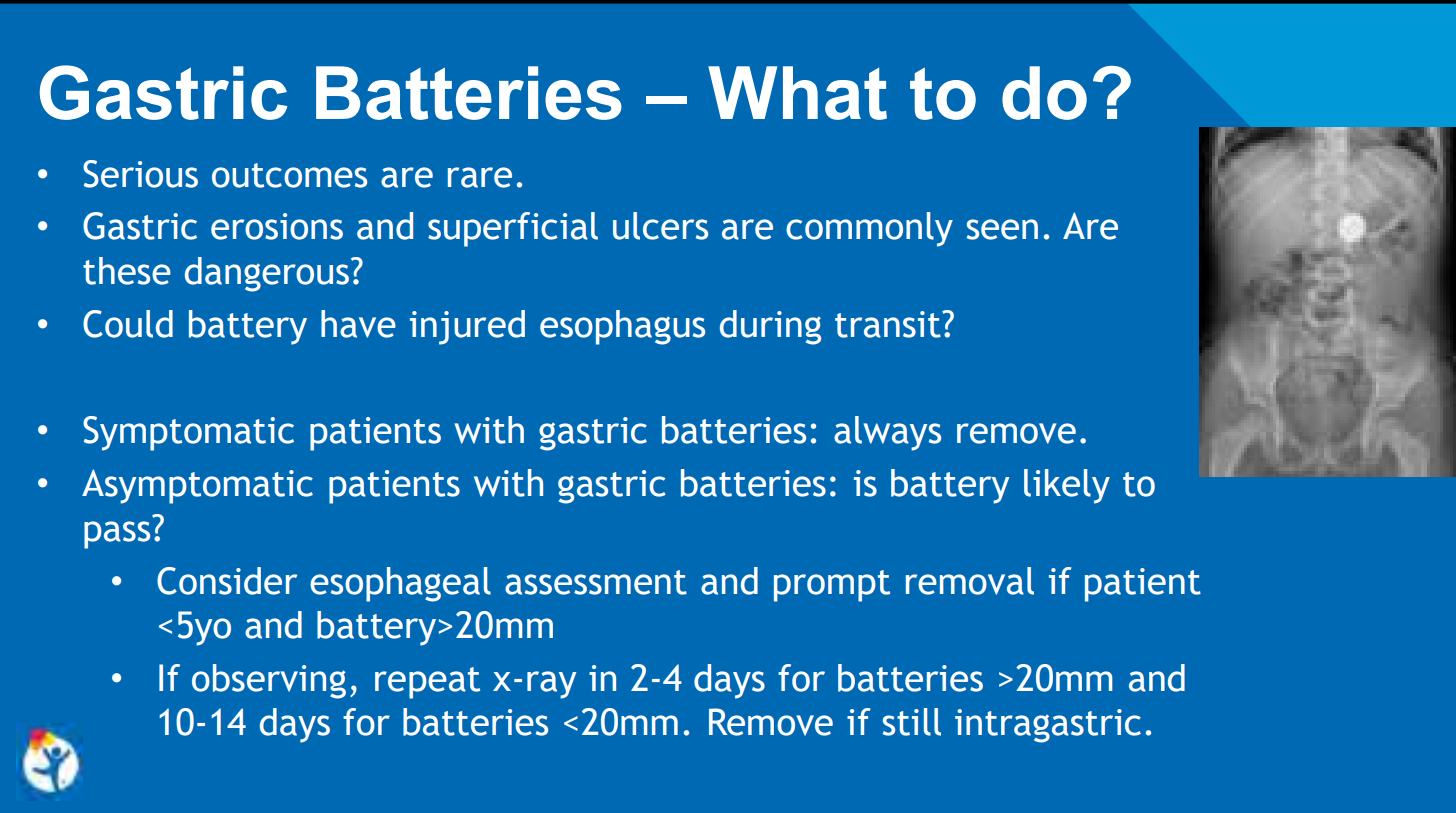
  • Even with “spent” batteries, there is enough residual charge to cause injury and all ingestions (even if asymptomatic) into the esophagus require emergent removal. If these batteries are in the stomach & asymptomatic, urgent removal is recommended if age < 5 years and BB ≥20 mm.

What is different in the proposed algorithm (Figure 1) compared with the Poison Center Guidelines (see:Button Battery Algorithm Link | gutsandgrowth) is more detail regarding concerns about aortoenteric fistula & what to do after endoscopy. Key points:

  • If active bleeding or unstable, endoscopic removal in OR with surgery/cardiovascular surgery is recommended.
  • If any esophageal injury, recommendations include admission, NPO, and IV antibiotics.  Chest imaging (CT angiography &/or MRI of chest) can help decide length of stay.  In those with injury close to aorta, continuation of NPO/antibiotics are recommended along with followup imaging every 5-7 days.  In those with clinical deterioration (eg. hematemesis w/in 21 days of injury), ‘assume aortoenteric fistula and emergently prepare for cardiovascular surgery.’

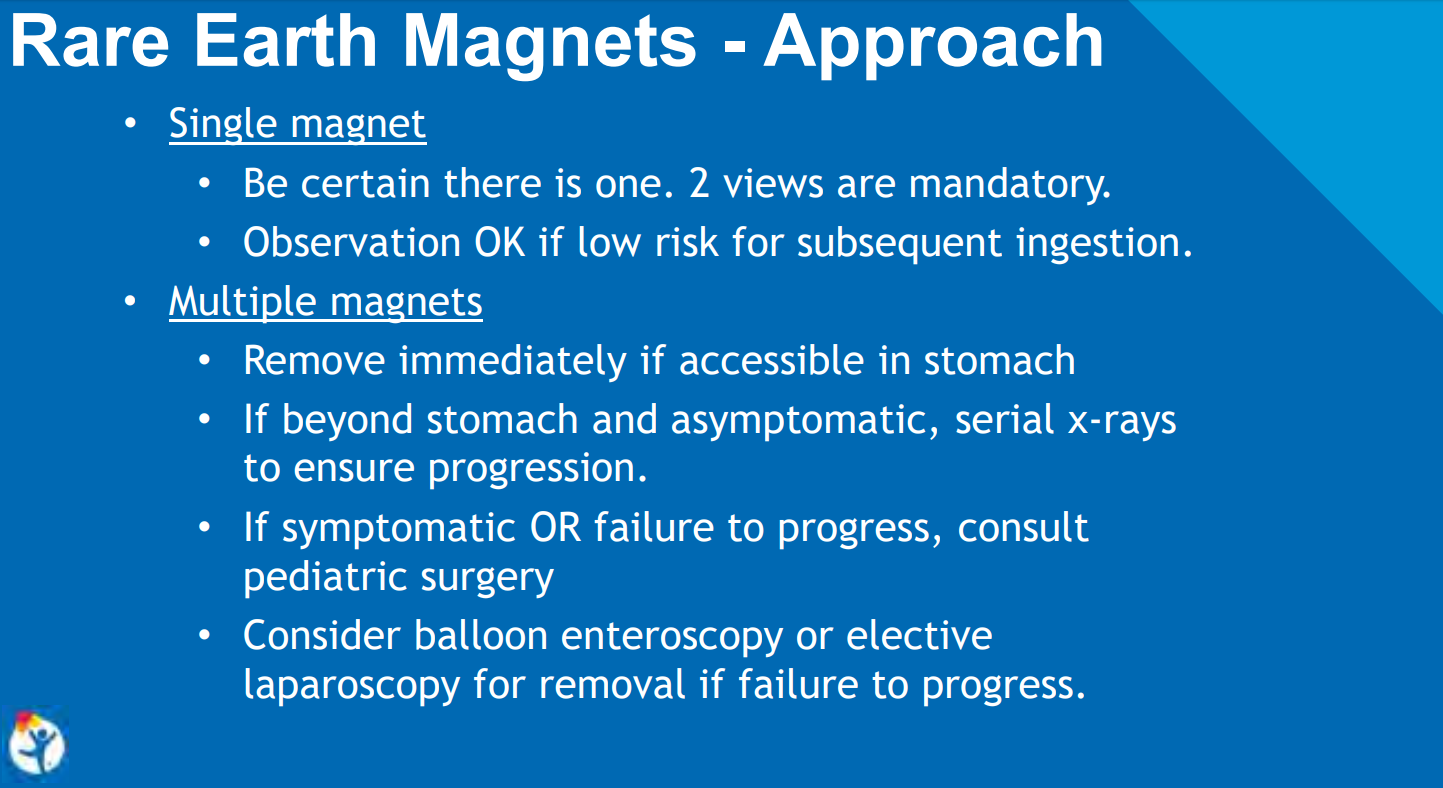
2. Magnets.  Figure 3 provides algorithm for single and multiple magnets (adapted from Hussain SZ et al. JPGN 2012; 55: 239-42).

  • For single magnets, emergent removal from esophagus is recommended (like all other foreign bodies) if difficulty managing secretions, otherwise urgent esophageal removal is suggested.
  • If there are multiple magnets within reach of endoscope, then if symptomatic, emergent removal is recommended, otherwise, urgent removal is suggested.
  • For asymptomatic magnets beyond the reach of an upper endoscopy, potential for colonoscopy, or enteroscopy for removal &/or serial x-rays to follow progression. If there is no progression on X-rays (every 8-12 hrs) &/or development of symptoms, then surgical removal/endoscopic removal is recommended.

3. Sharp objects. Figure 4 provides algorithm.

  • Emergent removal from esophagus/stomach is recommended (like all other foreign bodies) if difficulty managing secretions, otherwise urgent esophageal removal is suggested. For radiolucent objects, if the ingestion was witnessed, urgent removal is suggested; if not witnessed, then further imaging (CT, esophagram, MRI) could be considered.
  • With regard to sharp foreign bodies beyond the reach of an endoscope, “follow clinically with serial x-ray.  Enteroscopy or surgical removal considered if symptoms develop or >3 days without passage.”
  • Despite the low risk of severe morbidity/mortality from sharp objects (beyond esophagus), report recommends urgent “removal of all of the sharp objects within the reach of the endoscope..if possible.”

4. Food impaction in esophagus.  If symptomatic, emergent removal; if asymptomatic, then urgent removal.  Biopsies of the esophagus are recommended with endoscopy (Figure 5).

5. Coin ingestions/Blunt objects. Figure 6. “>250,000 ingestions and 20 deaths reported in the United States during a 10-year period.”

  • For esophagus: If symptomatic, emergent removal; if asymptomatic, then urgent removal.  Report recommends check X-ray immediately before sedation. While the report does not address this, a possible alternative to x-ray would be the use of a metal detector.  “Consider glucagon if distal esophageal coin or if endoscopy not readily available.”
  • For stomach: No endoscopy needed. Repeat X-ray at 2 weeks.  Remove if not passed w/in 2-4 weeks. Report recommends check X-ray immediately before sedation. While the report does not address this, a possible alternative to x-ray would be the use of a metal detector.
  • For small bowel: removal (enteroscopy/surgery) if symptomatic.
  • For objects >25 mm width or >6 cm in length –> should be removed from stomach urgently.

6. Superabsorbent objects.  The authors describe ingestions from materials from toys and diapers with polymers that can retain ‘up to 100 times their weight in water.”

  • For esophagus: If symptomatic, emergent removal; if asymptomatic, then urgent removal.
  • Stomach/small intestine: urgent removal is recommended

The authors state these recommendations are based on consensus rather than strong evidence and are “no substitute for clinical judgement.”

Take-home message: These guidelines are a good starting point to improve the management of children with foreign bodies.

Related blog posts:

Disclaimer: These blog posts are for educational purposes only. Specific dosing of medications/diets (along with potential adverse effects) should be confirmed by prescribing physician/nutritionist.  This content is not a substitute for medical advice, diagnosis or treatment provided by a qualified healthcare provider. Always seek the advice of your physician or other qualified health provider with any questions you may have regarding a condition.

University of Chicago

University of Chicago
Cheap Technology for Button Battery Ingestions

Typical Button Battery

Typical Button Battery

An NPR report regarding “the results of .. experiments published Monday in the Proceedings of the National Academy of Sciences show that a prototype shield is effective at keeping small, 11 millimeter batteries from damaging the esophagus after being swallowed.”  This would be worthy endeavor to pursue.  The larger buttons (20 millimeters in diameter) “are particularly dangerous. One out of 8 children [under 6 years old] who swallow this larger battery are going to have a serious debilitating complication.”  Here’s the link: Battery Shield

Here’s an excerpt regarding the shield:

Microscopic metal particles are embedded in the shield, which is a millimeter thick. When a battery is inserted into a device, the pressure from the device’s cover or a spring that holds the battery in place pushes the metal particles together. The shield then acts like a switch, conducting electricity.

When the battery is free, floating down a child’s esophagus, for instance, there’s not enough pressure to make the microparticles smush together. The shield then acts as an insulator…

The shield’s material is commercially available and currently used in touch-screen devices where a gentle press of a fingertip can complete a circuit.

Related blog posts:


"Great Power" for Damaging an Esophagus

“Great Power” for Damaging an Esophagus

Review of Button Batteries

A recent open access article reviews button batteries and reiterates algorithm from poison control (noted in previous blog post: Button Battery Algorithm Link | gutsandgrowth).  This article has some excellent figures detailing the extent of the problem and has relevant pictures of radiographs and mucosal damage.

Here’s the reference:

International Journal of Pediatric Otorhinolaryngology 77 (2013) 1392–1399

Here’s the link:

http://authors.elsevier.com/offprints/PEDOT6686/7551db6b14c8aabfa827016d69367c08 …

Button Battery Algorithm Link

The following website has a useful button battery algorithm (thanks to JL for forwarding this link):

One important point is that in an asymptomatic patient, a button battery in the stomach can be left alone if no coingestion with a magnet.  If gastric battery is > 15 mm and child is less than 6 year,  the recommendation is to check xray in 4 days and remove if still in stomach or whenever there are symptoms.
Of course, a button battery in the esophagus is a true endoscopic emergency. Recognizing that it is a button battery and not a coin can alter the outcome.
Related blog links:
Another link on foreign bodies, 2011: Postgraduate Course Syllabus – Slides, only – NASPGHAN.org (Look for the slides from Marsha Kay)