Preliminary Work: A Vaccine to Prevent Colon Cancer and A Blood Test to Detect Colon Cancer

D’Alise, A.M., Willis, J., Duzagac, F. et al. Nat Med (2026). https://doi.org/10.1038/s41591-025-04182-9. Nous-209 neoantigen vaccine for cancer prevention in Lynch syndrome carriers: a phase 1b/2 trial. (Open Access!)

Background: “Lynch syndrome (LS) is a prevalent hereditary cancer syndrome affecting ~1 in 300 individuals, with an overall lifetime cancer risk as high as 80%. LS is caused by germline mutations in the DNA mismatch repair genes, leading to microsatellite instability (MSI) and accumulation of shared mutations. When these occur in coding regions, they generate frameshift peptides (FSPs). Nous-209 is a neoantigen-directed immunotherapy” against these FSPS. These are “the results from cohort 1 of a phase 1b/2 single-arm trial of Nous-209 for cancer interception in LS carriers (n = 45).”

Key findings:

  • Neoantigen-specific immune responses were observed after vaccination in 100% of evaluable participants (n = 37), with induction of potent T cell immunity
  • The immune response was durable and detectable at 1 year in 85% of participants
  • Both CD8+ and CD4+ T cells were induced, recognizing multiple FSPs
  • Peptide–human leukocyte antigen predictions allowed the identification of >100 immunogenic FSPs with demonstration of cytotoxic activity in vitro
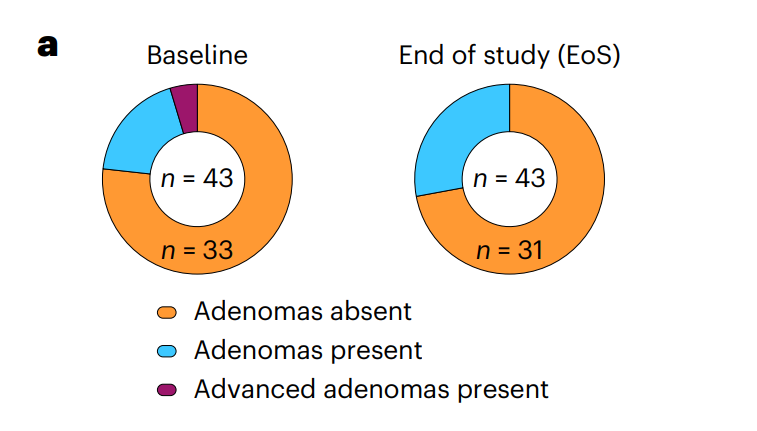
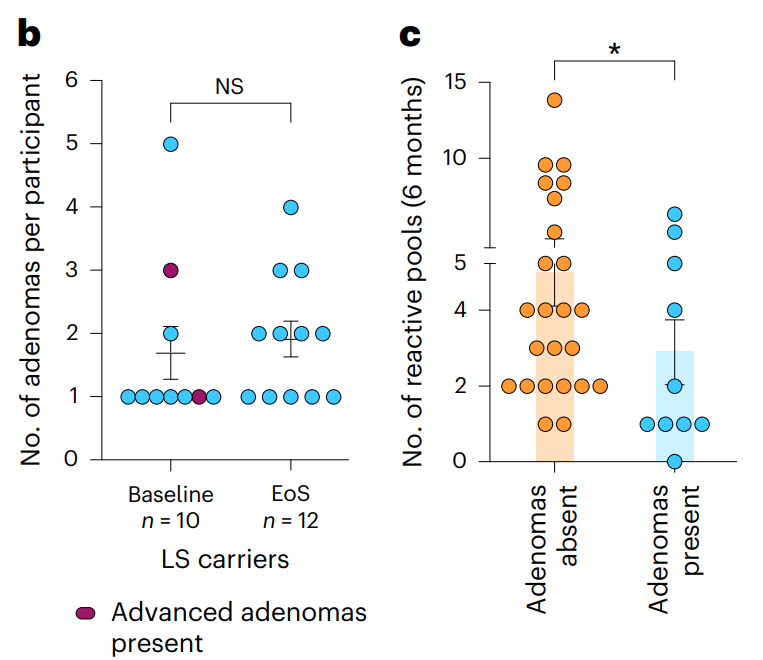
Colorectal neoplasia burden observed at end-of-study colonoscopy inversely correlates with breadth of immune response. a, Number of participants who underwent screening colonoscopy at baseline and end of study (EoS; n = 43) who had no adenomas (adenomas absent), at least one adenoma (adenomas present) and advanced adenomas (advanced adenomas present) detected.
b, Number of adenomas per trial participant at baseline and end of study; comparison of baseline versus EoS was performed using a two-tailed Mann–Whitney U-test; NS, not significant. c, Number of reactive pools measured at 6 months (n = 34 evaluable subjects) between the participants with and without adenomas. Data are shown as the mean ± s.e.m.

My take (borrowed in part from authors): “Overall, this clinical trial provides important proof-of-concept data of the safety and the robustness of induced immunogenicity of
Nous-209 in LS carriers…and supporting its clinical development as a valuable intervention for cancer immune interception.” Vaccines have a long history in reducing cancer (for Hepatitis B, Cervical Cancer (due to HPV), Anal Cancer, Leukemia (by boosting immunity) and Others). Until recently, this has been by preventing viral infections that increase the risk of cancer. This is a new approach.

Related article: Blood test for colorectal cancer: A Mannucci et al. Gastroenterol 2026; 170: 330-343. An Exosome-Based Liquid Biopsy for the Detection of Early-Onset Colorectal Cancer: The ENCODER Multicenter Study Methods: A panel of 6 cell-free and exosome-based circulating biomarkers were identified through small RNA sequencing from a biomarker discovery cohort (blood test). Key finding: “This study developed and independently tested a blood-based test with 97.3% sensitivity for screening-relevant CRC stages I–III and 61.5% for the noninvasive detection of high-grade dysplasia.”

Related blog posts:

How Gut Bacteria Might Increase Colon Cancer Risk in Young Adults

Will Stone, NPR 4/25/25: Damage from gut bacteria may play a role in the rise in colon cancer in young adults

An excerpt:

It’s unclear why colon cancer cases have doubled in people under 55 over the past two decades, a staggering rise that has alarmed doctors and cancer researchers.

But part of the story could be colibactin, a toxin made by certain strains of E. coli and other bacteria. In a study out this week, researchers have identified a strong link between this DNA-damaging toxin and colon cancer among younger patients.

The team, based at the University of California, San Diego, analyzed tissue samples from close to 1,000 colorectal cancer patients across four continents. They found the majority had cancers bearing mutations that signaled a past encounter with colibactin.

“You can think of it as the weapon system of a bacteria to fight other bacteria and to defend themselves,” says Ludmil Alexandrov, the lead author of the study, which was published in Nature this week.

Strikingly, those under the age of 40 with early-onset colon cancer were three to five times more likely to have these mutations than those in their 70s and older.

The thinking goes that in some people, this bacterial weaponry — technically called a “genotoxin” — can get directed at their gut cells, seeding mutations that put them at increased risk of developing colorectal cancer.

According to their data, this exposure isn’t ongoing when the cancer is diagnosed. Instead, it appears to have happened during childhood.

“Our estimate is that it happens within the first 10 years of life,” Alexandrov says. “So if you get that mutation at age 5, that puts you 20 to 30 years ahead of schedule for getting colorectal cancer.”

While the study shows a strong association, the data can’t prove colibactin caused these patients to develop cancer at a younger age. And researchers in the field don’t expect E. coli, or any single microbe for that matter, to be the skeleton key for the surge in colorectal cancer.

Related article: M Diaz-Gay, et al. Nature https://doi.org/10.1038/s41586-025-09025-8 (2025). Geographic and age variations in mutational processes in colorectal cancer

Related blog posts:

View from plane over Thailand

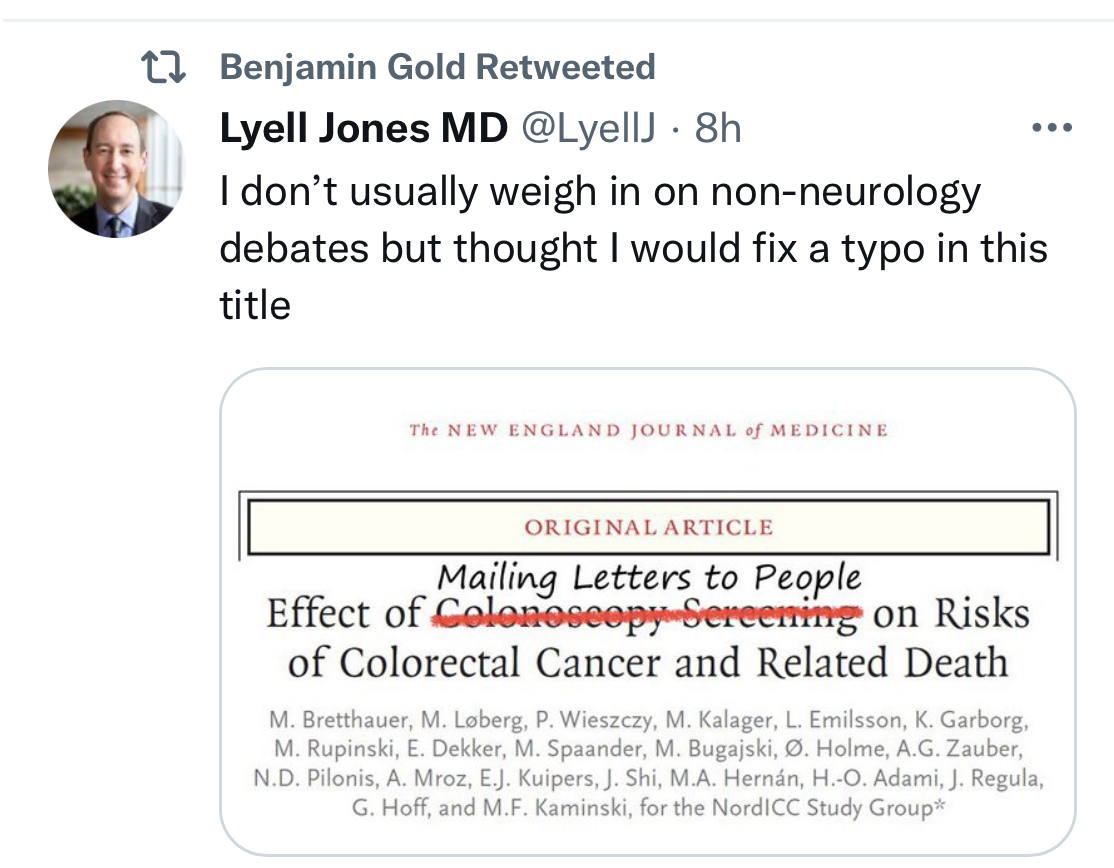
Mailing Letters to People and Risk of Colorectal Cancer

A widely covered news story in October 2022 was the disappointing results/modest benefits of a colonoscopy screening study. This study actually supports the use of colonoscopy to reduce colorectal cancer deaths but shows that typical screening programs may not work well if patients don’t show up for the test.

M Bretthauer et al. NEJM 2022; 387: 1547-1556. Effect of Colonoscopy Screening on Risks of Colorectal Cancer and Related Death

Methods: This was “a pragmatic, randomized trial involving presumptively healthy men and women 55 to 64 years of age drawn from population registries in Poland, Norway, Sweden, and the Netherlands between 2009 and 2014. The participants were randomly assigned in a 1:2 ratio either to receive an invitation to undergo a single screening colonoscopy (the invited group) or to receive no invitation or screening (the usual-care group).”

There were 84,585 participants in Poland, Norway, and Sweden — 28,220 in the invited group,

Key findings:

  • Only 11,843 (42.0%) in the invited group underwent colonoscopy screening
  • During a median follow-up of 10 years, 259 cases of colorectal cancer were diagnosed in the invited group as compared with 622 cases in the usual-care group
  • The risk of colorectal cancer at 10 years was 0.98% in the invited group and 1.20% in the usual-care group, a risk reduction of 18%
  • The risk of death from colorectal cancer was 0.28% in the invited group and 0.31% in the usual-care group (risk ratio, 0.90; 95% CI, 0.64 to 1.16)
  • The risk of death from any cause was 11.03% in the invited group and 11.04% in the usual-care group

If all invited participants had received a colonoscopy, the authors estimate the risk of colorectal cancer would have decreased from 1.22% to 0.84% and the risk of colorectal cancer death would have been reduced from 0.3% to 0.15% (a 50% drop).

My take: Colonoscopy as a screening tool only works if it is performed. Given the low response rate for screening, other tools like an annual fecal immunochemical test (FIT) need to be considered as alternatives.

Related blog posts:

Colorectal Cancer in Patients Up to Age to 25 Years

In a nationwide retrospective cohort from The Netherlands (pop. ~17 million), a recent study (RM de Voer et al. Clin Gastroenterol Hepatol 2021; 19: 1642-1651. Full Text: Clinical, Pathology, Genetic, and Molecular Features of Colorectal Tumors in Adolescents and Adults 25 Years or Younger) characterizes the clinical and genetic features of colorectal cancer (CRC) in individuals <26 years of age (aka AYA group) from 2000-2017.

Key findings:

  • There were 139 patients in the AYA group identified: 9 (ages 10-15), 26 (ages 16-20), and 104 (ages 21-25)
  • Overall, the AYA group represents 0.1% of all CRC cases. However, AYA cases were much more likely to be at an advanced stage at diagnosis (66% at stage 3 or 4 compared with 46% of adults with CRC in The Netherlands).
  • Negative predictors for outcomes included age <16 yrs, signet ring cell carcinoma histology, and advanced stage at diagnosis.
  • Genetic tumor risk syndromes were identified in 39% and IBD was noted in 8.4% of the AYA group. The genetic risk is underestimated as the authors did not test for all CRC-predisposing genes. Lynch syndrome was the most common genetic disorder (identified in 22 patients) followed by familial adenomatous polyposis (identified in 5 patients)

Related blog posts:

Sugary Diet and Colonic Adenomas

H-K Joh et al. Gastroenterol 2021; 161: 128-142. Full text: Simple Sugar and Sugar-Sweetened Beverage Intake During Adolescence and Risk of Colorectal Cancer Precursors

Methods: We prospectively investigated the association of adolescent simple sugar (fructose, glucose, added sugar, total sugar) and sugar-sweetened beverage (SSB) intake with CRC precursor risk in 33,106 participants of the Nurses’ Health Study II who provided adolescent dietary information in 1998 and subsequently underwent lower gastrointestinal endoscopy between 1999 and 2015.

Key Findings:

  • High sugar and SSB intake during adolescence was positively associated with risk of adenoma, but not serrated lesions.
  • Per each increment of 5% of calories from total fructose intake, multivariable ORs were 1.17 (95% CI, 1.05–1.31) for total and 1.30 (95% CI, 1.06–1.60) for high-risk adenoma

Full text (editorial, pg 27): JK Lee et al: Sugary Truth of Early-Onset Colorectal Neoplasia—Not So Sweet After All

Key points:

  • “In the United States, SSB [sugar-sweetened beverage] consumption has increased by nearly 5-fold over time, from 10.8 gallons per person in 1950 to 49.3 gallons per person in 2000.8 In adolescents, SSB consumption has more than doubled since the 1960s and comprises the largest source of simple sugar and calories in their diets”
  • “Recent studies, including several from the Nurses’ Health Study, have identified lifestyle factors from early adulthood, including Western diet,13,14 alcohol,15 tobacco,16 sedentary television viewing,11 diabetes,17 and obesity12 as risk factors for early-onset CRC or adenoma. Other studies report no association between sugar, fruit juice, and SSB consumption during adulthood and risk of CRC in older adults”

My take (borrowed from editorial): “Increasing fructose and SSB consumption, particularly among adolescents and young adults, is troublesome because substantial evidence links consumption to various health outcomes, including obesity, type 2 diabetes, cardiovascular disease, some cancers, all-cause mortality, and now early-onset high-risk adenoma…. clinicians should continue to support public health policies discouraging or reducing consumption of simple sugars and SSBs in adolescents, for whom exposure might have lifelong consequences.”

Anti-TNF Therapy and Lower Rates of Colon Cancer & Financial Hardship Due to IBD

M Aklkhayyat et al. Inflamm Bowel Dis 2021; 27: 1052-1060. Lower Rates of Colorectal Cancer in Patients With Inflammatory Bowel Disease Using Anti-TNF Therapy

Using a selected sample from a database with >62 million patients, this retrospective cohort study determined the rates of colorectal cancer among patients with IBD. Key finding:

Among the IBD cohort, patients treated with anti-TNF agents were less likely to develop CRC; patients with Crohn’s disease: odds ratio, 0.69; 95% confidence interval, 0.66-0.73; P < 0.0001 vs patients with ulcerative colitis: odds ratio, 0.78; 95% confidence interval, 0.73-0.83; P < 0.0001.

My take: This study found an association between anti-TNF therapy and a reduced risk of CRC in patients with IBD.

Related blog posts:

NH Nguyen et al. Inflamm Bowel Dis 1068-1078. National Estimates of Financial Hardship From Medical Bills and Cost-related Medication Nonadherence in Patients With Inflammatory Bowel Diseases in the United States

Using the National Health Interview survey (2015), the authors identified individuals with self-reported IBD and assessed national estimates of financial toxicity. Key findings:

  • 23% reported financial hardships due to medical bills, 16% of patients reported cost-related medication nonadherence, and 31% reported cost-reducing behaviors
  • Approximately 62% of patients reported personal and/or health-related financial distress, and 10% of patients deemed health care unaffordable
  • Inflammatory bowel disease was associated with 1.6 to 2.6 times higher odds of financial toxicity across domains compared with patients without IBD

My take: In addition to the physical and emotional toll of having IBD, there is also significant financial hardships for many.

Colorectal Cancer: Rare in Pediatrics

A recent retrospective single-center in Turkey study (2013-2018) reports 5 cases of colorectal cancer (CRC).

E Polat et al. JPGN Reports; 2021 – Volume 2 – Issue 1 – p e039 Full text: Colorectal Carcinoma in Childhood

Key points:

  • Patients were between 12-16 yrs of age and presented with bloody stools and weight loss
  • “CRC in childhood is very rare, usually diagnosed at an advanced stage and often has poor prognosis. CRC in children are mostly sporadic, roughly 10% of cases may have a predisposing condition…familial adenomatous polyposis, hereditary nonpolyposis colorectal cancer, Gardner syndrome, Turcot syndrome, Peutz-Jeghers syndrome, juvenile polyposis of colon, and ulcerative colitis.”

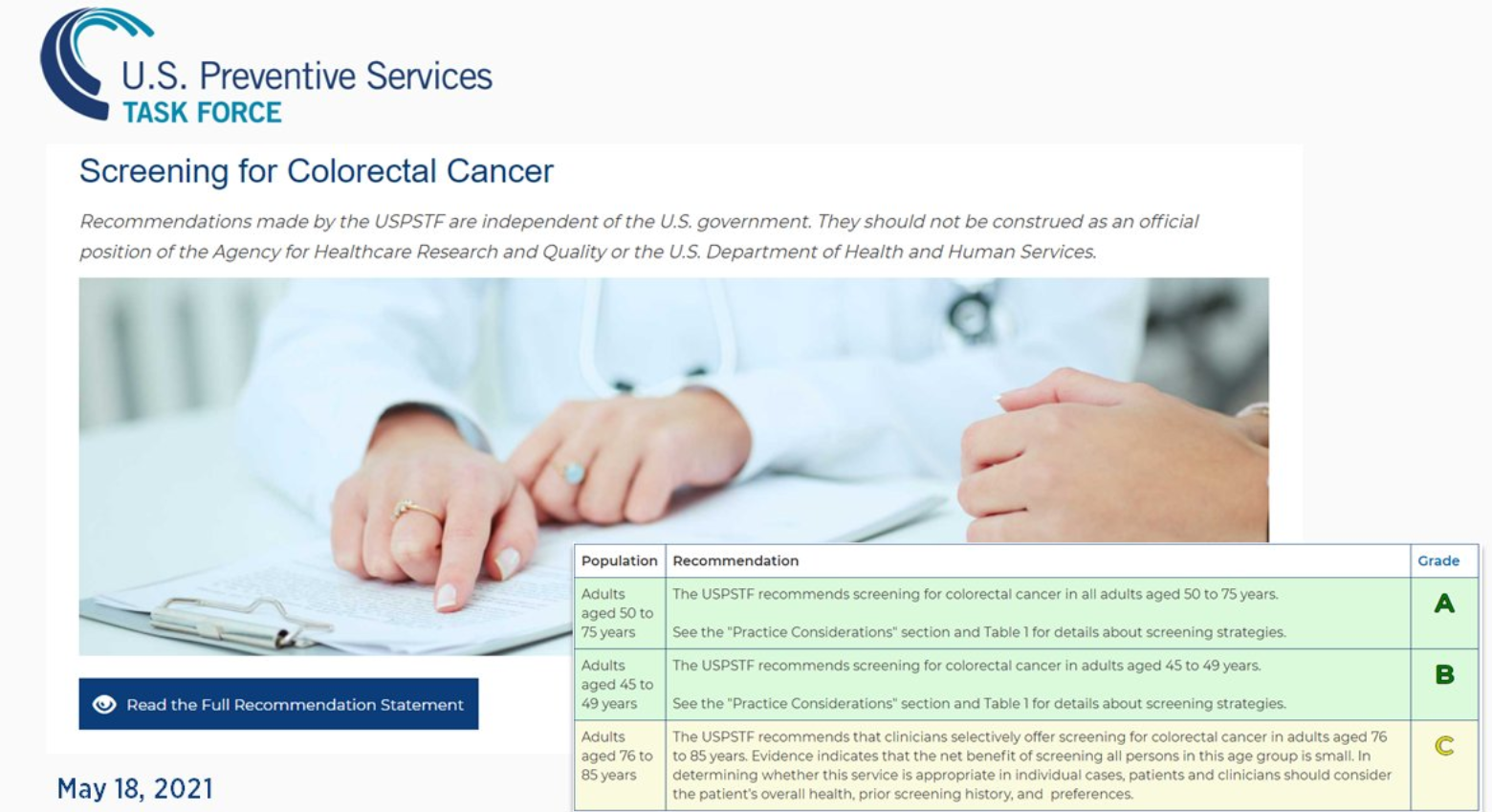
45 Years –The New Recommendation for Colorectal Cancer Screening

Related blog posts:

Surprising Genetic Mutations in Polyposis Study

A recent cross-sectional study (PP Stanich et al. Clin Gastroenterol Hepatol 2019; 17: 2008-15, editorial 1942-44) identified a high frequency of genetic mutations among adults with at least 10 colonic polyps (cumulative burden of either adenomatous or hamartomatous).

This study had 3789 subjects who underwent multigene panel testing (MGPT) from 2012-16.

  • All subjects had at least 14 CRC-associated genes tested: APC, BMPR1A, CDH1, CHEK2, EPCAM, MLH1, MSH2, MSH6, MUTYH, PMS2, PTEN, SMAD4, STK11, TP53
  • A subset had 3 more newly recognized polyposis genes: GREM1, POLD1, and POLE

Key findings:

  • A mutation in at least 1 gene was found in 13.7%
  • In those with fewer than 20 cumulative adenomas, 7.6% had a disease-associated genetic mutation with the majority (5.3%) being nonpolyposis CRC genes
  • Younger patients, 18-29, were more likely to have mutations in any gene.  For example, among patients with 10-19 polyps, these younger patients had a mutation in one of these genes in 27.8%; this is more than double the rate in any other age group.
  • Hamartomatous polyps, regardless of number, had a very high yield with genetic testing: 40% with 10-19 polyps and 72% with 20-99 polyps.

Limitations:

  • There is a referral bias in that the population was derived from a testing laboratory (Ambry)
  • In clinical practice, genetic testing frequently results in variants of unknown significance

My take: This study shows that genetic mutations are fairly frequent in patients with cumulative polyp burden of 10 or more, especially in younger age groups.  The surprising finding is the high frequency of nonpolyposis CRC genes.  Thus, in patients with adenomatous polyposis, testing beyond APC and MUTYH may be needed.

Related blog posts:

Atlanta Botanical Garden