O Ledder et al. J Pediatr Gastroenterol Nutr. 2026;83:539–554. Open Access! Foreign body ingestions in children and adolescents: A position paper of the European Society for Pediatric Gastroenterology, Hepatology, and Nutrition (ESPGHAN) endoscopy special interest group
In 2015, NASPGHAN’s endoscopy committee published a report on the management of foreign bodies (see: Foreign Bodies in Children -Expert Guidance). This was quite helpful. This ESPGHAN position paper provides updated guidance though many of the recommendations are unchanged.
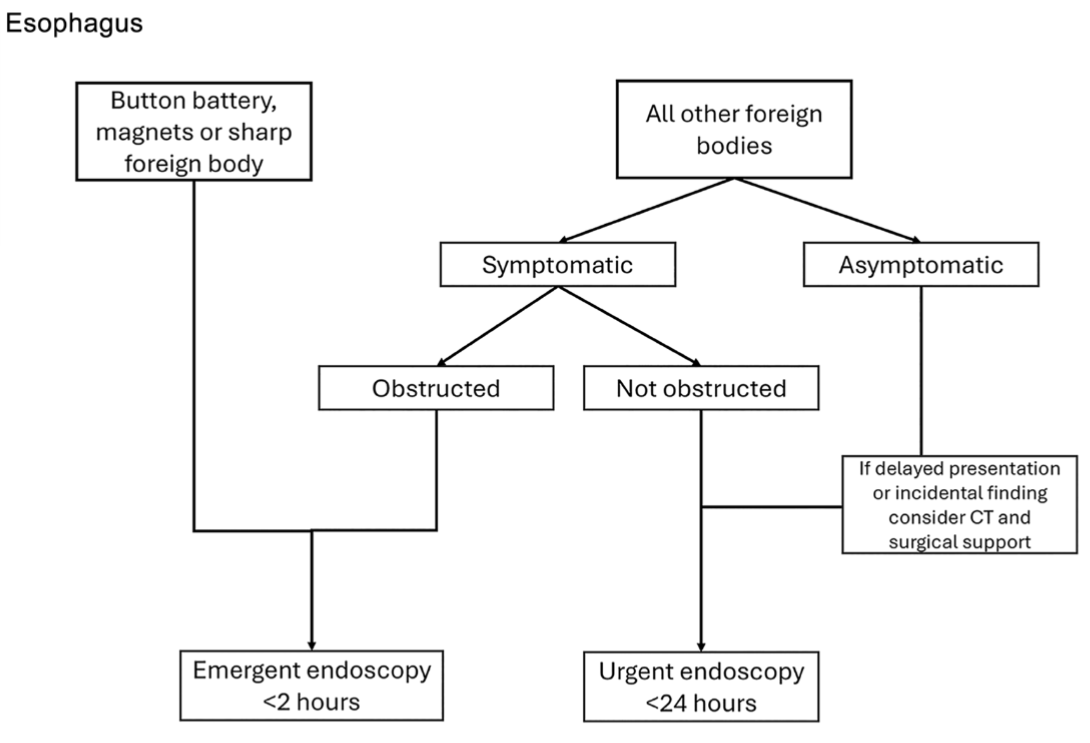
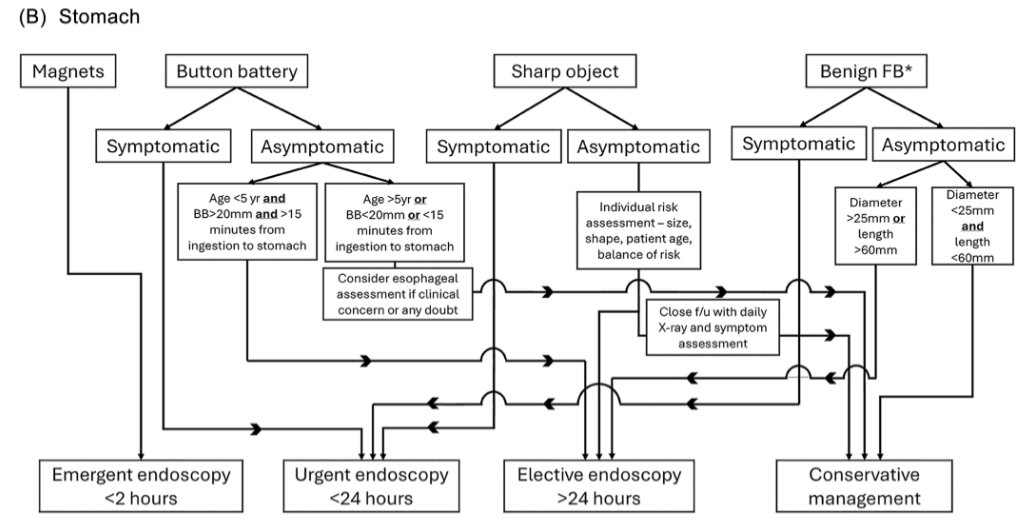
Overall Treatment Algorithm:
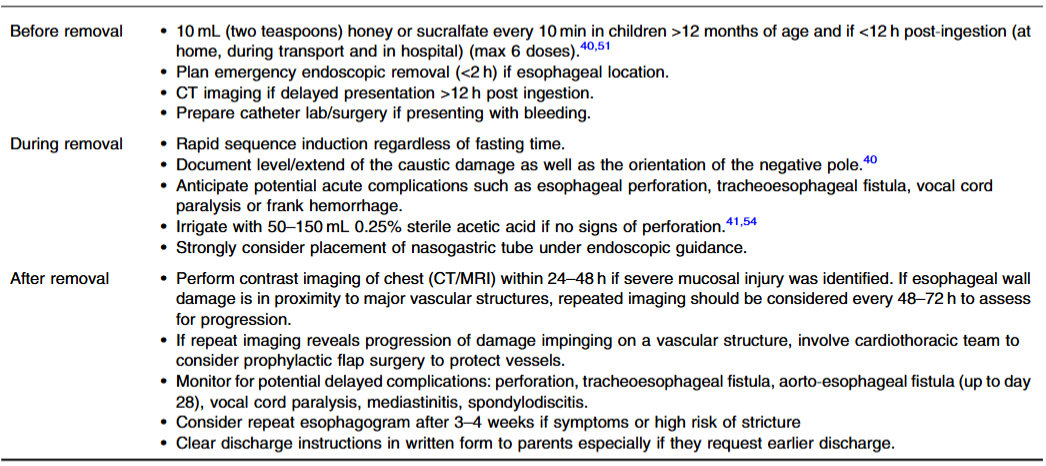
Button Batteries
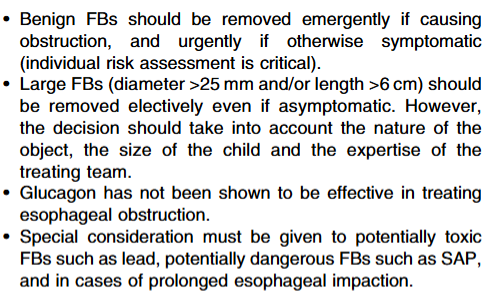
Blunt Objects/Benign Foreign Bodies
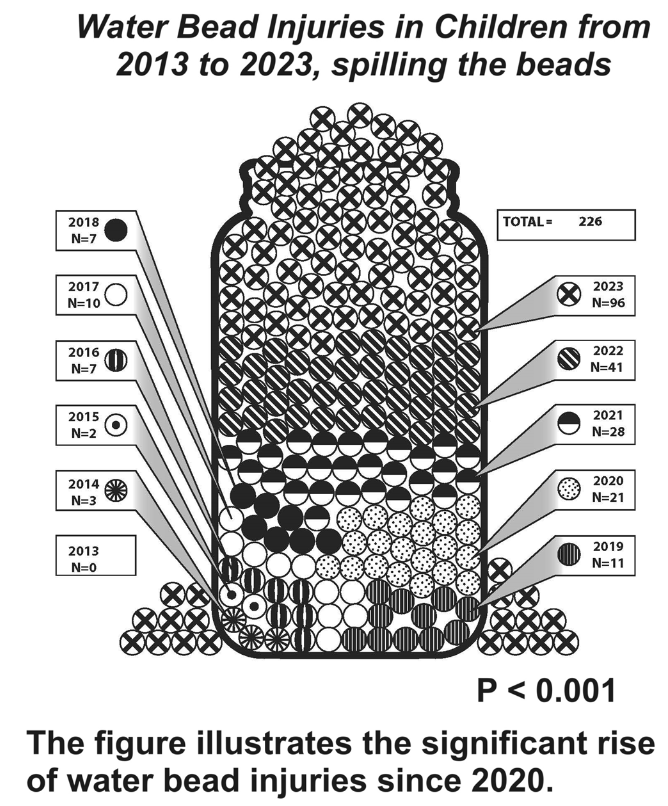
- Superabsorbent polymers (SAP) Since these items are translucent, imaging is useful only for identifying the sequelae of the ingestion, but not the SAP itself… In cases of witnessed or suspected ingestion of SAP, emergency endoscopy should be performed to attempt retrieval of the material. If this is unsuccessful, or not completely retrieved, the child should be admitted for close observation with surgical support.
Magnets:
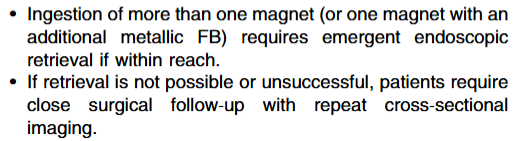
- On table fluoroscopy has been suggested to confirm removal of all magnets if there is doubt whether all have been retrieved. (My personal experience is that fluoroscopy is particularly helpful if a colonoscopy is needed.)
Sharp Objects


My take: These guidelines are similar the previous NASPGHAN endoscopy committee recommendations from 2015. They are still worth a read for more context and there are a lot of endoscopy pointers in this report.
Related blog posts:
- Foreign Bodies in Children -Expert Guidance (2015)
- Foreign Body Retrieval: You Never Know What You Will See
- “Corkscrew Method;” A Quick Trick For Esophageal Food Impactions
- Water Beads in the News and in JPGN
- An Esophageal Coin with Moth Eaten Appearance
- How Often Esophageal Coins Pass Into the Stomach
- Personal Quest Update: The Beginning of the End for the Penny & World Button Battery Day
- Weird Xray and Successful Treatment for Water Bead Ingestion
- Near-Death Experience from a Button Battery
- Also, A Few Years Ago –Button Battery Changes
- Sharp Objects in GI Tract & Good Outcomes
- How NOT To Do a Transit Time Study
- Case report: Spondylodiscitis After Button Battery Ingestion
- Mitigation Efforts for Button Batteries
Disclaimer: This blog, gutsandgrowth, assumes no responsibility for any use or operation of any method, product, instruction, concept or idea contained in the material herein or for any injury or damage to persons or property (whether products liability, negligence or otherwise) resulting from such use or operation. These blog posts are for educational purposes only. Specific dosing of medications (along with potential adverse effects) should be confirmed by prescribing physician. Because of rapid advances in the medical sciences, the gutsandgrowth blog cautions that independent verification should be made of diagnosis and drug dosages. The reader is solely responsible for the conduct of any suggested test or procedure. This content is not a substitute for medical advice, diagnosis or treatment provided by a qualified healthcare provider. Always seek the advice of your physician or other qualified health provider with any questions you may have regarding a condition.