Medical Imaging of Children/Adolescents and Risk of Cancer (2025)

R Smith-Bindman et al. NEJM 2025; 393: 1269-1278. Medical Imaging and Pediatric and
Adolescent Hematologic Cancer Risk

Methods: This was a retrospective cohort of 3,724,623 children born between 1996 and
2016 in six U.S. health care systems and Ontario, Canada, until the earliest of cancer
or benign-tumor diagnosis, death, end of health care coverage, an age of 21 years, or December 31, 2017.

Key findings:

  • During 35,715,325 person-years of follow-up (mean, 10.1 years per person), 2961 hematologic cancers were diagnosed, primarily lymphoid cancers (2349 [79.3%]), myeloid cancers or acute leukemia (460 [15.5%]), and histiocytic- or dendritic-cell cancers
    (129 [4.4%]).
  • The excess cumulative incidence of hematologic cancers by 21 years of age among children exposed to at least 30 mGy (mean, 57 mGy) was 25.6 per 10,000
  • The authors estimated that 10.1% of hematologic cancers may have been attributable to radiation exposure from medical imaging, with higher risks from the higher-dose medical-imaging tests such as CT
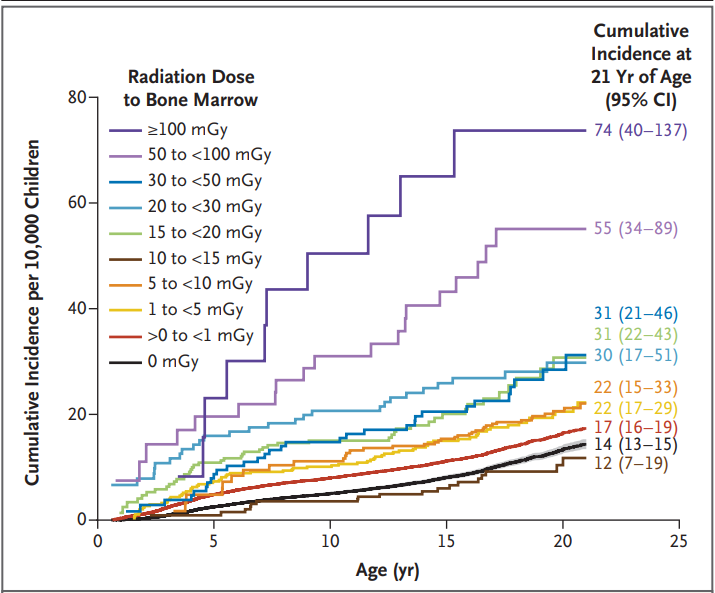
Cumulative Incidence of Hematologic Cancer According to Attained Age and
Radiation Dose to Bone Marrow among Children without Down’s Syndrome

Discussion Points:

  • “A 15-to-30-mGy exposure equivalent to one to two CT scans of the head was associated with an increased risk by a factor of 1.8”
  • “Although CT and other radiation-based imaging techniques may be lifesaving, our
    findings underscore the importance of carefully considering and minimizing radiation exposure during pediatric imaging to protect children’s long-term health”
  • “Research on Japanese atomic-bombing survivors showed that leukemia rates peaked 6 to 8 years after exposure, with excess risk lasting for more than five decades, particularly for acute myeloid leukemia”
  • This study tried to avoid concerns about reverse causation — in which imaging is performed because of existing cancer symptoms –by lagged exposures by 6 and 24 months
  • “The increasing use of low-value imaging in children and excessive radiation doses in CT are well documented…In many cases, reducing the imaging dose or substituting magnetic resonance imaging or ultrasonography may be more feasible than avoiding imaging altogether”

While the risks in aggregate appear quite substantial, the editorial (L Morton. NEJM 2025; 393; 1337-1339.Studying Cancer Risks Associated with Diagnostic Procedures –Interpret Wisely) makes the point that the risks for the individual are very small. “Fewer than 1% of youths in this study accumulated doses of 30 mGy or more from medical imaging and even at this exposure level, the excess cumulative incidence of hematologic cancers was low (25.6 per 10,000)…we need to ensure that all involved in medical imaging…wisely interpret the results…to understand the balance of the very small risks and the notable benefits of necessary imaging examinations to provide optimal patient care.”

My take: This study is a reminder to carefully evaluate the benefits, risks and alternatives when using ionizing radiation studies.

Related blog posts:

CT Imaging and Projected Cancer Risks: 2025 Analysis

Smith-Bindman R, Chu PW, Azman Firdaus H, et al.  JAMA Intern Med. Published online April 14, 2025. doi:10.1001/jamainternmed.2025.0505. Open Access! Projected Lifetime Cancer Risks From Current Computed Tomography Imaging

Methods: Lifetime radiation-induced cancer incidence and 90% uncertainty limits (UL) were estimated by age, sex, and CT category using National Cancer Institute software based on the National Research Council’s Biological Effects of Ionizing Radiation VII (BEIR VII) models and projected to the US population using scaled examination counts.

Key findings:

  • Ninety-three million CT examinations were performed in 61 510 000 patients in the United States in 2023, including an estimated 3,069,000 CTs (3.3%) in 2,570,000 children (4.2%) and 89,931,000 CTs (96.7%) in 58,940,000 adults (95.8%) 
  • In this risk model, the 93 million CT examinations performed in 62 million patients in 2023 were projected to result in approximately 103,000 future cancers
  • Estimated radiation-induced cancer risks were higher in children and adolescents, yet higher CT utilization in adults accounted for most (93,000) radiation-induced cancers
  • “If current practices persist, CT-associated cancer could eventually account for 5% of all new cancer diagnoses annually”

Discussion: “The projected number of radiation-induced cancers in this analysis is 3 to 4 times higher than the earlier assessment of CT exposure for several reasons”

  • CT use is 30% higher today than in 2007
  • Dose modeling in this study accounted for multiphase scanning
  • Substantially higher organ doses in this study were reconstructed using newer dosimetry methods
  • More granular CT categories reflecting imaging indications that have important dose differences
  • “Many of the model assumptions were conservative” and could underestimate the risk

My take (borrowed from authors): “Even very small cancer risks will lead to a significant number of future cancers given the tremendous volume of CT use in the United States…CT could be responsible for approximately 5% of cancers diagnosed each year. This would place CT on par with other significant risk factors, such as alcohol consumption (5.4%) and excess body weight (7.6%)”

Related blog posts:

Kiawah Beach, SC

Understanding Alcohol’s Cancer Risks and Warnings

NY Times and USAToday both reported on this topic earlier this month:

An excerpt from USAToday report:

According to the Centers for Disease Control and Prevention, alcohol consumption is the third-leading preventable cause of cancer in the United States, after tobacco and obesity. And according to the report released by Murthy’s office, it increases the risk for at least seven types of cancer…

In a post on X, Murthy said alcohol contributes to about 100,000 cancer cases and 20,000 cancer deaths annually in the U.S., a number greater than the 13,500 alcohol-related traffic accidents each year.

Murthy is calling on Congress to act to update the labels to include an increased risk of the following cancers linked to alcohol consumption:

  • Breast
  • Colon
  • Throat
  • Liver
  • Voice box
  • Esophagus
  • Mouth

From NY Times:

While most cancer deaths occur at drinking levels that exceed the current recommended dietary guidelines, the risk for cancers of the breast, the mouth and the throat may rise with consumption of as little as one drink a day, or even less, Dr. Murthy said on Friday.

Overall, one of every six breast cancer cases is attributable to alcohol consumption, Dr. Murthy said. …

The World Health Organization says there is no safe limit for alcohol consumptionThe most widely accepted theory is that inside the body, alcohol breaks down into acetaldehyde, a metabolite that binds to DNA and damages it, allowing a cell to start growing uncontrollably and creating a malignant tumor.

My take: It is surprising that alcohol is attributed to causing more deaths due to cancer than due to motor vehicle accidents.

Related blog posts:

Atlanta Botanical Gardens

Ponsegromab: A Breakthrough for Cancer Cachexia Treatment

JD Groarke, et al. NEJM 2024; 391: 2291-2303. Ponsegromab for the Treatment of Cancer Cachexia

Background: “Growth differentiation factor 15 (GDF-15) is a stress-induced cytokine that binds to the glial cell–derived neurotrophic factor family receptor alpha-like protein (GFRAL) in the hindbrain.12 The GDF-15–GFRAL pathway has emerged as a main modulator of anorexia and body-weight regulation and is implicated in the pathogenesis of cachexia.13 …Ponsegromab (PF-06946860) is a potent, highly selective, humanized monoclonal antibody that binds to circulating GDF-15, thereby inhibiting the interaction with its GFRAL receptor.”

“A recent guideline supports low-dose olanzapine to improve appetite and weight in patients with advanced cancer,3 a recommendation that is largely based on a single-center study.4 Safe, effective, and targeted therapies for cancer cachexia are needed.10,11

Methods: In this phase 2, randomized, double-blind, 12-week trial, we assigned patients with cancer cachexia and an elevated serum GDF-15 level (≥1500 pg per milliliter) in a 1:1:1:1 ratio to receive ponsegromab at a dose of 100 mg, 200 mg, or 400 mg or to receive placebo, administered subcutaneously every 4 weeks for three doses. N=187. Of these patients, 40% had non–small-cell lung cancer, 32% had pancreatic cancer, and 29% had colorectal cancer.

Key findings:

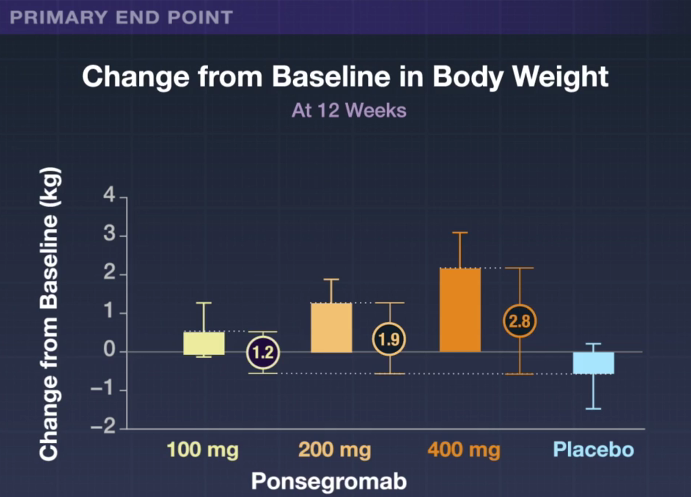
  • Over the 12-week trial, patients treated with ponsegromab had as much as a 2.8 kg weight gain compared to placebo.
  • Improvements were observed across measures of appetite and cachexia symptoms, along with physical activity, in the 400-mg ponsegromab group relative to placebo. 

My take: This study explains a key driver of cachexia in cancer and shows that inhibition of GDF-15 can improve weight gain and physical activity.

Updated Health Warnings Needed For Alcohol & More on COVID-19/Paxlovid

AH Grummon, MG Hall. NEJM 2022; 387: 772-774. Updated Health Warnings for Alcohol — Informing Consumers and Reducing Harm

This article makes a compelling case that most U.S. consumers do not know the true risks of alcohol intake; this is likely in part due to the >$1 billion spent each year on marketing by the alcohol industry.

Leading causes of alcohol-related harms:

  • Fatal and nonfatal injuries resulting from acute intoxication (including injuries caused by motor vehicle crashes)
  • Chronic diseases including hypertensive heart disease, cirrhosis, pancreatitis and several types of cancer.2 Even light or moderate drinking increases the risk of these conditions, particularly cancer (eg. breast, colon, and stomach)2
  • Risks during pregnancy include miscarriage, preterm birth, and fetal alcohol syndrome (these risks are not specifically addressed in this commentary)
  • Also not noted in this article, alcohol is considered a major contributor to violence, including intimate partner violence

Key points –Scope of Problem and Informing Consumers:

  • “In April 2022, the Centers for Disease Control and Prevention (CDC) released new mortality statistics showing that alcohol consumption now accounts for more than 140,000 deaths per year in the United States, or more than 380 deaths per day. The Covid-19 pandemic has exacerbated alcohol-associated harm in the United States, with alcohol-related deaths increasing by 25% during the first year of the pandemic as compared with the previous year”(White AM, Castle IP, Powell PA, Hingson RW, Koob GF. Alcohol-related deaths during the Covid-19 pandemic. JAMA 2022;327:1704-1706).
  • “A national survey of U.S. adults, for example, found that nearly 70% are unaware that alcohol consumption increases the risk of cancer.3…Some alcohol companies even seek to link their products to health campaigns. Several companies, for example, have sold seasonal, pink ribbon–themed alcoholic drinks during October to promote their efforts to raise funds for breast-cancer research — despite compelling evidence that alcohol increases the risk of developing breast cancer.”
  • The authors advocate for better warning labels. They argue that “updated alcohol warnings would provide new risk information to many Americans, … implementing such warnings would be a sensible policy for addressing industry dominance over alcohol-related information, even if warnings’ effects on consumption are fairly small.”

Related article: NBC News 11/4/22: Alcohol deaths spiked among middle-aged adults, especially women, during pandemic “Alcohol-related deaths rose by 26% from 2019 to 2020, a new report published Friday by the Centers for Disease Control and Prevention finds.”

Related blog post:

More on COVID-19:

Eric Topol: Paxlovid and Long Covid This in-depth article reviews the benefits of paxlovid (early) and later, including the reduction of Long Covid in 26% in a recent study. It also provides a table for potential drug interactions (Thanks to Jeff Lewis for sharing).

This recent study is reviewed in NY Times (11/7/22): Paxlovid May Reduce Risk of Long Covid in Eligible Patients, Study Finds

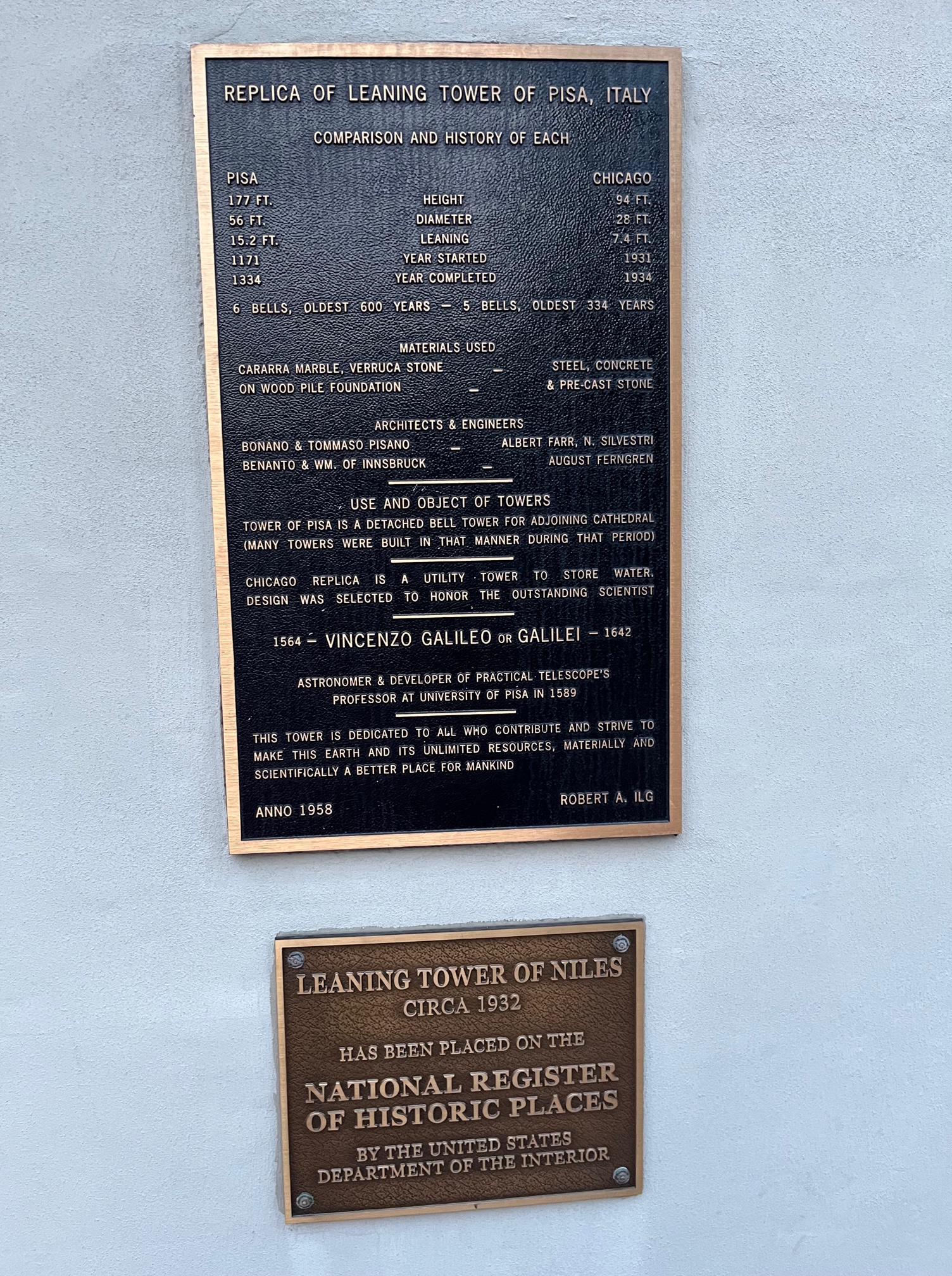
Leaning Tower of Niles (1934) (near Chicago, IL). The “Papa Chris Place” sign should help distinguish this landmark for the one in Pisa.

Smoking, Alcohol and Obesity Increase Risk of Malignancies + Staff Morale (Humor)

S-M Wang et al. The American Journal of Gastroenterology: September 2021 – Volume 116 – Issue 9 – p 1844-1852. Open Access: Population Attributable Risks of Subtypes of Esophageal and Gastric Cancers in the United States

This study examined population risks for esophageal squamous cell carcinoma (ESCC), esophageal adenocarcinoma (EAC), gastric cardia adenocarcinoma (GCA), and gastric noncardia adenocarcinoma (GNCA).

“We prospectively examined the associations for risk factors and these cancers in 490,605 people in the National Institutes of Health-the American Association of Retired Persons Diet and Health cohort Diet and Health Study cohort from 1995 to 2011.”

Key findings:

My take: Tobacco, Obesity and Alcohol are associated with increased risk for a large proportion of esophageal and gastric cancers in the United States

Related article: VK Rustgi et al. Gastroenterol 2021; 161: 171-184. Open Access: Bariatric Surgery Reduces Cancer Risk in Adults With Nonalcoholic Fatty Liver Disease and Severe Obesity

Key findings:

  • The IPTW (inverse probability of treatment weighting)-adjusted risk of any cancer and obesity-related cancer was reduced by 18% (hazard ratio, 0.82; 95% CI, 0.76–0.89) and 25% (hazard ratio, 0.65; 95% CI, 0.56–0.75), respectively, in patients with versus without bariatric surgery.
  • In cancer-specific models, bariatric surgery was associated with significant risk reductions for colorectal, pancreatic, endometrial, thyroid cancers, hepatocellular carcinoma, and multiple myeloma.

Link: Improving Morale (53 seconds)

Missing Care Due to COVID-19

When analyzing health care expenditures, it has been well-recognized that many patients/families cut back on both necessary and unnecessary care when faced with increased costs; that is, individuals are not very good at selecting care that is truly essential.  This is one reason why many health care policy advisors are opposed to  high copays and deductibles as a way of reducing health care costs.

I have seen the same type of problem amidst the pandemic.  Due to fears of contracting SARS-CoV-2 (rather than mainly cost), individuals/families are deferring routine medical care.  This is leading to delays in diagnosis of many serious illnesses and missing opportunities to prevent illnesses (eg. vaccines).  A recent study has shown some of the impact with regard to cancer that happened early in the pandemic (and may be ongoing).

HW Kaufman et al. JAMA Netw Open. 2020;3(8):e2017267. doi:10.1001/jamanetworkopen.2020.17267. Full text: Changes in the Number of US Patients With Newly Identified Cancer Before and During the Coronavirus Disease 2019 (COVID-19) Pandemic

Introduction/Background:  In this study, we analyzed weekly changes in the number of patients with newly identified cancer before and during the COVID-19 pandemic.

Methods: This cross-sectional study included patients across the United States who received testing for any cause by Quest Diagnostic; data was compared between baseline period (January 6, 2019, to February 29, 2020) and the COVID-19 period (March 1 to April 18, 2020). n=278 778 patients. Study evaluated  breast cancer,  colorectal cancer, lung cancer,  pancreatic cancer, gastric cancer, and esophageal cancer.

Key findings:

  • During the pandemic period, the weekly number fell 46.4% (from 4310 to 2310) for the 6 cancers combined, with significant declines in all cancer types, ranging from 24.7% for pancreatic cancer (from 271 to 204; P = .01) to 51.8% for breast cancer (from 2208 to 1064; P < .001)

The authors noted a similar problem has been reported with cardiovascular disease.  A study from 9 high-volume US cardiac catheterization laboratories found a 38% decrease in patients treated for ST-elevation myocardial infarction, considered a life-threatening condition.

My take: It is difficult to calculate the actual toll of this pandemic which includes a great deal of secondary problems: delays in diagnosis of life-threatening conditions, mental health/suicides, death from poverty, setbacks in the opioid crisis & overdose deaths, and enormous setbacks in global health projects.

Related blog posts:

The Narrow Path of Personalized Cancer Medicine

Since I’m not directly involved in oncology care, I have a limited perspective on how quickly molecular medicine may transform cancer care.  A recent commentary (IF Tannock, JA Hickman. NEJM 2016; 1289-94) explains the “Limits to Personalized Cancer Medicine.”

While the idea of careful molecular characterization of tumors that lead to targeted therapy with better survival and better patient quality of life has been proven effective in several circumstances, there are a number of reasons why this approach will not be useful for most cancers.

Key points:

  • Examples of current personalized cancer Rx: trastuzumab for HER2-expressing breast cancer and vemurafenib for BRAF-mutated-expressing melanomas.
  • Very few studies have shown feasibility/effectiveness of targeted drug treatment
  • There has been limited success with targeted drugs within and outside studies
  • Though proponents of targeted therapy expect further advances, tumors typically have heterogeneity which allows a Darwinian evolution to evade these new therapies. “Cancer cells have an almost universal capacity to develop resistance to a single molecular targeted agent by means of upregulation of the partially inhibited pathway, mutation of the target, or activation of alternative pathways.”
  • Targeted therapies are usually limited by only partial inhibition of the signaling pathways and by toxicity when used in combination therapy.
  • In some cases, a clonal driver mutation may be present which would be present in all cell lines –however the authors note that success from this approach is likely to be rare.
  • Cost: “new drugs to treat cancer are marketed at ever-increasing prices…unrelated to value (i.e. to clinical effectiveness)….but the development and marketing of expensive drugs with marginal effectiveness diverts resources from the development of more effective therapies.”

My take (borrowed from authors): “The concept of personalized medicine is so appealing…[but] there should also be a clear message to patients that personalized cancer medicine has not led to gains in survival…and is an appropriate strategy only within well-designed clinical trials.”

Related blog post:

University of Virginia

The Lawn, University of Virginia