New Trend: Oral Medicines Replacing Injections

  • R Bissonnette et al. NEJM 2025; 393: 1784-1795. Oral Icotrokinra for Plaque Psoriasis
  • RS Stern. NEJM 2025; 303: 1854-1855. Oral Psoriasis Therapy — For Whom and at What Cost and Risk?
  • S Wharton et al. NEJM 2025; 303: 1796-1806. Orforglipron, an Oral Small-Molecule GLP-1 Receptor Agonist for Obesity Treatment

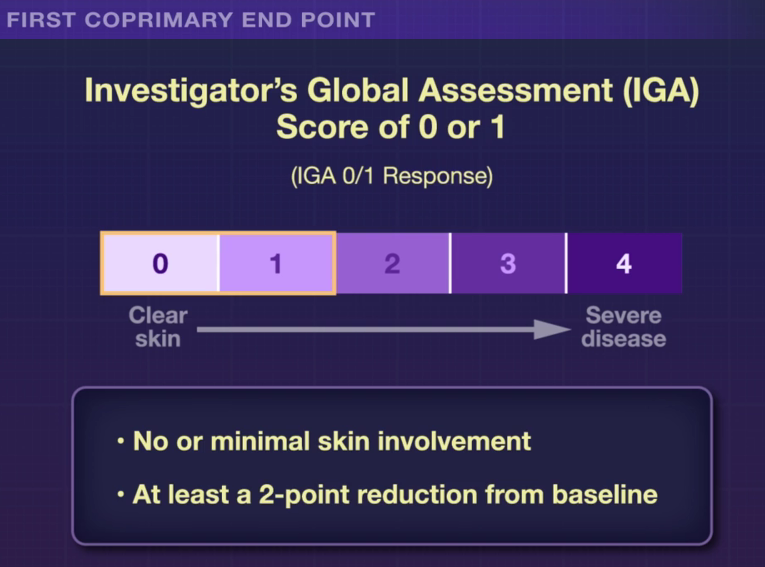
In the ICONIC-LEAD study (Bissonnette et al), 684 adolescents and adults participated in a DBPC trial with an oral peptide, icotrokinra, which binds the IL-23 receptor. This medication is of interest as there are ongoing trials with it for inflammatory bowel disease. Other injectable medications targeting IL-23 are already approved for IBD.

Key Findings:
The associated editorial notes that this new therapy is likely to cost ~$70,000 per year. The cost of psoriasis care has increased more than 2000% since 1997. “Because of these high prices, rebates and discounts to pharmacy benefit managers that often guide formulary preferences are likely to govern clinician’s selection of immune-based oral and parenteral therapies for psoriasis.”

In the ATTAIN-1 Trial (Wharton et al), the authors share the results of an oral GLP-1 Receptor Agonist, Orforglipron, monotherapy for obesity.

Key findings:

My take: There are similar injectable alternatives to each of these medications for psoriasis, obesity and diabetes. The availability of oral medications could reduce one barrier to treatment. Cost barriers may preclude their use in many patients when they become available. In addition, long-term outcome data are still needed.

Related blog posts:
Insulin: “Poster Child For Everything That’s Wrong” with U.S Drug Costs

Fortune Dec 2021-Jan 2022: Insulin’s Deadly Cost Thanks to Stan Cohen for sharing article.

Some excerpts/key points:

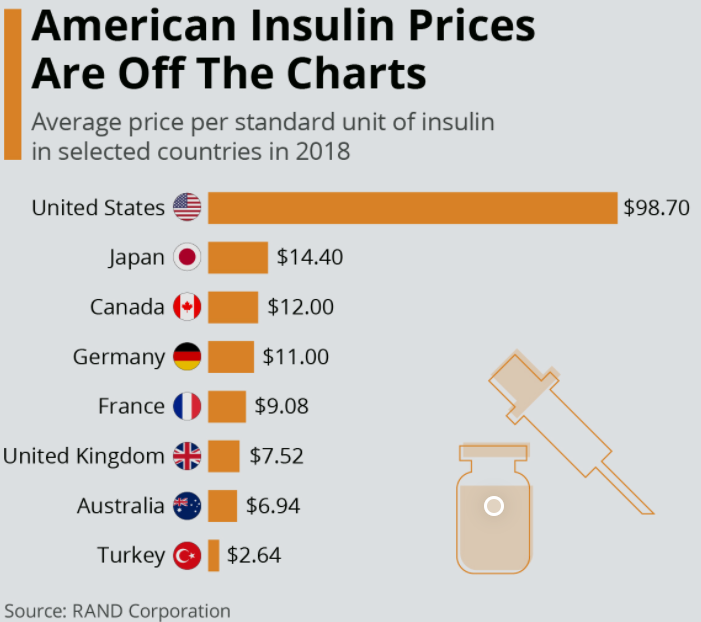
  • “Insulin in the U.S. costs on average some 800% more than in other developed economies. And yes, people die for lack of it, sometimes within days or even hours of missing their dose. No one knows how many; data suggests that in the U.S. it’s at least a few every day. Far more may suffer other ravages of diabetes—blindness, heart attacks, loss of limbs.” In addition, 40% of Americans who have died from COVID-19 were diabetics.
  • “Manufacturer’s compete not by cutting prices but by raising them.” This is often due to pharmacy benefit managers (PBMs), the middleman between manufacturer’s and insurers. PBMs negotiate drug prices and establish formularies. PBMs make more money if they able to discount higher rebates on the list cost; hence, to influence PBMs to choose their products, manufacturer’s are incentivized to raise drug costs, even if the average price is unchanged. Higher list prices affect those least able to cover the costs, namely those without insurance as well as many with high deductibles.
  • List price for Humalog (Eli Lilly) more than doubled from 2013 to 2018, Lantus (Sanofi) more than quadrupled from 2005 to 2016
  • Some patients have obtained insulin in Canada where costs for a vial could be more than 10-fold less (though this is illegal). There are also more than 12,000 GoFundMe.com listings with “insulin” in the title.
  • For the insulin market, some recent changes include the emergence of GLP-1 analogs for Type 2 diabetes (~90% of diabetes in U.S.). Trulicity is now Eli Lilly’s bestselling medication. In addition, the FDA recently approved Semglee, an interchangeable biosimilar for Lantus which is reducing costs.

My take: “The story of insulin is a poster child for everything that’s wrong with a free-market approach to drug availability,” says Arthur Caplan…”It’s almost inexcusable morally.”

Related blog posts:

Marketing of Insulin Explains a Lot About Our Health Care System

A recent commentary (M Fralick, AS Kesselheim. NEJM 2019; 381: 1793-5) describes the U.S. Insulin Crisis.

Background: 

  • In 1922, insulin was first injected into a 14-year-old boy with severe type 1 diabetes mellitus (T1DM). Prior to this, T1DM had been considered a universally fatal disease
  • Frederick Banting, John Macleod, and members or their team that discovered insulin sold their patent for $1 to assure it could be widely affordable
  • “U.S. law allows pharmaceutical manufacturers to price their products at whatever level they believe the market will bear and to raise prices over time without limit”
  • “Direct competition in the insulin market is lacking”
  • Since insulin is a biologic drug, this necessitates “additional testing beyond what is usually required for generic drugs before approval by the” FDA.

Current Situation:

  • A carton of insulin that sells for $300 in the U.S. could be purchased in Canada for $20 (in U.S. dollars)
  • Nearly 100 years after the development of insulin, “insulin is inaccessible to thousands of Americans because of its high cost.”

My take: Why does insulin cost 15 times more in the U.S. than Canada?   These excess costs with insulin are occurring despite a great deal scrutiny; unfortunately, U.S. consumers are paying extra for a wide range of pharmaceuticals.  Going from the Nobel discovery of insulin to our current state is a clear indication of the need to reform of our healthcare system.

Related blog posts:

Mural in Quebec City: La Fresque des Québécois

NPR: “Craptastic Voyage” and Fart Analysis

Surely a story for every gastroenterologist: “Before The Gas is Passed, Researchers Aim to Measure it in The Gut.”

An excerpt:

Kalantar-Zadeh and his colleagues propose in a paper in Trends in Biotechnologyonline Thursday two new devices that could keep a vigilant eye, or a nose in this case, on what’s going on deep in the gut….

The jar is pretty straightforward. A spoonful of poop goes in and a technician squeezes on a lid containing a sensor that detects the molecules of gas fuming inside and at what concentration…but he’s most excited about their other invention.

It’s a robotic pill that sniffs its way along a craptastic voyage through the gut. As the pill tumbles through, a membrane on the pill lets gasses pass onto a small molecular sensor inside that serves as its nose. The membrane blocks the other stuff sloshing around in the gut.

The pill notes the gasses that gut microbes produce, including oxygen, methane, hydrogen and hydrogen sulfide, which smells like rotten eggs. The pill’s sensor figures out how much of each gas is present, and beams the information out of the patient’s body through a tiny antenna…

The researchers aim to detect changes in gas content. As people’s health waxes or wanes because of stress or disease their intestinal ecosystems change too. Certain microbes may thrive in the new conditions while others struggle. As the populations shift, so will the concentrations of their distinctive gassy waste products.

My Take: This story reminds me about the joke I heard from a mentor about how can you tell if a person is an optimist.  An optimist is a person who finds a pile of manure under the tree on Christmas morning and declares: ‘Oh boy, I’m getting a pony.’

This story shows us that some researchers are true optimists as well; they see a lot of opportunity in studying stool and intestinal gases. Will this research will be useful or wind up being a pile of stool?

Also on NPR: Why Is Insulin So Expensive in the U.S. -summarizes recent commentary (N Engl J Med 2015; 372:1171-1175). This article is important for anyone concerned about escalating medicine costs.

Related blog post“There is No ‘Healthy’ Microbiome” | gutsandgrowth