Lean Patients with Inflammatory Bowel Disease Have Higher Risk of Steatotic Liver Disease Than Lean Patients Without IBD

SJ Martinez-Dominguez et al. Inflammatory Bowel Diseases, Volume 30, Issue 8, August 2024, Pages 1274–1283https://doi.org/10.1093/ibd/izad175 Open Acess! Inflammatory Bowel Disease Is an Independent Risk Factor for Metabolic Dysfunction–Associated Steatotic Liver Disease in Lean Individuals 

Methods: This was a cross-sectional, case-control study including 300 lean cases with IBD and 80 lean controls without IBD, matched by sex and age (median age ~45 yrs). All participants underwent a liver ultrasound, transient elastography, and laboratory tests. All patients with current or previous use of systemic steroid in the last 2 years were excluded from the analysis

Key Findings:

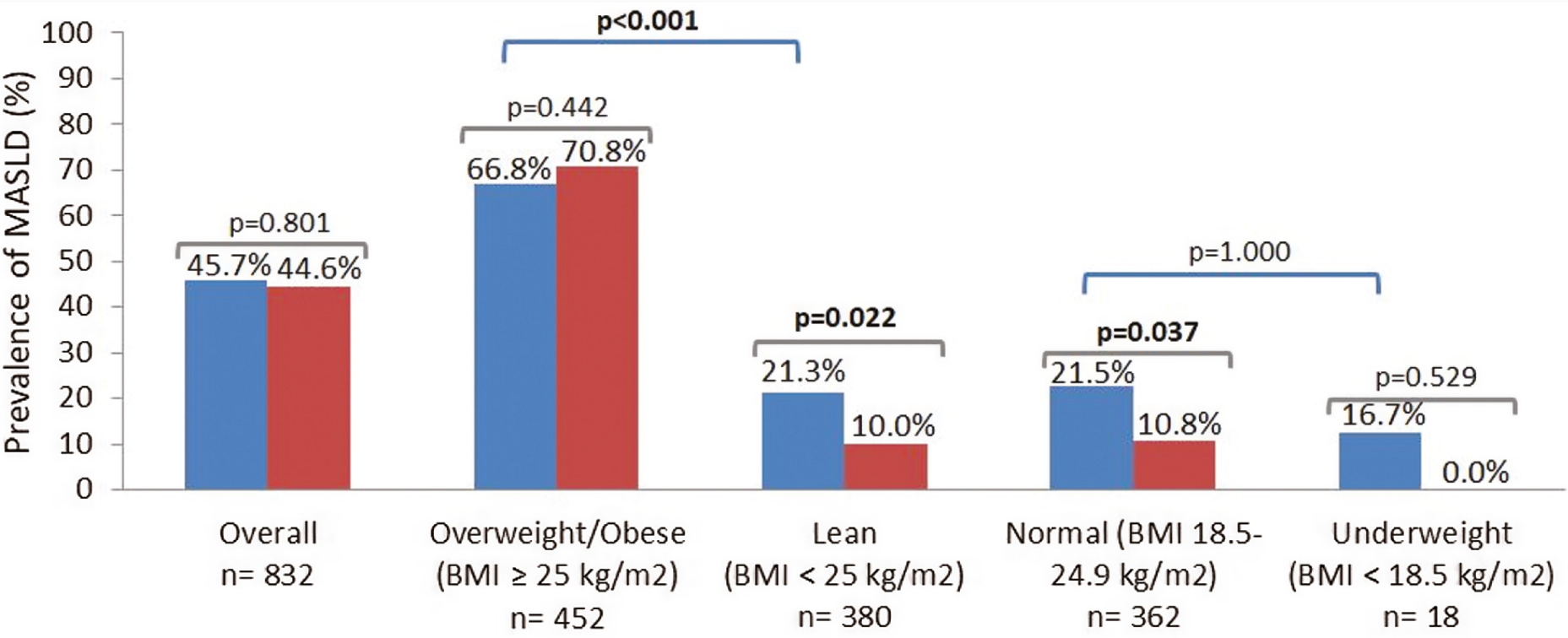
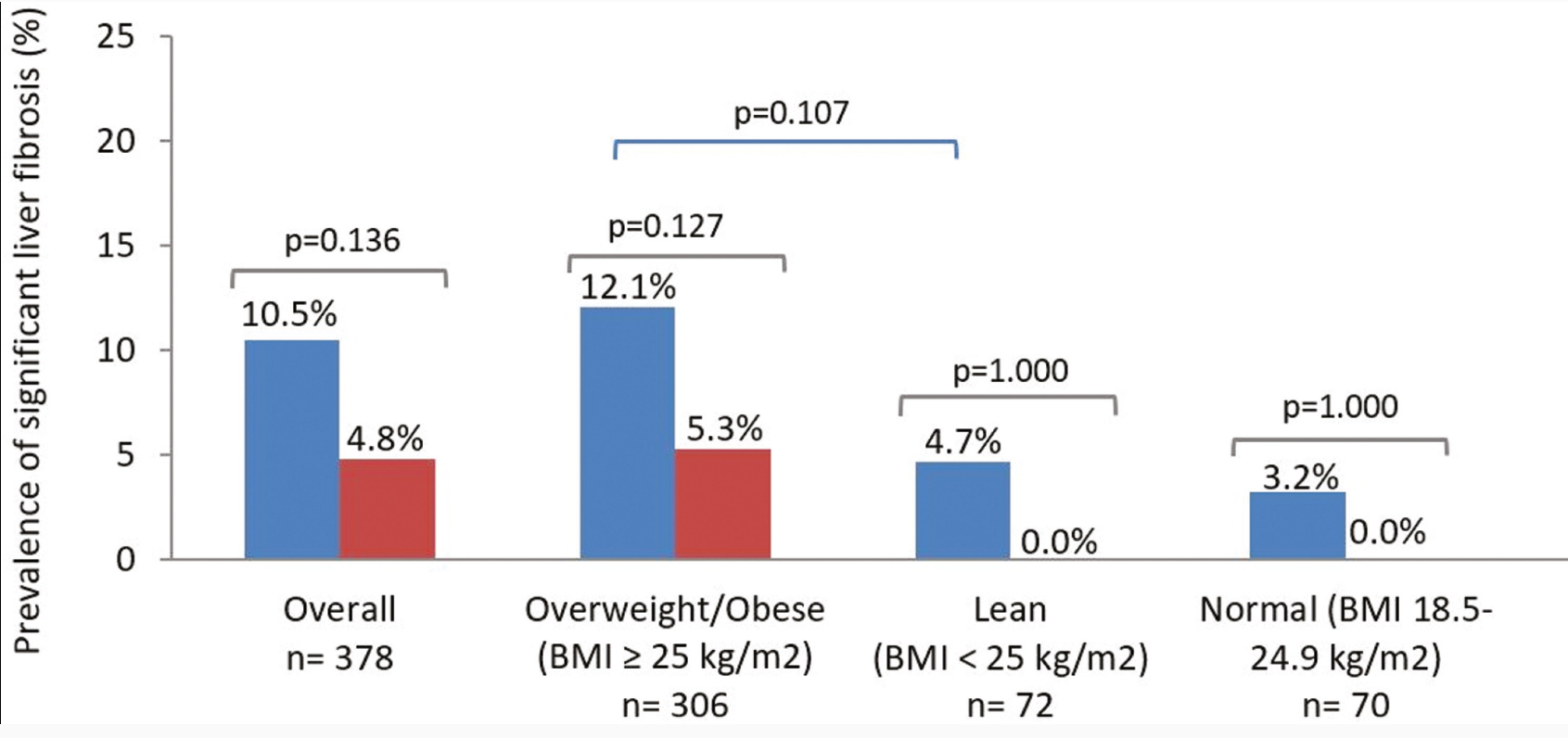
  • The lean IBD group showed a significantly higher prevalence of MASLD compared with lean non-IBD group (21.3% vs 10%; P = .022), but no differences were observed in the prevalence of significant liver fibrosis (4.7% vs 0.0%; P = 1.000)
  • No differences were found between the prevalence of MASLD in IBD and non-IBD participants who were overweight/obese (66.8% vs 70.8%; P = .442)
  • IBD was an independent risk factor for MASLD in lean participants (odds ratio [OR], 2.71) after adjusting for classic metabolic risk factors and prior history of systemic steroid use
Prevalence of metabolic dysfunction–associated steatotic liver disease (MASLD) in cases and controls according to body mass index (BMI) status. Blue bars: cases (inflammatory bowel disease). Red bars: controls (non–inflammatory bowel disease). P values in bold indicate statistical significance (P < .05).

My take: This study suggests that “chronic inflammation could play a role in MASLD development.” Also, this indicates that MASLD could be a reason for elevated LFTs in patients with IBD, even in lean patients.

Related blog posts:

Fibrosis and Steatotic Liver Disease -Who Needs to be Followed by Hepatology?

N Ma et al. JPGN 2024; 79:229–237. Fibrosis and steatotic liver disease in US adolescents according to the new nomenclature

Methods: Among 1410 adolescents (12–19 years) in NHANES (2017-March, 2020), the controlled attenuation parameter (CAP) of transient elastography (TE) was used to define steatosis and fibrosis (TE ≥ 7.4 kPa). Obesity and alanine aminotransferase (ALT) ≥ 80 U/L were used to identify adolescents qualifying for hepatology referral according to practice guidelines.

Key findings:

  • At the supplier (EchoSens)-recommended CAP threshold of 240 dB/m, 30.5% of adolescents had steatotic liver disease (SLD) and about 85% of adolescents with NAFLD met criteria for MASLD. At a CAP threshold of 270 dB/m, SLD prevalence was about 16% in adolescents. The other 15% of NAFLD patients do not meet diagnostic criteria MASLD and would receive a diagnosis of cryptogenic SLD or possible MASLD
  • At higher CAP thresholds, MASLD/NAFLD concordance increased and approached 100%.
  • Among adolescents with MASLD-fibrosis, only 8.8% had overweight/obese and ALT ≥ 80 U/L. Thus, more than 90% of adolescents in this group would not merit hepatology evaluation based on current guidelines.

My take: This study identifies potential problems with current thresholds for which patients need to be seen by pediatric hepatologists. This will be even more important as effective pharmaceuticals become available.

Related blog posts:

Channel Islands off the California coast

Liver Briefs: MASLD with T1DM, ESPGHAN Pediatric HCV Recommendations, Age of Kasai in Europe

  1. F Koutny et al. JPGN 2024; https://doi.org/10.1002/jpn3.12194. Open Access! Poorly controlled pediatric type 1 diabetes mellitus is a risk factor for metabolic dysfunction associated steatotic liver disease (MASLD): An observational study

Study population, n=32,325. Key finding:  Inadequately controlled T1D (HgbA1c >11%) was associated with a higher hazard ratio ((HR: 1.54) of elevated ALT values compared to children with controlled T1D over an observation period extending up to 5.5 years. When both elevated HbA1c (>11%) and overweight were present, the HR was 2.71.

————————————————————————————————————————–

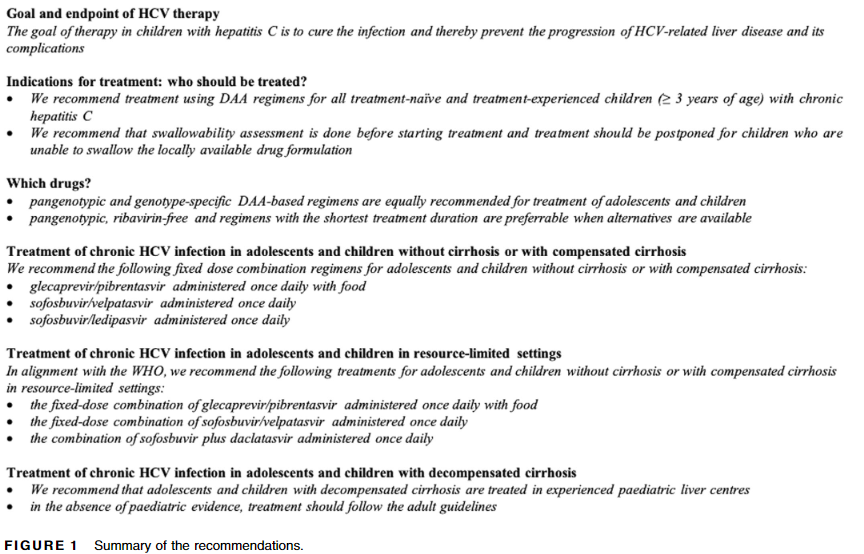
2. G Indolfi et al. JPGN 2024; 78:957–972. ESPGHAN recommendations on treatment of chronic hepatitis C virus infection in adolescents and children including those living in resource-limited settings

Summary of Recommendations:

————————————————————————————————————————–

3. F Lacaille et al. JPGN 2024; 78:1374–1382. Awareness, referral and age at Kasai surgery for biliary atresia in Europe: A survey of the Quality-of-Care Task Force of ESPGHAN

Key finding: Data from 785 infants diagnosed with BA from 2015 to 2019 from 18 centers in 15 countries revealed a mean age at referral to tertiary center of 55 days (similar to results obtained in Europe 10–30 years earlier)

Related blog posts:

Biliary Atresia

HCV:

Prevalence of Steatotic Liver Disease in U.S. And Risk of Complications

M Kalligeros et al. Clin Gastroenterol Hepatol 2024; 22: 1330-1332. Prevalence of Steatotic Liver Disease (MASLD, MetALD, and ALD) in the United States: NHANES 2017-2020

9698 participants in NHANES during the 2017-2020 cycle completed a transient elastography examination. After excluding patients less than 18 years, these were the key findings:

  • 37.87% had steatotic liver disease
  • 32.45% had MASLD
  • 2.56% had MetALD
  • 1.17% and ALD

Limitations: database study, lack of liver biopsy, reliance on self-reports of alcohol consumption

————————-

M-H Lee et al. Clin Gastroenterol Hepatol 2024; 22: 1275-1285. Open Access! Chronic Viral Hepatitis B and C Outweigh MASLD in the Associated Risk of Cirrhosis and HCC

Methods: 336,866 adults aged ≥30 years were prospectively enrolled in a health screening program between 1997–2013

Key findings:

  • 122,669 (36.4%) had MASLD. Over a mean follow-up of 15 years, 5562 new cases of cirrhosis and 2273 new cases of HCC were diagnosed.
  • Hazard ratios for HCC were 8.86 for MASLD with HBV or HCV, compared with non-SLD without HBV or HCV
  • Hazard ratios for HCC were 8.81 for HBV or HCV with non-SLD (SLD), and 1.52 for MASLD without HBV or HCV

My take: MASLD significantly increased cirrhosis and HCC risks; however the risk of HBV or HCV was much greater. The high prevalence rates of MASLD guarantees a huge need for liver disease management for the foreseeable future.

Related blog posts:

Descanso Gardens (Los Angeles)

You No Longer Have Fatty Liver Disease-You Have Steatotic Liver Disease!

A total of 236 panelists from 56 countries participated in four online surveys and two hybrid meetings.

Key points:

  • Steatotic liver disease (SLD) was chosen as an overarching term to encompass the various “aetiologies” of steatosis.
  • The name chosen to replace NAFLD was metabolic dysfunction-associated steatotic liver disease (MASLD). There was consensus to change the definition to include the presence of at least one of five cardiometabolic risk factors (see 2nd figure).
  • The term steatohepatitis was felt to be an important pathophysiological concept that should be retained. Metabolic dysfunction-associated steatohepatitis (MASH) is the replacement term for NASH.
  • Those with no metabolic parameters and no known cause were deemed to have cryptogenic SLD.
  • A new category, outside pure MASLD, termed MetALD was selected to describe those with MASLD who consume greater amounts of alcohol per week (140 to 350 g/week and 210 to 420 g/week for females and males respectively). 

AASLD News Digest: “MASLD, formerly known as NAFLD, is the most common chronic liver disease around the world, affecting more than 30% of global population. This was why it was vital that the global liver community coalesce around an affirmative, non-stigmatizing name and diagnosis. Ultimately, the global members of the Nomenclature Development Initiative were focused on ensuring the global community had better nomenclature that could be used around the world so that the research and funding could be better directed to save more people’s lives.”

My take: NAFLD is now MASLD –time to update patient handouts (hopefully someone at GIKids.org is on top of this). Aslo, if you have really bad disease, should it be called the ‘monster MASH’ ?