Fatty Liver Disease with Craniopharyngioma and with Down Syndrome

A recent retrospective study (SY Yung et al. Ann Pediatr Endocrinol Met 2017; 22 https://doi.org/10.6065/apem.2017.22.3.189 –thanks to Jeff Schwimmer for this reference) describes the problem of nonalcoholic fatty liver disease (NAFLD) in long-term survivors of childhood-onset (CO) craniopharyngioma.

This study reviewed 75 children with CO-craniopharyngioma who had surgery prior to 15 years of age. The mean followup was 4.3 years.

Key findings:

  • 51 had either elevated AST or ALT above 40 IU/L. ALT ≥60 IU/mL was observed in 15 patients.
  • Estimated prevalence of NAFLD based on mainly imaging was 47%. 27 underwent ultrasonography and 5 underwent CT scan.
  • Among those with available growth data, 41% were obese and 18% were overweight.
  • NAFLD developed within a year after surgery in many patients.

This study had many limitations, including reliance of ultrasonography for diagnosis and incomplete evaluations.  Despite this, it is clear that hypothalamic obesity places patients at a high risk for developing NAFLD.  In addition, NAFLD in this population may be more aggressive.

My take: This study documents the well-recognized phenomenon of NAFLD in CO-craniopharyngioma with obesity.  Current treatment relies on trying to preserve hypothalamic function and optimizing lifestyle/nutrition.

Briefly noted: D Valentini et al. J Pediatr 2017; 189: 92-7.  Using ultrasound in 280 Italian children with Down syndrome, the authors identified NAFLD in 45% of those considered nonobese and 82% of those overweight/obese. In a related commentary (pg 11-13 Full text: Down syndrome and Pediatric NAFLD …), the authors (AD Matteo, P Vajro) note that Down syndrome patients may have increased NAFLD due to less activity, more obesity including possible excess adiposity in those with normal BMI, obstructive sleep apnea, or perhaps other mechanisms.

Related blog posts:


Projected Obesity Rates: Majority of Today’s Children Will Be Obese in U.S.

A recent study (ZJ Ward et al. NEJM 2017; 377: 2145-53) pooled observations from 41,567 children and adults.  They extrapolated this data to created 1000 virtual  populations of 1 million children through the age of 19 years.  They performed simulations to predict future obesity levels.

Key findings:

  • Given current levels of childhood obesity the authors predict 57.3% of today’s children will be obese at the age of 35 years.  They defined obesity for adults as BMI ≥35 and for children as 120% or more of the 95th percentile.
  • For children with severe obesity at age 2 years, approximately 80% will be obese at 35 years; whereas approximately 95% of severely obese 19 year olds will be obese at 35 years of age.
  • About half of the total prevalence of obesity at age 35 years begins in childhood in these models.

Because these are simulations, these projections could be influenced by changing circumstances.  Though, the authors note that these projections have corresponded well to measurable trends thus far in NHANES data.

My take: The increasing rates of obesity projected in these models will have profound effects for health but has implications for a wide range of issues: transportation, housing, social, etc.

South Kaibab Trail, Grand Canyon

12 Year Data: Pros and Cons with Bariatric Surgery

A recent study (TD Adams et al. NEJM 2017; 377: 1143-55) examines outcomes of bariatric surgery after 12 years.  The ‘skinny’ on this study is that the weight loss/improved metabolic measures associated with bariatric surgery were very durable but there was a small increased risk of suicide among those undergoing bariatric surgery.

In this study, there were three cohorts:

  • Surgery group: 418 patients
  • Nonsurgery group 1: 417 patients. This group had sought surgery but did not receive surgery (often due to insurance coverage)  (147 underwent subsequent surgery)
  • Nonsurgery group 2: 321 patients. This group had not sought surgery (39 underwent subsequent surgery)

Key findings:

  • At 12 yrs, mean change from baseline body weight was -35 kg in surgery group, compared with -2.9 kg in nonsurgery group 1 and 0 kg in nonsurgery group 2
  • Of those with type 2 diabetes in the surgery group, type 2 diabetes remitted in 75% at 2 yrs and remained remitted in 51% at 12 yrs.
  • The surgery group had higher remission rates of hypertension and dyslipidemia as well.
  • 7 deaths by suicide were noted -5 in the surgery group, and 2 in the nonsurgery 1 group but only after the patients had undergone subsequent bariatric surgery

My take: Weight loss and improved metabolic changes at 6 yrs were maintained over the following 6 yrs.  It is troubling that the surgery and/or weight loss is associated with suicide in a small number of patients.

Related blog entries:

Do these antibiotics make me look fat?

There has been a lot of interest and conflicting reports about whether antibiotics contribute to obesity.  Another interesting study on this theme:

  • ET Rogawski et al. JPGN 2017; 65: 350-6. 

The authors followed 1954 children twice weekly from birth to 2 years of age as part of the MAL-ED study.  There were 8 study sites, including in Bangladesh, India, Brazil, Pakistan, Nepal, South Africa, Peru, and Tanzania. Key finding:

  • Antibiotic use before 6 months of age was associated with increased weight from 6 months to 2 years of age.
  • Antibiotic use after 6 months did not affect growth.

The authors speculate: “If treatment of infections were the main mechanism, we would expect antibiotic exposure after 6 months to also have an impact.” Thus, they conclude that effects on the microbiome are likely a more important explanation.

My take (borrowed from te authors):  “Antibiotic use in low-resource settings” can improve growth, though the long-term consequences are not known.  In high-income settings, weight gain secondary to antibiotic exposure is more likely to be detrimental.

Related blog posts:

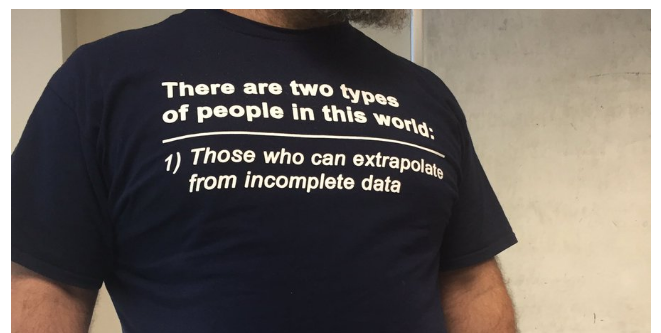
Patient T-shirt


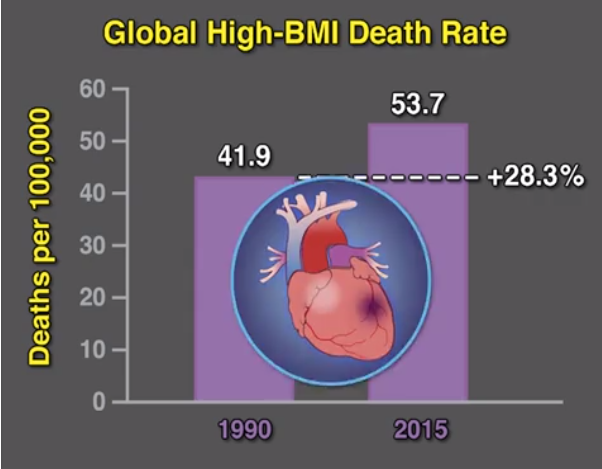
Obesity Epidemic: Graphic Depiction

From NY Times: How Big Business Got Brazil Hooked on Junk Food

Excerpt from article:

Across the world, more people are now obese than underweight. At the same time, scientists say, the growing availability of high-calorie, nutrient-poor foods is generating a new type of malnutrition, one in which a growing number of people are both overweight and undernourished…

For a growing number of nutritionists, the obesity epidemic is inextricably linked to the sales of packaged foods, which grew 25 percent worldwide from 2011 to 2016, compared with 10 percent in the United States, according to Euromonitor, a market research firm. An even starker shift took place with carbonated soft drinks; sales in Latin America have doubled since 2000, overtaking sales in North America in 2013, the World Health Organization reported

In many ways, Brazil is a microcosm of how growing incomes and government policies have led to longer, better lives and largely eradicated hunger. But now the country faces a stark new nutrition challenge: over the last decade, the country’s obesity rate has nearly doubled to 20 percent, and the portion of people who are overweight has nearly tripled to 58 percent. Each year, 300,000 people are diagnosed with Type II diabetes, a condition with strong links to obesity.

FDA Warning for Obesity Devices: Intragastric Balloons

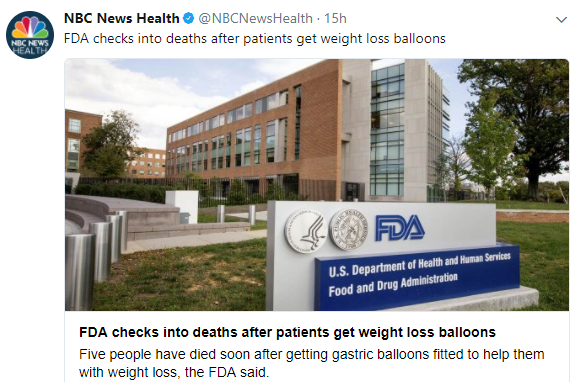
FDA Warning: Five Die While Using Obesity Devices (Intragastric Balloons)

An excerpt:

At least five people have died soon after being fitted with balloons aimed at helping them lose weight, the Food and Drug Administration said Thursday.

The FDA says it doesn’t know if the devices or the surgery to implant them is to blame but issued an alert to doctors to closely monitor patients who get them.

Related blog post: In the News: Weight Loss Intragastric Balloons

8 Cups of Water: Weight Loss or Worthless?

A recent study: JMW Wong et al. JAMA Pediatr 2017; 17 e170012 (Thanks to Ben Gold for this reference)

Full Text Link: Effects of Advice to Drink 8 Cups of Water per Day in Adolesents with Overweight or Obesity: A Randomized Clinical Trial

Among 38 adolescents with overweight or obesity, participants were divided into a water group and a control group.  The water group received “well-defined messages about water through counseling and daily text messages, a water bottle, and a water pitcher with filters.”

Key findings:

  • The water group consumed 2.8 cups of water per day compared to 1.2 cups per day for the control group
  • The 6-month chnage in BMI z score was identical z= -0.1.

My take: Advice and behavioral supports to consume 8 cups of water per day are likely to fall short and do not seem to enhance weight loss.

Related blog posts:

Normandy American Cementary

Treatment of Childhood Obesity Can Be Focused on Parent(s) -Children Do Not Need to Attend

From JAMA Pediatrics Full Text: Effect of Attendance of Child on Obesity Treatment

(Thanks to NASPGHAN twitter feed for this reference) KN Boutelle et al. JAMA Pediatr. Published online May 30, 2017. doi:10.1001/jamapediatrics.2017.0651

From Abstract:

Importance  Family-based weight loss treatment (FBT) is considered the gold-standard treatment for childhood obesity and is provided to the parent and child. However, parent-based treatment (PBT), which is provided to the parent without the child, could be similarly effective and easier to disseminate.

Objective  To determine whether PBT is similarly effective as FBT on child weight loss over 24 months. Secondary aims evaluated the effect of these 2 treatments on parent weight loss, child and parent dietary intake, child and parent physical activity, parenting style, and parent feeding behaviors.

Design, Setting, and Participants  Randomized 2-arm noninferiority trial conducted at an academic medical center, University of California, San Diego, between July 2011 and July 2015. Participants included 150 overweight and obese 8- to 12-year-old children and their parents.

Interventions  Both PBT and FBT were delivered in 20 one-hour group meetings with 30-minute individualized behavioral coaching sessions over 6 months. Treatments were similar in content; the only difference was the attendance of the child.

Main Outcomes and Measures  The primary outcome measure was child weight loss (body mass index [BMI] and BMI z score) at 6, 12, and 18 months post treatment. Secondary outcomes were parent weight loss (BMI), child and parent energy intake, child and parent physical activity (moderate to vigorous physical activity minutes), parenting style, and parent feeding behaviors.

Results  One hundred fifty children (mean BMI, 26.4; mean BMI z score, 2.0; mean age, 10.4 years; 66.4% girls) and their parent (mean BMI, 31.9; mean age, 42.9 years; 87.3% women; and 31% Hispanic, 49% non-Hispanic white, and 20% other race/ethnicity) were randomly assigned to either FBT or PBT. Child weight loss after 6 months was −0.25 BMI z scores in both PBT and FBT. Intention-to-treat analysis using mixed linear models showed that PBT was noninferior to FBT on all outcomes at 6-, 12-, and 18-month follow-up with a mean difference in child weight loss of 0.001 (95% CI, −0.06 to 0.06).

Conclusions and Relevance  Parent-based treatment was as effective on child weight loss and several secondary outcomes (parent weight loss, parent and child energy intake, and parent and child physical activity). Parent-based treatment is a viable model to provide weight loss treatment to children.

My take: This study indicates that parental instruction is likely the key element in improving outcomes in childhood obesity.  In many cases, counseling parents without the presence of the child (patient) could improve ease of scheduling.  In other cases, parents may prefer for direct childhood involvement.  On a tangential note, the absence of the child may make billing issues (often a problem regardless) more complicated.

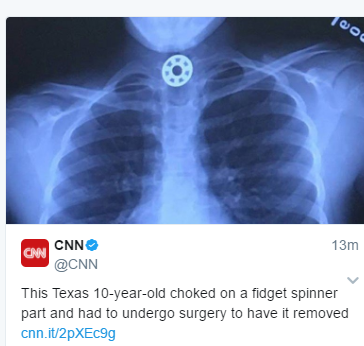
I’ve recently noted the popularity of these fidget spinners. I have yet to remove one with endoscopy


POWER — Practice Guide on Obesity and Weight Management, Education, and Resources

Recently, the American Gastroenterological Association (AGA) has published a large amount of information regarding obesity and the potential role for gastroenterologists.  In addition to publishing an entire Special Issue supplement of Gastroenterology (152: (7): 1635-1801, the AGA has published a “white paper” (Clin Gastroenterol Hepatol 2017; 15: 631-49).  The AGA has also addressed coding issues and episodic care issues: Clin Gastroenterol Hepatol 2017; 15: 650-64.

Some useful points from these articles:

  • “Severe obesity [as classified by] the American Heart Association…BMI>120% of the 95% for age and sex or a BMI ≥35” (“class 2 obesity in adults”) Class 3 obesity is BMI >140% of 95% for age and sex or a BMI ≥40.
  • Intensive lifestyle interventions ‘average weight losses of up to 8 kg in 6 months’ but maintaining weight loss has been a challenge. “However, both the DPP and Look AHEAD have shown that weight loss, followed by substantial weight regain, was associated with greater improvements in health than not having lost weight at all.”
  • Good idea to review medications that affect weight.  Medications associated with weight gain include antidiabetics, some antihypertensives (eg. nadolol, propranolol), antidepressants (eg. lithium, mirtazapine, SSRIs, tricyclic antidepressants), antipsychotics (clozapine, olanzapine, quetiapine, risperdione), some antieleptics (carbamazepine, gabapentin, pregabalin, valproic acid), 1st generation antihistamines and glucocorticoids.
  • Is there a best diet? On this topic, the authors (pg 1749 of supplement): “there appears to be little weight loss advantage or difference in metabolic health outcomes between dietary approaches and improvements in health are relative to degrees of weight loss.  Caloric restriction is the fundamental premise of every successful weight loss strategy, whether that is achieved by lowering fat or carbohydrate, fasting, or using meal replacements...the best diet ultimately is the one you can stick to long enough

The information available in these publications are overlapping and cannot be summarized adequately in a short post.  The white paper, in particular, does an excellent job of summarizing the reasons for obesity, the steps a clinician should take, identification of comorbidities, management (diet, exercise, pharmacologic agents, endoscopic therapies, and surgery), and outcomes.

My take (borrowed from the authors):  “obesity is possibly the greatest health care issue of our day…Although lifestyle changes, including an individualized reduced-calorie diet and physical activity, are the cornerstones of treatment, new medications and bariatric endoscopic therapies and surgery can be effective tools.”

Related blog posts:

Mural Near Sullivan’s Island