Prognostic Tool for Biliary Atresia after Kasai: Serum Bile Acids (2026)

E Grimaud et al. Hepatology 2026; 84: 117-128. Serum bile acid levels predict the development of portal hypertension and high-risk esophageal varices following successful Kasai in biliary atresia

Methods: The authors examined the predictive value of serum bile acids (sBA) patients (n=57) with biliary atresia who underwent a successful Kasai Procedure (KP), defined as a total serum bilirubin level of ≤25 μmol/L within 6 months after KP.

Key findings:

  • sBA thresholds of 56 and 30 μmol/L at a median time of 6 and 11 months after KP predicted HRV within 5 years after KP with a sensitivity of 100%.
  • No patient with sBA <18 μmol/L (between 4-9 months after KP) developed portal hypertension (PH) at 3 and 5 years after Kasai, whereas sBA >41 μmol/L predicted PH with PPV of 91% and 97% at 3 and 5 years after KP, respectively

From editorial on pages 1-2: “Persistent elevation f=of sBA likely reflects ongoing intrahepatic cholestasis and bile-acid mediated hepatocellular and fibrogenic injury, even in the setting of ostensibly adequate biliary drainage.”

My take: This study is in agreement with others regarding the predictive value of sBA. It suggests the current definition of a successful KP needs modification to incorporate sBA. Those with good bilirubin parameters but with persistent elevation of sBA could be considered partially-successful KP.

Related blog posts:

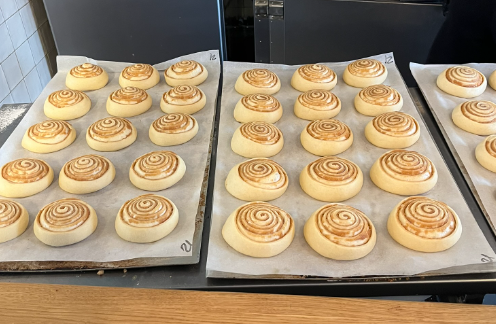
Braud Bakery in Reykjavik

Does Liver Histology Still Help with Risk Stratification in Advanced Liver Disease Due to MASLD?

The editorial provide a succinct critique and summary of this retrospective study. An excerpt:

For many decades, liver biopsy specimens and HVPG measurements have served as the cornerstone for risk stratification of patients with cirrhosis. Fibrosis staging, particularly the distinction between F3 and F4, as well as HVPG measurements, have informed prognoses and patient enrollment in therapeutic trials…

Noninvasive tests, particularly liver stiffness measurement (LSM) by vibration-controlled transient elastography (VCTE), are increasingly used for risk stratification in MASLD patients with cirrhosis and may inform treatment decisions.3 The ANTICIPATE–nonalcoholic steatohepatitis (NASH) models, which combine LSM, platelet count, and body mass index, have been proposed to predict the risk of CSPH [clinically significant portal hypertension] progression and liver-related events (LRE) in patients with MASLD.4–6

First, the authors examined a multicenter cohort of 699 biopsy specimen–proven MASLD patients with LRE (hepatic decompensation, hepatocellular carcinoma, transplantation, or liver-related death) as the end point. Second, they examined a validation cohort of 1396 F3 or F4 patients from 4 clinical trials…

The results can be summarized as follows: In the first cohort, 56 LREs (8%) occurred during a 3-year follow-up, mostly in F4 patients. The second cohort had 33 composite end points (2.3%) during a median follow-up of 16 months. The ANTICIPATE-NASH model showed excellent discrimination for LRE (C statistic, 0.93), which was higher than that for histology (C statistic, 0.67). However, adding histology to the model did not improve prediction… These findings highlight the limitations of biopsy specimens and underscore the ability of noninvasive models to capture the dynamic and continuous nature of disease progression…

The clinical and research implications are substantial. In daily clinical practice, the widespread adoption of the ANTICIPATE-NASH model could allow hepatologists to identify high-risk patients who require closer monitoring or early therapeutic intervention while sparing low-risk patients from invasive biopsies and unnecessary procedures. For clinical trials, model-based enrichment could increase event rates, reduce required sample sizes, and shorten follow-up duration.

My take: This study, while limited by its retrospective design, indicates that histology is no longer the “gold” standard for prognostication in adults with MASLD and advanced fibrosis.

Related blog posts:

Chamblee Rail Trail

Bilary Atresia Prognosis After 2-Year Survival with Native Liver

A recent study (M Witt et al. JPGN 2018; 689-94) indicates that among patients with biliary atresia who reached 2 years of life with native liver survival (NLS), they continued to be at risk for progressive liver failure.

Key findings:

  • Upon a median follow-up of 16.4 years, NLS rates at 5, 10, 15, 18 years of age were 89%, 72%, 60%, 54%, respectively.
  • Corresponding overall survival rates were 98%, 90%, 87%, 87%, respectively
  • NLS ended in 37% by liver transplantation (LTx) and in 6% by (pre-transplant) mortality.
  • Abstract Link: Prognosis of Biliary Atresia After 2-year Survival With Native Liver

My take: This data provides more precise information for families about prognosis and reinforces the need for careful followup.

Related blog posts:

Parker Ridge, near Banff