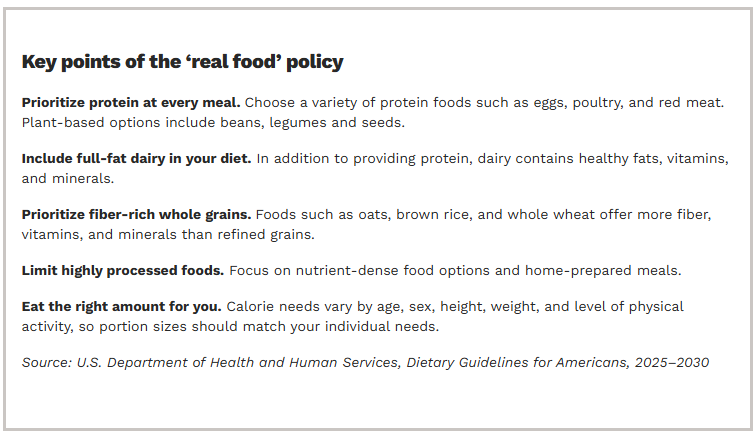
Have You Read the New “Dietary Guidelines for Americans, 2025-2030”?

Here’s a link to the new 10-page guidelines: Dietary Guidelines for Americans

Here are critiques:

What’s Good About This Guidance:

  1. Short enough to read and understand
  2. The emphasis of reducing unprocessed foods and clear language
  3. Encouraging early introduction of potential allergens at 6 months of life. This lowers the risk of developing food allergies later.

Some of the questionable advice:

  1. Increasing the protein recommendation to 1.2-1.6 gm per day, up to double prior recommendations. The reason why this level of protein is not a good idea for everyone is noted in a prior blog post: Is a High Protein Diet Beneficial and Safe?. And from the AJC critique: “Pushing protein higher can also crowd out vegetables and fiber, which play a major role in heart health, digestion and overall wellness.”
  2. Backing away from previous advice about alcohol. The current guidance states to “consume less alcohol.” From NY Times: “It is the first time in decades that the government has omitted the daily caps on drinking that define moderate consumption. The guidelines no longer warn of risks like cancer.”
  3. Encouraged changes (more red meat, full-fat dairy) may increase saturated fat intake above stated goal of less than 10%.

The NY Times article on conflicts of interests notes that “Robert F. Kennedy Jr. had promised that his panel, which released new guidelines this week, would have no “conflicts of interest”….Some parts of the guidelines represent such a departure from previous versions that it seems like the administration “handpicked” scientists likely to support those conclusions, “versus undertaking a neutral review of the science,” said Lindsey Smith Taillie, a professor of nutrition at the U.N.C. Gillings School of Global Public Health.”

My take: Overall, the focus on reducing processed foods and decreasing added sugar are worthwhile. The brevity of the guidelines make them accessible. At the same time, the guidelines appear to continue a pattern of RFK Jr of selecting advisers, whether with diet recommendations or with vaccine policy, to support a desired outcome.

Related blog posts:

Gastroenterology and the Rise of Private Equity Investments

TA Brenner et al. Clin Gastroenterol Hepatol 2026: 24: 7-9. Geodemographic Trends in Private Equity Acquisitions of US Gastroenterology Practices: An Analysis of Transactions From 2013 to 2023

An excerpt:

“The combination of high-volume procedures, strong ancillary revenue streams, and opportunities for outpatient consolidation has made gastroenterology a prime target for PE-backed investment. For many gastroenterologists, this trend is no longer theoretical—it is local, visible, and shaping the landscape of everyday practice.”

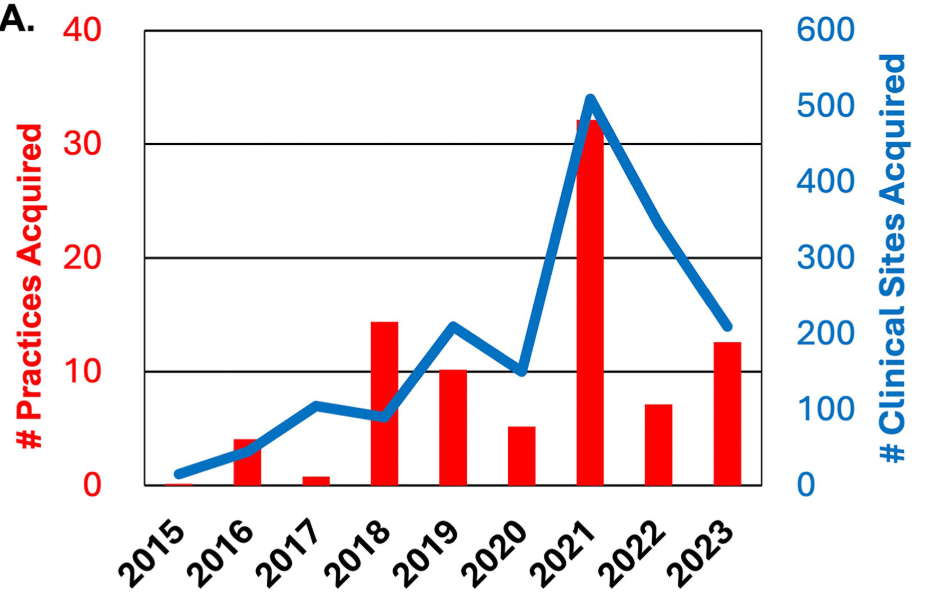
“Between 2013 and 2023, PE firms acquired 114 outpatient gastroenterology practices, encompassing 1169 clinical sites nationwide…That includes 854 clinics, 266 endoscopy centers, and 49 infusion centers. Collectively, these sites employed approximately 2675 physicians and advanced practice providers. In total, around 14% of all gastroenterology clinical sites nationwide are now affiliated with PE-backed platforms.”

 (A) Trend in private equity acquisitions of gastroenterology practices (red)
and gastroenterology clinical sites (blue) by year.

“PE firms are less likely to invest in gastroenterology practices located in the poorest communities… Practices in zip codes with the lowest income levels were about 60% less likely to be acquired than those in wealthier areas (aRR, 0.37; 95% CI, 0.31–0.45; P < .001)…PE firms tend to prioritize markets with strong commercial payer mixes and higher rates of elective procedures, steering clear of areas with high Medicaid penetration or large numbers of uninsured patients.”

Key Points:

  • “First, consolidation is accelerating…Even if you are not interested in selling, you may need to compete with PE-backed groups that have more capital, better tech infrastructure, and stronger payer contracts”
  • “Second, staying independent may become more difficult. As regional consolidation increases, remaining unaffiliated could put independent practices at a disadvantage. PE-backed platforms often negotiate better rates with commercial insurers and have the scale to invest in centralized billing, marketing, and compliance.”
  • “Third…If PE firms avoid lower-income or rural areas, gastroenterology access could become more uneven and more challenging to sustain in underserved regions.”
  • “Studies in other specialties suggest that practices owned by PE firms often face changes in staffing, autonomy, and productivity expectations. Physicians may experience higher pressure to perform more procedures, see more patients, or adopt system-wide workflows they did not design.”

My take: PE acquisitions are affecting broad areas of healthcare. However, they do not seem to result in improvement in patient care or physician satisfaction.

Related blog posts:

Updated Data on PPI Effectiveness For Eosinophilic Esophagitis

AJ Lucendo et al. Clin Gastroenterol Hepatol 2025; 23: 2115-2127. Proton Pump Inhibitors for Inducing and Maintaining Remission in Eosinophilic Esophagitis: An Updated Systematic Review and Meta-Analysis

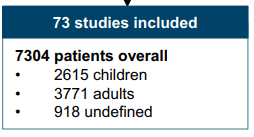
Background/Methods: This systematic review aimed to update the response/remission rates of PPI therapy for eosinophilic esophagitis. Compared to review in 2016, the current review covers a 10-fold increase in population (from 619 to 7304 patients), with a more balanced distribution between children (41%) and adults, and with a geographical representation from several continents.

Key findings:

  • PPI therapy led to clinical response in 65% (95% confidence interval [CI], 57.2–72.4)) and histological remission (<15 eos/hpf) in 45.4% (95% CI, 41.6%–49.3%) of patients, without differences between children and adults (41.4% vs 48%; P = .17)
  • Overall, 34.1% (95% CI, 27.9%–40.5%) achieved <5 eosinophils per high-power field
  • Maintenance half-doses led to sustained histological remission in 68.2% (95% CI, 63.7%–72.6%) of patients
  • Clinical and histological remission (<15 eos/hpf) was achieved in 45% of patients
  • Histological remission was significantly higher with double PPI doses compared with standard (51.7% vs 28.3%; P < .005)

In the discussion, it was noted that Japanese cohorts had a better response to PPI therapy with a histological remission (67.9%). This could be related to more favorable metabolism of PPI. “CYP2C19∗17 haplotype (related to ultrarapid and rapid PPI metabolizers), is the least prevalent (<3%) in patients with Asian ancestry.”

My take: This study reinforces previous data showing a 40-50% remission rate with PPI therapy for EoE. Twice a day PPI therapy is significantly more effective than once a day.

Related blog posts:

#5000: Simple Rule for Deciding When pH Impedance Testing Should Be Done While on Therapy

Editor’s note: This is the 5000th post on this blog! The first post was on December 7th, 2011.

Iguazu Falls

CP Gyawali et al. Clin Gastroenterol Hepatol 2025; 23: 2459-2467. Open Access! pH Impedance Monitoring on Proton Pump Inhibitor Therapy Impacts Management Decisions in Proven GERD but Not in Unproven GERD

Methods: Prospective 2-center study enrolled adult patients (n=79) with typical reflux symptoms with incomplete PPI response; they were studied both off PPI (wireless pH monitoring) and on PPI (pH-impedance monitoring)

Key findings:

  •  In 60 patients with proven GERD off-PPI, 56.7% had no ongoing GERD on PPI (despite reflux symptoms)
  • In unproven GERD, pH-impedance monitoring on acid suppressive therapy is unable to differentiate non-GERD symptoms from controlled GERD in the majority of patients, or identify patients who could benefit from discontinuation of acid suppression

Discussion points:

  • “Only a small proportion of PPI nonresponders have true GERD, and most have either no GERD or overlap between inconclusive GERD and a non-GERD process such as an esophageal disorder of gut-brain interaction (E-DGBI).10,11
  • “On-therapy pH-impedance monitoring can identify refractory GERD in patients with previously proven GERD.”
  • “Definitive GERD evidence and persisting symptoms despite optimized PPI therapy is an indication for escalation of management.20… potassium competitive acid blockers provide better healing of advanced grade esophagitis21 as well as faster symptom response in nonerosive reflux disease,22,23 and could be an option”

My take:

  1. Simple rule: Only perform on-therapy pH-impedance monitoring in patients with proven GERD
  2. Many patients with GERD symptoms do not have GERD (see posts below)
  3. In patients with documented GERD, on therapy pH monitoring can be helpful in proving refractory GERD which may benefit from alternative treatments

Related blog posts:

Nahuel Huapi Lake (near Bariloche, Argentina)

Etrasimod for Ulcerative Colitis (2026)

AJ Yarur et al. Clinical Gastroenterology and Hepatology 2026; 24: 210 – 220. Open Access! Efficacy of Etrasimod in Ulcerative Colitis: Analysis of ELEVATE UC 52 and ELEVATE UC 12 by Baseline Endoscopic Severity.

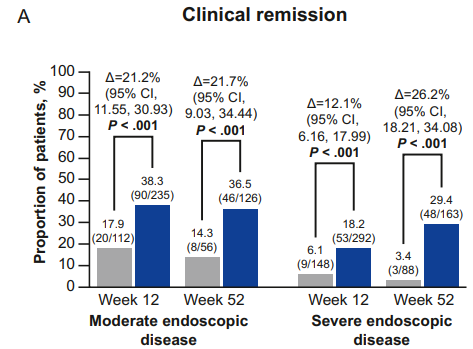
Methods: Efficacy end points were evaluated at Weeks 12 (pooled population) and 52 (ELEVATE UC 52)

Key findings:

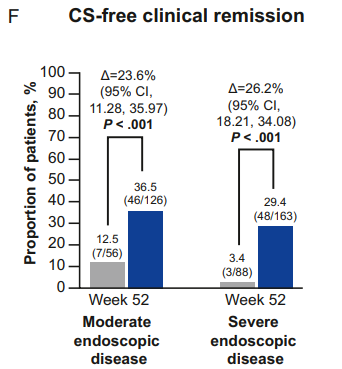
  • Clinical remission in the moderate group compared to placebo: Week 12: 38.3% vs 17.9%; Week 52: 36.5% vs 14.3%
  • Clinical remission in the severe group compared to placebo: Week 12: 18.2% vs 6.1%; Week 52: 29.4% vs 3.4%
  • “Our findings were consistent with those for other UC treatments…with efficacy improvements generally being greater among patients who were naive rather than experienced with biologics and/or JAKi.12–17

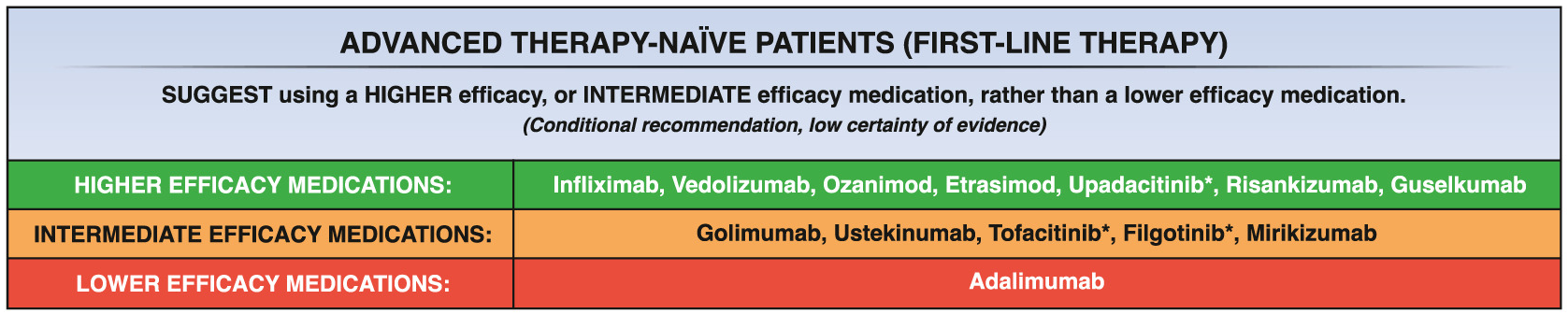
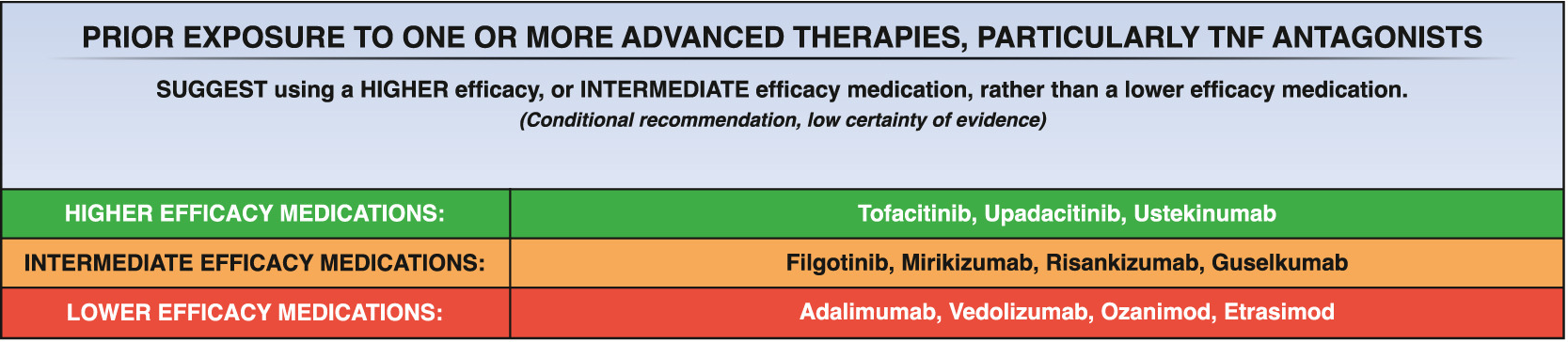
My take: Etrasimod demonstrated significant induction and maintenance efficacy over placebo in both moderate and severe endoscopic disease. Its role remains limited as there are other treatments with improved likelihood of response, especially in those with prior advanced therapies. However, it is notable that recent AGA guidelines promote etrasimod as one of the higher efficacy agents in patients naive to advanced therapies.

Related blog posts: