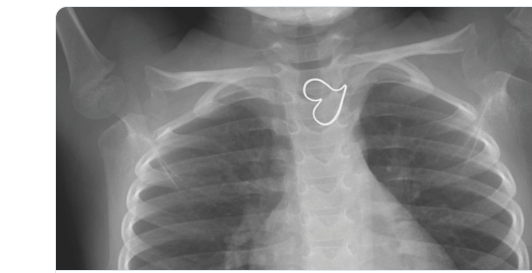
Big Pharma Neglecting ‘Required’ Pediatric Studies

A recent retrospective study (TJ Hwang et al. JAMA Pediatr 2019; 173: 68-74) examined the completion rate of FDA-required pediatric studies. Thanks to Ben Gold for this reference.

Background: In 2003, the Pediatric Research Equity Act (PREA) was signed into law and authorized the FDA to require clinical stuides to assess the safety and efficacy of new drugs and drugs with new indications in pediatric subpopulations.  However, the FDA cannot withdraw approval for a drug if a manufacturer fails to comply with PREA.  In addition, the authors note that “to our knowledge, to date, no financial penalties or enforcement proceedings have been brought against manufacturers fo noncompliance…and only 31 noncompliance letters have been issued.”

Key findings:

  • Between 2007-2014, there were 438 new drugs and/or new indications.  114 were subject to PREA. 84 were new drugs and 30 were new indications.
  • 222 studies required pediatric postmarketing clinical studies (in these 114 drugs). Only 75 (33.8%) were completed; rates were lower for efficacy studies (38 of 132 –28.8%) compared to pharmacokinetic studies (19 of 34 –55.9%).
  • As a result of the PREA-mandated studies, there was an increase in some pediatric information of drug labels in 41.2% after a median follow-up of 6.8 years, compared with 15.8% at time of approval of these 114 drugs.

The authors note that PREA is responsible for “nearly 80% of pediatric drug studies completed for FDA.” Congress also passed the Best Pharmaceuticals for Children Act which provides a financial incentive to companies if they perform certain pediatric studies.

My take: Pharmaceutical companies, for a multitude of reasons, are not completing requied pediatric studies.

The Health Consequences of Climate Change

A recent review article, “The Imperative for Climate Action to Protect Health,” (A Haines, K Ebi. NEJM 2019; 380: 263-73, and commentary 209-11) explains why many brilliant minds are so concerned about our climate.

What is happening to our climate:

  • “Climate change is already adversely affecting human health…if no additional actions are taken, then over the coming decades, substantial increases in morbidity and mortality are expected.”
  • “August 2018 was the 406th straight month during which global mean temperatures were above the long-term mean.”
  • “Carbon dioxide (the primary greenhouse gas) have risen from approximately 280 ppm in preindustrial times to approximately 410 ppm today. Carbon dioxide remains in the atmosphere for centuries, with about 20% persisting for more than 1000 years.”
  • “The global mean temperature is currently increasing at a rate of 0.2 degrees C per decade owing to past and continuing emissions.”

Health Consequenes:

  • Major climate events including heat waves, floods, rising sea levels, droughts and storms with their immediate and long-term effects of health: heat-related illnesses, fatalities, injuries, and mental health effects
  • Worsened air quality: asthma and COPD exaccerbations, worsened cardiovascular outcomes
  • Water-borne illnesses due to effects on water quality: cholera, campylobacter infection, algae blooms, cryptosporidium, leptospirosis are some examples
  • Disruption of food supply and safety –heat can interfere with soil moisture and crop yield: malnutrition
  • Proliferation of vector-related illnesses: zika virus, dengue, lyme disease, malaria to name a few
  • Social: flooding and heat are likely to lead to social upheaval, mass migration, and violent conflicts

Even if all of the goals of the Paris Agreement were honored by all of the signatories, “it would not be sufficient to limit warming to 2 degree C above preindustrial levels…[it] would be expected to result in a temperature increase of approximately 3.2 degree C by the year 2100, relative to the preindustrial period.”

The authors cite estimates that mitigating adverse climate effects could prevent more than 175,000 premature deaths and 22,000 fewer deaths annually by 2030.

The associated commentary link the recent destructive California wildfires to climate change.  They note that “tackling this challenge may feel overwhelming.” Working on this can include both individual lifestyle actions and institutional efforts.

Individual actions:

  • Walking/cycling more
  • Eating less meat
  • Reducing food waste
  • Conserving energy

Institutional actions:

  • Health care system accounts for 1/10th of greenhouse gas emissions and health systems need to work on cutting their emissions
  • Health care institutions can invest/divest in industries who are helping and harming efforts to limit fossil fuel consumption

Resources:

From review article by Haines and Ebi:  “Health professionals have leading roles to play in addressing climate change. They can support health systems in developing effective adaptation to reduce the health risks of climate change, promote healthy behaviors and policies with low environmental impact.”

My take: Interestingly, the issue of delay in addressing problems is discussed in an unrelated commentary (NEJM 2019; 380: 118-9) related to denial.  For the author, she was attempting to deny the possibility that her father had ALS.  At the end, she quotes Elisabeth Kubler-Ross: “Denial helps us to pace our feelings of grief. There is a grace in denial.  It is nature’s way of letting in only as much as we can handle.”  Clearly, much of the world remains in denial of the necessitiy to address climate change.

Related blog post:

Badwater Basin, Death Valley -salt-covered dried up basin

How Safe is Marijuana?

A recent link to Malcolm Gladwell’s article in the New Yorker: Is Marijuana as Safe as We Think? One of my sons informed me of this article.

Excerpt from Malcolm Gladwell’s analysis:

A few years ago, the National Academy of Medicine convened a panel of sixteen leading medical experts to analyze the scientific literature on cannabis. The report they prepared, which came out in January of 2017, runs to four hundred and sixty-eight pages. It contains no bombshells or surprises, which perhaps explains why it went largely unnoticed. It simply stated, over and over again, that a drug North Americans have become enthusiastic about remains a mystery.

For example, smoking pot is widely supposed to diminish the nausea associated with chemotherapy. But, the panel pointed out, “there are no good-quality randomized trials investigating this option.” We have evidence for marijuana as a treatment for pain, but “very little is known about the efficacy, dose, routes of administration, or side effects of commonly used and commercially available cannabis products in the United States.” The caveats continue. Is it good for epilepsy? “Insufficient evidence.” Tourette’s syndrome? Limited evidence. A.L.S., Huntington’s, and Parkinson’s? Insufficient evidence. Irritable-bowel syndrome? Insufficient evidence. Dementia and glaucoma? Probably not. Anxiety? Maybe. Depression? Probably not.

Then come Chapters 5 through 13, the heart of the report, which concern marijuana’s potential risks. The haze of uncertainty continues. Does the use of cannabis increase the likelihood of fatal car accidents? Yes. By how much? Unclear. Does it affect motivation and cognition? Hard to say, but probably. Does it affect employment prospects? Probably. Will it impair academic achievement? Limited evidence. This goes on for pages…

Several points discussed in article:

  • Marijuana may increase the risk of psychiatric illnesses. “Many people with serious psychiatric illness smoke lots of pot. The marijuana lobby typically responds to this fact by saying that pot-smoking is a response to mental illness, not the cause of it—that people with psychiatric issues use marijuana to self-medicate. That is only partly true. In some cases, heavy cannabis use does seem to cause mental illness”…
  • Marijuana may increase aggression,  In the state of Washington was the first U.S. jurisdiction to legalize recreational marijuana. “Between 2013 and 2017, the state’s murder and aggravated-assault rates rose forty per cent—twice the national homicide increase and four times the national aggravated-assault increase”
  • Does cannabis serve as a gateway drug?  Like e-cigarettes, cannabis is being formulated into products attractive to youth: gummy bears, bites, and brownies.

My take (borrowed in part from author): “Permitting pot is one thing; promoting its use is another.” We really don’t know that much about marijuana.

CDC Link: Marijuana and Public Health

Related blog posts:


NPR: How to Help Kid Overcome Fear of Doctors and Shots

From NPR: How to Quell A Kid’s Fear of Doctors and Shots

An excerpt:

Sasha Albani, a child and adolescent psychotherapist… suggests parents calm themselves and find age-appropriate ways to help children face their medical fears instead of fleeing them.

For very young kids, who have a hard time putting words to thoughts and emotions, imaginary play with mom or dad before the appointment can help, Albani says.

“Use a toy doctor kit to explain what will happen at the appointment and to discuss your child’s specific worries,” she advises…

Children under age 6 may benefit from the book, “Daniel Visits the Doctor” by Becky Friedman.

Kids with needle phobias may be helped by reading, “Lions Aren’t Scared of Shots: A Story for Children About Visiting the Doctor,” by Howard S. Bennett. And the book “Imagine a Rainbow: A Child’s Guide for Soothing Pain,” by Brenda S. Miles, may be useful for older kids between the ages of 8 and 10.

Playing The Coping Skills Board Game can bolster the confidence of preteens… And smartphone apps like “Stop, Breathe & Think Kids” can be a fun way to learn mindful breathing techniques and other relaxation tips that help turn down the alarm of worrisome feelings.

Reason for Optimism

While yesterday’s post (No exaggeration: too many children are dying in U.S.) highlighted the numerous unnecessary childhood deaths in this country and previous posts have discussed the drop in life expectancy in this country, there are still reasons for optimism.

It has been said that newspapers/news programs never report on the thousands of airplanes that don’t crash everyday.  Similarly, it is easy to think that with so many challenges that we face everyday that the world is falling apart.  A recent NY Times commentary by Nicholas Kristof points out that 2018 was in fact the best year ever.

Why 2018 Was the Best Year in Human History!

An excerpt:

[In 2018] Each day on average, about another 295,000 people around the world gained access to electricity for the first time, according to Max Roser of Oxford University and his Our World in Data website. Every day, another 305,000 were able to access clean drinking water for the first time. And each day an additional 620,000 people were able to get online for the first time.

Never before has such a large portion of humanity been literate, enjoyed a middle-class cushion, lived such long lives, had access to family planning or been confident that their children would survive…

Child deaths are becoming far less common. Only about 4 percent of children worldwide now die by the age of 5. That’s still horrifying, but it’s down from 19 percent in 1960 and 7 percent in 2003…

Until about the 1950s, a majority of humans had always lived in “extreme poverty,” defined as less than about $2 a person per day. When I was a university student in the early 1980s, 44 percent of the world’s population lived in extreme poverty. Now, fewer than 10 percent of the world’s population lives in extreme poverty, as adjusted for inflation.

My take: This commentary points out that worldwide people are living longer and living better.

From Golden Gulch Trail, Death Valley

No Exaggeration: Too Many Children Are Dying in the U.S.

A recent report (RM Cunningham et al. NEJM 2018; 379: 2468-75; editorial 2466-7) highlights the poor outcomes for children in the U.S. based mainly on the CDC WONDER (Wide-ranging Online Data for Epidemiologic Research) database.

Key findings:

  • “The sad fact is that a child or adolescent in the United States is 57% more likely to die by the age of 19 years than those in other wealthy nations.”
  • Motor vehicle accidents (MVA) are the number one cause of deaths in children/adolescents, accounting for 20% of such deaths.  The U.S. rate of death from MVAs is “triple that in other developed countries.”  Overall, MVA deaths had dropped in half from 1999-2013 but have increased in last few years; this increase is thought to be related to distracted driving/walking due to cellphones.
  • Firearm-related deaths accounted for 15% of deaths in children/adolescents in U.S.  In U.S., children/adolescents are “36 times as likely to be killed by gunshots.”  Unlike adults in U.S., the majority of these gunshots are homicides (59%) rather than suicides (35%); unintentional firearm deaths accounted for 4% (2% undetermined firearm-related death).  Among U.S. adults, 62% of deaths from firearms were from suicide.
  • Malignant neoplasms were the third leading mortality cause in children/adolescents, 9%. This rate is similar to other countries.

The figures in the study are very helpful:

  • Figure 2: Deaths from MVAs for the U.S. pediatric population are more similar to low-to-middle income countries (Figure 2A) whereas firearm-related deaths are much greater than all of the countries shown in Figure 2B (including Sweden, England, Hungary, Australia, Austria, Thailand, Tajikistan, Romania, Mongolia).
  • Figure 3. Deaths in U.S. rural areas are roughly double from MVAs than from the average of urban/suburban areas.  Deaths from firearms are similar in all three areas.  There are several factors which could explain the high rate of fatal MVAs in rural areas: longer time to get medical attention, faster speeds in less populous areas, less seat belts, lower enforcement of traffic laws, and impaired driving.

My take: The increased risk of death from MVAs and firearms identified in this study should not be considered “accidents” but failures.  Is it too much to expect that a child born in the U.S. could have the same chance to reach adulthood as a child in Canada or a child in Europe?

Related blog posts:


Late-Night Pages –Are they a Conspiracy?

A few thoughts while I’m still in a post-call daze:

One of my biggest gripes is that there must be a hidden camera in my bedroom.  Someone must monitor this camera whenever I am on call.  Because everytime, every single time it seems, someone calls me 15-20 minutes after I get in bed.  As soon as I get nice and cozy and start to doze off, it is a guarantee that I will get a page.  In addition, it is usually something that could have been called hours earlier.  Last night, at 11:22 pm, a nurse from the hospital called me to say that a 12 year old girl (who was well-nourished) had not been eating all evening and wanted to know if we should put in an NG tube.

Despite my antipathy for late-night calls, particularly some pointless ones, I try to always project a pleasant demeanor on the phone.  I might grumble after a call but not during.  There have been so many times when I have received timely information from nurses which have made important changes in a patient’s care.

Unwanted phone calls remind me of an anecdote that I heard in fellowship.  My mentor said he had received a pointless call from a family at 4 am about their young son.  So, he decided to set his alarm clock for 4 am the next morning and asked the parents how the son had been doing.  Later that morning, the family called the GI division to report the phone call.  They said, ‘When he called us at 4 am, we realized that he could not sleep because he was so worried about our child.  He is an amazing doctor.’

On another topic, can someone explain to me why it seems that whenever I am retrieving a foreign body that the forceps always line up parallel to the object rather than in the optimal perpendicular?

I sometimes tell colleagues that when I am post-call that I don’t realize how it has affected me.  Sometimes I am ‘punch-drunk’ and think everything is funny.  Sometimes I am irritable –but in my view –always justified.  The next day is sometimes like the difference portrayed in the snickers bar commercial where Betty White is transformed into a young adult.

Related blog post:


How Parents Feel After Tracheostomy Decision

A recent study (S Nageswaran et al. J Pediatr 2018; 203; 354-60) examined parents’ perceptions about their decision to proceed with a tracheostomy.  As a GI doctor, I am not directly involved in the discussions about tracheostomy; however, we interact closely with many complex patients whose families have reached this decision.  Many times I have wondered whether families regret this decision and whether a more palliative approach may have been appropriate in some children.

In this study with interviews from 56 caregivers of 41 children, their was very high satisfaction with the decision to proceed with a tracheostomy.  All children in this study had a tracheostomy for 5 years or less.

The parents reported the following reasons:

  • Extending the life of their children.  In fact, many parents reported there were no other options available to ensure their children’s survival; thus, many caregivers felt they did not have a choice other than a tracheostomy.
  • Being able to provide care at home
  • Improvement in respiratory symptoms
  • Improved quality of life
  • Physical and developmental health

Key finding: Among 38 interviews, 38 out of 41 explicitly expressed satisfaction with their decision to pursue a tracheostomy.  In none of the interviews did any caregiver express clear regrets about their decision.

At the same time, the parents acknowledged difficulties like mucus plugs, accidental decannulation, and difficulty of home care with a tracheostomy..