Course of Functional Abdominal Pain Before and During Pandemic

C Strisciuglio et al. JPGN 2021; 73: 689-694. Overall Impact of Coronavirus Disease 2019 Outbreak in Children With Functional Abdominal Pain Disorders: Results From the First Pandemic Phase

In this multicenter, observational, international study conducted between April and July 2020 at six different referral centers, the authors studied two groups:

  1. Children diagnosed with FAPDs between October 2019 and February 2020 were enrolled and prospectively interviewed at 4 months of follow-up during the first pandemic phase (Quarantine group, n=180, mean age 14 yrs)
  2. A cohort of children diagnosed with FAPDs between October 2018 and February 2019 was used as a Control group, n=176, mean age 13 yrs)

Key findings:

  • At 4 months of follow-up, both groups had a significant reduction of children reporting >5 episodes of abdominal pain per month when compared to baseline. Quarantine group: 63.9% vs 42.2%, P < 0.001; Control group: 83.5% vs 50%, P < 0.001.
  • Overall, 57% of the Quarantine group and 63.5% of the Control group had improvement of all symptoms.

My take: This study shows that the majority of patients with functional abdominal pain have improvement (at least temporarily) and reinforce the benefit of reassurance/conservative approach for many even during the pandemic. It is possible that school closures and additional parental attention mitigated some of the improvement in the Quarantine group.

Related blog posts:

Siesta Key, FL

Bariatric Surgery Outcomes in Adolescents

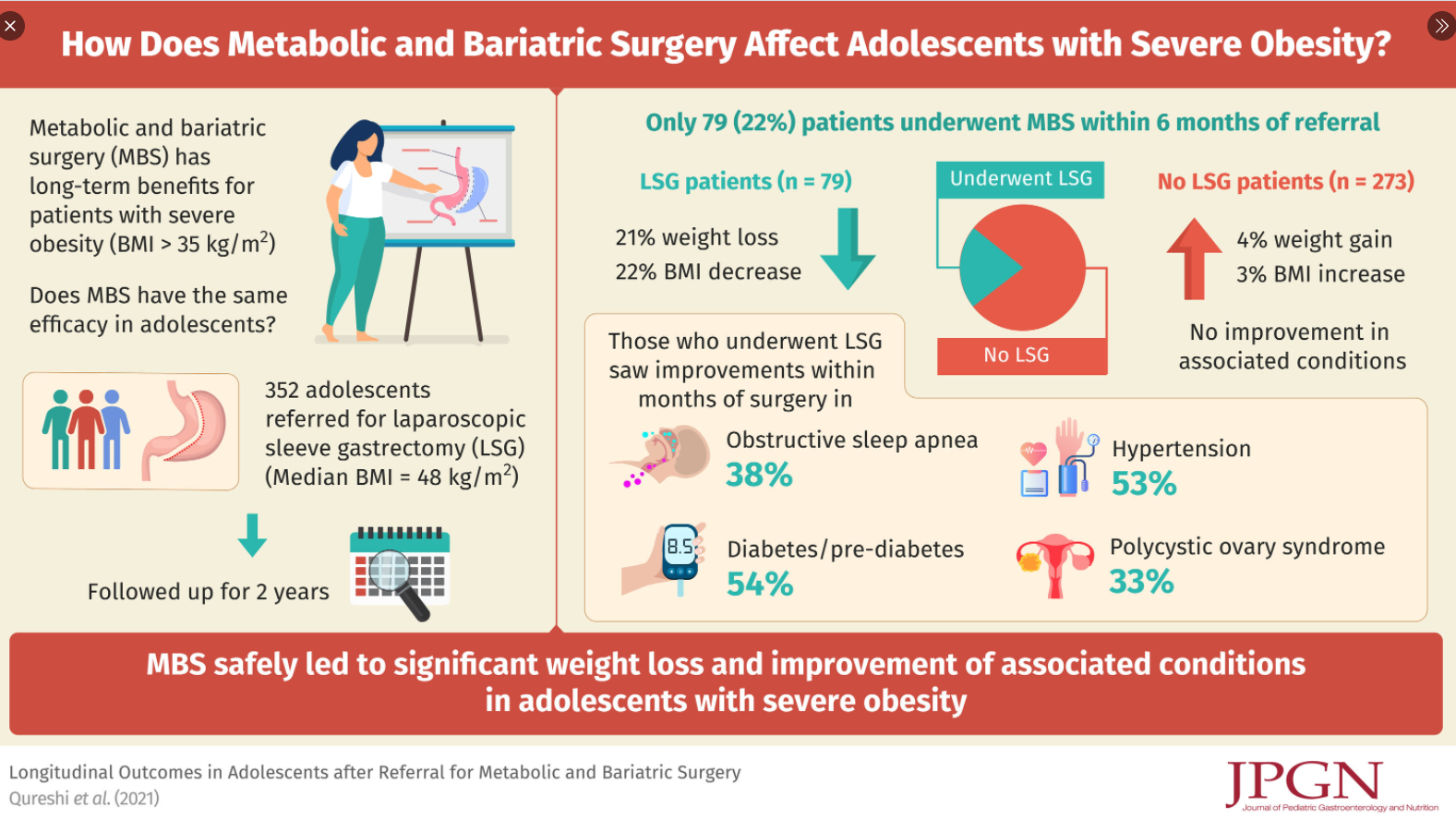
F Qureshi et al. JPGN 2021; 73: 677-683. Longitudinal Outcomes in Adolescents After Referral for Metabolic and Bariatric Surgery

Key findings (study period 2015-2020):

  • Only 22% underwent bariatric surgery (Laparoscopic sleeve gastrectomy (LSG)), mainly due to lack of interest in those referred
  • Reasons for NoLSG: 171 (62% of the NoLSG group) did not return for a 2nd visit, 28 (10%) were considered non-adherent to clinical recommendations, 14 (6%) had insurance denials, 16 (6%) had psychological contraindications including recent suicidal ideations, and 29 (11%) are still considering/pursuing LSG
  • Only 8 (2.3%) of entire cohort were self-pay
  •  LSG patients had 21% total weight loss and 22% total BMI loss at 24 months whereas NoLSG patients had 4% total weight gain and 3% BMI gain (P < 0.01)
  • LSG group had improvement in obesity-associated conditions compared to group without surgery (P < 0.01)
  • Follow-up in both groups was poor (40% for LSG group and <20% for the NoLSG group) 1 year after bariatric referral. This is of particular interest in the LSG group b/c for surgery, patients are required to agree to a 5 year f/u period (though this lacks an enforcement mechanism). The authors note some improvement in f/u coincident with recent broader adoption of telemedine

My take: This single-center found that most patients referred for consideration of bariatric surgery did not have this surgery.

 Related blog posts:

Best Allergy Articles 2021 (Part 5): Allergy Test Ordering

In Pediatrics, supplement 3 summarizes 76 articles: Synopsis Book: Best Articles Relevant to Pediatric Allergy, Asthma and Immunology

Some of the studies that are most relevant to pediatric GI doctors I am reviewing for this blog over the next/past few days.

MT Kraft et al. Ann Allergy Asthma Immunol 2020; 125: 341-360. Review of Ordering Practices for Single-Allergen and Serum-Specific Immunoglobulin E Panel Tests for Food Allergy

In this study, the author’s examine the ordering of serum IgE food allergy tests at a single hospital in 2018. In total 12,345 tests were ordered by 400 physicians.

Key findings:

  • Allergists ordered 8986 tests, of which only 1.2% were food panels.
  • Nonallergists ordered 3368 tests, of which 37.5% were food panels.
  • Food panel ordering had dropped by 55% in absolute numbers since 2013.

In the commentary, it is noted that food serum IgE panels are not recommended “because more individuals will have detectable IgE sensitization than true symptoms” (aka false positives). “There is still a long way to go regarding educating families and nonallergist provideres on approaches to diagnosis of IgE-mediated food allergies.”

My take: This is a constant struggle. Everyday families want allergy testing on the assumption that it will be useful in treating their GI symptoms. Though dietary changes are frequently helpful in patients with GI problems, food allergy panels are likely to lead to more trouble than benefit.

Related blog posts:

Siesta Key, FL

Best of Allergy Articles 2021 -Cow’s Milk Allergy/Allergic proctocolitis (Part 4)

In Pediatrics, supplement 3 summarizes 76 articles: Synopsis Book: Best Articles Relevant to Pediatric Allergy, Asthma and Immunology

Some of the studies that are most relevant to pediatric GI doctors I am reviewing for this blog over the next/past few days.

A Lemoine et al. Clin Exp Allergy  2021:51(9):1242-1245.  doi:10.1111/cea.13896. Rectal bleeding and cow’s milk protein-induced allergic proctocolitis: A prospective study

In this prospective cohort of infants (in France) with food protein-induced allergic proctocolitis (FPIAP) (n=76), all infants had rectal bleeding (RB) which resolved with cow’s milk protein (CMP) elimination. After the initial oral food challenge (OFC) which took place 2 to 8 weeks after resolution of rectal bleeding, OFC was repeated every 2 months.

Key findings:

  • Only 31% failed the initial OFC
  • The median age of tolerance, for those with a confirmed FPIAP based on OFC, was 6.8 months, with >75% of the cohort tolerant by 10 months of age

My take:

  1. This study shows that the majority of infants with RB probably do not have FPIAP. In those that do have FPIAP, earlier challenge is reasonable in the majority.
  2. FPIAP is generally mild and self-limited. Diagnosis is hampered by lack of validated criteria.
From Siesta Key, FL

Best Allergy Articles 2021 -Cow’s Milk Allergy (Part 3)

In Pediatrics, supplement 3 summarizes 76 articles: Synopsis Book: Best Articles Relevant to Pediatric Allergy, Asthma and Immunology

Some of the studies that are most relevant to pediatric GI doctors I am reviewing for this blog over the next/past few days.

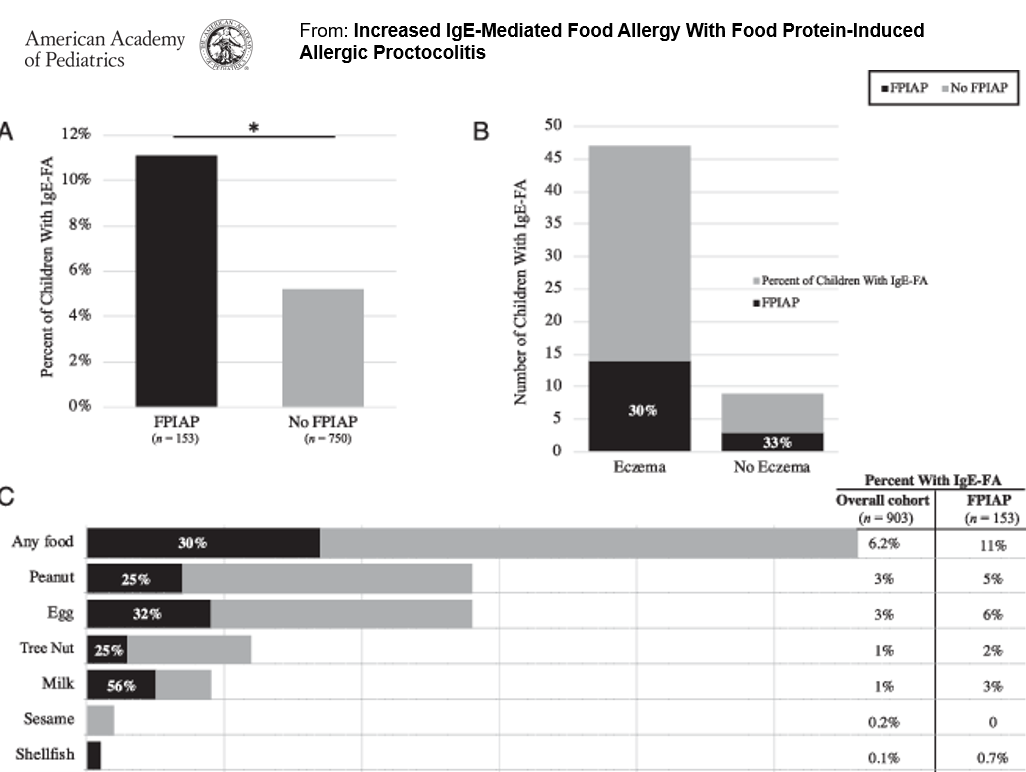
VM Martin et al. Pediatrics 2020; 146: e20200202. Open Access: Increased IgE-Mediated Food Allergy with Food-Protein-Induced Allergic Proctocolitis.

In this study of 153 infants with food protein-induced allergic proctocolitis (FPIAP) with documented blood in the stool, more children with FPIAP developed IgE-Food Allergy (IgE-FA) (11%) compared with healthy children.

Key points (from commentary by MT Kraft and D Stukus):

  • “Although conventional teaching is to wait until 12 months of age to reintroduce dairy to infants with FPIAP, it can likely be introduced much earlier.”
  • The diagnosis of FPIAP was associated with with an increased risk of IgE-FA, “although diagnosis was not confirmed through oral food challenges”

My take: Children with FPIAP are more likely to receive a diagnosis of IgE-FA. Prolonged restriction of milk, when no longer required, could contribute to this; in addition, some children are mislabeled as food allergic without appropriate confirmation (based on faulty testing).

Best Allergy Articles 2021 -Cow’s Milk Allergy (Part 2)

In Pediatrics, supplement 3 summarizes 76 articles: Synopsis Book: Best Articles Relevant to Pediatric Allergy, Asthma and Immunology

Some of the studies that are most relevant to pediatric GI doctors I am reviewing for this blog over the next few days.

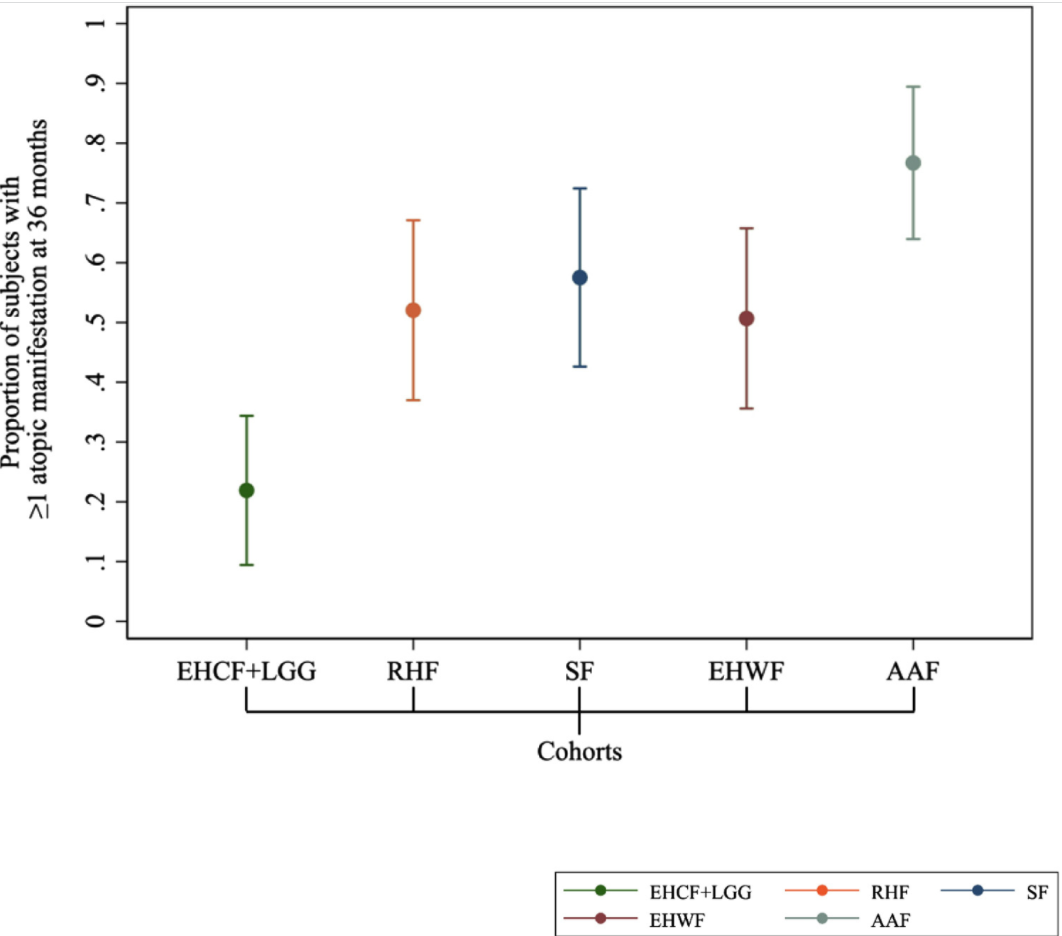
R Nocerino et al. J Pediatr 2021; 232: 183-191. Open Access: The Impact of Formula Choice for the Management of Pediatric Cow’s Milk Allergy on the Occurrence of Other Allergic Manifestations: The Atopic March Cohort Study

Methods: In a 36-month prospective cohort study (n=365), the occurrence of other atopic manifestations (eczema, urticaria, asthma, and rhinoconjunctivitis) and the time of immune tolerance acquisition were comparatively evaluated in children with oral food challenge-confirmed IgE-mediated cow’s milk allergy (CWA). 5 groups were treated with extensively hydrolyzed casein formula containing the probiotic L. rhamnosus GG (EHCF + LGG), rice hydrolyzed formula, soy formula, extensively hydrolyzed whey formula (EHWF), or amino acid–based formula.

Key finding:

  • The use of EHCF + LGG for CMA treatment was associated with lower incidence of atopic manifestations and greater rate of immune tolerance acquisition.

The risk ratios:  

  • 2.37 (1.46-3.86, P < .001) for rice hydrolyzed formula vs EHCF + LGG
  • 2.62 (1.63-4.22, P < .001) for soy formula vs EHCF + LGG
  • 2.31 (1.42-3.77, P < .001) for EHWF vs EHCF + LGG
  • 3.50 (2.23-5.49, P < .001) for amino acid–based formula vs EHCF + LGG

Limitations: non-blinded study, exclusion of patients with anaphylaxis-CMA

Best Allergy Articles 2021-Cow’s Milk Allergy

In Pediatrics, supplement 3 summarizes 76 articles: Synopsis Book: Best Articles Relevant to Pediatric Allergy, Asthma and Immunology

Some of the studies that are most relevant to pediatric GI doctors I am reviewing for this blog over the next few days.

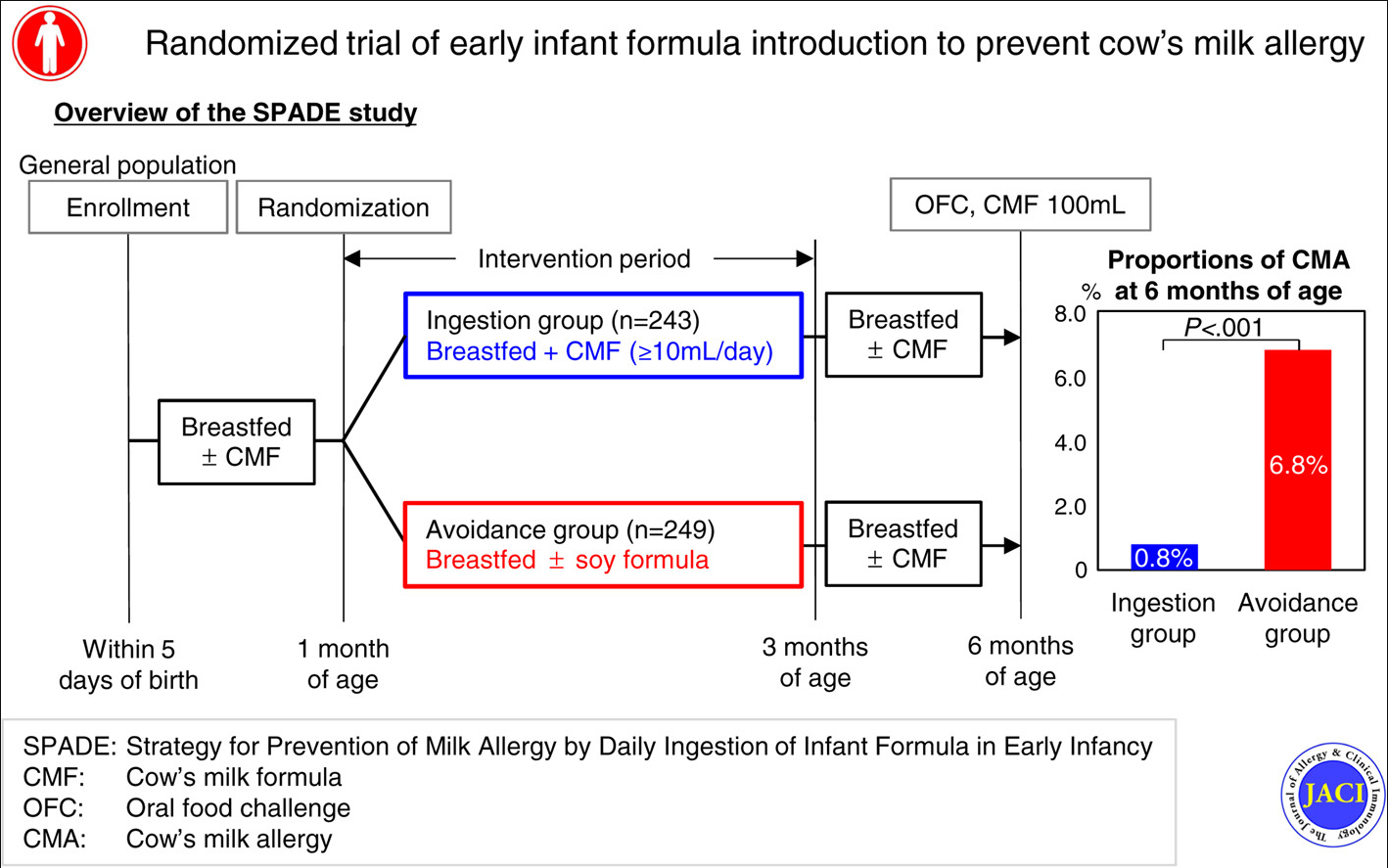
T Sakihara et al. J Allergy Clin Immunol 2021; 147: 224-232.e8. Randomized trial of early infant formula introduction to prevent cow’s milk allergy

In this randomized trial, infants (n=491 enrolled) in Japan were randomly allocated to ingest at least 10 mL of CMF (cow’s milk formula) daily (ingestion group) or avoid CMF (avoidance group) between 1 and 2 months of age. In the avoidance group breast-feeding was supplemented with soy formula as needed. Oral food challenge was performed at 6 months of age to assess CMA development. Continuous breast-feeding was recommended for both groups until 6 months of age.

Key findings:

  • There were 2 CMA cases (0.8%) among the 242 members of the CMF ingestion group and 17 CMA cases (6.8%) among the 249 participants in the avoidance group (risk ratio = 0.12; 95% CI = 0.01-0.50; P < .001).
  • Approximately 70% of the participants in both groups were still being breast-fed at 6 months of age.

My take: This study adds to the growing body of evidence that early introduction of allergenic foods lowers the likelihood of developing food allergies.

Related blog posts:

Disclaimer: This blog, gutsandgrowth, assumes no responsibility for any use or operation of any method, product, instruction, concept or idea contained in the material herein or for any injury or damage to persons or property (whether products liability, negligence or otherwise) resulting from such use or operation. These blog posts are for educational purposes only. Specific dosing of medications (along with potential adverse effects) should be confirmed by prescribing physician.  Because of rapid advances in the medical sciences, the gutsandgrowth blog cautions that independent verification should be made of diagnosis and drug dosages. The reader is solely responsible for the conduct of any suggested test or procedure.  This content is not a substitute for medical advice, diagnosis or treatment provided by a qualified healthcare provider. Always seek the advice of your physician or other qualified health provider with any questions you may have regarding a condition.

Inconclusive Screening for Cystic Fibrosis and Outcomes

T Gonska et al. Pediatrics 2021; 148: e2021051740. Outcomes of Cystic Fibrosis Screening-Positive Infants With Inconclusive Diagnosis at School Age

Background: Cystic fibrosis (CF) screen-positive infants with an inconclusive diagnosis (CFSPID) are infants in whom sweat testing and genetic analysis does not resolve a CF diagnosis

Methods: Prospective, longitudinal, multicenter, Canada-wide cohort study of CFSPID for a mean of 7.7 years

Key findings:

  • A CF diagnosis was established for 24 of the 115 children with CFSPID (21%) — either because of reinterpretation of the cystic fibrosis transmembrane conductance regulator genotype or because of increase in sweat chloride concentration ≥60 mmol/L. Those with initial sweat chloride concentration ≥40 mmol/L were most likely to receive a diagnosis of cystic fibrosis.
  • Children with CFSPID were pancreatic sufficient and showed normal growth until school age and had good pulmonary outcomes (similar to healthy controls)
  • In the associated commentary by P Chakraborty et al (Maximizing Benefits and Minimizing Harms: Diagnostic Uncertainty Arising From Newborn Screening), the authors note that while newborn screening (NBS) offers benefit of early diagnosis, some families can be harmed by false-positive tests or inconclusive results. Furthermore, “these issues of uncertainty are increasingly important to consider as the scope of NBS programs and their use of genomic technologies expands.”

My take: With CF, this study shows the need to monitor those with inconclusive studies. More broadly, the use of genomic testing is leading to more frequent inconclusive results in many areas and sometimes leaving more questions than answers.

Related blog posts:

From NPR, December 2021

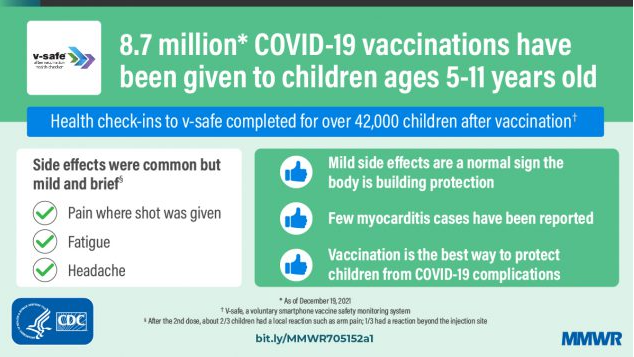
MMWR: COVID-19 Vaccine Safety 8.7 Million Doses in 5-11 year olds

MMWR: Open Access: COVID-19 Vaccine Safety in Children Aged 5–11 Years — United States, November 3–December 19, 2021

From Discusssion:

My take: Cardiac complications related to COVID-19 appear to be much more likely than adverse cardiac events due to vaccination.

Related blog post: Vaccination Reduces Risk of COVID-19 Associated MIS-C & New Quarantine Guidelines