DA Patel et al. Gastroenterol 2022; 162: 1617-1634. Open Access: Esophageal Motility Disorders: Current Approach to Diagnostics and Therapeutics

based on CC v4.0. HRIM, high-resolution impedance manometry


DA Patel et al. Gastroenterol 2022; 162: 1617-1634. Open Access: Esophageal Motility Disorders: Current Approach to Diagnostics and Therapeutics


T Shoda et al. Gastroenterol 2022; 162: 1635-1642. Open Access: Evaluating Eosinophilic Colitis as a Unique Disease Using Colonic Molecular Profiles: A Multi-Site Study
Methods: Subjects with EoC (n = 27) and controls (normal [NL, n = 20], Crohn’s disease [CD, n = 14]) were enrolled across sites associated with the Consortium of Eosinophilic Gastrointestinal Disease Researchers. EoC was diagnosed as colonic eosinophilia (ascending ≥100, descending ≥85, sigmoid ≥65 eosinophils/high-power field) with related symptoms. Colon biopsies were subjected to RNA sequencing.
Key findings:
My take: The study indicates that eosinophilic colitis is likely unrelated to other eosinophilic GI disease and is likely unrelated to inflammatory bowel disease.
Related blog posts:

IJ Broekaert et al. JPGN 2022; 74: 123-127. Open access: An ESPGHAN Position Paper on the Use of Breath Testing in Paediatric Gastroenterology
This is a good article which provides pediatric dosing of breath testing agents and important considerations in methodology and interpretation. In addition, there are 22 graded recommendations (see below) –some may be surprising. For example, the breath testing is NOT recommended for diagnosis of H pylori but is recommended for determination of eradication therapy.


Related blog posts:
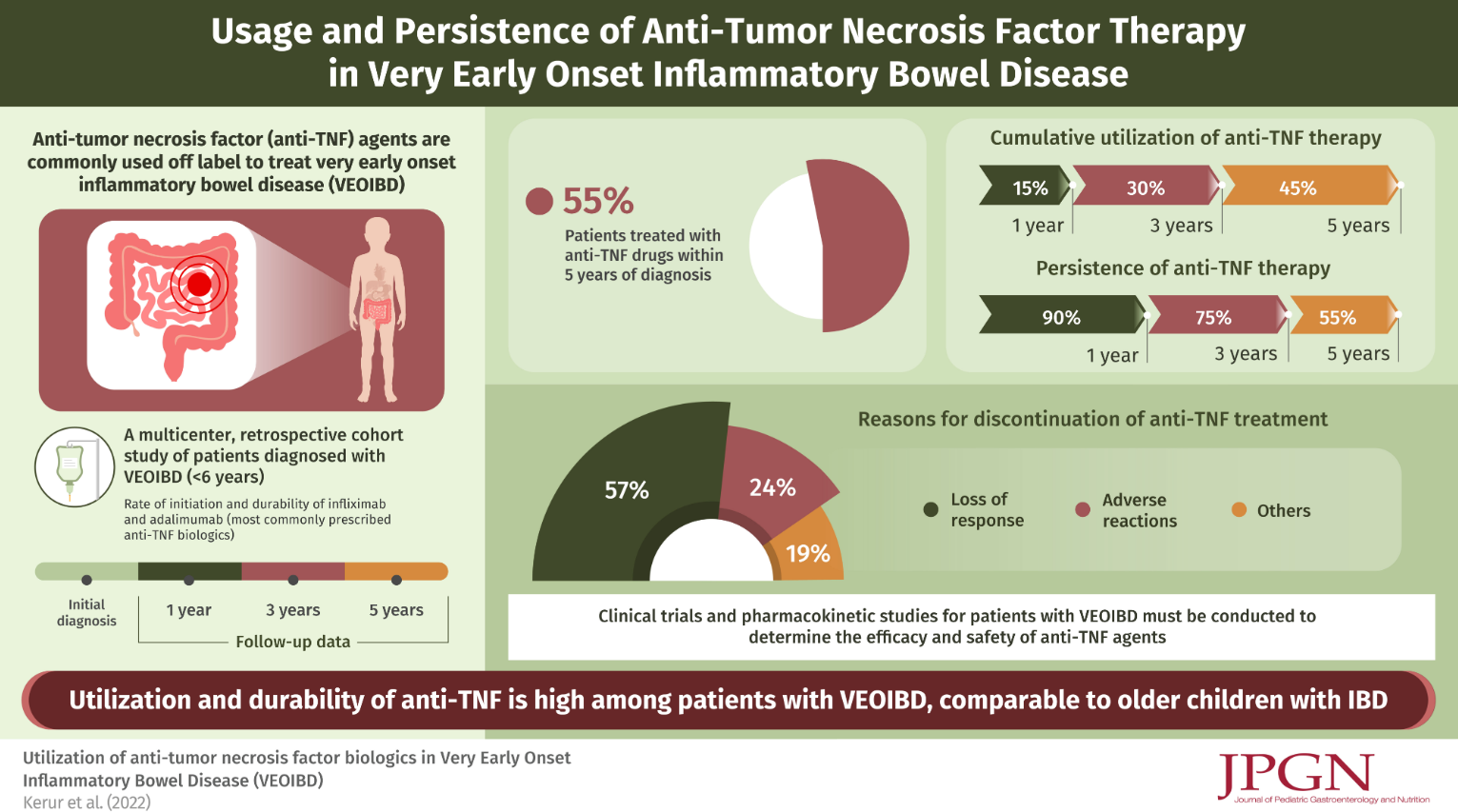
GA Morris et al. Inflamm Bowel Dis 2022; 28: 531-538. Increasing Biosimilar Utilization at a Pediatric Inflammatory Bowel Disease Center and Associated Cost Savings: Show Me the Money
Key findings:
My take: The introduction of biosimilars have resulted in huge cost savings. In addition, for infliximab, the originator product price has also dropped substantially (more than 60% in some locations)
J Hanzel et al. Inflamm Bowel Dis 2022; 28: 495-501. Open Access: Multiple Switches From the Originator Infliximab to Biosimilars Is Effective and Safe in Inflammatory Bowel Disease: A Prospective Multicenter Cohort Study
Methods: This was a prospective multicenter cohort study of adult IBD patients (n=176) who underwent 2 switches from the originator IFX to CT-P13 to SB2 (group 1), 1 switch from CT-P13 to SB2 (group 2), and 1 switch from the originator IFX to CT-P13 (group 3).
Key findings:
My take: This study did not identify detrimental effects from multiple successive switching and switching between biosimilars of IFX. Longer followup and more clinical experience will be needed to confirm these findings.

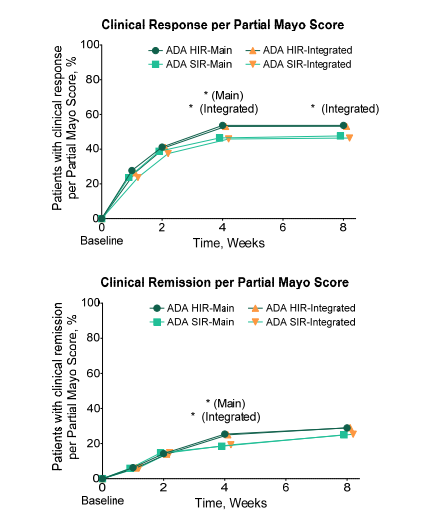
WJ Sandborn et al. Gastroenterol 2022; 162: 1650-1664. Open Access: Guselkumab for the Treatment of Crohn’s Disease: Induction Results From the Phase 2 GALAXI-1 Study
Background: Guselkumab, a selective p19 interleukin-23 antagonist, is approved for the treatment of plaque psoriasis and psoriatic arthritis.
Methods: GALAXI-1, a phase 2, double-blind, placebo-controlled study, randomized patients with moderate to severe Crohn’s disease 1:1:1:1:1 to intravenous guselkumab 200 mg, 600 mg, or 1200 mg at weeks 0, 4, and 8; intravenous ustekinumab approximately 6 mg/kg at week 0 and 90 mg subcutaneously at week 8; or placebo. n=309 with ~50% having disease refractory to prior biologics
Key findings:
My take: This is an exciting time for practitioners taking care of patients as there are an increasing number of pharmacologic and dietary treatments for inflammatory bowel disease. With guselkumab, there may be an overlapping mechanism with ustekinumab which targets IL-12/23.
Related blog post: Emerging Data on Risankizumab for Crohn’s Disease

H Mel et al. J Pediatr 2022; 243: 53-60. Clinical and Genetic Etiologies of Neonatal Unconjugated Hyperbilirubinemia in the China Neonatal Genomes Project
Methods: The researchers used targeted panel sequencing data on 2742 genes including known unconjugated hyperbilirubinemia genes in 1412 neonates (in China). Exclusion criteria included gestational age <35 weeks and congenital malformations. 37% had severe unconjugated hyperbilirubinemia (reaching threshold recommended for exchange transfusion)
Findings:
My take: About 3% of infants in this cohort had underlying genetic causes contributing to their jaundice; three-fourths of those with a genetic condition had either a variant of G6PD or UGT1A1
Related blog posts:


U.S. FDA (5/20/22): FDA Approves First Treatment for Eosinophilic Esophagitis, a Chronic Immune Disorder
“Today, the U.S. Food and Drug Administration approved Dupixent (dupilumab) to treat eosinophilic esophagitis (EoE) in adults and pediatric patients 12 years and older weighing at least 40 kilograms (which is about 88 pounds). Today’s action marks the first FDA approval of a treatment for EoE…”
“The efficacy and safety of Dupixent in EoE was studied in a randomized, double-blind, parallel-group, multicenter, placebo-controlled trial, that included two 24-week treatment periods (Part A and Part B)…In Part A of the trial, 60% of the 42 patients who received Dupixent achieved the pre-determined level of reduced eosinophils in the esophagus compared to 5% of the 39 patients who received a placebo…. In Part B, 59% of the 80 patients who received Dupixent achieved the pre-determined level of reduced eosinophils in the esophagus compared to 6% of the 79 patients who received a placebo”
My take: We will need to revise our patient handout and decide how best to position this very expensive therapy. Without insurance, Dupixent (2 pens of 300 mg/2 mL) costs $3,649.97 on GoodRx. For those with insurance, Dupixent has a manufacturer’s coupon (Dupixent MyWay).
Related blog posts:

NPR: Pro-Trump counties continue to suffer far higher COVID death tolls
Since May 2021, “those living in counties that voted 60% or higher for Trump in November 2020 had 2.26 times the death rate of those that went by the same margin for Biden. Counties with a higher share of Trump votes had even higher mortality rates…. previous polling has shown that belief in misinformation is highly correlated with being unvaccinated. Kaiser examined several common pieces of misinformation such as the idea that the government is exaggerating the severity of the pandemic, or that the vaccines contain a microchip. Kaiser’s poll found that 94% of Republicans believed one or more false statements about the vaccines.”

Related blog post: Perception of COVID-19 Risk, Vaccine Uptake and Media Source
I have not paid close attention to the movement to unionize health care workers in the U.S. As such, I learned a few things in this past weekend NY Times article: Doctors and Nurses Shouldn’t Have to Strike (online version titled “When Health Care Workers Are Protected, Patients Are, Too”)
Excerpts:
Since the pandemic began, the health care work force — the country’s largest industry by employment — has shrunk by nearly 2 percent… Now, with astronomical turnover and rising demand as patients seek care that they may have put off during the height of the pandemic, hospitals, clinics, nursing homes and home care agencies across the country lack sufficient staff members to adequately care for patients…
Most hospitals might be private companies in their formal legal identity, but the reality is that government has shaped the health care system every step of the way of its modern existence…
Unionized health care workers all over the country are fighting back against untenable conditions in the health care industry, and they are often met with harsh treatment by employers for doing so…
Peace agreements are popular with unions because they help prevent the type of devastating reprisals that drive many workers out of their jobs, but employers often refuse to accept them…
By giving weight to workers’ on-the-job needs, while eliminating strikes, labor peace policies in health care facilities benefit patients because they give workers more power to manage their work environments. They also make establishing unions easier for workers, and data suggests that unionization in health care improves patient care.
My take: In our hospital system, recent staffing shortages have forced the hospital to close a significant number of intensive care unit beds. This will inevitably lead to postponement or cancellation (often at last minute) of needed surgical procedures (that often require availability of an ICU bed). The fix for some of the ills in our hospital system is going to be difficult. Adequate staffing with highly-trained health care workers needs to be the top priority.