NY Times: “Who Deserves a Lifesaving Organ?”

NY Times: “Who Deserves a Lifesaving Organ?”

Yesterday’s post discussed policy efforts to help with equitable access for transplantation. This essay explores some of the same issues.

A few excerpts:

  • What makes someone a “good” transplant candidate? Maybe it is inevitable that doctors’ biases creep in when we must make fraught decisions about a scarce resource….
  • A transplant program is also beholden to its metrics. If the one-year survival of transplant recipients is lower than expected or if transplant failure is higher than expected, a program could be put on probation or lose its certification entirely…
  • Social-support requirements vary based on the intensity of the surgery and the length of the required rehabilitation. But in general, a patient is expected to have one to three people who can commit to helping in recovery — driving to appointments, managing medications or responding to overnight emergencies…
  • So much of transplant decision-making is about narrative, which is one reason misconceptions can take hold when patients do not speak English as their primary language. Hispanic patients are about half as likely as their white peers to receive kidney donations from family or friends— a gap that Dr. Juan Carlos Caicedo, an adult and pediatric transplant surgeon who directs the Hispanic Transplant Program at Northwestern Medicine, is working to close. “People will argue that these are not good patients because they don’t follow recommendations, but they are dead wrong,” he told me. “They are great patients, as long as they understand you.”..
  • Change is happening. At my hospital, our lung transplant team is working to identify recipients from underserved communities who can become “ambassadors” to educate others and build trust…
  • Perhaps most important, transplant teams are openly discussing and challenging their assumptions about who makes a “good” transplant candidate. And in doing so, more lives may be saved.
Thanks to Jennifer for this picture

Equitable Access to Liver Transplant

R Rosenblatt et al. Hepatology 2021; 74: 2808-2812. Open Access. Equitable Access to Liver Transplant: Bridging the Gaps in the Social Determinants of Health

The problem:

“Evaluation for organ transplantation, a life-saving procedure, involves a multistep, highly selective process. Initially, referrals to appropriate subspecialists and a transplant center are required. During evaluation, candidates undergo formal assessment of adequate social support, psychological health, health insurance, adherence, and understanding of treatments. Each step in the transplant evaluation process is an opportunity for inequity to insert itself, resulting in disparate access to listing for transplantation. This manifests through mechanisms related to poor health literacy, lack of insurance or high copay, poor social support, and geographical location. Culture incapacity by health providers and implicit bias at the provider level and health care system level can create additional barriers. Examples of health inequities include lower referral rate for LT and inferior outcomes among Black and Latinx compared to White patients,(3) while, in addition to race/ethnicity, sex and health literacy(4) also strongly correlate with the likelihood of listing. SES [socioeconomic status] affects both waitlist mortality and post-LT survival as well.”

This article proposes policy measures to counter the deleterious effects of SDOH [social determinants of health]—identify and reduce implicit bias, expand and optimize telemedicine, and improve community outreach. “Structural racism, access to affordable insurance, health literacy, and substance abuse therapy are equally important factors that contribute to health disparities and inequities and warrant further commentary and research, but are outside the focus of this policy piece.”

Related blog post: Getting a Seat at the Liver Counter

Albumin in Liver Disease -When It’s Helpful

RK Jagdish et al. Hepatology 2021; 74: 2848-2862. Albumin in Advanced Liver Diseases: The Good and Bad of a Drug! (Review)

Useful review –

  • Explains biologic properties -typically 10-15 g of Albumin is synthesized daily (reduced in advanced liver disease). The half-life is between 12-18 days
  • Physiologic functions: oncotic effects, transports proteins/molecules/medications, antithrombotic effects, modulates inflammatory pathways
  • Main uses: beneficial in patients undergoing large-volume paracentesis or who have hepatorenal syndrome or spontaneous bacterial peritonitis.
  • Studies have shown possible modest benefit in long-term albumin administration in patients with cirrhosis, especially ANSWER study which showed a reduction in ascites recurrence, HRS, encephalopathy, infections, hospital admissions and death. Costs of long-term infusion and the lack of benefit in the ATTIRE trial indicate the need for more studies to determine the best approach in this population.
  • Main adverse effects: allergic and transfusion reactions, volume overload, antibody formation and coagulation derangements
  • Generally, albumin infusions are not recommend for correcting isolated hypoalbuminemia. The primary disorder (eg. acute stress, trauma, infection, malignancy) should be treated.

History of Medicine: Hepatitis C Discovery –“A Triumph of Curiosity and Persistence”

MC Ghany et al. Hepatology 2021; 74: 2813-2823. Free Access: The 2020 Nobel Prize for Medicine or Physiology for the Discovery of Hepatitis C Virus: A Triumph of Curiosity and Persistence

This great little article humanizes and summarizes the discovery of Hepatitis C with first hand accounts and anecdotes.

A couple of interesting points:

  • Until you know the call is from Stockholm (and not a prank), the 4 am call informing you were awarded a Nobel prized is quite irksome
  • All of the Nobel Laureates (none are hepatologists) advocate for a vaccine but note that making it is difficult due to so many quasispecies. Only a fraction of the estimated 72 million persons with chronic HCV infection have been diagnosed and received curative therapy
  • Advice for young people: “There is no elevator to success. You have to take the stairs…It’s a step-by-step, slow process”
  • Hepatology humor:  “Is life worth living?” “It depends upon the liver.” 
Key milestones in HCV virology and therapeutics. Abbreviation: SVR, sustained virological response.

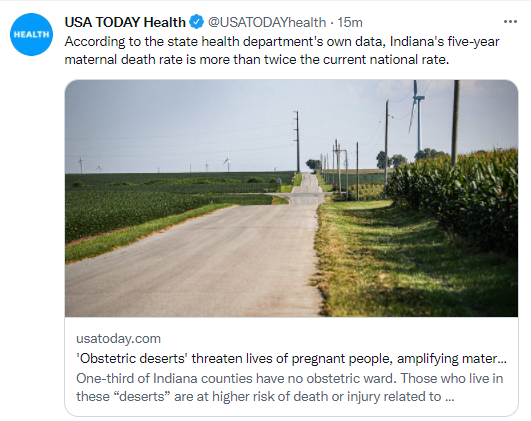
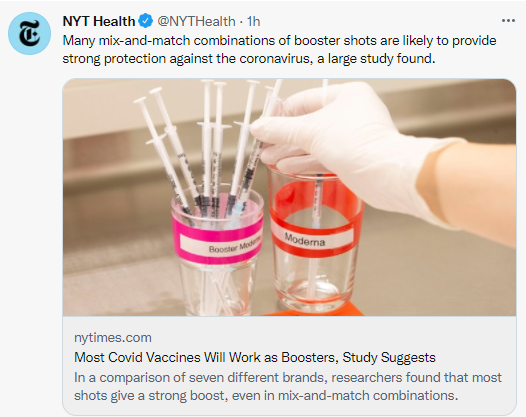
Only Tweets: PA Branding, Maternal Death Rates, Mask Mandates, Mix-Match Boosters, and Costly Way to Determine if You Have Feet

From NPR

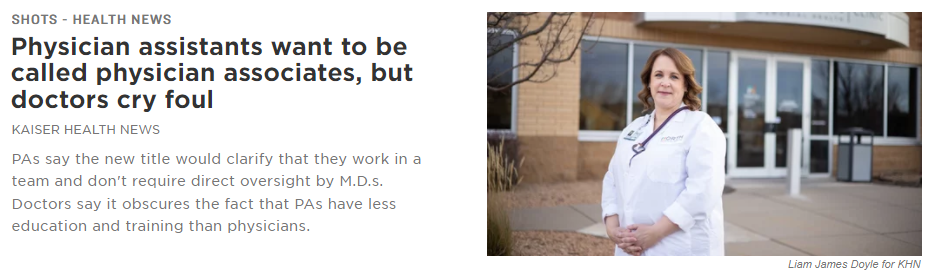
This article (link: PAs want to be called physician associates) notes that “Physician assistants, as they are still legally called, have been steadily granted greater autonomy over the years since 1967, when the Duke University School of Medicine graduated four former Navy medics as the nation’s first class of PAs.”

And from The Onion:

From The Onion

Quantifying the Cancer Risk (Mainly HCC) in Adults with NAFLD

TG Simon et al. Hepatology 2021; 74: 2410-2423. Open Access. Cancer Risk in Patients With Biopsy-Confirmed Nonalcoholic Fatty Liver Disease: A Population-Based Cohort Study

Key findings from this retrospective study with median of 14 yrs f/u (1966-2016, n=8892):

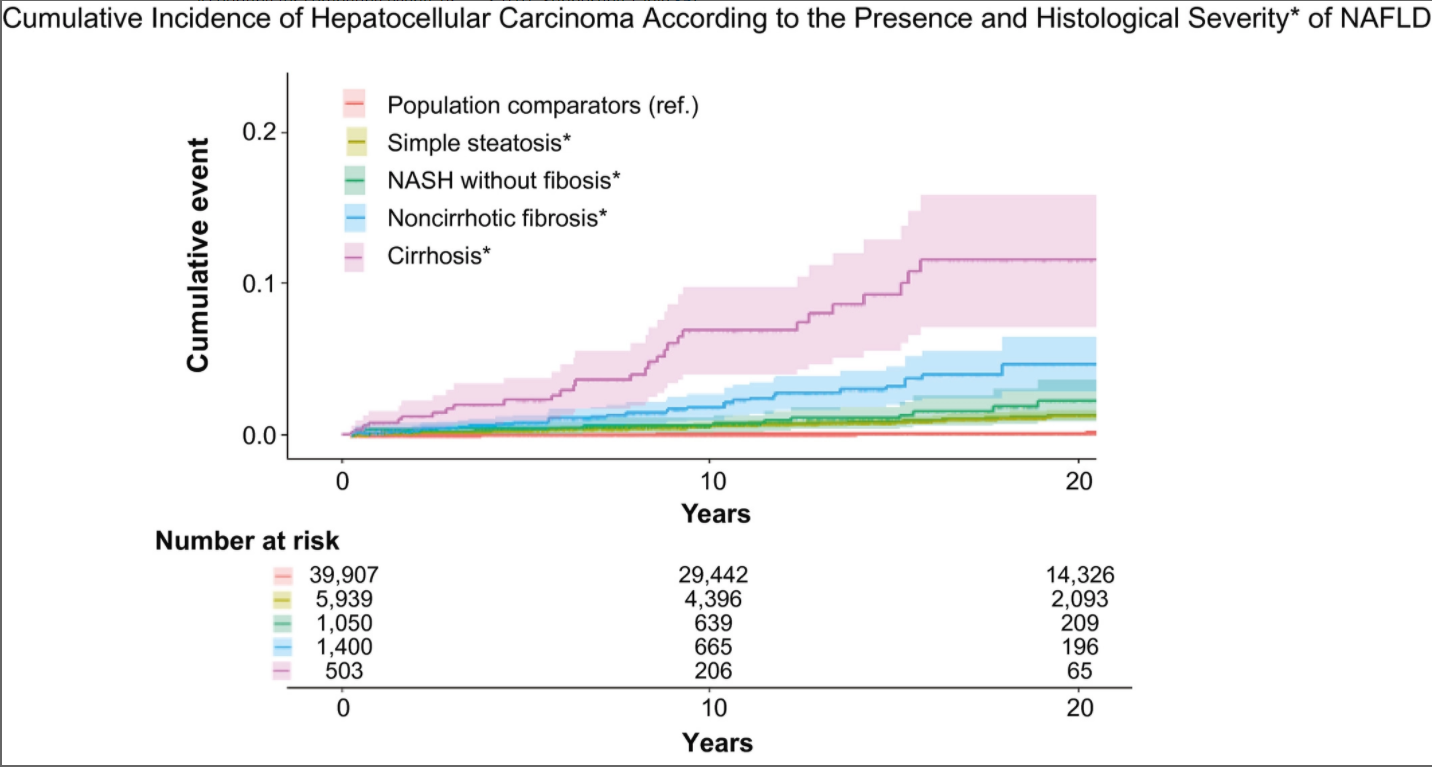
  • HCC incidence rates increased monotonically across categories of simple steatosis, nonfibrotic NASH, noncirrhotic fibrosis, and cirrhosis (0.8 per 1,000 PYs, 1.2 per 1,000 PYs, 2.3 per 1,000 PYs, and 6.2 per 1,000 PYs, respectively; Ptrend < 0.01) and were further amplified by diabetes (1.2 per 1,000 PYs, 2.9 per 1,000 PYs, 7.2 per 1,000 PYs, and 15.7 per 1,000 PYs, respectively
  • “Compared with controls, patients with NAFLD had a17-fold higher rate of developing HCC and a 20-year absolute excess risk of 2.1%.”
  • The 20-year absolute excess risk of patients with noncirrhotic NAFLD fibrosis (4.6%) or cirrhosis (11.4%) developing HCC was comparable to that of all EHSO [extrahepatic solid organ] cancers combined (4.7% -11.4%).
  • The risk of extrahepatic solid organ cancers was increased 12% compared to general population

G Chonlakeril et al. Hepatology 2021; 74: 2336-2338 Associated Editorial. NAFLD and HCC: Time to Bridge the Gap

  • In this analysis, the authors note the annual incidence rate of HCC for cirrhosis in NAFLD was 0.62% which is below rate of 1.5% in which “HCC surveillance may be cost-effective;” however, the rate was 1.52% in those with cirrhosis and diabetes.
  • The authors note that the 9-fold higher risk for HCC in those with simple steatosis compared to matched population could be related to ascertainment bias (at least in part) as not all patients with steatosis undergo a liver biopsy; in addition, misclassification of liver biopsies is possible.

My take: Lots of increased risk with fatty liver disease, especially increased HCC/cancers and increased cardiovascular disease.

Related blog posts:

Cannaboid Use in Liver Transplant Recipients

K Yan, L Forman. Liver Transplantation; 2021; 27: 1623-1632. Open Access: Cannabinoid Use Among Liver Transplant Recipients

Key findings:

  • 23.8% of liver transplant recipients reported current MJ use (of 538 who responded to survey
  • Top reasons for MJ use were recreation (56.5%), anxiety (54.8%), and pain (53.2%)
  •  Among respondents, 21.0% currently used CBD, usually in the form of creams or lotions (58.9%) and to relieve pain (84.9%) and anxiety (31.1%)

The authors note that MJ (marijuana) use previously was not associated with adverse liver tranplant outcomes (in one study); however, there are “there are case reports of drug interactions resulting in tacrolimus toxicity in patients using MJ and CBD.” And, MJ by inhalation may increase the risk for pulmonary fungal/aspergillosis. The use of MJ was similar to previous data in the general Colorado population, “18.1% of adults aged 18 and older in Colorado had used MJ in the past month in 2017-2018, compared with 10.2% of adults nationally.”

My take: Cannaboid use is common in liver transplant recipients and in the general population. More data is needed to understand its safety.

Related blog posts:

How to Lower Placebo Effects in Crohn’s Disease Trials

A Almradi et al. J Crohns Colitis 2021. https://doi.org/10.1093/ecco-jcc/jjab194. Clinical, endoscopic and safety placebo rates in induction and maintenance trials of Crohn’s disease: Meta-analysis of Randomised controlled trials

The authors searched MEDLINE, EMBASE and CENTRAL from inception to March 2021. Eligible studies were placebo-controlled trials of pharmacological interventions for CD

Key findings:

  • In 125 studies (91 induction, 46 maintenance), placebo clinical remission and response rates for induction studies were 18% [95% confidence interval (CI) 16-21%], and 32% (95%CI 29-35%), respectively, and for maintenance studies were 28% (95%CI 23-34%) and 30% (95%CI 24-37%), respectively 
  • Endoscopic remission and response rates (for placebo) in induction studies were 8% (95%CI 4–18%), and 16% (95%CI 11–23%), respectively
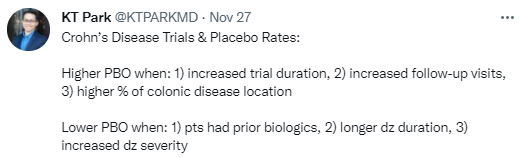
  • Trials enrolling patients with prior biologic exposure, longer disease duration and higher CD activity index scores were associated with lower placebo clinical remission rates
  • Increased duration of follow-up, more follow-up visits and a greater proportion of patients with colonic disease distribution were associated with higher clinical placebo rates

My take: These studies show fairly high placebo responses and thus they reinforce the need for well-designed trials with objective endpoints.

Related blog posts:

Preclinical Disease Detection of Inflammatory Bowel Disease

Recent articles indicate the possibility of preclinical disease detection of inflammatory bowel disease; perhaps this is analagous to the “precrime’ detection in The Minority Report which allowed the police to arrest people before they committed their crime.

D Bergemalm et al. Gastroenterol 2021; 161: 1526-1539. Open Access: Systemic Inflammation in Preclinical Ulcerative Colitis

In this study from Sweden, the authors used biobanked plasma samples from 72 individuals with ulcerative colitis (UC) and matched healthy controls (n=140). Then the findings were validated in an inception cohort (n=101 with UC and 50 healthy controls. In addition, a cohort of heathy twin siblings of patients with UC (n=41) were matched with healthy controls (n=37).

Key findings:

  • Six proteins (MMP10, CXCL9, CCL11, SLAMF1, CXCL11 and MCP-1) were up-regulated (P < .05) in preclinical ulcerative colitis compared with controls
  • MMP10, CXCL9, CXCL11, and MCP1, but not CCL11 and SLAMF1, were significantly up-regulated among the healthy twin siblings. This up-regulation is triggered by exposure to genetic and early environmental factors.

The discussion elaborates on the role of these proteins.

  • MMP10 is classified as a stromelysin. Upregulated levels of stromelysin have been detected in inflamed segments of the colon from patients with ulcerative colitis….The observed preclinical upregulation of MMP10 [thought to promote wound healing] in plasma might indicate that endogenous pathways for wound healing are up-regulated several years before clinically overt ulcerative colitis to counteract disease progression and maintain mucosal homeostasis”
  • “Eotaxin (CCL11) is a potent chemoattractant of monocytes…eosinophilic-driven inflammation represents an early element in the pathogenesis of ulcerative colitis”
  • CXCL9 and CXCL11 has been observed previously in inflamed colonic tissue specimens and blood from patients with ulcerative colitis… Both chemokines are regulated by IFN-gamma and attract CXCR3-positive CD4þ T cells and natural killer cells to the inflammatory site”

My take: This study shows up-regulation of 6 plasma proteins indicating activation of both pro-inflammatory and tissue-repairing pathways several years before clinically overt UC. It offers hope of intervention to prevent the development of UC.

Related study: S-H Lee et al. Gastroenterol 2021; 161: 1540-1551. Open Access: Anti-Microbial Antibody Response is Associated With Future Onset of Crohn’s Disease Independent of Biomarkers of Altered Gut Barrier Function, Subclinical Inflammation, and Genetic Risk

In this study, the authors measured host serum antibody response to 6 microbial antigens at enrollment (Prometheus enzyme-linked immunosorbent assay test: anti-Saccharomyces cerevisiae antibodies immunoglobulin A/immunoglobulin G, anti-OmpC, anti-A4-Fla2, anti-FlaX, anti-CBir1) and derived the sum of positive antibodies (AS).

Key finding:

“High baseline AS (≥2) (43% of cases, 11% of controls) was associated with higher risk of developing CD (adjusted odds ratio, 6.5; 95% confidence interval, 3.4–12.7; P < .001). Importantly, this association remained significant when adjusted for markers of gut barrier function, fecal calprotectin, C-reactive protein, and CD-polygenic risk score, and in subjects recruited more than 3 years before diagnosis. Causal mediation analysis showed that the effect of high AS on future CD development is partially mediated (42%) via preclinical gut inflammation.