Does It Matter If Fatty Liver Disease Is Called MAFLD or NAFLD?

H Lee, et al. Clin Gastroenterol Hepatol 2021; 19: 2138-2147. Metabolic Dysfunction-Associated Fatty Liver Disease and Incident Cardiovascular Disease Risk: A Nationwide Cohort Study

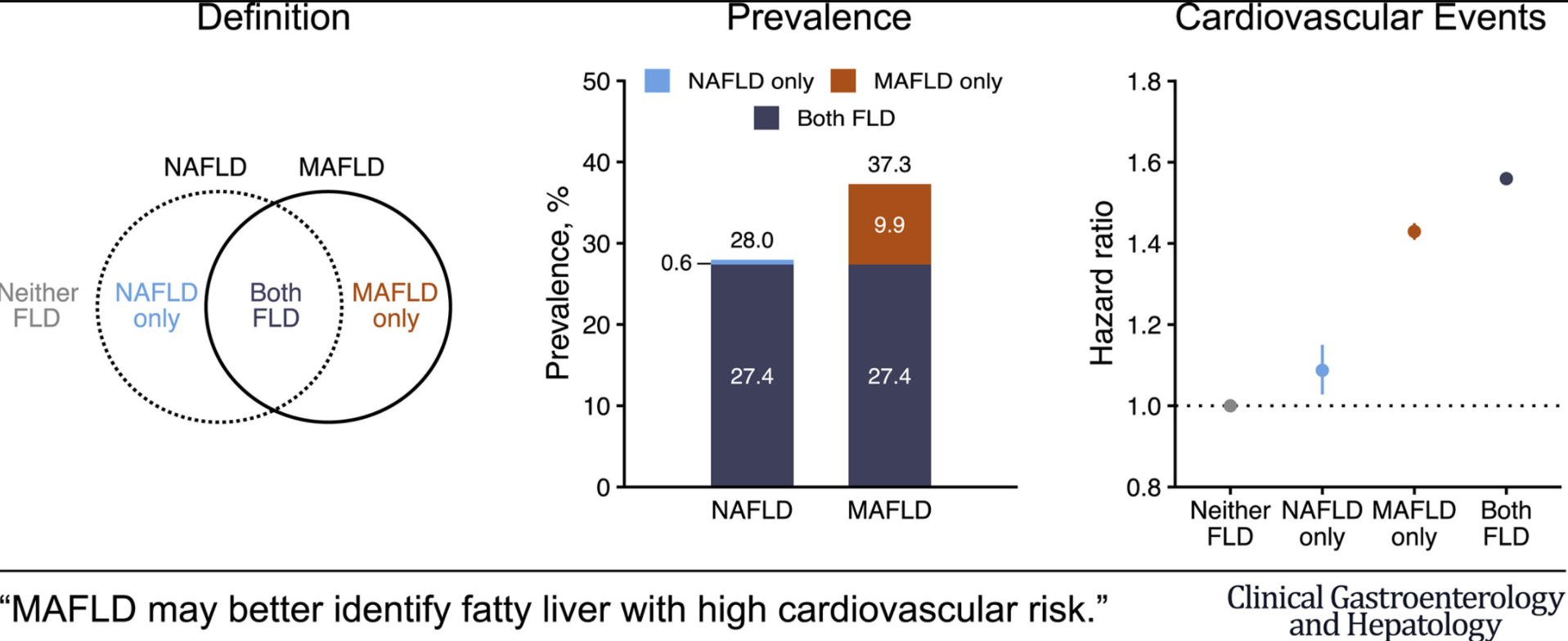
A recent study from South Korea with 9.5 million participants (followed for 10 years) shows that changing to metabolic dysfunction–associated fatty liver disease (MAFLD) as a name change from nonalcoholic fatty liver disease (NAFLD) changes the prevalence of at-risk individuals.

Key findings:

  • Prevalence of NAFLD and MAFLD were 28.0% and 37.3%, respectively
  • NAFLD and MAFLD were each associated with significantly higher risk for CVD events: multivariable-adjusted hazard ratios (95% confidence interval) for CVD events were 1.09 (1.03-1.15) in the NAFLD-only group, 1.43 (1.41-1.45) in the MAFLD-only group, and 1.56 (1.54-1.58) in the Both-FLD group
  • In the same issue, a study from Hong Kong showed similar prevalence rates between MAFLD (25.9%) and NAFLD (25.7%) (Clin Gastroenterol Hepatol 2021; 19: 2161-2171). This study noted that many people with hepatic steatosis at baseline have less severe metabolic burden.
  • Also, in the same issue, using a well-define population of more than 13,000 from NHANES III, this retrospective study (Clin Gastroenterol Hepatol 2021; 19: 2172-2181) found that Non-NAFLD MAFLD patients had the highest all-cause and cardiovascular-cause related mortality. In addition, this group had the highest rate of advanced fibrosis >7% (compared to <2% in other groups.

My take (borrowed from authors of first study): “The change from NAFLD to MAFLD criteria may identify a greater number of individuals with metabolically complicated fatty liver and increased risk for CVD.”

Another related article: M Eslam, AJ Sanyal, J George. MAFLD: A Consensus-Driven Proposed Nomenclature for Metabolic Associated Fatty Liver Disease (2020). This article similar to a previous article (Improving Fatty Liver Nomenclature) suggests changing the name for NAFLD to MAFLD.
MAFLD Criteria in this study:

MAFLD is diagnosed based on the presence of hepatic steatosis with one or more of the following:

  1. diabetes mellitus
  2. overweight/obesity (BMI >/= 23)
  3. at least 2 metabolic abnormalities: a) Waist circumference ≥90 cm in men and 80 cm in women. b) Blood pressure ≥130/85 mmHg or under anti-hypertension therapy. c) High-density lipoprotein cholesterol (HDL-C) <40 mg/dL for males and <50 mg/dL for females. d) Triglyceride (TG) ≥150 mg/dL or specific drug treatment. e) fasting glucose ≥100 f) Homeostasis model assessment-insulin resistance (HOMA-IR) score ≥2.5; and g) Hypersensitive C-reactive protein (hs-CRP) level >2 mg/L.

NAFLD Criteria in this study:

The presence of hepatic steatosis without 1. excessive drinking ( ≥30 g/day in men, ≥20 g/day in women) and 2. concomitant liver diseases

COVID-19, Vaccines and Liver Disease Plus AAP Declares Mental Health Emergency

OK Fix et al. Hepatology 2021; 74: 1049-1064. Open Access. American Association for the Study of Liver Diseases Expert Panel Consensus Statement: Vaccines to Prevent Coronavirus Disease 2019 Infection in Patients With Liver Disease

“Remarkably safe and highly effective mRNA COVID-19 vaccines are now available for widespread use and should be given to all adult patients with CLD and LT recipients. The online companion document located at https://www.aasld.org/about-aasld/covid-19-resources will be updated as additional data become available regarding the safety and efficacy of other COVID-19 vaccines in development.”

A Saviano et al. Hepatology 2021; 74: 1088-1100. Open Access (Review) Liver Disease and Coronavirus Disease 2019: From Pathogenesis to Clinical Care

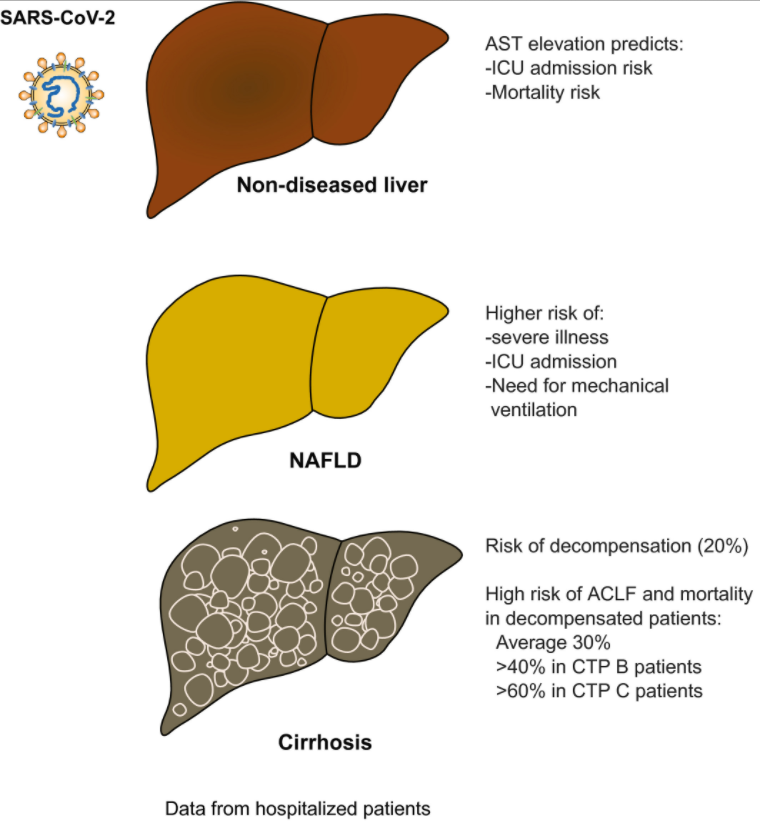
  • “The presence of liver injury is a surrogate marker for more severe disease and higher mortality in patients with COVID-19. An elevated AST level is the most robust predictor of poor outcome.”
  • “Liver injury and mortality in COVID-19 are likely multifactorial, driven by a sustained and excessive systemic release of proinflammatory and prothrombotic cytokines following SARS-CoV-2 infection, iatrogenic injury caused by DILI, hemodynamic changes associated with mechanical ventilation or vasopressor use, and worsening of underlying liver injury in those with CLD.”
  • “Risk of de novo liver injury appears limited in patients without CLD, and only rare cases of COVID-19–related ACLF [acute-on-chronic liver failure] were observed.”

Related blog post: Aspen Webinar 2021 Part 1: COVID-19 and the Liver (William Balistreri)

“COVID-19–related liver injury and mortality in patients who were hospitalized with and without chronic liver disease (CLD). Patients without CLD usually present with AST elevation, which correlates with ICU admission and mortality. Among patients with CLD, NAFLD has the highest risk of severe illness, ICU admission, and need for mechanical ventilation. Patients with cirrhosis are at risk for decompensation, and patients who are decompensated have a high risk of acute-on-chronic liver failure (ACLF) and mortality.”Abbreviations: CTP, Child-Turcotte-Pugh; ICU, intensive care unit.

Link to AAP News: AAP, AACAP, CHA declare national emergency in children’s mental health (Thanks to Ben Gold for passing this along)

  • “We are caring for young people with soaring rates of depression, anxiety, trauma, loneliness, and suicidality that will have lasting impacts on them, their families, their communities, and all of our futures,” said AACAP President Gabrielle A. Carlson, M.D. “We cannot sit idly by. This is a national emergency, and the time for swift and deliberate action is now.”
  • These organizations make several recommendations to policy makers including more access for mental health services. (I worry that we do not have sufficient numbers of qualified mental health practitioners to meet the challenge.)

Sacroiliitis, NAFLD, IMIDs -Concurring Problems with Inflammatory Bowel Disease

I Levine et al. Inflamm Bowel Dis 2021; 809-815. Prevalence, Predictors, and Disease Activity of Sacroiliitis Among Patients with Crohn’s Disease

Key findings in this cross-sectional retrospective study (n=258, median age 30 yrs):

  • Overall, 17% of patients had MRI evidence of sacroiliitis, of whom 73% demonstrated bone marrow edema.
  • Female gender, back pain, and later age of CD diagnosis were associated with sacroiliitis (P = 0.05, P < 0.001, P = 0.04, respectively).
  • Disease activity (clinical, endoscopic, and radiographic), disease location and CD therapy were not associated with sacroiliitis on MRE.
  • More than two-thirds with MRE evidence of sacroiliitis were never seen by a rheumatologist.

A Lin et al. Inflamm Bowel Dis 2021; 947-955. Prevalence of Nonalcoholic Fatty Liver Disease in Patients With Inflammatory Bowel Disease: A Systematic Review and Meta-analysis

Key finding:

  • Data pooled from 27 studies showed the prevalence of NAFLD among IBD patients was 32% (substantial heterogeneity); this is “statistically significantly higher than the prevalence of NAFLD in the general population (25.2%; P < 0.001)”

M Attauabi et al. Inflamm Bowel Dis 2021; 927-939. Systematic Review with Meta-analysis: The Impact of Co-occurring Immune-mediated Inflammatory Diseases on the Disease Course of Inflammatory Bowel Diseases

A total of 93 studies were identified, comprising 16,064 IBD patients with co-occurring IMIDs and 3,451,414 IBD patients without IMIDs. IMIDs included the following:

  • Unspecified autoimmune disease
  • Diabetes type 1
  • Asthma
  • Grave disease
  • Spondyloarthropathy
  • Ankylosing spondylitis
  • Iridocyclitis
  • Uveitis
  • Rheumatoid arthritis
  • Polymyalgia rheumatica
  • Psoriasis/psoriatic arthritis
  • Primary Sclerosing Cholangitis
  • Celiac disease
  • Pyoderma gangrenosum
  • Pernicious anemia
  • Autoimmune hepatitis
  • Sarcoidosis
  • Giant cell arteritis
  • Primary biliary cholangitis
  • Hashimoto thyroiditis
  • Episcleritis
  • Sjogren syndrome

Key findings: Patients with IBD and co-occurring IMIDs were at increased risk of having extensive colitis or pancolitis (risk ratio, 1.38; 95% Cl, 1.25–1.52; < 0.01, I2 = 86%) and receiving IBD-related surgeries (risk ratio, 1.17; 95% Cl, 1.01–1.36; P = 0.03; I2 = 85%) compared with patients without IMIDs

Image below from Bahia Honda State Park (FL)

Increased Cancers with Fatty Liver Disease

Z Wang et al. Clin Gastroenterol Hepatol 2021; 19: 788-796. Associations Between Nonalcoholic Fatty Liver Disease and Cancers in a Large Cohort in China

It is well-recognized that obesity/overweight increases the risk of cancer (related blog post: Cancer due to Overweight/Obesity). Wang et al provide data regarding cancer risk due specifically to nonalcoholic fatty liver disease (NAFLD) from a large prospective adult cohort (n=54,187). Key findings:

  • Prevalence of NAFLD, based on ultrasonography, was 32.3%.
  • NAFLD was associated with increased risk of all cancers (hazard ratio [HR], 1.22; 95% CI, 1.10–1.36; P = .0001), thyroid cancer (HR, 2.79; 95% CI, 1.25–6.21; P = .01), and lung cancer (HR, 1.23; 95% CI, 1.02–1.49; P = .03).
  • Increased risk for colorectal cancer (HR, 1.96) and lung cancer (HR, 1.38) was demonstrated only in smokers.  An association between NAFLD and kidney cancer (HR, 1.57; 95% CI, 1.03–2.40) was only observed in men without diabetes.
  • Risk of hepatocellular carcinoma was increased only in those with elevated ALT values of 80 U/L or more (HR 8.08)

My take: This study shows that NAFLD increases the risk of cancer; much of this risk may be due to obesity/metabolic syndrome and associated chronic inflammation. Overall, cardiovascular disease in patients with NAFLD represents a higher risk for morbidity and mortality.

Related blog posts:

Peonies

Juice in Infancy and Fatty Liver Disease

Briefly noted: ML Geurtsen et al. Hepatology 2021; 73: 560-570. Full text: Associations Between Intake of Sugar‐Containing Beverages in Infancy With Liver Fat Accumulation at School Age

Methods: In a population‐based prospective cohort study of 1,940 infants, we assessed sugar‐containing beverage intake (juice or soda) at 1 year with a validated Food Frequency Questionnaire. Liver fat fraction and NAFLD (liver fat fraction ≥5.0%) were assessed with MR. Key findings:

  • Compared to infants with <1.0 serving/day, those with >2.0 servings/day had the highest odds of NAFLD at 10 years of age (OR, 3.02; 95% CI, 1.34, 6.83). This was independent of sugar‐containing beverage intake and body mass index at school age
  • Liver fat fraction greater than or equal to 5% in school-aged children was almost 3-fold higher in those who consumed more than two servings of juice per day at age 1 (4.0%) than in those who drank less than one per day (1.4%)
  • The associations between juice intake in infancy and NAFLD were strongest in children with overweight or obesity at age 10 and those in families with more limited education

Major strengths of this study are the population‐based prospective longitudinal design with a large sample size, with information on sugar‐containing beverage intake in infancy and liver fat fraction measured with MR at 10 years of age.

My take: Juice and other high sugar beverages (eg soda) should be avoided, particularly at younger ages.

Related blog posts:

.

Best Practice for Fatty Liver Disease

ZM younossi, KE Corey, JK Lim. Gastroenerol 2021; 160; 912-918. AGA Clinical Practice Update on Lifestyle Modification Using Diet and Exercise to Achieve Weight Loss in the Management of Nonalcoholic Fatty Liver Disease: Expert Review

Some of the Best Practice Advice Recommendations:

  • #1 “Lifestyle modification using diet and exercise to achieve weight loss is beneficial for all patients with nonalcoholic liver disease (NAFLD).”
  • #2 Weight loss leads to improvement. >5% wt loss can decrease steatosis, >7% can lead to resolution of NAFLD, >10% can stabilize or reduce fibrosis
  • #3 “Adults with NAFLD should follow the Mediterranean diet…as well as limit or eliminate consumption of commercially produced fructose”
  • #8 Evaluate for coexisting conditions, such as “obesity, diabetes mellitus, hypertension, dyslipidemia and cardiovascular disease.”

Also another publication on fatty liver disease:

LF Chun et al. J Pediatr 2021: https://doi.org/10.1016/j.jpeds.2021.01.064. Hepatic Steatosis is Negatively Associated with Bone Mineral Density in Children

Related blog posts:

Progression of Fatty Liver Disease in Children

SA Xanthakos et al. Gastroenterol 2020; 159: 159: 1731-1751. Progression of Fatty Liver Disease in Children Receiving Standard of Care Lifestyle Advice

This prospective study followed the natural history of NAFLD in children with timed liver biopsy reassessment in children (n=122) using the placebo arms of 2 large multicenter clinical trials; patients received standard of care lifestyle advice. The study population had a mean age of 13 years; 71% were Hispanic participants

Key findings:

  • At enrollment, 31% of the children had definite NASH, 34% had borderline zone 1 NASH, 13% had borderline zone 3 NASH, and 21% had fatty liver but not NASH
  • Over a mean period of 1.6 ± 0.4 years, borderline or definite NASH resolved in 29% of the children, whereas 18% of the children with fatty liver or borderline NASH developed definite NASH
  • Fibrosis improved in 34% of the children but worsened in 23%
  • Progression was more likely with increasing ALT, increasing GGT, type 2 diabetes/increasing HgbA1c
  • Overall, one-third had histologic features of progression within 2 years, in association with increasing obesity and serum levels of aminotransferases and loss of glucose homeostasis.
  • The study conclusions are limited by selection bias, potential liver biopsy sampling errors, limited enrollment of non-Hispanic children, and relatively short duration of follow-up

Related blog posts:

Genetic Testing for Fatty Liver Disease Is Not Ready For Routine Use

A recent study (H Gellert-Kristensen et al. Hepatology 2020; 72: 845-856. Combined Effect of PNPLA3TM6SF2, and HSD17B13 Variants on Risk of Cirrhosis and Hepatocellular Carcinoma in the General Population) describes genetic risk score (GRS) which can stratify the risk of developing cirrhosis and hepatocellular carcinoma.

The study utilized data and plasma markers from 110,761 individuals from Copenhagen, Denmark, and 334,691 individuals from the UK Biobank. GRS scores were from 0 to 6 based on three common genetic variants: PNPLA3, TM6SF2, and HSD17B13.

Key finding:

  • A GRS of 5 or 6 (compared to GRS of 0) for fatty liver disease confers up to a 12‐fold higher risk of cirrhosis and up to a 29‐fold higher risk of HCC in individuals from the general population

The editorial by RM Pfeiffer et al (Hepatology 2020; 72: 794-795. Genetic Determinants of Cirrhosis and Hepatocellular Carcinoma Due to Fatty Liver Disease: What’s the Score?) is very helpful in placing the findings in context.

  • Only 0.5% of individuals had a GRS of 5 or 6. “A GRS of 4 [or more] which still conveyed large risks (cirrhosis, OR =5.2; HCC, OR =3.3) was found in approximately 5% of this population.”
  • Using a GRS of 4 or more, the positive predictive value of GRS-based test in the Danish population is “0.008 for cirrhosis and 0.003 for HCC. In other words, among 1000 persons with GRS greater than or equal to 4, only 8 will develop cirrhosis and 3 will develop HCC.”

My take: This study confirms that specific genetic variants increase the risk of complications from fatty liver disease. However, poor predictive value will likely preclude routine application.

Prenatal Liver Pollutants: Perfluoroalkyl Substances

It is very difficult to try to understand potential toxic substances in our environments. Some of the reasons for this are that there are always numerous simultaneous exposures and harm from substances can accrue over long periods. Once a substance is identified, it can take a long time to develop convincing evidence and even longer time frames to try to enact policy changes.

Despite these challenges, fortunately researchers continue to try to tease out these dangerous agents. A recent study (N Stratakis et al. Hepatology 2020; 72: 1758-1770. Free Full text: Prenatal Exposure to Perfluoroalkyl Substances Associated With Increased Susceptibility to Liver Injury in Children)

Background/Methods: Per- and polyfluoroalkyl substances (PFAS) are widespread and persistent pollutants that have been shown to have hepatotoxic effects in animal models. However, human evidence is scarce. PFAS chemicals have a myriad industrial/household applications which include nonstick cookware and products that confer resistance to stains. According to the editorial (MC Cave, pg 1518-21), some refer to PFAS as “forever chemicals” due to their decades-long half-lives.

The study authors used data from 1105 mothers and their children (median age 8.2 years) from the European Human Early-Life Exposome cohort. Key findings:

  • High prenatal exposure to PFAS resulted in children who were at higher risk of liver injury (odds ratio, 1.56; 95% confidence interval, 1.21–1.92)
  • PFAS exposure is associated with alterations in key amino acids and lipid pathways characterizing liver injury risk.

Related blog posts:

Fatty Liver Disease in Children is Increasing

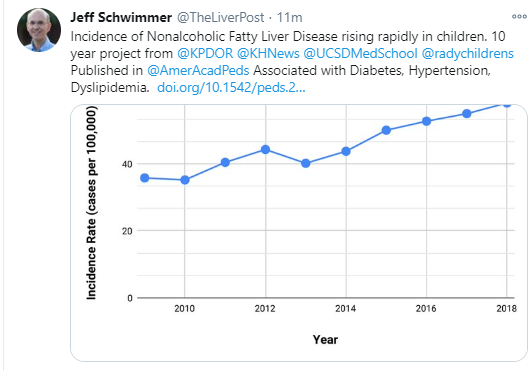
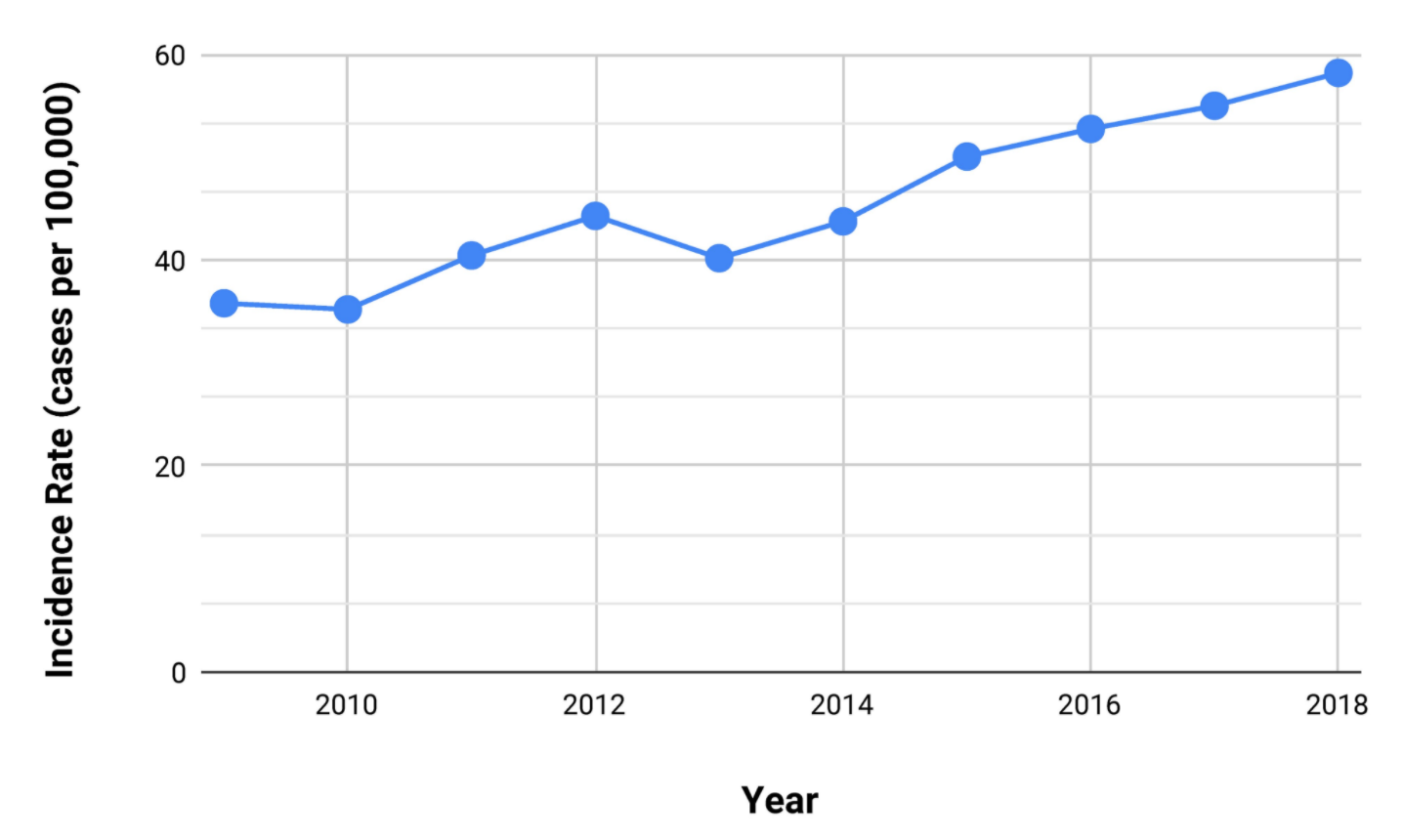
AK Sahota et al. Pediatrics 2020; DOI: https://doi.org/10.1542/peds.2020-0771. Incidence of Nonalcoholic Fatty Liver Disease in Children: 2009–2018

Key finding:  The incidence of an NAFLD diagnosis significantly increased over time, with 36.0 per 100 000 in 2009 and 58.2 per 100 000 in 2018 (P < .0001), based on study of a large integrated health care system in southern California