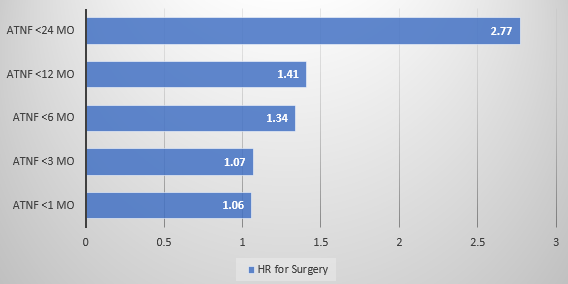
BD Constant et al. American Journal of Gastroenterology Publish Ahead of Print, July 1, 2026. | DOI: 10.14309/ajg.0000000000004104. The Safety and Effectiveness of Early Anti-tumor-necrosis-factor Therapy for Penetrating Crohn’s Disease Complications in Children
Methods: This was a multicenter retrospective study examining the safety of anti-TNF therapy in children (n=203) with Crohn’s disease (CD) who developed internally penetrating complications (IPCs; abscesses and inflammatory masses). The exposure timeframe was anti-TNF administration within 30 days of IPC diagnosis.
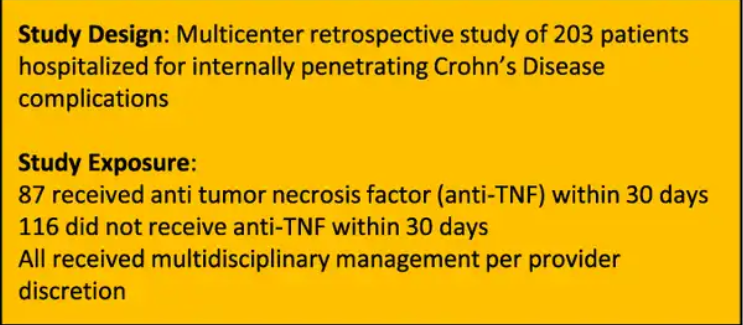
Key findings:
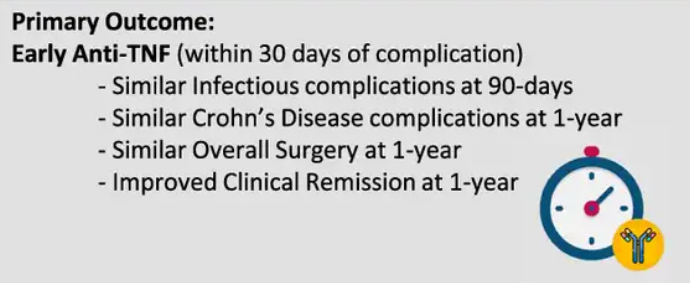
- In Cox analyses, early anti-TNF was not linked to infectious serious adverse events (iSAE), noninfectious CD-related SAE, or surgeries, but was associated with increased combined clinical-biochemical-corticosteroid-free remission (hazard ratio 1.65).
- Surgical risk differed by percutaneous drainage (PD) status: patients receiving early anti-TNF and PD had lower risk versus PD alone (event-free survival 58% vs 15%, log-rank P = 0.04).

My take: For many years, my practice has been to use early anti-TNF even in patients with internally penetrating complications. This study confirms that anti-TNF therapy may be beneficial in this setting.
Related blog posts:
- Early Postoperative Anti-TNF Therapy
- Safety of Preoperative Tumor Necrosis Factor Inhibitor Exposure in Patients With Inflammatory Bowel Disease Undergoing Intra-abdominal Surgery
- Is There An Increased Risk of Infections with Anti-TNF Therapy?
- Efficacy of Anti-TNF Agents for Internal Fistulas and Study of Antibiotics and Development of IBD
- Is It RISKy Not To Use Anti-TNF Therapy for Pediatric Crohn’s Disease?
- CCFA 2023 (Atlanta) Part 5
- Surgery Compared to Biologic Therapy for Crohn’s Disease
- Do Setons Improve Outcomes in Anti-TNF Treatment for Fistulas?
Disclaimer: This blog, gutsandgrowth, assumes no responsibility for any use or operation of any method, product, instruction, concept or idea contained in the material herein or for any injury or damage to persons or property (whether products liability, negligence or otherwise) resulting from such use or operation. These blog posts are for educational purposes only. Specific dosing of medications (along with potential adverse effects) should be confirmed by prescribing physician. Because of rapid advances in the medical sciences, the gutsandgrowth blog cautions that independent verification should be made of diagnosis and drug dosages. The reader is solely responsible for the conduct of any suggested test or procedure. This content is not a substitute for medical advice, diagnosis or treatment provided by a qualified healthcare provider. Always seek the advice of your physician or other qualified health provider with any questions you may have regarding a condition