Understanding the Ileal Pouch in Inflammatory Bowel Disease and Familial Adenomatous Polyposis

A Phillip et al. J Pediatr Gastroenterol Nutr. 2025;81:913–921. A narrative review of the ileal pouch in pediatric inflammatory bowel disease and familial adenomatous polyposis

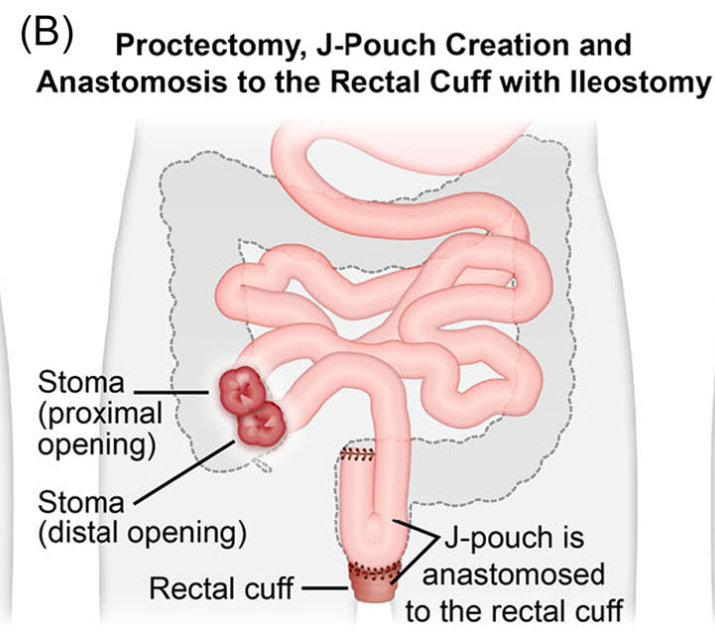
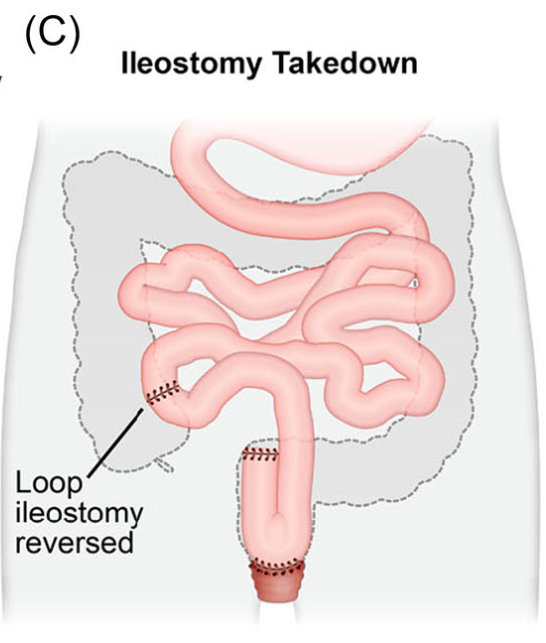
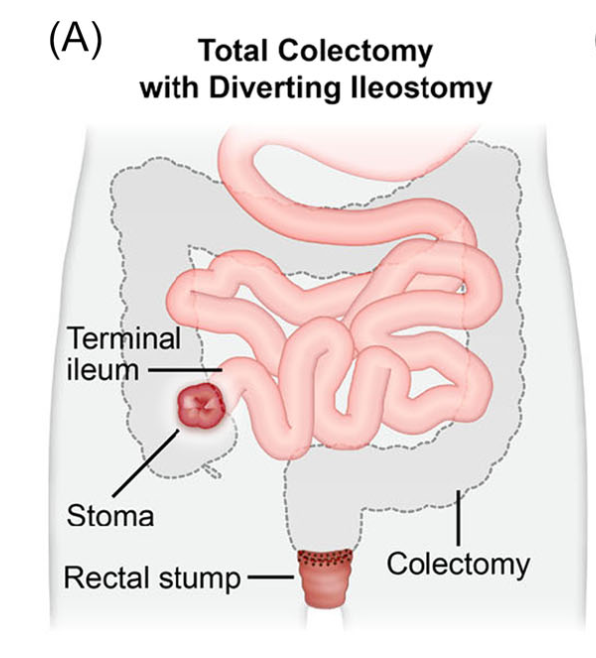
Introduction: Total proctocolectomy with ileal pouch-anal anastomosis (IPAA) can be a life changing solution for a subset of pediatric inflammatory bowel disease (IBD) and familial adenomatous polyposis (FAP) patients. For patients with severe disease a three-stage approach is commonly performed.

Creation of IPAA -Three Stages:
Endoscopic Images and IPAA Anatomy:

  • The article provides guidance on complications including pouchitis, CD-like inflammation of the pouch, J-pouch failure, fertility after IPAA along with follow-up/screening recommendations.
  • As for screening, adult guidelines recommend annual screening for IBD patients with high risk features—previous dysplasia, primary sclerosing cholangitis, type C mucosa, refractory pouchitis. In those without these features, guidelines are variable, with one suggesting screening every 5 years. In FAP patients, the recommendation for surveillance screening following IPAA is pouchoscopy every 1–2 years.8

My take: Most pediatric gastroenterologists are not proficient in pouch management due to the small number of our patients needing IPAA. This review provides a terrific review/resource.

Related blog posts:

Endoscopy of the Ileal Pouch Anal Anastomosis

A Bousvarous et al. JPGN 2023; 77: 691-694. Endoscopy of the Ileal Pouch Anal Anastomosis

This is a terrific review with some good pictures.

  • The authors note that in their practice in their IBD center, a pouchoscopy is performed 1-2 years after ileostomy closure irrespective of symptoms; in those with symptoms, it is performed sooner.
  • Some complications like strictures and ulcers can occur with few symptoms
  • Table 1 reviews common complications like strictures, cuffitis, infectious pouchitis, Crohn’s disease like pouch inflammation, pouch ischemia, and irritable pouch syndrome. Figure 2 provides useful endosopic picture

Related blog posts:

Another article on pouch management/evaluation:

P Santiago et al. Am J Gastroenterol 2023; 118(11):p 1931-1939 | DOI: 10.14309/ajg.0000000000002348. Open access: Classification and Management of Disorders of the J Pouch

IBD Briefs: May 2019 (Part 2)

KP Quinn et la. Inflamm Bowel Dis 2019; 25: 460-71.  This is a terrific review of evaluation and management of pouch disorders.

A Armuzzi et al. Inflamm Bowel Dis 2019; 25: 568-79. This prospective cohort study examined infliximab biosimilar in 810 patients (PROSIT cohort).  This included 459 patients naive to anti-TNF therapy (group a) , 196 with previous exposure (group b), and 155 who were switched while on original infliximab (group c).  At 12 months, patients without a loss of response were 71%, 64%, and 82% respectively in these three groups.

S Coward et al Gastroenterol 2019; 156: 1345-53. This study from Canada used population-based health administrative data from multiple provinces and then applied autoregressive integrated moving average regression to predict prevalence of IBD in 2030. Key point: “In 2018, 267,983 Canadians were estimated to be living with IBD, which was forecasted to increase to 402,853 by 2030.” This is approximately 1% of the population (981 per 100,000).

F Castiglione et al. Aliment Pharm Ther 2019; 49: 1026-39. This observational longitudinal study with 218 patients with Crohn’s disease who completed 2-years of anti-TNF treatment examined transmural healing via ultrasonography (≤3 mm bowel wall thickness).  “Transmural healing was associated with a higher rate of steroid-free clinical remission (95.6%), lower rates of hospitalization (8.8%) and need for surgery 0%).”  The authors conclude that transmural healing is associated with better long-term clinical outcomes than mucosal healing.

“Magic Fountain” Barcelona