Teduglutide-Induced Polyps

J Salazar et al. JPGN Reports 4(4):p e389. Open Access! Gastric Foveolar Hyperplastic Polyps in 2 Children With Short Bowel Syndrome on Long-Term Teduglutide

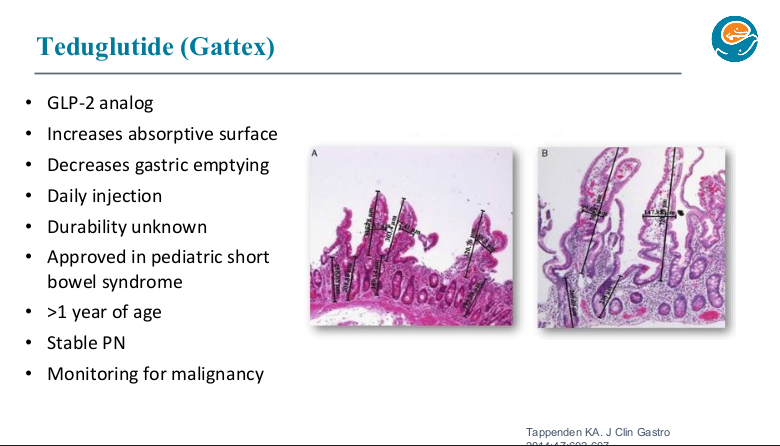
I have not been an enthusiastic early adopter of teduglutide. Though it has been shown to reduce HAL volumes in those with short bowel syndrome (SBS), this tends to revert with cessation of treatment. In addition, it has a very high cost and long-term adverse effects are unclear. Currently the manufacturer recommends a colonoscopy after 1 year of treatment.

This case report by Salazar et al identified two children who developed foveolar hyperplastic gastric polyps after receiving teduglutide.

Discussion points:

  • “There have been increasing reports of both benign and malignant small bowel polyp development. In trials of pediatric patients, limited to 12 and 24 weeks, initial upper endoscopy and colonoscopies were not required. In addition, postexposure upper endoscopy and colonoscopy was not the standard of care (9,13,16). Thus, the incidence of intestinal polyp formation on teduglutide treatment in pediatric patients remains unknown.”
  • “A recent retrospective review of adult patients with SBS showed increased small bowel polyp formation in 8 out of 35 patients (22.9%) on long-term teduglutide use… 3 were identified as adenomas with low-grade dysplasia… (14)”
  • “In general, isolated foveolar hyperplasia has not been identified as a premalignant lesion…The connection between foveolar hyperplasia and development of dysplasia, though, remains poorly understood, and further work delineating the natural history of foveolar polyps in the context of teduglutide is important.”

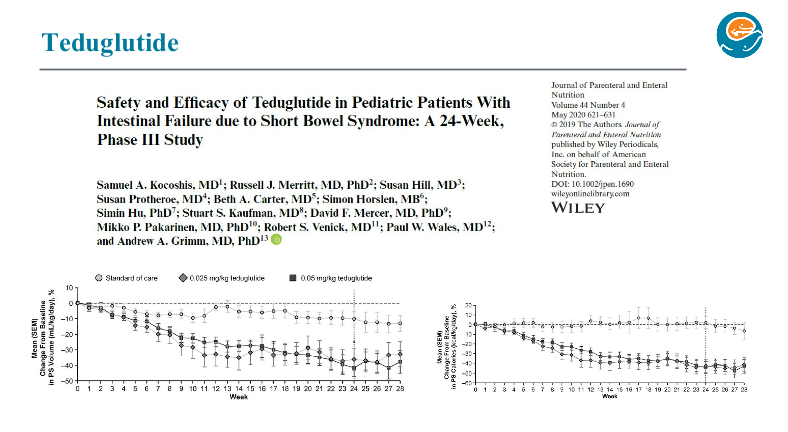
Related article: A Fifi et al. JPGN 2023; 77: 666-671. This is a post-hoc analysis showing improving stool consistency in 101 patients treated in open-label studies. Patients had mean drop of 20 mL/kg/day in parental fluid volume (compared to 7 mL/kg/day in the standard care treatment group).

My take: This case report indicates that endoscopic monitoring (possibly both upper endoscopy and colonoscopy) is needed in teduglutide-exposed patients. In addition, careful consent of the patients is prudent indicating the uncertain long-term effects. Finally, it would be a good idea to enroll all patients in a registry as well.

Related blog posts:

Tile mosaic in Lagos, Portugal

Personal Account of Extreme Short Bowel Syndrome

Jeff Lewis, one of my colleagues for the last 25 years, recently shared a story on The Moth Atlanta. For those of you who have not been to The Moth, you can hear many of these stories on NPR (The Moth Radio Hour) or The Moth Podcast. Each session has a topic and 10 people are invited to share their heartfelt and sometimes hilarious stories.

Jeff is a brilliant, innovative individual and a good friend. Some of his diverse accomplishments include helping start a camp for our celiac patients (Camp WeeKanEatit), starting our microbiome transplant program (FMT), advancing the health of special needs kids (given an award for this by the Georgia Department of Public Health) and starting a lecture series to honor our surgical colleague Donald Schaffner. He even prompted changes in the hospital’s advice line. In addition, he has been instrumental in making the business part of our office work and in initiating a whole host of research projects. One of his children has told me that Jeff has a calling as a clinician which is so true.

Here is the kind, sad and thoughtful story he shared (6 min): The Moth (YouTube Link -not available without link https://youtu.be/yK-iOMSDlYM)

My take: It would be a great idea to have a Moth-type session at our national meeting. I enjoy listening to these stories particularly on long trips.

Per google search: “The Moth was founded in 1997 by the writer George Dawes Green — its name comes from his memories of growing up in St. Simons Island, Ga., where neighbors would gather late at night on a friend’s porch to tell stories and drink bourbon as moths flew in through the broken screens and circled the porch light.”

Related blog post: Short Bowel Syndrome is a Full Time Job

Thrombosis in Pediatric Patients with Intestinal Failure

G Keefe et al. J Pediatr 2023; 253: 152-157. High Rate of Venous Thromboembolism in Severe Pediatric Intestinal Failure

This retrospective study (n=263) examined the rate of venous thromboembolism (VTE) in pediatric patients who required parenteral nutrition for at least 90 consecutive days.

Key findings:

  • The cumulative incidence of VTE was 28.1%, with a rate of 0.32 VTEs per 1000 catheter-days
  • The number of catheters and early gestational age were noted to be independent risk factors for VTE
  • No patients had progression of thrombus while receiving therapeutic anticoagulation
  • Of those with acute DVTs (n=47), 24 (51%)resolved on repeat imaging, 14 (30%)were stable, and and 9 (19%) had decreased
  • 4.4% (2 of 45) had a major bleed while on anticoagulation

The authors note that the true rate of VTE is likely even higher because only 42% categorized as not having a VTE had undergone dedicated venous imaging.

My take: A lot of patients with intestinal failure develop VTE. Given the risks of treatment, the role of prophylactic anticoagulation remains unclear. This is where a prospective study would be helpful.

Related blog posts:

Little Finger Rock Trail, Tucson, AZ

Short Bowel Syndrome is a Full Time Job

C Belza et al. J Pediatr 2022; 250: 75-82. Carrying the Burden: Informal Care Requirements by Caregivers of Children with Intestinal Failure Receiving Home Parenteral Nutrition

This was a cross-sectional study of caregivers of children (n=34) with intestinal failure receiving long-term parenteral nutrition. 97% of caregivers were the child’s mother and median duration of providing care among respondents was 3.4 years.

Key findings:

  • Caregivers reported a median of 29.2 hours per week (IQR, 20.8-45.7 hours per week) of direct medical care. 6.1 hours was spent on providing PN and care of the central venous catheter. 6.3 hours was spent on enteral nutrition and enteral tube care.

In the associated editorial (pgs 10-12 by S Mauskar, JG Berry. Open Access! “Failing to Support Families’ Burden of Care for Children with Intestinal Failure“), the authors note that in the U.S. there has been a growing population of children at home with greater medical complexity and reliance on medical technology and that the need for home nursing support “greatly exceeds the supply, leaving many families on their own to care for their children.”

They also note that the medical literature (over the last 25 years) on caregiver burden for children notes it is associated with “marital discord, loss of employment, and financial struggle…In the U.S. a substantial portion of children with medical complexity assisted with technology live in single-parent households, in poverty, and are exposed to adverse childhood events…very vulnerable to the effects of high caregiving burden.”

My take: This study shows that while we have an effective treatment for intestinal failure, the burden of this treatment is very high even with care coordination and social worker help. Understanding this burden could help medical providers be more empathetic for the family who is struggling with home medical care (eg. child with recurrent admissions for central line infections).

Related blog posts:

Island Ford National Recreational Area. Sandy Springs, GA

Will a SQUIRT Score Be Helpful?

A recent letter to the editor: J Rauh et al. Stool Quality for Intestinal Rehabilitation Therapy (SQUIRT) Score, JPS 2022. doi: https://doi.org/10.1016/j.jpedsurg.2022.08.025

The authors have devised a SQUIRT score for short bowel syndrome. The higher score indicates better enteral tolerance with a highest score of 13 and a lowest score is 3. It is a composite score based on composition, frequency and volume/blowouts. The authors define a blow-out to be a stool loose enough and large enough for the child to require a change of clothes.

How to Score:

Consistency (choose best stool of the day)
Playdough, Formed 5
Peanut Butter, Pasty 4
Pudding, Seedy 3
Pea Soup, Loose 2
Water 1

Occurrences (over 24 hours)
1 to 3 4
4 to 6 3
7 to 9 2
Greater Than 10 1
Ostomy Present 0

Volume
With Ostomy Without Ostomy
(mL/kg) (# of blowouts)

  • < 10 mL/kg 8 0 =4
  • 10 -14 mL/kg 7
    15-19 mL/kg 6 1 =3
  • 20-24 mL/kg 5 2 =2
    25-29 mL/kg 4
  • 30-34 mL/kg 3
  • 35 mL/kg 2
  • >35 mL/kg 1 >3 =1

The authors state that this scoring system has been used in their institution. “This tool can provide objective information to guide clinical decision making. Even patients with ostomies, for whom we can measure stool volume, benefit from SQUIRT scores because including the variable of stool consistency provides a more nuanced assessment than relying on volume.”

My take:This type of scoring system would be useful, primarily in patients in which the volume of stool is difficult to measure. It would benefit from trials to validate its utility.

Related blog posts for Short Bowel Syndrome:

American Windows by Marc Chagall, at the Art Institute of Chicage

Predicting Intestinal Failure After Gastroschisis Repair

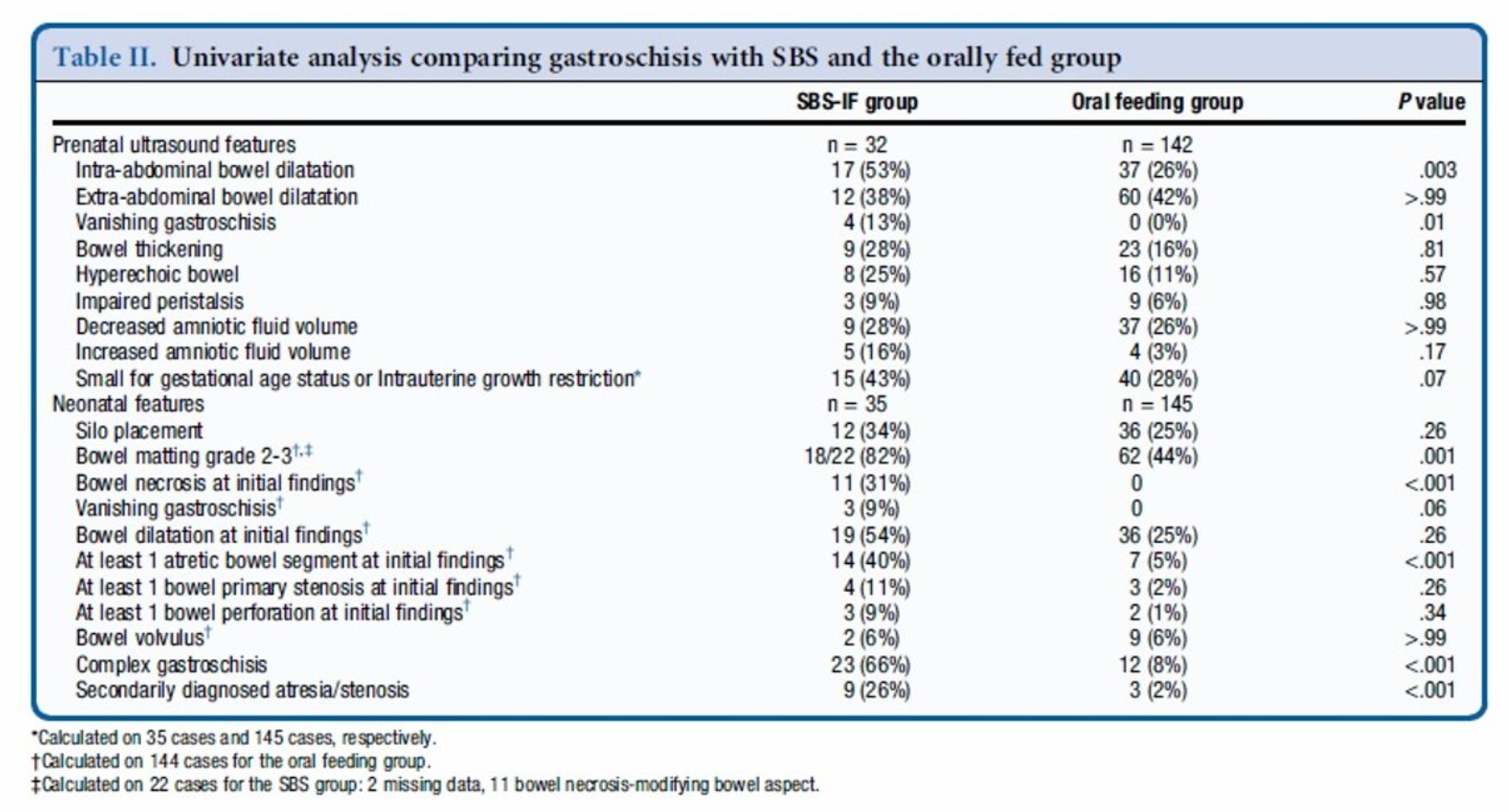
N Vinit et al. J Pediatr 2022; DOI:https://doi.org/10.1016/j.jpeds.2021.11.004 (Ahead of print) Predicting Factors of Protracted Intestinal Failure in Children with Gastroschisis

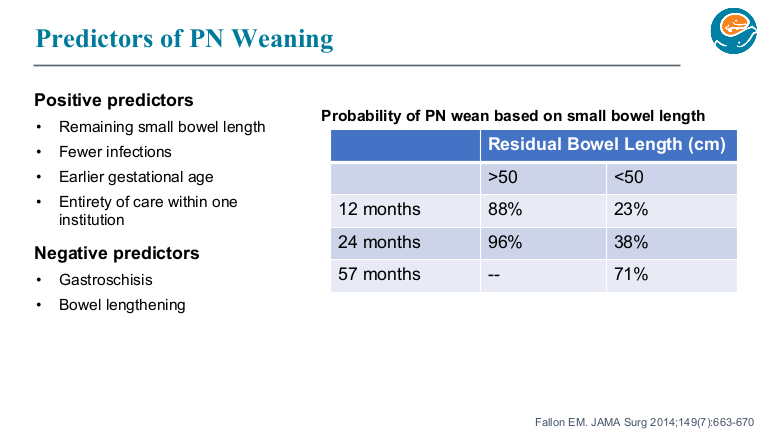
Methods: Retrospective study. Among 180 patients, 35 required long-term parenteral nutrition (SBS-IF group) and 145 acquired full oral feeding within 6 months (oral feeding group) over mean f/u of 7.9 years.

Key findings:

  • Both bowel matting (OR, 14.2, P = .039) and secondarily diagnosed atresia or stenosis (OR, 17.78, P = .001) were independent postnatal predictors of SBS-IF.
  • An initial residual small bowel length of more than 50 cm was the best predictive cut-off for nutritional autonomy, with a sensitivity of 67% and a specificity of 100%

My take: This study identifies bowel matting and atresia/stenosis as additional factors in predicting nutritional autonomy.

Related blog posts:

Slinky for Short Bowel Syndrome?

From GeneralSurgeryNews.com: Open Access: Novel Device Uses Mechanotransduction To Treat Small Bowel Syndrome

An excerpt:

“The basic concept is similar to distraction osteogenesis, which orthopedic surgeons have used for years, applying distraction force to broken bone that will grow up to a millimeter a day,” said Andre Bessette, the CEO and a co-founder of Eclipse Regenesis, Inc

To regenerate small-bowel tissue, a surgeon inserts the device, which looks like a small, compressed coil, inside the small intestine and secures both ends with plication sutures applied to the outside of the intestine. Over two to three weeks, the device slowly expands to its uncompressed state, stimulating new tissue growth—ultimately two to three times the segment’s original length, about 4 cm...[thus]  they’ll need more than one device applied or more than one procedure.

Once this process is complete, the chromic sutures dissolve over about a month, allowing the device to pass through the body to be excreted...

[The researchers] expect to start these [human] trials in the first half of 2022, and they have identified two primary investigator sites: Boston Children’s Hospital and Cincinnati Children’s Hospital

Preclinical studies: Eclipse’s website at www.eclipseregenesis.com/ publications.

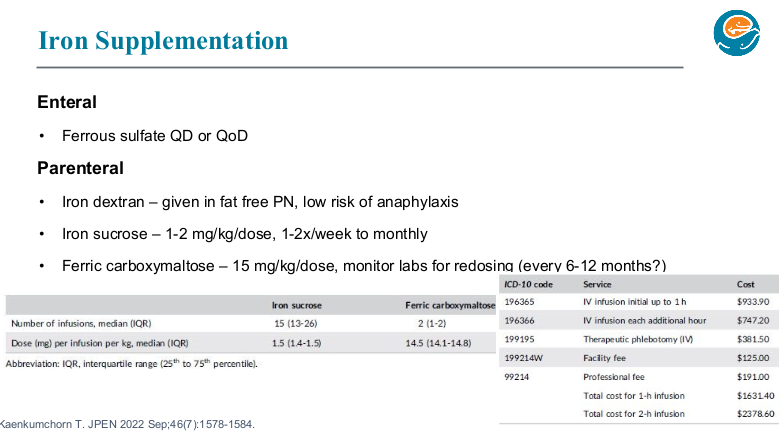
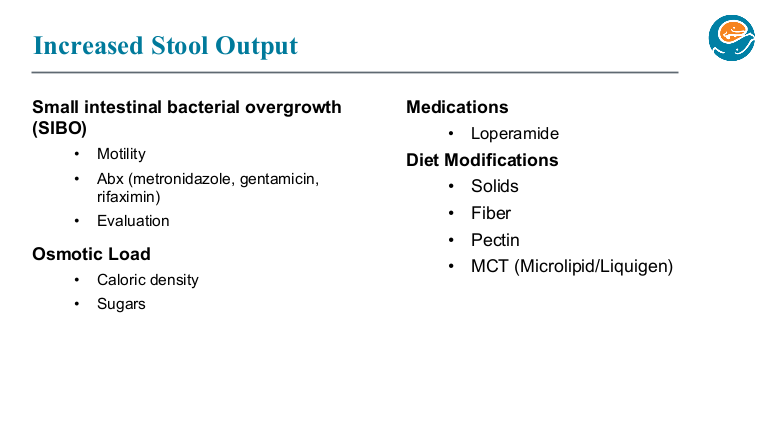
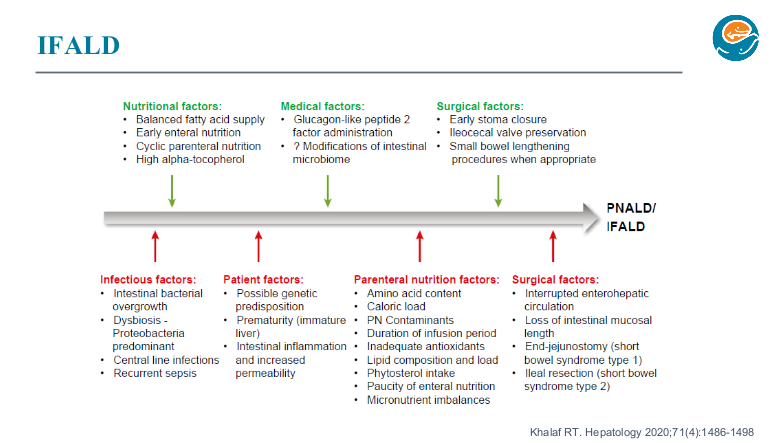
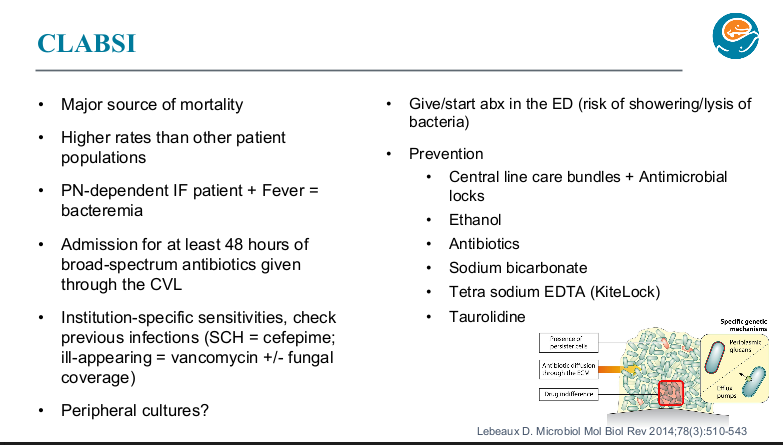
Nutritional Management of Intestinal Failure in Pediatrics

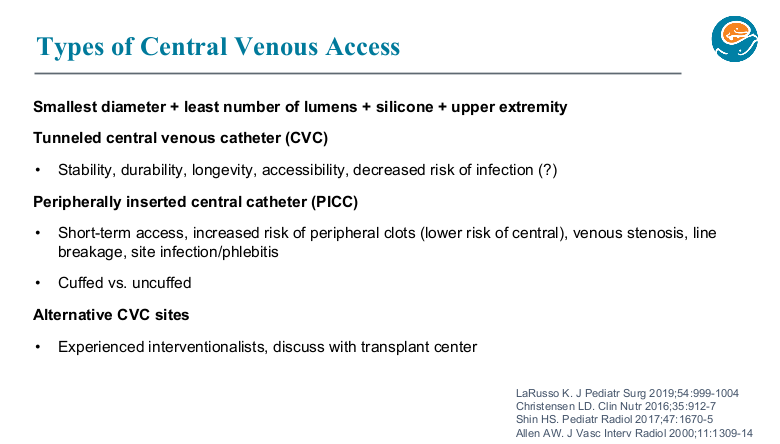
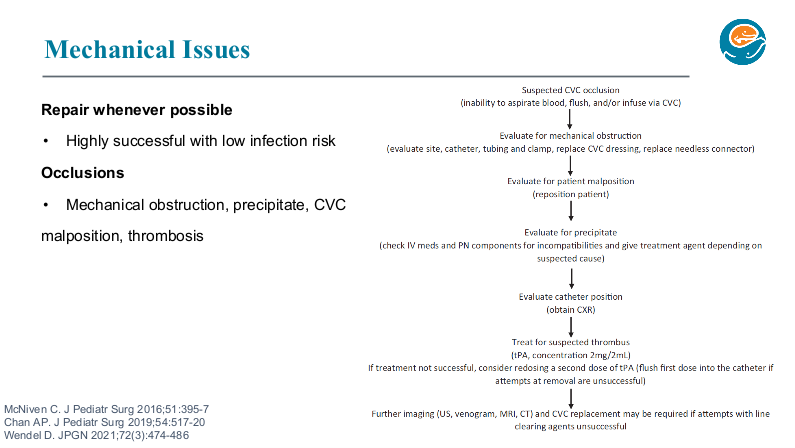
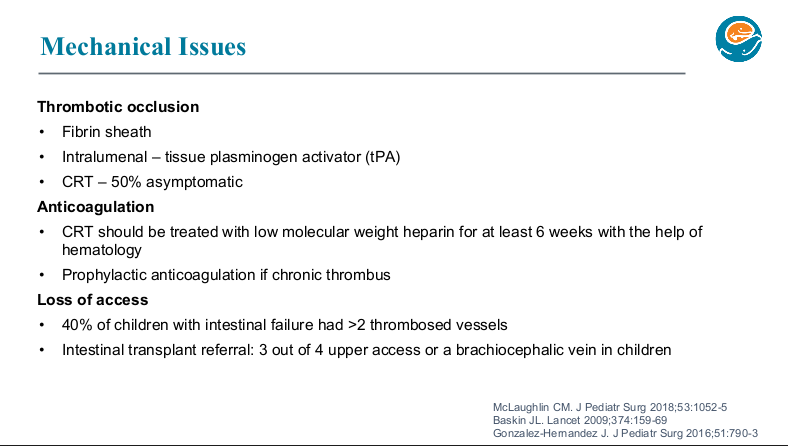
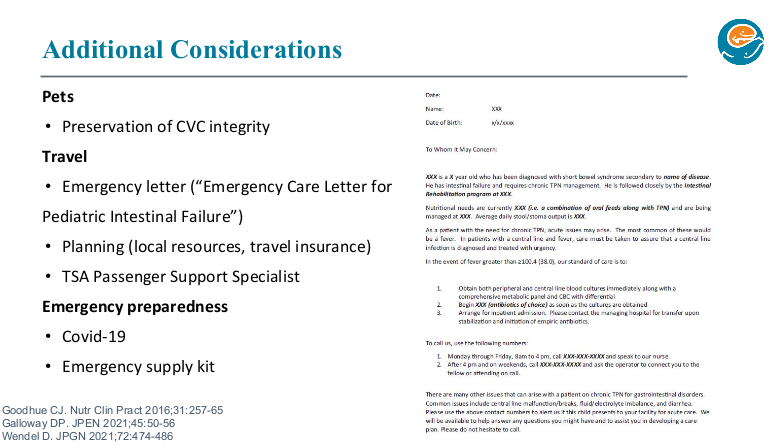
A recent terrific update from Kipp Ellsworth: Nutritional Management of Intestinal Failure Patients. Slides:

Some selected slides:

Related blog posts for Short Bowel Syndrome:

Aspen Webinar 2021 Part 4 – IFALD Update

More from Aspen Webinar 2021. This blog entry has abbreviated/summarized several presentations. Though not intentional, some important material is likely to have been omitted; in addition, transcription errors are possible as well. An excellent review from Dr. Sokol.

What’s New with IFALD Ronald Sokol

Key points:

  • Biliary cirrhosis related to parenteral nutrition has been the major indication for small bowel  transplantation/multi-visceral transplantation. IFALD presentations: Steatosis, biliary tract disease and cholestasis
  • Conjugated bilirubin >2.5 had RR 22.5 for mortality (prior to availability of intestinal transplantation)
  • Even after weaning off PN, studies have shown long-lasting fibrosis and steatosis in more than 40% of patients (>8 yrs off PN)
  • Intestinal microbiome is altered in patients with IFALD
  • Puder M et al. (Ann Surg 2009; 250: 395) showed that fish oil (at lower doses) was associated with improvement/resolution of parenteral nutrition associated cholestasis (PNAC)
  • Lipid reduction also is associated with cholestasis resolution
  • Treatments: Advance enteral feeds, lipid modulation, prevent CLABSI, treat bacterial overgrowth, GLP-2, and STEP procedure/tapering
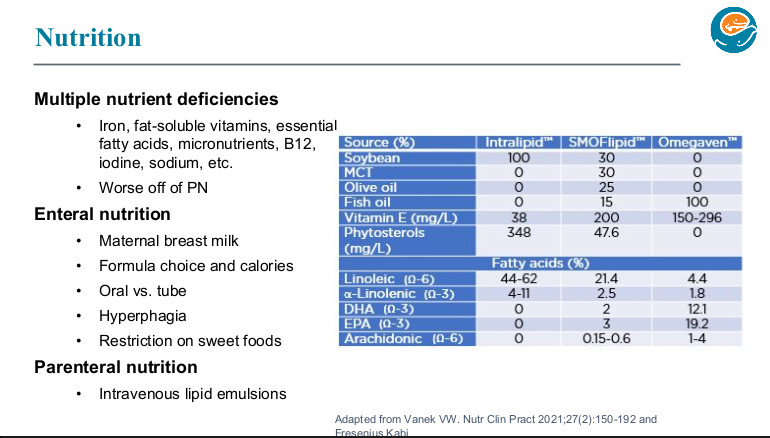
  • SMOF lipid allows full dosing of lipids (3 gm/kg)
  • Caution with Fish oil (omegaven): 1. Does not prevent hepatic fibrosis progression 2. Reduction of lipid doses can have negative effects on brain growth
  • Lipid management has been crucial in reducing the number of children needing intestinal transplantation

Some of the slides:

IBAT Inhibitors Frederick Suchy

Key  points:

  • IBAT inhibitors block intestinal absorption of bile acids/disrupt enterohepatic circulation; this leads to augmented bile acid excretion in stools
  • IBAT inhibitors may reduce liver damage in the setting of cholestasis/accumulation of toxic bile acids
  • Potential diseases for IBAT inhibitors include Alagille syndrome and PFIC
  • Van Wessel et al (J Hepatol 2020; 73: 84-93) correlated survival with PFIC1/PFIC2 with bile acid levels and showed improvement in survival in those with surgical biliary diversion
  • Goals for IBAT inhibitor trials: improvement in pruritus, bile acids, reduced ALT, hepatic fibrosis, HCC and need for liver transplantation
  • Marixibat is available for use as an FDA approved breakthrough medication for Alagille and PFIC2 in pediatric patients older than 1 year
  • Odexibat is designated as an orphan drug for Alagille, PFIC, PBC, and biliary atresia
  • Safety appears good with IBAT inhibitors. Fat soluble vitamin monitoring is needed

Case report: Alejandro Velez Lopez

3 yo presented with fatigue and jaundice, 3 weeks after COVID-19 infection. She was not taking any medications.  Labs:  ALT 939, AST 1321, T bili 5.5, D bili 0.9, INR 2, Plts 174, Hgb 12.8, LDH 1297. remained positive for SARS-CoV2 by PCR. Acetaminophen -no exposure.  Evaluation: LKM 1:1280. Neg ANA, NL Ferritin, NL sIL2r, Other viral studies negative, NL IgG. Developed encephalopathy with NH4 317, INR peaked at 2.8.  Treated with steroids, rifaximin and lactulose.  Liver biopsy showed sub-massive necrosis and fibrosis (indicative of  autoimmune hepatitis, likely triggered or exacerbated by COVID-19).  Patient responded to medical therapy and did not require liver transplantation.

How Important is Heparin for Preventing Occlusion of Catheters in Pediatrics?

According to a recent Cochrane review, heparin use is NOT more effective than saline flushes. Thanks to Ben Gold for providing this reference.

Bradford NK, Edwards RM, Chan RJ. Link: Normal saline (0.9% sodium chloride) versus heparin intermittent flushing for the prevention of occlusion in long-term central venous catheters in infants and children. Cochrane Database Syst Rev. 2020;4(4):CD010996. doi: 10.1002/14651858.CD010996.pub3.

Key findings:

  • The four trials (n=255) directly compared the use of normal saline and heparin; the studies all used different protocols for the intervention and control arms, however, and all used different concentrations of heparin.
  • The estimated RR for CVC occlusion per 1000 catheter days between the normal saline and heparin groups was 0.75 (95% CI 0.10 to 5.51; 2 studies, 229 participants; very low certainty evidence).
  • The estimated RR for CVC‐associated blood stream infection was 1.48 (95% CI 0.24 to 9.37; 2 studies, 231 participants; low‐certainty evidence).
  • The duration of catheter placement was reported to be similar for the two study arms in one study (203 participants; moderate‐certainty evidence), and not reported in the remaining studies.
  • This is in agreement with another updated Cochrane review assessing the effectiveness and safety of intermittent locking of CVCs with heparin vs. normal saline to prevent occlusion in adults (11 studies; N=2,392). The pooled analysis did show fewer occlusions with heparin than with normal saline (RR 0.70, 95% CI 0.51 to 0.95; P = 0.02; 1672 participants; 1025 catheters from 10 studies; I² = 14%), but it is based on a very low-quality of evidence given the differences in methodology, unclear allocation concealment, imprecision, and suspicion of publication bias. (López-Briz E, Ruiz Garcia V, Cabello JB, et al. Heparin versus 0.9% sodium chloride locking for prevention of occlusion in central venous catheters in adults. Cochrane Database Syst Rev. 2018;7(7):CD008462. doi: 10.1002/14651858.CD008462.pub3)

My take: This review found there was not enough evidence to determine which solution, saline or heparin, is more effective for reducing complications.

Related blog posts: