Pancreatic Cancer Surge in Young Adults –Why It has NOT Caused an Increase in Deaths

11/18/24 NY Times, G Kolata: Pancreatic Cancer Surge May Be Less Worrisome Than It Seemed (behind paywall)

An excerpt:

One of the first warnings came in a paper published in 2021. There was an unexpected rise in pancreatic cancer among young people in the United States from 2000 to 2018… a new study published on Monday in The Annals of Internal Medicine suggests, the whole alarm could be misguided.

The authors of the paper, led by Dr. Vishal R. Patel, a surgical resident at Brigham and Women’s Hospital in Boston, did not dispute the data showing a rising incidence. They report that from 2001 to 2019 the number of young people — ages 15 to 39 — diagnosed with pancreatic cancer soared. The rate of pancreatic surgeries more than doubled in women and men…

With more pancreatic cancers in young people, there should be more pancreatic cancer deaths. And there were not. Nor were more young people getting diagnosed with later-stage cancers. Instead, the increase was confined to cancers that were in very early stages.

Many cancers will never cause harm if left alone, but with increasingly sensitive tools, doctors are finding more and more of them. Because there usually is no way to know if they are dangerous, doctors tend to treat them aggressively…It’s the hallmark of what researchers call overdiagnosis: a rise in incidence without a linked rise in deaths..

The sudden rise in pancreatic cancer incidence is largely being driven by another type of tumor — endocrine cancers [rather than the more dangerous adenocarcinomas]. They tend to be indolent, taking years or even decades to grow and spread, but occasionally they can turn malignant…

“A lot of patients say, ‘Get it out,’” said Dr. Adewole S. Adamson, an author of the new paper and an overdiagnosis expert at the University of Texas at Austin. “When someone tells you that you have cancer you feel like you have to do something.”

But, said Dr. William Jarnagin, a pancreatic cancer specialist at Memorial Sloan Kettering Cancer Center, removing early stage endocrine tumors “has never been proven to be a good strategy.”

My take: More cases of pancreatic tumors are being detected with the increased use of cross-sectional imaging (eg. CT scan, MRI). It is helpful to know that the increase in (mainly) pancreatic endocrine tumors is not leading to more deaths. Yet, each individual case presents some difficult decisions.

Related blog post:

Disclaimer: This blog, gutsandgrowth, assumes no responsibility for any use or operation of any method, product, instruction, concept or idea contained in the material herein or for any injury or damage to persons or property (whether products liability, negligence or otherwise) resulting from such use or operation. These blog posts are for educational purposes only. Specific dosing of medications (along with potential adverse effects) should be confirmed by prescribing physician.  Because of rapid advances in the medical sciences, the gutsandgrowth blog cautions that independent verification should be made of diagnosis and drug dosages. The reader is solely responsible for the conduct of any suggested test or procedure.  This content is not a substitute for medical advice, diagnosis or treatment provided by a qualified healthcare provider. Always seek the advice of your physician or other qualified health provider with any questions you may have regarding a condition.

From the Museum of Illusions (Atlantic Station, Atlanta):

AGA Living Guideline for Moderate-to-Severe Ulcerative Colitis –The Good and The Bad

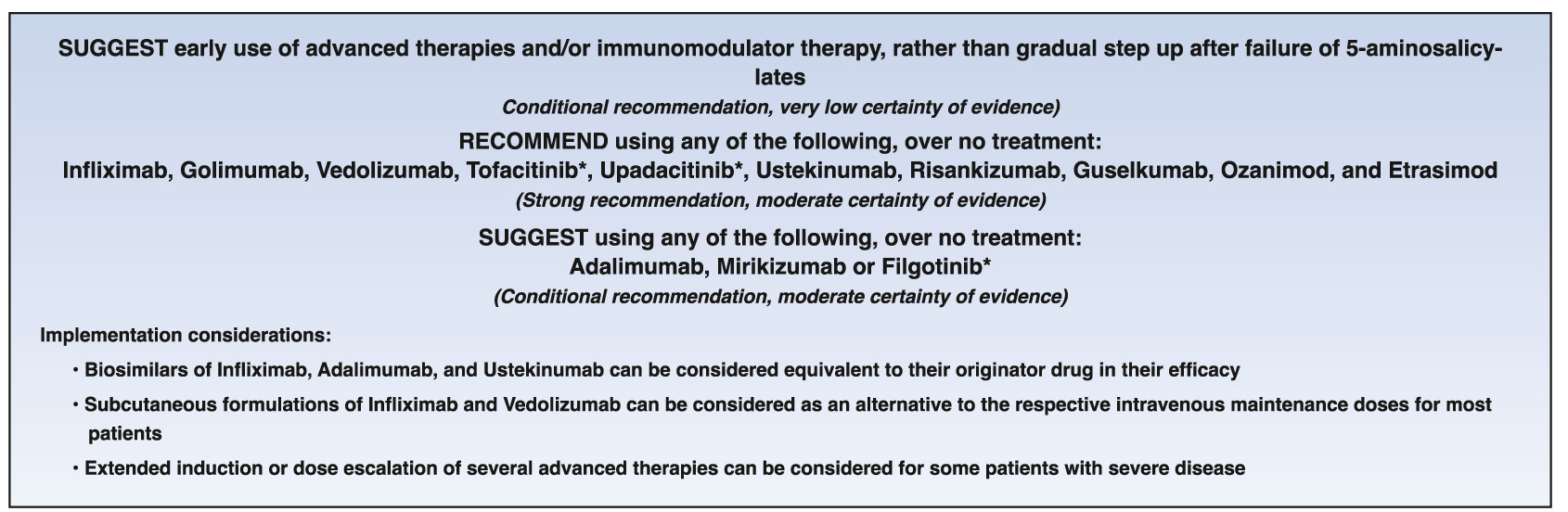
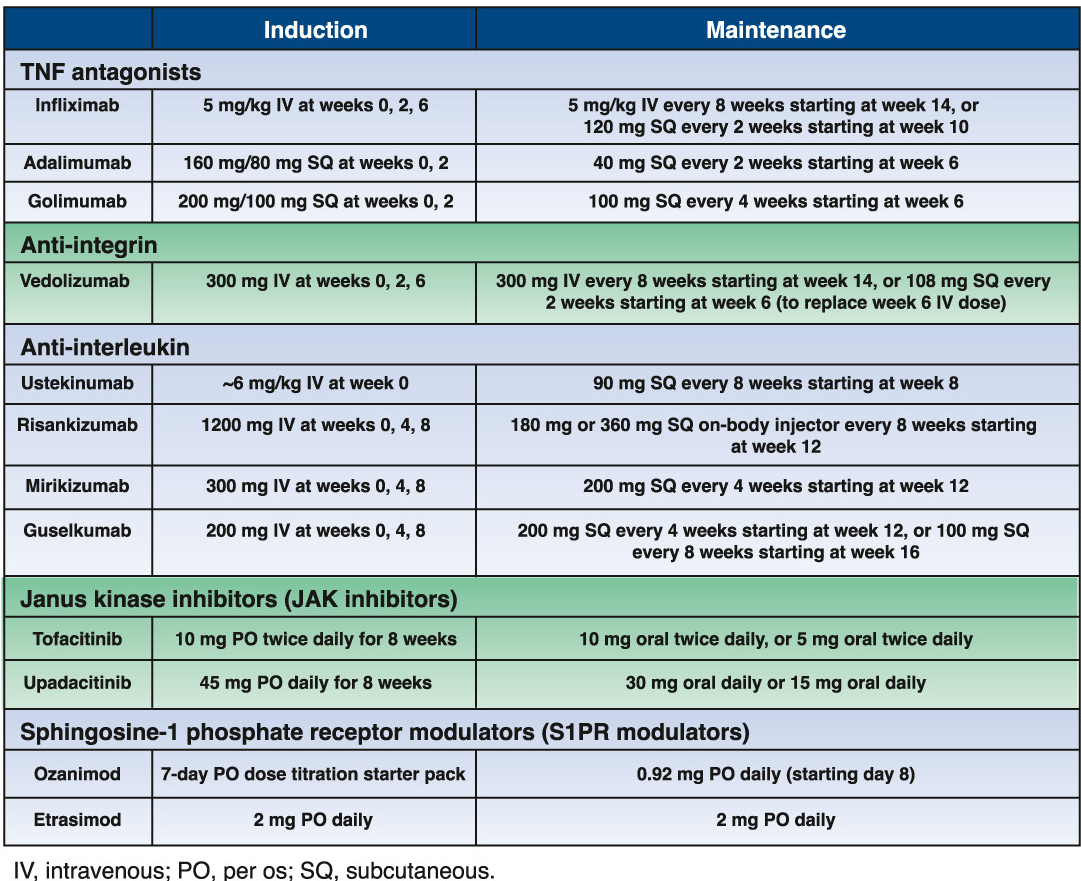
S Singh et al. Gastroenterol 2024; 167: 1307-1343. Open Access! AGA Living Clinical Practice Guideline on Pharmacological Management of Moderate-to-Severe Ulcerative Colitis

This is a recent clinical guideline intended to serve as the starting point of a “living guideline” for adults with moderate-to severe ulcerative colitis.

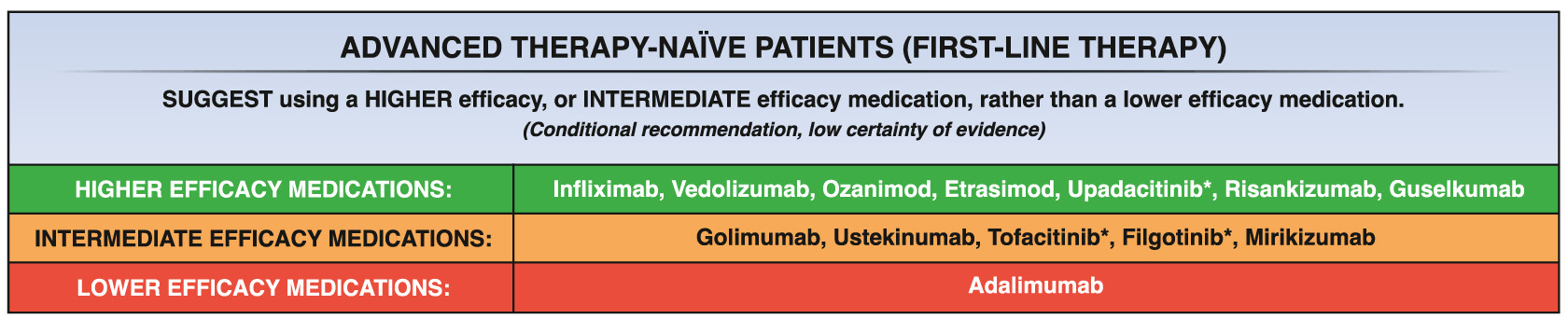
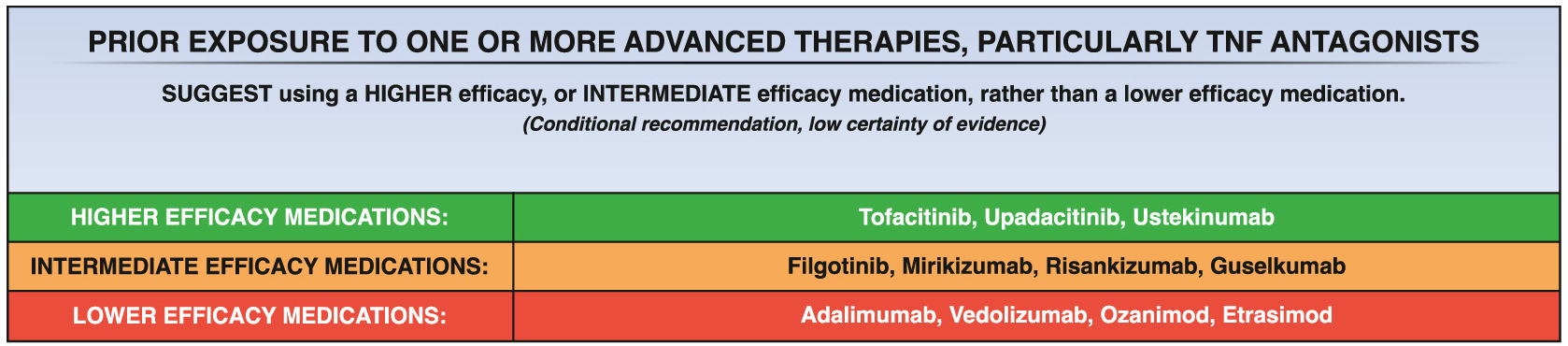
  • The good news is that the AGA plans to update these guidelines semi-annually. The bad news is that this guideline does not provide the best advice.
  • It lumps recommended treatments into broad categories rather than indicating which therapies have the most effectiveness.
  • It is useful that the guidelines specifically recommend against step up therapy.
FDA labelling recommends upadacitinib only in patients who have not responded to anti-TNF therapy

For a recent study that provided more direction into which medications are most effective for both UC and Crohn’s disease: PS Dulai et al. Gastroenterol 2024; 166: 396-408. Open Access! Integrating Evidence to Guide Use of Biologics and Small Molecules for Inflammatory Bowel Diseases (Summarized in blog post: Comparative Evidence and Positioning Advance Therapies for Inflammatory Bowel Disease)

Related blog posts:

Disclaimer: This blog, gutsandgrowth, assumes no responsibility for any use or operation of any method, product, instruction, concept or idea contained in the material herein or for any injury or damage to persons or property (whether products liability, negligence or otherwise) resulting from such use or operation. These blog posts are for educational purposes only. Specific dosing of medications (along with potential adverse effects) should be confirmed by prescribing physician.  Because of rapid advances in the medical sciences, the gutsandgrowth blog cautions that independent verification should be made of diagnosis and drug dosages. The reader is solely responsible for the conduct of any suggested test or procedure.  This content is not a substitute for medical advice, diagnosis or treatment provided by a qualified healthcare provider. Always seek the advice of your physician or other qualified health provider with any questions you may have regarding a condition.

New Study: Leaky Gut and Irritable Bowel Syndrome

MR Barbaro et al. Gastroenterol 2024; 167: 1152-1166. Molecular Mechanisms Underlying Loss of Vascular and Epithelial Integrity in Irritable Bowel Syndrome

This study examined markers of the epithelial and vascular barriers in 223 patients with irritable bowel syndrome in comparison to 78 healthy subjects. In actuality, this lengthy report was a composite of about 8 different experiments.

Key findings:

  • Figure 2 summarizes in vivo and in vitro epithelial permeability testing using orally-administered sugars and using Caco-2 cell incubation of control/IBS supernatants. In all of these experiments, there was a significant mean increase in IBS-D permeability compared to controls.
  • Figures 3 and 4 report on significant changes the gut vascular barrier and specific mediators, respectively, in IBS compared to controls
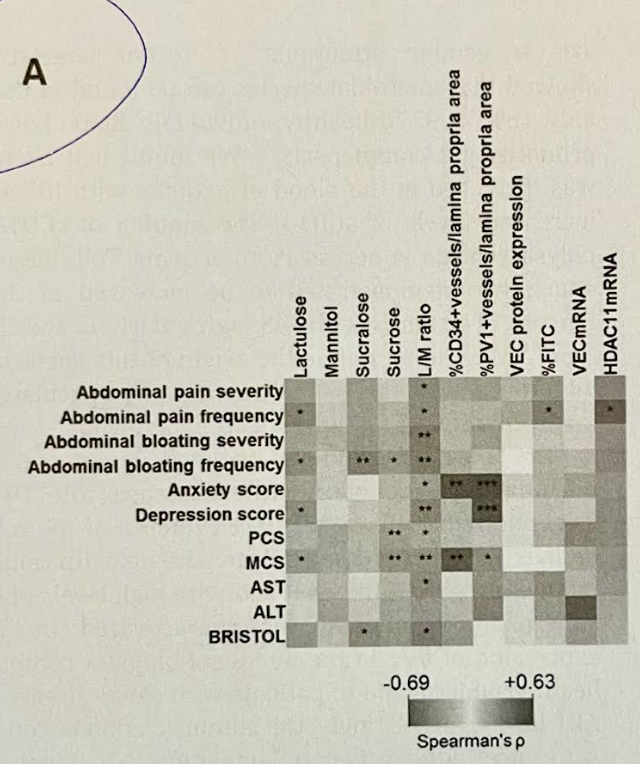
  • One novel finding was correlation of epithelial barrier markers with gastrointestinal symptoms and gut vascular dysfunction with systemic systems including anxiety and depression (see heat map below)
Relationships between epithelial and endothelial permeability markers and symptoms. The asterisks on the heatmap indicate significances in the Spearman’s correlation.

My take: The term ‘leaky gut’ has a negative connotation among many gastroenterologists as it has been associated with misleading diagnostic and therapeutic claims. However, this study shows a correlation between epithelial and vascular barrier disruptions and symptoms in irritable bowel. This is useful information; nevertheless, there are not simple tests to identify these findings and there are not therapeutics with demonstrated efficacy.

Related blog posts:

“The Evolving Story of Blastocystis: From Foe to Friend”

From the summary of the study by Dr. Keszthelyi-a few excerpts:
Background: “Blastocystis is the most common gastrointestinal protist found in humans and animals… At the same, Blastocystis remains one of the most enigmatic gut microbial organisms that has puzzled clinicians for decades… scores of patients with positive stools for Blastocystis have been treated with antimicrobial agents such as metronidazole.”

Methods: “Piperni et al examined 8 of these STs previously described in humans in a global-scale metagenomic exploration in 56,989 individuals from 32 countries. The analysis also included 4590 gut metagenomes from 214 nonhuman species (spanning mammals, reptiles, birds, amphibians, insects, crustaceans, mollusks, nematodes, and metazoans) from 49 public datasets, and paleofeces based on 28 publicly available ancient human gut metagenomic samples with archaeological dating ranging from 3000 BC to the Post-Medieval Age.”

Key findings:

  • Blastocystis was found in 8190 human stool samples and was fairly common in healthy individuals (16%). Blastocystis was hardly ever found in newborns, suggesting that it is likely acquired later in life and not vertically transmitted”
  • “The 8 human Blastocystis STs were not detected in most of the animal species tested, except for nonhuman primates kept in captivity”
  • Blastocystis was detected in ancient human samples”
  • “The presence of Blastocystis was positively associated with more favorable cardiometabolic profiles and negatively with obesity. In addition, adherence to a plant-based diet was associated with carriage of Blastocystis.”
  • “In particular, individuals who consumed higher quantities of unprocessed plant-based foods, such as avocados, dried fruits, nuts, seeds, legumes, and cruciferous vegetables, were more likely to be Blastocystis-positive compared with individuals with lower intake of such foods.”
  • Implementing “a 6-month personalized diet intervention study involving 1124 individuals, in which improvements in dietary quality and weight loss were paralleled with an increase in Blastocystis abundance.”

My take: The authors of the Cell study: “our results linking Blastocystis to host health support its non-pathogenic, if not favorable, role.”

Graphical abstract from Cell article

Practice Advice for Potassium-Competitive Acid Blockers

A Patel et al. Gastroenterology. 2024: 6: 1228 – 1238. Open Access! AGA Clinical Practice Update on Integrating Potassium-Competitive Acid Blockers Into Clinical Practice: Expert Review

Best Practice Advice (for adults):

  • Potassium-competitive acid blockers are generally not recommended as first line therapy. This rationale is based on cost, greater obstacles to obtaining medication, and fewer long-term safety data.
  • Clinicians may use P-CABs in selected patients with documented acid-related reflux & erosive esophagitis who fail therapy with twice-daily PPIs.
  • Clinicians should use P-CABs in place of PPIs in eradication regimens for most patients with H pylori infection.
  • P-CABs may be beneficial in high-risk bleeding peptic ulcer disease. “Although there is currently insufficient evidence for clinicians to use P-CABs as first-line therapy in patients with bleeding gastroduodenal ulcers and high-risk stigmata, their rapid and potent acid inhibition raises the possibility of their utility in this population.”

Related blog posts:

How to Distinguish Cyclic Vomiting Syndrome and Cannabis Hyperemesis Syndrome

The correspondence regarding AGA’s clinical practice update on Cannabinoid Hyperemesis Syndrome offered a few useful points.

Bonnet notes that “CVS is most likely present if cyclic vomiting persists, recurs or worsens during cannabis abstinence (beyond 3-week cannabis withdrawal period, which may be temporarily accompanied by nausea). In other cases with more fluctuation symptoms, a clear distinction between CHS and CVS is not so easy…Evidence shows that a symptom-free period of about 12 months after cessation of long-term cannabis use should be sufficient to clearly distinguish CHS from CVS…Finally, I emphasize here that…CHS…in exceptional cases can lead to life-threatening conditions (eg due to prerenal failure, severe electrolyte disturbances, or esophageal rupture)…but recovers completely when affected patients permanently stop using cannabis or THC analogues.

Mullins et al note that “ondansetron is uniformly ineffective and that butyrophenones (haloperidol, droperidol) are more effective” for CHS. In the reply, the authors note that the data supporting these medications is based on small studies and some patients have developed acute dystonia.

Related blog posts:

Images from “Chalktoberfest” in Marietta 10/11/24-10/13/24. The drawings are amazing, including some that appear to be 3-D:

Phase 2 Trial of Tulisokibart for Ulcerative Colitis

Yesterday’s pumpkin -please no snide remarks about how I can now retire and become a sculptor:


BE Sands et al. N Engl J Med 2024;391:1119-1129. Phase 2 Trial of Anti-TL1A Monoclonal Antibody Tulisokibart for Ulcerative Colitis

Background: “Several studies have implicated human tumor necrosis factor–like cytokine 1A (TL1A) in the pathogenesis of inflammatory bowel disease…Tulisokibart (formerly PRA023) is a humanized IgG1 kappa monoclonal antibody that binds to the membrane-bound and soluble forms of TL1A with high affinity and specificity. Tulisokibart prevents the interaction of TL1A and DR3, thereby suppressing type 1 and type 17 helper T-cell responses, increasing regulatory T-cell activity, and decreasing profibrotic pathways.”

Methods: (ARTEMIS-UC trial) The authors “randomly assigned patients with glucocorticoid dependence or failure of conventional or advanced therapies for ulcerative colitis to receive intravenous tulisokibart (1000 mg on day 1 and 500 mg at weeks 2, 6, and 10) or placebo. Cohort 1 included patients regardless of status with respect to the test for likelihood of response. Cohort 2 included only patients with a positive test for likelihood of response.”

“The inclusion of an integrated assessment of a panel of genetic markers as a diagnostic assay was based on the notion that patients with a propensity to overexpress TL1A might be more likely to have a response to tulisokibart than an unselected population.”

Key findings:

  • In the first cohort, a significantly higher percentage of patients who received tulisokibart had clinical remission than those who received placebo (26% vs. 1%), endoscopic healing (31% vs. 4%), endoscopic improvement (37% vs 6%) and clinical response (66% vs 22%)
  • “Among patients with a positive test for likelihood of response (cohorts 1 and 2 combined), clinical remission occurred in a higher percentage of patients who received tulisokibart than in those who received placebo (32% vs. 11%).”
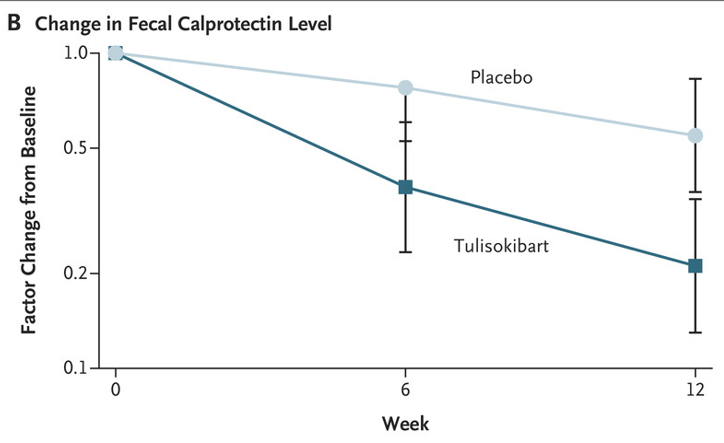
  • Improvement in CRP and Calprotectin were noted as early as 2 weeks and 6 weeks respectively
  • The incidence of adverse events was similar in the tulisokibart and placebo groups

My take: Tulisokibart was effective in a group of patients with moderately to severely active ulcerative colitis who were refractory to advanced therapies.

Related blog posts:

Is Vonoprazan Better Than Intravenous PPIs for High-Risk Peptic Ulcers?

T Geeratragool et al. Gastroenterol 2024; 167: 778-787. Open Access PDF! Comparison of Vonoprazan Versus Intravenous Proton Pump Inhibitor for Prevention of High-Risk Peptic Ulcers Rebleeding After Successful Endoscopic Hemostasis: A Multicenter Randomized Noninferiority Trial

All patients received IV PPI treatment prior to endoscopy. Key finding from this multicenter randomized open-label adult trial:

  • The 30-day rebleeding rates in vonoprazan and PPI groups were 7.1% (7 of 98) and 10.4% (10 of 96), respectively
  • There were similar outcomes with regard to safety and secondary outcomes

My take: This study shows that oral vonoprazan is not inferior to IV PPI treatment for high-risk peptic bleeding ulcers. Perhaps, a study with more participants would show superiority of vonoprazan given the absolute lower rebleeding rates in this study.

Related blog posts:

Common Mistakes When Managing Acute Pancreatitis

G Trikudanathan et al. Gastroenterol 2024; 167: 673-688. Open Access (PDF)! Diagnosis and Management of Acute Pancreatitis

While this review focuses on acute pancreatitis in adults, there are areas of overlap with pediatric patients who have acute pancreatitis. Many of the points in this article were reviewed in the lecture by Dr. Freeman (summarized earlier this week).

A couple of details regarding these recommendations:

Nutrition: “Current guidelines recommend initiating early (as soon as tolerated)
oral feeding with solid (low-fat) diet in patients with predicted mild AP and this approach reduces length of hospitalization. Patients with severe AP or NP may be intolerant to oral diet…studies noted that the pancreas is largely insensitive to meal stimulation during AP. Early enteral nutrition (EN) was shown to have a beneficial trophic effect in preserving gut mucosal integrity and reducing gut bacterial translocation. EN was compared with TPN in AP in several RCTs and the results were statistically aggregated in several meta-analyses to
establish the superiority of EN in mortality, multiorgan failure, and rate of infection.”

TPN: “Given the cost burden, risk of catheter-related sepsis, electrolyte and metabolic derangement, and gut barrier failure, currently use of TPN is reserved for patients for whom EN is not possible or is not able to meet the minimum calorie requirements. It should be noted that although all guidelines advise avoiding TPN, it continues to be used.”

Antibiotics: “Current guidelines do not recommend prophylactic antibiotics in predicted severe AP or sterile necrosis because this practice is associated with the development of multidrug-resistant bacteria and fungal superinfection. It can be difficult in severe
pancreatitis to know if clinical deterioration is due to ongoing pancreatitis with SIRS, or due to a new infection. Procalcitonin is useful in distinguishing SIRS from bacterial sepsis. The PROCAP randomized trial used procalcitonin testing at 0, 4, and 7 days and weekly thereafter with a threshold of 1.0 ng/mL to guide initiation, continuation, and discontinuation of antibiotics. The procalcitonin based algorithm decreased the probability of being prescribed an antibiotic and the number of days on antibiotics without increasing infection or harm in patients with AP.”

Progression to Chronic Pancreatitis: “A systematic review and meta-analysis of progression showed that 10% of patients with first episode of AP and 36% of patients with recurrent AP develop CP, with risk being highest among smokers, alcoholic patients, and men.”

Risk of Diabetes: “A prior systematic review and meta-analysis of patients with an index attack of AP found that newly diagnosed diabetes occurred in 15% of individuals within 12 months, and risk increased 2-fold for diabetes after 5 years. The development of
diabetes was not significantly associated with the severity of pancreatitis, etiology of disease, patient age, or gender.”

Related blog posts:


Adding Linaclotide To Help With Bowel Prep

H Xu et al. Journal of Gastroenterology and Hepatology; 2024: https://doi.org/10.1111/jgh.16734. Application of linaclotide in bowel preparation for colonoscopy in patients with constipation: A prospective randomized controlled study

Methods: In this prospective, single-center, randomized controlled trial, 322 participants (18-75 yrs) were divided into two groups: a 3-L PEG + 870-μg linaclotide group (administered as a single dose for 3 days) and a 4-L PEG group. All enrolled patients had constipation as defined by the Rome IV criteria (fewer than three bowel movements per week with associated symptoms such as straining and hard or lumpy stools).

Linaclotide dosing: One 290-μg linaclotide capsule 30 min before the first meal for 3 days leading up to the colonoscopy, but not on the day of the procedure itself

Key findings:

  • The 3-L PEG + linaclotide group showed significantly higher rates of adequate and excellent bowel preparation than the 4-L PEG group (89.4% vs 73.6% and 37.5% vs 25.3%, respectively; P < 0.05).
  • Boston Bowel Preparation Scale (BBPS) score  in the linaclotide group was significantly higher than that in the 4-L PEG group.
  • Adverse effects like nausea and vomiting were less common in the linaclotide group compared to the 4-L PEG group. Nausea was noted in 10% of linaclotide group compared to 24.5% in the 4-L PEG group. vomiting occurred in 5% and 19.5% respectively. Overall, adverse effects were 24.4% compared to 41.5% respectively.
  • The cecal intubation rate was 87.5% in the linaclotide group and 81.8% in the 4-L PEG group, which indicated a higher trend in the linaclotide group. Both groups had a lower cecal intubation rate than the 90% benchmark rate and could be related to the underlying constipation.

My take: In patients with constipation, linaclotide with 3L PEG resulted in a better cleanout than a standard 4L PEG prep. Combination laxatives as part of the prep should be considered in those with underlying constipation.

This study would be hard to replicate in children as very few children with constipation need a colonoscopy. It is possible that the addition of linaclotide would improve cleanouts even in children without constipation. Other studies showing linaclotide can help with cleanouts in the general population include the following:

  • Zhang M, et al. Eur. J. Gastroenterol. Hepatol. 2021; 33: e625–33.
  • Tao T, et al. Chin. J. Dig. 2022; 42

Related blog posts: