Impact of GLP-1 Agonists on IBD and Obesity

P Sehgal et al. Clin Gastroenterol Hepatol 2025; 23: 1453-1454.Safety and Clinical Effectiveness of GLP1 Receptor Agonists in Inflammatory Bowel Disease Patients

Background: “The prevalence of obesity among patients with inflammatory bowel disease (IBD) is estimated at 15-40%, and continues to rise. Obesity has been associated with a more severe phenotype of IBD.”

Methods: Retrospective cohort with 244 patients. Semaglutide was the most commonly prescribed agent (54%).

Key findings:

  • GLP-1RA use led to weight loss from 102 kg to 97.6 kg at 12-24 weeks postinitiation
  • GLP-1RA was associated with a significant drop in CRP from 10.1 mg/dL to 3 mg/dL
  • In a subset of 32, fecal calprotectin values decreased from 825 mcg/kg to 235 mcg/kg (P= 0.13)

Limitations: Retrospective study with a short duration, lack of a control group for this study, and lack of endoscopic data.

My take: As with the broader population, GLP-1 RAs help with weight loss in patients with IBD. Many patients may derive health benefits from weight loss alone. This study, though with numerous limitations, indicates the potential beneficial effects on the activity of IBD based on improvements in biomarkers.

Related blog posts:

Old Mill on the Cherokee Trail at Stone Mtn Park. Stone Mtn, GA

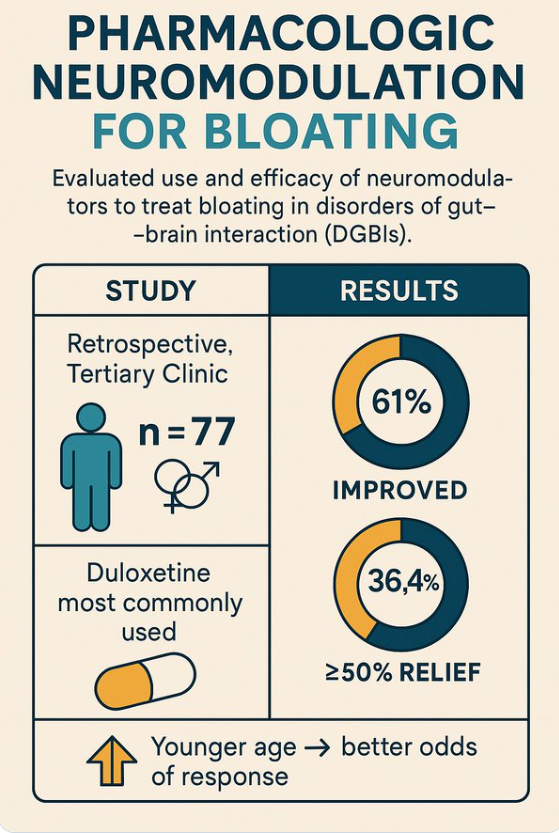
Pharmacologic Neuromodulation for Bloating Symptoms

Briefy noted: EN Madva et al. Scand J Gastroenterol 2025 Aug 8:1-5. doi: 10.1080/00365521.2025.2544306. Online ahead of print. Pharmacologic neuromodulation for bloating.

This was a small retrospective study of consecutively referred patients with a DGBI (N = 77; ages 18-74, 87% female) to a tertiary neurogastroenterology clinic who were prescribed a neuromodulator for a primary complaint of bloating in 2016-2022.  Duloxetine was the most commonly prescribed neuromodulator (n = 52, 67.5%).

My take: This study shows that neuromodulators are likely beneficial for bloating symptoms. Dr. Garza () previously noted that in patients with bloating “the typical increase in excess gas during bloating symptoms is only 22 mL.” Thus, “A lot of bloating symptoms are due to increased sensitivity and ‘weird gas handling.’ The latter could include compression of diaphragm rather than elevation.”

Related blog posts:

Disclaimer: This blog, gutsandgrowth, assumes no responsibility for any use or operation of any method, product, instruction, concept or idea contained in the material herein or for any injury or damage to persons or property (whether products liability, negligence or otherwise) resulting from such use or operation. These blog posts are for educational purposes only. Specific dosing of medications (along with potential adverse effects) should be confirmed by prescribing physician.  Because of rapid advances in the medical sciences, the gutsandgrowth blog cautions that independent verification should be made of diagnosis and drug dosages. The reader is solely responsible for the conduct of any suggested test or procedure.  This content is not a substitute for medical advice, diagnosis or treatment provided by a qualified healthcare provider. Always seek the advice of your physician or other qualified health provider with any questions you may have regarding a condition.

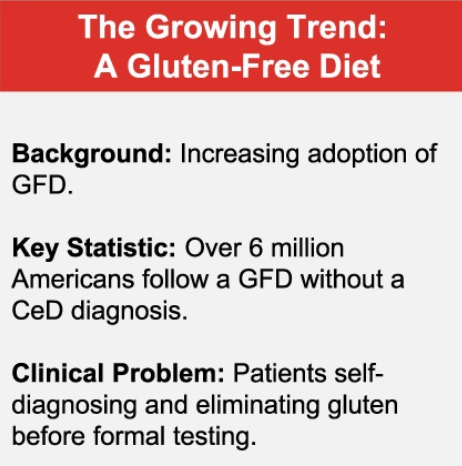
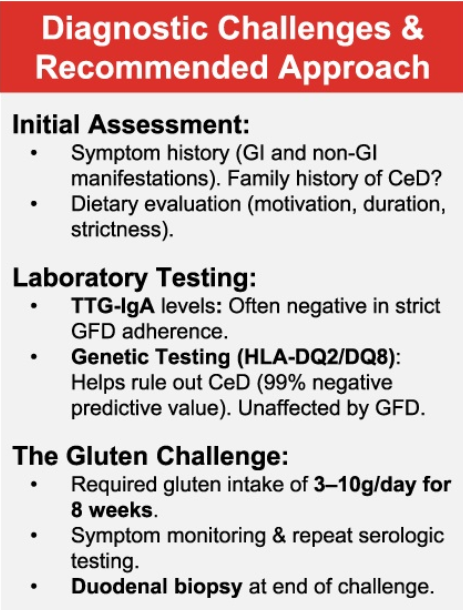
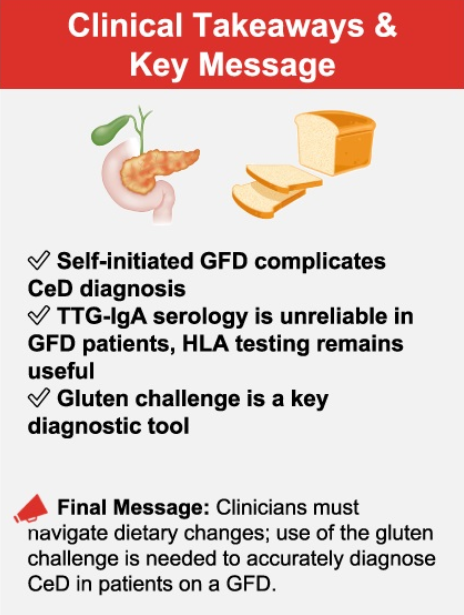
How to Diagnose Celiac Disease in Patients Already Receiving a Gluten Free Diet

Open Access: Evaluating for Celiac Disease in Patients on a Gluten-Free Diet: A Practical Approach

Algorithm -Figure 2:

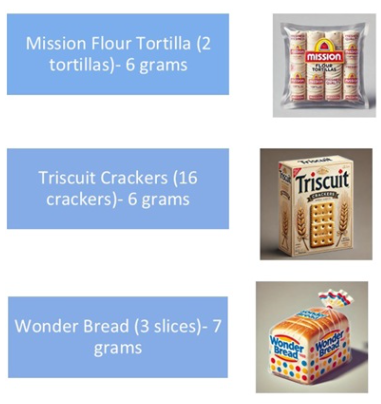
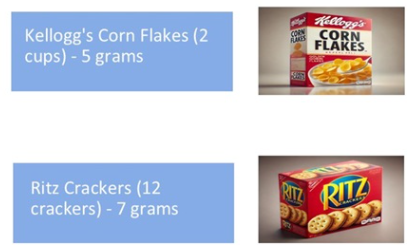
Figure 3 lists the content of several common foods -some noted below

While gluten exposure increases the diagnostic yield of currently available tests, there are novel tests being developed “which may aid in the diagnosis of CeD regardless of diet, with a particular focus on immune-based assays. One such innovation involves the use of tetramer-based assays, which enable the direct detection of gluten-specific T cells in the blood. These tetramers, designed to bind to HLA-DQ2 molecules, can help identify T cells that have been activated by gluten exposure. This presents a highly specific immune marker for CeD. Even for those on a GFD, sensitivity (97%) and specificity (95%) have been impressive.”

My take: This article provides practical advice for evaluating whether celiac disease is present in those already consuming a GFD.

Related blog posts:

And news from The Onion 8/26/25: Hummingbird Feels Like Fucking Idiot After Seeing Other Bird Gliding

Celiac Risk Among First-Degree Relatives of Index Case

S Karimzadhagh, et al. The American Journal of Gastroenterology 2025; 120(7):p 1488-1501. Global Prevalence and Clinical Manifestations of Celiac Disease Among First-Degree Relatives: A Systematic Review and Meta-Analysis

Methods: Of 8,764 studies screened, 34 studies involving 10,016 first-degree relatives (FDRs) of patients with Celiac Disease (CeD) were included

Key findings:

  • The pooled estimates for seroprevalence and the biopsy-confirmed CeD prevalence in FDRs were 11% and 7%, respectively
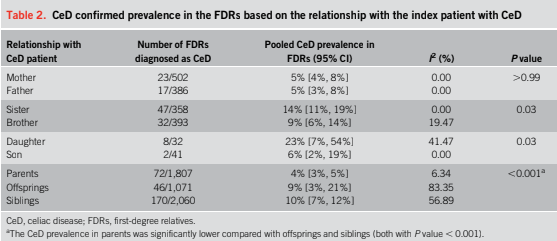
  • Daughters and sisters had the highest prevalence rates at 23% and 14%, compared with sons and brothers at 6% and 9%, respectively. Mothers/fathers prevalence rates were 5%. It is noted, however, that the stud only included 32 daughters and 41 sons, making these estimates less reliable
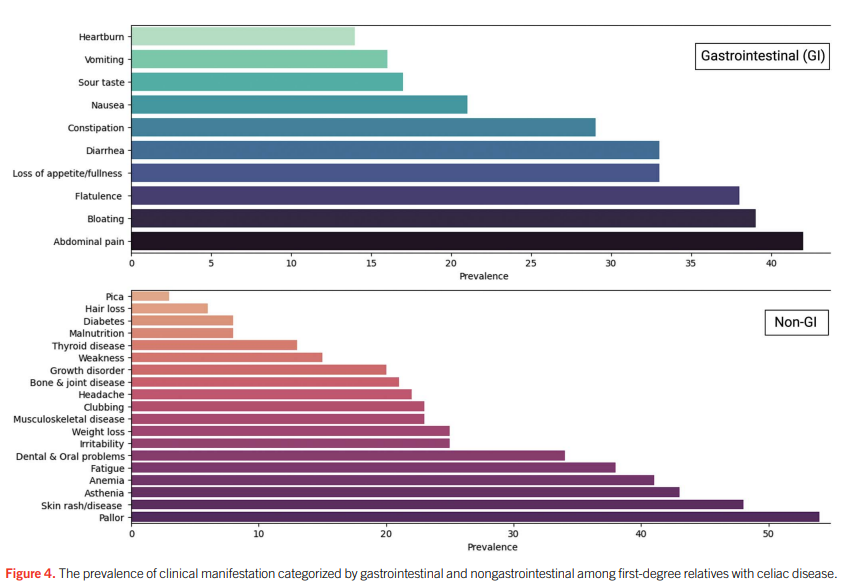
  • Abdominal pain (42%), bloating (39%), and flatulence (38%) were the most common gastrointestinal symptoms, while 34% of FDRs with CeD were asymptomatic

Discussion points:

Discrepancy between serology and biopsy: “First, not all individuals who tested positive through serological screening underwent a confirmatory duodenal biopsy. Second, some individuals with positive anti-tTG Ab may have false-positive results, or the disease process is still in the early stages of the disease, where intestinal damage is not yet detectable. This highlights that relying solely on serological screening without follow-up evaluations and intestinal biopsy can lead to overestimating the true prevalence of CeD.”

Limitations: “Some included studies only screened the siblings of indexed patients with CeD. For example, one study reported a prevalence of 22% among siblings. Given that genetic factors play a pivotal role in the pathogenesis of CeD and that the prevalence of CeD among siblings is often higher than that of other FDRs, this selective screening approach could potentially introduce selection bias into the overall prevalence of CeD in FDRs.”

My take: This study supports routine screening of first-degree relatives of patients with Celiac Disease, especially as many are asymptomatic.

Related blog posts:

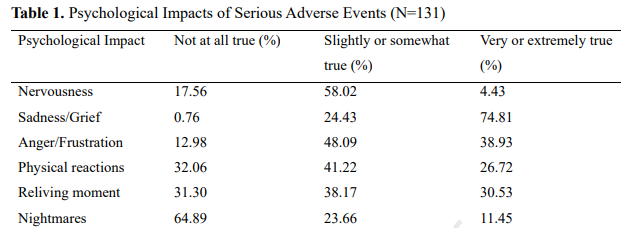
INNOCENT Study: Psychological Impact for Gastroenterologist Associated with Procedural Complications

Holzwanger, Erik A. et al. Gastroenterology 2025. Psychosocial Impact of Endoscopic Procedural Complications on Gastroenterologists: The Second Victims

Background: “Serious adverse events (SAEs) are unavoidable occurrences for those performing complex endoscopic interventions. These affect not only the patient (the first victim), but also possibly the proceduralist (the second victim). Second victim syndrome (SVS) was first described by Dr. Wu detailing the negative psychological effects of adverse patient events on physicians (Ref: Wu AW. Medical error: the second victim. BMJ. 2000;320(7237):726-727).”

Methods: Survey responses form “X” platform (n=195) were collected in 2023. Only
responses from advanced endoscopists (defined as those who perform either endoscopic
ultrasound or endoscopic retrograde cholangiopancreatography annually) and advanced
endoscopy fellows were included.

Key findings:

  • Higher procedural volume (>1000/year) was associated with feelings of greater emotional preparedness for SAEs
  • Speaking with colleagues (53%), exercise (33%), discussions at conferences (17%) and meditation (8%) were rated as used and very or extremely helpful

Discussion Points: “Peer support programs have proven to be well received and highly utilized. Additionally, surgeons criticize the often-punitive handling of SAEs, and note that the tone and culture in the review process following an SAE dictates reduction or exacerbation of SVS.”

My take: When I have had a complication in a patient, speaking with colleagues has provided a lot of support. One book I have recommended to others is the following: Complications: A Surgeon’s Notes on an Imperfect Science by Atul Gawande.

Related article (2022): “We Suffer in Silence” The Challenge of Surgeons as Second Victims

Related blog posts:

Sterile Water is Unnecessary for Endoscopy

From AGA Today (8/5/25): “Sterile Water is Unnecessary for Endoscopy”

GI and Hepatology News (8/4, Pass) reports a review suggests that “endoscopists can safely forgo sterile water in favor of tap, reducing both environmental and financial costs.” Researchers found that only two studies since 1975 “directly compared sterile and tap water use in endoscopy,” and “neither showed an increased risk of infection from tap water. In fact, some cultures from allegedly sterile water bottles grew pathogenic bacteria, while no patient complications were reported in either study.” Current guidelines “recommend sterile water for procedures involving mucosal penetration but acknowledge low-quality supporting evidence.” However, they pointed out that “these recommendations are based on outdated studies, some unrelated to GI endoscopy.” Furthermore, the “review estimates that the production and transportation of sterile water bottles contributes over 6,000 metric tons of emissions per year from US endoscopy units alone.” The review was published in Gastro Hep Advances.

Referenced article: D Agrawal, et al. Gastro Hep Advances, Volume 4, Issue 5, 100625. Ripple Effect: Safety, Cost, and Environmental Concerns of Using Sterile Water in Endoscopy

Environmental Costs:

“With a conservative estimate of using half of a 1-L sterile bottle for irrigation per endoscopy, 22 million yearly endoscopies in the US could result in an additional 6000 tons of eCO2.”

Economic Costs:

“A 1-L bottle of sterile water costs $3–$10. For an endoscopy unit performing 30 procedures daily and a conservative estimate of half a water bottle per case, the average monthly direct costs could be $1000–$3000”

Discussion:

“There is no direct supporting evidence for using sterile water during endoscopy…a Cochrane review show no difference in infection risk when using tap or sterile water to irrigate wounds…Similarly, there is no benefit in using sterile water for enteral feeds in immunosuppressed patients, and tap water enemas are routinely acceptable for colon cleansing before sigmoidoscopies in all patients, irrespective of immune status.

My take: Plastic water bottles in endoscopy centers contribute to health-care waste, climate change and increased costs.

Related blog post: Environmental Impact of Endoscopy

Sandy Springs, GA

Guselkumab for Crohn’s Disease: GALAXI-2 and GALAXI-3: 48-Week Results

R Panaccione et al. The Lancet. Published online July 17, 2025 https://doi.org/10.1016/S0140-6736(25)00681-6. Efficacy and safety of intravenous induction and subcutaneous maintenance therapy with guselkumab for patients with Crohn’s disease (GALAXI-2 and GALAXI-3): 48-week results from two phase 3, randomised, placebo and active comparator-controlled, double-blind, triple-dummy trials

Methods: “GALAXI-2 and GALAXI-3 were identically designed, phase 3, randomised, double-blind, triple-dummy, treat-through trials with active and placebo comparators…1048 participants were randomly assigned, treated, and followed up until week 48, of whom 1021 participants were included in the primary analysis population: 508 (49·8%) in GALAXI-2 and 513 (50·2%) in GALAXI-3.” The studies enrolled adult patients with moderately to severely active Crohn’s disease.

Key findings:

Discussion points:

  • “Guselkumab treatment in participants with moderately to severely active Crohn’s disease was also evaluated in the GRAVITI study, which had a fully subcutaneous induction and maintenance treatment regimen. Clinical and endoscopic outcomes reported with subcutaneous guselkumab induction in the GRAVITI study were similar to those in the phase 3 GALAXI studies following intravenous guselkumab induction.”
  • “The incidence of adverse events with guselkumab during induction was low and similar to placebo.”

My take (borrowed from authors): In GALAXI-2 and GALAXI-3, both guselkumab dose regimens (each including intravenous induction and subcutaneous maintenance) were superior to placebo for short-term (week 12) and long-term (week 48) endpoints and both guselkumab dose regimens were also superior to ustekinumab

Related blog posts:

Medications and the Risk of Microscopic Colitis

H Khalili et al. Annals of Internal Medicine 2025; https://doi.org/10.7326/ANNALS-25-0026. Medications and Risk for Microscopic Colitis: A Nationwide Study of Older Adults in Sweden

Methods: The authors used Total Population Register, which includes information on the age and sex of all residents in Sweden. Then the cohort of older adults in Sweden was linked to the ESPRESSO study), which contains data on GI-related biopsies from all 28 pathology departments in Sweden from January 1965 until April 2017.

Key findings:

  • Estimated 12-month risk differences were close to null under angiotensin-converting enzyme versus calcium-channel blocker (CCB) initiation, angiotensin-receptor blocker versus CCB initiation, nonsteroidal anti-inflammatory drug initiation versus noninitiation, proton-pump inhibitor initiation versus noninitiation, and statin initiation versus noninitiation. 
  • There was a slight increase risk of microscopic colitis in patients receiving SSRIs compared to mirtazapine. The estimated 12-month risk difference was 0.04% (95% CI, 0.03% to 0.05%) for selective serotonin receptor inhibitors (SSRIs) versus mirtazapine.
  • Several medications were also associated with increased risk for receiving a colonoscopy with a normal colorectal mucosa biopsy result.

My take: Microscopic colitis is a very infrequent problem in the pediatric population. With the exception of SSRIs, this study in older adults did not find a significant relationship between purported “trigger” medications and the development of microscopic colitis. In addition, the low persistent associations with SSRI initiation may be due to surveillance bias.

Impact of Mediterranean Diet on Constipation

Y Wang et al. Gastroenterol 2025; (Epub). Dietary Patterns and Incident Chronic Constipation in Three Prospective Cohorts of Middle- and Older-aged Adults

Methods: In three large cohorts, the Nurses’ Health Study (NHS), NHSII, and the Health Professional Follow-up Study (HPFS) (combined >95,000 participants), the authors identified chronic constipation based on repeatedly-measured self-reported constipation symptoms for ≥12 weeks in the past year.

Key Findings:

  • The top quintiles of alternate Mediterranean diet (aMED) and plant-based dietary index (PDI) were associated with 16% (9-22%) and 20% (14-27%) reduced risk for constipation. Vegetable and nut intake, which are enriched in aMED and PDI, were associated with decreased constipation risks.
  • A Western diet in the top quintile was associated with a 22% (11-33%) increased risk for constipation

My take: The results from this study are not surprising, but nice to see more data on the effects of diet on constipation. While this data focused on adults, it is clear that dietary patterns have a big role in the frequency of constipation in children too.

Related blog posts:

Once-Weekly Mazdutide: Effective for Overweight and Obesity (GLORY-1 Study)

L Ji et al. NEJM 2025; 392: 2215-2225. Once-Weekly Mazdutide in Chinese Adults with Obesity or Overweight

This study from China enrolled young participants (mean age 34 yrs) and lower BMI (mean 31.1) than in similar studies of other GLP1 RAs and GLP 1 RA/GIP dual agonists. However, there was a high prevalence of dyslipidemia (62.3%), MAFLD (48.9%), hyperuricemia (40.2%), and hypertension (22.8%).

Key findings:

  • At week 48, the mean percentage change in body weight from baseline was –11.00% in the 4-mg mazdutide group, –14.01% in the 6-mg mazdutide group, and 0.30% in the placebo group

My take: Mazdutide resulted in significant weight loss along with improvements in cardiometabolic measures. This study shows beneficial effects in a younger cohort with significant cardiometabolic disease. Improvements in younger populations is likely to result in more substantial effects on outcomes than improvement in older cohorts.

Related blog posts: