“Optimal dietary patterns for healthy aging”

Tessier, AJ., Wang, F., Korat, A.A. et al.  Nat Med (2025). https://doi.org/10.1038/s41591-025-03570-5. Open Access! Optimal dietary patterns for healthy aging

Key Points:

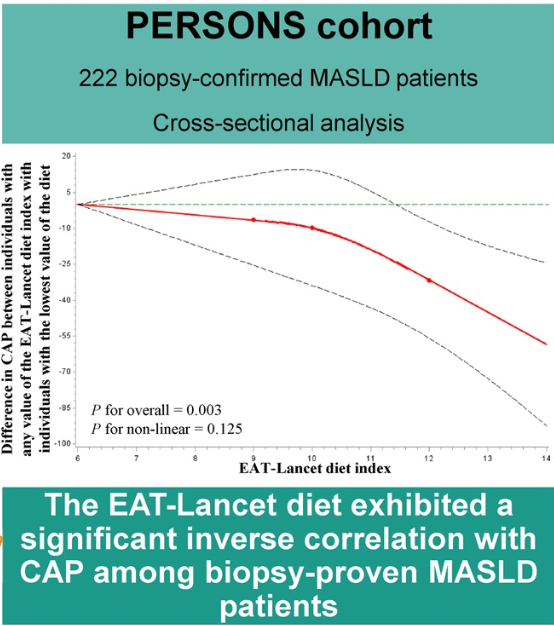
  • Of >105,000 participants with 30-year follow-up, only 9.3% achieved healthy aging (age 70, w/o any chronic diseases). Their diet was significantly associated with this outcome
  • A Mediterranean type diet high in fruits, vegetables, legumes, nuts, whole grains, low fat dairy products, plant-based foods, and a diet with reduced sodium, trans fats, animal-based foods, sugary beverages, ultra- processed foods was the optimal pattern
These are the specific foods that were linked with healthy aging and other outcomes.
Green-favorable; Red-unfavorable

Eric Topol has provided an excellent commentary on this article for those interested in a deeper analysis: Our Diet and Healthy Aging

Dr. Topol notes that there has been a decline in interest in plant-based foods. “In The Atlantic magazine this week [among other big Signal things ;-)] there was an article (←gift link) on the loss of appeal of plant-based eating…” He also previews his new book Super Agers.

Related blog posts:

Tirzepatide: Breakthrough in Obesity and Diabetes Management (SURMOUNT-1 Study at 3 years)

AM Jastrebofff et al. NEJM 2025; 392: 958-971. Tirzepatide for Obesity Treatment and Diabetes Prevention

Methods: In this phase 3, double-blind, randomized, controlled trial, there were  2539 participants with obesity, of whom 1032 also had prediabetes. They were assigned in a 1:1:1:1 ratio to receive tirzepatide at a once-weekly dose of 5 mg, 10 mg, or 15 mg or placebo.

Key findings:

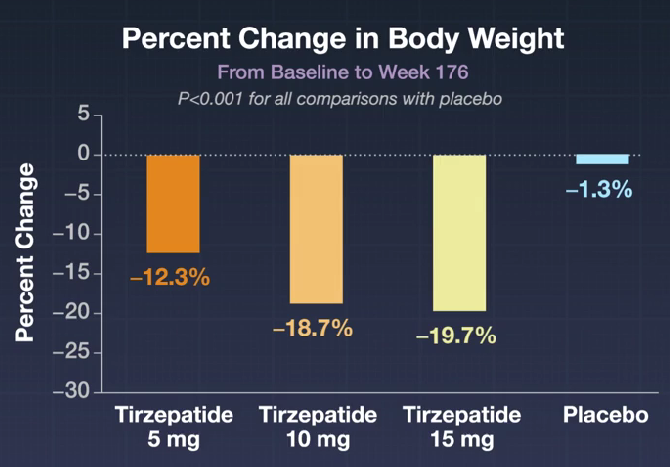
  • Weight loss: At 176 weeks, the mean percent change in body weight among the participants who received tirzepatide was −12.3% with the 5-mg dose, −18.7% with the 10-mg dose, and −19.7% with the 15-mg dose, as compared with −1.3% among those who received placebo (P<0.001 for all comparisons with placebo).
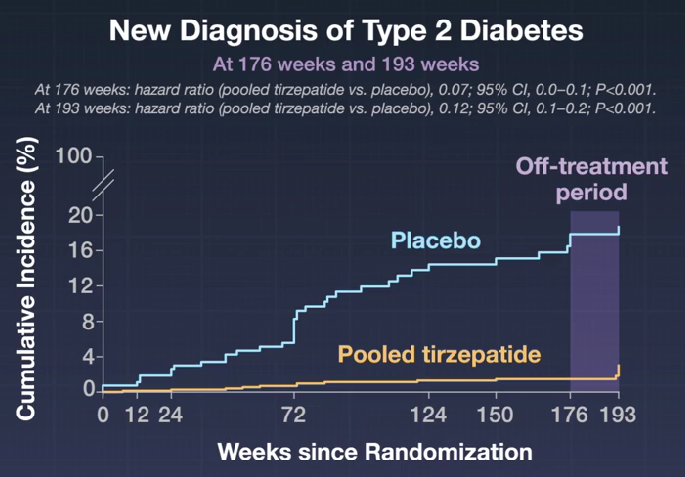
  • Type 2 Diabetes Reduction: Fewer participants received a diagnosis of type 2 diabetes in the tirzepatide groups than in the placebo group (1.3% vs. 13.3%; hazard ratio, 0.07). After 17 weeks off treatment or placebo, 2.4% of the participants who received tirzepatide and 13.7% of those who received placebo had type 2 diabetes (hazard ratio, 0.12)

My take: This study shows durable effectiveness of tirzepatide over a three year period with no new safety signals.

Related blog posts:

Understanding Heavy Metals in Baby Formula: Insights from Abbott

Link to Abbott website: Facts for Parents About Heavy Metals and Infant Formula

Some excepts:

Consumer Reports published a report on the levels of heavy metals in U.S. infant formulas. In response, we want to share some important information with parents regarding the report.

  • First and foremost, Abbott’s Similac infant formulas are safe, and parents can use them confidently.
  • The results reported by Consumer Reports for our infant formulas meet the regulations for heavy metals already set by the European Commission and Health Canada. FDA is currently developing limits for infant formula in the U.S.
  • Abbott has a multi-step quality process for heavy metals to ensure that levels are below the relevant regulatory requirements in the countries we serve.

Occurrence of Heavy Metals

Heavy metals are naturally occurring in the environment, including in the soil, water, or air where foods are grown.  As a result, they are present in low levels in almost anything we eat or drink, including in baby food, all brands of infant formula, fruits and vegetables, and human breast milk.

Commitment to Safety and Quality

The levels of heavy metals that Consumer Reports detected in Abbott’s formulas are very low—just a few parts per billion. To put that in perspective, a single ppb equals a single grain of sand in 730 pounds of sand.

Approach to Heavy Metals

Individual ingredients that we believe may contain trace heavy metals (due to absorption from the natural environment) are tested during the qualification process before we approve them for use in our products.  We also have an ongoing surveillance testing program after the qualification process designed to periodically test samples of ingredients and finished products to ensure that our supplier and ingredient qualification process is working as intended...Parents can continue to use them with confidence. 

Related blog posts:

Safe Baby Formula Choices Based on Consumer Reports Testing

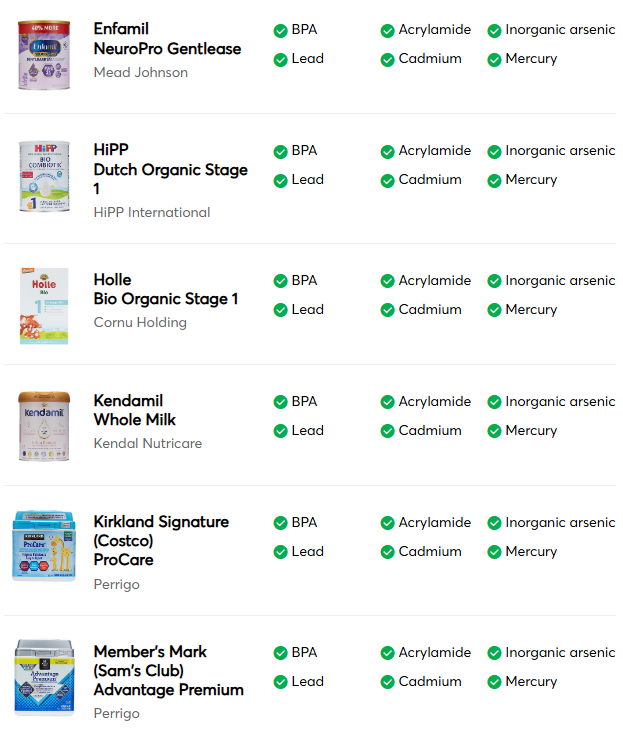
From Consumer Reports, April 18, 2025: We Tested 41 Baby Formulas for Lead and Arsenic

This Consumer Reports article is likely to generate a lot of attention. Thanks to Dr. Seth Marcus for sharing this reference.

An excerpt:

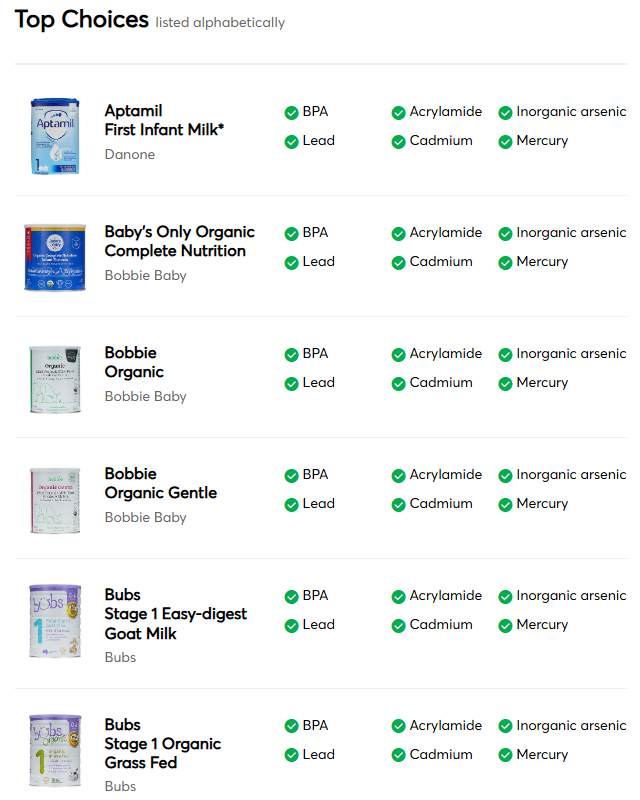
While some formulas had concerning levels [of arsenic and lead], there are safer choices. After seeing our results, the FDA is pledging further action…

Consumer Reports tests in the past have found elevated levels of inorganic arsenic in fruit juicebaby food, and bottled water…Our tests found the highest inorganic arsenic level in Abbott Nutrition’s EleCare Hypoallergenic, at 19.7 parts per billion (ppb), and the second highest in Similac Alimentum at 15.1 ppb, also made by Abbott.

As we had expected, CR’s tests found lead in almost all the formulas. Lead levels ranged from 1.2 ppb to 4.2 ppb, which is below the FDA’s Closer to Zero goal, but CR’s experts believe those levels are too high...

Together the formula made by these three companies—Abbott, Mead Johnson, and Perrigo—makes up 79 percent of the U.S. market…They also said trace levels of heavy metals in the food supply are not an issue that is unique to infant formula…

Perrigo, which makes Dr. Brown’s formula and many popular store brands we tested, including Kirkland, Parent’s Choice, Member’s Mark, and Up&Up, also told us that it routinely screens its formulas for heavy metals. “These compounds and PFAS are also found in breast milk,” a spokesperson wrote. “Their levels in infant formula are insignificant and well below regulations in the United States and around the world.”

Contaminants from the environment pose a problem for our entire food supply, CR experts say. But the problem is much more urgent for formula, given how vulnerable babies who depend on it are.

The FDA has long been limited by a lack of both resources and authority to carry out all the oversight it’s tasked with. ..

Keep these test results in perspective. Environmental pollutants are pervasive in our food supply, and all the contaminants in our tests—arsenic, lead, BPA, acrylamide, and PFAS—have also been previously detected in breast milk, food, and water…

Never ever try to make your own baby formula or offer alternative foods. It’s unsafe from a nutrition standpoint…

Use clean water to mix into your powdered formula. The EPA sets limits on contaminants in tap water for most of the country, but not every part of it. If you drink water from a well, for instance, that water is not regulated by the EPA. So it’s a good idea to get well water tested for heavy metals and PFAS before using it…

“Good Choices”

  • A2 Platinum -A2 Milk Company
  • ByHeart Whole Nutrition -ByHeart
  • Happy Baby Organics -Danone
  • Kendamil Organic -Kendal Nutricare
  • Neocate Hypoallergenic -Danone
  • Parent’s Choice Infant -Perrigo
  • Similac 360 Total Care -Abbott Nutrition
  • Similac 360 Total Care Sensitive -Abbott Nutrition
  • Similac Sensitive -Abbott Nutrition
  • Similac Soy Isomil -Abbott Nutrition

“Worse Choices”

  • Dr. Brown’s SoothePro -Perrigo
  • Elecare Hypoallergenic -Abbott Nutrition
  • Enfamil Nutramagen -Mead Johnson
  • Enfamil ProSobee Simply Plant-Based -Mead Johnson
  • Kabrita Goat Milk-Based -Ausnutria
  • PurAmino Hypoallergenic -Mead Johnson
  • Similac Alimentum -Abbott Nutrition
  • Similac NeoSure -Abbott Nutrition
  • Similac Total Comfort -Abbott Nutrition
  • Up&Up (Target) Soy -Perigo

My take: Formula companies need to continue to work on minimizing all of the contaminants. Yet, if all families selected only CR’s “top choices,” there would not be enough formula for infants who are not breastfed. In addition, this problem is even more of an issue in children needing specialized hypoallergenic formulas.

Related blog posts:

Efficacy of Anthocyanin-Rich Extract in Ulcerative Colitis

L Beidermann et al. Nutrients. 2024;16(23):4197. Open Access! Efficacy and Safety of Anthocyanin-Rich Extract in Patients with Ulcerative Colitis: A Randomized Controlled Trial

First of all: Bilberries are similar to blueberries, but have red inner flesh rather than white flesh.

Background: The authors note that some small studies have shown that anthocyanin-rich extract (ACRE), the bioactive ingredient of bilberries, has been effective for ulcerative colitis (UC)

“ACs have been associated with many protective biological effects, including anti-oxidative, anti-carcinogenic, antimicrobial, and anti-inflammatory properties [17,20,21]. Due to their phenolic structure, ACs exhibit an anti-oxidative capacity in vivo as they scavenge reactive oxygen species (ROS) [20,22], also a classical effect of 5-ASA [23]. After ingestion, ACs largely bypass absorption in the upper gastrointestinal tract, reaching the colon intact, where they are metabolized by microbiota through deglycosylation and further degraded into vanillic, protocatechuic, p-coumaric, gallic, and syringic acids (i.e., phenolic acids) [24]. ACs interrupt the pro-inflammatory signaling and are inhibitors of 5-lipoxygenase, a key enzyme implicated in the arachidonic acid pathway for the biosynthesis of active leukotrienes.”

Methods: A multi-center, randomized, placebo-controlled, double-blind study with a parallel group was conducted. Due to COVID-19’s effect on study enrollment, only 34 patients were randomized and only Eighteen ACRE and eight placebo patients could be analyzed (per protocol set)

Key finding:

  • Half (9/18) of ACRE patients and 3/8 of placebo patients responded clinically (p = 0.278). An improvement in the Mayo score was observed in the ACRE arm (77.8% vs. 62.5% placebo).
  • Fecal calprotectin (FC) dropped from 1049 ± 1139 to 557 ± 756 μg/g for ACRE but not for the placebo group (947 ± 1039 to 1040 ± 1179; p = 0.035).

The authors state that the placebo group had an unusually high response and that improved FC with ACRE patients indicates efficacy in UC.

Figure 2
Figure 3

My take: This is a negative study (despite the secondary finding of improved FC at some timepoints). Importantly, the study did not demonstrate any harms in the ACRE group. It did help me understand more about bilberries!

Related blog posts:

Is Breastfeeding Linked to IBD Risk in Offspring?

M Agrawal et al. Clin Gastroenterol Hepatol 2024; 22: 2459-2467. Open Access! Breastfeeding Duration Is Not Associated With Offspring Inflammatory Bowel Disease Risk in Three Population-Based Birth Cohorts

The authors utilized  prospectively collected data from 3 population-based birth cohorts (Danish National Birth Cohort, Norwegian Mother, Father, and Child Cohort, and All Babies in Southeast Sweden). This collectively included nearly 170,000 offspring.

Key findings:

  • During median follow-up of 16.3–22.3 years, between 1996 and 2021, 543 offspring were diagnosed with IBD
  • In each country, there was no association between exclusive breastfeeding duration and offspring IBD risk

Discussion:

“In contrast to majority of case-control studies, both cohort studies reported null association between breastfeeding, treated as a binary exposure (any versus no breastfeeding) or by duration, and offspring IBD risk. Similarly, 2 nested case-control studies, leveraging prospectively collected data on early life exposures as part of the population-based Jerusalem Perinatal Study and 2 United Kingdom birth cohorts (the 1946 National Survey of Health & Development and the 1958 National Child Development Study) reported null associations between breastfeeding and IBD risk.22,23 Data from these studies, which are more rigorous in methodology compared with case-control studies, are consistent with findings from our analyses.”

My take: While this study has some limitations inherent in observational data, this study with prospectively-collected data indicates that breastfeeding did not modulate the risk of developing IBD.

Related blog posts:

La Fortuna, Costa Rica

Impact of Ultra-Processed Foods on Bowel Health

C-H Lo et al. Clin Gastroenterol Hepatol 2024; 22: 2309-2318. Open Access! Association of Ultra-processed Food and Unprocessed or Minimally Processed Food Consumption With Bowel Habits Among U.S. Adults

Methods: The authors used a cross-sectional study using data from the National Health and Nutrition Examination Survey (2005-2010) and they used two 24-hour dietary recalls and, based on the Nova classification, calculated intakes of ultra-processed foods (UPFs) and minimally-processed foods (MPFs). N=12,716 adults.

Key Findings:

  • Median UPF and MPF intakes were 26.5% and 66.2% of total grams per day, respectively
  • Greater UPF consumption (in % gram/d) was associated with higher odds of constipation
    (adjusted OR [aORQ4 vs Q1], 2.20]

Discussion point: The authors did not find an association with diarrhea. “UPF consumption has been associated with increased risks of GI disorders that can cause chronic diarrhea including IBD and irritable bowel syndrome (IBS). This was thought to be related to alteration of the gut barrier integrity and activation of the immune response in the setting of microbial dysbiosis. The overall effect induces a pro-inflammatory micro-environment in the intestine and alterations in bowel function. However, the amount of UPFs needed to be
consumed by individuals such that the risk of diarrhea would be higher is unknown and likely varies between individuals.”

My take: Limiting UPFs and promoting fresh foods/minimally-processed foods is better for our health.

Related blog posts:

La Fortuna, Costa Rica

Improvements in Toddler Diet Quality: 1999-2018 Study

M Zimmer et al. Pediatrics 2024; 154: e2024067783.

Methods: This serial cross-sectional analysis of National Health and Nutrition Examination Survey (NHANES) data was performed with 2541 toddlers from 10 NHANES cycles from 1999 to 2018.

Key findings:

  • Toddler diet quality improved significantly from 1999 to 2018 (P < .001), from 63.7
    points on average in 1999-2000 to 67.7 points in 2017-2018
  • A significant positive linear trend in total diet quality was observed for all socioeconomic status groups (P < .05)
  • Several dietary component scores improved, as follows: Whole Fruits (P < .001), Whole
    Grains (P 5 .016), Fatty Acids (P 5 .002), Refined Grains (P 5 .009), and Added Sugars
    (P < .001)
HEI-Toddlers -Healthy Eating Index has total score ranging from 0-100 points with higher score indicating healthier diets.

In the discussion, the authors note that other age groups besides toddlers have seen modest improvements in diet. Even small improvements can be consequential on a population-basis. In adults, a 4-point increase in HEI scores has been associated with a reduced risk of cardiovascular disease. The strongest improvement between 1999 and
2018 in toddler diet quality was in scores for added sugars…attributed to declines in
added sugars from sweetened beverages. “A heightened awareness of added sugars in sweetened drink products among caregivers themselves may have led to a cultural shift
around feeding toddlers less sweetened drinks.”

While in toddlers there was no significant difference in dietary scores based on socioeconomic status, “, the diet quality gap for adults has widened over time by SES,14,15
race and Hispanic origin, and Supplemental Nutrition Assistance Program participation status.”

“Although toddlers do not receive school meals, their diets can be similarly impacted by other large-scale programs like the Special Supplemental Nutrition Program for Women, Infants, and Children (WIC) and the Child and Adult Care Food Program. Changes to the WIC food package have been consistently linked to improved child diet quality, and may have contributed to the gains in toddler diet quality observed in this study.”

Study limitations are related to self-reported dietary intake.

My take: It feels like improving diet quality is like swimming against a strong tide. Yet, this study shows improvements can happen. Ongoing efforts are needed to encourage healthier diets.

Related blog posts:

The Hidden Dangers of Early Sugar Exposure

Catherine Offord. Science 10/31/24: Britain’s postwar sugar craze confirms harms of sweet diets in early life. Reference article: T Gracner et al. Science 2024; 0,eadn5421. DOI:10.1126/science.adn5421 Exposure to sugar rationing in the first 1000 days of life protected against chronic disease

An excerpt:

In 1953, the United Kingdom got its sweet tooth back, ending the rationing of candies and sugar that had begun during World War II. Hordes of people descended on candy stores and started to sweeten more of their foods at home. Within the year, the nation’s sugar consumption doubled…. 

Combining food surveys and sugar sales from the 1950s with medical records of adults from the UK Biobank database, the team found that people conceived or born after 1953 had higher risks of type 2 diabetes and hypertension decades later than those born during rationing…

Public health authorities recommend no added sugar for infants during the first 1000 days from conception, a critical window for development. But … more than 80% of babies and toddlers have foods with added sugar on any given day…

Infants who reached age 1.5 before rationing ended fared even better, with a 40% lower risk of diabetes and a 20% lower risk of hypertension compared with the never-rationed group.

My take: Mae West was wrong. Too much of a good thing is not wonderful (if the good thing is sugar).

Related blog posts:

Isle of Palms, SC

Risk of Eating Disorders with Dietary Therapy of Functional Abdominal Pain

L Sims et al. JPGN 2024;79:1040–1046 Open Access! Eating concerns in youth with functional abdominal pain disorders

This retrospective cohort included 270 adolescents/young adults who attended an intensive, interdisciplinary pain treatment program, including 135 youth with functional abdominal pain (FAP) and an age- and gender-matched control group with a primary pain diagnosis of chronic headache.

Key findings:

  • Limitation of this study: The population attending this intensive pain program is NOT representative of typical outpatient setting
  • A history of an eating disorder was more common with FAP than in those with chronic headache (15.4% vs. 5.9%)
  • In this cohort, patients with FAP compared to patients with chronic headache had higher rates of prior exclusion diets to manage their symptoms (46% vs. 22%, p = 0.007), and prior requirement enteral or parenteral feeds (18% vs. 1.5%, p = 0.001)
  • The study found a significant association between a history of exclusion diets and meeting criteria for ARFID. “With regard to ARFID, the prevalence of patients in both groups who met diagnostic criteria (FAP: 50%; chronic headache: 36%) was also significantly higher than estimates from the general school-aged population (3%)”
  • Patients with FAP were also more likely than patients with chronic headache to be diagnosed with postural orthostatic tachycardia syndrome ([POTS]; 46% vs. 30%) and have a history of food allergies or intolerances (43% vs. 25%)
  • Significantly more adolescents with FAP (n = 68) than chronic headache (n = 45) had lost 4.5 kg or more, p = 0.004

My take: Most treatments for FAP, including dietary treatment, have some inherent risks. In patients placed on dietary therapies, screening and/or discussing the risk of dietary restriction need to be considered.

Related blog posts:

Boats Leaving Harbor -Claude Monet, National Gallery of Art (Washington, D.C.)