Liver Shorts April 2019

CL Mack et al. JPGN 2019; 68: 495-501. This multicenter prospective open-label phase I/III trial of IVIG in biliary atresia patients status-post Kasai indicated that the infusions were tolerated.  However, though this study was not powered to detect efficacy, survival with native liver was LOWER among patients who had received IVIG (n=29): 58.6% compared to the comparison placebo group 70.5% (n=64).  Thus, despite the theoretical advantages of IVIG which targets aspects of the immune system and improvement in a murine model, in practice IVIG does not appear promising for biliary atresia.

D Kim et al. Hepatology 2019; 69: 1064-74. This study shows that despite improvements in hepatitis C mortality rates associated with newer treatments, there is an overall increase in mortality rates from cirrhosis and hepatocellular carcinoma.  This increase is driven by increasing prevalence and severity of both alcoholic liver disease and nonalchoholic fatty liver disease. The overall cirrhosis-related mortality increased from 19.77/100,000 persons in 2007 to 23.67 in 2016 with an annual increase of 2.3%. Similarly, the overall HCC-related mortality increased from 3.48/100,000 persons in 2007 to 4.41 in 2016 at annual increase of 2%. The editorial on page 931 (TG Cotter and MR Charlton) notes that each year there are more than 40,000 deaaths associated with chronic liver disease.

H Park et al. Hepatology 2019; 69: 1032-45. This study, using Truven Health MarketScan Cata, examined the outcomes of more than 26,000 patients with newly-diagnosed hepatitis C virus (HCV) infection.  Among the 30% who received oral direct-acting antiviral (DAA) therapy, there were improved outcomes in those with and without cirrhosis. In those with cirrhosis (n=2157), DAA was associated with a 72% and 62% lower incidences of HCC and DCC [decompensated cirrhosis] respectively. In noncirrhotic HCV patients (n=23,948), DAA was associated with a 57% and 58% lower incidence of HCC and DCC respectively.  In addition to improved health outcomes, DAA treatment resulted in decrease health care costs, especially for patients with cirrhosis.

Z Kuloglu et al. JPGN 2019; 68: 371-6.  In this multicenter Turkish study, the authors identified 810 children (median age 5.6 years) with unexplained transaminase elevation (62%),unexplained organomegaly (45%), obesity-unrelated liver steatosis (26%) and cryptogenic fibrosis or cirrhosis (6%).  LAL-D [lysosomal acid lipase deficiency] activity was deficient in 2 siblings (0.2%); both had LDL ~155.  Overall, even in at risk groups, LAL-D is rare.

Related posts:

Joshua Tree National Park

Best Predictor for Mortality from Biliary Atresia Liver Transplantation Candidates –Cardiomyopathy?

Briefly noted: A recent study (NM Gorgis et al. Hepatology 2019; 69: 1206-18, editorial 940-2 by Elizabeth Rand) indicates that cirrhotic cardiomyopathy (CCM) is very important factor for survival for biliary atresia (BA) patients requiring liver transplantation.

CCM was defined based on two-dimensional echocardiographic criteria: LV mass index ≥95 g/meter-squared or relative wall LV thickness of LV ≥0.42.

Key points:

  • Overall, 11 of 69 patients died, 4 while awaiting liver transplantation and 7 following transplantation.
  • 34 of 69 BA patients in this cohort had BA-CCM
  • All 11 who died had BA-CCM compared with no deaths in the 35 patients without CCM.

My take: Severe BA-CCM needs to be examined further; if severe, it may merit changing allocation policy.

Related blog posts:

Joshua Tree National Park

Biliary Atresia and Bile Lakes

A retrospective study (DA Ginström et al. JPGN 2019; 488-94) review cholangitis associated with biliary atresia and the role of bile leaks.  This study encompasses a ~30 year period (1987-2016) and 61 patients.

Key findings: 

  • 54% had survived with their native liver at a median of 7.3 years; 28 (46%) had ≥ 1 cholangitis episodes/year
  • Cholangitis bouts were >5 times higher among patients with bile lakes
  • Management of bile lakes after 1995 (n=6) was with operative intestinal drainage (bile-lake jejunostomy) which resulted in disappearance or regression of bile lakes in all patients.  Associated with this, yearly cholangitis bouts decreased from 8.8 (4.2-14) to 1.1 (0.2-3.2). Prior to 1995, two patients were managed with PTCD; both died within one year.
  • Among patients who had surgical drainage of their bile lakes, 4 have survived jaundice-free and 2 received liver transplants at 1.3 and 4.9 years after intestinal drainage.

My take: This report provides insight into the management of bile lakes (also referred to as intrahepatic biliary cysts) indicating that bile-lake jejunostomy is effective in symptomatic patients.

Related blog posts:

Joshua Tree National Park

Pediatric Livers Bypassing Needy Children

A recent study (J Ge, EK Hsu, J Bucuvalas, JC Lai. Hepatology 2019; 69: 1231-41) provides data showing that current liver allocation policy allow pediatric donor organs to bypass desperately ill children in favor of adult liver transplant recipients. The authors utilized national registry data over a 5-year period to follow the allocation of pediatric liver donor organs.

Key points:

  • About 60 children (~12% of waitlist candidates) die awaiting liver transplantation each year
  • From 2010-2014, 3318 pediatric donor livers were transplanted; 45% of these organs went to adults.
  • 390 of the 1569 adult recipients received a pediatric organ that was NEVER offered to a child
  • In this group of 390, 71% of these adults were lower acuity with MELD <35 and non-status 1A.

These data identify a deviation from the policy goal that pediatric organs are offered first to pediatric recipients.

My take: this study adds more data showing that children <12 years of age are disadvantaged with current allocation policies.  This is despite the fact that children have lower posttransplant mortality, indicating that organ transplantation is more likely to be truly life-saving in children.

Related blog posts:

Near Chattahoochee River, Atlanta

How Progressive Familial Intrahepatic Cholestasis (PFIC) Recurs After Liver Transplantation

A recent case-report study (D Krebs-Schmitt et al. JPGN 2019; 68: 169-74) describes how progressive familial intrahepatic cholestasis (PFIC) due to bile salt export pump (BSEP) deficiency can recur after liver transplantation.

BSEP deficiency due to mutations in ABCB11 gene causes the development of PFIC type 2.  In this case report, the authors describe recurrence of BSEP-deficiency following liver transplantaion in 3 patients.

Key points:

  • Following liver transplantation, patients with PFIC 2 can develop antibodies to BSEP as this antigen was not present in the pretransplant period.  Since initial reports, more than 20 patients have been described. “In most of these cases, intensifying the immunosuppression led to normalization of graft function.”
  • In this case report, the 3 patients ultimately required retransplantation due to recurrent disease and one patient died (following retransplantation). One patient also received stem cell transplantation after a complicated course.

Related blog posts:

Georgia Aquarium

Are Liver Tests Needed in Pediatric Patients Receiving Statin Therapy?

A recent study (NK Desai et al. JPGN 2019; 68: 175-81) showed excellent safety of statins with regard to hepatotoxicity. This study utilized prospectively collected ALT values from the Preventive Cardiology Program at Boston Children’s and their lipid program from 2010 until 2014.  They included 943 patients (mean age 14 years) with 111 always on statin, 97 started on statin, and 735 never on a statin.

Key findings:

  • In this cohort with dyslipidemia, there was no higher burden of ALT elevations among pediatric patients receiving statin therapy compared to those who did not receive statin therapy.
  • Patients with ALT values ≥5 times ULN were not increased among patients receiving statins (n=3) compared to those who did not receiving statins (n=13)
  • Mean ALT was actually greater in the non-statin cohort by 2 U/L but likely related to the increased frequency of obesity in the non-statin group.

My take: Due to the high prevalence of nonalcoholic fatty liver disease (NAFLD), it is likely that most patients who need statin therapy would get liver biochemistries; however, this study suggests that additional monitoring is not required in asymptomatic patients who receive statins for dyslipidemia.

Related blog posts:

Georgia Aquarium

How Long is Acetylcysteine Needed for Acetaminophen Overdose?

A recent open-label “NACSTOP trial” (A Wong et al. Hepatology 2019; 69: 774-84) examined a 12-hour regimen of acetylcysteine in patients at lower risk for severe hepatotoxicity from acetaminophen overdose.

Background/Methods: Intravenous acetylcysteine is generally delivered as 300 mg/kg over 20 hours in “nearly every patient deemed at any risk for hepatotoxicity following acetaminophen overdose.” Administration within 8 hours of an acute single acetaminophen overdose prevents hepatotoxicity in nearly all patients.

In this study, patients with normal serum alanine transaminase (ALT) and normal creatinine at presentation and at 12 hours along with acetaminophen level of <20 mg/L at 12 hours were assigned to either a 12 hour (250 mg/kg) or 20 hour (300 mg/kg) acetylcysteine (IV) infusion.

1411 Acetaminophen overdoses were identified; of these, 449 met criteria for study participation. 100 patients out of these 449 eligible were enrolled.

Key findings:

  • There was no difference in ALT or INR at 20 hours between the two groups.
  • No hepatotoxicity was evident in either group. 96 of 96 were well at 14-day telephone followup.

Discussion: “A normal ALT on  presentation has a high negative predictive values (100%) of individuals developing any serious liver injury (ALT >1000 IU/L) in those receiving acetylcysteine.” [Al-Hourani et al. QJM 2013; 1065: 541-6)

My take: This study shows that a shortened acetylcysteine infusion is likely safe in selected patients at low risk for hepatotoxicity.

Related blog posts:

Disclaimer: These blog posts are for educational purposes only. Specific dosing of medications/diets (along with potential adverse effects) should be confirmed by prescribing physician/nutritionist.  This content is not a substitute for medical advice, diagnosis or treatment provided by a qualified healthcare provider. Always seek the advice of your physician or other qualified health provider with any questions you may have regarding a condition

Joshua Tree National Park

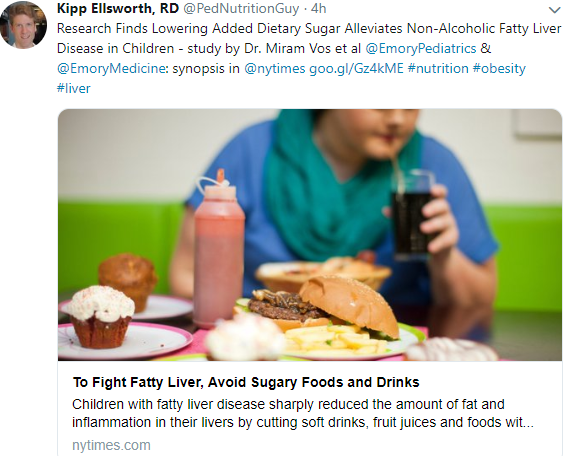
Low Free Sugar Diet for Nonalcoholic Fatty Liver Disease in Adolescent Boys

A recent randomized study (Jeffrey B. Schwimmer, MD1,2Patricia Ugalde-Nicalo, MD1Jean A. Welsh, PhD, MPH, RN3,4,5et al JAMA. 2019;321(3):256-265. doi:10.1001/jama.2018.20579) examined the beneficial effects of a low free sugar diet for Nonalcoholic Fatty Liver Disease (NAFLD) in adolescent boys.  Congratulations to the authors, particularly to Miriam Vos (my Emory colleague & corresponding author) and Jeffrey Schwimmer (whose training overlapped with mine in Cincinnati).

Key finding:

“In this randomized clinical trial that included 40 adolescent boys aged 11 to 16 years with nonalcoholic fatty liver disease followed up for 8 weeks, provision of a diet low in free sugars compared with usual diet resulted in a greater reduction in hepatic steatosis [based on MRI] from 25% to 17% in the low free sugar diet group and from 21% to 20% in the usual diet group, a statistically significant difference of −6.23% when adjusted for baseline.”

Summary of this study in NY Times: To Fight Fatty Liver, Avoid Sugary Foods and Drinks

An excerpt from NY Times:

To make the diet easier and more practical for the children in the limited-sugar group to follow, the researchers asked their families to follow it as well. They tailored the diet to the needs of each household by examining the foods they consumed in a typical week and then swapping in lower sugar alternatives. If a family routinely ate yogurts, sauces, salad dressings and breads that contained added sugar, for example, then the researchers provided them with versions of those foods that did not have sugar added to them.

Fruit juices, soft drinks and other sweet drinks were forbidden. They were replaced with unsweetened iced teas, milk, water and other nonsugary beverages. Dietitians prepared and delivered meals to the families twice a week, which helped them stick to their programs.

Full abstract:

Importance  Pediatric guidelines for the management of nonalcoholic fatty liver disease (NAFLD) recommend a healthy diet as treatment. Reduction of sugary foods and beverages is a plausible but unproven treatment.

Objective  To determine the effects of a diet low in free sugars (those sugars added to foods and beverages and occurring naturally in fruit juices) in adolescent boys with NAFLD.

Design, Setting, and Participants  An open-label, 8-week randomized clinical trial of adolescent boys aged 11 to 16 years with histologically diagnosed NAFLD and evidence of active disease (hepatic steatosis >10% and alanine aminotransferase level ≥45 U/L) randomized 1:1 to an intervention diet group or usual diet group at 2 US academic clinical research centers from August 2015 to July 2017; final date of follow-up was September 2017.

Interventions  The intervention diet consisted of individualized menu planning and provision of study meals for the entire household to restrict free sugar intake to less than 3% of daily calories for 8 weeks. Twice-weekly telephone calls assessed diet adherence. Usual diet participants consumed their regular diet.

Main Outcomes and Measures  The primary outcome was change in hepatic steatosis estimated by magnetic resonance imaging proton density fat fraction measurement between baseline and 8 weeks. The minimal clinically important difference was assumed to be 4%. There were 12 secondary outcomes, including change in alanine aminotransferase level and diet adherence.

Results  Forty adolescent boys were randomly assigned to either the intervention diet group or the usual diet group (20 per group; mean [SD] age, 13.0 [1.9] years; most were Hispanic [95%]) and all completed the trial. The mean decrease in hepatic steatosis from baseline to week 8 was significantly greater for the intervention diet group (25% to 17%) vs the usual diet group (21% to 20%) and the adjusted week 8 mean difference was −6.23% (95% CI, −9.45% to −3.02%; P < .001). Of the 12 prespecified secondary outcomes, 7 were null and 5 were statistically significant including alanine aminotransferase level and diet adherence. The geometric mean decrease in alanine aminotransferase level from baseline to 8 weeks was significantly greater for the intervention diet group (103 U/L to 61 U/L) vs the usual diet group (82 U/L to 75 U/L) and the adjusted ratio of the geometric means at week 8 was 0.65 U/L (95% CI, 0.53 to 0.81 U/L; P < .001). Adherence to the diet was high in the intervention diet group (18 of 20 reported intake of <3% of calories from free sugar during the intervention). There were no adverse events related to participation in the study.

Conclusions and Relevance  In this study of adolescent boys with NAFLD, 8 weeks of provision of a diet low in free sugar content compared with usual diet resulted in significant improvement in hepatic steatosis. However, these findings should be considered preliminary and further research is required to assess long-term and clinical outcomes.


Related blog posts:


Subclinical Liver Transplant Rejection

A recent study (S Feng, JC Bucuvalas, et al. Gastroenterol 2018; 155: 1838-51) found a high prevalence of chronic histologic injury even among highly selected long term liver transplant recipients with consistently normal liver biochemical tests. The authors were able to enroll 157 patients. In addition to histology, the authors examined gene expression/microarray transcriptional analysis, and immunohistochemical staining.

Key findings:

  • Three clusters of patients were identified: interface activity (group 1, n=34), periportal/perivenular fibrosis without interface activity (group 2, n=45), and a group with neither (group 3, n=78).
  • In this cohort, 96 (61%) had Ishak Fibrosis of Stage 0-1, 27  (17%) had Stage 2, 33 (21%) had Stage 3, and 1 (1%) had Stage 4-5.
  • The authors identified a module of genes that regulate T-cell-mediated rejection that were associated with interface activity. Thus, interface activity in these patients connotes subclinical rejection, even in patients with consistently normal liver biochemistries.

What to do with this information:

“For patients whose biopsy samples harbor neither inflammation nor fibrosis, immunosuppression dose reduction may be reasonable…For patients, whose biopsy samples show fibrosis in the absence of inflammation, our data do not support any recommendations…for patients whose biopsy samples show interface hepatitis, our data indicate that dose reduction may be unwise.  Although the intuitive response may be to escalate immunosuppression, data evidencing the benefit of this approach are lacking.”

My take: This study shows why a liver biopsy has been important prior to reducing immunosuppression (in liver transplantation and autoimmune hepatitis). My question is whether the authors could identify a gene signature/biomarker (like their gene module) that could be used as an alternative to a liver biopsy.

Related blog post:

View from Golden Gulch Trail, Death Valley