
D Blumenthal et al; NEJM 2024; DOI: 10.1056/NEJMp241085. The Failing U.S. Health System
This article succinctly explains why the U.S. health system spends a lot and has the worst performance of similar countries.
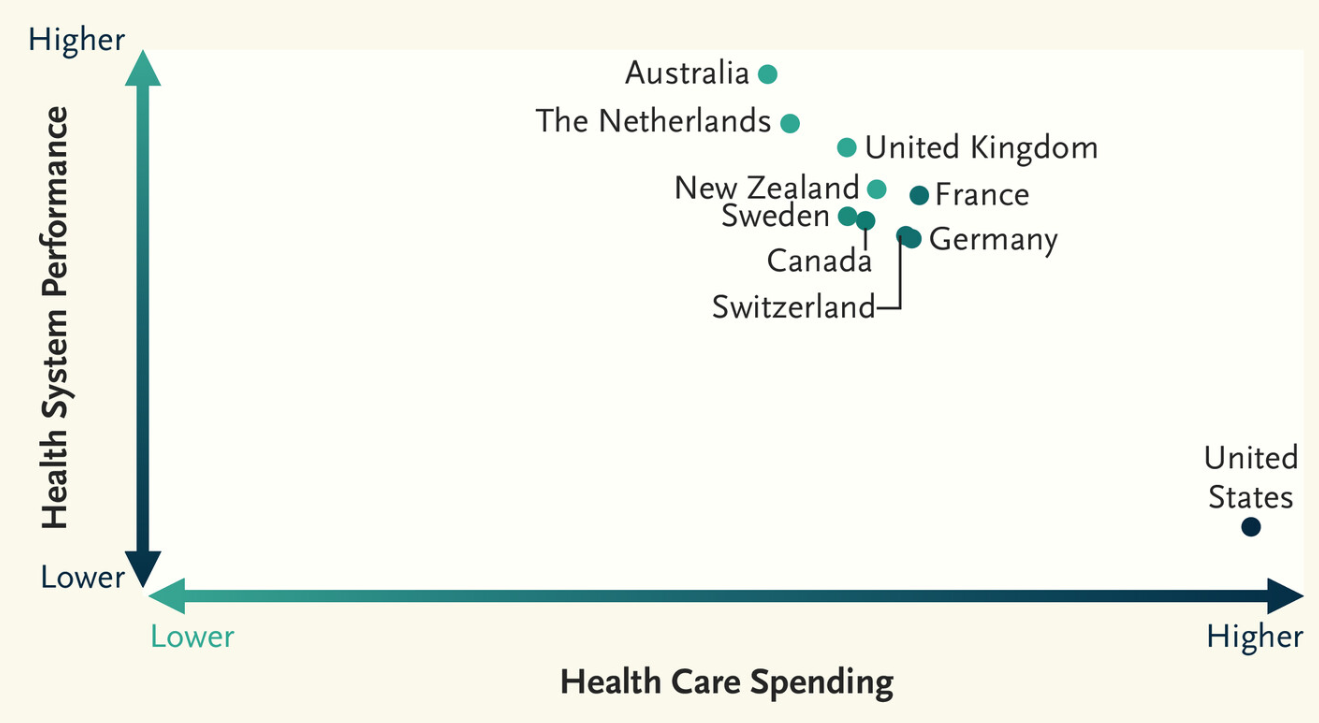
Some excerpts:
- “In Mirror, Mirror 2024, the Commonwealth Fund’s eighth report since 2004 comparing the health systems of 10 high-income countries…The United States has the lowest life expectancy among the 10 countries we studied, 4 years less than the 10-country average.”
- “It also ranks last on measures of preventable mortality and “treatable mortality”…These measures capture deaths that could have been averted by means of preventive services or timely and effective treatment, such as deaths from hypertension, diabetes, cerebrovascular disease, ischemic heart disease, or renal failure. The United States had the highest excess mortality attributable to Covid-19 among people younger than 75 years of age in 2021. It also has the highest rate among the 10 countries of death from self-harm, which includes deaths by suicide, and the highest rate — by orders of magnitude — of death from assault, which includes deaths caused by gun violence.”
- “The United States ranks last on measures of access to care and equity of care…Another contributor to access barriers is inadequate coverage among insured Americans because of high deductibles and copayments.”
- ” The Affordable Care Act and related policies reduced the proportion of uninsured people to its current level of 7 to 8%. But 26 million Americans still lack insurance.”
- “Providing insurance, however, will not be sufficient. The U.S. health care delivery system has profound problems … One such problem is the country’s worsening shortage of primary care clinicians”
- ” the high prices charged by U.S. health care facilities and professionals, which far exceed prices in other health systems.3 … One of the reasons health care organizations are able to charge such high prices is that they have obtained increasing economic power in local markets as a result of consolidation — both horizontal consolidation among hospitals and vertical consolidation, which involves large organizations acquiring physician practices. The arrival of private equity investors who “roll up” physician practices in local markets and then raise prices has also contributed to the escalation of U.S. health care costs.4“
- “The United States lags behind comparator countries when it comes to addressing the social determinants of health, such as poverty, homelessness, inequality, and hunger.”
My take (borrowed from authors): “What is the future of a country that allows an untold number of its people to suffer and die unnecessarily because of a lack of access to basic health services, inadequate public health measures, and a tattered social safety net?”
Related blog posts:
- “More Than Half a Million Extra Deaths” Every Year In U.S.
- NY Times: America can afford a world-class health system. Why don’t we have one? | gutsandgrowth
- Life Expectancy Dropping in U.S.
- What Is Driving Hospitals’ Acqui$ition of Physician Practices?
- “Health Insurance Is Broken” | gutsandgrowth
- When Hospitals Look Like The Ritz (But Cost Even More)
- “America’s Huge Health Care Problem” | gutsandgrowth
- “Do Nonprofit Hospitals Deserve Their Tax Exemption?”
- Healthcare: “Where the Frauds Are Legal”
- Medical Billing Trap: Hospital Pricing for Urgent Care Visits and Outpatient Departments
- NPR: Drugmakers Claim to Lose Money in US In Order to Avoid Taxes
- Heroes, Villains and ‘Perverse’ Incentives. Story of Big Hospitals vs. Big Pharma | gutsandgrowth
- Worse Outcomes After Hospital Mergers | gutsandgrowth







 gutsandgrowth