Changing Approach to Iron Deficiency Anemia in Pediatric IBD

Previously, there have been numerous posts on this blog discussing iron deficiency anemia in pediatric IBD, including an algorithm by CHOP in 2019 (CHOP QI: Anemia in IBD Pathway) and a NASPGHAN position paper in 2020 (Anemia in IBD -NASPGHAN Position Paper). A recent study from Nationwide Children’s highlights ongoing changes in the approach to this common problem.

J Smith et al. JPGN 2023; 76: 313-318. Diagnosis and Treatment of Iron Deficiency and Anemia in Youth With Inflammatory Bowel Disease

This study focused on a quality improvement effort to improve iron deficiency screening in newly-diagnosed patients with IBD. The QI project increased screening from a baseline of 20% to more than 90%. Importantly, this article details a useful algorithm (Figure 4). Key components:

  1. Screen with Ferritin, Iron and TIBC. If Ferritin is less than 30 or iron saturation is less than 20%, it recommends weight-based oral treatment.
  2. If less than 35 kg, options include 3 mg/kg/day (elemental) of ferrous sulfate or Novaferrum. If more than 35 kg, then it recommends ferrous sulfate (325 mg daily=65 mg elemental), ferrous gluconate (325 mg tab bid=36 mg elemental BID), or Novaferrum Ferrex capsule (150 mg daily =150 mg elemental).
  3. Anemia & iron indices are followed every 2-3 months (until improved) and if not resolved, options include either intravenous treatment and/or hematology involvement. For patients less than 50 kg, the authors utilize ferric carboxymaltose (FCM) 15 mg/kg/dose and for those more than 50 kg, FCM at 750 mg dosing.

For IV iron, the authors prefer FCM, which is FDA approved in children 1 yr of age and older, over iron sucrose or iron dextran as the number of infusions needed to replete iron stores is significantly reduced.  FCM is a relatively costly IV iron formulation, but can be given over 15 minutes; however, due to fewer infusions, FCM is likely cost-effective.

In the discussion, the authors caution against relying on laboratory reference values for ferritin and iron saturation which often set lower normative values (eg. Ferritin of 7 and iron saturation of 15%).

My take: This QI project provides a good strategy for dealing with iron deficiency anemia in the pediatric population.

Nationwide Children’s Algorithm

Nutritional Anemia -Expert Review

At Children’s Healthcare of Atlanta, there has been a long-standing nutritional lecture series coordinated by Kipp Ellsworth.

A recent webinar: Link to WebEx (password PmSU6JPt): Nutrition Support Colloquium featuring Dr. Parmi Suchdev: “The Prevention, Diagnosis, and Treatment of Nutritional Anemia” (30 minute lecture)

Dr. Parmi Suchdev affiliations:

  • Associate Director, Emory Global Health Institute
    Director, Global Health Office of Pediatrics
    Professor of Global Health, Rollins School of Public Health
    Professor of Pediatrics, Emory University School of Medicine
  • BRINDA: BIOMARKERS REFLECTING INFLAMMATION AND NUTRITIONAL DETERMINANTS OF ANEMIA

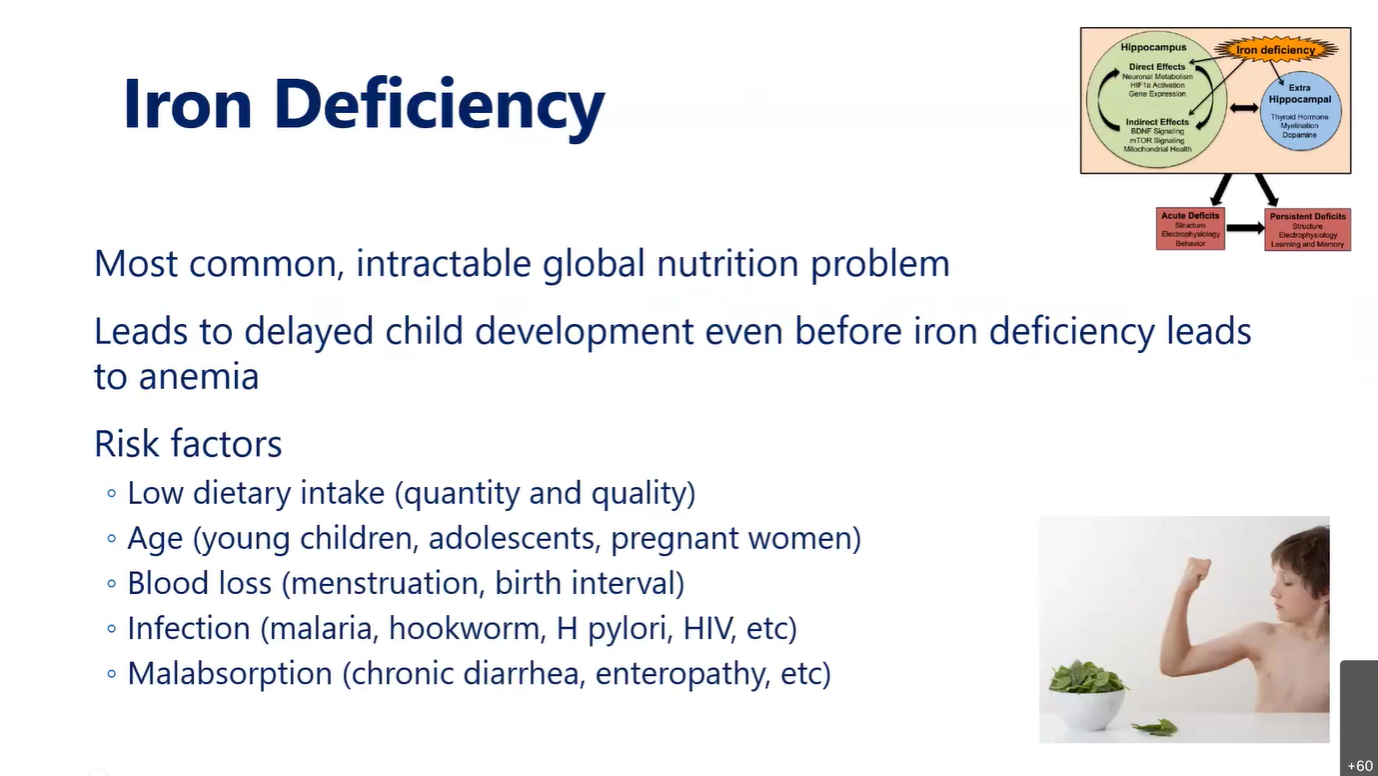
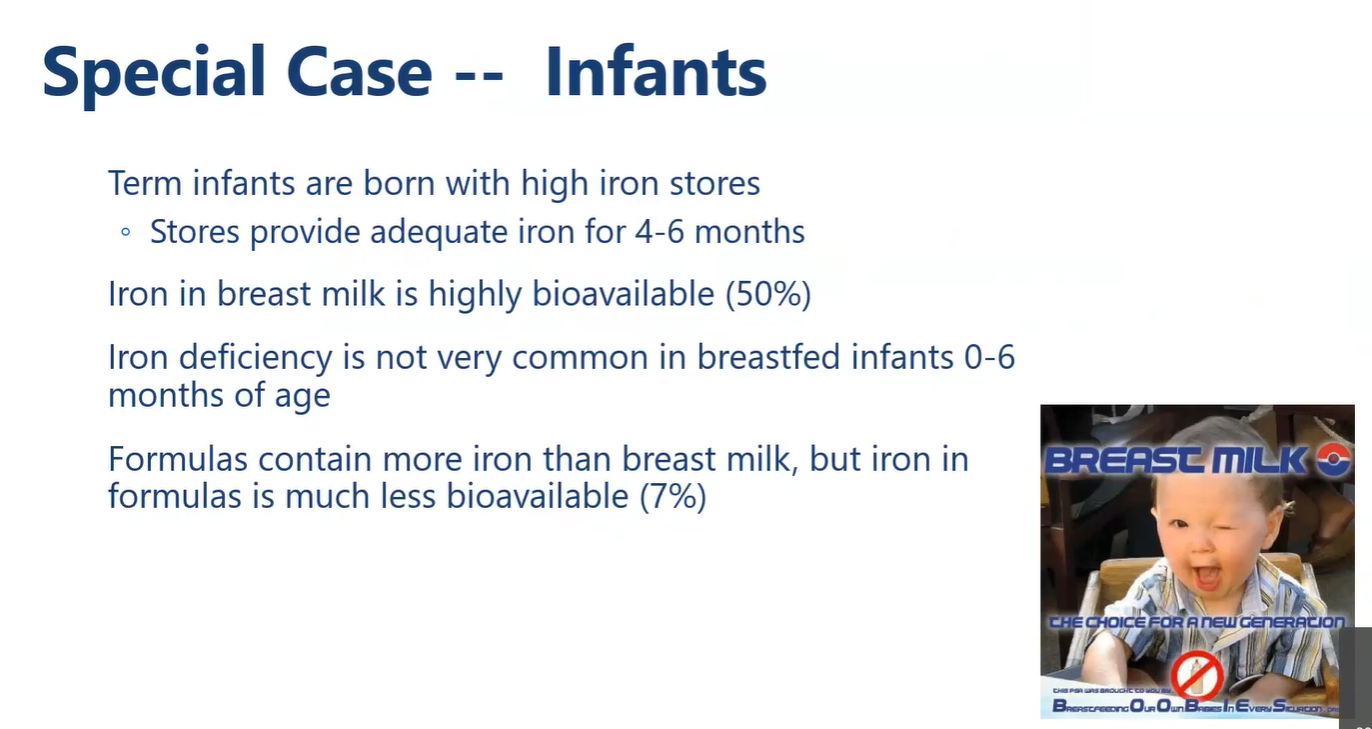
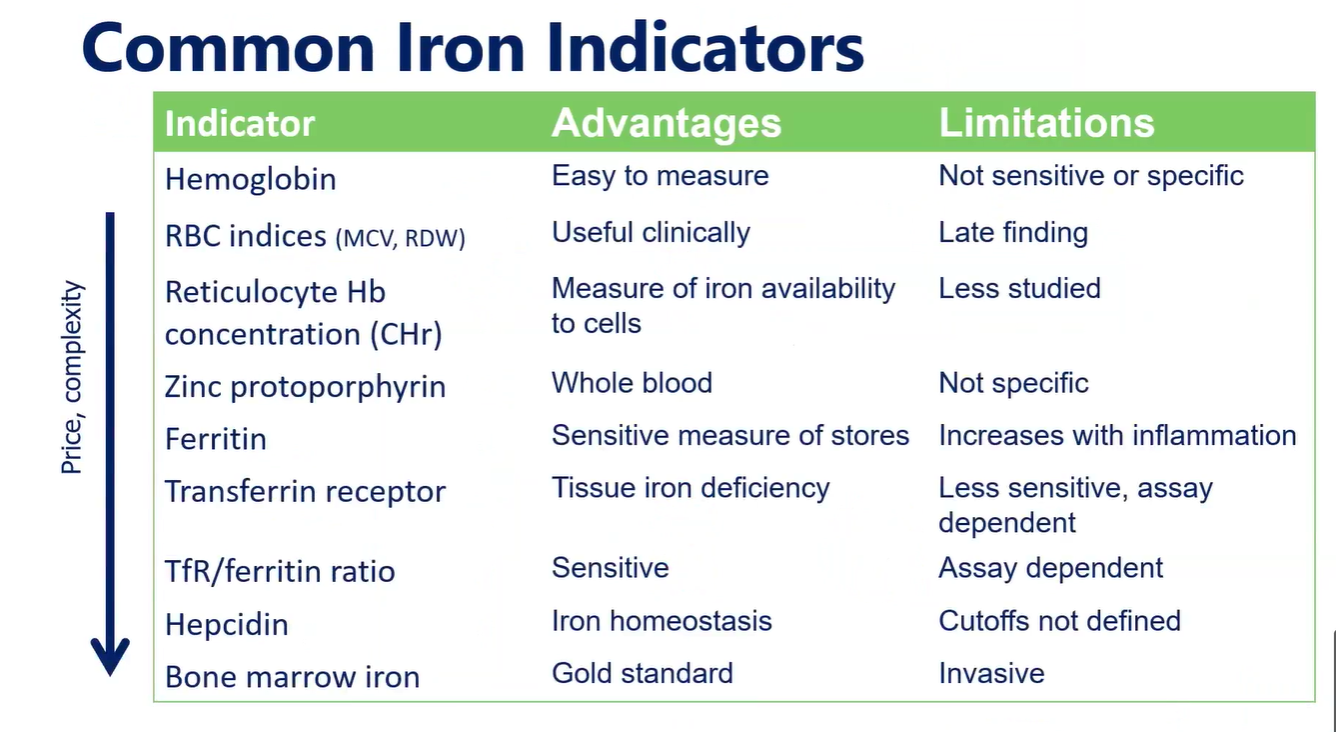
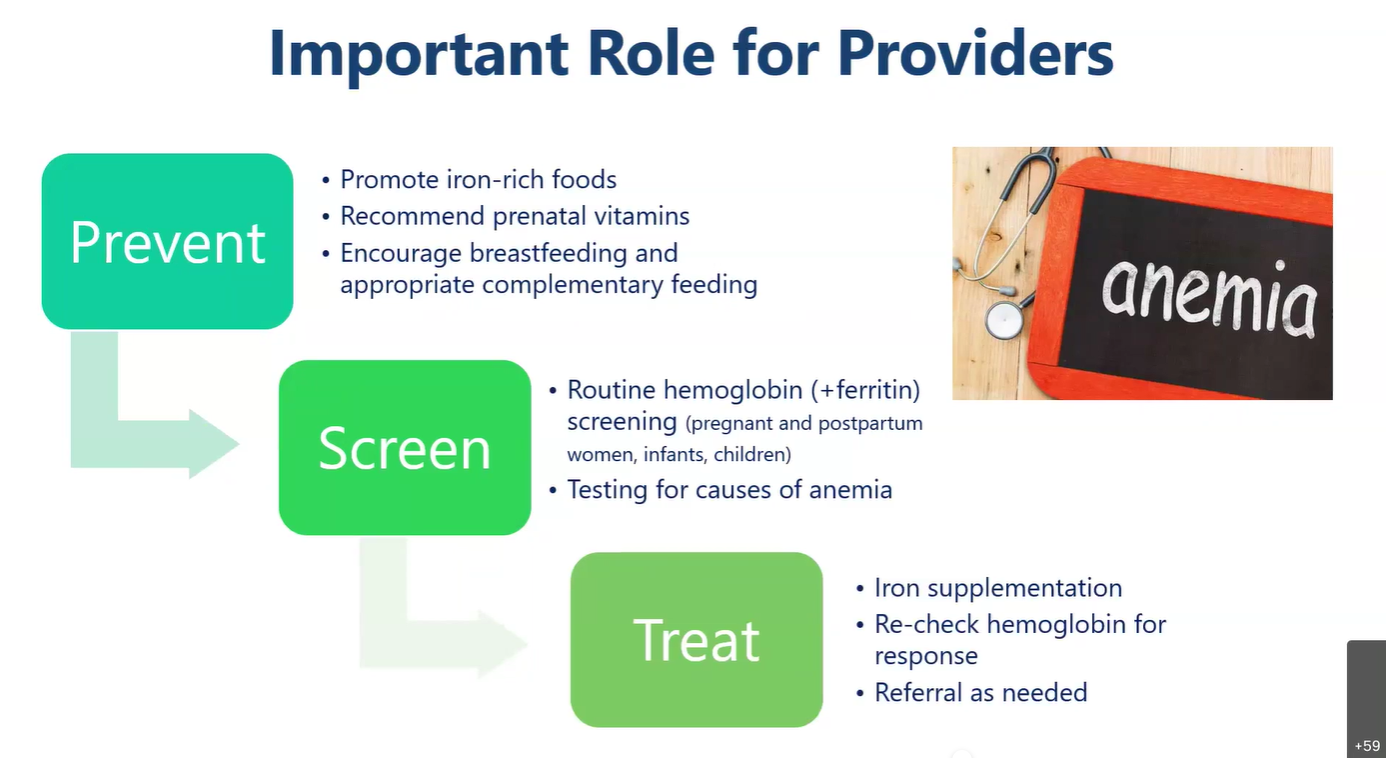
Here are a few of the slides:

Related blog posts:

Disclaimer: This blog, gutsandgrowth, assumes no responsibility for any use or operation of any method, product, instruction, concept or idea contained in the material herein or for any injury or damage to persons or property (whether products liability, negligence or otherwise) resulting from such use or operation. These blog posts are for educational purposes only. Specific dosing of medications (along with potential adverse effects) should be confirmed by prescribing physician.  Because of rapid advances in the medical sciences, the gutsandgrowth blog cautions that independent verification should be made of diagnosis and drug dosages. The reader is solely responsible for the conduct of any suggested test or procedure.  This content is not a substitute for medical advice, diagnosis or treatment provided by a qualified healthcare provider. Always seek the advice of your physician or other qualified health provider with any questions you may have regarding a condition

Anemia in IBD -NASPGHAN Position Paper

A Goyal et al. JPGN 2020; 71: 563-582 Full text (free). Anemia in Children With Inflammatory Bowel Disease: A Position Paper by the IBD Committee of the North American Society of Pediatric Gastroenterology, Hepatology and Nutrition.

Main Types of Anemia in Inflammatory Bowel Disease:

  • “IDA is the most common cause of anemia in children with IBD. True iron deficiency results from a number of factors, including chronic blood loss secondary to gastrointestinal bleeding, decreased iron absorption because of tissue or systemic inflammation and from reduced absorptive surface area. “
  • “Functional iron deficiency (FID) results from high levels of circulating hepcidin, which binds to and disables the iron transporter, ferroportin. Under the influence of hepcidin, ferroportin-mediated export of intracellular iron is stalled, leaving the iron trapped within the enterocytes and macrophages… the underlying inflammation, which induces hepcidin production can result in anemia secondary to FID.”
  • Anemia of chronic disease (ACD) “occurs from various downstream pathways secondary to inflammation.”

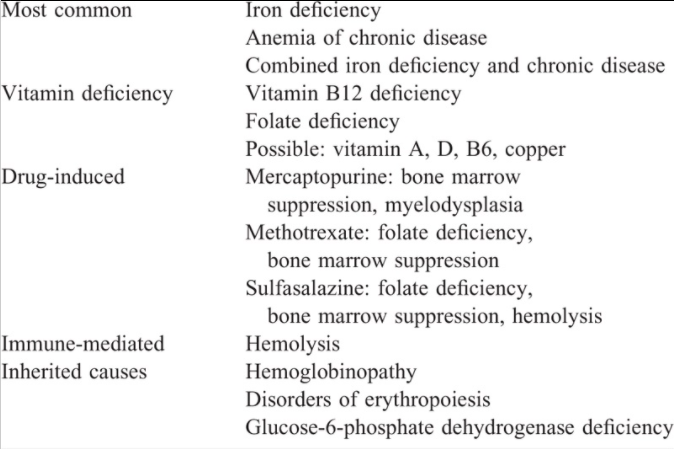
Table 4:

Recommended Testing

  • Screening Tests: “initially a complete blood count (CBC), CRP, and ferritin levels should be performed. If a patient is found to be anemic, then testing should include CBC with differential, including mean corpuscular volume (MCV), mean corpuscular Hgb concentration (MCHC), red cell distribution width (RDW), reticulocyte count, CRP, serum ferritin, and transferrin saturation (TSAT)”
  • Serum iron level … is … unreliable in the assessment of iron deficiency as the level fluctuates with several variables.
  • Transferrin saturation (TSAT) is a measure of the iron content in the circulating transferrin and reflects the availability of utilizable iron

Treatment of Anemia

  • In mild anemia (Hgb ≥10 g/dL) and/or quiescent disease, oral iron should be tried first.
  • Parenteral iron is indicated when oral iron is ineffective or poorly tolerated, in patients with moderate-severe anemia and/or with active inflammation.
  •  According to ECCO guidelines, an IV replacement goal of achieving of ferritin level of up to 400 μg/L is more likely to prevent recurrence of anemia…a transferrin saturation of 50% and serum ferritin of 800 μg/L should not be exceeded
  • Regarding iron effects on microbiome: studies indicate that dysbiosis at baseline worsens the unfavorable shifts in microbiome with oral iron therapy…Our position, however, is that further studies are required in humans before any reliable conclusions can be drawn. [My question: have the effects of oral iron supplementation on the microbiome been compared to IV iron supplementation on the microbiome?]
  • Table 6 lists various iron products including costs and dosing.
  • The hypersensitivity reactions to parenteral iron are mostly secondary to iron nanoparticles that trigger complement activation-related pseudo-allergy (CARPA)….It is important that parenteral iron be administered by trained personnel. Emergency medications and resuscitative equipment should be available during these infusions.

My take: This is a useful resource for a very common problem.

Related blog posts:

Disclaimer: This blog, gutsandgrowth, assumes no responsibility for any use or operation of any method, product, instruction, concept or idea contained in the material herein or for any injury or damage to persons or property (whether products liability, negligence or otherwise) resulting from such use or operation. These blog posts are for educational purposes only. Specific dosing of medications (along with potential adverse effects) should be confirmed by prescribing physician.  Because of rapid advances in the medical sciences, the gutsandgrowth blog cautions that independent verification should be made of diagnosis and drug dosages. The reader is solely responsible for the conduct of any suggested test or procedure.  This content is not a substitute for medical advice, diagnosis or treatment provided by a qualified healthcare provider. Always seek the advice of your physician or other qualified health provider with any questions you may have regarding a condition

More Iron Infusions, Less Blood Transfusions in Kids with Inflammatory Bowel Disease; COVID-19 Transmission in Children


Briefly noted: AE Jacobson-Kelly et al. J Pediatr 2020; 222: 141-5. In this retrospective multicenter cohort study (2012-2018), the authors used the Pediatric Health Information System administrative database (n= 8007 with 28 260 admissions, <21 yrs of age). Key findings:

  • Anemia was documented in 29.8% of admissions.  IV iron was given in 6.3% of admissions and blood transfusions in 7.4%
  • A steady increase in the proportion of IBD admissions received IV iron, from 3.5% in 2012 to 10.4% in 2018 ( P < .0001), and the proportion of admissions with red cell transfusions decreased over time from 9.4% to 4.4% ( P < .0001).

Related blog posts:


CHOP QI: Anemia in IBD Pathway

A recent article in Gastroenterology & Enoscopy News, “QI Pathway Improves Anemia Management in Pediatric IBD” (also presented at NASPGHAN 2018 -abstract 7, J Breton et al), discusses anemia and provides a link to CHOP QI Pathway for Anemia

This link contains useful information regarding treatment options and links to recommendations on management.  This algorithm suggests using intravenous iron for anemia in all IBD patients with active disease as well as using intravenous iron for those with moderate to severe anemia.  The rationale for parenteral iron in those with active disease is due to two factors:

  1. to overcome the block to intestinal iron absorption induced by hepcidin in the setting of inflammation (making oral iron less effective in active IBD regardless of disease location)
  2. due to data showing  that oral iron may aggravate intestinal inflammation by altering the gut microbiome and increasing intestinal permeability

My take: The CHOP initiative provides some clear cut recommendations.for anemia in IBD.  Parenteral iron is more efficacious in improving anemia; however, the effects of parenteral iron on the microbiome and other potential risks (eg. increased sepsis) are not clear. In my view, more information about outcomes and costs are needed to determine the optimal approach.

Related blog posts:

Disclaimer: These blog posts are for educational purposes only. Specific dosing of medications/diets (along with potential adverse effects) should be confirmed by prescribing physician/nutritionist.  This content is not a substitute for medical advice, diagnosis or treatment provided by a qualified healthcare provider. Always seek the advice of your physician or other qualified health provider with any questions you may have regarding a condition.

Iron Metabolism Improves after Anti-TNF Therapy for Crohn’s Disease

A previous study has shown that low vitamin D levels improved with anti-TNF therapy for Crohn’s disease in the absence of supplemental vitamin D.  Similarly, a recent study (MA Atkinson, MB Leonare, R Herskovitz, RN Baldassano, MR Denburg. JPGN 2018; 66: 90-4) showed improvement in iron metabolism with anti-TNF therapy.

In 40 children and adolescents with Crohn’s disease, the authors measured serum hepcidin-25 and hemoglobin at baseline and then 10 weeks after anti-TNF therapy.

Key findings:

  • Median hepcidin concentrations decreased (27.9–>23.2 ng/mL) and mean hemoglobin increased (10.6–>10.9).
  • Disease activity and markers of inflammation also decreased.

My take: This study shows that improvement in inflammation is associated with meaningful improvement in anemia.  However, most patients will need additional treatment for anemia, particularly as anemia may be related to blood loss in addition to anemia of chronic disease/inflammation.

Related blog posts:


February Briefs

JM Powers et al. J Pediatr 2017; 180: 212-6. This retrospective study details a protocol for using intravenous ferric carboxymaltose (FCM) (Injectafer) in children.  This product has become available for adults in U.S. since June 2013; it had been available in Europe since 2009. In this retrospective study, 72 pediatric patients received FCM for iron deficiency anemia (off-label); there was a good safety profile and a good response with hemoglobin increasing from 9.1 to 12.3 (4-12 weeks post infusion).  FCM is a relatively costly IV iron formulation, but can be given over 15 minutes.

L Peyrin-Biroulet et al. Clin Gastroenterol Hepatol 2017; 15: 25-36.  This systemic review with more than 2800 patients showed that TNF antagonists were effective for extraintestinal manifestations of inflammatory bowel disease, including cutaneous disorders (eg.. pyoderma gangrenosum, erythema nodosum), hematologic problems (eg anemia), ocular disorders, and rheumatologic symptoms( eg. arthralgias/arthritis).

AE Mikolajczyk et alClin Gastroenterol Hepatol 2017; 15: 17-24. Useful review of the GI/Liver manifestations of autosomal-dominant polycystic kidney disease. “There is not a role for therapy [for the liver] in asymptomatic patients.” Other problems reviewed included pancreatic cysts, hernias, and diverticular disease. Related posts:

T Rajalahti et al. JPGN 2017; 64: e1-6.  Among 455 patients <18 with Celiac disease, anemia was noted in 18%. This resolved in 92% after one year of a gluten-free diet.  Anemia is associated with more severe histological and serological presentation. Related posts:

FL Cameron et al. JPGN 2017; 64: 47-55. This retrospective review of 93 children treated with infliximab and 28 children with adalimumab provides data on growth after anti-TNF therapy.  This study shows that anti-TNF therapy is more likely to be associated with growth improvement when used at earlier stages of puberty.

Related blog posts:

Chattahoochee River

Chattahoochee River

Celiac Studies

Three reports on celiac disease:

  • KM Simmons et al. J Pediatr 2016; 169: 44-8.
  • NR Reilly et al. J Pediatr 2016; 169: 40-54
  • MMS Wessels et al. J Pediatr 2016; 169: 55-60.

In the first study, the authors examined bone mineral density (BMD), glycemic control with hemoglobin A1c, and celiac autoimmunity in children with type 1 diabetes (T1D).  This was a cross-sectional study of 252 children with T1D; 123 had positive serology were anti-tissue transglutaminase (tTG) antibody.  In addition, another cohort (n=141) of children without T1D were examined who carried HLD-DR, DQ genotypes with (n=71) and without (n=70) tTG.  Key findings:

  • Children with T1D: those positive for tTG had significantly worse BMD L1-L4 (-0.45 ± 1.22 vs 0.09 ± 1.10, P= .0003).  Higher tTG and higher HgbA1c were independent predictors of lower BMI.
  • In children without T1D: no differences in BMD were found based on tTG status.
  • The authors concluded that celiac autoimmunity and hyperglycemia had synergistic effects on low BMD.

In the second study, the researchers used a population-based cohort study and compared 958 individuals with both T1D and celiac disease (CD) to 4598 similar individuals with T1D alone. Key finding: Over a 13 year period, 12 patients with both T1D and CD had a fracture (1 osteoporotic fracture). CD did not influence the risk of any fracture (aHR 0.77) in patients with T1D.  The researches concluded: “CD does not seem to influence fracture risk in young patients with T1D.”

My take: Looking at these studies in juxtaposition shows how important it is to consider multiple studies and how frequent discrepant results occur.  While the second study does not show a significant fracture risk, the preponderance of evidence does show an association between celiac disease and low BMD particularly in adults. In addition, a gluten free diet has been shown to reverse low BMD in those with CD.

Relevant studies:

  1. Gastroenterology 2010; 139: 763.
  2. Aliment Pharmacol Ther 2000; 14: 35-43.
  3. JPGN 2003; 37: 434-6.
  4. Gut 1996; 38: 322-7.

In the third study, the investigators looked at “complementary” investigation in children with CD.  These included tests like hemoglobin, ferritin, folate, vitamin B12, calcium, vitamin D, and thyroid assays.  Between 2009-2014, 182 children were evaluated included 119 with new diagnosis. Key findings:

  • At time of diagnosis: Iron deficiency (28%), iron deficiency anemia (9%), folate deficiency (14%), vitamin B12 (1%), and vitamin D deficiency (27%) were identified. No hypocalcemia or thyroid dysfunction was found.
  • At followup: iron deficiency (8%), iron deficiency anemia (2%), folate (3%), vitamin D (25%) were identified and no other abnormalities were evident.
  • The investigators concluded that these complementary tests “are relevant at the time of diagnosis of CD but have little diagnostic yield during followup-visits” after institution of gluten-free diet.

My take: Particularly at followup, identification of nutrient deficiencies is typically similar to the general population.

Related posts:

Castillo San Felipe del Morro, San Juan

Castillo San Felipe del Morro, San Juan

Be Aggressive! Treating Anemia Associated with Inflammatory Bowel Disease

A number of recent publications have made the point that anemia is a biomarker for severe inflammatory bowel disease and undertreatment affects quality of life. Reading one of the more recent studies (IE Koutroubakis et al. Clin Gastroenterol Hepatol 2015; 13: 1760-66) brought to mind the high school football cheer: Be Aggressive!

This particular retrospective study involved 410 patients (245 with Crohn’s disease, 165 with ulcerative colitis) from 2009-2013.  This study is from the same group that published data on a somewhat smaller cohort and showed that IBD treatment alone often will not resolve anemia (Koutroubakis, IE et al. Inflamm Bowel Dis 2015; 21: 1587-93–see previous blog links).

Key findings:

  • Prevalence of anemia: 37.2% in 2009 and 33.2% in 2013
  • Anemia was associated with increased hospitalizations (P<.01), clinic visits (P<.001), telephone calls (P<.004), surgeries for IBD (P=.001), and lower quality of life scores (P<.03)

The associated editorial (pgs 1767-69) suggests that IBD-related anemia, if mild (w/in 1 g/L below normal) to treat with oral iron replacement and if moderate-to-severe, then to replace intravenously (using Ganzoni’s formula calculator). In addition, if anemia is not improving, looking for alternative explanations (e.g. vitamin B12 or folate deficiency) is recommended.

Ganzoni Equation: Total Iron Deficit = Weight {kg} x (Target Hb – Actual Hb) {g/l} x 2.4 + Iron stores {mg}.   Iron stores: { 500 if W > 35kg } & { 15 mg/kg if W < 35kg }

My take: Anemia is a biomarker for severe disease.  While treating the underlying inflammatory bowel disease, don’t forget to make sure the patient’s anemia is addressed.

Related blog posts:

Disclaimer: These blog posts are for educational purposes only. Specific dosing of medications/diets (along with potential adverse effects) should be confirmed by prescribing physician/nutritionist.  This content is not a substitute for medical advice, diagnosis or treatment provided by a qualified healthcare provider. Always seek the advice of your physician or other qualified health provider with any questions you may have regarding a condition.

Central Park

Central Park

Is It Right? Anti-TNF Therapy Does Not Fix IBD-Related Anemia

A surprising study (Koutroubakis, IE et al. Inflamm Bowel Dis 2015; 21: 1587-93) of prospectively-collected data from 430 patients with inflammatory bowel disease (IBD) showed that the rate of anemia did not change after 1 year in patients treated with anti-tumor necrosis factor (anti-TNF) therapy and oral iron.

The data was derived from 2010-2012 and included 324 patients with Crohn’s disease (51.6% females) with a median age of 41 years.  Anemia was defined as hemoglobin (Hb) <13 g/dL in men and <12 g/dL in women.  Patients with Hb <10 g/dL were considered to have severe anemia. Key findings:

  • Prevalence of anemia in IBD patients treated with anti-TNF was 38.1% at baseline and then 36.6% at 1 year.
  • Severe anemia was identified in 10% at baseline and 9.9% at 1 year.
  • A hematopoietic response with a Hb ≥2 g/dL was observed in 33.6% (n=45 of 134 anemic patients) and 14 (40%) of those with severe anemia.
  • There were 45 new anemic patients at 1 year; 64.4% were nonresponders to anti-TNF treatment.
  • Using multivariate logistic regression analysis, the author noted that use of immunomodulators was associated with an odds ratio of 2.56 of improvement in hemoglobin levels.

The authors state that anemia is the most common extra intestinal manifestation of IBD and remains underappreciated.  Anemia in IBD correlates with the extent of intestinal disease and activity.

Bottomline: “Use of anti-TNF therapy had only a modest effect on patients’ Hb level.”

From related post: IBD Update January 2015 (Part 2)

Inflamm Bowel Dis 2014; 20: 2266-70.  This study with 749 patients from Sweden showed that a large number of inflammatory bowel disease patients did not receive with iron supplementation: “Only 46% of patients with anemia were treated with iron supplementation or blood transfusion.”  This study showed frequent persistence of anemia one year after diagnosis, especially in children. At time of diagnosis, 55% of children and 27% of adults had anemia and 28% and 16% at one year followup, respectively.

My take: Treatment of the underlying IBD, often helps anemia.  However, in some patients treating the anemia with iron may help improve symptoms as much or more than other aspects of treatment.

Related blog post: Microcytic Anemia Review | gutsandgrowth

Sandy Springs, Georgia

Sandy Springs, Georgia