Store Your Stool at OpenBiome

Due to concerns regarding disruption of a person’s microbiome and C diff infection, there is now an option to store your own stool –should it be needed to restore your ‘health’ microbiome.

Here’s a link to the Gastroenterology & Endoscopy News Report: OpenBiome Now Stores Your Stool

An excerpt:

Banking one’s own stool is a particularly good idea for individuals who have an elective surgery scheduled and for those who are predisposed to developing C. difficile infections, such as patients with inflammatory bowel disease, Dr. Kassam said…

“Just like banking one’s blood prior to surgery, one should be able to bank their stool in anticipation of antimicrobial exposure after admission to a hospital,” Dr. Brandt said. “This is of even greater importance in the immunocompromised patient who requires multiple courses of antimicrobials.”

Related blog posts:

Acadia Natl Park

Acadia Natl Park

October 2016: IBD Studies

Briefly noted:

E Zittan et al. Inflamm Bowel Dis 2016; 22: 2442-47.  In this study with 773 patients with history of ulcerative colitis/ileal pouch-anal anastomosis, there was no significant difference in complications/leak among the 196 with preoperative anti-TNF exposure (n=26, 13.2%) compared with the control group (n=66, 11.7%). Preoperative anti-TNF exposure does not appear to worsen outcomes after surgery.

C Hartman et al. JPGN 2016; 63: 437-444. This cross-sectional survey of 68 children with IBD (57 Crohn’s disease) found frequent nutrient deficiencies based on 3 day diet records.  Interestingly, children on exclusive enteral nutrition were much less likely to have inadequate intakes of energy, minerals, or micronutrients. This article provides plenty of reasons for children with IBD, particularly Crohn’s disease, to work with a nutritionist.

M Fischer et al. Inflamm Bowel Dis; 2016; 22: 2402-09. In a cohort study of 67 patients (35 with Crohn’s, 31 with ulcerative colitis, and 1 indeterminate colitis), fecal microbiota transplantation (FMT) for refractory Clostridium difficile infection was successful in 53 (79%) with a single infusion.  Four of the 14 failures, subsequently responded to anti-CDI antibiotics. Of the 8 who had a 2nd FMT, 6 were successful; and 1 of 2 responded to 3rd FMT.  Thus, 60 of 67 responded overall to FMT.  After FMT, IBD disease activity was reported as improved in 25 (37%), no change in 20 (30%) and worse in 9 (13%).  In this cohort, 1 needed colectomy and 1 needed diversion.  This article indicates that FMT for CDI in IBD was associated with high cure rates and low risk of IBD flare.

A Khoruts et al. Clin Gastroenterol Hepatol 2016; 14: 1433-38. This was a study of 272 consecutive patients that underwent FMT for recurrent CDI. 15% had established IBD and 2.6% were determined to have IBD at time of FMT.  74.4% of IBD patients responded to a single FMT compared with 92.1% of patients without IBD.  More than one quarter of IBD patients experienced a clinical flare after FMT.

MA Conrad et al. Inflamm Bowel Dis; 2016: 22: 2425-31.  This review of early pediatric experience with vedolizumab in 21 subjects (16 with Crohn’s disease) identified a clinical response in 6/19 (31.6%) evaluable subjects at week 6 and 11/19 (57.9%) by week 22. Steroid-free remission was noted in 3/20 at 14 weeks (15%) and 4/20 (20.0%) at 22 weeks.  Overall, this shows a fairly low response rate to vedolizumab in this highly selected cohort.  Prospective pediatric studies of vedolizumab are needed to identify which patients are most likely to benefit.

University of Virginia Rotunda

University of Virginia Rotunda


FMT in the “Real World”

At DDW 2016, OpenBiome presented data (abstract Su1737) from 2,050 patients who received fecal microbiata transplants (FMT) in “the real world.”

Key findings:

  • Overall, 84% clinical cure rate with a single treatment
  • 85% of patients were treated with FMT via colonoscopy (250 mL) and 15% via nasal tube (50 mL). Nasal tube administration had a lower clinical cure rate of 77.9%, compared with 85.1% who had FMT via colonoscopy.

More information on this study: “Closet Thing to Miracle Cure”: Study Confirms Benefit of FMT in C difficile  Gastroenterology & Endoscopy News July 2016  This link also presents data on use of FMT in ulcerative colitis and the use of capsule FMT.

Related blog posts:

Lymphonodular Hyperplasia2

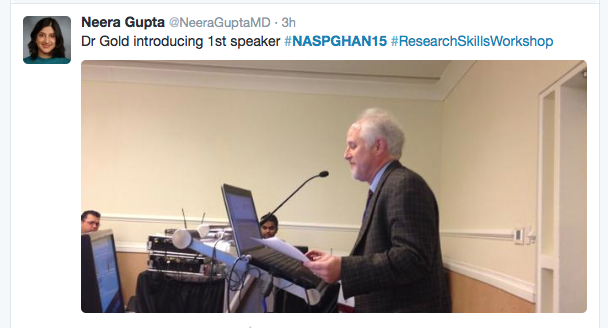
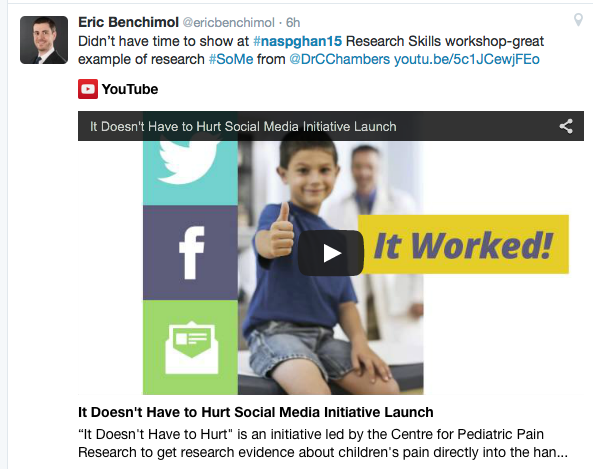
Final Tweets from #NASPGHAN15

BG

Screen Shot 2015-10-11 at 5.01.53 PM

Screen Shot 2015-10-11 at 4.57.51 PM

Screen Shot 2015-10-10 at 10.26.51 PM

Screen Shot 2015-10-10 at 10.23.11 PM

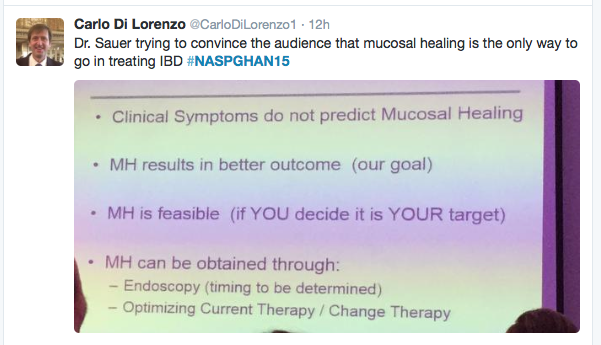
From debate regarding importance of mucosal healing:

Screen Shot 2015-10-10 at 10.30.46 PM

Screen Shot 2015-10-10 at 10.31.09 PM

Related blog posts:

NY Times: “Should We Bank Our Own Stool?”

A provocative article poses the question: Should we bank our own stool?

Here’s an excerpt:

The scientific term for this is “autologous fecal transplant.” In theory, it could work like a system reboot disk works for your computer. You’d freeze your feces, which are roughly half microbes, and when your microbiome became corrupted or was depleted with antimicrobials, you could “reinstall” it from a backup copy.

That damage from antibiotics may not be trivial. Studies have linked antibiotic use early in life with a modestly increased risk of asthma,inflammatory bowel diseaseobesity and rheumatoid arthritis. These are associations, of course; they don’t prove that antibiotics cause disease…

Almost 60 years later, the “fecal transplant” is a cutting-edge treatment for the pathogen Clostridium difficile, a bug that kills 29,000 yearly and infects nearly half a million…

Memorial Sloan Kettering Cancer Center in New York has also started a proactive stool-banking study. Most of the subjects are patients with leukemia. Before stem cell transplants, patients receive antibiotics andchemotherapy, often wiping out their microbiota…

OpenBiome…started a pilot self-banking program called “PersonalBiome.” One complication: If he stores your stool, you can generally withdraw it only to treat C. difficile, not for preventive “reconstitution.” That’s because stool is regulated as a drug and not, as with embryos or blood, a tissue, which makes its use more complex.

Related blog posts:

Atlanta Botanical Garden, Bruce Munro Exhibit

Atlanta Botanical Garden, Bruce Munro Exhibit

Latest News: ‘Georgia Girl Saved by Fecal Transplant’

For those not able to see the live presentation…

GI Care for Kids physician, Jeff Lewis, helped bring fecal microbiota transplant (FMT) to Georgia. Here’s a success story from Fox5 Atlanta from August 31, 2015.  Here’s the link:

Georgia Girl Saved by Fecal Transplant  This link includes a 4:08 video and written summary as well.

From Twitter:

Screen Shot 2015-08-31 at 6.38.42 PM


Ulcerative Colitis with Questionable Response to Fecal Transplant

Fecal microbiota transplantation (FMT) is not going to be a “magic bullet” for most patients with inflammatory bowel disease. So far, it is unclear whether FMT works at all.  A recent study (full text link: Rossen NG et al. Gastroenterol 2015; 145: 110-8) with only 37 patients echo that experience. Here is the abstract:

Background & Aims

Several case series have reported the effects of fecal microbiota transplantation (FMT) for ulcerative colitis (UC). We assessed the efficacy and safety of FMT for patients with UC in a double-blind randomized trial.

Methods

Patients with mild to moderately active UC (n = 50) were assigned to groups that underwent FMT with feces from healthy donors or were given autologous fecal microbiota (control); each transplant was administered via nasoduodenal tube at the start of the study and 3 weeks later. The study was performed at the Academic Medical Center in Amsterdam from June 2011 through May 2014.

The composite primary end point was clinical remission (simple clinical colitis activity index scores ≤2) combined with ≥1-point decrease in the Mayo endoscopic score at week 12. Secondary end points were safety and microbiota composition by phylogenetic microarray in fecal samples.

Results

Thirty-seven patients completed the primary end point assessment. In the intention-to-treat analysis, 7 of 23 patients who received fecal transplants from healthy donors (30.4%) and 5 of 25 controls (20.0%) achieved the primary end point (P = .51). In the per-protocol analysis, 7 of 17 patients who received fecal transplants from healthy donors (41.2%) and 5 of 20 controls (25.0%) achieved the primary end point (P = .29). Serious adverse events occurred in 4 patients (2 in the FMT group), but these were not considered to be related to the FMT. At 12 weeks, the microbiota of responders in the FMT group was similar to that of their healthy donors; remission was associated with proportions of Clostridium clusters IV and XIVa.

Conclusions

In this phase 2 trial, there was no statistically significant difference in clinical and endoscopic remission between patients with UC who received fecal transplants from healthy donors and those who received their own fecal microbiota, which may be due to limited numbers. However, the microbiota of responders had distinct features from that of nonresponders, warranting further study. ClinicalTrials.gov Number: NCT01650038.

Related blog posts:

Cumberland Island

Cumberland Island


FMT for Crohn’s Disease -Small Study

A recent prospective open-label study (Suskind DL, et al. Inflamm Bowel Dis 2015; 21: 556-63) adds a bit more information on fecal microbial transplantation (FMT) for individuals with Crohn’s disease (CD). This study included 9 patients, ages 12-19, and 11 authors.

Study details:

  • Pretreated with rifaximin 200 mg TID x 3 days and Miralax 17 gm TID x 2 days prior, and omeprazole day before and morning of procedure
  • Patients continued on prior treatment: 4 on methotrexate, 2 on thiopurine, and 3 on mesalamine (1 mesalamine patient was receiving methotrexate also)
  • Stool donor was a screened parent
  • Stool administered via NG
  • Stool DNA studied –>metagenomic sequencing

Key findings:

  • FMT engraftment was demonstrated in 7 of 9 patients
  • Mean PCDAI improved –baseline 19.7 –>6.4 at 2 weeks–>8.6 at 6 weeks
  • 5 of 9 patients who did not receive additional medical therapy were in remission at 6 and 12 weeks.

One particular advance with this study was the correlation between microbial species before and after FMT.  One speculation from the authors was that “the more divergent a Crohn’s patient is from his donor the more the potential benefit of transplantation.”  Thus, this same study with unrelated donor stool (eg. OpenBiome) would be of interest as well.

My Take: While this study offers encouragement for bigger studies, we will not know if FMT is effective (& how to administer optimally) until we have studies with more patients than authors.

Related blog posts:


Not So Promising: FMT for Ulcerative Colitis

After initial reports suggesting that fecal microbiota transplantation (FMT) may be helpful for ulcerative colitis (UC), more recent data suggest that it is not so promising (JPGN 2015; 60: 27-29, editorial 3).

In this open-label, prospective study of four patients, all boys aged 13-16 years, patients tolerated a single-dose FMT (via nasogastric tube) without adverse effects but there was no significant clinical or laboratory improvement.

The article provides a number of references regarding the experience of FMT for UC.

Related blog posts:

Clostridium difficile/Fecal Microbiota Transplantation Video

I have been a fan of OpenBiome (www.OpenBiome.org).  Their website provides a nice ~3 minute explanation of Clostridium difficile and the rationale for fecal microbiota transplantation (FMT). Here’s the link: C diff FMT video

In addition to this video, their website has a lot of information (for families and clinicians) about how to obtain and use safe, screened stool products. Here’s their background information (from their website):

Why we’re here:

We founded OpenBiome, a nonprofit 501(c)(3) organization, after watching a friend and family member suffer through 18 months of C. difficile and 7 rounds of vancomycin before finally receiving a successful, life-changing Fecal Microbiota Transplantation (FMT). The remarkable efficacy of this treatment and the great lengths required to receive it convinced us that we needed to help expand access. After many discussions with local clinicians and the FDA, we launched OpenBiome in 2012 to make FMT faster and easier for patients and doctors alike.

What we do:

We work with clinicians to make FMT easier, cheaper, safer and more widely available. We do so by providing hospitals with screened, filtered, and frozen material ready for clinical use. This service eliminates the time, staff, protocols, and facilities needed to screen and prepare material from new donors for each treatment. With OpenBiome, all that’s needed to deliver FMT is a doctor and an endoscope.

Related blog posts: