Global Evidence of Gastric Cancer Prevention with Helicobacter pylori Eradication

Several recent articles have confirmed the benefits of H pylori eradication on reducing the risk of gastric cancer. This is in both Western and Eastern populations.

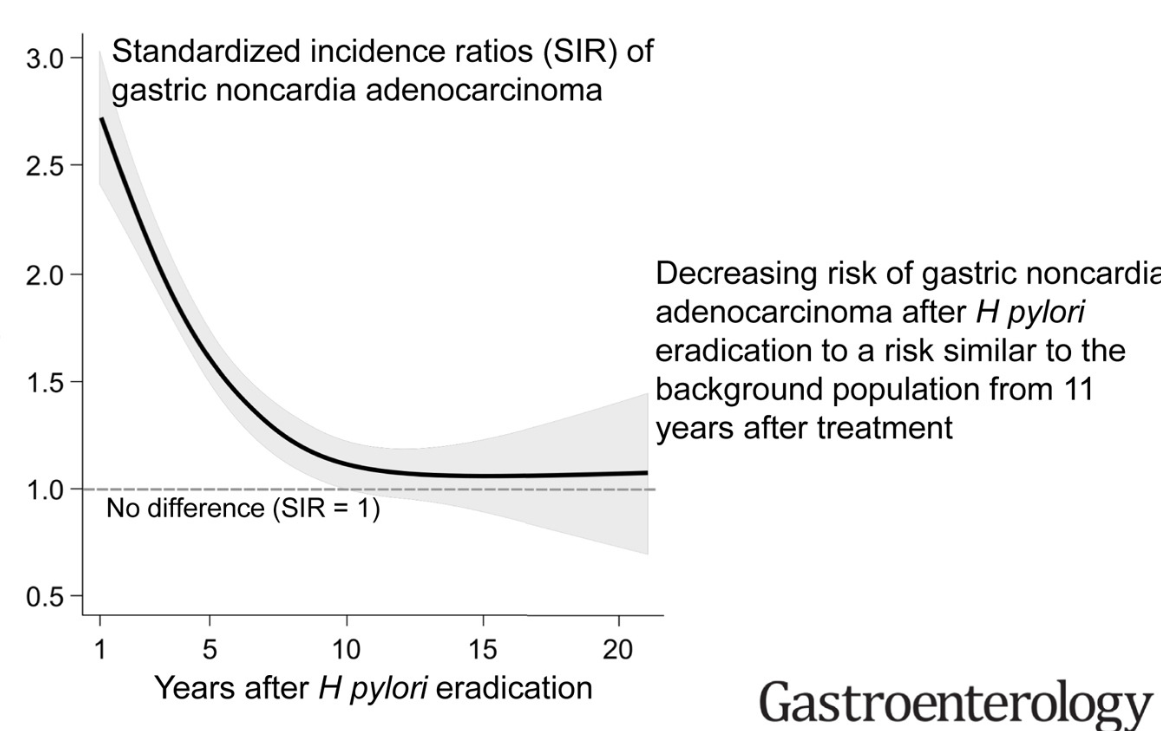
In this retrospective study from Nordic countries (Denmark, Sweden, Norway, Finland, and Iceland), researchers followed outcomes among ~700,000 people treated for H. pylori infection. The incidence of gastric adenocarcinoma was twice that of the general population in the first 5 years after treatment, likely reflecting H. pylori–related carcinogenesis that already was underway, but after 11 years, the incidence fell to that of the general population and remained there.

Discussion points:

  • The results of this study from 5 entire Western countries are in line with systematic reviews from Asian populations, indicating that H pylori eradication reduces the risk of gastric cancer
  • In addition, it has been proposed that eradication of H pylori might increase the risk of esophageal adenocarcinoma, but our recent study based on the NordHePEP found no such increase (Ref: Gastroenterology. 2024; 167:485-492.e3)
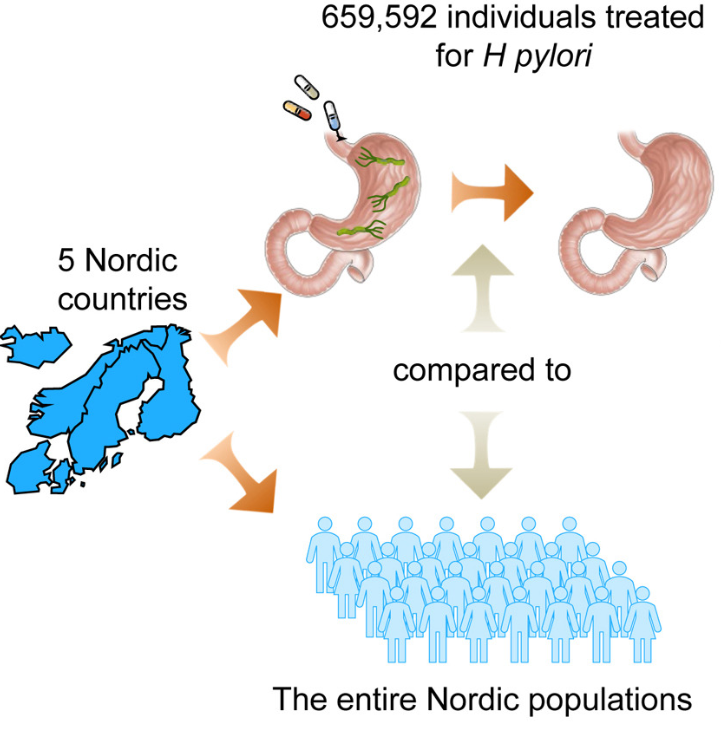
In this population-based study with more than 900,000 individuals, gastric cancer incidence and mortality rates were significantly lower in H pylori-treated individuals than in the general population.

In this meta-analysis of 11 randomized trials and 13 cohort studies researchers compared outcomes in treated and untreated H. pylori–positive adults. In both groups of studies, gastric cancer incidence was 40% lower in people who underwent H. pylori eradication. All but two of these studies were from eastern Asia.

 “In 2025, the IARC Working Group has issued a new report reaffirming H pylori eradication as a globally actionable and cost-effective intervention for the primary prevention of GC.18…Also, addressing the global public health challenge of antibiotic resistance remains essential, necessitating the development of susceptibility-guided or empirically optimized regimens tailored to local resistance patterns.

My take (borrowed from the commentary): “Despite the challenges, collectively, the emerging evidence from diverse populations reinforces the significant benefits of H pylori eradication in reducing GC incidence and mortality. These findings continuously support that H pylori eradication remains an effective preventive strategy across demographic settings, highlighting its relevance as a critical public health measure globally.”

Related blog posts:

Excellent Review of H Pylori in Children Plus One on Healthy Aging

Congratulations to my partner Ben Gold and coauthors on their recent publication –an excellent review of H pylori infection in children:

DL Mebuge, RJ Noel, BD Gold. Current Treatment Options in Pediatrics 2025; 11:13. doi.org/10/1007/s40746-025-00328-6. Open Access: Helicobacter pylori in Children: An Individualized Approach to a Worldwide Disease

Related blog posts:

For those interested in healthy aging/healthspan, Eric Topol had a recent interview with Katie Couric (54 minutes): On the State of US Life Science and Extending Healthspan

Elevated Fecal Calprotectin Levels in Pediatric Patients with H pylori Infection

P Villalba-Davila et al. J Pediatr Gastroenterol Nutr. 2025;80:617–622 Helicobacter pylori infection is associated with significant elevations to fecal calprotectin, systemic inflammatory markers

In this retrospective study from a high immigrant density community, patients aged 6–18 years old who had an fecal calprotectin (FC) level within 6 months prior to EGD and who were tested for HP infection were included in the study. 

Key findings:

  • Of 129 patients, 37 (28.7%) tested positive for HP infection.
  • The mean FC level was significantly elevated in HP-positive patients (241.2) as compared with HP-negative patients (88.1) (p < 0.001)
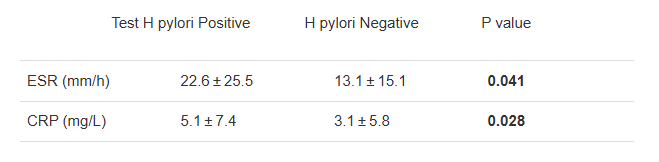
  • HP-positive patients were also found to have small but notably higher elevations of CRP and ESR levels

My take: This study confirms what I have seen in my own practice. Patients with H pylori frequently have elevated calprotectin levels. Checking stool for H pylori may help avoid some colonoscopies. H pylori infection, however, can be present in patients with inflammatory bowel disease as well.

Related blog posts:

Phang Nga Bay, Thailand

Practice Advice for Potassium-Competitive Acid Blockers

A Patel et al. Gastroenterology. 2024: 6: 1228 – 1238. Open Access! AGA Clinical Practice Update on Integrating Potassium-Competitive Acid Blockers Into Clinical Practice: Expert Review

Best Practice Advice (for adults):

  • Potassium-competitive acid blockers are generally not recommended as first line therapy. This rationale is based on cost, greater obstacles to obtaining medication, and fewer long-term safety data.
  • Clinicians may use P-CABs in selected patients with documented acid-related reflux & erosive esophagitis who fail therapy with twice-daily PPIs.
  • Clinicians should use P-CABs in place of PPIs in eradication regimens for most patients with H pylori infection.
  • P-CABs may be beneficial in high-risk bleeding peptic ulcer disease. “Although there is currently insufficient evidence for clinicians to use P-CABs as first-line therapy in patients with bleeding gastroduodenal ulcers and high-risk stigmata, their rapid and potent acid inhibition raises the possibility of their utility in this population.”

Related blog posts:

Dr. Benjamin Gold: 2024 Pediatric H pylori Guidelines (Part One)

We had a brilliant lecture given to our group by Dr. Benjamin Gold. I have had the good fortune of getting to know Ben and working alongside Ben for more than 15 years. Most readers of this blog are very familiar with Dr. Gold who is a leader in our field.

My notes below may contain errors in transcription and in omission.

.Key points:

  • While H pylori prevalence has decreased, it is becoming more difficult to treat
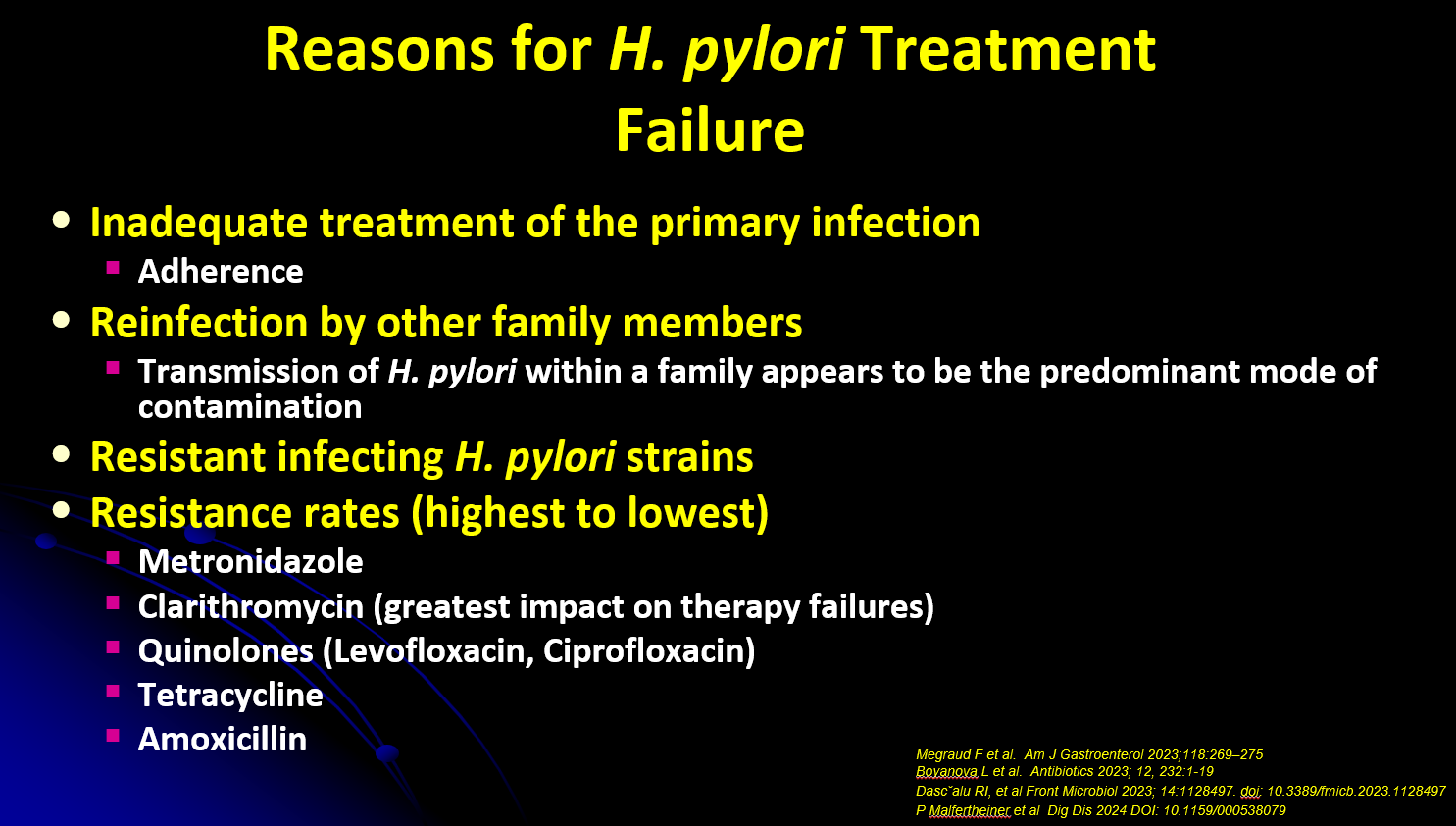
  • Knowing if there is clarithromycin resistance in individuals with H pylori infection is most likely to impact treatment success. Metronidazole resistance can often be overcome with adequate dosing
  • H pylori is an infectious disease with GI manifestations (rather than a GI disease).  It needs to be treated as such, using tools like antimicrobial sensitivity
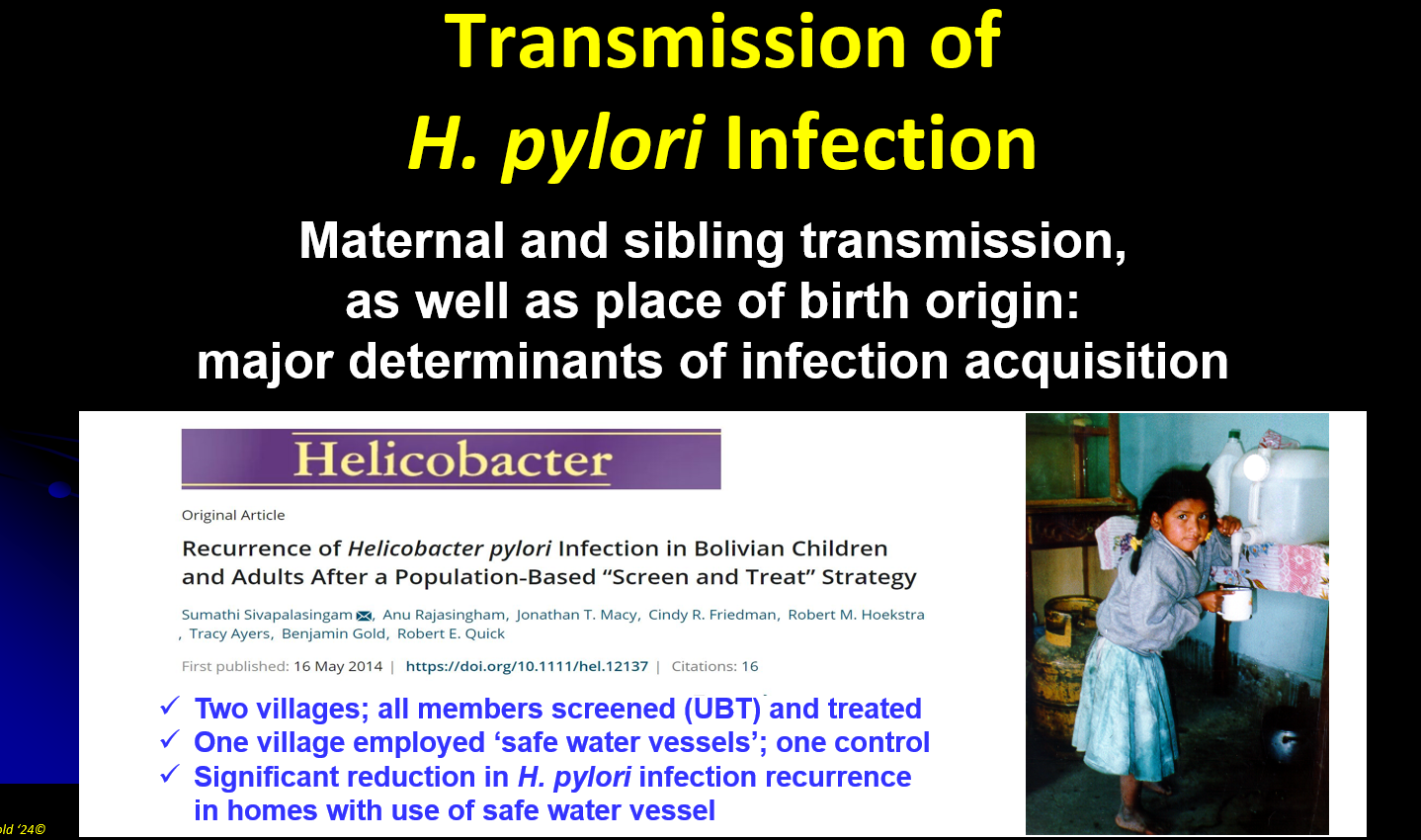
  • Improving water supply in endemic areas reduces reacquisition of infection
  • Transmission can occur from one generation to the next.  Dr. Gold (& coauthors) has published a study showing transmission from grandfather to mother to child using DNA fingerprinting
  • Eradication of H pylori lowers the risk of developing gastric cancer
  • Vonoprazan has been an effective part of treatment in adults. Pediatric studies are underway

Related blog posts:

Disclaimer: This blog, gutsandgrowth, assumes no responsibility for any use or operation of any method, product, instruction, concept or idea contained in the material herein or for any injury or damage to persons or property (whether products liability, negligence or otherwise) resulting from such use or operation. These blog posts are for educational purposes only. Specific dosing of medications (along with potential adverse effects) should be confirmed by prescribing physician.  Because of rapid advances in the medical sciences, the gutsandgrowth blog cautions that independent verification should be made of diagnosis and drug dosages. The reader is solely responsible for the conduct of any suggested test or procedure.  This content is not a substitute for medical advice, diagnosis or treatment provided by a qualified healthcare provider. Always seek the advice of your physician or other qualified health provider with any questions you may have regarding a condition.

Give the Right Dose (for H pylori) -It Works Better!

C Andrews et al. J Pediatr Gastroenterol Nutr. 2024;79:35–41. Impact of medication dosage on Helicobacter pylori eradication rates among pediatric patients

As I write this post on July 1st, I recollect having to learn the weight-based dosing of acetaminophen during my first day of pediatric internship. Even at this early stage, it was quite clear of the importance of getting the right dose. This article makes clear that there is a lot of room for improvement in dosing with regards to H pylori.

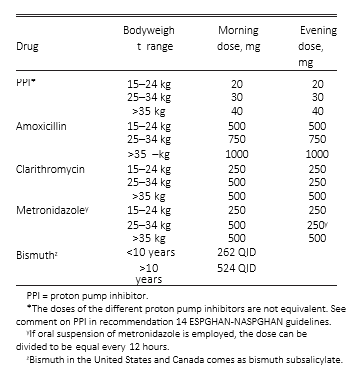
This retrospective study examined 144 children. Correct dosing was based on ESPGHAN-NASPGHAN guidelines:

Key findings:

  • The overall eradication rate was 73.6% (“well below the greater than 90% optimal eradication cut-off for H. pylori therapies”)
  • There was a high rate of improper weight‐based dosing: proton pump inhibitor(PPI) 31.2% (45/144), amoxicillin 31.7% (39/123), metronidazole (MET) 19.4% (12/62), clarithromycin (CLA) 23.9% (22/70), tetracycline 50% (6/12), bismuth 26.1% (6/23).
  • When PPIs were properly weight‐dosed, there was a 78.8% eradication rate that dropped to 62.2% with suboptimal dosing (p = 0.036, odds ratio [OR]: 2.26). The dose of PPI was incorrect in 45 patients.
  • When amoxicillin was properly weight‐dosed, successful eradication was achieved in 81% versus only 53.8% when improperly dosed (p = 0.002; OR: 3.64). The dose of amoxicillin was incorrect in 39 patients. There was no statistically significant impact on eradication rates with improper weight‐based dosing of MET, CLA, tetracycline, or bismuth.

My take: It is worthwhile to double-check on dosing for H pylori treatments -it results in better eradication rates. Also, in this study, as expected, quadruple therapy regimens had higher success rates (85% eradication); however, it was used in only 20 patients. In patients (virtually all of my patients) without known antimicrobial sensitivity, it has been my practice to use quadruple therapy (related post: Quadruple Therapy for Helicobacter Pylori Favored in Toronto Guidelines).

Related blog posts:

Many of the trees at Arches have this bark that feels like exposed firewood.
It doesn’t seem to have a typical outer shell
Delicate Arch (~90 ft tall)

Helicobacter Pylori Stool Susceptibility in Children –How Good Is It?

S Bonilla et al. JPGN 2023; 77: 623-627. Helicobacter pylori Antimicrobial Resistance Using Next-Generation Sequencing in Stool Samples in a Pediatric Population

Background: Stool H pylori testing “has become available and is based on the detection of mutations in H pylori genome associated with antimicrobial resistance and corresponds well with resistance determined by culture”

Methods: The authors obtained stool susceptibility testing using a novel NGS-based analysis and compared results with the current “gold standard” of gastric biopsy culture via agar dilution in 20 pediatric patients with evidence of H pylori in gastric biopsies. Stool samples were sent to American Molecular Laboratories (description in supplemental material). Gastric samples were sent to Mayo Laboratories.

Key findings:

  • Stool NGS-based antimicrobial susceptibility analysis was highly concordant with agar dilution (gastric biopsies) for no resistance (100% agreement), as well as clarithromycin, levofloxacin, and amoxicillin resistance (100%, 67%, and 100% agreement, respectively) but not concordant for metronidazole in our cohort of patients.
  • 35% of patients had antibiotic resistance identified

My take: Since H pylori is difficult to treat, identifying susceptibility patterns can be very helpful. This study shows that stool specimens have good agreement with gastric biopsy testing. While the results for metronidazole are not as good, resistance to metronidazole can often be overcome as part of multidrug regimens.

Lisbon and the Tegas River

Related blog posts:

Disclaimer: This blog, gutsandgrowth, assumes no responsibility for any use or operation of any method, product, instruction, concept or idea contained in the material herein or for any injury or damage to persons or property (whether products liability, negligence or otherwise) resulting from such use or operation. These blog posts are for educational purposes only. Specific dosing of medications (along with potential adverse effects) should be confirmed by prescribing physician.  Because of rapid advances in the medical sciences, the gutsandgrowth blog cautions that independent verification should be made of diagnosis and drug dosages. The reader is solely responsible for the conduct of any suggested test or procedure.  This content is not a substitute for medical advice, diagnosis or treatment provided by a qualified healthcare provider. Always seek the advice of your physician or other qualified health provider with any questions you may have regarding a condition.

Long Term Benefits of Helicobacter Eradication in U.S.

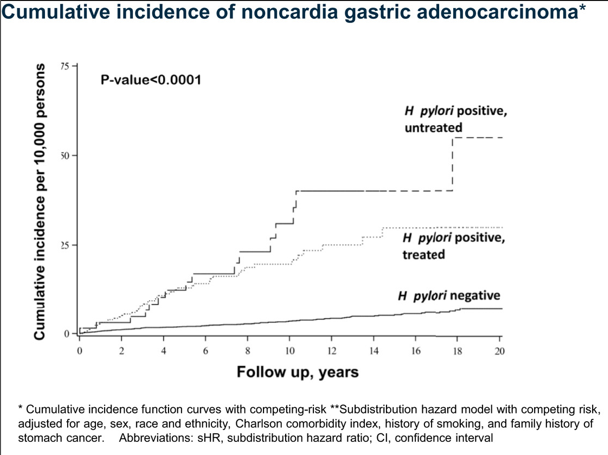
D Li et al . Gastroenterol 2023; 165: 391-401. Open Access! Effect of Helicobacter pylori Eradication Therapy on the Incidence of Noncardia Gastric Adenocarcinoma in a Large Diverse Population in the United States

The authors examined a retrospective cohort study of Kaiser Permanente Northern California members (716,567 individuals) who underwent testing and/or treatment for H pylori between 1997 and 2015 and were followed through December 31, 2018. Key findings:

  • The adjusted subdistribution hazard ratios of NCGA for H pylori–positive/untreated and H pylori–positive/treated individuals were 6.07 and 2.68, respectively, compared with H pylori–negative individuals.
  • When compared directly with H pylori–positive/untreated individuals, subdistribution hazard ratios for NCGA in H pylori–positive/treated were 0.95 at <8 years and 0.37 ≥8 years of follow-up.

My take (borrowed from authors):  H pylori eradication therapy was associated with a significantly reduced incidence of gastric cancer after 8 years compared with no treatment. The risk among treated individuals became lower than the general population after 7 to 10 years of follow-up. The findings support the potential for substantial gastric cancer prevention in the United States through H pylori eradication.

Related blog posts:

How to Handle Gastric Intestinal Metaplasia

I Mansuri et al. JPGN 2023; 77: 332-338. Gastric Intestinal Metaplasia in Children: Natural History and Clinicopathological Correlation

This retrospective single-center study (2013-2019) identified 38 patients with gastric intestinal metaplasia (GM) with a mean age of 12.5 years.

Background: “Gastric intestinal metaplasia (GIM) is defined as the replacement of the normal gastric epithelium by intestinal-type epithelium. GIM is considered a preneoplastic lesion for gastric adenocarcinoma in adults and is found in 25% of Helicobacter pylori ( H pylori ) exposed adults.”

Key findings:

  • The prevalence was 0.53% based on 7104 patients who were 18 or younger who underwent EGDs
  • 2 cases of H pylori were identified; chronic gastritis was noted in 47%
  • Only a third of patients had f/u EGDs; none of these had progression to dysplasia. In fact, GIM was NOT identified in the majority at followup

In their discussion, the authors note that the AGA’s clinical practice guidelines for GIM in adults provides the following recommendation: “Routine surveillance endoscopy in patients with incidental detection of gastric intestinal metaplasia (GIM) is discouraged.”

Also, it is worthwhile to consider that many cases of GIM are likely overlooked given the often patchy distribution.

My take (borrowed from authors): GIM appears to be an incidental gastric biopsy finding of uncertain significance. Unless there are high risk factors for gastric cancer, routine followup is unlikely to be beneficial.

Pictures from Villa Ephrussi de Rothschild:

Disclaimer: This blog, gutsandgrowth, assumes no responsibility for any use or operation of any method, product, instruction, concept or idea contained in the material herein or for any injury or damage to persons or property (whether products liability, negligence or otherwise) resulting from such use or operation. These blog posts are for educational purposes only. Specific dosing of medications (along with potential adverse effects) should be confirmed by prescribing physician.  Because of rapid advances in the medical sciences, the gutsandgrowth blog cautions that independent verification should be made of diagnosis and drug dosages. The reader is solely responsible for the conduct of any suggested test or procedure.  This content is not a substitute for medical advice, diagnosis or treatment provided by a qualified healthcare provider. Always seek the advice of your physician or other qualified health provider with any questions you may have regarding a condition.

Synergistic Dangers: Helicobacter Pylori and Cancer Genes

Y Usui et al. NEJM 2023; 388: 1181-1190. Helicobacter pylori, Homologous-Recombination Genes, and Gastric Cancer

Background: Gastric cancer is the fifth most common neoplasm and the fourth leading cause of death from cancer worldwide.1 Helicobacter pylori has been classified as a group I carcinogen and is an environmental risk factor for gastric cancer.2 Although H. pylori infection affects more than half the world population

Methods: This study evaluated the association between germline pathogenic variants in 27 cancer-predisposing genes and the risk of gastric cancer in a sample of 10,426 patients with gastric cancer and 38,153 controls from BioBank Japan. This retrospective study also assessed the combined effect of pathogenic variants and H. pylori infection status on the risk of gastric cancer and calculated the cumulative risk in 1433 patients with gastric cancer and 5997 controls from the Hospital-based Epidemiologic Research Program at Aichi Cancer Center (HERPACC).

Key findings:

  • Germline pathogenic variants in nine genes: (APCATMBRCA1BRCA2CDH1MLH1MSH2MSH6, and PALB2) were associated with the risk of gastric cancer.
  • At 85 years of age, persons with H. pylori infection and a pathogenic variant had a higher cumulative risk of gastric cancer than noncarriers infected with H. pylori (45.5% vs. 14.4%).
  • Limitation: The study population was from East Asia and thus, the findings may be different in other populations.

My take: H. pylori infection has a synergistic effect in increasing the risk of gastric cancer in individuals with germline pathogenic variants in homologous-recombination genes. To minimize the risk of gastric cancer, H pylori eradication is important; however, it is especially in those with cancer-predisposing variants.

From NEJM Twitter Feed

Related blog posts: