Pilot Study: Mediterranean Diet vs Low FODMAP for Irritable Bowel Syndrome

S Singh et al. Neurogastroenterology and Motility 2025; https://doi.org/10.1111/nmo.70060. Open Access! Efficacy of Mediterranean Diet vs. Low-FODMAP Diet in Patients With Nonconstipated Irritable Bowel Syndrome: A Pilot Randomized Controlled Trial

Methods: Patients were randomized controlled trial (RCT), adult patients with diarrhea-predominant IBS (IBS-D) or mixed bowel pattern (IBS-M) were randomized to Mediterranean diet (MD) versus a diet low in fermentable oligo-, di-, monosaccharides, and polyols (LFD) for 4 weeks. 10 patients completed the study in each group. The primary endpoint was the proportion of patients with ≥ 30% decrease in abdominal pain intensity (API) for ≥ 2/4 weeks. Daily variables included abdominal pain intensity (API) and bloating, while IBS symptom severity score (IBS-SSS) and IBS adequate relief (IBS-AR) were scored weekly

Key findings:

  • 73% percent of the MD group met the primary endpoint compared to 81.8% of the LFD group (p = 1.0)
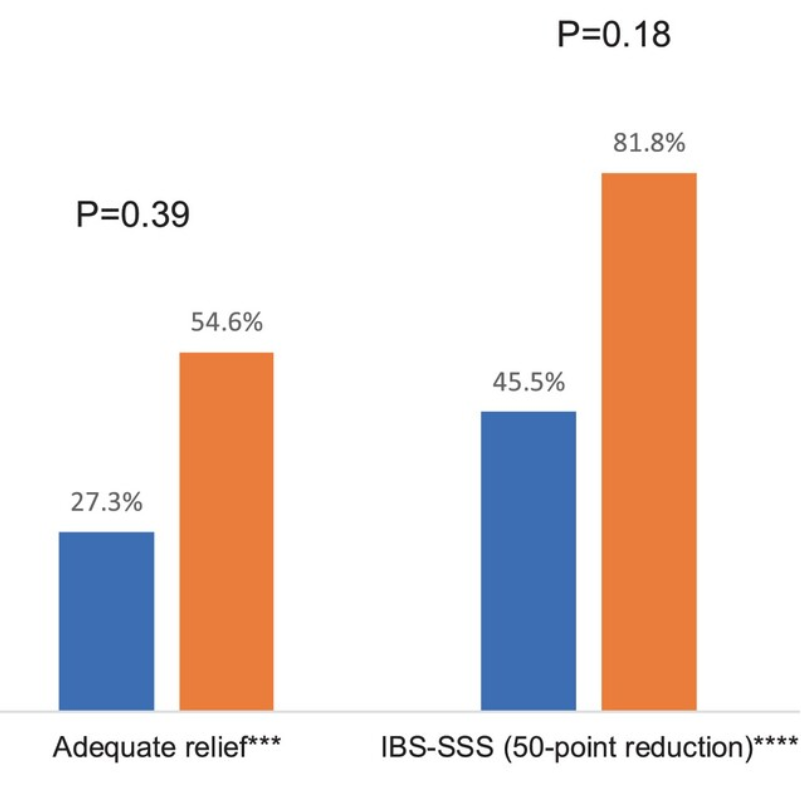
  • Although not statistically significant, a numerically higher proportion of the LFD group reported adequate relief and met the responder endpoint for IBS-SSS (50-point reduction) compared to the MD group (54.6% vs. 27.3% for IBS-AR and 81.8% vs. 45.5% for IBS-SSS, p = 0.39 and 0.18, respectively)
  • The LFD group also had a significantly greater reduction in IBS-SSS score over the 4-week treatment period compared to the MD group (−105.5 vs. −60, p = 0.02)

My take (borrowed from authors): A Mediterannean diet “improves abdominal symptoms in the majority of patients with IBS-D and IBS-M. Larger, adequately powered, real-world studies comparing the efficacy of a MD with LFD and NICE diet are needed to validate these preliminary findings and to help patients and providers to know if a MD should be added to the list of effective, evidence-based diet interventions for patients with IBS.”

Related blog posts:

Does a Less Restrictive Low FODMAP Diet Work?

In the movie There’s Something About Mary, there is a scene (YouTube: 7-minute abs) where the main character picks up a hitchhiker. The hitchhiker reveals his brilliant idea for the 7-minute ab workout to replace the 8-minute ab workout. Of course, he becomes upset when the lead character suggests that someone else could invent the 6-minute ab workout.

This is what I was thinking of when I read a recent article describing a simplified, less restrictive low FODMAP diet.

P Singh et al. Clin Gastroenterol Hepatol 2025; 23: 362-364. Is a Simplified, Less Restrictive Low FODMAP Diet Possible? Results From a Double-Blind, Pilot Randomized Controlled Trial

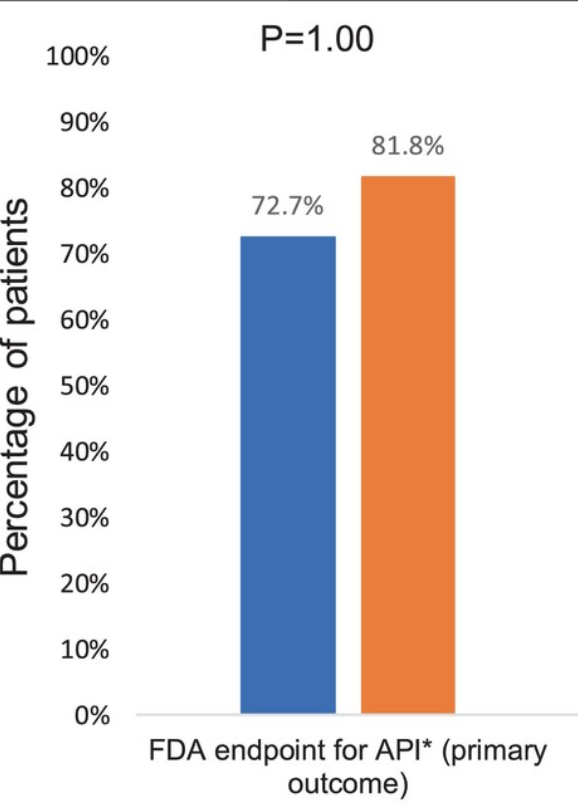
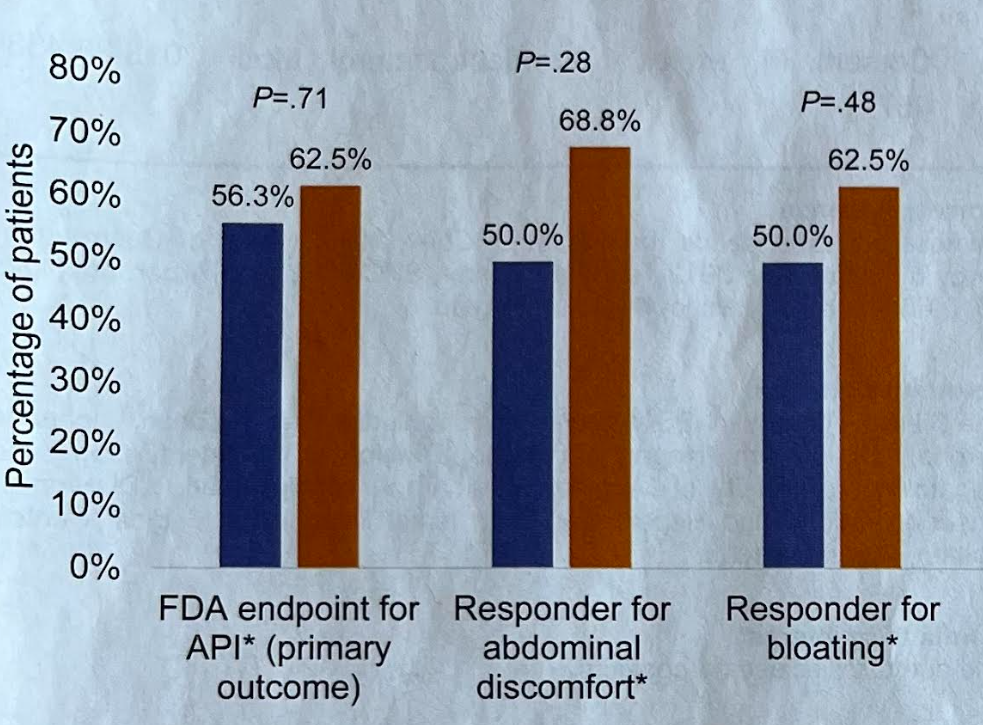
This pilot study with 35 subjects with IBS-D were randomized to a standard low FODMAP diet (LFD) or to a simplified FODMAP diet which eliminated solely fructans and galactooligosaccharides. The primary endpoint was the proportion of subjects meeting the FDA responder definition for abdominal pain intensity (ie. a >/= 30% reduction in weekly average of daily abdominal pain scores for 2 of the 4-week treatment period).

Key findings:

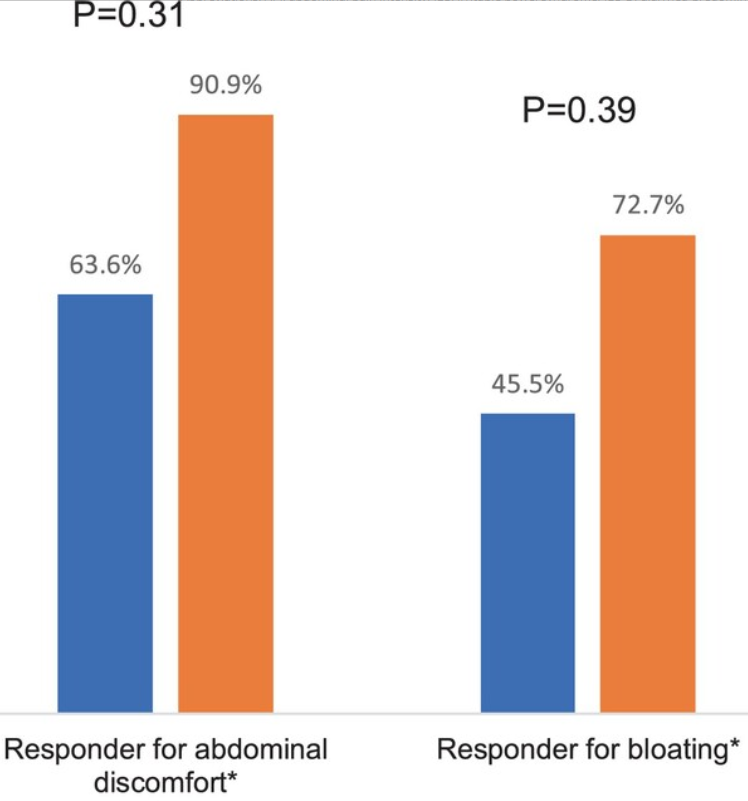
  • There was a similar reduction in key symptoms (see below)
  • Fewer individuals in the simplified diet dropped out due to side effects or difficulty with adherence (12.5% vs 26.3%)
Blue columns indicate response to traditional low FODMAP diet (n=19)
and orange represents response to simplified low FODMAP diet (n=16)

My take: Larger trials are needed. This study suggests that a simplified version of a low FODMAP diet would improve symptoms in most patients with IBS-D.

Related blog posts:

More Data Supporting Dietary Treatment for Irritable Bowel

S Nybacka et al. The Lancet Gastroenterol Hepatol 2024; DOI: https://doi.org/10.1016/S2468-1253(24)00045-1. A low FODMAP diet plus traditional dietary advice versus a low-carbohydrate diet versus pharmacological treatment in irritable bowel syndrome (CARBIS): a single-centre, single-blind, randomised controlled trial

In this Swedish study with 294 randomized participants who had with moderate to severe I.B.S, 96 assigned to the LFTD (low FODMAPs with IBS advice) diet, 97 to the low-carbohydrate diet, and 101 to optimised medical treatment. Response was defined as a reduction of 50 or more in IBS-SSS compared with baseline.

Key findings:

  • Response rate after 4 weeks: 73 (76%) of 96 participants in the LFTD diet group, 69 (71%) of 97 participants in the low-carbohydrate diet group, and 59 (58%) of 101 participants in the optimised medical treatment group

The findings of this study were included in a recent NY Times Article (4/18/24): What’s the Best Way to Treat I.B.S.?

An excerpt:
“A new study suggests that certain dietary changes may be more effective than medication.. When she checked on the participants during the trial, one from the low-FODMAP group cried when she described how much better she felt on the diet. Another in the low-carbohydrate group said she “never in her life had felt so good in her stomach,” Dr. Nybacka said…

Dr. Chey said the study was well done and provided “real data” to support what many doctors have observed: That “diet therapy is at least as good and probably better” than medication.

My take: Dietary therapies and psychological therapies are underutilized in the management of IBS. For those using dietary therapies, counseling with a nutritionist is a good idea.

Related blog posts:

Grand Canyon (from Seth Hochman)

Treatment of Refractory Celiac Symptoms with a Low FODMAP Diet

F van Megen et al. Clin Gastroenterol Hepatol 2022; 20: 2258-2266. Open Access! A Low FODMAP Diet Reduces Symptoms in Treated Celiac Patients With Ongoing Symptoms–A Randomized Controlled Trial

Methods: A randomized controlled trial was performed from 2018 to 2019 in 70 adults with biopsy-proven celiac disease. Inclusion criteria were as follows: persistent gastrointestinal symptoms defined by a Gastrointestinal Symptom Rating Scale (GSRS)–IBS version score of 30 or higher, gluten-free diet adherence for 12 months or longer, and serologic and mucosal remission. 

Key findings:

  • Compared to placebo-treated patients, there was significant improvement in pain, bloating, diarrhea and satiety, based on GSRS-IBS scores, in those assigned to a low FODMAPs diet (see below)

While this a low FODMAP diet can be helpful, the authors offer this cautionary advice:

  • “Following 2 complex diets increases the risk of inadequate nutritional intake, and patients should be followed up carefully. A low FODMAP diet should not be recommended to patients at nutritional risk or to patients at risk of developing an eating disorder.”
Figure 2 in Article

My take: Asking patients with celiac disease to further restrict their diet is akin to running the Peachtree Road Race in a fireman’s outfit. It can be done but doesn’t look like much fun.

Related blog posts:

Low FODMAPs Diet for Inflammatory Bowel Disease?

A recent small study (SR Cox et al. Gastroenterology 2019: doi: 10.1053/j.gastro.2019.09.024. [Epub ahead of print]) examined the use of a low-FODMAP diet to reduce symptoms in inflammatory bowel disease.

A summary of the study in GI & Hepatology News: Low-FODMAP diet eases gut symptoms in IBD

An excerpt:

While previous research has shown that a low-FODMAP diet can relieve gut symptoms such as swelling and flatulence in people with irritable bowel syndrome, the diet has been little studied in IBD patients, for whom gut symptoms often persist even in the absence of gastrointestinal inflammation.

In a study published in Gastroenterology, Selina Cox, MD, of King’s College, London, and colleagues randomized 52 people with ulcerative colitis or Crohn’s disease with persistent gut symptoms but without active inflammation to 4 weeks on a low-FODMAP diet (n = 27) or a control diet comprising sham dietary advice (n = 25).

At 4 weeks, Dr. Cox and her colleagues reported more patients on the low-FODMAP diet reported “adequate” relief of gut symptoms (52% vs. 16%, P = .007), and saw slight improvements in health-related quality of life scores, compared with the control group. Patient-reported flatulence and bloating were significantly lower in the treatment group, while few other symptom-specific differences were seen between groups…

There were no significant between-group differences in bacterial diversity or in biomarkers of inflammation.

My take: A low-FODMAP diet may help reduce symptoms but there is no indication that this diet is an effective treatment to reduce complications or reduce inflammation for patients with Crohn’s disease or ulcerative colitis.  In addition, assistance from a dietician is recommended when implementing a low-FODMAP diet.

Related Blog Posts:

AGA website for patient information: Low FODMAPs diet

Quebec City


Disclaimer: This blog, gutsandgrowth, assumes no responsibility for any use or operation of any method, product, instruction, concept or idea contained in the material herein or for any injury or damage to persons or property (whether products liability, negligence or otherwise) resulting from such use or operation. These blog posts are for educational purposes only. Specific dosing of medications (along with potential adverse effects) should be confirmed by prescribing physician.  Because of rapid advances in the medical sciences, the gutsandgrowth blog cautions that independent verification should be made of diagnosis and drug dosages. The reader is solely responsible for the conduct of any suggested test or procedure.  This content is not a substitute for medical advice, diagnosis or treatment provided by a qualified healthcare provider. Always seek the advice of your physician or other qualified health provider with any questions you may have regarding a condition


Evidence-Based IBS Treatment Recommendations from ACG

A recent  American College of Gastroenterology Task Force conducted a systematic review (AC Ford et al. The American Journal of Gastroenterology 2018;113:1–18 ) to update management recommendations for irritable bowel syndrome -Link:

American College of Gastroenterology Monograph on Management of Irritable Bowel Syndrome

The highlights of this report are summarized at Gastroenterology & Hepatoloy: Highlights of the Updated Evidence-Based IBS Treatment Monograph

A few excerpts:

“There have been numerous studies performed on the roles of diet and dietary manipulation in IBS. Three fairly firm conclusions were made following the review of these studies: (1) the low–fermentable oligosaccharide, disaccharide, monosaccharide, and polyol (FODMAP) diet seems to be effective for overall IBS symptom improvement; (2) a gluten-free diet is not effective for symptom improvement; and (3) conducting tests to detect various types of allergies or intolerances in order to base a diet on those results does not appear to be effective. Of these 3 conclusions, the most impressive data that came out of the research was the evidence for the low-FODMAP diet. Not only were there more studies on this diet, but the results were fairly consistent and favorable, at least for the short-term management of IBS.”

” We did not find evidence supporting the idea that prebiotics and synbiotics were effective in IBS management… In ­contrast, studies demonstrated that probiotics did improve global gastrointestinal symptoms, as well as the individual symptoms of bloating and flatulence in patients with IBS. However, determining which probiotic is best was difficult”

“Three prosecretory agents are available: linaclotide (Linzess, Allergan/Ironwood Pharmaceuticals), lubiprostone (Amitiza, Takeda), and plecanatide (Trulance, Synergy Pharmaceuticals), with plecanatide being the most recently approved agent. All 3 of these agents had convincing data to support their use in patients with constipation-predominant IBS

My take: In IBS patients, if dietary therapy is recommended, current evidence favors a low FODMAP diet rather than a gluten-free diet.

Related blog posts:

near Banff

Image above -Parker Ridge Trail

Low Quality Evidence for IBS Dietary Therapy

A recent systematic review and meta-analysis (J Dionne et al. Am J Gastroenterol 2018; 113: 1290-1300) throws some shade on the effectiveness of dietary therapies for irritable bowel syndrome. Thanks to Ben Gold for this reference. The authors reviewed 1726 citations -only 9 were eligible for systematic review; two RCTs (n=111 participants) with gluten-free diet (GFD) and 7 RCTs (n=397) with low FODMAPs diet.

Key findings:

  • A GFD was associated with reduced global symptoms compared with control interventions (RR=0.42, CI 0.11-1.55) which was not statistically significant.  Thus, there is “insufficient evidence to recommend a GFD to reduce IBS symptoms.”
  • A low FODMAP diet was associated with reduced global symptoms compared with control interventions (RR=0.69, CI 0.54-0.88). The three RCTs with rigorous control diets found the least magnitude of effect. Thus, the overall quality of the data was “very low” according to the GRADE criteria.

Given the limited data supporting dietary therapy for IBS, the authors caution that in those who are placed on a low FODMAPs diet, that after a 2-6 week trial, those who “fail to improve should not continue the diet. ”

Related blog posts:


Differential Microbiome Effects of Prebiotics and low FODMAPs

A recent study (J-W Huaman et al. Gastroenterol 2018; 155: 1004-7) examined the effects of a prebiotic (Bimuno) and a low FODMAPs diet for the treatment of functional GI disorders and their effects on the microbiome.

This was a randomized controlled 4-week trial with a 2-week followup period.  Those who received the prebiotic (N=19) received a placebo diet (Mediterranean-type) and those who were randomized to a low FODMAP diet (n=21) were instructed to consume a placebo.  The prebiotic contained beat-galactooligosaccharide.

Key findings:

  • Both groups had significant reduction in GI symptoms, though low FODMAPs was the only treatment helpful for flatulence/borborygmi.
  • The symptom reduction persisted in the prebiotic group for the 2 -week follow-up period, whereas symptoms reappeared immediately in the low FODMAP group.
  • The two treatments had opposite effects on the intestinal microbiota –the prebiotic treatment led to an increase in bifidobacteria and a decrease in Bilophilia wadsworthia.

My take: (borrowed from editorial pg 960-2): This study “may indicate that the effect of the prebiotic is mediated through its effects on gut microbiota composition, whereas the effect of the low FODMAP diets is more related to the meal composition…than to its effects on gut microbiota composition.”

Related blog posts:

From two of the missions in San Antonio


Another Study: Low FODMAPs Diet for Irritable Bowel Syndrome

Another good study on the low FODMAPs diet for irritable bowel syndrome with diarrhea (IBS-D): S Eswaran et al. Clin Gastroenterol Hepatol 2017; 15: 1890-9

This was a propspective, single-blind trial of 92 patients (84 completed study) with IBS-D (65 women) comparing the low FODMAPs diet to a modified diet recommended by the National Institute for Health and Care Excellence (NICE) for 4 weeks. Key findings:

  • The low FODMAPs group had larger increase in IBS-QOL score (15.0 vs 5.0).  In addition, based on IBS-QOL a meaningful clinical response occurred in 52% compared with 21% in the mNICE group.
  • Activity impairment was significantly reduced in the low FODMAPs group; -22.89 compared with -9.44.  Anxiety scores decreased as well.

My take: This study indicates that the low FODMAPs diet helps patient with IBS-D, and not just with their GI symptoms.

Related blog posts:

Cabin at Phantom Ranch, Grand Canyon

Mailbag for postcards (delivered via mule)

Phantom ranch canteen

Low FODMAP –Real World Experience

HM Staduacher et al. Gastroenterol October 2017; 153: 936–47

Key finding:

  • In this randomized, placebo-controlled study with 104 patients with irritable bowel syndrome (IBS), the researchers spent only 10 minutes per patient teaching the low FODMAPs diet; yet 57% reported adequate relief of symptoms.

AGA Journals blog summary: Can a Diet Low in FODMAP Reduce IBS Symptoms in the Real World?

An excerpt:

Heidi Maria Staudacher et al aimed to investigate the effects of a diet low in FODMAPs compared with a sham diet in patients with IBS, and determine the effects of a probiotic on diet-induced alterations in the microbiota.

They performed a 2×2 factorial trial of 104 patients with IBS. Patients were either given counselling to follow a sham diet or diet low in FODMAPs for 4 weeks, but not the actual foods. Patients also received a placebo or multistrain probiotic formulation, resulting in 4 groups (27 receiving sham diet/placebo, 26 receiving sham diet/probiotic, 24 receiving low-FODMAP diet/placebo, and 27 receiving low-FODMAP diet/probiotic)…

In the per-protocol analysis, a significantly higher proportion of patients on the low-FODMAP diet had adequate symptom relief (61%) than in the sham diet group (39%).

The total mean IBS severity score was significantly lower for patients on the low-FODMAP diet (173 ± 95) than the sham diet (224 ± 89), but there was no significantly difference between patients given probiotic (207 ± 98) or placebo (192 ± 93).

Related blog posts: