
AH Everhov et al. Gastroenterol 2026; 171: 158-160. Open Access! Incidence of Rectal Cancer in Patients With Isolated Ulcerative Proctitis: A Population-Based Cohort Study
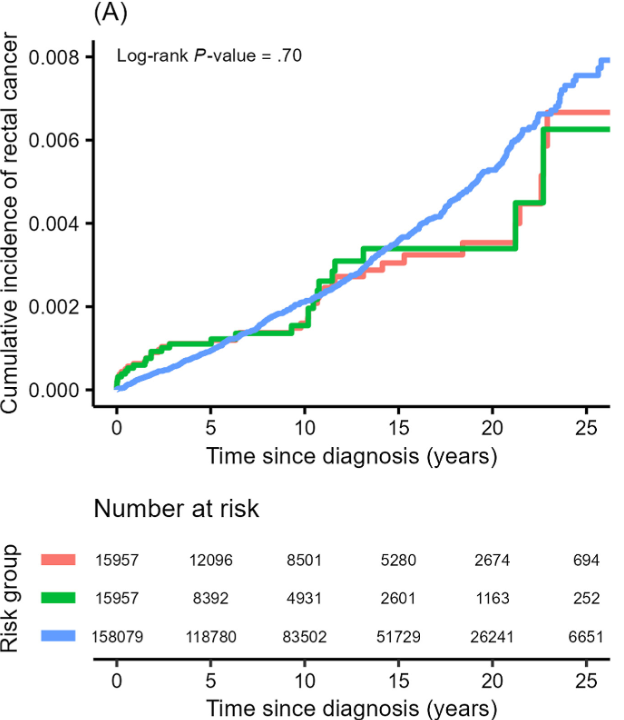
Methods: Using a prospective nationwide registry (SWIBREG) (1997-2023), there were 15,957 individuals diagnosed with isolated proctitis and matched to 158,079 population comparators. Median followup for patients with isolated proctitis was 10.8 years.
Key findings:
- Rectal cancer incidence was 0.11% in patients and 0.09% in comparators at 5 years and 0.16% and 0.21%, at 10 years.
- During follow-up, inflammation remained limited to the rectum in 60% of patients, whereas 23% developed left-sided colitis and 17% developed extensive colitis

Discussion Points:
- “Results from this nationwide study indicate patients with isolated proctitis have no elevated rectal cancer risk with respect to the general population.”
- “40% of patients experienced disease extension” which is similar to prior studies.
- “European (European Crohn’s and Colitis Organisation)9 and US (American College of Gastroenterology)10 guidelines endorse standard population screening in limited-extent disease, and our data support these recommendations.”
My take: This should provide a lot of reassurance for our patients with isolated proctitis.
Related blog posts:


