The guideline panel agreed on 16 recommendations. This highly-detailed report provides a comprehensive, patient-centered, evidence-based approach to the pharmacologic management of adult patients with moderate-to-severely active CD. Table 1 summarizes this lengthy 53-page report. Tomorrow’s post will be the “spotlight” summary which presents the recommendations in easier to read graphic.
Key Points:
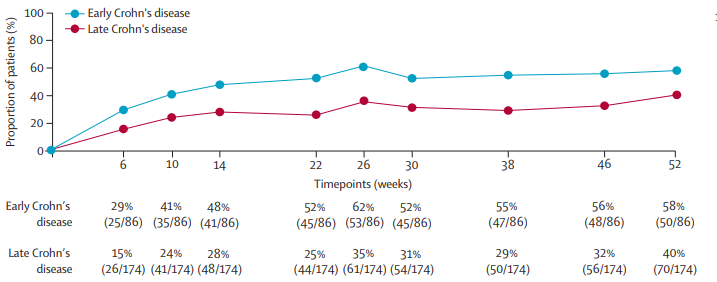
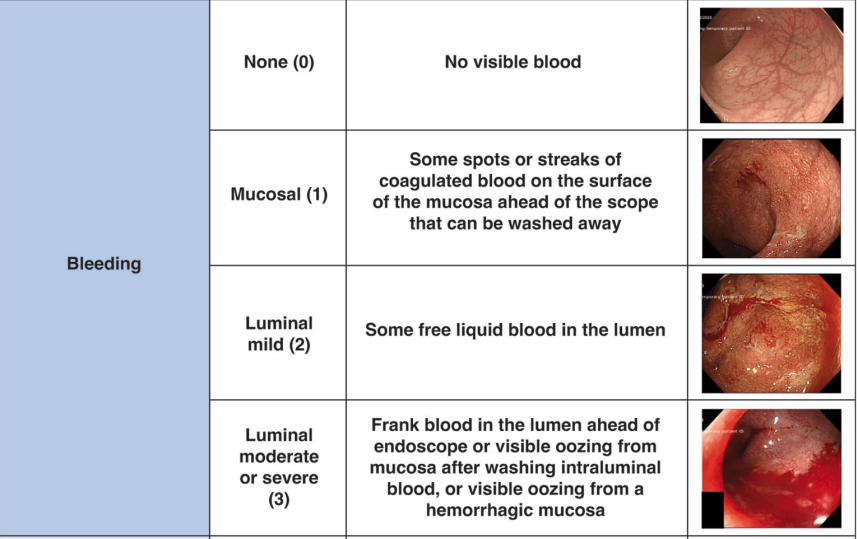
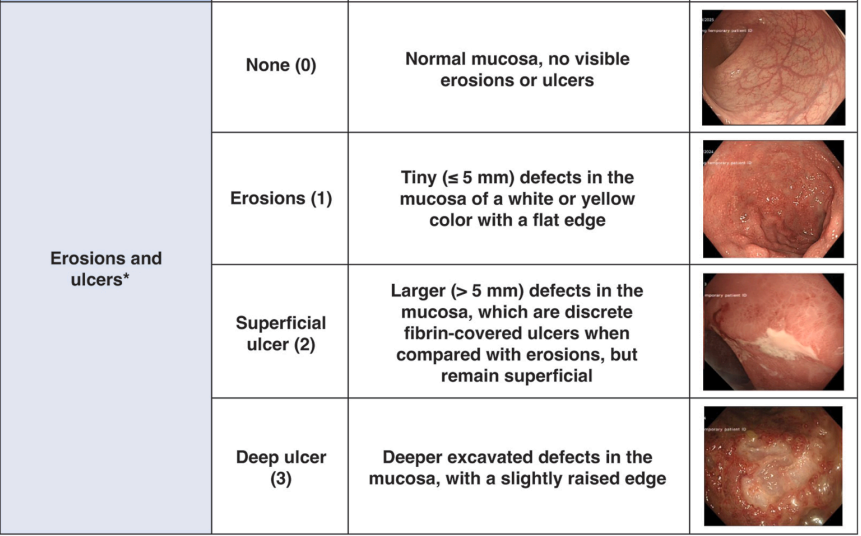
The guidelines are overall very helpful. They identify higher efficacy medications and recommend them. In addition, they support the use of combination therapy with thiopurines (which are less frequently used in pediatrics). It is interesting that the sixteenth recommendation clashes with prior expert recommendations. The sixteenth recommendation in this report makes no recommendation on using endoscopic surveillance compared to symptomatic clinical remission. Most experts advise “treat-to-target” therapy approaches.
In the discussion of this, the authors state the followiing:
“Recent position statements from an international consortium of experts have advised that longitudinal targets for the management of IBD should include not only clinical remission but also endoscopic resolution of inflammation.31 Several studies have demonstrated that patients who achieve endoscopic remission (vs those with ongoing endoscopic activity) have favorable long-term outcomes…
There are limited RCTs assessing whether there is actual benefit in systematically treating toward endoscopic remission target vs symptomatic remission targets (ie, testing whether the target has been achieved, followed by algorithmic treatment adjustment, including escalating index therapy, adding an immunomodulator, followed by switching to an alternative advanced therapy and surgery). There was significant heterogeneity among the 2 reviewed studies, both in terms of the advanced therapy used, algorithms for therapy modification, and the cadence and frequency of endoscopic monitoring that challenge interpretation. Based on the significant uncertainty of evidence with regard to improving maintenance of remission or reducing the risks of adverse events, the guideline panel could not make a recommendation in relation to selecting endoscopic targets over clinical targets.
It is worth emphasizing that in both of the included trials, the majority of individuals in the endoscopic healing arms were not able to meet the goal of endoscopic healing despite an algorithmic approach. For example, in STARDUST, only 11% of individuals achieved endoscopic remission.149…There are specific patient populations, such as those who have recently undergone intestinal resection,155 in which endoscopic evaluation may be particularly valuable in clinical decision making...
The benefit of a monitoring strategy incorporating biochemical monitoring over clinical monitoring alone was demonstrated in the CALM trial,152 and has been addressed in previous AGA guidelines on the role of biomarkers in patients with CD.12“
My take: These “living” guidelines are likely to be quite influential in selecting Crohn’s disease therapy. In pediatrics, ImproveCareNow provides a similar role of guiding treatment.
Steroids are commonly used and misused for inflammatory bowel disease. This article reviews best practices, steroid formulations/dosing, and potential complications.
For moderate to severe ulcerative colitis (in adults), the authors recommend treatment with 40 mg of prednisone daily. Patients with ASUC (acute severe ulcerative colitis) should be treated with 60 mg of IV methylprednisolone for 3 to 5 days, after which rescue therapy should be initiated
Use of budesonide is recommended as an option for many clinical situations to minimize steroid adverse effects. These situations include mild-moderate UC failing to respond to mesalamine, ileal CD and older patients
Postoperative complications: “In the postoperative period, patients treated with CS had a higher risk of both infectious complications (aOR, 3.69; 95% CI, 1.24–10.97) and major infectious complications (aOR, 5.54; 95% CI, 1.12–27.26) [Abrerra et al].135 Subramanian pooled data from 7 studies showing that preoperative CS use is associated with increased postoperative complications (OR, 1.41; 95% CI, 1.07–1.87) as well as infectious complications.
The authors note that corticosteroids “remain widely available and are an effective short-term option for induction of remission in patients with active UC or inflammatory CD. However, their well-described and significant safety profile warrants proactive strategies to limit their use through non-systemic formulations, short-term exposures, steroid-sparing maintenance options, and most recently, complete steroid avoidance strategies.”
My take: Continuing steroids when they are not effective prior to potential surgery (eg. ASUC) remains a frequent problem. Sometimes, it is difficult to know it they are helping some.
“Long-term treatment with proton pump inhibitors (PPIs) is independently associated with an increased risk for early-onset colorectal cancer (EOCRC) among individuals aged younger than 50 years, according to study results presented at the American College of Gastroenterology (ACG) 2025 conference…”
“Researchers reviewed data from the National Inpatient Sample from 2016 to 2020. Individuals were aged 18 to 49 years and had a main diagnosis of colorectal cancer (CRC)…Investigators identified PPI exposure through diagnostic codes indicating long-term use (Z79.891) or adverse effects (T45.4X5A/D)….
“Of the 7140 hospitalizations for patients with EOCRC aged younger than 50 years, 1056 (14.8%) reported long-term PPI treatment. After multivariable adjustment, PPI users had a 41% increased risk for EOCRC vs individuals without PPI use (adjusted odds ratio [aOR], 1.41…”
My take: More studies will be needed to determine if this link between PPI use and early onset CRC is truly significant. Many prior associations between PPI and other health conditions on observational studies have not held up with well-controlled studies. There was no increased risk of cancer in a previous randomized control trial (see below).
PPIs: Good News on Safety In the only large randomized controlled study (>17,000 patients over 3 years) of PPIs, there was no difference in pneumonia, Clostridium difficile infection, fracture, gastric atrophy, chronic kidney disease, dementia, cardiovascular disease, cancer, hospitalizations, and all-cause mortality in the PPI compared with the placebo arms. ”Enteric infections, which were slightly more common in patients randomized to PPIs, but even there the NNH was more than 900 per year.”
Methods: Randomized noninferiority clinical trial (n=139 Adults from UK) — 6 weeks of the MD (Mediterranean diet) (n = 68) versus TDA (traditional diet advice) (n = 71). Primary end point was the proportion achieving clinical response, defined as 50-point or greater reduction in IBS Symptom Severity Scale (IBS-SSS).
Traditional dietary advice’s main elements are to “adopt sensible eating habits and avoid excess fatty foods, spicy foods, processed foods, caffeine, fizzy drinks, and alcohol. The principal components of the MD are a diet rich in fruit, vegetables, pulses (aka legumes), whole grains, nuts, fish, and olive oil.”
Key findings:
The primary end point was met by 62% following a MD versus 42% following TDA (P = 0.017)
There was a greater reduction in the mean IBS-SSS after a MD than TDA (−101.2 vs. −64.5)
My take: I agree with the authors: The Mediterranean diet “represents a viable first-line dietary intervention for IBS.”
This ACTION study enrolled 280 patients (18-75 yrs) with IBS-D in a multicenter randomized controlled trial in 6 hospitals in China. “For the sham acupuncture group, blunt-tipped placebo needles with a similar appearance to real needles were used over the adhesive pads with no skin penetration. Five fixed pairs of non-acupoints (10 stimulation points in total) away from meridians or conventional acupoints were used.”
Key finding:
The primary outcome (see below) was reached by 71 (57.9%) patients in the acupuncture group compared with 47 (41.4%) patients in the sham acupuncture group (risk ratio 1.40; P = .008)
The effects of acupuncture in symptomatic improvements of IBS-D persisted 3 months after treatment with minimal to no side effects
Limitations including the difficulty of acupuncture blinding (despite the identical treatment setups)
My take: Acupuncture, especially given its safety, is a reasonable therapy for IBS-D; though, it is not recommended in recent pediatric guidelines. “The rub” in many locations is finding qualified practitioners.
Acupuncture for irritable bowel syndrome (2012). In this study, true acupuncture was not shown to be more effective than sham acupuncture; however, there was a high placebo response with sham acupuncture
This multicenter prospective study (n=253) examined efficacy of treatment in patients with proximal ileal disease using balloon-assisted enteroscopy (BAE). The recruited patients had a mean disease duration of 4 years. 52% were naive to biologic treatment at baseline.
Key findings:
At baseline, 74 patients (29.2%) had proximal ileal ulcerations without terminal ileal ulcerations
At week 26, after treatment with anti-TNF therapy (n=103), ustekinumab (n=99) or vedolizumab (n=51), endoscopic remission was achieved in 91 patients (36.0%). Of the patients with complete ulcer healing of the terminal ileum, 28.6% (22/77) had residual ulcers in the proximal ileum
The rate of endoscopic remission in the proximal ileum (50.9%) was relatively lower compared with the colon (63.4%) and terminal ileum (56.7%)
After a median follow-up of 134 weeks, residual ulcerations in the proximal ileum were associated with a poorer prognosis (P = .0126 for hospitalization and P = .0014 for surgery). In contrast, there was no significant differences in hospitalization and surgery associated with endoscopic activity vs remission in the colon or terminal ileum.
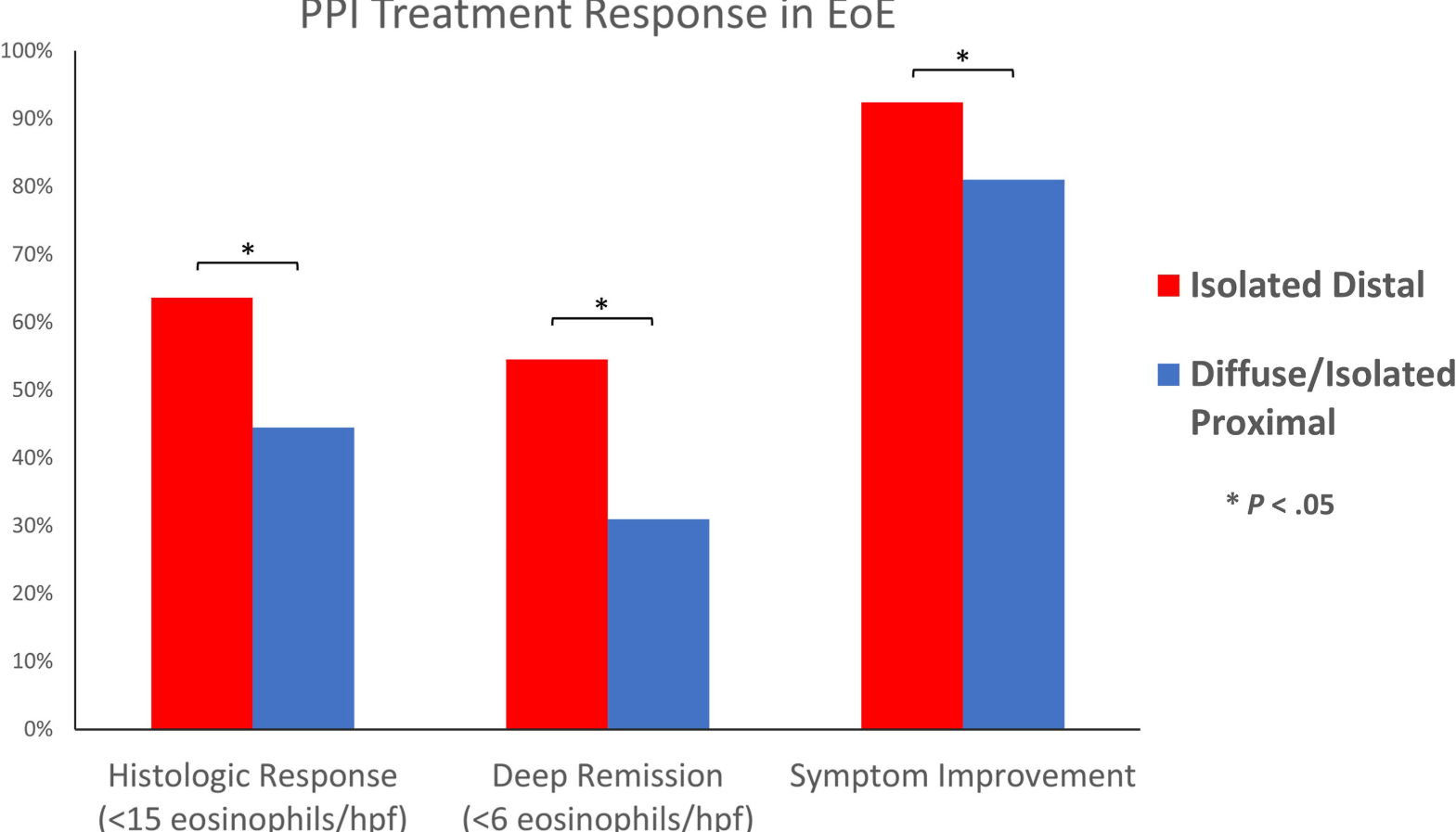
Discussion: Residual “proximal ileal ulcerations … are associated with a poorer prognosis…Additionally, we confirmed that proximal ileal inflammation is less responsive to biologic therapies compared with colonic inflammation. Although the reasons for this disparity remain unclear”
My take: Balloon-assisted enteroscopy is not frequently used in the setting of inflammatory bowel disease, particularly in pediatrics. MRE is typically used to follow proximal small bowel disease, though it has less sensitivity for luminal mucosal disease.
Methods: This was a two-part study: “(i) a detailed single-patient case of wheat-triggered, endoscopy-confirmed colitic FPIES treated with dupilumab 300 mg subcutaneously every two weeks and (ii) a prospective follow-up of seven additional FPIES patients all of whom initiated dupilumab for approved comorbidities. Serial flow cytometry quantified dendritic-cell OX40L and CD8+ CRTH2+ T-cell subsets before and after treatment; open food challenges assessed clinical tolerance.”
Key Findings:
Index case: Within two injections of dupilumab, the wheat sensitive patient tolerated a 50 g wheat protein challenge without gastrointestinal symptoms—this was the first uneventful exposure in 20 years. Discontinuation of dupilumab led to relapse; re-initiation again restored clinical tolerance
Cohort: All seven additional patients (ages 2–58 yr; triggers: milk, soy, rice, wheat, shellfish) achieved unrestricted dietary tolerance within three months
An important finding in the index case as well as the follow up cohort is the dupilumab induced drop in dendritic cell OX40L. OX40L is a TNF-superfamily co-stimulatory molecule induced on dendritic cells and other antigen-presenting cells.
My take: Dupilumab appears to be a promising medication for FPIES and warrants further study. If confirmed to be effective, it is likely to be targeted to those with approved comorbidities and those with more severe presentations.
Methods: Meta-analysis of 17 randomized controlled trials in 8871 adults with moderate-severe UC. The authors calculatedthe ratio of odds ratio of achieving remission with active drug vs placebo, in TNF antagonist–naïve vs TNF antagonist–exposed patients.
Key findings:
JAK inhibitors: Less efficacious in TNF antagonist–naïve vs exposed patients (6 trials; ratio of OR, 0.47)
IL-23 antagonists: No significant difference was observed in efficacy of selective interleukin-23 antagonists vs placebo in TNF antagonist–naïve vs exposed patients (6 trials; ratio of OR, 1.07)
Lymphocyte trafficking inhibitors: More efficacious in TNF antagonist–naïve vs exposed patients (5 trials; odds ratio [OR], 1.88)
Discussion:
This study “confirmed prior observations that exposure to TNF antagonists significantly reduces the efficacy of lymphocyte trafficking inhibitors in inducing remission, including both vedolizumab and S1P receptor modulators, by approximately 50%.In contrast, prior exposure to TNF antagonists was associated with a significant increase in the efficacy of JAK inhibitors in inducing remission, with 2-fold higher efficacy in TNF antagonist–exposed vs TNF antagonist–naïve patients”
In the SELECT-COMPARE trial in patients with rheumatoid arthritis, there was also an improved response to upadacitinib in patients with prior adalimumab.
“The current findings raise the intriguing possibility that exposure to TNF antagonists could result in lasting effects on the immune system that differentially alter responsiveness to therapies with distinct mechanisms of action”
My take: This study suggests that JAK inhibitors are a good choice for secondary therapy after anti-TNF agents. Other factors, besides efficacy, including safety, extraintestinal manifestations, and cost, have to be considered as well.
Disclaimer: This blog, gutsandgrowth, assumes no responsibility for any use or operation of any method, product, instruction, concept or idea contained in the material herein or for any injury or damage to persons or property (whether products liability, negligence or otherwise) resulting from such use or operation. These blog posts are for educational purposes only. Specific dosing of medications (along with potential adverse effects) should be confirmed by prescribing physician. Because of rapid advances in the medical sciences, the gutsandgrowth blog cautions that independent verification should be made of diagnosis and drug dosages. The reader is solely responsible for the conduct of any suggested test or procedure. This content is not a substitute for medical advice, diagnosis or treatment provided by a qualified healthcare provider. Always seek the advice of your physician or other qualified health provider with any questions you may have regarding a condition.
Yesterday and Today I am highlighting two adult clinical guidelines both of which are equivalent to up-to-date textbook chapters with specific recommendations; both are open access. In addition, the articles have accompanying author podcasts. Thanks to Ben Gold for these references.
Selected Management Recommendations:
Table 1, #3: We suggest against requiring failure of conventional therapy before initiation of advanced therapy for the management of CD
Table 1, #13: We recommend combination therapy of intravenous infliximab with immunomodulators (thiopurines) as compared with treatment with either immunomodulators alone or intravenous infliximab alone in patients with CD who are naive to those agents
Table 1, #33: In patients with high-risk CD, we recommend anti-TNF therapy to prevent postoperative endoscopic recurrence
Key Concepts:
Table 2, #9: Symptoms of CD do not correlate well with the presence of active inflammation and therefore should not be the sole guide for therapy. Objective evaluation by endoscopic or cross-sectional imaging should be undertaken periodically to avoid errors of under- or over-treatment.
Table 2, #14: The 10-year cumulative risk of major abdominal surgery in CD is 40%–55%, although recent studies performed in the biologic era suggest that the 10-year risk may have decreased to 30%. The 10-year risk of a second resection after the first is 35%, although again more recent studies suggest that this may have dropped to closer to 30%.
Table 2, #15: In CD, the 5-year rate of symptomatic postoperative recurrence is ∼50%.
Table 2, #29: Small bowel imaging should be performed as part of the initial diagnostic workup for patients with suspected CD.
Table 2, #31: Because of the absence of radiation exposure, magnetic resonance enterography should be used preferentially in young patients (younger than 35 years) and in patients in whom it is likely that serial exams will need to be performed.
Table 2, #38: Mucosal healing as determined by endoscopy is a goal of therapy. Scoring systems are available to measure the endoscopic disease activity and may be used to monitor response to therapy.
Table 2, #41: Antibiotics are not an effective treatment for luminal inflammatory CD and should not be used as a primary therapy.
My take: Given the rapid changes in available therapies, it would be optimal to make these collaborative guidelines (AGA, ACG, NASPGHAN) available online with frequent updates (similar to HCVguidelines.org).