Proactive Therapeutic Drug Monitoring is Routine Part of Pediatric IBD Care Plus SNL Humor

RJ Colman et al. Crohn’s & Colitis 360, Volume 7, Issue 3, July 2025, otaf050https://doi.org/10.1093/crocol/otaf050. Open Access! Therapeutic Drug Monitoring in Pediatric Inflammatory Bowel Disease: A Nationwide Survey of Anti-TNF Therapy Practices, Attitudes, and Barriers 

Methods: A 28-item survey of therapeutic drug monitoring (TDM) was deployed through the ImproveCareNow Learning Health System Network between February and June 2023.

Key findings:

  • Among 380 invitees, 256 (77%) completed the questionnaire. Among respondents, 67% (171) were academic-affiliates
  • In contrast to the adult literature, most pediatric gastroenterologists report undertaking proactive TDM for anti-TNF agents in IBD management
  • TDM: All 256 respondents reported using TDM for infliximab, while 252 (98%) used TDM for adalimumab (ADL)
  • Proactive TDM: Proactive TDM was more common for infliximab 98% (205/256) compared to ADL 92% (232/252; P = .0007)
  • Overall, 61% (156/255) of respondents reported that they experienced barriers in undertaking TDM. Insurance denial (50%) and cost (31%) were the 2 most commonly reported barriers
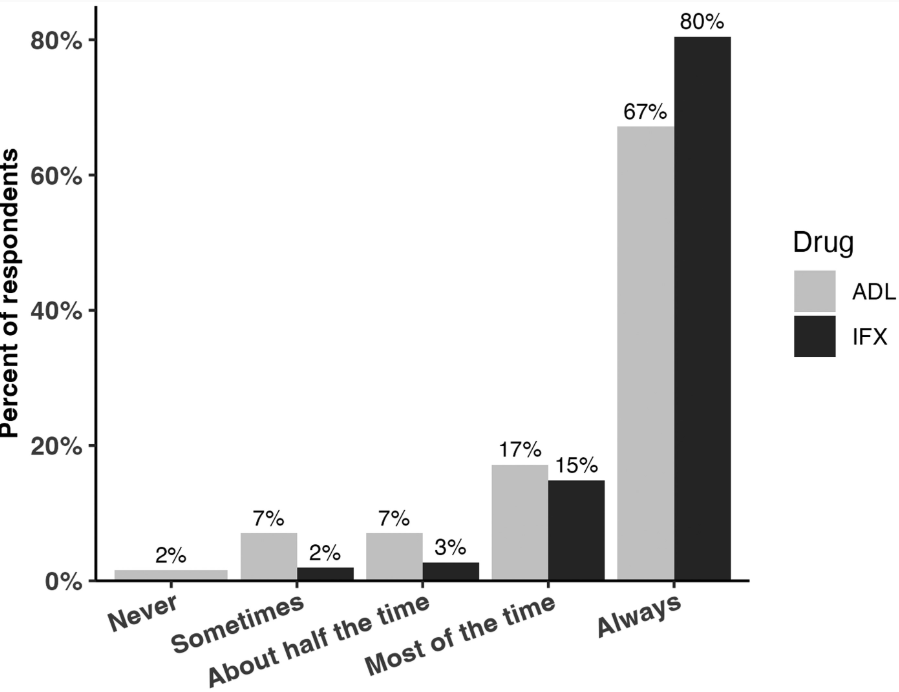
Frequency of therapeutic drug monitoring use stratified by anti-TNF agent.

Limitation: Only surveyed practitioners in ICN. However, “approximately 65% of US pediatric gastroenterologists practice within ICN-affiliated institutions, [thus] our findings likely reflect national trends.”

My take (borrowed from authors): “Proactive TDM, is a widely practiced strategy, and represents the current standard of care among pediatric gastroenterologists in the United States.” 

How to explain a complication with Will Ferrell, YouTube Link: SNL Post-Op (5 minutes)

Related blog posts:

Proactive Drug Monitoring for Crohn’s Disease in Pediatrics

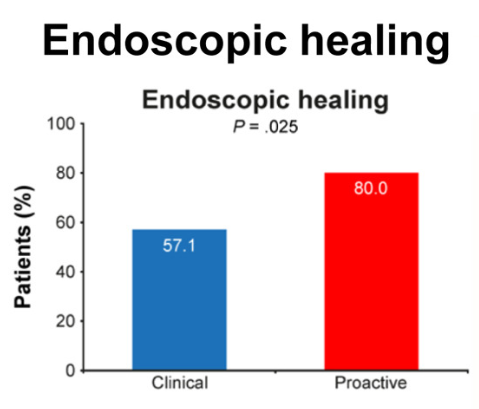
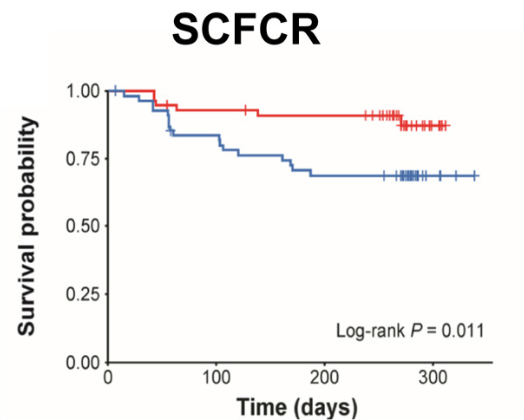
B Kang et al. Clinical Gastroenterology and Hepatology; 2026: 24: 201 – 209. Proactive Drug Monitoring Versus Clinically Based Dosing for Endoscopic Healing in Pediatric Crohn’s Disease Receiving Infliximab

Methods: This was a non-blinded, randomized controlled trial of 112 biologic-naïve children with CD who had responded to IFX induction treatment at 4 centers in South Korea between July 2017 and November 2020. Patients were randomly assigned to receive dosing based on proactive TDM (proactive arm) or clinically based dosing (clinical arm). The primary endpoint was endoscopic healing (EH) at week 54.

During the maintenance phase, patients received IFX 5 mg/kg every 8 weeks. In the proactive arm, treatment was intensified (shortening interval by 2- to 4-weeks) if trough level was less than 6 mcg/mL.

Key findings:

Sustained corticosteroid-free clinical remission (SCFCR) 

Discussion Points:

  • “Our findings provide evidence that the proactive strategy resulted in increased EH rates and had a positive impact on SCFCR, biochemical remission, and FC, which serve as surrogate markers of EH.”
  • “The PAILOT trial, the only prospective study on proactive TDM in pediatric patients with CD, demonstrated that proactive TDM with adalimumab resulted in higher SCFCR rates than reactive TDM (82% vs 46%; P < .001), consistent with our findings.8
  • “In our study, IMM [immunomodulator] modulation was performed in conjunction with proactive TDM, which may explain why no difference was observed in ADA development (proactive arm, 31.4% vs clinical arm, 28.6%. Proactive TDM has been confirmed to reduce the development of ADAs, and the concept of “optimized monotherapy” based on the view that proactive TDM effectively guides IMM withdrawal in combination therapy has been well-described.30 …in our institution, IMMs are discontinued as soon as possible after 1 year of combination therapy if adequate TDM is maintained.31

My take: This study shows that proactive TDM is superior to clinical-based dosing. The findings may have been less pronounced if higher baseline doses of IFX were used. It is well-recognized that “standard” IFX (5 mg/kg/dose every 8 weeks) is usually insufficient in pediatric patients.

Related blog posts:

Early Infliximab Levels Correlates with Outcomes in Acute Severe Ulcerative Colitis

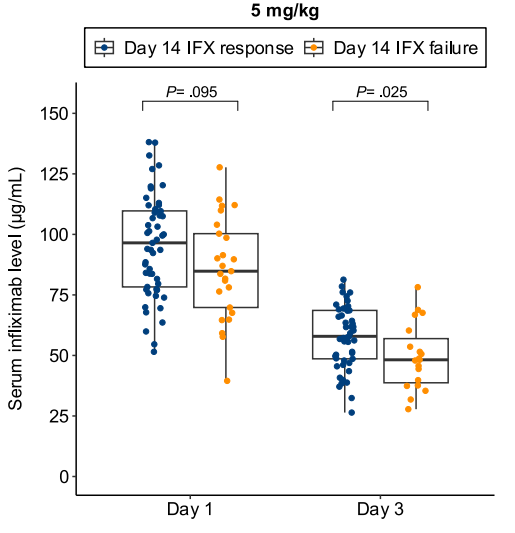
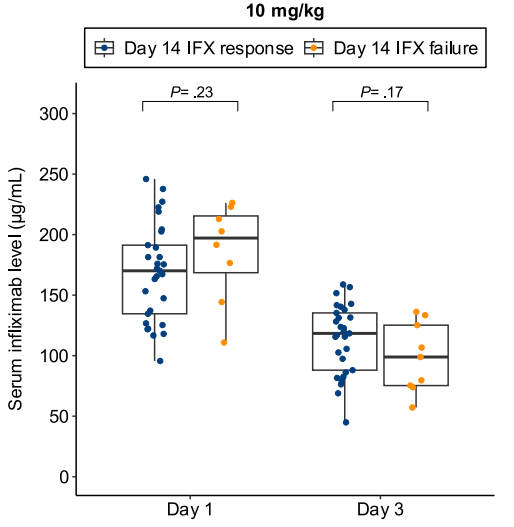
CFD Li Wai Suen et al.Gastroenterology, Volume 170, Issue 1, 118 – 131. Early Infliximab Levels and Clearance Predict Outcomes After Infliximab Rescue in Acute Severe Ulcerative Colitis: Results From PREDICT-UC

Methods: Data, including serum and stool testing, was extracted from from 135 patients (ages 24-42) enrolled in the PREDICT-UC prospective, randomized controlled trial

Key findings:

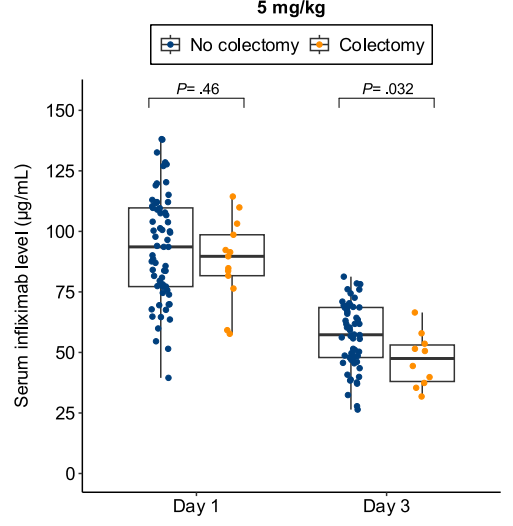
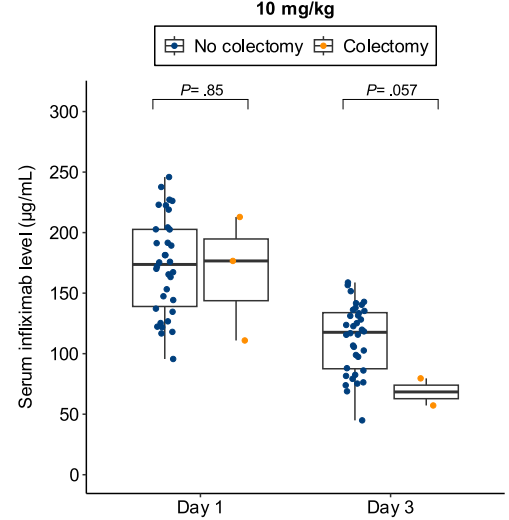
  • Lower day 3 serum infliximab levels predicted infliximab failure on day 14 and colectomy by 3 months; a threshold of ≤57.9 μg/mL had 83% sensitivity, 67% specificity, 24% positive predictive value, and 97% negative predictive value for colectomy
  • In patients with high clearance who did not respond to the first infliximab dose, day 14 response rate was higher with a second 10 mg/kg vs 5 mg/kg dose (38% vs 11%; risk ratio, 3.43)
  • Day 3 fecal infliximab levels correlated with endoscopic severity and was associated with day 7 nonresponse (P = .016)

Discussion points:

“Early infliximab levels and clearance predict outcomes in ASUC. Additionally, we are the first to demonstrate that a high early infliximab clearance can be overcome by additional dosing. These results demonstrate the potential of early infliximab TDM [therapeutic drug monitoring] to guide decision-making in ASUC and for the first time provide an evidence base for intensified infliximab dosing in clinical practice.”

My take: While the authors suggest TDM as a potential strategy to overcome low levels, an alternative approach would be using higher dosing and more frequent dosing, especially as infliximab levels may not be quickly available. Higher dosing is particularly important in the pediatric age group where studies have shown that “standard” dosing of 5 mg/kg result in insufficient levels of infliximab in ~80%.

Related blog posts:

    Impact of Adalimumab Levels on Fistula Healing in Crohn’s Disease

    K Papamichael et al.Clin Gastroenterol Hepatol 2024; 22: 2134-2136.
    Higher Adalimumab Concentration Is Associated With Complete Fistula Healing in Patients With Perianal Fistulizing Crohn’s Disease

    In this multicenter retrospective review with 183 patients, the adalimumab (ADM) levels were examined with respect to healing of perianal fistulas. Most patients (82%) had complex perianal fistulizing CD.

    Key findings:

    • 87 patients (48%) received intensified dosing at the time of therapeutic drug monitoring (TDM)
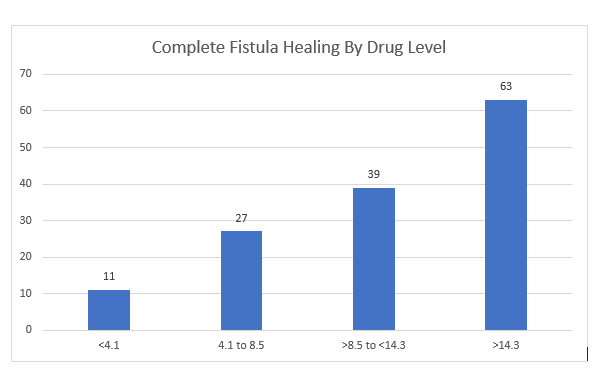
    • Patients with complete fistula healing (CFH) had higher median ADM levels: 12.9 compared to 6.1 for those witout CFH
    • “Optimal ADM concentration associated with CFH was 12.2 mcg/mL” which had positive predictive value of 64% and negative predictive value of 80%. Among those with ADM >12.1, CFH was achieved in 64% compared to 20.5% in those with concentrations <12.1 (Odds ratio, 5.7). “Even higher drug levels may be needed.”
    There were 46 patients in each drug level category

    My take: There is a lot of data supporting TDM, including proactive TDM, with anti-TNF agents like adalimumab and infliximab. This study shows that with fistulizing disease higher drug levels are needed to achieve better outcomes.

    Related blog posts: