Liver Transplant Outcomes in Children: Two Studies

Jean de Ville de Goyet et al. Hepatology 2022; 75: 634-645. European Liver Transplant Registry: Donor and transplant surgery aspects of 16,641 liver transplantations in children

This is an amazing study — “50-year period (1968–2017), clinical and laboratory data were collected from 133 transplant centers and analyzed retrospectively (16,641 liver transplants in 14,515 children).”

Key findings:

  • Overall, the 5-year graft survival rate has improved from 65% in group A (before 2000) to 75% in group B (2000-2009) (p < 0.0001) and to 79% in group C (since 2010) (B versus C, p < 0.0001).
  • Graft half-life was 31 years, overall; it was 41 years for children who survived the first year after transplant.
  •  The use of living donors steadily increased from A to C (A, n = 296 [7%]; B, n = 1131 [23%]; and C, n = 1985 [39%]; p = 0.0001)

My take: Liver transplantation provides a durable cure for most infants and children with severe liver disease.

A Shingina et al. Liver Transplantation 2022; 28: 437-453. Long-term Outcomes of Pediatric Living Versus Deceased Donor Liver Transplantation Recipients: A Systematic Review and Meta-analysis

Associated editorial: EM Dugan, AD Griesemer. Pediatric Living Donor Liver Transplantation: Optimizing Outcomes for Recipients, Donors, and the Waiting List

A total of 24 studies with 3677 patients who underwent living donor liver transplantation (LDLT) and 9098 patients who underwent deceased donor liver transplantation (DDLT) were included for analysis. Key findings:

Overall, this meta-analysis shows improved patient and graft survival at 1, 3, 5, and 10 years with LDLT compared to DDLT:

  • Patient survival: LDLT vs DDLT: 1-year (odds ratio [OR], 0.68), 3-year (OR, 0.73), 5-year (OR, 0.71), and 10-year (OR, 0.42)
  • Graft survival — LDLT vs DDLT: 1-year (OR, 0.50), 3-year (OR, 0.55), 5-year (OR, 0.5; 95), and 10-year (OR, 0.26)

While LDLT is often technically more challenging, it provides timely access (reducing wait-time deaths/deterioration) to a high-quality organ with minimal preservation time. In this cohort, LDLT patients had higher MELD and PELD scores at transplantation compared to the DDLT.

My take: Increasing use of LDLT, at centers with appropriate expertise, will lead to better outcomes in children with severe liver disease.

Related blog posts:

Chattahoochee River in Sandy Springs, Ga

What’s Wrong with Step Therapy Reform: Safe Step Act

RE Sachs, MA Kyle. NEJM 2022; 386: 901-904. Step Therapy’s Balancing Act — Protecting Patients while Addressing High Drug Prices

Step therapy is a utilization-management strategy whereby insurers implement tiered treatment pathways for various conditions. Patients (and their physicians) who seek approval for restricted therapies must document unsuccessful attempts at treatment with less expensive therapies in earlier ‘steps.’ Most employer-sponsored insurance plans incorporate requirements for step therapy into their drug formularies.”

The fundamental flaw with step therapy: “Payers have turned to step-therapy protocols because we have failed to address high drug prices at a societal level, instead transferring the problem to the point of care and imposing administrative burdens on physicians and patients.”

While step therapy makes sense with high-cost, low-value medications, it is problematic with high-cost, high efficacy medications. To mitigate some of the harmful effects of step therapy, lawmakers have drafted the Safe Step Act.

“The Safe Step Act also lists five specific circumstances under which insurers would be required to grant an exception to step-therapy protocols. It would require exceptions in cases in which the required treatments have previously been ineffective for the patient, delay of effective treatment would lead to “severe or irreversible consequences,” required treatments are contraindicated, required treatments would prevent the patient from performing activities of daily living, or the patient’s condition is stable on the existing medication and the patient has previously received coverage approval for it. The act would also empower the executive branch to identify other circumstances that might require exemptions. Most of these exceptions, however, could create additional administrative burdens for patients and clinicians that might pose challenges for maintaining continuity of care.”

My take (from authors): “the Safe Step Act focuses on legal action at the individual-prescription level, failing to bring down drug prices while increasing administrative costs.”

Related blog posts:

Chattahoochee River in Sandy Springs

PEnQuIN and Improving the Quality of Pediatric Endoscopy

Several articles in a recent JPGN supplement issue describe the efforts to develop quality standards and indicators for pediatric endoscopy. All of these articles are open access.

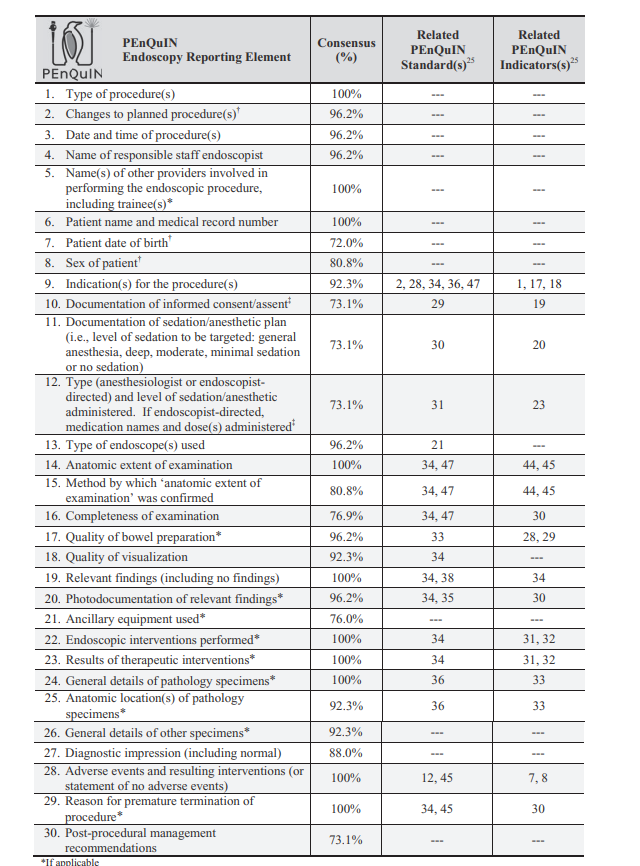
The overview article (CM Walsh et al. JPGN 2022;74: S3–S15) is the most important: Open Access: Overview of the Pediatric Endoscopy Quality Improvement Network Quality Standards and Indicators for Pediatric Endoscopy: A Joint NASPGHAN/ESPGHAN Guideline

The reporting article (CM Walsh et al. JPGN 2022;74: S53–S62) lays out the details that should be included in an endoscopy procedure note: open access PDF: Pediatric Endoscopy Quality Improvement Network Pediatric Endoscopy Reporting Elements: A Joint NASPGHAN/ESPGHAN Guideline

The other articles:

JR Lightdale et al. JPGN 2022;74: S16–S29 Open Access: Pediatric Endoscopy Quality Improvement Network Quality Standards and Indicators for Pediatric Endoscopy Facilities: A Joint NASPGHAN/ESPGHAN Guideline

JR Lightdale et al. JPGN 2022;74: S30-S43 Open Access: Pediatric Endoscopy Quality Improvement Network Quality Standards and Indicators for Pediatric Endoscopic Procedures: A Joint NASPGHAN/ESPGHAN Guideline

CM Walsh et al. JPGN 2022;74: S44–S52. Open Access: Pediatric Endoscopy Quality Improvement Network Quality Standards and Indicators for Pediatric Endoscopists and Endoscopists in Training: A Joint NASPGHAN/ESPGHAN Guideline

My view: These detailed articles provide a good framework for improving pediatric endoscopy. After assuring that the facility and personnel are high quality, the pediatric endoscopist has the important responsibility of providing a high quality endoscopy. We need to strive to provide the best care for every single child entrusted in our care. In my view, the most important step is having an appropriate indication and despite guidelines, this remains highly subjective.

Related blog posts:

Internet Survey: Lots of People Have Rumination

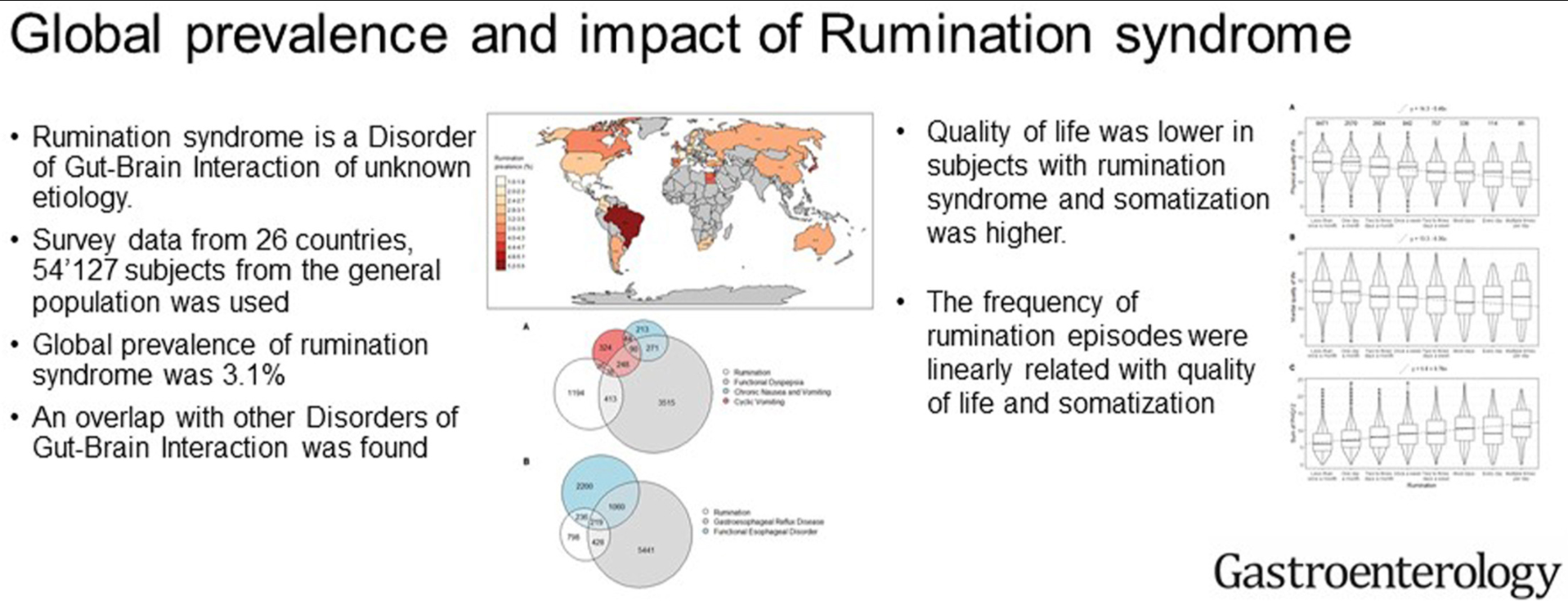
A Josefsson et al. Gastroenterol 2022; 162: 731-742. Open Access: Global Prevalence and Impact of Rumination Syndrome

Key findings:

  • Using internet surveys from 26 countries (54,127 subjects), the authors identified an overall prevalence of rumination syndrome of 3.1% (Rome IV criteria)
  • Factors independently associated with rumination syndrome were depression (odds ratio [OR], 1.46), anxiety (OR, 1.8), body mass index (OR, 1.04), and female sex (OR, 1.19)
  • Limitations: this was “an Internet survey with self-reported symptoms. In clinical practice, investigations, including endoscopy and esophageal manometry, are often carried out, so we cannot completely exclude that some subjects had other conditions, misclassified as rumination syndrome” (especially reflux)
  • As noted in the commentary (pgs 696-697), the prevalance drops to 0.122% in those with daily symptoms, which is common in tertiary referral centers, the prevalence drops to 0.122%

My take: Rumination syndrome is common and likely underdiagnosed.

Related blog posts:

Why Do Some People Recover from Acute Liver Failure and Some People Don’t?

Briefly noted: T Lin et al. Hepatology 2022; 322-337. Open Access: Follistatin-controlled activin-HNF4α-coagulation factor axis in liver progenitor cells determines outcome of acute liver failure

Design: After preliminary work in 19 patients with acute liver failure (ALF) and in a zebrafish model, a prospective clinical study followed up 186 patients with cirrhosis for 80 months to observe the relevance of follistatin (FST) levels in prevalence and mortality of acute-on-chronic liver failure.

Key findings: Recovered patients with ALF robustly express HNF4α in either LPCs (liver progenitor cells) or remaining hepatocytes. Serum FST levels could predict the incidence and mortality of acute-on-chronic liver failure.

Implication of study: “Our results indicate that serum FST levels might be a surrogate marker reflecting the extent of hepatocyte death and hepatic insulin resistance, which point to the danger of coagulopathy and clinical deterioration. The hypothesis requires further confirmation in the future.”


Hormone-controlled activin-HNF4α-coagulation factor axis in LPCs

Incidental Liver Lesions -What to Do

B Karmazyn et al. JPGN 2022; 74: 320-327. Diagnosis and Follow-up of Incidental Liver Lesions in Children

This article summarizes the authors’ diagnostic approach to incidental liver lesions. Figure 1 provides provides an overview. The authors note that an MRI is preferred for multiple lesions, complex cysts, and solid cysts >3 cm in size. This algorithm recommends the following:

  • Consideration of liver biopsy for lesions 5 cm or greater (though imaging surveillance can be considered for some lesions with typical benign appearance). Most malignant lesions are >5 cm.
  • For those lesions less than 5 cm, in those with features of hepatocellular adenoma or lesions with atypical features, consider a biopsy if feasible
  • For those lesions less than 5 cm, in those with a typical appearance of a simple cyst, hemangioma or focal nodular hyperplasia, the algorithm recommends surveillance every 6-12 months. When a lesion is stable in size, surveillance can be changed to every 2-3 years. In those lesions that are increasing size, either a biopsy or more frequent surveillance (every 3-6 months) is recommended.
  • In terms of modality, if initial imaging is an ultrasound, the algorithm recommends an MRI if the lesion is a complex cyst, and for solid lesions >3 cm. No followup is recommended for “typical focal fatty infiltration or sparing.”

Related blog post: Liver Masses -Helpful Reference

Dawn in Sandy Springs (no filter)

Disclaimer: This blog, gutsandgrowth, assumes no responsibility for any use or operation of any method, product, instruction, concept or idea contained in the material herein or for any injury or damage to persons or property (whether products liability, negligence or otherwise) resulting from such use or operation. These blog posts are for educational purposes only. Specific dosing of medications (along with potential adverse effects) should be confirmed by prescribing physician.  Because of rapid advances in the medical sciences, the gutsandgrowth blog cautions that independent verification should be made of diagnosis and drug dosages. The reader is solely responsible for the conduct of any suggested test or procedure.  This content is not a substitute for medical advice, diagnosis or treatment provided by a qualified healthcare provider. Always seek the advice of your physician or other qualified health provider with any questions you may have regarding a condition.

Celiac Disease, Hepatitis B and Paul Harvey

Growing up, I heard a number of Paul Harvey broadcasts on the radio. Often there would be an important twist at the end and he would conclude with ‘and that’s the rest of the story.’

This came to mind after reading a recent article on celiac disease and hepatitis B infection:

N Habash et al. JPGN 2022; 74: 328-332. Celiac Disease: Risk of Hepatitis B Infection

Methods:

  • A cross-sectional study using the National Health and Nutrition Examination Survey (NHANES) database (2009–2014) 
  • And a retrospective analysis of HBV infection in two cohorts: Mayo Clinic cohort (1998–2021) and the Rochester Epidemiology Project cohort (REP; 2010–2020)

Key findings:

  • Based on NHANES database, the rate of HBV infection in the United States was  0.33%
  • Of 93 patients with CD, 46 (49%) were vaccinated for HBV and of the remaining 19,422 without CD, 10,228 (53%) were vaccinated
  • Twenty-two (48%) vaccinated patients with CD had HBV immunity and 4405 (43.07%) vaccinated patients without CD had HBV immunity
  •  In NHANES data, there were no cases of HBV infection in patients with CD. Among the 3568 patients with CD seen at Mayo Clinic and 3918 patients with CD in the REP database, only four (0.11%) at Mayo Clinic and nine (0.23%) of the REP patients had HBV infection.

This finding is probably applicable to other conditions in which HBV immunity is ascertained.

My take: In contrast to other small studies, this study showed that the “rate of HBV vaccination and immunity was similar in individuals with and without CD.” In addition, there was no increased risk of HBV infection detected in CD patients. Thus, testing for HBV is not necessary in patients with CD.

And that’s the rest of the story.

Related blog post

Nonmedical Adalimumab Switches

G Tapete et al. Inflamm Bowel Dis 2022; 28: 62-69. Effectiveness and Safety of Nonmedical Switch From Adalimumab Originator to SB5 Biosimilar in Patients With Inflammatory Bowel Diseases: Twelve-Month Follow-Up From the TABLET Registry

Methods: Prospective enrollment (n=146) included a ADA and those with a nonmedical switch from the ADA originator (n=98). Clinical remission and safety were assessed at baseline and at 3, 6, and 12 months

Key finding:

  • In the naïve cohort, the overall remission rate at 12 months was 60% (similar to originator adalimumab results); the remission rate in the switching cohort it was 75% with a treatment persistency of 82% at 12 months after the switch
  • No differences were found in terms of ADA serum trough levels at baseline, 3, and 6 months after switching. No patient developed antidrug antibodies after the switch
  • Fecal calprotectin (FC) values trended lower in both cohorts. In the naive cohort, the mean value of FC dropped from 665 (baseline) to 231 at 12 months. In the switch cohort, the mean value of FC dropped from 212 (baseline) to 84 at 12 months

My take: In this cohort, SB5 biosimilar for adalimumab was effective and safe.

Related blog posts:

“Bigorexia” and Body Image Distortion in Males

NY times (3/5/22): What Is ‘Bigorexia’?

This article appeared in the print edition of the NT Times on 3/6/22 (in the Style Section). Some excerpts:

Many doctors and researchers say that the relentless online adulation of muscular male bodies can have a toxic effect on the self-esteem of young men, with the never-ending scroll of six packs and boy-band faces making them feel inadequate and anxious...

A 2019 survey published in the Californian Journal of Health Promotion examined body image in boys. Almost a third of the 149 boys surveyed, aged 11 to 18, were dissatisfied with their body shapes. Athletes were more likely to be dissatisfied than non-athletes and most wanted to “increase muscle,” especially in the chest, arms and abs.

The quest for perfect pecs is so strong that psychiatrists now sometimes refer to it as “bigorexia,” a form of muscle dysmorphia exhibited mostly by men and characterized by excessive weight lifting, a preoccupation with not feeling muscular enough and a strict adherence to eating foods that lower weight and build muscle…

A scroll through the most popular TikTok or YouTube accounts today reveals a landscape dominated by musclemen…no form of media has disrupted how young men view their bodies quite like the insatiable voyeurism and staged exhibitionism that fuels platforms like TikTok and Instagram...

A study published last year in The Journal of Adolescent Health looked at eating disorders among men throughout young adulthood. By age 16 to 25, one-quarter of the 4,489 male participants told researchers they were worried about not having enough muscles. Eleven percent reported using muscle-building products such as creatine or anabolic steroids…

The line between getting fit and fanatical is not always clear…

Bigorexia can lead to interpersonal problems too. Many young men who overexercise and follow rigid diets often skip meals with family and friends, and complain of feeling isolated and socially anxious...

At first, he thought a muscular physique might be a way to make new friends, especially among the girls at school. But most of the attention has come from other boys on TikTok looking to get buff.

“Your only new friends are the weights,” he says in one video.

My take: Fortunately, this blog author’s appearance will not cause anyone to develop toxic self-esteem issues. On a more serious note, this growing problem should lead physicians to review protein supplements/dietary supplements with our teen population in addition to being sensitive to associated emotional struggles..

Related blog posts: