Hepatitis B Reactivation with Direct-Acting Antiviral Hepatitis C Therapy

“I refuse to accept the view that mankind is so tragically bound to the starless midnight of racism and war that the bright daybreak of peace and brotherhood can never become a reality.” Martin Luther King, Jr

——————
More information on hepatitis B virus (HBV) reactivation with direct-acting antiviral (DAA) hepatitis C virus (HCV) therapy has been published:

  • PS Belperio et al. Hepatology 2017; 66: 27-36
  • G Chen et al Hepatology 2017; 66: 13-26
  • Editorial: RP Perrillo. G Chen et al Hepatology 2017; 66: 4-6.

In a previous post on this topic (:), it was noted that physicians need to be aware of HBV reactivation with DAAs. It appears that HCV can suppress HBV replication and that successful HCV therapy allows for HBV reactivation.

Belperio et al reviewed data from an observational study on more than 62,000 HCV-infected veterans, including 377 who had HBsAg-positivity and 7295 who had anti-HBc-positivity.

Key findings:

  • 8 of 377 HBsAg-positive had reactivation (defined as HBV DNA increase of >1000 IU/mL) of HBV during DAA treatment of HCV. Only one of these eight had a severe hepatitis (ALT 154o IU)
  • 1 of 7295 HBc-positive had HBV reactivation. This rate of reactivation is actually lower than HBV reactivation reported with ‘inactive’ disease (1-2% per year).
  • For HBV screening, the authors recommend HBsAg and anti-HBc testing

Chen et al performed a systematic review (of 28 studies included) and meta-analysis had identified overt  HBV reactivation in 12.2% of those receiving DAAs.  This was a lower rate of HBV reactivation than with interferon (14.5%); however, reactivation during DAA therapy occurred earlier (typically 4-12 weeks into treatment) and was more clinically significant. There was significant variation in the virologic and ALT criteria used to define HBV reactivation.  The authors conclude that it is “important to have HBV serology (HBsAg, anti-HBc) in all HCV patients prior to therapy.

Perillo recommends that in addition to screening, “it is my belief that anti-HBV prophylaxis be given to all HBsAg-positive patients, ” regardless of HBV DNA level.

My take: These articles help quantitate the risk of HBV reactivation during HCV therapy.

Ben Sawyer Bridge, Sullivans Island

Related blog posts:

Swing bridge, Ben Sawyer Bridge, Sullivans Island


One in Three Americans Used Prescription Opioids in 2015

NBC News: One in Three Americans Took Prescription Opioid Painkillers in 2015

An excerpt: How many Americans are using prescription opioid painkillers? About one in three.

That’s the stunning number in a new survey released Monday from the National Institute on Drug Abuse, which calculated that a whopping 91.8 million Americans used drugs like OxyContin or Vicodin in 2015.

And nearly five percent of the adults surveyed told researchers they took these drugs without their doctor’s permission, the study reported.  They didn’t get their meds from some seedy drug dealer, either.

“The most commonly reported sources were friends and relatives for free,” the study reported. “Or a physician.”

Hypophosphatemia with an Elemental Formula

A recent retrospective study (LF Gonzalez Ballesteros et al Bone 2017; 97: 287-92) of 17 centers in North America and Ireland (2014-2016) identified a frequent association between an elemental formula and idiopathic hypophosphatemia in infants and children.

Key findings:

  • “Fifty-one children were identified at 17 institutions with unexplaned hypophosphatemia.  Most children had complex illnesses and been solely fed Neocate® formula products for variable periods of time.”
  • “Hypophosphatemia was detected during evaluation of fractures or rickets.  Increased alkaline phosphatase activity”  was noted in nearly all cases.
  • “Most all improved with addition of supplemental phosphate or change to a different formula product.”
  • Median age was 3.0 years (range 0.2 years to 15.5 years).  Median duration of Neocate® was 1.3 years

Since the composition of the formula had adequate phosphate, the authors speculate that the “bioavailability of formula phosphorus may be impaired in certain clinical settings.” Interestingly, this report singles out Neocate® products, “although the possibility of hypophosphatemia may occur with other amino-acid based formulas cannot be excluded.” Neocate® infant has similar amounts of phosphorus as Elecare®: 82.2 mg of phosphorus per 100 kcal compared with 84.2 mg.

My take: In patients receiving exclusive amino-acid based formulas (especially Neocate®), it is probably worthwhile to periodically monitor phosphate, calcium, alkaline phosphatase and possibly other micronutrients.

College of Charleston

Surgery as Placebo

A recent summary by 538 website details how surgery can be a powerful placebo: Surgery Is One Hell of a Placebo

Here’s an excerpt:

“expectations matter, and we know they matter because of a bizarre research technique called sham surgery. In these fake operations, patients are led to believe that they are having a real surgical procedure…

2014 review of 53 trials that compared elective surgical procedures to placebos found that sham surgeries provided some benefit in 74 percent of the trials and worked as well as the real deal in about half.1 Consider the middle-aged guy going in for surgery to treat his knee pain. Arthroscopic knee surgery has been a common orthopedic procedure in the United States, with about 692,000 of them performed in 2010,2 but the procedure has proven no better than a sham when done to address degenerative wear and tear, particularly on the meniscus

Even without a robust placebo effect, an ineffective surgery may seemhelpful. Chronic pain often peaks and wanes, which means that if a patient sought treatment when the pain was at its worst, the improvement of symptoms after surgery could be the result of a condition’s natural course, rather than the treatment. That softening of symptoms from an extreme measure of pain is an example of the statistical concept of regression to the mean.

My take: Both with medicine and surgery, sometimes improvement occurs even when the treatment itself is not effective.

Dupont Forest, NC

What Can Be Done for Patients with Hepatitis C Who Do Not Respond to the Newest Medications

While the emergence of multiple highly-active agents for Hepatitis C has been a terrific advance, there are a small subset of patients who have not responded to them in almost all clinical trials.  A recent study (M Bourliere et al. NEJM 2017; 376: 2134-46) has identified a highly-effective combination regimen for this population: sofosbuvir/velpatasvir/voxilaprevir x 12 weeks

The authors conducted two phase 3 trials in patients who had not responded to a direct-acting antiviral (DAA) regimen previously.  POLARIS-1 and POLARIS-4. 46% of patients had compensated cirrhosis Key findings:

  • POLARIS-1: 96% of combination group had a sustained virologic response (SVR) compared with 0% of patients receiving placebo
  • POLARIS-4: the triple combination had a SVR of 98%, whereas 90% had SVR with dual therapy (sofosbuvir-velpatasvir)
  • Among patients receiving active treatment, less than 1% discontinue treatment due to advers events.

My take: This triple therapy is highly effective in patients who were  previously-treated with DAA for HCV.

Related blog posts:

Arthur Ravenel Jr Bridge, Charleston


CHAPLE Syndrome: Early-Onset Protein-Losing Enteropathy

With more widespread use of whole exome sequencing, new diseases are being uncovered.  CHAPLE syndrome has recently been described: A Ozen et al. NEJM 2017; 377: 52-61.

CHAPLE syndrome comprises CD55 (decay-acclerating factor) deficiency with hyperactivation of complement, angiopathic thrombosis, and protein-losing enteropathy (PLE).

  • In this report of 11 patients, 8 presented before 2 years of life.
  • Disease manifestations included chronic diarrhea in 8, abdominal pain in 4, vomiting in 6.
  • PLE features included hypoalbuminemia in 10 of 11, hypogammaglobulinemia in all 11, and primary intestinal lymphangiectasia (or Waldmann’s disease) in 5.
  • Thrombotic disease: 3 with thrombosis, 2 with thrombocytosis
  • Endoscopic findings (2 patients did not have endoscopy): mucosal ulcer in 4, lymphoid infiltrates in mucosa in 6
  • Other features: recurrent lung infections in 5, hypothyroidism in 3, arthritis/arthralgia in 2, and clubbing in 5
  • Patents’ T lymphocytes showed increased complement activation; cytokine modulation by CD55 were defective
  • Treatment: Genetic reconstitution of CD55 or treatment with a complement-inhibitory therapeutic antibody reversed abnormal complement activation

In a related letter to the editor (NEJM 2017; 377: 87-9), Kurolap et al show that eculizimab therapy was helpful in a family with CHAPLE syndrome, reducing PLE and bowel movements within 100 days of initiation.

My take: CHAPLE syndrome needs to be considered in young patients with PLE (& primary intestinal lymphangiectasia).

Shem Creek, SC

6-Thioguanine Levels in Autoimmune Hepatitis

A recent retrospective study (MA Sheiko et al JPGN 2017; 65: 80-5) examines the issue of azathioprine (AZA) metabolites and outcomes in pediatric autoimmune hepatitis (AIH).

Study characteristics:

  • 66 children
  • Mean age of diagnosis 9.6 years
  • Mean follow-up 2.9 years
  • Study period 2002-2013

Key findings:

  • 79% achieved biochemical remission (defined as ALT ≤50 U/L); mean time was 6.2 months
  • 6% required liver transplantation
  • 18% were weaned off immunosuppression and remained in remission
  • 6-thioguanine (6-TGN) levels ranging from 50 to 250 (pmol/8 x 10 to 8th red blood cell count) were associated with biochemical remission

Our study suggests that AZA dosing of approximately 1.2 to 1.6 mg/kg/day will achieve 6-TGN levels of 50 to 250 pmol, which is sufficient to maintain biochemical remission in the majority of patients.

This is significantly lower than dosing recommended for inflammatory bowel disease (recommended levels 250-450). The associated editorial (pg 2-3, N Kerkar) cautions that while “lower levels are sufficient for maintaining biochemical remission…higher levels, similar to that used in IBD, are required for inducing remission.”

My take: Lower doses of azathioprine are likely to maintain biochemical remission and cause fewer side effects.  Metabolite levels can be helpful to assure reasonable levels of 6-TGN and to assure medication adherence.

Related blog entries:

Disclaimer: These blog posts are for educational purposes only. Specific dosing of medications (along with potential adverse effects) should be confirmed by prescribing physician.  This content is not a substitute for medical advice, diagnosis or treatment provided by a qualified healthcare provider. Always seek the advice of your physician or other qualified health provider with any questions you may have regarding a condition.

Shem Creek, SC

Neonatal Cholestasis for Neonatologists

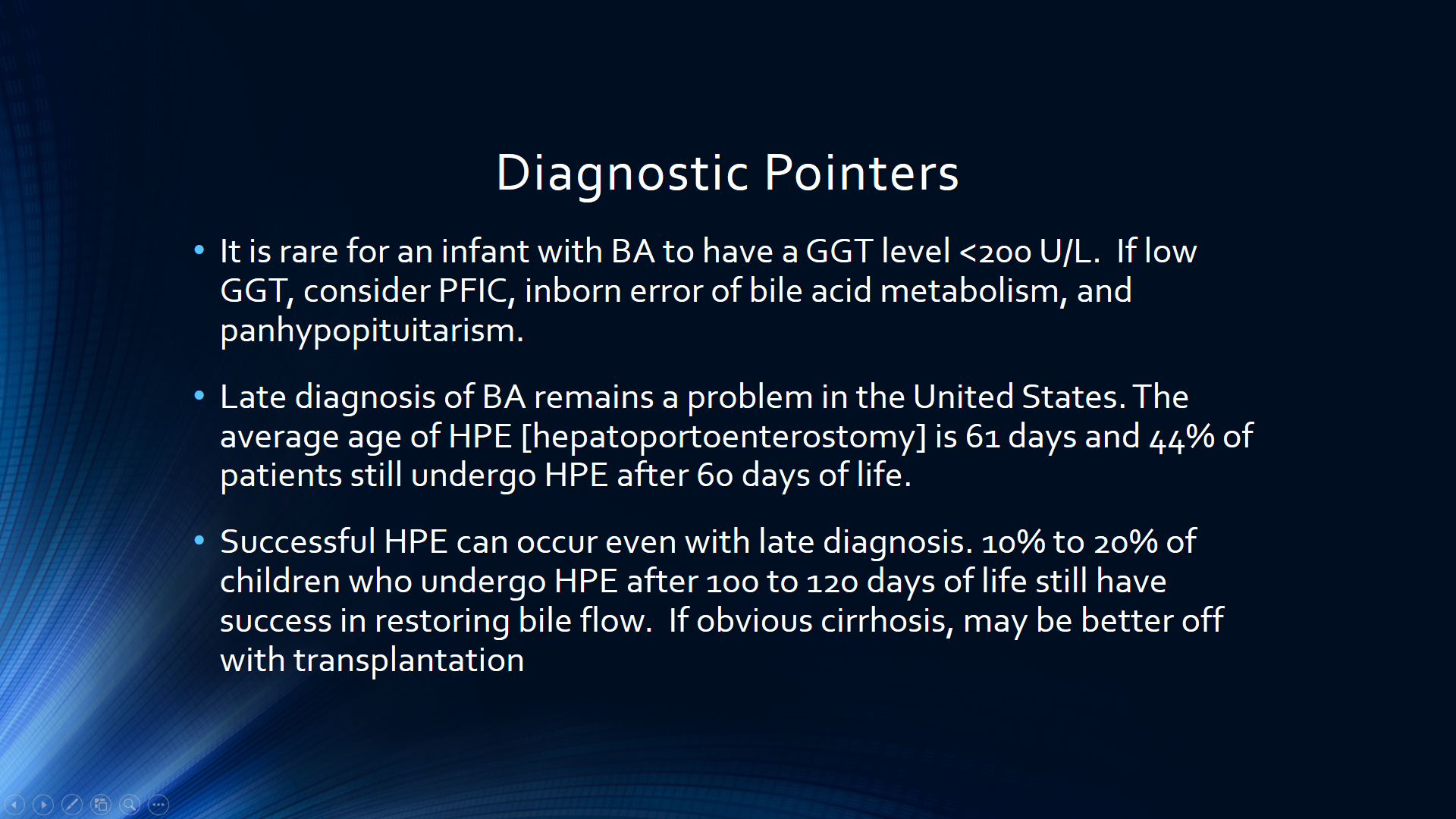
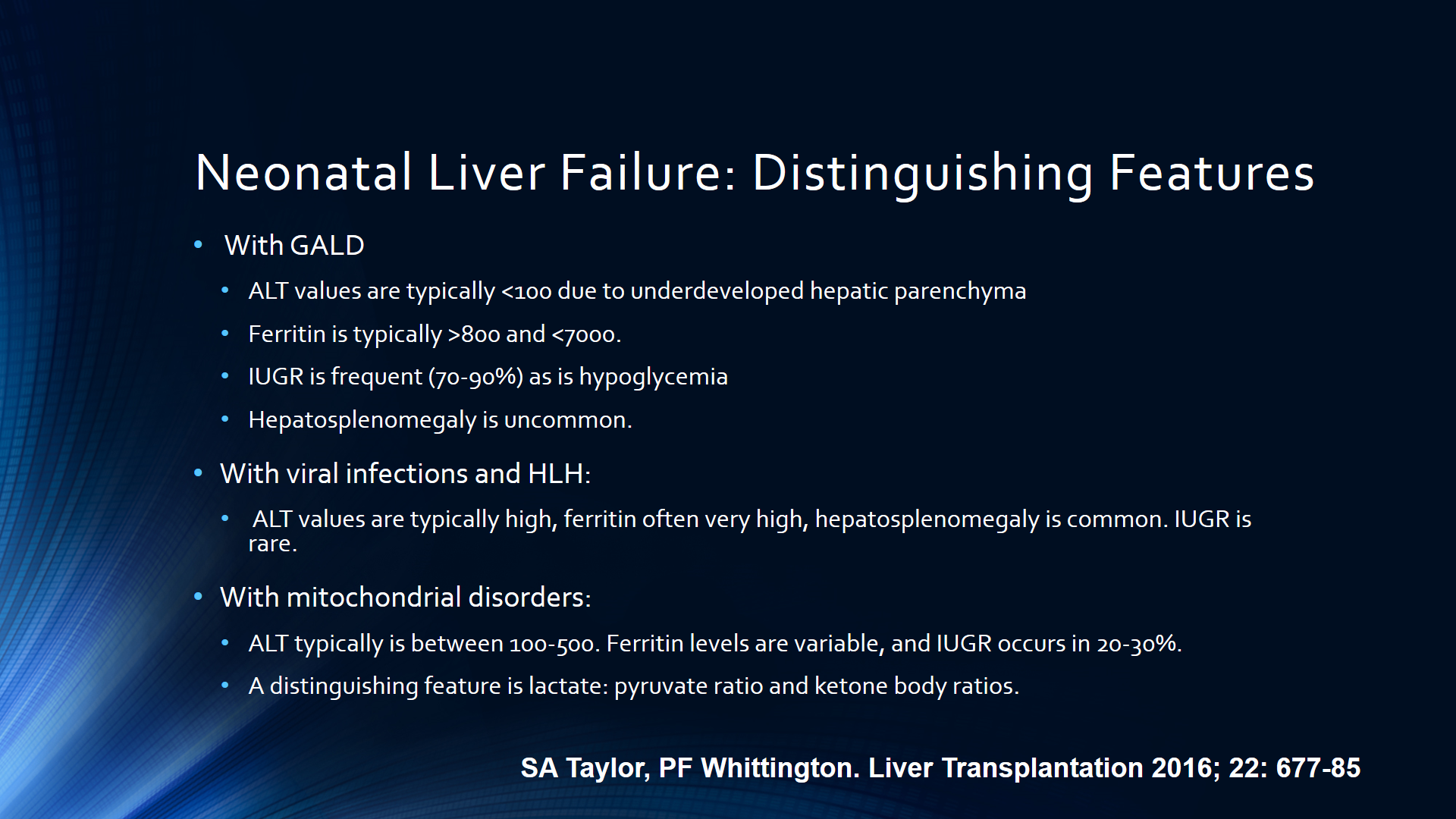
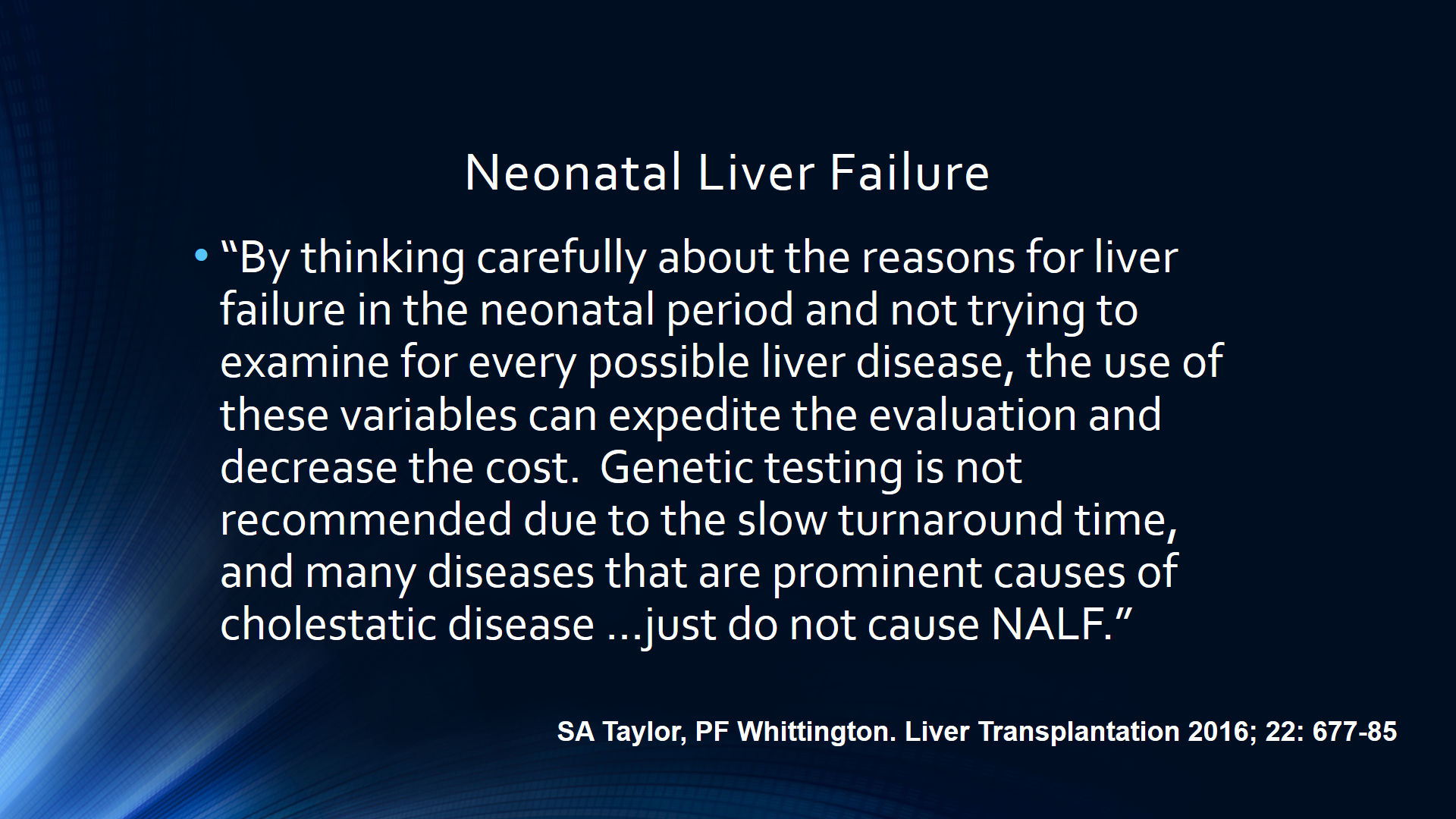
I recently had the opportunity to review the topic of neonatal cholestasis with my neonatal colleagues.  I reviewed two related conditions: parenteral nutrition associated liver disease (PNALD) and neonatal acute liver failure (NALF).  Some of the material incorporates recommendations from NASPGHAN cholestasis guidelines and from NASPGHAN cholestasis slidesets. Much of the slideset information is publicly available on a YouTube lecture by Dr. Linda Book (link at bottom).

Full lecture: Neonatal Cholestasis for Neonatologists

Some screenshots:

Related blog posts:

Disclaimer: These blog posts are for educational purposes only. Specific dosing of medications (along with potential adverse effects) should be confirmed by prescribing physician.  This content is not a substitute for medical advice, diagnosis or treatment provided by a qualified healthcare provider. Always seek the advice of your physician or other qualified health provider with any questions you may have regarding a condition.


Vitamin D3 vs Vitamin D2

Vitamin D3 appears to be more effective at increasing vitamin D levels than vitamin D2 according to a recent study: From MedicalNewsToday: Vtiamin D Guidelines May Be Changing Following New Study

An excerpt:

The researchers measured vitamin D levels in 335 South Asian and white European women over two winter periods. They chose winter because, due to a reduction in sunlight exposure, vitamin D levels tend to be lower at this time.

The women were split into five groups: those consuming vitamin D-2 in a biscuit; those consuming vitamin D-3 in a biscuit; those consuming vitamin D-2 in a juice drink; those consuming vitamin D-3 in a juice drink; and those receiving a placebo.

The study found that vitamin D-3 was twice as effective at raising vitamin D levels in the body as vitamin D-2.

Participants who received the D-3 in a biscuit raised their levels of vitamin D by 74 percent, while those receiving the vitamin in juice saw a 75 percent increase. Those receiving D-2 had a 33 and 34 percent increase, respectively. The placebo group experienced a drop of 25 percent across the same period.

Related blog posts:

“Sell by”/Expiration Dates for Medications

A recent NPR story/ProPublica research reiterates the fact that many medications remain potent long after their expiration dates: That Drug Expiration Date May be More Myth Than Fact

Here’s an excerpt:

Tossing such drugs when they expire is doubly hard. One pharmacist at Newton-Wellesley Hospital outside Boston said the 240-bed facility is able to return some expired drugs for credit, but had to destroy about $200,000 worth last year. A commentary in the journal Mayo Clinic Proceedings cited similar losses at the nearby Tufts Medical Center. Play that out at hospitals across the country and the tab is significant: about $800 million per year. And that doesn’t include the costs of expired drugs at long-term care pharmacies, retail pharmacies and in consumer medicine cabinets…

Pharmacists and researchers say there is no economic “win” for drug companies to investigate further. They ring up more sales when medications are tossed as “expired” by hospitals, retail pharmacies and consumers despite retaining their safety and effectiveness…

Whatever the solution, the drug industry will need to be spurred in order to change, says Hussain, the former FDA scientist. “The FDA will have to take the lead for a solution to emerge,” he says. “We are throwing away products that are certainly stable, and we need to do something about it.”

My take: Don’t expect any action on this issue anytime soon.  At the very least, this will may persuade some family members not to throw away some medications that are likely still effective.