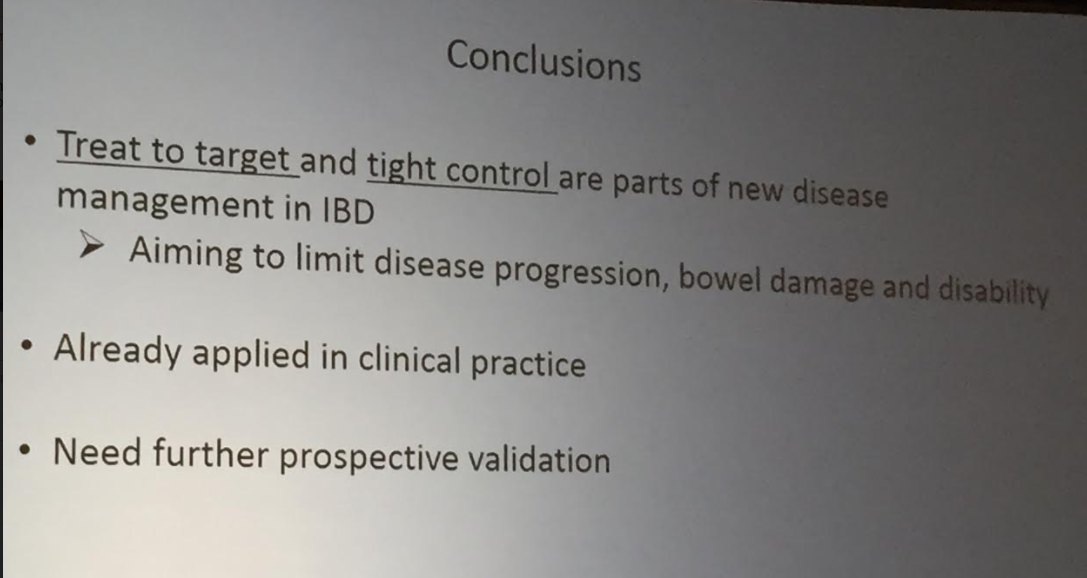
Mandated Malpractice in IBD Care?

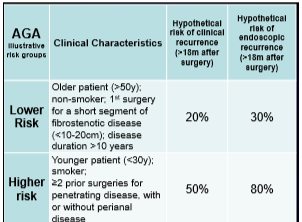
A recent study (A Yada et al. Inflamm Bowel Dis 2017; 23: 853-7) finds that insurance policies are not in compliance with expert guidelines.  The authors reviewed 79 policies from the top insurance companies to examine their policies regarding anti-TNF agents, vedolizumab, and ustekinumab.  These policies were compared with the American Gastroenterological Association (AGA) clinical pathway recommendations for ulcerative colitis (UC) and Crohn’s disease (CD).

Key findings:

  • “90% of the policies required step-wise failure prior to starting anti-TNF for non-fistulizing CD.”
  • “When choosing anti-TNF therapy, 26% of policies required the use of adalimumab as the first anti-TNF agent.”
  • 98% of policies are inconsistent with AGA IBD guidelines

Discussion from authors:

  • “The plans do not allow for treatment based on disease severity but rather dictate treatment based on the required failure of different drug classes.”
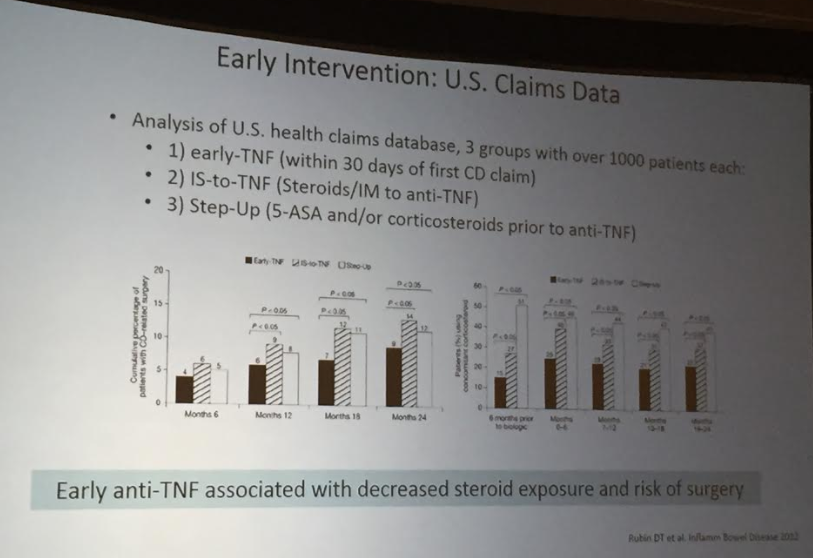
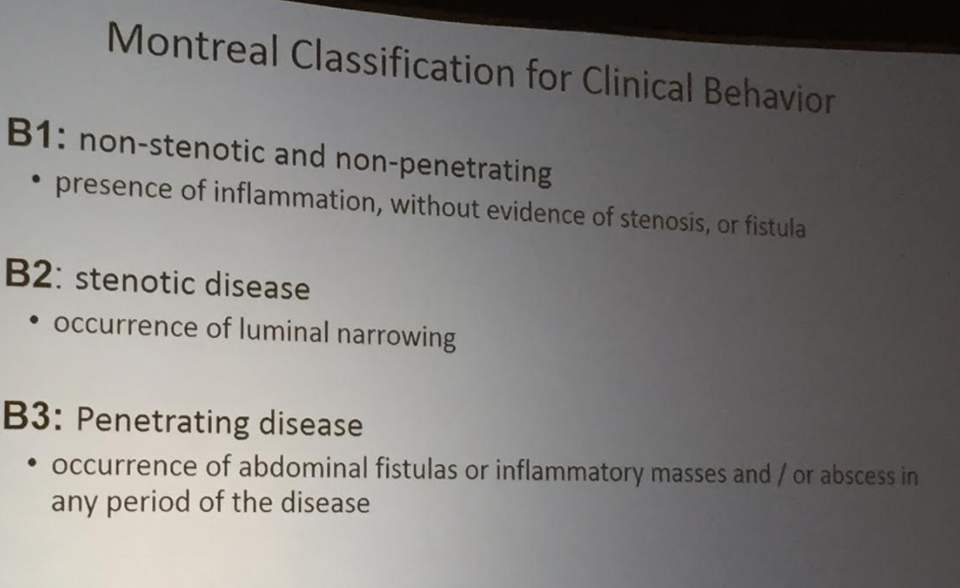
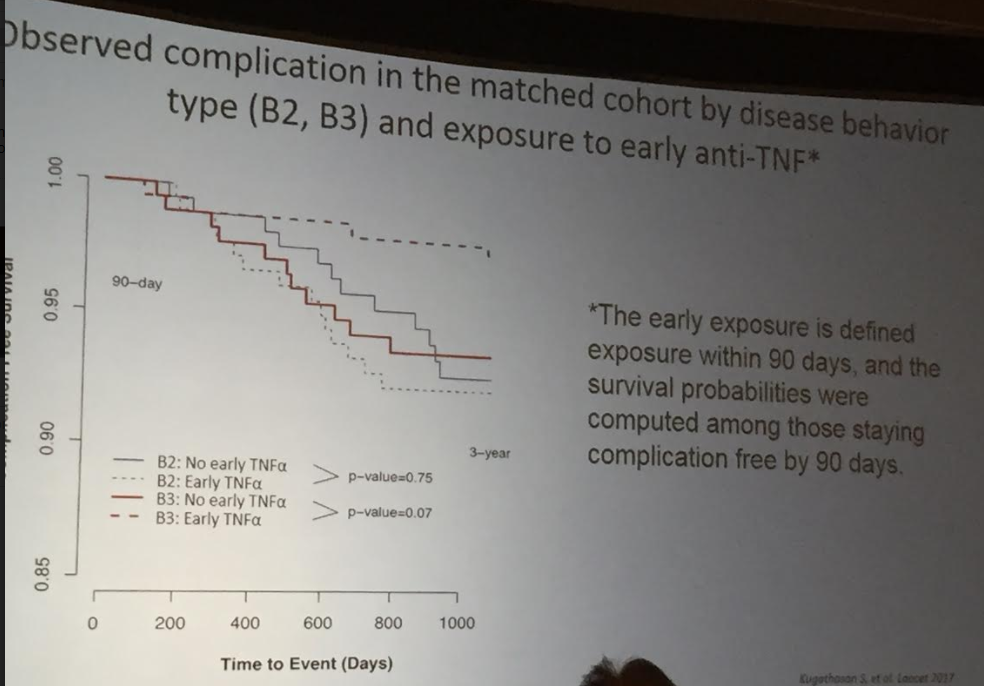
  • “Only 2% of UC policies and 10% of CD policies allowed for early initiation of biologic therapy to reduce the risk of complications.”
  • “The goal of medical management is to minimize the use of corticosteroids…However, the majority of the current policies…preclude this standard-of-care management.”

My take (from authors): “Most insurance companies do not comply with the current standard of care for treating IBD.” My expectation is that these problems will continue and/or worsen as the options for IBD treatment become more complex.

Normandy American Cementary


Small Pediatric Study: Probiotic Helping Some with Irritable Bowel Syndrome

In a recent study (O Jadresin et al. JPGN 2017; 64: 925-9), 55 children with functional abdominal pain or irritable bowel syndrome were randomized (prospective, double-blind, placebo-controlled study) to either L reuteri DSM or placebo.

Key findings:

  • The intervention group had more days without pain: median 89.5 days vs. 51 days (P=.029)
  • Abdominal pain was less severe in the intervention group at some time points (second month, and fourth month)
  • The two groups did not differ with regard to duration of abdominal pain, stool type, or absence from school

Limitation: Small number of patients -the estimated samples size was not reached

My take: This study suggests that probiotics may help some pediatric patients with irritable bowel syndrome.  Trying to identify which patients should receive a probiotic and which probiotic should be selected remains unclear.

Related blog posts:

Pierre Renoir’s portrait of Claude Monet, Musee d’Orsay

Little Evidence to Support Dietary Intervention in Autism Spectrum Disorders

Thanks to Kipp Ellsworth Twitter feed for reference:  Nutritional and Dietary Interventions for Autism Spectrum Disorder: A Systematic Review N Sathe Pediatrics 2017; vol 139.

Abstract:

CONTEXT: Children with autism spectrum disorder (ASD) frequently use special diets or receive nutritional supplements to treat ASD symptoms.

OBJECTIVES: Our objective was to evaluate the effectiveness and safety of dietary interventions or nutritional supplements in ASD.

DATA SOURCES: Databases, including Medline and PsycINFO.

STUDY SELECTION: Two investigators independently screened studies against predetermined criteria.

DATA EXTRACTION: One investigator extracted data with review by a second investigator. Investigators independently assessed the risk of bias and strength of evidence (SOE) (ie, confidence in the estimate of effects).

RESULTS: Nineteen randomized controlled trials (RCTs), 4 with a low risk of bias, evaluated supplements or variations of the gluten/casein-free diet and other dietary approaches. Populations, interventions, and outcomes varied. Ω-3 supplementation did not affect challenging behaviors and was associated with minimal harms (low SOE). Two RCTs of different digestive enzymes reported mixed effects on symptom severity (insufficient SOE). Studies of other supplements (methyl B12, levocarnitine) reported some improvements in symptom severity (insufficient SOE). Studies evaluating gluten/casein-free diets reported some parent-rated improvements in communication and challenging behaviors; however, data were inadequate to make conclusions about the body of evidence (insufficient SOE). Studies of gluten- or casein-containing challenge foods reported no effects on behavior or gastrointestinal symptoms with challenge foods (insufficient SOE); 1 RCT reported no effects of camel’s milk on ASD severity (insufficient SOE). Harms were disparate.

LIMITATIONS: Studies were small and short-term, and there were few fully categorized populations or concomitant interventions.

CONCLUSIONS: There is little evidence to support the use of nutritional supplements or dietary therapies for children with ASD.

Related blog post: Gluten-free, Casein-free -No improvement in Autism

Bayeux, France

Five Reasons Medical Groups Oppose the Senate’s AHCA

Many analysts have described the American Health Care Act (AHCA) as essentially an 800 billion dollar tax cut which as a consequence eliminates health care coverage for more than 20 million.

Some of the reasons why almost all major medical groups oppose the repeal/replace effort of the Affordable Care Act are summarized from NBC News. In brief, they are the poor, the elderly, children, women, and those with preexisting conditions –all disadvantaged if the AHCA passes.

NBC News: Just About Every Major Medical Group Hates the GOP Healthcare

An excerpt -regarding children:

Medicaid covers 75 million people, including nearly 36 million children, according to data released Friday by the Center for Medicare and Medicaid Services..

“Senate leaders present their bill as providing states with flexibility. The reality is that it will put considerable pressure on states to limit their spending on health care, including for children,” said Dr. Matthew Davis, a professor of pediatrics and of medicine at Northwestern University Feinberg School of Medicine.

“The bill includes misleading ‘protections’ for children by proposing to exempt them from certain Medicaid cuts,” added Dr. Fernando Stein, president of the American Academy of Pediatrics.

“A ‘carve-out’ for children with ‘medically complex’ health issues does little to protect their coverage when the base program providing the coverage is stripped of its funding. Doing so forces states to chip away coverage in other ways, by not covering children living in poverty who do not have complex health conditions, or by scaling back the benefits that children and their families depend on,” Stein added.

Related blog posts:

Camp Oasis 2017: Don’t Tell Me the Sky’s the Limit

For many years, our group has helped out at Camp Oasis, a week-long camp for children with inflammatory bowel disease.  Among our physicians, Dr. Larry Saripkin has devoted more time than anyone else for about 15 years and he does such a great job. Over the years, our nurses and many other office staff have participated as well. Here are a couple photos from this year’s camp:


Don’t Tell Me the Sky’s the Limit When There are Footsteps on the Moon!  –one of many painted rocks

Ft Yargo State Park (location of Camp Oasis)

Why Cost-Saving Strategies Do Not Start with Children

On a daily basis, it is clear that there should be a more thoughtful way to spend health care dollars so that what is purchased has more value.  The graph below illustrates that older and disabled adults utilize more health care dollars (in Medicaid) and as a result are likely to be the initial focus of cost-saving strategies.
Related blog posts:

Updated Pediatric Helicobacter Pylori Guidelines
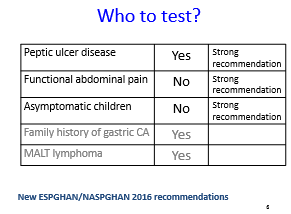
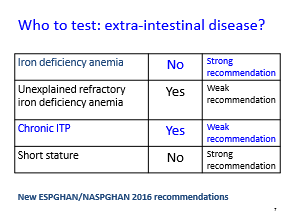
Joint ESPGHAN/NASPGHAN guidelines (NL Jones et al. JPGN 2017; 64: 991-1003) have been published.  Overall, these guidelines cover a great deal of information.  It is interesting that these guidelines provide some conflicting advice with recommendations for adults.

  • Some recommendations:
    The authors recommend against diagnostic testing H pylori in children with functional abdominal pain
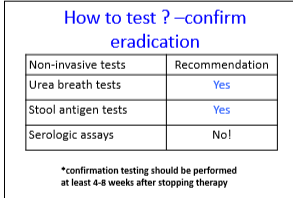
  • The authors recommend against using antibody-based tests from blood, urine, or saliva.
  • The authors recommend noninvasive testing for H pylori when investigating chronic immune thrombocytopenic purpura (ITP)
  • First line therapy recommendations if sensitivity is unknown: High-dose PPI-Amoxicillin-Metronidazole for 14 days OR Bismuth-based quadruple therapy (in children less than 8 years, quadruple therapy would be bismuth, PPI, amoxicillin and metronidazole; in older children it is recommended to substitute tetracycline for amoxicillin).  Specific dosing is given in this report (Table 3 and Table 4)
  • The authors recommend assessing for infection eradication at least 4 weeks after completion of therapy

My take: I favor quadruple therapy for most patients (see adult guidelines below) until sensitivities can be more easily obtained.  If you know of a reliable lab to obtain culture sensitivities, please let me know.

Related blog posts:

Adult Guidelines:

Other related posts

Improving the Value of Pediatric Colonoscopy

Two recent studies examine the diagnostic utility of pediatric gastrointestinal endoscopy:

  • PS Kawada et al. JPGN 2017; 64: 898-902
  • M Thomson, S Sharma. JPGN 2017; 64: 903-06

Before looking at these studies more closely, I would say that I was struck by contrasting remarks in their discussions. The first study: “a negative colonoscopy has not been shown to improve outcomes in those with functional pain” and references: Bonilla S et a. Clin Pediatr (Phila) 2011; 50: 396-401.  The second study states that “a negative endoscopic finding, with effective reassurance, can prevent unnecessary medicalization of many children in whom other nonorganic causes may present with GI symptoms.” The latter study does not provide any data to support their claim.

In terms of the specifics, the first study is a retrospective examination of 999 colonoscopies.  The indications for colonoscopy were suspected IBD; in this circumstance, 143 of 449 (32%) were normal.  For isolated rectal bleeding, 141 of 197 (72%) were normal.  For recurrent abdominal pain, all 46 were normal.  The cecal or beyond completion rate was only 52%, potentially lowering diagnostic yield.  The perforation rate during the 10 year timeframe (2001-2010) was 0.2%. The authors conclude that the yield of colonoscopy for recurrent abdominal pain (without other features) is very low and that many children with isolated rectal bleeding “should have a trial of conservative management before undergoing endoscopy.”

The second study retrospectively examined 153 endoscopic cases from a database of 2471 children (2012-2014).  The median age was 9.58 years. The authors found a diagnostic yield of 18.9% for upper endoscopy alone, 32.6% for ileocolonoscopy alone, and 39.2% for combined upper endoscopy/ileocolonoscopy. The terminal ileum intubation rate was 98%.

My take: Both of these studies look at pediatric endoscopy and reach opposite conclusions. The first study suggests that many colonoscopies could be avoided and the latter suggests that whether normal or not, endoscopy contributes to improved management. What is your conclusion?

Related blog posts:

Jean Hugues 1890, Edipe a Colone, Marbre taille d’apres le platre expose au Salon des Artistes fracaise. Musee d’Orsay


Treatment of Childhood Obesity Can Be Focused on Parent(s) -Children Do Not Need to Attend

From JAMA Pediatrics Full Text: Effect of Attendance of Child on Obesity Treatment

(Thanks to NASPGHAN twitter feed for this reference) KN Boutelle et al. JAMA Pediatr. Published online May 30, 2017. doi:10.1001/jamapediatrics.2017.0651

From Abstract:

Importance  Family-based weight loss treatment (FBT) is considered the gold-standard treatment for childhood obesity and is provided to the parent and child. However, parent-based treatment (PBT), which is provided to the parent without the child, could be similarly effective and easier to disseminate.

Objective  To determine whether PBT is similarly effective as FBT on child weight loss over 24 months. Secondary aims evaluated the effect of these 2 treatments on parent weight loss, child and parent dietary intake, child and parent physical activity, parenting style, and parent feeding behaviors.

Design, Setting, and Participants  Randomized 2-arm noninferiority trial conducted at an academic medical center, University of California, San Diego, between July 2011 and July 2015. Participants included 150 overweight and obese 8- to 12-year-old children and their parents.

Interventions  Both PBT and FBT were delivered in 20 one-hour group meetings with 30-minute individualized behavioral coaching sessions over 6 months. Treatments were similar in content; the only difference was the attendance of the child.

Main Outcomes and Measures  The primary outcome measure was child weight loss (body mass index [BMI] and BMI z score) at 6, 12, and 18 months post treatment. Secondary outcomes were parent weight loss (BMI), child and parent energy intake, child and parent physical activity (moderate to vigorous physical activity minutes), parenting style, and parent feeding behaviors.

Results  One hundred fifty children (mean BMI, 26.4; mean BMI z score, 2.0; mean age, 10.4 years; 66.4% girls) and their parent (mean BMI, 31.9; mean age, 42.9 years; 87.3% women; and 31% Hispanic, 49% non-Hispanic white, and 20% other race/ethnicity) were randomly assigned to either FBT or PBT. Child weight loss after 6 months was −0.25 BMI z scores in both PBT and FBT. Intention-to-treat analysis using mixed linear models showed that PBT was noninferior to FBT on all outcomes at 6-, 12-, and 18-month follow-up with a mean difference in child weight loss of 0.001 (95% CI, −0.06 to 0.06).
Conclusions and Relevance  Parent-based treatment was as effective on child weight loss and several secondary outcomes (parent weight loss, parent and child energy intake, and parent and child physical activity). Parent-based treatment is a viable model to provide weight loss treatment to children.

My take: This study indicates that parental instruction is likely the key element in improving outcomes in childhood obesity.  In many cases, counseling parents without the presence of the child (patient) could improve ease of scheduling.  In other cases, parents may prefer for direct childhood involvement.  On a tangential note, the absence of the child may make billing issues (often a problem regardless) more complicated.

I’ve recently noted the popularity of these fidget spinners. I have yet to remove one with endoscopy


Hepatitis C -New Studies & New Recommendations (2017)

Briefly noted:

EJ Gane et al. Gastroenterol 2017; 152: 1366-71.  This phase 2, open-label study (n=53) examined the efficacy of ledipasvir plus sofusbuvir for 8 or 12 weeks for Hepatitis C virus (HCV) genotype 2.  An SVR was noted in 96% with 12 weeks of treatment and 74% with 8 weeks of treatment.  The only patient in the 12 week group without an SVR did not complete treatment.  Overall, this study stands in contrast with the ION-3 study which showed that 8 weeks of therapy led to an SVR of 94% among genotype 1.  Thus, this study is consistent with ledpasvir having more potency against genotye 1 and the need for a 12 week course with genotype 2 HCV.

IM Jacobson et al. Gastroenterol 2017; 152: 1372-82. This retrospective study examined 402 patients with HCV genotypes 1, 4 or 6 with Child-Pugh A compensated cirrhosis who were treated with Elbasvir/GrazoprevirKey finding: SVR12 was 98% and 89% for treatment-naive and treatment-experienced patients after 12 weeks of therapy. The authors noted that baseline tests were done to look for resistance-associated substitutions (RASs).  They recommend: “GT1a patients with RASs require extension of therapy to 16 weeks and addition of ribavirin.”

IM Jacobson et al. Gastroenterol 2017; 152: 1378-87. This AGA clinical practice update makes recommendations for patients have achieved an SVR after HCV therapy. These recommendations are mainly expert opinion given the recent advent of newer treatments for HCV and lack of data regarding long-term outcomes after these treatments. Recommendations from authors:

  • SVR should be confirmed by undetectable HCV RNA at 12 weeks after treatment regimen
  • Reconfirmation of SVR at 48 weeks after treatment is recommended.
  • Surveillance for HCC with liver imaging ± AFP should be pursued twice annually for an indefinite duration in all patients with stage 3 fibrosis or liver cirrhosis post-SVR.  Surveillance is “not recommended for patients with stages 0-2 fibrosis post SVR.”
  • Endoscopic screening for varices is recommended for all patients with cirrhosis, independent of SVR. Repeat screening should be considered if no varices or small varices are noted 2-3 years later.  If there are still no varices at 2-3 years, no further endoscopic screening is recommended.

Related blog posts:

If this picture and reports are accurate, this man’s family urged him to come inside. He said he was keeping an eye on it.