Diet, Meat, and Colorectal Cancer

A recent study (RS Mehta et al. Gastroenterol 2017; 152: 1944 & summarized in editorial, 1821-23) examined the effects of a “Western” diet and a “prudent” diet on the risk of colorectal cancer (CRC). Data was derived from two large prospective cohorts involving more than 137,000 participants for up to 32 years; this equated to 3.6 million person-years of follow-up.
Key findings:

  • Those in the highest quartile of a Western dietary pattern had a 31% increased CRC risk (RR=1.31) compared to those in the lowest quartile. In this context, a Western diet was characterized by consumption of red and processed meats, high-fat dairy products (such as whole milk), refined grains, and desserts.
  • The prudent diet cohort, had a 14% reduced risk for those in the highest quartile compared to the lowest quartile. The ‘prudent’ diet included high intakes of vegetables, fruits, whole grains, and fish.

Based on this study and others, the editorial notes the following:

  • Limit red and processed meat consumption to 0.5 servings or 42 g/day of lean red meat
  • A more ‘prudent’ diet has health benefits beyond reduction of CRC, including lower cardiovascular disease mortality

Related blog post: Colon Cancer at Younger Ages

Piedmont Park, Atlanta

Recent Study Did NOT Find Dementia Risk with PPIs

When performing retrospective studies, many times a potential association can be found with medications or diet and specific problems.  When these risks/associations are low (i.e. relative risks <2), often, these findings do not hold up, particularly with prospective studies which are much more able to control for confounding variables.

For proton pump inhibitors (PPIs), many potential complications have been suggested at  low relative risk findings in poorly-controlled studies.  A recent study has contradicted previous findings suggesting that PPIs increase the risk of dementia.

Goldstein FC, et al. J Am Geriatr Soc. 2017;doi:10.1111/jgs.14956. (Thanks to Ben Gold for this reference)

A link and an excerpt from a summary of this study from Healio Gastroenterology:

Link: Study finds no link between PPIs, dementia, Alzheimer’s risk

Excerpt:

They evaluated 10,486 volunteers within the NIH-supported Alzheimer’s Disease Centers who were aged 50 years and older and had either normal cognition or mild cognitive impairment at baseline. Participants underwent neuropsychological evaluations and self-reported PPI use at two to six annual visits between 2005 and 2015.

Overall, 884 reported they were taking PPIs at every visit, 1,925 reported they took PPIs intermittently, and 7,677 never reported taking PPIs.

Those who reported continuous PPI use showed a lower risk for cognitive function decline compared with those who never reported using PPIs (HR = 0.78; 95% CI, 0.66-0.93) as well as a lower risk for developing mild cognitive impairment or Alzheimer’s disease (HR = 0.82; 95% CI, 0.69-0.98).

Those who reported using PPIs intermittently also showed a lower risk for cognitive function decline (HR = 0.84; 95% CI, 0.76–0.93) and for developing mild cognitive impairment or Alzheimer’s disease (HR = 0.82; 95% CI, 0.74–0.91).

My take: This study provides reassurance that PPIs are unlikely to result in cognitive decline. Particularly when a study suggests a low risk of an association, further studies are needed to clarify the true risks.

Related blog posts:

Lennon Wall, Prague

Diarrhea Mortality Improving

A  recent story from NPR indicates that globally diarrhea deaths are on the decline, ~30%, from 2005-2015.  In wealthy countries, there has been a mild increase, likely related to Clostridium difficile infection and the use of antibiotics.  The article cautions that data from some parts of the world are questionable due to upheaval.

Full Link: A Good News Story About Diarrhea -With One Surprising Exception

An excerpt:

An infection by E. coli, Cryptosporidium, Shigella or rotavirus, and the resulting diarrhea, is often a death sentence in much of the world. In 2005, about 1.6 million people died from diarrhea-related diseases, and roughly 770,000 of them were kids under 5. But that number has been steadily dropping, as a new study points out…

Published this month in The Lancet, the study shows diarrhea-related deaths have declined about 20 percent from 2005 to 2015 for all ages to 1.3 million people, and 35 percent for children under 5 to about 500,000 children during the same time period.

Long-term Effects on Bone Health of PPIs in Infancy?

A recent study –summarized by Pediatric News (MDedge): Antacid use in infants linked to increased fracture risk.

In this large study (874,447 children), more than 90% of the cohort had not received a prescription for any antacid.

An excerpt:

The large study revealed that use of proton pump inhibitors (PPIs) before age 1 year was linked to a 22% increased risk of fracture, compared with those not prescribed antacids…

The retrospective study’s cohort comprised 874,447 children born between 2001 and 2013 who had been in the U.S. Military Health System for at least 2 years…

Adjustment for preterm birth, low birth weight, sex, and a previous fracture barely reduced those risks: 22% increased risk for PPI use, 4% increased risk for H2 blocker use, and 31% increased risk for using both. The vast majority of children who took antacids had been prescribed them in their first 6 months, so the researchers calculated adjusted risk by age of exposure. 

My take: There are a lot of reasons to resist using PPIs in most infants, particularly lack of efficacy.  Potential harms of these medications, particularly at the youngest ages, should not be overlooked either.

Related blog posts:

Prague Castle and Charles Bridge

NEJM: Senate Effort to Scale Back Health Care Coverage

This is a concise summary on the potential effects of the U.S. Senate’s efforts to ‘repeal and replace’ Obamacare: from NEJM: Health, Wealth, and the U.S. Senate

Here’s an excerpt:

The Better Care Reconciliation Act (BCRA), as the U.S. Senate calls the health care bill released by a small working group of Republican senators last week, is not designed to lead to better care for Americans. Like the House bill that was passed in early May, the American Health Care Act (AHCA), it would actually do the opposite: reduce the number of people with health insurance by about 22 million, raise insurance costs for millions more, and give states the option to allow insurers to omit coverage for many critical health care services so that patients with costly illnesses, preexisting or otherwise, would be substantially underinsured and saddled with choking out-of-pocket payments — all with predictably devastating effects on the health and lives of Americans. What would get “better” under the BCRA is the tax bill faced by wealthy individuals, which would be reduced by hundreds of billions of dollars over the next decade — about $5,000 per year for families making over $200,000 per year and $50,000 or more for those making over $1 million, according to analysis of the AHCA, which included a similar set of tax provisions.1 We believe that that trade-off is not one to which we — physicians, patients, or American society — should be reconciled.

Related blog post: Five Reasons Why Medical Groups Oppose the Senate’s AHCA

St. Vitus Cathedral, Prague


Why the Liver is the King of Internal Organs

A nice summary of how great our livers are by the NY Times: The Liver: A ‘Blob’ That Runs the Body

An excerpt:

After all, a healthy liver is the one organ in the adult body that, if chopped down to a fraction of its initial size, will rapidly regenerate and perform as if brand-new. Which is a lucky thing, for the liver’s to-do list is second only to that of the brain and numbers well over 300 items, including systematically reworking the food we eat into usable building blocks for our cells; neutralizing the many potentially harmful substances that we incidentally or deliberately ingest; generating a vast pharmacopoeia of hormones, enzymes, clotting factors and immune molecules; controlling blood chemistry; and really, we’re just getting started.

Antibiotics for Acute Uncomplicated Appendicitis in Children

A recent meta-analysis study (L Huang et al. JAMA Pediatr 2017; 17: 426-34 -thanks to Ben Gold for this reference) indicates that antibiotcis can be effective as treatment for acute uncomplicated appendicitis, particularly if no appendolith is present.

From the abstract:

Abstract

IMPORTANCE:

Antibiotic therapy for acute uncomplicated appendicitis is effective in adult patients, but its application in pediatric patients remains controversial.

OBJECTIVE:

To compare the safety and efficacy of antibiotic treatment vs appendectomy as the primary therapy for acute uncomplicated appendicitis in pediatric patients.

STUDY SELECTION:

Randomized clinical trials and prospective clinical controlled trials comparing antibiotic therapy with appendectomy for acute uncomplicated appendicitis in pediatric patients (aged 5-18 years) were included in the meta-analysis. The outcomes included at least 2 of the following terms: success rate of antibiotic treatment and appendectomy, complications, readmissions, length of stay, total cost, and disability days.

RESULTS:

A total of 527 articles were screened. In 5 unique studies, 404 unique patients with uncomplicated appendicitis (aged 5-15 years) were enrolled. Nonoperative treatment was successful in 152 of 168 patients (90.5%), with a Mantel-Haenszel fixed-effects risk ratio of 8.92 (95% CI, 2.67-29.79; heterogeneity, P = .99; I2 = 0%). Subgroup analysis showed that the risk for treatment failure in patients with appendicolith increased, with a Mantel-Haenszel fixed-effects risk ratio of 10.43 (95% CI, 1.46-74.26; heterogeneity, P = .91; I2 = 0%).

CONCLUSIONS AND RELEVANCE:

This meta-analysis shows that antibiotics as the initial treatment for pediatric patients with uncomplicated appendicitis may be feasible and effective without increasing the risk for complications. However, the failure rate, mainly caused by the presence of appendicolith, is higher than for appendectomy. Surgery is preferably suggested for uncomplicated appendicitis with appendicolith.

From a AHC Media synopsis of article:Although antibiotic treatment of acute appendicitis appears effective in many cases, there is a nearly nine-fold higher risk of treatment failure compared with appendectomy, with 26.8% of patients in the antibiotic treatment group requiring interval appendectomy.

My take: My opinion is that surgery is appropriate as first-line treatment for  acute uncomplicated appendicitis.

Related blog posts:

View of Omaha Beach from Normandy American Cemetery 

8 Cups of Water: Weight Loss or Worthless?

A recent study: JMW Wong et al. JAMA Pediatr 2017; 17 e170012 (Thanks to Ben Gold for this reference)

Full Text Link: Effects of Advice to Drink 8 Cups of Water per Day in Adolesents with Overweight or Obesity: A Randomized Clinical Trial

Among 38 adolescents with overweight or obesity, participants were divided into a water group and a control group.  The water group received “well-defined messages about water through counseling and daily text messages, a water bottle, and a water pitcher with filters.”

Key findings:

  • The water group consumed 2.8 cups of water per day compared to 1.2 cups per day for the control group
  • The 6-month chnage in BMI z score was identical z= -0.1.

My take: Advice and behavioral supports to consume 8 cups of water per day are likely to fall short and do not seem to enhance weight loss.

Related blog posts:

Normandy American Cementary

Adalimumab Can Reverse Growth Failure in Pediatric Crohn’s Disease

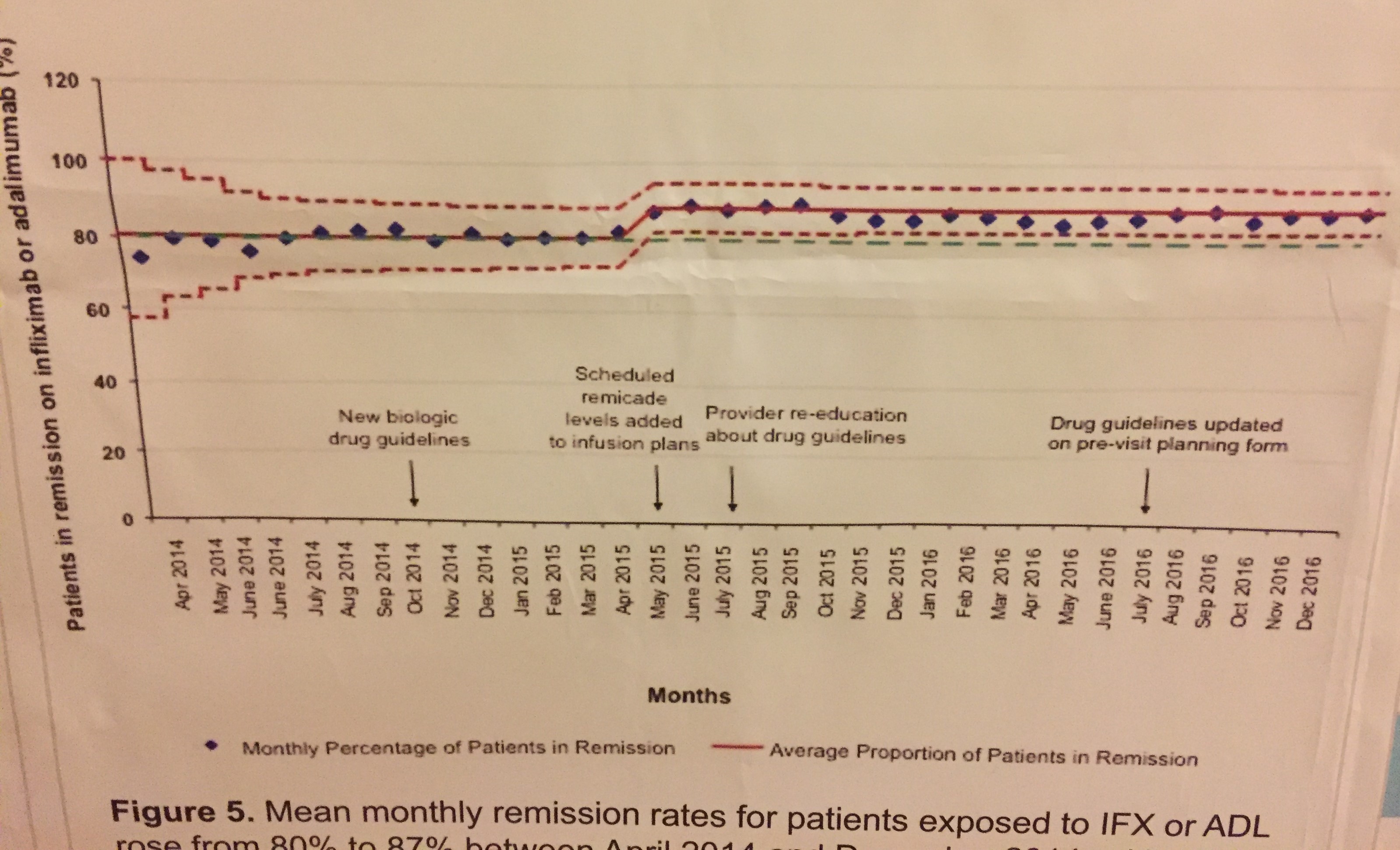
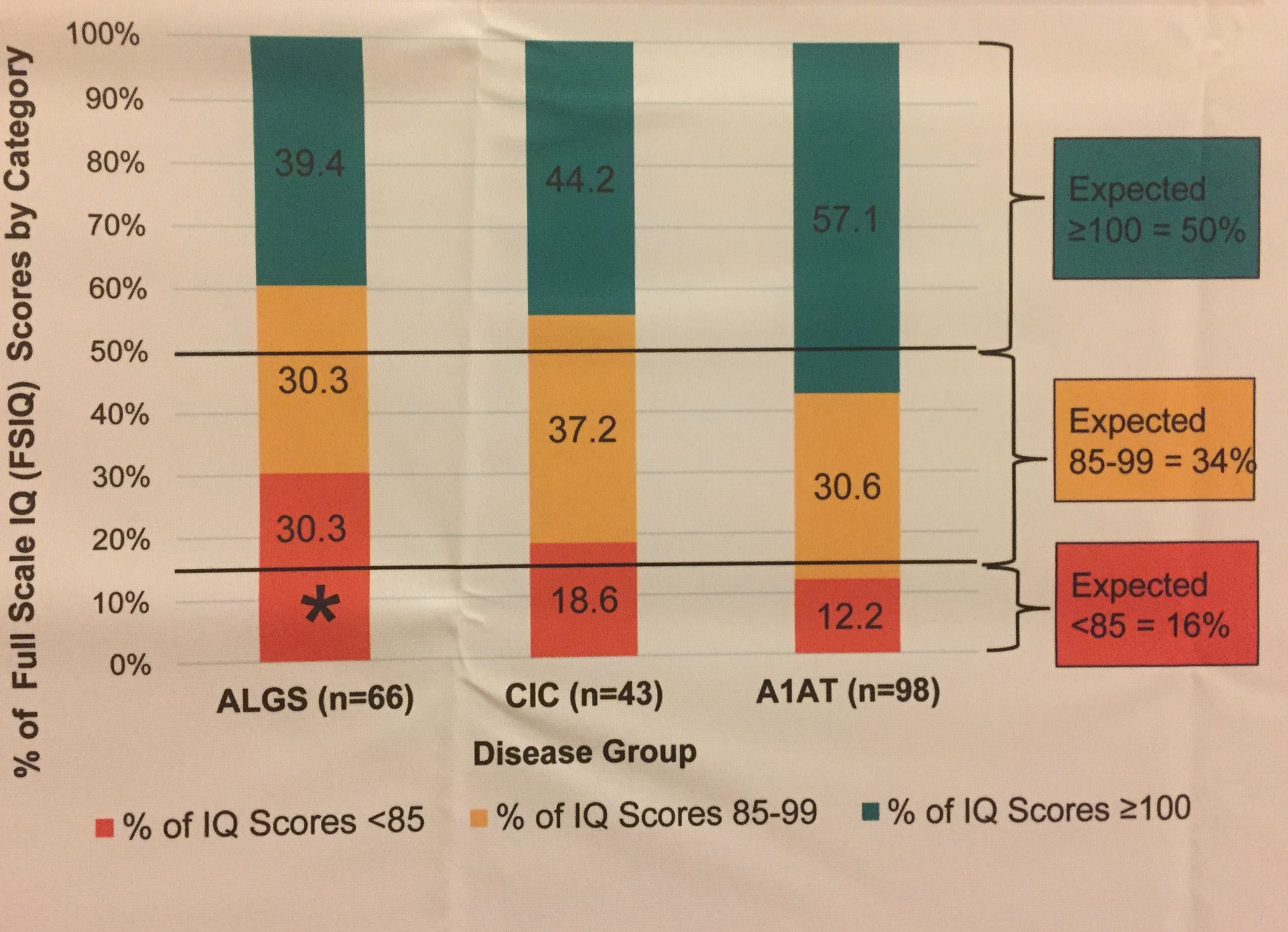
In an industry-sponsored study (TD Walters et al. Inflamm Bowel Dis 2017; 23: 967-75), adalimumab (ADA) was shown to be effective agent in reversing growth failure associated with pediatric Crohn’s disease (CD).

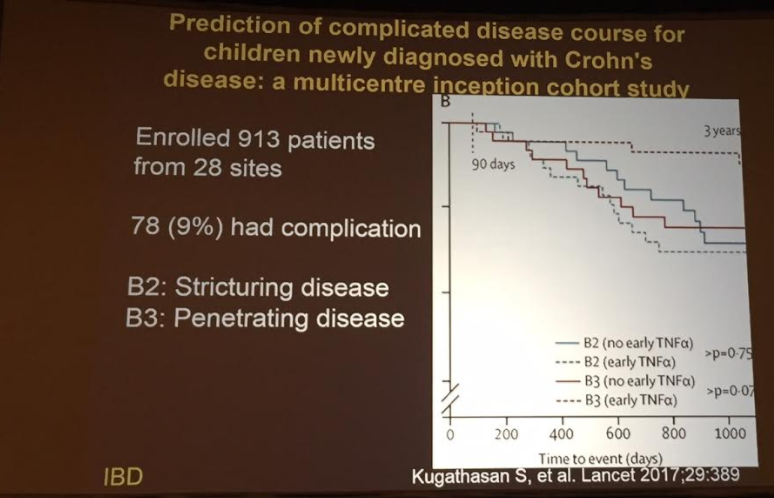
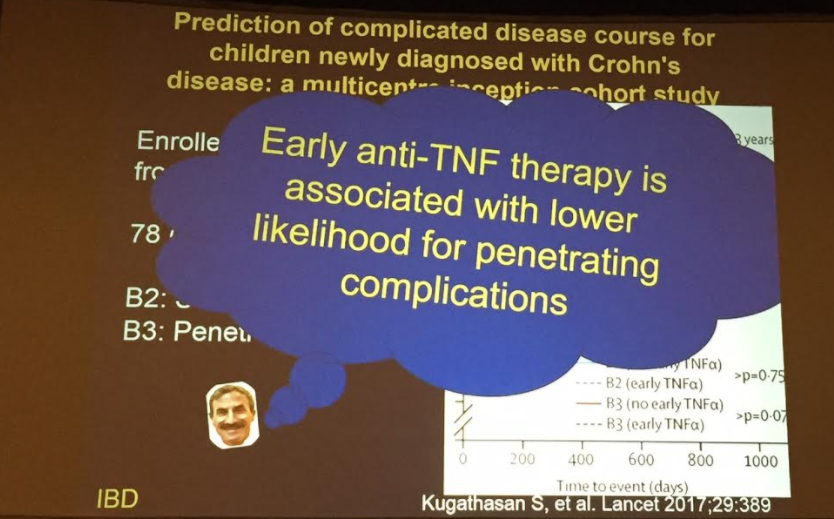
Background:  About one-third of children and adolescents with CD suffer from growth failure and delayed puberty.  Several prior studies have shown that anti-TNF therapy can improve height velocity and that early treatment with anti-TNF therapy (≤3 months after diagnosis) leads to greater improvement in height obtained, if initiated before puberty or early into puberty. This study examines the effectiveness of ADA in children from the IMAgINE 1 trial.

The authors identified 73 participants with growth delays (& adequate data) along with 27 participants with no growth delays.

Key findings:

  • ADA therapy significantly improved and normalized growth rates at 26 and 52 weeks in patients with baseline linear growth impairment.
  • At week 26, height velocity z-score was 1.33 among 23 children in remission compared with -0.78 (n=29) among “nonremitters”
  • At week 52, height velocity z-score was 2.17 among 27 children in remission compared with -1.57 (n=17) among “nonremitters”

My take: In moderate to severe CD, anti-TNF agents have been demonstrated to reverse growth failure; though, this is expected to occur only in patients with clinical response. To my knowledge, no other CD medical therapies have been proven to reverse growth failure (surgical treatment can improve growth as well).

Related blog posts:

Quiet Spot on U Chicago Campus