World Toilet Day and Poo-ems

Thanks to my favorite blog reader for pointing me towards this NPR piece:

World Toilet Day: Read Winning Poo Haikus About Diarrheal Disease

An excerpt:

That’s the idea behind Poo Haiku, a competition created by Defeat DD, a campaigndedicated to the eradication of diarrheal disease.

Although everybody’s had the runs, it’s not something most folks talk about, says Hope Randall, digital communications officer for PATH’s Center for Vaccine Innovation and Access, which created DefeatDD to bring together resources on vaccines, nutrition, oral rehydration therapy, sanitation and more…

this winning entry from Kat Kelley of the Global Health Technologies Coalition, which references a recent study published in The Lancet:

Just six pathogens
But eighty percent of kids’
Diarrheal deaths….

Check out all of the poo-ems, including some videos, by searching for the hashtag #poohaiku on Twitter.

My take: Today is World Toilet Day -a great day to write your own poo-em. 2.4 billion people do not have access to a toilet.

World Toilet Day this year is November 19th (today).

Sandy Springs

Sandy Springs


iPatient and Physician Work Circa 2016

An interesting commentary (DI Rosenthal, A Verghese. NEJM 2016; 375: 1813-5) provides a closer glimpse into the meaning and nature of physicians’ work at this time.

Key points:

  • Medical students and residents spend 40-50% of their day in front of a computer & much of the rest of their day on the phone (coordinating care).
  • Time spent with patients “has remained stable over the past six decades.”
  • Flipping through the electronic record before seeing patients is commonplace but can lead to a ‘framing bias.’
  • “Our attention is so frequently diverted from the lives, bodies, and souls of the people entrusted to our care”…”despite all the rhetoric about ‘patient-centered care,’ the patient is not at the center of things.”
  • The authors equate the digital representation of the patient as an ‘iPatient.’
  • Physicians are “resentful of the time required to transcribe and translate information.”
  • Higher satisfaction is associated with perceptions of higher quality of care.
  • The authors advocate working on “rebuilding our practices and physical spaces to promote human connections that can sustain us — between physicians and patients, physicians and physicians, and physicians and nurses.”

My take: The authors provide a closer glimpse of the problem showing how our digital health has hindered meaningful interactions that go to the heart of medicine –to provide comfort and care.

Related blog posts:

Neighborhood tree a few weeks ago

Neighborhood tree a few weeks ago

Autism Drugs: Fat and Happy?

“The reason fat people are happy is that their nerves are well protected.”
– Luciano Pavarotti

It is not uncommon to see kids with behavioral problems that are also obese.  Many times, medications which help improve behavioral problems may contribute to obesity by increasing appetite.

A recent study (K Shedlock et al. J Pediatr 2016; 178: 183-7) provides some insight into this issue. In this retrospective study, using the Military Health System database (2000-2013) with 48,762 individuals with autism spectrum disorder and with 243,810 matched controls, children with autism spectrum disorder (ASD) had significantly higher rates of obesity with OR 1.85 along with obesity-related conditions.  These conditions include type 2 diabetes, hypertension, hyperlipidemia, and NAFLD/NASH.

Key points:

  • In children with ASD, mood stabilizers, antipsychotics, antiepileptic drugs, and selective serotonin reuptake inhibitors (SSRIs) were associated with obesity.  Mood stabilizers had the greatest risk in this study, with adjusted OR of 1.41; the other medications had fairly small risk with adjusted ORs between 1.13 to 1.16.
  • When kids with ASD develop complications like NAFLD/NASH or hyperlipidemia, they may be less likely to adhere with recommended lifestyle changes.  This can be due to sensory aversions and social deficits.

My take: Children with autism spectrum disorder are likely at increased risk for obesity at baseline; some of the medications to treat behavior problems may contribute to obesity, though they may be partly an epiphenomenon or a marker of a more severe autism spectrum disorder.

Portland Head Light

Portland Head Light

Vedolizumab Study in IBD

From CGH Associated Editor Charles Kari:

Effectiveness and Safety of Vedolizumab Induction Therapy for Patients With Inflammatory Bowel Disease

Vedolizumab is a biologic agent which targets the integrin receptor and is approved for the treatment of patients with moderate-severe ulcerative colitis (UC) and Crohn’s disease (CD). Vedolizumab inhibits the interaction between α4β7 integrin and mucosal addressin cell adhesion molecule-1 (MAdCAM–1).

In this [November] issue of Clinical Gastroenterology and Hepatology, Amiot and colleagues report the effectiveness and safety of vedolizumab induction therapy in patients with moderate-to-severe active UC and CD who previously failed anti-TNF therapy. Active IBD was defined according to the Harvey-Bradshaw index (HBI) >4 for CD patients and the Mayo Clinic score ≥6 for UC patients. Patients received intravenous vedolizumab at a dose of 300 mg at weeks 0, 2 and 6 and then every 8 weeks through week 52. Concomitant use of corticosteroids, immunomodulators, or methotrexate was permitted. The primary outcome measure was steroid-free clinical remission at week 14, which was defined as a HBI ≤4 for CD patients and a partial Mayo Clinic score ❤ with a combined stool frequency and rectal bleeding subscore of ≤1 for UC patients. A total of 294 patients were enrolled (CD, 173; UC, 121), of whom 276 completed the induction period. At week 14, 63 (36%) and 47 (39%) patients were in clinical remission in the CD and UC groups, respectively, of whom 53 (31%) and 43 (36%), respectively, were in steroid-free clinical remission. The clinical response rates at 14 weeks were 64% for CD patients and 57% for UC patients. Adverse events occurred in 93 patients (31.6%) out of 294 patients with serious adverse events in 24 (8.2%) and adverse events leading to vedolizumab discontinuation in 15 (5.1%) including one case of pulmonary tuberculosis.

In conclusion, in a cohort of IBD patients who failed anti-TNF therapy and received vedolizumab, about one third experienced steroid-free clinical remission at 14 weeks, with good safety profile (Figure 3).

screen-shot-2016-10-24-at-10-42-42-am

screen-shot-2016-10-24-at-10-42-50-am

Compared with Zika, CMV is a Greater Threat and Less Discussed

A recent article in NY Times provides another example of how a common infectious problem has been overshadowed by a more recent epidemic.  CMV is A Greater Threat to Infants Than Zika

Two years ago, it was well-recognized that the flu virus is vastly more dangerous for U.S. than Ebola (Related post:Scarier than Ebola -the Flu | gutsandgrowth). This year, CMV should get more attention.

Here’s an excerpt:

Every year, 20,000 to 40,000 infants are born with CMV. At least 20 percent — up to 8,000 — have or develop permanent disabilities, such as hearing lossmicrocephaly, intellectual deficits and vision abnormalities. There is no vaccine or standard treatment…

CMV is the most common congenital viral infection and the leading nongenetic cause of deafness in children. Roughly 400 children die from it annually. By contrast, roughly 900 pregnant women in the continental United States have contracted the Zika virus

CMV is the most common congenital viral infection and the leading nongenetic cause of deafness in children. Roughly 400 children die from it annually. By contrast, roughly 900 pregnant women in the continental United States have contracted the Zika virus.

The American College of Obstetricians and Gynecologists used to encourage counseling for pregnant women on how to avoid CMV. But last year, the college reversed course, saying, “Patient instruction remains unproven as a method to reduce the risk of congenital CMV infection.”

My take: Perinatal CMV infection merits more discussion.

Related blog posts:

Trail to Iceberg Lake, Glacier Nat'l Park

Trail to Iceberg Lake, Glacier Nat’l Park

Safer Than You Think: Biologic Therapies for IBD and Risk of Infection and Malignancy

While there have been a number of studies which have highlighted the potential risks of biologic agents, many studies have NOT identified any risk of infection or malignancy.

Another recent systematic review/meta-analysis (S Bonovas et al. Clin Gastroenterol Hepatol 2016; 14: 1385-97) provides reassuring data regarding the following biologics: infliximab, adalimumab, certolizumab, golimumab, natalizumab, and vedolizumab.

The authors identified 49 randomized placebo-controlled studies with 14,590 participants.

Key findings:

  • There was a moderate infection risk with odds ratio of 1.19 (19% increase in odds of developing an infection) and significant increase in opportunistic infections (eg. tuberculosis) OR 1.90
  • Risk of serious infections was NOT increased in patients treated with biologics with OR 0.89.  In studies with low risk of bias, the risk of serious infections had OR of 0.56.
  • No increase in malignancy risk was identified with OR 0.90 but the authors note that data was insufficient in terms of exposure and follow-up to be conclusive.

The authors note that the studies including in this review challenge some of the findings of observational studies. “However, observational studies lack the experimental random allocation of participants…the discrepancies between observational studies and randomized trial evidence might be explained by the inability of observational designs to fully address the complex and important differences between the IBD patients receiving and those not receiving biologics.”

Study limitations include “sponsorship bias -because the trials were supported by pharmaceutical companies and limited followup of 24 months. In addition, most of the trials in the meta-analysis were judged to be at high or unclear risk of bias because of their methodological characteristics.

My take: This study indicates that biologic therapies do not appear to increase the risk of serious infections and may not increase the overall risk of malignancy.

Related blog posts:

Portland Fish Market

Portland Fish Market


Image: Duodenal Ulcer due to an Unusual Cause

screen-shot-2016-11-04-at-12-52-09-pm

This ulcer was identified in a 26 year old and determined to be due to Strongyloides stercoralis infection. From Clin Gastroenterol Hepatol Nov 2016; DOI: http://dx.doi.org/10.1016/j.cgh.2016.04.019 “This case also highlights the importance of including strongyloidiasis in the differential diagnosis when a patient presents with ulcer bleeding and eosinophilia.”

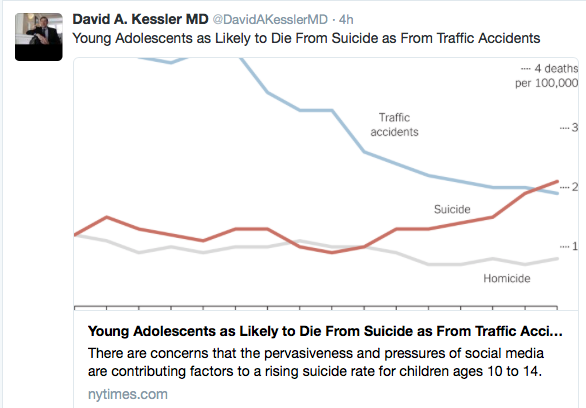
Image Only: Middle Schoolers as Likely to Die From Suicide as From Traffic Accidents

screen-shot-2016-11-04-at-12-57-22-pm

From NY Times:  Full Text

It is now just as likely for middle school students to die from suicide as from traffic accidents.

That grim fact was published on Thursday by the Centers for Disease Control and Prevention. They found that in 2014, the most recent year for which data is available, the suicide rate for children ages 10 to 14 had caught up to their death rate for traffic accidents.

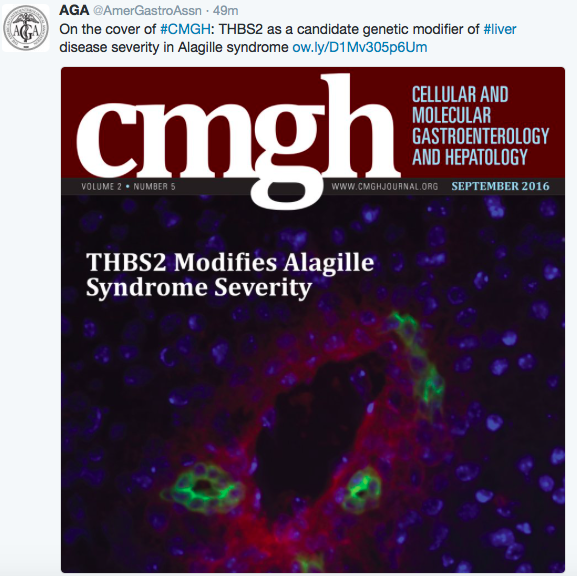
Explaining Differences in Disease Severity for Alagille Syndrome

A recent study (DOI: http://dx.doi.org/10.1016/j.jcmgh.2016.05.013) has shown a gene which may help explain the difference in disease severity in Alagille syndrome.

Here’s a link to full text: THBS2 is a Candidate Modifier of Liver Disease Severity in Alagille Syndrome

Here’s the abstract:

Background & Aims

Alagille syndrome is an autosomal-dominant, multisystem disorder caused primarily by mutations in JAG1, resulting in bile duct paucity, cholestasis, cardiac disease, and other features. Liver disease severity in Alagille syndrome is highly variable, however, factors influencing the hepatic phenotype are unknown. We hypothesized that genetic modifiers may contribute to the variable expressivity of this disorder.

Methods

We performed a genome-wide association study in a cohort of Caucasian subjects with known pathogenic JAG1 mutations, comparing patients with mild vs severe liver disease, followed by functional characterization of a candidate locus.

Results

We identified a locus that reached suggestive genome-level significance upstream of the thrombospondin 2 (THBS2) gene. THBS2 codes for a secreted matricellular protein that regulates cell proliferation, apoptosis, and angiogenesis, and has been shown to affect Notch signaling. By using a reporter mouse line, we detected thrombospondin 2 expression in bile ducts and periportal regions of the mouse liver. Examination of Thbs2-null mouse livers showed increased microvessels in the portal regions of adult mice. We also showed that thrombospondin 2 interacts with NOTCH1 and NOTCH2 and can inhibit JAG1–NOTCH2 interactions.

Conclusions

Based on the genome-wide association study results, thrombospondin 2 localization within bile ducts, and demonstration of interactions of thrombospondin 2 with JAG1 and NOTCH2, we propose that changes in thrombospondin 2 expression may further perturb JAG1–NOTCH2 signaling in patients harboring a JAG1mutation and lead to a more severe liver phenotype. These results implicate THBS2 as a plausible candidate genetic modifier of liver disease severity in Alagille syndrome.

Related blog posts:

alagille-cover

Fatty Liver Improved with Exercise

A recent study (LA Orci et al. Clin Gastroenterol Hepatol 2016; 14: 1398-1411) analyzed data from 28 randomized trials (>1600 patients) and performed a meta-analysis regarding the utility of exercise for nonalcoholic fatty liver disease (NAFLD).

Key finding:

  • Physical activity, independently from diet change, was associated with improvement in intrahepatic lipid content (-0.69) and with reduction in alanine aminotransferase.

The authors note that the effects of lipid reduction due to exercise is considered moderate-to-large.  In several trials, another effect of exercise that was measured was a reduction in insulin resistance.

Limitations:

  • The duration of the effect of exercise is not known and there is not a clear “dose” of exercise.
  • Lack of histologic data (only 2 studies had histology data)

My take: This study suggests that exercise by improving metabolic status is important in improving NAFLD; thus, a fatty liver is not just about being fat.

Bar Harbor at Sunset

Bar Harbor at Sunset