High Risk of Relapse in Younger Patients after anti-TNF Therapy Withdrawal

From KT Park’s Twitter Feed:

Article first published online: 19 FEB 2016

NA Kennedy et al.  Aliment Pharm Ther; 2016. DOI: 10.1111/apt.13547

Abstract:

Background

Infliximab and adalimumab have established roles in inflammatory bowel disease (IBD) therapy. UK regulators mandate reassessment after 12 months’ anti-TNF therapy for IBD, with consideration of treatment withdrawal. There is a need for more data to establish the relapse rates following treatment cessation.

Aim

To establish outcomes following anti-TNF withdrawal for sustained remission using new data from a large UK cohort, and assimilation of all available literature for systematic review and meta-analysis.

Methods

A retrospective observational study was performed on 166 patients with IBD (146 with Crohn’s disease (CD) and 20 with ulcerative colitis [UC) and IBD unclassified (IBDU)] withdrawn from anti-TNF for sustained remission. Meta-analysis was undertaken of all published studies incorporating 11 further cohorts totalling 746 patients (624 CD, 122 UC).

Results

Relapse rates in the UK cohort were 36% by 1 year and 56% by 2 years for CD, and 42% by 1 year and 47% by 2 years for UC/IBDU. Increased relapse risk in CD was associated with age at diagnosis [hazard ratio (HR) 2.78 for age <22 years], white cell count (HR 3.22 for >5.25 × 10⁹/L) and faecal calprotectin (HR 2.95 for >50 μg/g) at drug withdrawal. Neither continued immunomodulators nor endoscopic remission were predictors. In the meta-analysis, estimated 1-year relapse rates were 39% and 35% for CD and UC/IBDU respectively. Retreatment with anti-TNF was successful in 88% for CD and 76% UC/IBDU.

Conclusions

Assimilation of all available data reveals remarkable homogeneity. Approximately one-third of patients with IBD flare within 12 months of withdrawal of anti-TNF therapy for sustained remission.

Related blog posts:

El Junque, Puerto Rico

El Junque, Puerto Rico

Surgery Resident Sleep & Flexibility in Training

A recent study (KY Bilimoria et al. NEJM 2016; DOI: 10.1056/NEJMoa1515724) indicates that some flexibility in training hours did not result in increased adverse outcomes and improved continuity of care. This study examined the care of nearly 140,000 patients.

For a 2 minute quick take -video available at this link along with full-text and abstract: National Cluster-Randomized Trial of Duty-Hour Flexibility in Surgical Training

Related blog posts:

Guidelines: Microscopic Colitis & Vascular Diseases of the Liver

In brief:

AGA Microscopic Colitis Guideline: GC Nguyen et al. Gastroenterol 2016; 150: 242-6. Technical review DS Pardi et al. Gastroenterol 2016; 150: 247-74. Patient guide: pg 275.

EASL Clinical Practice Guidelines: Vascular diseases of the liver. J Hepatology 2016; 64: 179-202.  Topics covered include Budd-Chiari, Portal vein obstruction, Heriditary hemorrhagic telangiectasia, veno-occlusive disease of the liver, management of anticoagulation in liver disease

Epidemiology of Eosinophilic Disorders

Jensen et al. JPGN 2016; 62: 36-42.  The researchers used a large database (>75 million individuals) representative of US commercially-insured population to provide estimates of the prevalence of several eosinophilic disorders:

  • Eosinophilic gastritis 6.3 per 100,000
  • Eosinophilic gastroenteritis 8.4 per 100,000
  • Eosinophilic colitis 3.3 per 100,000

In the associated commentary by Furuta et al (pg 1), clinicians are encouraged to urge patients with EGID to register on the Consortium for Eosinophilic Gastrointestinal Disease Research registry: https://www.rarediseasesnetwork.org/cms/CEGIR

Related blog posts:

Screen Shot 2016-02-01 at 6.25.41 PM


Breath Test Reliability for Bacterial Overgrowth

While breath test reliability for bacterial overgrowth has been a concern for a long time, another study (EC Lin, BT Massey. Clin Gastroenterol Hepatol 2016; 14: 203-08) takes a new approach to show that the glucose breath tests are subject to a high false-positive rate.  This is often related to rapid transit time.

Here’s what they did:

In a retrospective study, they examined data from 139 patients with suspected small bowel bacterial overgrowth (SBBO) (2003-2013).  Abnormal glucose breath tests were indicated by either hydrogen or methane >15 parts per million within 90 minutes after glucose ingestion.  In addition, they used concurrent scintigraphy (by labeling glucose with a Tc99m compound) to determine whether this increase occurred before or after glucose bolus arrived in the cecum.

Findings:

  • 46 (33%) had abnormal breath tests.  Of these 22 (48%) had false-positive results due to colonic fermentation.
  • False-positives were higher (65%) in the subset of patients with prior upper gastrointestinal surgery.  The nonsurgical group had a 13% false-positive rate.
  • This study shows that with rapid transit, significant glucose malabsorption is possible.

Because direct culture of small bowel contents is expensive, invasive and subject to contamination, physicians have relied on breath tests for diagnosis of SBBO or have empirically treated for SBBO.  The discussion and related editorial (pg 209) explain that lactulose breath testing is not more reliable than glucose breath testing.

My take: For patients with prior GI surgery (who are at the highest risk for SBBO), breath testing may not be more reliable than flipping a coin.  True positive results are more likely if hydrogen peak occurs within 60 minutes of glucose administration.

Related blog post: 

Flamenco Beach, Culebra

Flamenco Beach, Culebra

Common Sense: Lifestyle Intervention in Gastroesophageal Reflux Disease

“Common sense is not so common” –Voltaire

A recent study (E Ness-Jensen et al. Clin Gastroenterol Hepatol 2016; 14: 175-82) reviewed the literature and identified 15 original studies which met inclusion criteria regarding lifestyle interventions in gastroesophageal reflux disease (GERD).

Key findings:

  • Weight loss lowered esophageal acid exposure in 2 RCTs: 5.6% –>3.7% and 8.0%–>5.5% and reduced reflux symptoms in prospective observational studies
  • Tobacco cessation reduced reflux symptoms in normal-weight individuals in a large prospective cohort study OR 5.67
  • Head-of-the-bed elevation decreased supine acid exposure from 21% to 15%.
  • Early evening meals decreased supine acid exposure by 5.2% point change.

My take: With the increasing incidence of obesity, these type of lifestyle modifications need to be implemented in our teenagers with GERD.  For those who want to decrease use of medications, these interventions, if emphasized with conviction, are a good first step.

GERD cover

Do deductibles work to improve smart spending on health care?

According to a recent NY Times article –the answer is no.

The problem:

  • With high deductible plans, people reduce both high-value and low-value care
  • Many people cannot afford very valuable care due to their deductibles

Link: The Big Problem With High Health Care Deductibles

Here’s an excerpt:

Some health economists say the solution to the problem may be smarter but more complicated forms of health insurance that provide patients with important care free, but charge them for treatments with fewer proven benefits. Mr. Chernew, for one, argues that ordinary deductibles are too “blunt” an instrument, but smarter insurance plans could harness economic incentives to reduce wasteful health spending without discouraging needed care. If such plans held down costs as well as deductibles, they could keep insurance affordable without as many risks. The theory behind such plans is compelling, but given how bad people are at shopping for health care, more empirical evidence is needed to know how well it works in practice.

US Infinity Pool

Celiac Studies

Three reports on celiac disease:

  • KM Simmons et al. J Pediatr 2016; 169: 44-8.
  • NR Reilly et al. J Pediatr 2016; 169: 40-54
  • MMS Wessels et al. J Pediatr 2016; 169: 55-60.

In the first study, the authors examined bone mineral density (BMD), glycemic control with hemoglobin A1c, and celiac autoimmunity in children with type 1 diabetes (T1D).  This was a cross-sectional study of 252 children with T1D; 123 had positive serology were anti-tissue transglutaminase (tTG) antibody.  In addition, another cohort (n=141) of children without T1D were examined who carried HLD-DR, DQ genotypes with (n=71) and without (n=70) tTG.  Key findings:

  • Children with T1D: those positive for tTG had significantly worse BMD L1-L4 (-0.45 ± 1.22 vs 0.09 ± 1.10, P= .0003).  Higher tTG and higher HgbA1c were independent predictors of lower BMI.
  • In children without T1D: no differences in BMD were found based on tTG status.
  • The authors concluded that celiac autoimmunity and hyperglycemia had synergistic effects on low BMD.

In the second study, the researchers used a population-based cohort study and compared 958 individuals with both T1D and celiac disease (CD) to 4598 similar individuals with T1D alone. Key finding: Over a 13 year period, 12 patients with both T1D and CD had a fracture (1 osteoporotic fracture). CD did not influence the risk of any fracture (aHR 0.77) in patients with T1D.  The researches concluded: “CD does not seem to influence fracture risk in young patients with T1D.”

My take: Looking at these studies in juxtaposition shows how important it is to consider multiple studies and how frequent discrepant results occur.  While the second study does not show a significant fracture risk, the preponderance of evidence does show an association between celiac disease and low BMD particularly in adults. In addition, a gluten free diet has been shown to reverse low BMD in those with CD.

Relevant studies:

  1. Gastroenterology 2010; 139: 763.
  2. Aliment Pharmacol Ther 2000; 14: 35-43.
  3. JPGN 2003; 37: 434-6.
  4. Gut 1996; 38: 322-7.

In the third study, the investigators looked at “complementary” investigation in children with CD.  These included tests like hemoglobin, ferritin, folate, vitamin B12, calcium, vitamin D, and thyroid assays.  Between 2009-2014, 182 children were evaluated included 119 with new diagnosis. Key findings:

  • At time of diagnosis: Iron deficiency (28%), iron deficiency anemia (9%), folate deficiency (14%), vitamin B12 (1%), and vitamin D deficiency (27%) were identified. No hypocalcemia or thyroid dysfunction was found.
  • At followup: iron deficiency (8%), iron deficiency anemia (2%), folate (3%), vitamin D (25%) were identified and no other abnormalities were evident.
  • The investigators concluded that these complementary tests “are relevant at the time of diagnosis of CD but have little diagnostic yield during followup-visits” after institution of gluten-free diet.

My take: Particularly at followup, identification of nutrient deficiencies is typically similar to the general population.

Related posts:

Castillo San Felipe del Morro, San Juan

Castillo San Felipe del Morro, San Juan

Feeding Aversions -A Personal Journey

A terrific article in NY Times Magazine explains the difficulties of feeding aversions and describes some of the approaches, including feeding tubes and behavior feeding programs.

Link: When Your Baby Won’t Eat

For families struggling with feeding problems and for feeding programs, this article is well worth the read.

By the Chattahoochee

By the Chattahoochee

Emergency Medical Information -Easy Access on Your iPhone

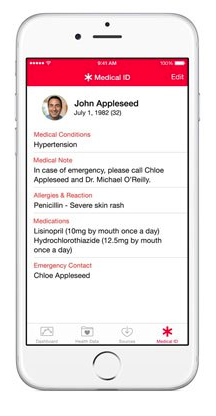
When I purchased a new iPhone, one of my sons was eager to show me all of the cool features.  If you do not have a teenager (i.e. house IT specialist) in the house, you may not have taken advantage of the health app built into the iPhone 6.  This can be very useful for you and your patients.

Screen Shot 2016-01-31 at 12.14.08 PM

One feature of the health app is that it allows you to store emergency contact information and health information that’s accessible from your device’s Lock screen. First responders or good Samaritans will be able to call the emergency contacts listed in Medical ID.  This health app also can function as an activity tracker.

Screen Shot 2016-01-31 at 12.12.38 PM

Here’s a link with additional information: How to set up your emergency medical ID