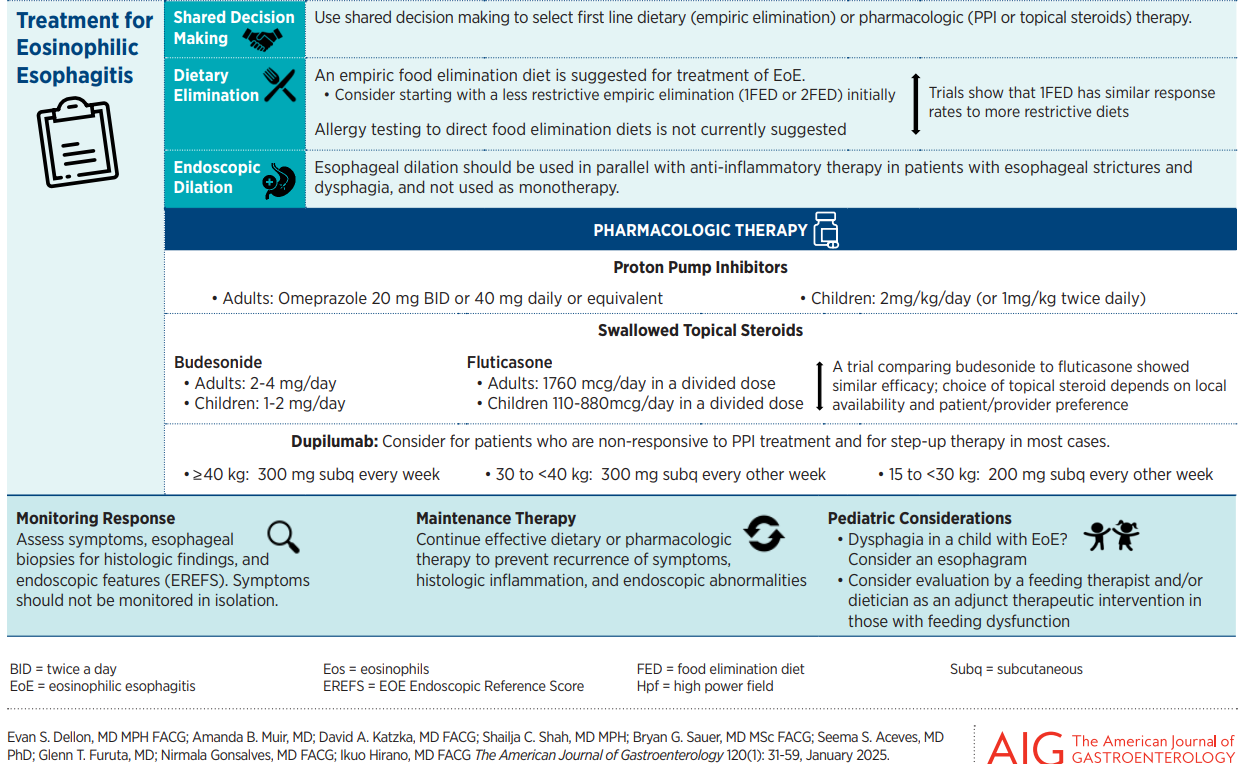
ACG 2025 Guidelines for Eosinophilic Esophagitis

ES Dellon et al. The American Journal of Gastroenterology  2025;120(1):p 31-59. Open Access! ACG Clinical Guideline: Diagnosis and Management of Eosinophilic Esophagitis or bit.ly/acg-eoe-2025.

Related blog posts:

The Future of Medicine: AI’s Role vs Human Judgment

Pranav Rajpurkar and Eric J. Topol. NY Times Feb 2, 2025: The Robot Doctor Will See You Now

An excerpt:

“The medical community largely anticipated that combining the abilities of doctors and A.I. would be the best of both worlds, leading to more accurate diagnoses and more efficient care…That assumption might prove to be incorrect. A growing body of research suggests that A.I. is outperforming doctors, even when they use it as a tool…

Simply giving physicians A.I. tools and expecting automatic improvements doesn’t work. Physicians aren’t completely comfortable with A.I. and still doubt its utility, even if it could demonstrably improve patient care…

Medical training will need to adapt to help doctors understand not just how to use A.I., but when to rely on it and when to trust their own judgment…But the promise for patients is obvious: fewer bottlenecks, shorter waits and potentially better outcomes. For doctors, there’s potential for A.I. to alleviate the routine burdens so that health care might become more accurate, efficient and — paradoxically — more human.”

In a related Substack article (open access: Opinion | When A.I. Alone Outperforms the Human-A.I. Partnership), Dr. Topol and Dr. Rajpurkar list several studies showing that AI alone may be better than physicians with AI under some circumstances:

My take (borrowed from the authors): “The future of medicine won’t be shaped by a simple choice between human or artificial intelligence, but by our ability to understand their respective strengths and limitations, and to orchestrate their collaboration in ways that truly benefit patient care.”

Related blog posts:

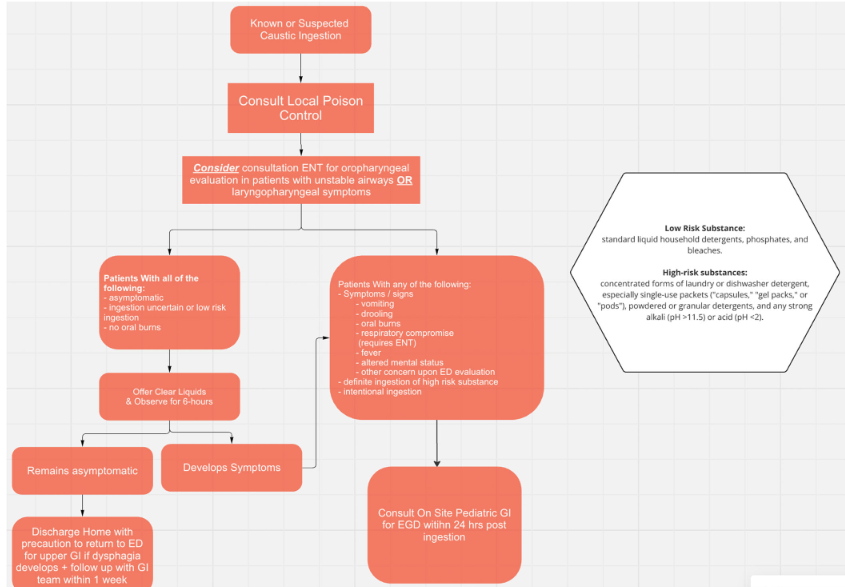
Early Management of Caustic Ingestions in Children

Briefly noted: ES Gordon, E Barfiedl, BD Gold. J Pediatr Gastroenterol Nutr. 2025;1–12. Early management of acute caustic ingestion in pediatrics

Congratulations to my partner Dr. Gold and his coauthors.

Key points:

  • In symptomatic patients, EGD within 24‐hours is most optimal to evaluate the degree of injury and for prognostication
  • Further research is needed on the use of steroids, antibiotics, and acid‐suppression
  • Early placement of NGT under direct visualization during endoscopy may help prevent stricture formation and allow for enteral nutrition in cases of significant injury (Zargar grade 2b and above)

Related blog posts:

Henoch-Schonlein Purpura Findings in the Duodenum

L Torelli et al. J Pediatr Gastroenterol Nutr. 2025;80:242–244. Gastrointestinal involvement in Henoch–Schönlein purpura

A 10 yo underwent an EGD due to nausea, melena and abnormal CT (showing thickening in the  the duodenum and first jejunal loop. Two days later, she developed a cutaneous rash appeared on her legs, buttocks, and elbows.

Mucosal congestion with shallow ulcerations in the descending duodenum.

Related blog posts:

PICNIC Trial Results: Can Antimicrobial PICC Lines Reduce Central Line Infections?

AJ Ullman et al. NEJM 2025; 392: 161-172. A Comparison of Peripherally Inserted Central Catheter Materials

Background: Advances in material technology have introduced coatings and altered surfaces with purported antithrombotic and antiinfective properties to be used with polyurethane PICCs…A Cochrane review11 that included data from 42 randomized, controlled trials and 10,405 patients concluded that there was high-quality evidence showing that antimicrobial central venous catheters reduced the risk of bloodstream infections (risk ratio, 0.62)…On the basis of this indication, chlorhexidine-coated PICCs have been introduced to clinical practice… We conducted the Peripherally Inserted Central Catheter Innovation to Reduce Infections and Clots (PICNIC) trial to test the hypothesis that the risk of device failure due to complications would be lower with two technological innovations (hydrophobic and chlorhexidine PICCs) than with standard polyurethane PICCs.”

Methods: The authors conducted a randomized, controlled, superiority trial in three Australian tertiary hospitals. Adults and children (n=1098) who were referred for PICC placement were assigned in a 1:1:1 ratio to receive a hydrophobic or chlorhexidine PICC or a standard polyurethane PICC and were followed for 8 weeks

Key findings:

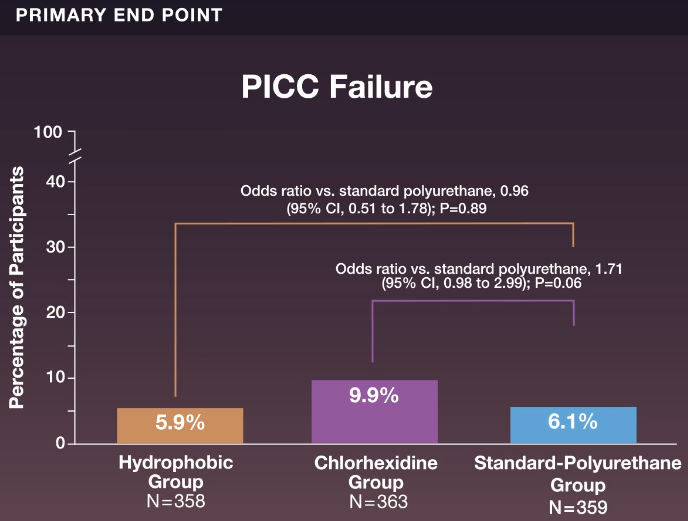
  • Device failure occurred in 21 of 358 participants (5.9%) in the hydrophobic group, in 36 of 363 (9.9%) in the chlorhexidine group, and in 22 of 359 (6.1%) in the standard-polyurethane group
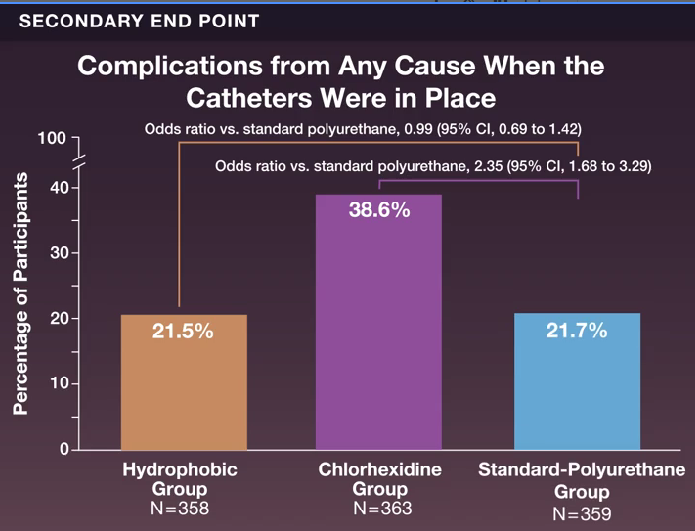
  • Complications from any cause during the period of PICC placement occurred in 77 participants (21.5%) in the hydrophobic group, in 140 (38.6%) in the chlorhexidine group, and in 78 (21.7%) in the standard-polyurethane group (odds ratio, hydrophobic vs. standard polyurethane, 0.99)

Discussion point: This trial was conducted during the COVID epidemic which may have altered the results due to a focus of mitigating infectious exposures.

My take (borrowed from authos): “The risk of device failure due to noninfectious or infectious complications was not lower with hydrophobic or chlorhexidine PICCs than with standard polyurethane PICCs.”

Related blog posts:

The Alarming Impact of Microplastics on Human Health

Yesterday’s post described the problems than pollution and chemicals are associated with in children.

Today’s post reviews data that microplastics accumulate in the brain and are associated with dementia in adults. A thorough review of this topic from Eric Topol 2/3/25: The Microplastic Concerns Elevate—To the Brain

Some excerpts:

Background: Last March a landmark prospective study of microplastics found nearly 60% of patients undergoing an artery operation (carotid endarterectomy) 58% had microplastics and nanoplastics (MNPs) in their plaque. Their presence was linked to a subsequent 4.5 -fold increase of the composite of all-cause mortality, heart attack and stroke…A multi-center study from China showed microplastics were present in the semen and urine of all 113 men assessed and were associated with reduced sperm count and semen quality The CDC data indicate they are likely present in the bodies of all Americans. As you know by now, MNPs are pervasive in our air and water, there’s currently an annual output of 400 million tons of plastics, and the burden of MNPs is expected to double by 2040 if nothing is done to change course.

The main sources of MNPs

The New Study

As reported in today’s Nature Medicine, Alexander Nihart and colleagues assessed concentrations of MNPs in the brain, liver and kidney…To emphasize, the MNP concentration in the brain was 7-30 times greater than the concentration in the liver or kidneys...the increased concentration of MNPs was considerably greater in the people with dementia. Even at the most recent, higher MNP concentration, the brains without dementia averaged ~5,000 μg g−1 whereas the brains from individuals with dementia has MNP concentrations that were 2 to 10-times higher…

Another study published on 22 January in Science Advances demonstrates, in the mouse model, that MNPs in the bloodstream cross the blood-brain-barrier, activate the immune system (schematic below) and result in stagnation of blood flow, culminating in blood clots, also resulting in neurological abnormalities…

Some practical tips were, however, provided: “Reducing exposure to microplastics is feasible, by avoiding food and drinks packaged in plastics, using less synthetic fabric and cleaning up household dust. Heating plastic containers leaches lots of microplastics, so avoiding microwaved ready-meals and plastic kettles should help too.”

The essential point of this post is that the striking brain accumulation of MNPs is paralleled by the overwhelming accumulation of evidence for their toxicity to human health. 

Related blog posts:

Urgent Need for New Chemical Regulations For Kids

The Consortium for Children’s Environmental Health. NEJM 2025; 392: 299-305. Manufactured Chemicals and Children’s Health — The Need for New Law

This review article explains the worsening toll that chemicals in our environment are exacting on the health of children.

Here are some of the key excerpts:

  • “An estimated 350,000 manufactured chemicals, chemical mixtures, and plastics are currently listed in global inventories.3 Most are produced from fossil fuels — gas, oil, and coal. Production has expanded 50-fold since 1950, is currently increasing by about 3% per year, and is projected to triple by 2050.4 Environmental pollution5,6 and human exposure7 are widespread.”
  • In the past half-century, “the incidence of childhood cancers has increased by 35%.10 Male reproductive birth defects have doubled in frequency.11 Neurodevelopmental disorders now affect 1 in 6 children, and autism spectrum disorder is diagnosed in 1 in 36.12 Pediatric asthma has tripled in prevalence.13 Pediatric obesity has nearly quadrupled in prevalence and has driven a sharp increase in type 2 diabetes among children and adolescents.14 In adults, by contrast, illness, disability, and death due to cardiovascular disease, stroke, and many cancers have decreased.15,16
  • “Research in environmental pediatrics has flourished over the past 25 years. Two key catalysts of this growth were the 1993 publication of the National Research Council report, Pesticides in the Diets of Infants and Children21 which elucidated the biologic bases of children’s heightened susceptibility to toxic chemicals, and the passage in 1996 of the Food Quality Protection Act (FQPA), the U.S. law on pesticides. The FQPA made protecting children’s environmental health a national priority and required generation of data on chemical hazards to children, stimulating substantial expansion of federally funded research in environmental pediatrics…Prenatal exposures are particularly hazardous…diseases associated with early-life exposures can manifest any time during the life span.23
  • “Prospective, birth-cohort epidemiologic studies that measure chemical exposures in pregnant persons and fetuses and follow children longitudinally over many years are particularly powerful platforms for discovering associations between synthetic chemicals and disease because they link exposures to outcomes in individual children and eliminate recall bias.”
  • “Widespread childhood exposure to a toxic chemical can damage the health, economic viability, and security of an entire society. For example, each year from the 1950s through the 1970s, about 100,000 tons of tetraethyl lead were added to gasoline in the United States to enhance automotive performance, causing massive environmental lead contamination and extensive human exposure… The average IQ among U.S. children was reduced by an estimated 2 to 5 points,32 the number of children with an IQ above 130 decreased by more than 50%, and the number with an IQ below 70 (the criterion used in the International Classification of Diseases to define intellectual disability) increased by more than 50%…reducing toxic chemical exposures can produce major economic benefits…because each additional IQ point is associated with an increase of 1.8 to 2.4% in lifelong earning potential.
  • “Chemicals should no longer be presumed harmless until proven otherwise…National chemical policies should take into consideration findings from animal and mechanistic toxicology studies, which are highly predictive of human health risks, including risks to children.49

My take: Pollution from chemicals and plastics is worsening and resulting in worsening health/intellectual outcomes for children. I doubt any legislation will be forthcoming to improve the situation. It is unfortunate that protecting profits is prioritized over protecting our health.

Related blog posts:

A ‘good demon’ at The Grand Palace in Bangkok

Understanding Alpha-Gal Syndrome: Key Symptoms and Findings

E Lesmana et al. Clin Gastroenterol Hepatol 2025; 23: 69-78. Open Access! Clinical Presentation and Outcomes of Alpha-Gal Syndrome

This was a retrospective chart review of patients who underwent serological testing for suspected Alpha-Gal Syndrome (AGS) between 2014 and 2023 at Mayo Clinic. Of 1260 patients who underwent testing,124 tested positive for AGS. –matched with 380 seronegative control subjects. 40 patients had long-term followup data available

Key findings:

  • AGS patients reported a higher frequency of tick bites (odds ratio [OR], 26.0)
  • AGS patients reported a higher prevalence of urticaria (56% vs 37%; P = .0008)
  •  A total of 47% experienced at least 1 GI symptom, such as diarrhea, nausea, vomiting, abdominal pain, abdominal cramps, bloating, heartburn, and constipation, in descending order of frequency
  • 11% of AGS patients presented solely with GI symptoms
  • After institution of red meat restriction, 22 of 40 were asymptomatic at followup, 14 of 40 were improved, and 4 of 40 reported no improvement. 7 of the asymptomatic group were able to resume a diet without restrictions.

Discussion point:

  • “Symptom onset in AGS typically occurs more than 4 hours after allergen exposure, with studies emphasizing a tight association with delayed reactions within the 3- to 6-hour range.”

My take: This study provides some more granular data on Alpha-gal and highlights the importance of asking about tick bites and urticaria in patients with possible AGS.

Related blog posts:

Wat Arun (Temple of Dawn). Bangkok

The Pediatrician’s Role in Vaccination and Trust

Two recent commentaries on “hot button” issues:

  • ER Menzin: The Pediatrician’s Lament. NEJM 2025; 392: 320-321
  • PMG Santos et al. Texas Executive Order GA-46 and the Erosion of Trust in Health Care. NEJM 2025; 392: 108-109

An excerpt from the first commentary:

“Throughout my career, I have seen new vaccines approved: pneumococcus, rotavirus, meningococcus, and human papillomavirus. In each case, I have studied the data, reviewed published recommendations, and adjusted my language to encourage vaccination. I consider the high immunization rate in my patient panel to be one of my greatest professional accomplishments — a quantitative metric of the benefit I provide…

Every so often, parents will look at me over a smiling infant and tell me they want their child to have only one or two recommended vaccines. Can I choose the most important? I tell them the question is akin to asking me to pick my favorite child — an impossible task…

Some will ask, “Can you recommend a good pediatrician who does not believe in vaccines?” No, I say, no more than I can recommend a good physicist who does not believe in gravity…

Even if patients are skeptical of the alphabet soup of institutions designed to protect and safeguard their health, they still have confidence in the long-standing relationships with their clinicians. To deserve that trust, we are obligated to raise our collective voice in defense of science, health, and vaccines.”

From the 2nd Commentary:

“On Halloween morning, 2024, Texas physicians received disturbing news about hospital policies set in compliance with Governor Greg Abbott’s Executive Order GA-46 — a rule that mandates the collection and reporting of information on patient citizenship status during intake…

Throughout medical training, physicians learn that trust is a cornerstone of patient care: we ask patients to share deeply personal information about themselves and their loved ones, with the assurance that legal and ethical safeguards protect against the misuse of such information. Chief among these safeguards is the Health Insurance Portability and Accountability Act (HIPAA), which restricts physicians from disclosing protected health information (PHI) without a person’s consent. Citizenship status, though not traditionally considered PHI, may be treated as such when it is paired with medical information obtained during patient encounters…

GA-46 … will deter immigrants, both documented and undocumented, from seeking help for serious medical concerns… Under the Emergency Medical Treatment and Labor Act (EMTALA), hospitals are required to provide emergency care to all patients, regardless of citizenship status. GA-46 indirectly conflicts with EMTALA’s intent to guarantee access to emergency services for all people by discouraging undocumented people from seeking care…

From an economic standpoint, Texas officials have stated that the goal of GA-46 is to protect the financial solvency of public hospitals; however, federal financial support covers most uncompensated care costs. Moreover, contributions from immigrants help sustain the viability of public health insurance programs. In 2017, immigrants helped offset a $67 billion deficit in health care costs for U.S.-born citizens by paying $58 billion more in taxes and premiums than was spent on their health care; 89% of this surplus was attributed to contributions made by undocumented immigrants…

Physicians in Texas and Florida must continue to inform patients of their right to refuse disclosure of their citizenship status.”

Related blog posts:

IBD Briefs: Upadacitinib in Children, Predicting Crohn’s Disease, and Autoimmune Diseases Associated with IBD

J Runde et al. J Pediatr Gastroenterol Nutr. 2025;80:133–140. Upadacitinib is associated with clinical response and steroid-free remission for children and adolescents with inflammatory bowel disease

In this single-center retrospective study, n=20 (3 CD, 13 UC, 4 IBD-U), steroid-free clinical remission (SF-CR) was seen in 75% (16/20) following induction and maintained in 65% (11/17) reaching Week 24 of therapy

J Gaifem et al. Nature Immunology 2024; 25: 1692-1703. Open Access! A unique serum IgG glycosylation signature predicts development of Crohn’s disease and is associated with pathogenic antibodies to mannose glycan.

“Analysis of preclinical serum samples, up to 6 years before IBD diagnosis (from the PREDICTS cohort), revealed the identification of a unique glycosylation signature on circulating antibodies (IgGs)…[which] elicits a proinflammatory immune pathway through the activation and reprogramming of innate immune cells.”

LR Jolving et al. Inflamm Bowel Dis 2025; 31: 87-94. Children and Adolescents Diagnosed With Inflammatory Bowel Disease Are at Increased Risk of Developing Diseases With a Possible Autoimmune Pathogenesis

Using Danish registry and 50-fold matched controls, there was a significant increase for a large number of autoimmune diseases: The adjusted hazard ratio after full follow-up was 4.72 for psoriatic arthritis, 5.21 for spondyloarthritis, 2.77 for celiac disease, 2.15 for rheumatoid arthritis, 1.69 and 1.64 for type 1 and type 2 diabetes, respectively. For thyroid disease, it was 1.16.

Related blog posts:

La Fortuna, Costa Rica