ACupuncTure for Irritable bOwel syNdrome (ACTION)

J-W Yang et al. Gastroenterology, Volume 169, Issue 5, 958 – 969.e5. Open Acces! Efficacy of ACupuncTure in Irritable bOwel syNdrome (ACTION): A Multicenter Randomized Controlled Trial

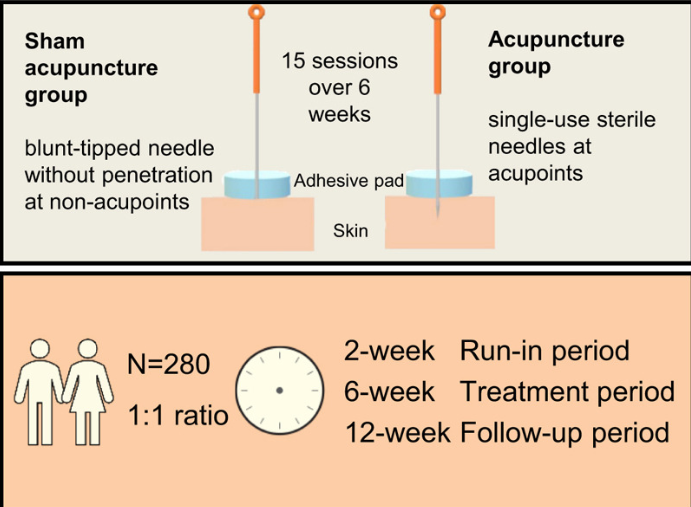
This ACTION study enrolled 280 patients (18-75 yrs) with IBS-D in a multicenter randomized controlled trial in 6 hospitals in China. “For the sham acupuncture group, blunt-tipped placebo needles with a similar appearance to real needles were used over the adhesive pads with no skin penetration. Five fixed pairs of non-acupoints (10 stimulation points in total) away from meridians or conventional acupoints were used.”

Key finding:

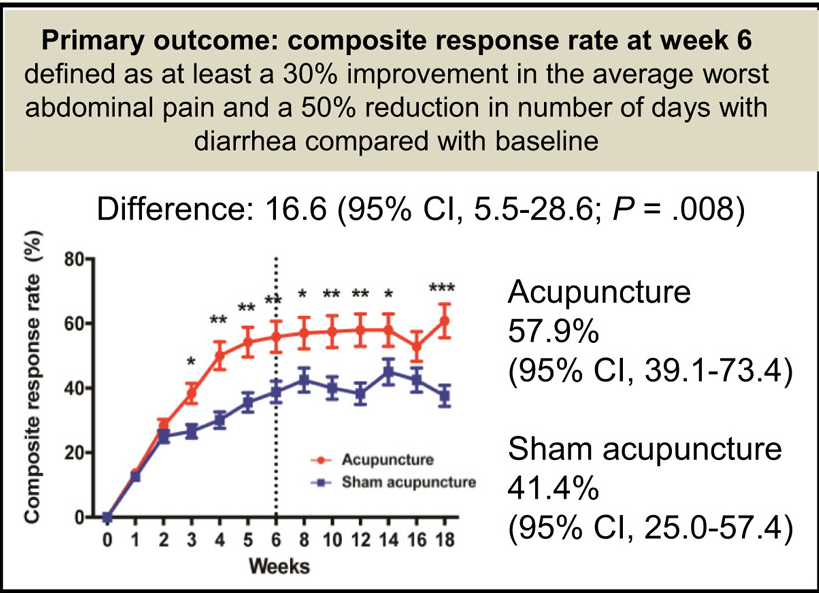
  • The primary outcome (see below) was reached by 71 (57.9%) patients in the acupuncture group compared with 47 (41.4%) patients in the sham acupuncture group (risk ratio 1.40; P = .008)
  • The effects of acupuncture in symptomatic improvements of IBS-D persisted 3 months after treatment with minimal to no side effects
  • Limitations including the difficulty of acupuncture blinding (despite the identical treatment setups)

My take: Acupuncture, especially given its safety, is a reasonable therapy for IBS-D; though, it is not recommended in recent pediatric guidelines. “The rub” in many locations is finding qualified practitioners.

Related blog posts:

When Celiac Disease Symptoms Continue Despite a Gluten Free Diet

A Kruegger et al. JPGN 2025; 81:596–605. Open Access! The prevalence and predictive factors of overlapping disorders of gut–brain interaction and celiac disease in children

Methods: Single-center, retrospective study of children (4–21 years old, n=191) with biopsy-proven Celiac disease (CeD) who were evaluated for DGBI based on Rome IV criteria. Patients who were adherent to a GFD, demonstrated tissue transglutaminase immunoglobulin A (TTG IgA) decline, and had at least one visit 9–24-months after diagnosis with a pediatric gastroenterologist. For this study, sustained TTG IgA decline required at least two declining TTG IgA values, a 90% decline from baseline, or normalization of TTG IgA.

Key findings:

  • 43% (n = 83) met Rome IV DGBI diagnostic criteria.
  • Functional constipation (27/83, 33%) and functional abdominal pain (24/83, 29%) were the most common DGBI
  • Abdominal pain, constipation, and vomiting at initial presentation as well as comorbid joint hypermobility, headaches, and chronic musculoskeletal pain increased risk of developing DGBI after serological decline

Discussion Points:

  • “The prevalence reported here is similar to a study of adults with CeD who were adherent to a GFD that reported over 50% met criteria for a functional gastrointestinal disorder19 and is higher than previously reported pediatric prevalence rates”
  • “The majority of patients who met DGBI criteria did so through having the persistence of the same gastrointestinal symptoms that were present at CeD diagnosis. This raises the question as to whether the symptoms at presentation were due to CeD, DGBI, or both”
  • “Clinicians could consider discussing that while symptoms related to CeD should improve on a GFD, some symptoms may persist, especially if they have an increased likelihood of having a comorbid DGBI. Such counseling may prevent the misattribution of persistent symptoms to ongoing gluten exposure and mitigate hypervigilance”
  • “Having complete villous blunting on diagnostic biopsy increased the likelihood of having a DGBI. Intuitively, it is possible that complete villous blunting can lead to greater nerve sensitization and subsequently higher rates of DGBI. It is also possible that complete villous blunting is slower to recover”

My take: Given the overlap of DGBI symptoms with CeD, diagnosing DGBI in patients with CeD can be challenging. However, DGBI is much more likely to contribute to lingering symptoms than refractory CeD.

As a practical matter, the high frequency of ongoing GI symptoms despite use of a GFD provides another drawback to relying on a no-biopsy diagnosis. A no-biopsy diagnosis introduces greater uncertainty in the diagnosis and does not allow for a histologic comparison if a subsequent evaluation is needed.

Related blog posts:

Claude Monet, Bridge over a Pond of Water Lilies at The Metropolitan Museum of Art

IBS Impact: Survey Reveals Daily Life Struggles

AGA GastroNews, AGA IBS in America survey reveals IBS major burden despite advances in treatment (8/7/25):

Methods: The Harris Poll on behalf of AGA in 2024, among 2,013 U.S. adults age 18+ who have been diagnosed by a health care provider with IBS-C (1,005) or IBS-D (1,008). In addition, U.S. health care provider research was conducted online among 600 health care providers including gastroenterologists (n=200), primary care physicians (PCPs, n=200), gastroenterology nurse practitioners (NP)/physician assistants (PA) (n=100), and PCP NP/PAs (n=100)

Key findings:

  • IBS symptoms interfere with patients’ productivity at work/school for nearly 11 days per month on average
  • IBS symptoms disrupt personal activities eight days per month on average
  • 69% say their symptoms make them feel like they’re not “normal”
  • 77% avoid situations where bathroom access is limited.
  • 72% find it difficult to plan activities due to unpredictable symptoms.
  • 72% stay home more often because of their symptoms

My take: This sample of patients with IBS likely has more severe symptoms than a more general population of patients with IBS. Nevertheless, it highlights the impact of IBS symptoms on daily living.

Link: AGA IBS Toolkit

Related blog posts:

Westminster Abbey, London


Pilot Study: Mediterranean Diet vs Low FODMAP for Irritable Bowel Syndrome

S Singh et al. Neurogastroenterology and Motility 2025; https://doi.org/10.1111/nmo.70060. Open Access! Efficacy of Mediterranean Diet vs. Low-FODMAP Diet in Patients With Nonconstipated Irritable Bowel Syndrome: A Pilot Randomized Controlled Trial

Methods: Patients were randomized controlled trial (RCT), adult patients with diarrhea-predominant IBS (IBS-D) or mixed bowel pattern (IBS-M) were randomized to Mediterranean diet (MD) versus a diet low in fermentable oligo-, di-, monosaccharides, and polyols (LFD) for 4 weeks. 10 patients completed the study in each group. The primary endpoint was the proportion of patients with ≥ 30% decrease in abdominal pain intensity (API) for ≥ 2/4 weeks. Daily variables included abdominal pain intensity (API) and bloating, while IBS symptom severity score (IBS-SSS) and IBS adequate relief (IBS-AR) were scored weekly

Key findings:

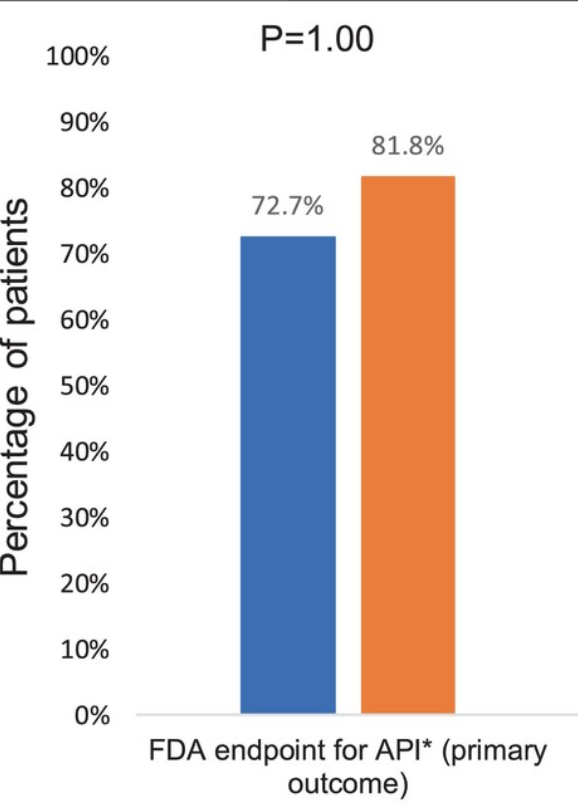
  • 73% percent of the MD group met the primary endpoint compared to 81.8% of the LFD group (p = 1.0)
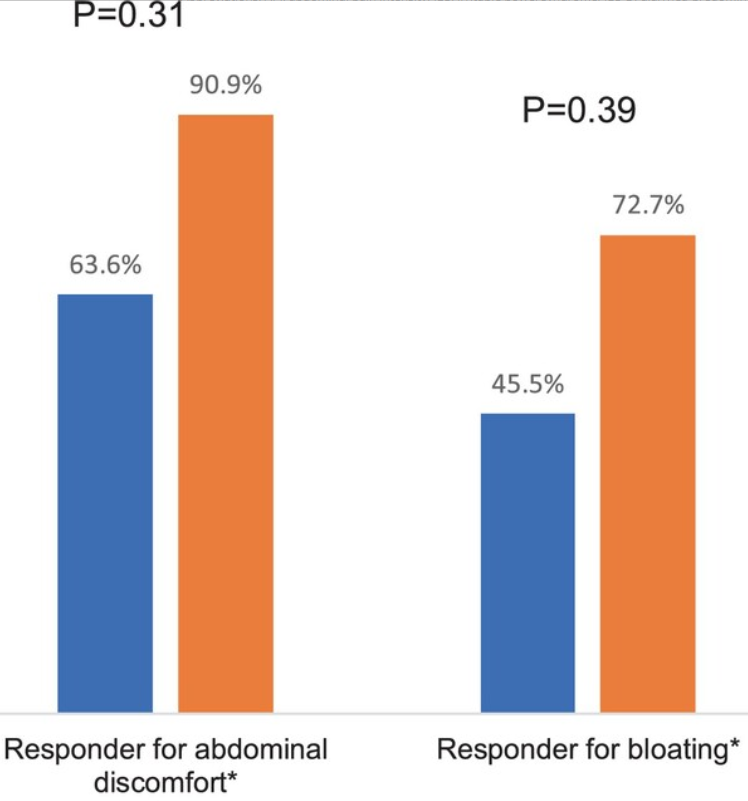
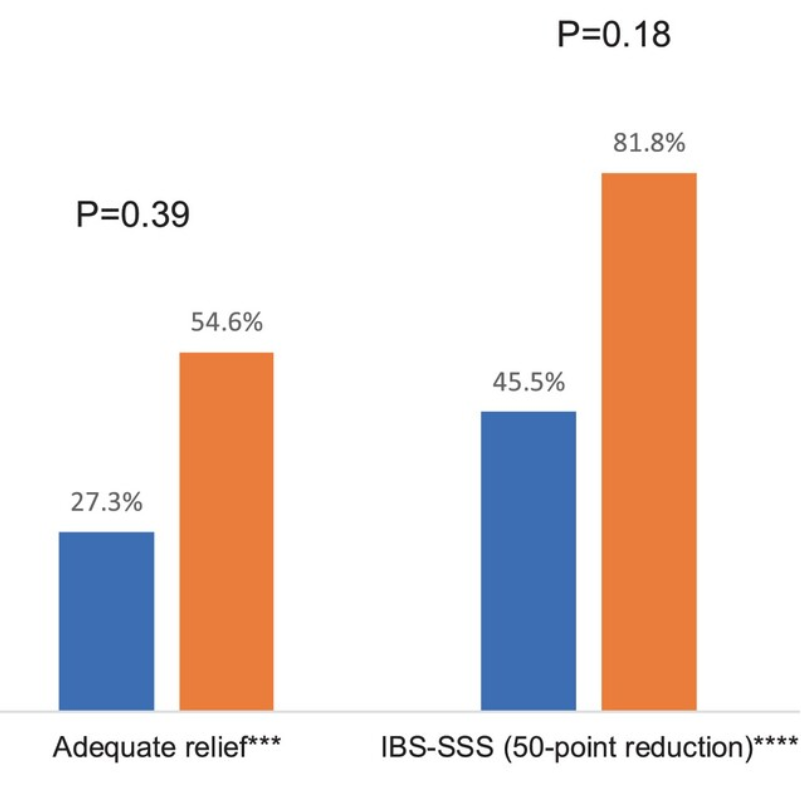
  • Although not statistically significant, a numerically higher proportion of the LFD group reported adequate relief and met the responder endpoint for IBS-SSS (50-point reduction) compared to the MD group (54.6% vs. 27.3% for IBS-AR and 81.8% vs. 45.5% for IBS-SSS, p = 0.39 and 0.18, respectively)
  • The LFD group also had a significantly greater reduction in IBS-SSS score over the 4-week treatment period compared to the MD group (−105.5 vs. −60, p = 0.02)

My take (borrowed from authors): A Mediterannean diet “improves abdominal symptoms in the majority of patients with IBS-D and IBS-M. Larger, adequately powered, real-world studies comparing the efficacy of a MD with LFD and NICE diet are needed to validate these preliminary findings and to help patients and providers to know if a MD should be added to the list of effective, evidence-based diet interventions for patients with IBS.”

Related blog posts:

New Study: Leaky Gut and Irritable Bowel Syndrome

MR Barbaro et al. Gastroenterol 2024; 167: 1152-1166. Molecular Mechanisms Underlying Loss of Vascular and Epithelial Integrity in Irritable Bowel Syndrome

This study examined markers of the epithelial and vascular barriers in 223 patients with irritable bowel syndrome in comparison to 78 healthy subjects. In actuality, this lengthy report was a composite of about 8 different experiments.

Key findings:

  • Figure 2 summarizes in vivo and in vitro epithelial permeability testing using orally-administered sugars and using Caco-2 cell incubation of control/IBS supernatants. In all of these experiments, there was a significant mean increase in IBS-D permeability compared to controls.
  • Figures 3 and 4 report on significant changes the gut vascular barrier and specific mediators, respectively, in IBS compared to controls
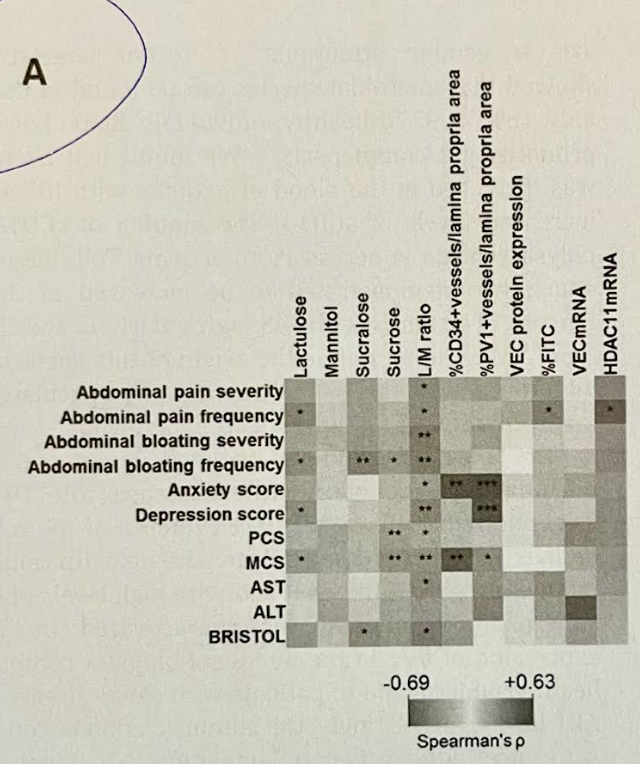
  • One novel finding was correlation of epithelial barrier markers with gastrointestinal symptoms and gut vascular dysfunction with systemic systems including anxiety and depression (see heat map below)
Relationships between epithelial and endothelial permeability markers and symptoms. The asterisks on the heatmap indicate significances in the Spearman’s correlation.

My take: The term ‘leaky gut’ has a negative connotation among many gastroenterologists as it has been associated with misleading diagnostic and therapeutic claims. However, this study shows a correlation between epithelial and vascular barrier disruptions and symptoms in irritable bowel. This is useful information; nevertheless, there are not simple tests to identify these findings and there are not therapeutics with demonstrated efficacy.

Related blog posts:

“Efficacy” of Probiotics in Irritable Bowel Syndrome

VC Goodoory, M Khasawneh et al. Gastroenterol 2023; 165: 1206-1218. Open Access! Efficacy of Probiotics in Irritable Bowel Syndrome: Systematic Review and Meta-analysis

After performing a systematic literature review, the authors identified randomized controlled trials (RCTs) recruiting adults with IBS, comparing probiotics with placebo were eligible; this included 82 eligible trials, containing 10,332 patients. However, only 24 RCTs were at low risk of bias across all domains.

Key findings:

  • There was some evidence to support the use of some probiotics for global IBS symptoms, abdominal pain, and abdominal bloating or distension (highly detailed analysis of the studies in article –Figures 1-3 and Tables 1-3)
  • There was moderate certainty in the evidence for a benefit of Escherichia strains, low certainty for Lactobacillus strains and Lplantarum 299V, and very low certainty for combination probiotics, LacClean Gold S, Duolac 7s, and Bacillus strains
  • For abdominal pain, there was low certainty in the evidence for a benefit of Scerevisiae I-3856 and Bifidobacterium strains, and very low certainty for combination probiotics, LactobacillusSaccharomyces, and Bacillus strains
  • For abdominal bloating or distension, there was very low certainty in the evidence for a benefit of combination probiotics and Bacillus strains
  • The relative risk of experiencing any adverse event, in 55 trials, including more than 7000 patients, was not significantly higher with probiotics

My take: This study shows that it is difficult to confidently recommend specific probiotics for IBS as the certainty in the evidence for efficacy by GRADE criteria was low to very low. In addition, the quality control of production of most probiotics is uncertain.

Related blog posts:

Riverside Park, Sandy Springs

Increased bile acids in diarrhea-predominant IBS

The role for bile acids in causation of irritable bowel gets a closer look in a recent publication (Clin Gastroenterol Hepatol 2012; 10: 1009-15).

This study randomly selected 52 participants (26 with diarrhea-predominant IBS, 26 with constipation predominant IBS) from a cohort of 700 IBS patients followed at the Mayo clinic along with 26 healthy volunteers.  The ages of the patients ranged from 29-51. Subsequently, these patients underwent additional testing following a 4-day high fat diet.  Of note, 5 of the IBS-D patients had a history of cholecystectomy compared with one patient in the other two groups.

In these patients, bile acid concentrations were measured in the stool and serum levels of 7α-hydroxy-4-cholesten-3-one (C4).In the IBS-D patients, serum levels of C4 were significantly higher than in the other two groups.  38% of the IBS-D group had elevated C4 levels; these elevated levels correlated with increased stool concentrations of bile acids.

The authors note that bile acid malabsorption has been identified frequently in patients with unexplained chronic diarrhea and that these patients often respond to bile acid sequestration (eg. cholestyramine or colesevelam).  Another interesting finding was that obesity was associated with elevated bile acid levels. Overall, the cohort with IBS-D had an average BMI of 29.5.

So, what conclusions can be drawn?

  • Serum C4 levels may be using in identifying patients with bile acid malabsorption
  • Bile acid sequestration agents may be worth a try in some cases of IBS-D and this study provides a rationale

Additional references:

-Alim Pharmacol Ther 2009; 30: 707-17.  Bile acid malabsorption in IBS-D.

Food choices, FODMAPs, and gluten haters

Given the frequency of functional gastrointestinal diseases (FGID), including irritable bowel syndrome (IBS), dietary treatments that may improve symptoms receive a lot of attention.  A recent review of the role of food choices in the development and management of FGIDs is a useful reference (Am J Gastroenterol 2012; 107: 657-66 -thanks to Ben Gold for forwarding this article).

This review details specific dietary advice as well as the following specific physiologic effects of FODMAPs:

  • Osmotic effects
  • Bacterial fermentation
  • Motility effects
  • Prebiotic effects
  • Systemic effects –mild depression, tiredness
In addition, the review looks at other potential foods which could serve as a trigger for IBS symptoms, like gluten & summarizes why some IBS patients are gluten haters.  The authors acknowledge that gluten sensitivity, in the absence of celiac disease, does not have a known mechanism.  Until a reliable marker becomes available, the importance of gluten sensitivity for FGIDs is unknown.
Related posts:

What to make of FODMAPs

Gluten sensitivity without celiac disease

Is a biopsy necessary in Celiac disease?

Gluten sensitivity without celiac disease

Gluten free is big business.  In a range of conditions, eliminating gluten has been advocated to improve symptoms.  The most frequent problem in which a gluten-free diet (GFD) may be beneficial is irritable bowel syndrome (IBS).  A selected summary in Gastroenterology discusses this topic (Gastroenterology 2012; 142: 664-73).

This review highlights an article that showed improvement in a double-blind randomized trial (Am J Gastroenterol 2011; 106: 508-14) & then reviews the topic more broadly.  The study is the first randomized controlled trial that suggests that nonceliac IBS patients may improve with a GFD.  The study looked at 34 patients with IBS who had improved with a GFD & had no evidence of celiac disease (either negative HLA-DQ2/DQ8 or duodenal biopsy).  Then 19 patients had 16g of gluten per day reintroduced; control patients were offered equivalent food that was gluten-free.  The gluten products in the study were free of fermentable oligo-, di-, monosaccharides and polyols to avoid confounders (What to make of FODMAPs).  The patients who continued a GFD had less reported pain, bloating and tiredness.  The GFD group reported good control of symptoms the previous week in 68% vs. 40% in the study group.

The commentary notes that ‘gluten sensitivity’ is big business, accounting for 1.3 billion in 2011 expenditures.  Companies like General Mills, Betty Crocker, PF Chang’s, and Subway are offering gluten-free choices.  Since immune activation and low-grade inflammation may be important for IBS, it is possible that some foods trigger these processes.  At the same time, individuals with reported gluten sensitivity have not been shown to have increased intestinal permeability; this is in contrast to celiac disease (BMC Med 2011; 9; 23).

There may be more patients with IBS who will benefit from a GFD due to gluten sensitivity than patients with celiac disease.

Additional references:

  • -Nutr Clin Pract. 2011;26:294-299.  A gluten-free diet (GFD) is commonly recognized as the treatment for celiac disease. It also has been investigated as a treatment option for other medical conditions, including dermatitis herpetiformis, irritable bowel syndrome, neurologic disorders, rheumatoid arthritis, diabetes mellitus, and HIV-associated enteropathy. The strength of the evidence for the use of a GFD in these nonceliac diseases varies.
  • -Clin Gastro & Hep 2007; 5: 844. GFD in IBS pts (w/o celiac)
  • -Am J Gastro 2009; 104: 1587. Gluten sensitivity in IBS (w celiac)
  • -Gastroenterology 2011; 141: 1187. Prevalence of celiac similar in IBS as general population though higher number (7%) with celiac antibodies (esp gliadin).
  • -Am J Gastro 2008; 103: S472 (abstract P687) Serology for Celiac in IBS patients same as in controls. n=566. n=555 controls.
  • -Clin Gastro & Hep 2007; 5: 844. d-IBS patients may respond to gluten-free diet, especially if positive HLA-DQ2 expression or positive celiac serology.
  • -Lancet 2001; 358: 1504-08. n=300 uninvestigated pts w IBS criteria & 300 controls. 66 w positive serology; 14 w biopsy-proven celiac dz, 43 w normal biopsies. Odds ratio of 7 to have celiac compared to control group (2 w biopsy-proven disease).

What to make of FODMAPs

Consumption of FODMAPs (fermentable oligosaccharides, disaccharides, monosaccharides and polyols) may trigger irritable bowel syndrome (IBS) symptoms.  Some research indicates that a diet low on FODMAPs may be beneficial (J Hum Nutr Diet 2011; 24: 487-95).  This study tried to assess whether a low FODMAPs diet which had been reported from a single center in Australia would be effective for IBS.

In this study, consecutive patients with IBS were divided into two groups.  39 received standard dietary advice based on UK National Institute for Health and Clinical Excellence (NICE) guidelines.  43 patients were placed on a low FODMAP dietary advice.  Patients were selected into each group consecutively (not randomized). This study reported a 76% satisfactory symptom response in the FODMAP group vs a 54% response in the control group (p=0.038).  Overall, 86% of FODMAP group had improved composite score compared with 49% of standard treatment group. Specific improvements were noted in bloating, abdominal pain, and flatulence.  The average age of the study population was 38 and 71% were females.  60% had diarrhea-predominant IBS.

NICE guidelines for IBS:

  • Healthy eating principles: regular eating, taking time to eat
  • Limit high fat foods and fizzy drinks
  • Limit insoluble fiber for diarrhea and gradually increase for constipation
  • Limit sugar-free sweets and foods with sorbitol
  • Limit fruit to 3 portions/day
  • Avoiding ‘resistant’ starch may be useful (eg. sweetcorn, green bananas, part-baked and reheated bread)
  • Addition of oats and linseeds may be helpful

Low FODMAP diet

  • Reduce high fructan foods (eg wheat and onion)
  • Reduction in high galactooligosaccharide foods (eg chickpeas, lentils)
  • Reduce high polyol foods and polyol-sweetened sources.  Replace with suitable fruits and vegetables
  • In patients with lactose malabsorption, reduce high lactose foods (eg milk, yoghurt) to smaller volumes or substitute lactose-free products
  • In those with fructose malabsorption, decrease excess fructose

Of course, reading the author’s description of a low FODMAP diet is confusing.  Translation:

Include more bananas, blueberries, lettuce, potatoes, gluten-free breads or cereals, rice, oats, hard cheeses, lactose-free milk, sugar, molasses, and artificial sweeteners that do not end in “ol.”

Avoid/eliminate apples, pears, canned fruits in natural juices, high-fructose corn syrup, cows’ milk (due to lactose), soft cheese, broccoli, cabbage, pasta, bread, baked goods from wheat/rye, mushrooms, and sweeteners like sorbitol or others that end in “ol.”

Since this diet has attracted more widespread attention, basic familiarity is important for all physicians who treat IBS.  A useful resource to explain this diet is the Wall Street Journal:

http://online.wsj.com/article/SB10001424052970204554204577023880581820726.html

This link has a good table illustrating the recommended dietary choices.

Whether FODMAPs will be superior to other dietary advice for IBS is still uncertain.  Though, given the limited number of effective treatments for IBS, this small study is a promising development.

Additional references:

  • -Clin Gastro & Hep 2009; 7: 706. n=17. 13 responded to very low carb diet (<20g/day)
  • -Clin Gastro & Hep 2008; 6: 765. Dietary triggers for IBS include fructose/fructans: honey, high fructose corn syrup, wheat, fruits.
  • -IBD 2006; 13: 91. Dietary guidelines for IBS.
  • -Clin Gastro Hepatol 2005; 10: 992-996. Obesity increases IBS symptoms; diet with low fat, high fruit/fiber have fewer symptoms
  • -Gut 2004; 53: 1459-1464. Food elimination based on IgG antibodies. Patients did better on diet with implicated foods than with control diet (diet was blinded/randomized).
  • -Am J Gastro 2011; 106: 508-514. randomized, double-blind trial showing efficacy of GFD for non-celiacs.  60% vs 32& placebo response.
  • -Nutr Clin Pract. 2011;26:294-299.  GFD for non-celiacs.
  • -Gastroenterology 2011; 141: 1941./Am J Gastro 2011; 106: 915.  Exercise improves IBS symptoms.