Explaining Prior Authorization to Patients/Families

Ron Lieber, NY Times 9/14/25: A Message From Your Doctor About the Prior Authorization Process

This article recommends that physicians consider a proactive role in explaining the prior authorization process. Here is his suggested handout:


Often, insurance companies require us to ask their permission for coverage before prescribing a drug or doing a test or procedure. They say they do this to make sure that we are suggesting medically appropriate, cost-effective care — on behalf of you or your employer. In fact, this is always our goal, but they don’t always think we’re accomplishing it.

To try to get this authorization ahead of time, we document our logic in the format they require, and they may reject it. Often we find out about rejections well before any surgery, but sometimes we don’t.

The prior authorization process can be as baffling to us as it may be to you, and we find it intensely frustrating. Please keep in mind that we are at the mercy of dozens of insurance companies, and their rules and requirements can change constantly. Your doctor may not be able to predict the odds of a prior authorization rejection, and musing over the possibility before it happens probably isn’t a productive use of our time together in the exam room.

If you have any concerns once you know what we’re recommending, reach out to our billing specialist or the department that helps with this. They too may not be able to tell you much ahead of time, but they will play a role in helping us with any appeal that is necessary if our request for prior authorization fails in full or in part.

Insurance companies like paper mail. Check yours every day, in case they issue denials that way. Download your insurance company’s app and sign up for push notifications for any changes, especially if they offer alerts specifically for changes in prior authorization. Opt in to email notifications, and check your spam.

You might hear from the insurance company before we do.

We think we are pretty good at navigating this deeply suboptimal system, but we can’t do it without you. Please, become intimately familiar with your insurance plan and what it covers — whether prior authorization is required or not.

Engage a human resources specialist at your employer, if you have one, to help communicate with the insurance company during the prior authorization process if you think you might need help. Call the insurer on your own to ask whether your medicine or procedures require permission and whether the insurance company is missing information it needs.

Patients can sometimes get better information faster than we can, if only because we may be trying to help hundreds of patients at once.

There is an appeal process, which may differ by insurer. Contact a billing specialist with whatever information you have from your insurance company, though we may hear about it before you do and start the process on our own.

Sometimes, the problem is a relatively simple one, resulting from confusion over the byzantine process of submitting medical codes, or some similar snafu. But often, a doctor will have to do what’s known as a peer review with someone from the insurance company. We find this burdensome, since the “peer” on the line with us may not have the same level of expertise as we do. That prolongs the call, adds to our overall operating expenses and keeps us from spending more time with you, the patient.

We’ll give any appeal our best shot, but it may take time to schedule any peer review.

We dislike having to give you a document like this that might produce anxiety. Still, it’s better that you be aware of how things might go than be desperately trying to reach us or learn about the prior authorization process after getting a mysterious and indecipherable rejection letter in the mail.

If things don’t go our way at first, we will have your back and argue fiercely to get you coverage for the care you need.

Our industry has a structural problem. We can provide you information and over-communicate, but the incentive systems are what they are.

Insurance companies may sometimes deny permission for care in order to make more money. Employers (and individuals) don’t want premiums to rise. Some patients demand that we throw everything we doctors have at every health condition. Regulators are in the middle of all of it, ordering up paperwork. And doctors are not infallible.

We wish we could fix all of that. But for now, we can be plain-spoken with you about how prior authorization works and try to make the system that we have just a bit more tolerable.

Related posts:

Wheat Field with Cyprus, Vincent van Gogh at the Metropolitan Museum of Art (NYC)

Delays by Insurance Companies Result in Worse Outcomes for Children with Inflammatory Bowel Disease

Briefly noted: Brad D. Constant MD, MSCSJeremy Adler MD, MScBenjamin D. Gold MD, et al. JPGN Reports. 2025;1–11. Open Access! National perspectives of barriers by insurance and pharmacy benefit managers in pediatric inflammatory bowel disease

Key findings:

  • In this sample of 113 pediatric patients with IBD, 77% of initial denials for biologic therapy were ultimately approved.
  • The median time to receiving medication was 18 days, with administrative time (prior authorization and appeal) requiring a median of 180 min.
  • More than half (60%) of patients experienced adverse outcomes or worsened quality of life due to delays in treatment.

My take (borrowed in part from authors): “Barriers to treatment by payors, of which 77% are ultimately approved, result in substantive treatment delay, patient harm, and hospitalization.” While 18 days (or more) may not seem like a lot, it is when you know the right therapy at the outset and delays lead to suffering and worsened outcomes. In addition, the insurance companies and PBMs (pharmacy benefit managers) know that exhausting valuable physician/office staff time is a disincentive. It makes physicians determine whether it is worth the fight.

Related blog posts:

Wat Arun (Temple of Dawn), Bangkok

AI Skirmish in Prior Authorizations

Teddy Rosenbluth NYT 7/10/24: In Constant Battle With Insurers, Doctors Reach for a Cudgel: A.I.

An excerpt:

For a growing number of doctors, A.I. chatbots — which can draft letters to insurers in seconds — are opening up a new front in the battle to approve costly claims, accomplishing in minutes what years of advocacy and attempts at health care reform have not….

Doctors are turning to the technology even as some of the country’s largest insurance companies face class-action lawsuits alleging that they used their own technology to swiftly deny large batches of claims and cut off seriously ill patients from rehabilitation treatment.

Some experts fear that the prior-authorization process will soon devolve into an A.I. “arms race,” in which bots battle bots over insurance coverage. Among doctors, there are few things as universally hated…

Doctors and their staff spend an average of 12 hours a week submitting prior-authorization requests, a process widely considered burdensome and detrimental to patient health among physicians surveyed by the American Medical Association.

With the help of ChatGPT, Dr. Tward now types in a couple of sentences, describing the purpose of the letter and the types of scientific studies he wants referenced, and a draft is produced in seconds.

Then, he can tell the chatbot to make it four times longer. “If you’re going to put all kinds of barriers up for my patients, then when I fire back, I’m going to make it very time consuming,” he said…

Epicone of the largest electronic health record companies in the country, has rolled out a prior-authorization tool that uses A.I. to a small group of physicians, said Derek De Young, a developer working on the product.

Several major health systems are piloting Doximity GPT, created to help with a number of administrative tasks including prior authorizations, a company spokeswoman said…

As doctors use A.I. to get faster at writing prior-authorization letters, Dr. Wachter said he had “tremendous confidence” that the insurance companies would use A.I. to get better at denying them.

Related blog posts:

Firefly Bike Trail (Athens, GA)

IBD Updates: Insurance Barriers Hindering Care, Guselkumab vs Ustekinumab, IBD Pain Management Guidelines

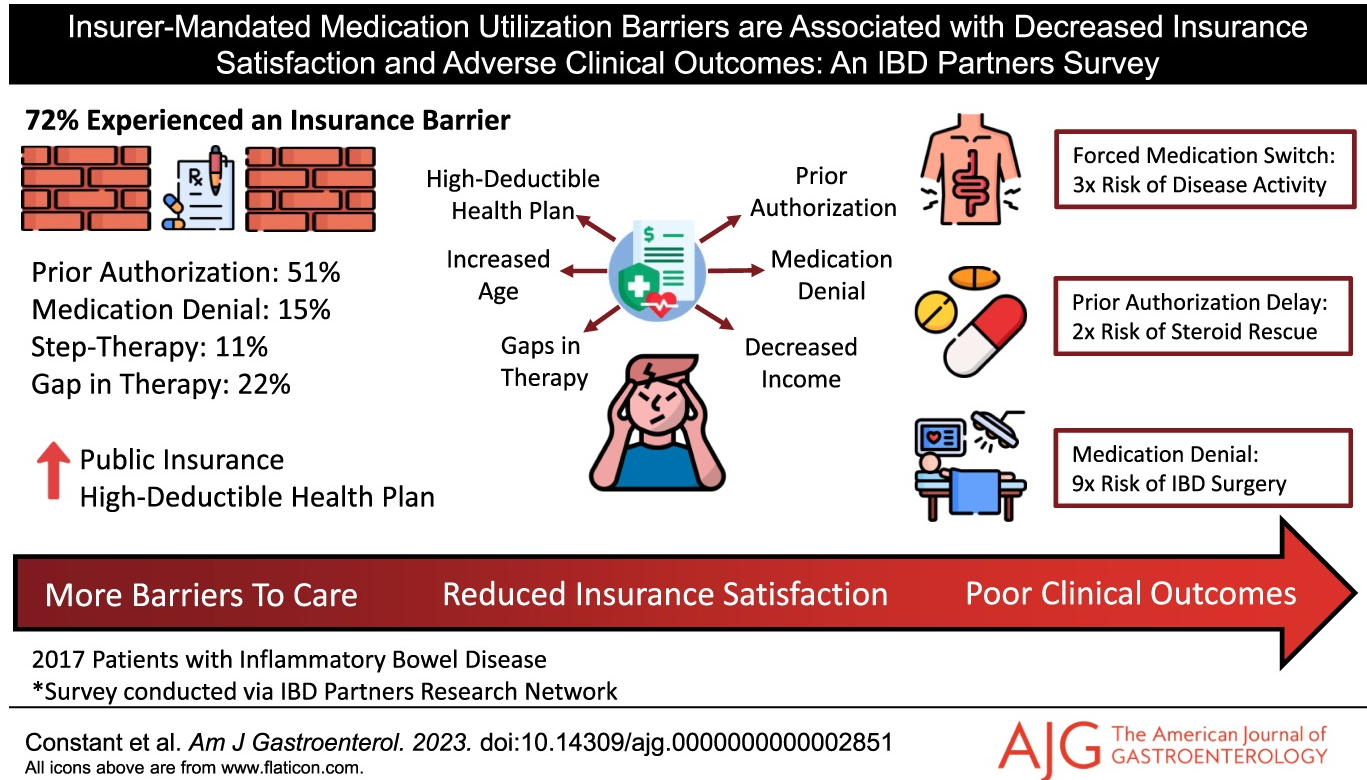
B Constant et al. AJG 2024;  DOI: 10.14309/ajg.0000000000002851. Insurer-Mandated Medication Utilization Barriers are Associated With Decreased Insurance Satisfaction and Adverse Clinical Outcomes: An Inflammatory Bowel Disease Partners Survey

Key findings: In this longitudinal survey with 2017 patients, 72% experienced an insurer-mandated barrier, most commonly prior authorizations (51%). Fifteen percent were denied an IBD medication by their insurer, 22% experienced an insurance-related gap in therapy, and 8% were forced by their insurer to switch from an effective medication.  Several insurance barriers were linked to negative downstream clinical outcomes, including prior authorizations associated with corticosteroid rescue (odds ratio [OR] 2.24]), forced medication switches associated with continued disease activity (OR 3.28), and medication denials associated with IBD-related surgery (OR 8.92).

Related blog posts:

S Danese et al. Lancet Gastroenterol Hepatol 2024; 9: 133-146. Efficacy and safety of 48 weeks of guselkumab for patients with Crohn’s disease: maintenance results from the phase 2, randomised, double-blind GALAXI-1 trial

In this phase 2 randomised, multicentre, double-blind trial with 309 adults, the authors report on the safety and efficacy of subcutaneous guselkumab maintenance regimens to week 48 in the GALAXI-1 study. Key findings:

  • “At week 48, the numbers of patients with CDAI clinical remission were 39 (64%) in the guselkumab 200→100 mg group, 46 (73%) in the guselkumab 600→200 mg group, 35 (57%) in the guselkumab 1200→200 mg group, and 37 (59%) in the ustekinumab group.”
  • “Eendoscopic remission was seen in 11 (18%), 11 (17%), 20 (33%), and four (6%) patients, respectively.”

Related blog posts:

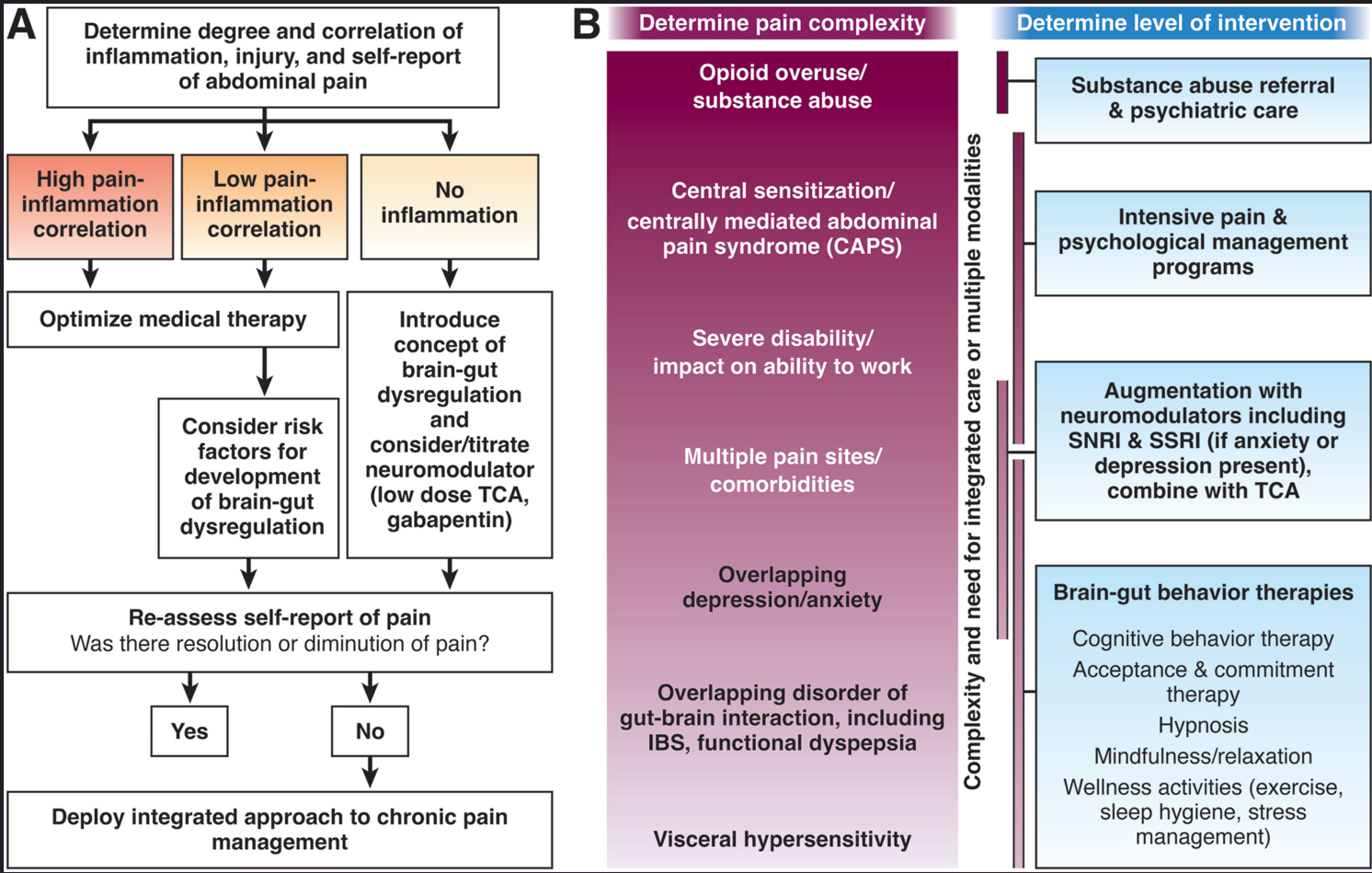
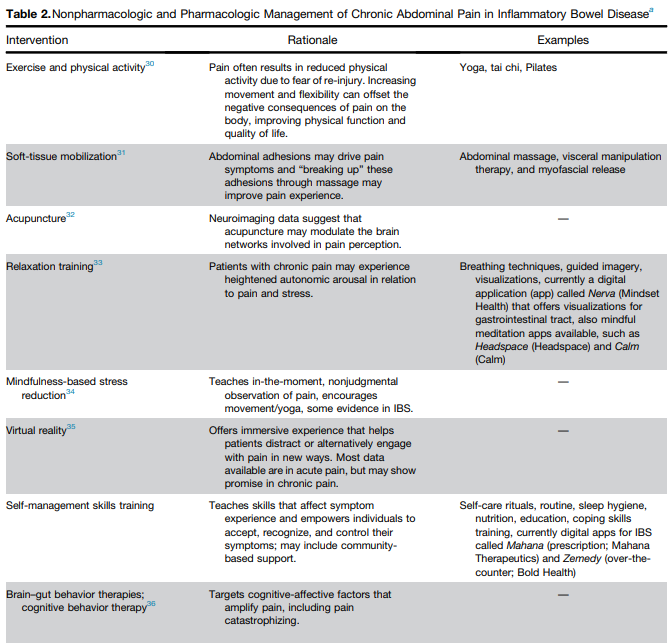
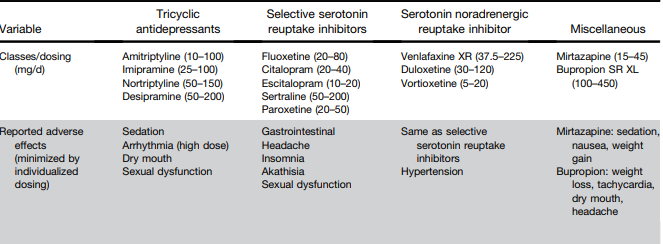
L Keefer et al. Gastroenterology 2024; 166: 1182-1189. AGA Clinical Practice Update on Pain Management in Inflammatory Bowel Disease: Commentary

Disclaimer: This blog, gutsandgrowth, assumes no responsibility for any use or operation of any method, product, instruction, concept or idea contained in the material herein or for any injury or damage to persons or property (whether products liability, negligence or otherwise) resulting from such use or operation. These blog posts are for educational purposes only. Specific dosing of medications (along with potential adverse effects) should be confirmed by prescribing physician.  Because of rapid advances in the medical sciences, the gutsandgrowth blog cautions that independent verification should be made of diagnosis and drug dosages. The reader is solely responsible for the conduct of any suggested test or procedure.  This content is not a substitute for medical advice, diagnosis or treatment provided by a qualified healthcare provider. Always seek the advice of your physician or other qualified health provider with any questions you may have regarding a condition.

NY Times: ‘What’s My Life Worth?’ The Big Business of Denying Medical Care

NY Times 3/14/24: ‘What’s My Life Worth?’ The Big Business of Denying Medical Care

Some of the input from this video was from physicians in our ImproveCareNow consortium (personal communication). Here’s an key points/excerpt: Prior Authorization Video (8:37 minute video)

  • This video explains how insurance companies have ‘weaponized’ prior authorization to postpone and/or deny care in order to increase their profits. “This is medical injustice disguised as paperwork.”
  • The video states that ~80% of PAs are effective in preventing patients from getting the care their physician recommended. However, when physicians spend their time appealing denials, they are usually successful in getting the medication covered.
  • “Prior authorization gives your insurance company more power than your doctor.”
  • There are efforts in Congress, including the GOLD Card Act of 2023, aimed at reforming prior authorization.

My take: Prior authorization delays and denials of care sometimes have devastating consequences (watch the video)

Related blog posts:

What’s Changing in IBD Care: Hospitalization Rates and Authorizations

The Good News:

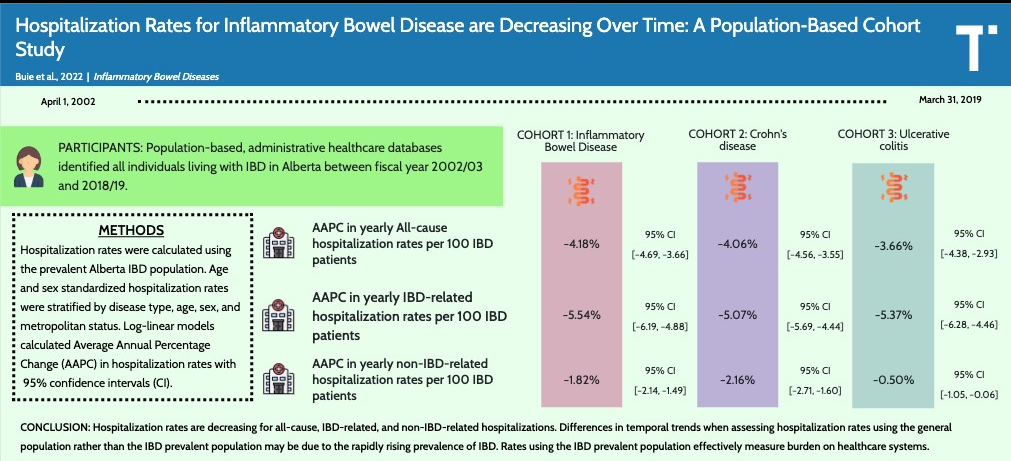
MJ Buie et al. Inflamm Bowel Dis 2023; 29: 1536-1545. Open Access! Hospitalization Rates for Inflammatory Bowel Disease Are Decreasing Over Time: A Population-based Cohort Study

This population-based administrative data cohort study provides annual IBD hospitalization rates in Alberta, Canada.

Key findings:

  • From 2002-2003 to 2018-2019, all-cause hospitalization rates decreased from 36.57 to 16.72 per 100 IBD patients (Average Annual Percentage Change (AAPC), −4.18%)
  • Inflammatory bowel disease–related hospitalization rate decreased from 26.44 to 9.24 per 100 IBD patients (AAPC, −5.54%)
  • The absolute number of hospitalizations, however, likely did not improve because this is affected by the increase in IBD prevalence. In Alberta, there was a 3-fold increase from 2002 to 2018 (general population increased 1.4 fold during this period)

“The last 2 decades have seen the introduction of several advanced therapies with novel mechanisms of action.22 The introduction of these therapies has been accompanied by changes in management strategies that include earlier introduction of advanced therapies based on risk stratification, treat-to-target, and monitoring strategies.5,23–26 These advancements include risk stratification, allowing for earlier introduction of advanced therapies; proactive clinical management algorithms to monitor disease activity; and therapeutic drug monitoring allowing for continued concentration-based dosing.23–26The net effect of these medical advances shifted IBD management from the hospital to the outpatient setting.27

The Bad News:

DK Choi et al. Inflamm Bowel Dis 2023; 29: 1658-1661. Delays in Therapy Associated With Current Prior Authorization Process for the Treatment of Inflammatory Bowel Disease

This retrospective study of 1693 prior authorizations (PAs) from 2020-2021. Key findings:

  • 1397 PA initially approved, 209 first-level PAs approved, 23 second-level PAs approve, and 11 external review requests approved. In total 97% (1640 of 1697) were approved
  • Dose escalations had the lowest approval rate of 67.6%
  • FDA approval had favorable OR for PA approval of 4.45
  • The median time to biologic initiation was 21 days, with appeals causing further delays to initiation

Median Days to Determination by Insurance Level:

  • Prior authorization: 11 days
  • First level appeal: 29 days
  • Second level appeal: 51 days
  • External review request: 73 days

My take: The PA process usually results in few denials (if pursued) but does result in significant delays in therapy. At the same time, these newer therapies have been associated with improvement in hospitalizations rates.

Related blog posts:

High Rates of Denying Medical Care for Medicaid Patients Managed by Health Insurers

7/19/23 NY Times: Insurers Deny Medical Care for the Poor at High Rates, Report Says

Some excerpts:

Private health insurance companies paid by Medicaid denied millions of requests for care for low-income Americans with little oversight from federal and state authorities, according to a new report by U.S. investigators published Wednesday.

Medicaid, the federal-state health insurance program for the poor that covers nearly 87 million people, contracts with companies to reimburse hospitals and doctors for treatment and to manage an individual’s medical care. About three-quarters of people enrolled in Medicaid receive health services through private companies, which are typically paid a fixed amount per patient rather than for each procedure or visit.

The report by the inspector general’s office of the U.S. Department of Health and Human Services details how often private insurance plans refused to approve treatment and how states handled the denials.

Doctors and hospitals have increasingly complained about what they consider to be endless paperwork and unjustified refusals of care by the insurers when they fail to authorize costly procedures or medicinesThe investigators also raised concerns about the payment structure that provides lump sums per patient. They worried it would encourage some insurers to maximize their profits by denying medical care and access to services for the poor...

The investigators emphasized the insurers were much more aggressive in refusing to authorize care under Medicaid than under Medicare…Unlike with Medicare, if an insurer refuses to authorize a treatment, patients are not automatically provided with an outside medical opinion as part of their appeal...

The investigators also found that state oversight of coverage denials was lax. Many states do not routinely examine the insurers’ denials nor collect information about how many times a plan denies requests for prior authorization...

The denial rates recorded by the investigators varied widely by insurer and by state.

My take: This is more evidence of the distorted incentives in U.S. healthcare where health insurance companies profit when patients are denied beneficial care.

Related blog posts:

Le Jardin Exotique, Eze France
Narrow walkways in Eze, France

The Consequences of Prior Authorizations

Like many clinicians, I would very much like to tell insurance companies how I really feel about their prior authorization policies, and peer-to-peer processes to get approvals needed for treating our patients.

Most of the time I resent the imposition on my time to craft detailed letters explaining my rationale for treatment. Some obstructionist tactics are particularly aggravating. For example, when I am asked to do a peer-to-peer call and find out on the call that the person on the other end is neither a peer (often a pharmacist) and more importantly that this person is not authorized to remedy the situation but only to arrange another call. Another tactic of asking me to write multiple letters at different stages of the authorization process is extremely annoying. All told, these authorization requests are becoming more frequent and further impinging on my free time.

Now it turns out a study has shown the harmful effects of these maneuvers for our patients:

Constant BD, de Zoeten EF, Stahl MG, et al. Delays Related to Prior Authorization in Inflammatory Bowel Disease. Pediatrics. 2022;149(3):e2021052501 (Thanks to Ben Gold for this reference)

In this retrospective study of 190 pediatric patients ((median age 14.5 years) with IBD initiating biologics at a tertiary care hospital, key findings:

  • Prior authorization and complicated prior authorizations (requiring appeal, step therapy, or peer-to-peer review) were associated with 10.2-day (95% confidence interval [CI] 8.2 to 12.3) and 24.6-day (95% CI 16.4 to 32.8) increases in biologic initiation time, respectively.
  • Prior authorizations increased the likelihood of IBD-related healthcare utilization within 180 days by 12.9% (95% CI 2.5 to 23.4) and corticosteroid dependence at 90 days by 14.1% (95% CI 3.3 to 24.8). 

In their discussion, the authors note that “in a recent survey conducted by the American
Medical Association, 94% of physicians reported that prior authorizations delay access to
necessary care, 90% perceived a negative impact on clinical outcomes, and 30% reported that a prior authorization led to a serious adverse event for a patient in their care.”

My take: Prior authorization policies usually delay needed care unnecessarily and lead to complications in children with IBD.

Related blog posts: 

“We Need More Information to Process This Claim”

After expending a great deal of time and effort on prior authorizations lately, this recent satirical explanation on prior authorizations and the purpose of insurance companies hits the target. Though, insurance companies do make money off interest, I think the main goal of PA is to limit care costs. Some patients will not get the care their doctor recommends due to stalling by the insurance company. Many times it takes a physician hours in order to get approvals. If a patient’s physician is not willing to do this, many times the patient will not get the treatment.

Link: Health Insurance

Related blog post: For the Next Insurance Appeal & Satire on Prior Authorization

Options If Coverage Denied by Insurance

From GI & Hepatology News (3/27/21): Fighting back against payer coverage policies

  • Ask for the credentials of the payer representative who initially denied the request. Even when payer representatives are physicians, they are often not gastroenterologists. Ask to speak with a representative actively practicing gastroenterology.
  • Ask to record your conversation with the payer representative for documentation purposes.Ask to speak directly to the payer’s medical director.
  • Bring the complaint to the payer’s attention on social media. Using social media to bring attention to a denial can sometimes elicit quick, personal outreach from the payer to address the issue.
  • Let the AGA know what’s happening. Reach out to the AGA via the AGA Community, via Twitter, or by emailing Leslie Narramore, the director of regulatory affairs at AGA (lnarramore@gastro.org).
  • File a complaint with the State Insurance Commissioner. State Insurance Commissioners are responsible for regulating the insurance industry in their state and can investigate to ensure the laws in their state are being followed and providers and patients are being treated fairly. While insurance law and regulation are established at the state level, the insurance commissioners are members of the National Association of Insurance Commissioners (NAIC), which allows them to coordinate insurance regulation among the states and territories. Find out your state’s complaint process because many state insurance commissioners have on online complaint forms. Keep records of all interactions with the insurance company to document that you have attempted to resolve the matter with the payer first.
  • File a complaint at the federal level for states without an external review process. If your state doesn’t have an external review process that meets the minimum consumer protection standards, the federal government’s Department of Health & Human Services oversees an external review process for health insurance companies in your state. See www.healthcare.gov/appeal-insurance-company-decision/external-review/ for more information. In states where the federal government oversees the process, insurance companies may choose to participate in an HHS-administered process or contract with independent review organizations. If your plan doesn’t participate in a state or HHS-Administered Federal External Review Process, your health plan must contract with an independent review organization.

Related blog post: