Celiac Disease: Pro Tips (Part 3)

In June 2024 (special issue), Gastroenterology published an entire issue (193 pages) focused on celiac disease. There was a lot of useful information on almost every aspect of this disease. Below I have summarized some of the points.

ME Robert et al. Open Access! Opportunities for Improving Biopsy and Non–Biopsy-Based
Diagnosis of Celiac Disease

This article has the most pragmatic advice in the entire issue.

Key points regarding the Non-Biopsy Approach should be applicable in adults:

  • “Retrospective studies in adults found that, in different clinical settings, TTG IgA raised to 10 or more times the upper normal value predicts the presence of mucosal atrophy from 95.2% in low-risk populations to 100% in high-risk populations. There is evidence that the magnitude of the TTG increase correlates with the risk of more severe damage at histology.”
  • “A subsequent prospective multicenter, international study added further evidence for a non-biopsy approach. This study confirmed that a 5-fold and a 10-fold increase of TTG in a high-risk population predicted mucosal atrophy in 97.4% and 97.5%, respectively, when the biopsy was interpreted locally. However, after a central expert pathologist re-evaluated local histology, the PPV of a 10-fold TTG elevation was 99.4%…the only patient [without initial diagnosis of CeD] was eventually diagnosed as having CeD.”
  • The authors discount the rationale for endoscopy in those with TTG IgA >10-fold ULN. 1. Missed CeD-related diagnosis (eg. EoE, lymphocytic gastritis): “The concern about missed endoscopic diagnoses in a biopsy-free approach appears to be a theoretical concern without empiric data.” 2. Concern for CeD complications: “Ulcerative jejunitis and enteropathy-associated T cell lymphoma are rare and, generally, not detected by the initial endoscopy” 3. Overdiagnosis (identification of Potential CeD):”PCeD is rarely found in cases of very high levels of TTG…Moreover, concern about the long-term implications of untreated PCeD may lead to a recommendation for a GFD, rendering moot the need for a biopsy.”
  • Certain populations like those with type 1 diabetes should undergo a biopsy as the serology has a “lower specificity” in this group.
  • There is concern that widespread adoption of a biopsy-free approach may lead to an over-reliance on serologies that fall short of the criteria that would lead to an accurate diagnosis.

Key points about Biopsy-Based Approach:

  • At present, there is broad consensus that among individuals with an elevated TTG IgA that falls short of a 10-fold elevation, a biopsy-based approach is necessary.
  • Obtain appropriate biopsies: guidelines recommend 2 biopsies from the first portion of duodenum and 4 biopsies from the distal duodenum (1 biopsy per pass recommended)

Related blog posts:

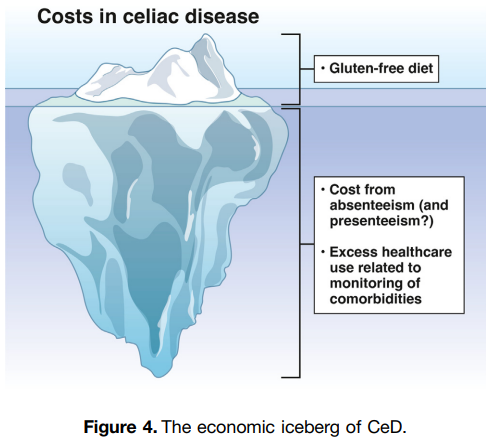
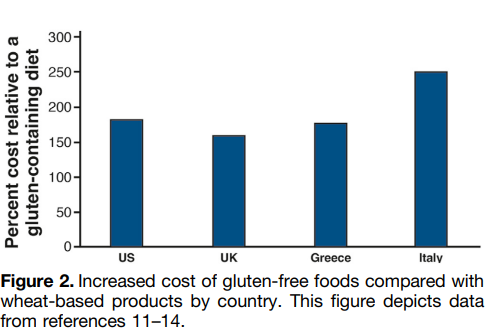
SR Bozorg et al. Open Access! The Economic Iceberg of Celiac Disease: More Than the Cost of Gluten-Free Food

Key points:

  • Long-term data from Sweden have revealed a persisting excess use of health care, with health care costs estimated to be 1.79 times higher than in reference individuals up to 5 years after diagnosis. Similar observations were made by Violato et al, who found UK primary health care costs in patients with incident CeD to be approximately 1.9 times higher than in reference individuals from 5 to 10 years after diagnosis.
  • Data collected from the Swedish national social insurance register showed that working-age patients with prevalent CeD had 1.49 times more work loss than matched reference individuals (42.5 days vs 28.6 days), equivalent to $2800 in lost productivity in 2015
Related blog post: Work Disability with Celiac Disease

Seronegative Villous Atrophy

A recent large retrospective study (R Mandile et al. JPGN 2021; 72: 282-287. Seronegative Villous Atrophy in Children: Clinical and Immunohistochemical Features) provides information about conditions, besides celiac disease (CD) which present with villous atrophy. 64 of 1282 pediatric patients were seronegative with villous atrophy; seronegative was defined as testing negative twice for serology (TTG IgA/EMA or if IgA-deficient, IgG antibody serology).

Key findings:

  • Diagnoses were: inflammatory bowel diseases (IBD) (21/64), food allergy (8/64), infections (7/64, of which 3 HIV infections), immune deficiency (3/64), short bowel syndrome (3/64), congenital diarrhea (2/64), other/inconclusive diagnosis (8/64). In addition, there were 12 with Gastro-Esophageal Reflux Disease (GERD) & the authors speculate that perhaps hyperacidity could play a role in some of these cases.
  • Only one quarter of the seronegative patients had an increased number of intraepithelial lymphocytosis (IELs)
  • Among those with villous atrophy attributed to IBD, this was nearly equally-split between Crohn’s disease and ulcerative colitis, 10 and 11 patients respectively (according to Table 1)
  • The authors note that the ~5% of patients with seronegative villous atrophy with alternative diagnosis than Celiac disease may be an overestimation as more individuals are being diagnosed without biopsy based on serology
  • Despite the large cohort, there are still other rare conditions that were not identified in this study (eg. autoimmune enteropathy, CTLA4B deficiency,drug-induced enteropathy, and tropical sprue)

My take: This article provides a good starting point for patients with villous atrophy and negative serology.

Related article: J Devara et al. JPGN 2021; 72: 288-293. The Significance and Clinical Outcome of Lymphocytic Duodenosis in Children: Mayo Clinic Experience and Systematic Review Background: Lymphocytic duodenosis (LD) defined as increased intraepithelial lymphocytes >25 intraepithelial lymphocytes (IELs) per 100 epithelial cells with normal villous architecture is associated with many gastrointestinal (GI) disorders.

Key findings:

  • During the study period 12,744 children underwent an EGD with biopsies. Of those, we identified 426 children with LD (3%).
  • Among the LD (compared to control group), 5% had celiac disease (vs 0%, P < 0.001), 9% had Crohn disease (3%, P = 0.003) and 3% had Helicobacter pylori gastritis (1%, P = 0.021).

Related blog post: @AmyOxentenkoMD: Celiac Disease and Mimics

How Often Do Adults Develop Celiac Disease After Negative Testing?

RS Choung et al. Gastroenterol 2020; 158: 151-9.  

Full abstract link: (which has link to full text): “Community-Based Study of Celiac Disease Autoimmunity Progression in Adults”

Methods: In this prospective cohort study, waste blood samples from residents of a community were tested for CeD autoimmunity at 2 time points. We analyzed waste blood samples from 15,551 adults for tTGA and, if titer results were above 2 U/mL, for endomysial antibody. The median interval between the two time points was 8.8 years.

Results:

  • Of the serum samples collected at the first time point, 15,398 had negative results for tTGA, and 153 had positive results for tTGA (>4 U/mL). Based on medical records, 6 individuals received a diagnosis of celiac disease, for a cumulative incidence of celiac disease diagnosis of 0.06% over 10 years.
  • Forty-nine (0.32%) individuals with a negative result from the first serologic test for tTGA had a positive result from the second test
  • Among the 153 adults who were tTGA positive at the first time point, 31 (20%) had a subsequent diagnosis of celiac disease, 81 (53%) remained positive for tTGA without a clinical diagnosis of celiac disease, and 41 (27%) had negative test results for tTGA at the second time point.

Followup Biopsies in Pediatric Celiac Disease?

Last December, this blog site discussed a widely-reported, provocative study suggesting that “1 in 5 pediatric celiac disease patients on gluten-free diet sustain persistent intestinal damage” (Are followup biopsies necessary for Celiac disease? Look beyond the headlines).

Apparently a great number of celiac disease (CD) experts took exception to the authors’ conclusion that “neither the presence of symptoms nor positive serology were predictive of a patient’s histology at the time of repeat biopsy. These findings suggest a revisitation of monitoring and management criteria of celiac disease in childhood.” 

A recent commentary (S Koletzko et al. JPGN 2017; 65: 267-9) from the CD working group of ESPGHAN critiques the limitations of the study. Limitations included the following:

  • Selection bias -70% of patients in this retrospective study had repeat endoscopy were symptomatic
  • Retrospective study
  • Including children with admitted non-adherence to gluten-free diet (GFD)
  • Including ~25% of children who were rebiopsied within 17 months of starting GFD
  • Lack of standardized tTG testing
  • Lack of blinding of pathologist

Their conclusions:

  • “We do not think that the data..give sufficient support…that routine biopsies should be performed in all children at diagnosis and after the initiation of GFD.”
  • The CD working group of ESPGHAN strongly advises against regular rebiopsy in children on a GFD…Re-endoscopy should be reserved for symptomatic patients–in particular when seronegative.”

The authors of the initial study (MM Leonard, A Fasano. JPGN 2017; 65: 270-1) were given an opportunity to defend their conclusions. Their commentary was much less provocative in my view, and titled: “Zero, One, or Two Endoscopies to Diagnosis and Monitor Pediatric Celiac Disease? The Jury is Still Out”

They note that there is a lack of data to know whether there are “no real clinical consequences” of persistent enteropathy, as stated by S Koletzko et al.  They state that until further research is completed a “personalized approach to follow-up care is needed.”  It is encouraging that they have started a prospective study to address the limitations of their retrospective study.

My commentary:

  • For patients with CD who are strictly-adherent, asymptomatic and with normal serology, repeat endoscopy is of questionable benefit.  If there are abnormalities in the histology, what is the appropriate intervention?
  • There has been a study (Gastroenterology 2010; 139: 763) which showed that mortality was NOT worsened in undiagnosed CD (identified by review of serology) in Olmstead County. In this population, the main long-term detrimental effect was reduced bone density. My inference is that for CD patients who are asymptomatic, particularly those with normalized serology, they are unlikely to have easily-identifiable adverse effects noted, even if their histology is abnormal.

My take (unchanged from last year): I think it is premature to recommend routine followup biopsies in asymptomatic patients with normal serology.

Prague Castle -clever door knocker

Briefly Noted: Celiac Serology Normalization, Inflammatory Markers in Crohn’s Disease, Nutrition in Neurologically-Impaired

  • DM Isaac et al. JPGN 2017; 65: 195-99.

This retrospective study of 487 pediatric patients shows that it takes a long time to normalize celiac serology/anti-tissue transglutaminase antibody (TTG). The median time was 407 days for the 80.5% of patients that normalized their serology in the study time frame.  The time was 364 days for those who were considered adherent to a gluten-free diet.  Patients with type 1 diabetes were less likely to normalize their TTG levels. Faster normalization occurred in those with lower titers at baseline.

Related blog posts:

  • A Alper et al. JPGN 2017; 65: e25-e27

In this chart review, among 135 children, normal ESR and CRP were observed in 28% of children with Crohn disease and 42% of children with ulcerative colitis.

Related blog post: Do you really need both a ESR and CRP?

  • C Romano et al. JPGN 2017; 65: 242-64

This guideline paper details 31 recommendations (some with multiple parts) for the evaluation and management of children with neurologic impairment.  The recommendations include detailed evaluations including knee heights, skinfold thickness measures, DXA scan, routine micronutrient bloodwork, along with a low threshold for oropharyngeal dysphagia assessment.  The paper has recommendations for evaluations of reflux, constipation, and dental problems.  The authors suggest “considering use of enteral feeding if total oral feeding time exceeds 3 hours per day.”

Related blog post: Surgery for reflux works best for those who need it the least

Will Asymptomatic Patients with “Potential” Celiac Disease Benefit from a Gluten-free Diet?

A recent study (Volta et al. Clin Gastroenterol Hepatol 2016; 14: 686-93) indicates that those with “potential” celiac disease, who are asymptomatic, are unlikely to benefit from a gluten-free diet.  A useful summary is available on the AGA blog: What Happens to Patients with Markers of Celiac Disease but No Symptoms?

An excerpt:

Celiac disease is an immune-mediated gluten-dependent systemic disorder characterized by serologic and genetic factors and villous atrophy in the small intestine. Although some people test positive for antibodies and carry genetic alleles associated with celiac disease, they have relatively normal or slightly inflamed intestinal mucosa, with no or mild enteropathy. These patients are considered to have potential celiac disease (defined as increased serum levels of antibodies against tissue transglutaminase [tTG] without villous atrophy). They can have gastrointestinal and extra-intestinal symptoms or be completely asymptomatic…

To learn more about progression of potential celiac disease, Umberto Volta et al performed a prospective study to track clinical, serologic, and histologic features of 77 patients. The subjects had normal or slight inflammation of the small intestinal mucosa and were followed for 3 years.

Sixty-one patients had intestinal and extra-intestinal symptoms and 16 were completely asymptomatic at diagnosis…

Gluten withdrawal led to significant clinical improvement in all 61 symptomatic patients.

Of the 16 asymptomatic patients, who were left on the gluten-containing diets, only 1 developed mucosal flattening; levels of anti-endomysial and tTG antibodies fluctuated in 5 of these patients or became undetectable.

My take: In symptomatic patients (but not asymptomatic patients) with potential Celiac disease, a gluten-free diet may be worthwhile.

Related blog posts:

Mina Falls, El Junque

Mina Falls, El Junque

Sorting Out Discrepancies in Hepatitis B Testing

A recent study (J Pediatrics 2014; 165: 773-8) highlighted the clinical problem of discrepant hepatitis B virus (HBV) testing in pregnant women.

Design: The Centers for Disease Control and Prevention analyzed a nonrandom sample of discordant cases of HBV reported by US Perinatal Hepatitis B Prevention Program.  Discordant cases indicated that there were differences between an initial HBsAg result and a subsequent test.  Among 142 cases, 89 had sufficient information to determine accuracy of the initial test.

Key finding: 14 (15.7%) of these cases were true positives, the remainders were false-positives.

How did authors sort out cases?

Negative testing for “total anti-HBc or no detectable HBV DNA result indicating no HBV infection…A positive total anti-HBc indicates current or past HBV infection, is not elicited by vaccination, and usually persists for life.”

Pointers regarding serology:

  • IgM anti-HBc -acute or recent infection and can persist for more than 6 months.
  • HBV DNA confirms active infection and can detect infection at levels below those of HBsAg assays.  This can occur either due to “occult HBV infection” or due to a mutant HBV strain that results in non-reactive test for HBsAg.
  • There were at least 11 HBsAg assays that have been FDA-approved –most but not all of them will confirm results before reporting.

It is important to sort out patients with discrepant HBV serology.  In infants who are not identified with HBV testing (false-negatives), this results in suboptimal post exposure prophylaxis and increased likelihood of chronic HBV.  Whereas, infants with false-positive results, incur unnecessary prophylaxis and costs.  The authors note that “total anti-HBc was the most useful single test to resolve HBsAg discrepancies.

Also noted: J Pediatr 2014; 165: 767-72.  “Factors Affecting the Natural Decay of Hepatitis B Surface Antigen in Children with Chronic Hepatitis B Virus Infection during Long-Term Followup”  This study followed 349 Taiwanese children over 20 years and noted annual HBsAg clearance of 0.58% (42 cleared HBsAg).  Spontaneous clearance was more common in HBeAg-seroconverters, infants with low initial HBsAg level <1000 IU/mL, and to those born to non-HBsAg-carrier mothers.

How Accurate is Serology at Predicting Mucosal Healing in Pediatric Celiac Disease?

A recent study (Am J Gastroenterol doi: 10.1038/ajg.2014.200) shows that in children, unlike adults, that normalization of celiac disease (CD) serology correlates well with mucosal healing.

In this study, 150 children with biopsy-proven CD were prospectively evaluated with duodenal biopsies, tissue transglutaminase (tTG) IgA serology, and deamidated gliadin peptide (DPG) IgG serology.  After maintaining a gluten-free diet (GFD) for at least 1 year, participants underwent followup evaluation.

  • Of the 97 with normalization of their serology, 91 had normal biopsies (Marsh 0) and 6 had slight abnormalities (Marsh 1).
  • Of the 27 with positive serology, only 6 had Marsh 3 changes.
  • Overall, 124 (82.7%) had normalization of duodenal mucosal biopsies irregardless of serology.

Higher rates of mucosal healing are possible with longer duration of GFD.

On the other hand, a recent retrospective study (JPGN 2014; 59: 229-31) notes that among 40 children who underwent followup endoscopic evaluation (>4 months after GFD, median 24 months), most of whom were symptomatic, only 25 had complete healing. Though among those with adherence to a GFD, only five had persistent villous atrophy (Marsh 3 lesion) . Serological correlation was not provided.

Take-home message: Followup biopsies are not needed in children with normalization of their serology (tTG IgA and DGP IgG).  That is, serology correlates well with mucosal healing in children with celiac disease on a GFD >12 months. However, it is certainly reasonable to consider followup endoscopy in those who are symptomatic, especially if serology is abnormal.
In a related matter, the new requirements regarding gluten-free labeling have been implemented -here’s a link from the LA Times: Celiac Regulations or First federal glutenfree regulation takes effect

Related blog posts:

Disclaimer: These blog posts are for educational purposes only. Specific dosing of medications (along with potential adverse effects) should be confirmed by prescribing physician.  This content is not a substitute for medical advice, diagnosis or treatment provided by a qualified healthcare provider. Always seek the advice of your physician or other qualified health provider with any questions you may have regarding a condition.