Quick Take: Preventing Recurrent Clostridium difficile Infection with Bezlotoxumab

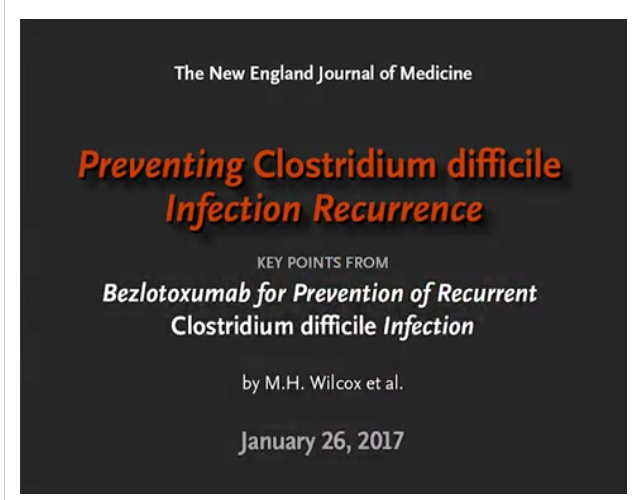
A recent study on a new monoclonal antibody to prevent Clostridium difficile infection is available from the NEJM.  Here’s the link: Preventing Clostridium difficile Infection Recurrence

screenshot-79

screenshot-81

screenshot-83

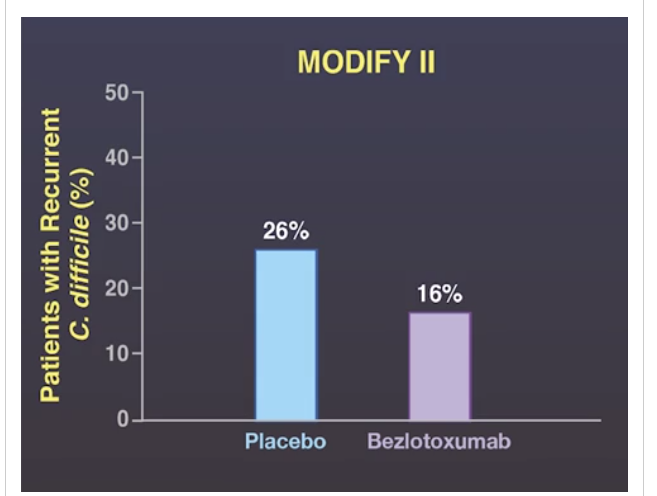
My take: In Modify I and Modify II, Bezlotoxumab reduced the rate of Clostridium difficile recurrence in elderly patients (median age 66 years). In a high risk patients, the likely hefty cost of this medication may be warranted.

These studies were likely pivotal in receiving FDA approval: FDA Approves Merck’s ZINPLAVA™ (bezlotoxumab) to Reduce Recurrence of Clostridium difficile Infection

Acute Pancreatitis Review

A succinct review (CE Forsmark et al. NEJM 2016; 375: 1972-81) provides some useful pointers regarding acute pancreatitis.

The review covers the causes, epidemiology, diagnosis, prediction of severity and management.  With regard to management:

  • The authors advocate for aggressive fluid resuscitation during the initial 24 hrs -though care to avoid fluid overload.  “One trial suggested the superiority of Ringer’s lactate as compared with normal saline in reducing inflammatory markers.”
  • “Total parenteral nutrition is…more expensive, riskier, and no more effective than enteral nutrition.”
  • “In patients with mild acute pancreatitis who do not have organ failure or necrosis, there is no need for complete resolution of pain or normalization of pancreatic enzyme levels before oral feeding is started.”
  • “A low-fat soft or solid diet is safe and associated with shorter hospital stays than is a clear-liquid diet with slow advancement to solid foods.”  Thus, most patients with mild acute pancreatitis can start a low-fat diet soon after admission, “in the absence of severe pain, nausea, vomiting and ileus.”
  • By day 5, one can predict the need for enteral feeding.  Early initiation of nasoenteric feeding “is not superior to a strategy of attempting an oral diet at 72 hours, with tube feeding only if oral feeding is not tolerated” by day 5.
  • “Whether an elemental or semielemental formula is superior to a polymeric formula is not known”
  • “Prophylaxis with antibiotic therapy is not recommended for any type of acute pancreatitis unless infection is suspected or has been confirmed.”  Infection in necrotic fluid collection “is the main indication for therapy” but is rare in the first 2 weeks of illness.
  • For pancreatitis triggered by gallstones, after removal of any residual stones in the ducts, “cholecystectomy performed during the initial hospitalization…reduces the rate of subsequent gallstone-related complications by almost 75%” compared to waiting for 25-30 days.

Related blog posts:

  • Changing Practice Patterns with Pediatric Pancreatitis | gutsandgrowth
  • Why an ERCP Study Matters to Pediatric Care | gutsandgrowth This post explains why LR may be best.
  • Nutrition University / gutsandgrowth What are the nutritional management recommendations for acute pancreatitis? Justine Turner indicated that too many centers continue to rely on parenteral nutrition.  Yet, guidelines recommend the use of enteral nutrition due to lower risk of poor outcomes (eg. infections when NPO and on parenteral nutrition). ‘Resting pancreas is not helpful.’ With acute pancreatitis, enzyme secretion is reduced.  Her approach is to start nasogastric (NG) feedings at about 24 hours after presentation, as long as hemodynamically stable.  She indicated that nasojejunal (NJ) feedings can be done if NG is not well-tolerated.  NJ feedings are effective at reducing enzyme secretion.  However, Praveen Goday stated that his practice was often starting with NJ feeds.  “Sometimes there is only one shot” before the ICU team starts HAL.  Both physicians indicated that polymeric formulas were probably acceptable; however, starting with semi-elemental or elemental feedings are often done, again as a practical matter to minimize the likelihood of reverting to parenteral nutrition.
Glacier National Park

Glacier National Park

Store Your Stool at OpenBiome

Due to concerns regarding disruption of a person’s microbiome and C diff infection, there is now an option to store your own stool –should it be needed to restore your ‘health’ microbiome.

Here’s a link to the Gastroenterology & Endoscopy News Report: OpenBiome Now Stores Your Stool

An excerpt:

Banking one’s own stool is a particularly good idea for individuals who have an elective surgery scheduled and for those who are predisposed to developing C. difficile infections, such as patients with inflammatory bowel disease, Dr. Kassam said…

“Just like banking one’s blood prior to surgery, one should be able to bank their stool in anticipation of antimicrobial exposure after admission to a hospital,” Dr. Brandt said. “This is of even greater importance in the immunocompromised patient who requires multiple courses of antimicrobials.”

Related blog posts:

Acadia Natl Park

Acadia Natl Park

Learned Fear of Gastrointestinal Sensations Plus Two

Briefly noted: The authors of a recent study (E Ceunen et al. Clin Gastroenterol Hepatol 2016; 14: 1552-58) set out to study whether it is likely that healthy adults could learn to fear “innocuous visceral sensations.”  Fifty-two healthy subjects received  2 types of esophageal balloon distentions –one that was perceptible and non-painful and one that was painful.  Not surprisingly, when the researchers paired these two interventions in the experimental group, the experimental group learned to fear the innocuous stimulation as well as the painful distention.  This study provides theoretical support for one mechanism that could trigger ongoing functional gastrointestinal symptoms and a potential rationale for therapies, like cognitive behavioral therapy, which attempt to extinguish these symptoms.

In a retrospective study (AM Moon et al. Clin Gastroenterol 2016; 14: 1629-37) with 6451 patients with cirrhosis (mean age 60.6 yrs), the authors note that use of antibiotics during upper gastrointestinal bleeding (which is currently recommended) is associated with reduced mortality by ~30% at 30 days.  Despite its benefit, this intervention is often overlooked.  In the current study, only 48.6% of admissions received timely antibiotics; however, during the course of the study, the rate of antibiotic use improved from 30.6% in 2005 to 58.1% in 2013.

A recent retrospective study (N Goossens et al. Clin Gastroenterol 2016; 14: 1619-28) with 492 subjects showed that histologic NASH (in 12% of cohort) was associated with increased risk of death in patients who underwent bariatric surgery compared to patients without NASH.  Overall, bariatric surgery reduced the risk of death during the study period with HR of 0.54; the median follow-up was 10.2 years, with surgery taking place 1997-2004.  However, in patients with NASH the HR 0.90 which indicated that there was not a significant reduction in the risk of death.

Bar Harbor, ME (low tide)

Bar Harbor, ME (low tide)
Is there a link between the microbes in your colon and depression?

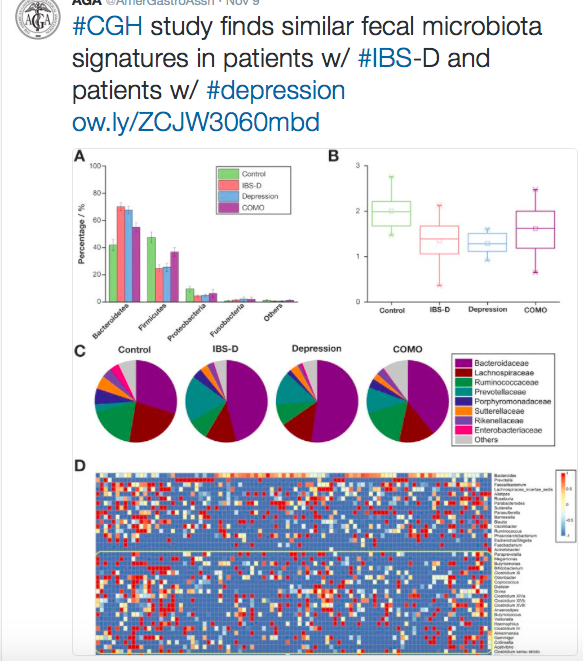
A recent study (Y Liu et al. Clin Gastroenterol Hepatol 2016; 14: 1602-11) showed that fecal microbiota signatures were similar between patients with diarrhea-predominant irritable bowel syndrome (IBS-D) and in patients with depression.

The authors analyzed stool samples from 100 Chinese subjects.  In addition to analyzed stool microbiota, the authors evaluated visceral hypersensitivity with a barostat and assessed for mucosal disease with immunohistochemical analyses of sigmoid biopsies.

In both IBS-D patients and patients with depression, the stool diversity was much less than controls and had similar abundance of many alterations, including higher proportions of Bacteroides and Prevotella (see below).

My take: It is interesting to speculate on whether changes in our microbiome could trigger/be related to the pathogenesis of not only IBS-D but other non-GI disorders like depression.

In the screenshot below, the term “COMO” refers to the 25 subjects who had both IBS and depression.

screen-shot-2016-11-14-at-12-10-03-pm

Image: Duodenal Ulcer due to an Unusual Cause

screen-shot-2016-11-04-at-12-52-09-pm

This ulcer was identified in a 26 year old and determined to be due to Strongyloides stercoralis infection. From Clin Gastroenterol Hepatol Nov 2016; DOI: http://dx.doi.org/10.1016/j.cgh.2016.04.019 “This case also highlights the importance of including strongyloidiasis in the differential diagnosis when a patient presents with ulcer bleeding and eosinophilia.”

Pouchitis -Not So Rare in Patients with FAP

In their introduction (KP Quinn et al. Clin Gastroenterol Hepatol 2016; 14: 1296-1301), the authors state the following:  “Despite the widely held notion that pouchitis is a rare complication in FAP following IPAA, clinical experience at our institution suggests [it]…is underestimated.”

Methods: retrospective cohort study of all FAP patients who underwent IPAA (ileal ouch-anal anastomosis) from 1992-2015 at their institution (Mayo clinic), n=113.

Key findings:

  • 25 (22.1%) developed pouchitis with a mean time to pouchitis of 4.1 years.
  • Of the 25 who developed pouchitis, 72% had an acute course and 28% had a chronic course.

My take: While pouchitis does occur more commonly in IBD following IPAA, it does occur with FAP more frequently than previously described.

Related blog post:

funnycity-name

Magnetically Controlled Capsule Endoscopy

I’m not sure this will take off, but a recent study (Z Liao et al. Clin Gastroenterol Hepatol 2016; 14: 1266-73) showed the feasibility and accuracy of using a magnetically controlled capsule endoscopy (MCE) to detect diseases in the stomach with a high rate of accuracy.

This was a multicenter blinded study comparing MCE with conventional gastroscopy in 350 patients (mean age 46.6 years).  Technique: MCE system relied on a guidance robot with a C-arm.  The capsule could also be manipulated manually with a joystick.  Examinations took no longer than 30 minutes and required no sedation.  To improve visualization, a defoaming agent and pronase granules (to remove mucus) were given.  Also, if visualization was not adequate, the patient was instructed to infest water.

Key findings:

  • MCE detected lesions in the stomach with 90.4% sensitivity and 94.7% specificity.  The negative predictive values was 95.9%.
  • 110 (31.4%) patients who had MCE required endoscopic biopsies.

In patients capable of swallowing the capsule, MCE could allow very good inspection of the stomach without sedation and at much lower cost.  In adults, nearly a third would still need conventional gastroscopy to obtain biopsies and MCE would not be ideal for detecting duodenal diseases like celiac disease.

My take: I doubt MCE will be used much in this country anytime soon.

this is art?

this is art?