Primary Care Physician Looming Shortage

In a recent commentary (K Grumbach et al. NEJM 2021; 385: 1156-8. Revitalizing the U.S. Primary Care Infrastructure), it’s clear a day of reckoning is coming due to a depletion of primary care physicians.

Scope of the problem:

  • “High-quality primary care is vital but undersupported in the United States. In communities with more primary care resources, people live longer, health care costs are lower, and there is greater health equity”
  • “Primary care physicians make up only 30% of the physician workforce…research on primary care garners just 1% of federal agency research awards”
  • “Primary care physicians earn 30% less than other physicians, on average, and they have among the highest rates of physician burnout”
  • “The situation is worsening…between 2005 and 2015, the number of primary care physicians in the United States decreased from 46.4 to 41.4 per 100,000 people, and the proportion of nurse practitioners and physician assistants who work in primary care is dropping”
  • Currently, the number of physician training to become family physicians is “well below the level needed to replace retiring family physicians. Less than one in five internal medicine residency graduates pursue careers in primary care, down from half of such graduates 25 years ago”

The authors propose a government council to develop and implement a plan to address the looming crisis.

My take: Virtually nothing has been done in 25 years to address this problem and I doubt anything substantive will emerge in the near future; though, it would be good policy to incentivize more physicians to go into primary care.

Related blog posts:

National Cathedral, Washington D.C. Scaffolding due to earthquake damage in 2011.

Digital Messages from Patients Spiked During Pandemic

The Verge: Digital messages from patients to doctors spiked during the pandemic (Link from Bryan Vartabedian 33mail)

An excerpt:

Doctors say they’re overwhelmed by the volume of digital messages they receive from patients during the pandemic, and new data backs up their experience. The number of messages increased by over 150 percent at the start of the COVID-19 pandemic, and the levels stayed high over the course of 2020, according to an early look at data from the electronic health record company Epic.

My take: I generally prefer receiving patient information (outside the office) from my nurse rather than directly from patients. Patient messages can contribute to the feeling that you are never done with work. I do like the idea that these portals allow families to let us know if patients have trouble reaching our office.

Related blog posts:

“In America: Remember”

About 10 days ago, I was in Washington D.C. The image below is from my trip.

NPR: More Than 600,000 White Flags On The National Mall Honor Lives Lost To COVID (9/17/21)

An excerpt:

For more than two weeks starting this week, more than 600,000 white flags will fill the National Mall — symbolizing the lives lost to COVID-19 in the United States.

Each of the flags, displayed across the 20 acres of grass, will hold a written personalized message from loved ones honoring their memory.

The art installation, titled In America: Remember, was created by Suzanne Brennan Firstenberg, the Washington, D.C

COVID Update: Atlanta Stats, Nationwide Immunization -We’re #45 (for at least 1 dose), Vaccination with Superior Immune Protection in IBD Patients

  • Source: CHOA COVID-19 Webpage The graph below depicts the number of patients hospitalized at CHOA (Egleston and Scottish Rite) during 2021, currently 8.7% of admissions are due to COVID-19.
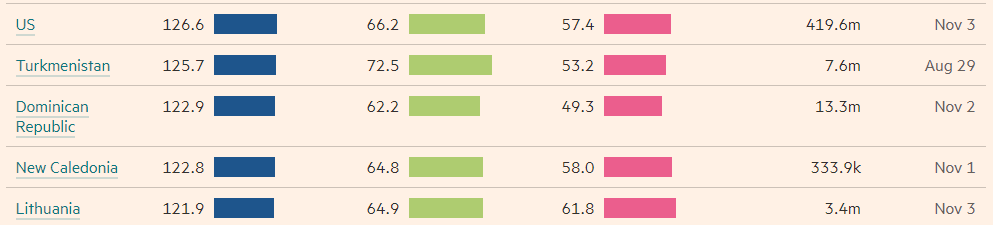
  • Here’s a link showing the U.S Vaccination Rate Compared to Other Countries (from Eric Topol): U.S. Fallen to #45 in World with Percentage of Population with 1 or More Doses of Vaccine
  • J Dailey et al. Inflammatory Bowel Diseases, izab207https://doi.org/10.1093/ibd/izab207 Open Access: Antibody Responses to SARS-CoV-2 After Infection or Vaccination in Children and Young Adults With Inflammatory Bowel Disease This article showed that there was a “lower and less durable SARS-CoV-2 S-RBD IgG response to natural infection in IBD patients receiving biologics [which] puts them at risk of reinfection. The robust response to immunization is likely protective.” Also, “hospitalized pediatric patients with PCR documented SARS-CoV-2 infection, S-RBD IgG antibody levels were significantly lower in the IBD cohort and by 6 months post infection most patients lacked neutralizing antibody.” This study provides a strong rationale for vaccination, especially in our IBD patients. (Thanks to Stan Cohen for this reference)

Notable COVID Studies Including Persistent Post-COVID Symptoms in Children

COVID-19 Advice from CHOA:

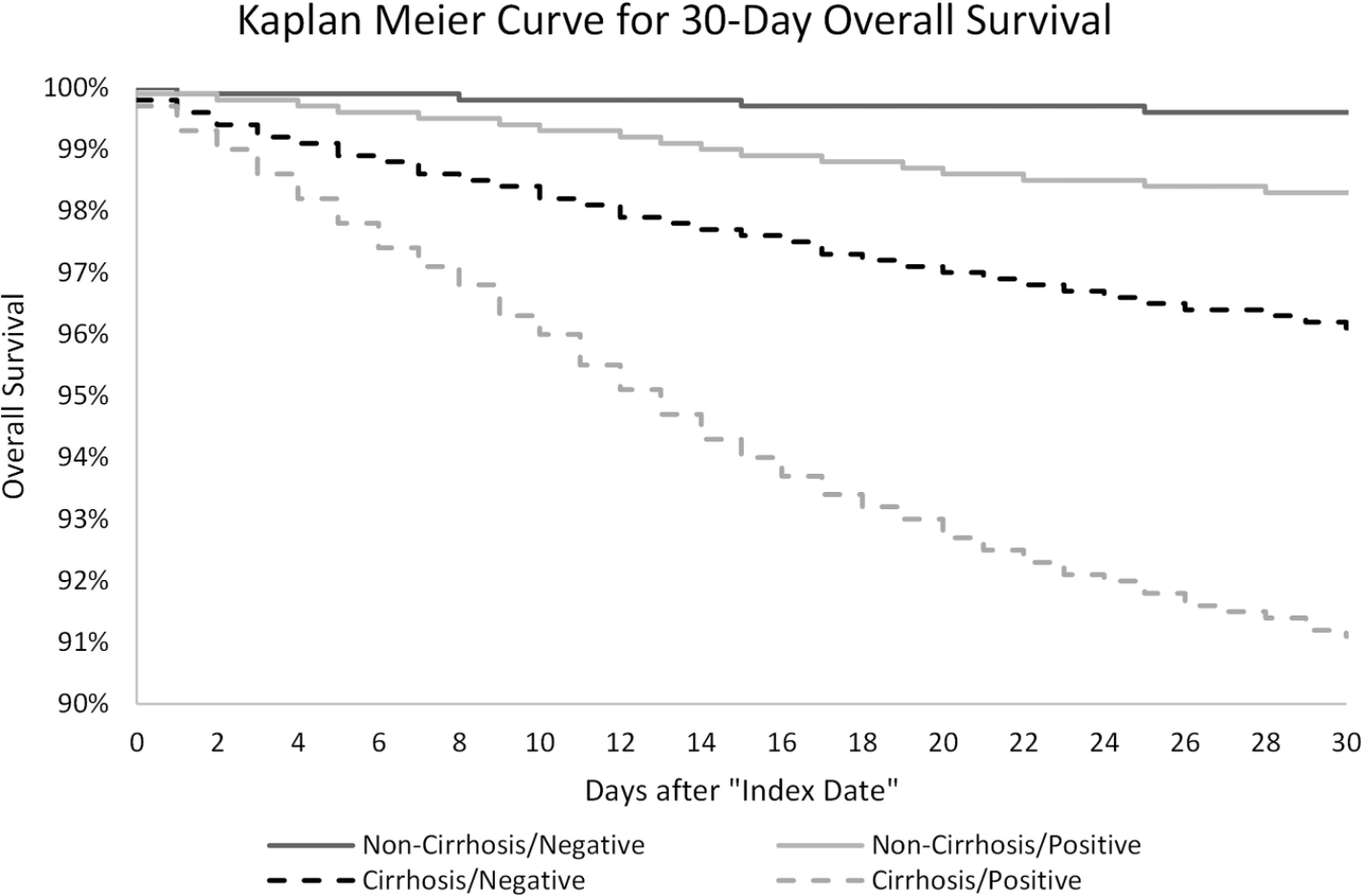
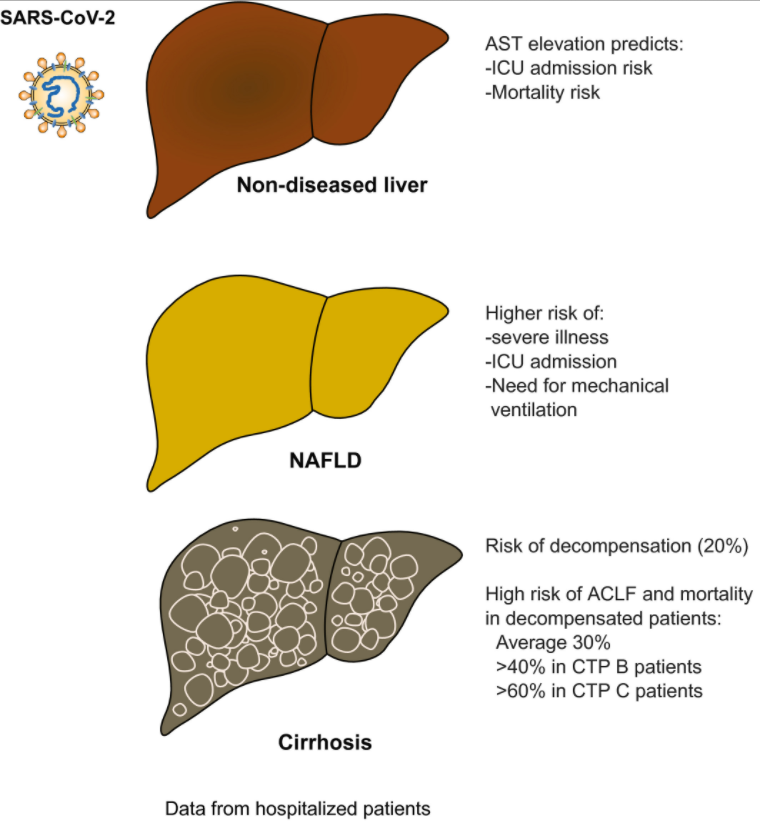
D Kim et al. Clin Gastroenterol Hepatol 2021; 19: 1469-1479. Full text: Predictors of Outcomes of COVID-19 in Patients With Chronic Liver Disease: US Multi-center Study

Key findings:

  • The overall all-cause mortality in this cohort with chronic liver disease was 14.0% (n = 121 of 867), and 61.7% (n = 535) had severe COVID-19
  • Liver-specific factors associated with independent risk of higher overall mortality were alcohol-related liver disease (ALD) (hazard ratio [HR] 2.42), decompensated cirrhosis (HR 2.91) and hepatocellular carcinoma (HCC) (HR 3.31)
  • Related blog post: Aspen Webinar 2021: COVID-19 and the Liver

BK Elmunzer et al (>120 authors!) Clin Gastroenterol Hepatol 2021; 19: 1355-1365. Full text: Digestive Manifestations in Patients Hospitalized With Coronavirus Disease 2019

Key findings:

  • In this cohort with 1992 patients hospitalized with COVID-19, gastrointestinal symptoms and liver test abnormalities were common, but the majority were mild and their presence was not associated with a more severe clinical course: GI symptoms had OR of 0.93 and liver test abnormalities had OR of 1.31 for mechanical ventilation or death.
  • Common GI symptoms: diarrhea (34%), nausea (27%), vomiting (16%), and abdominal pain (11%). 35% of patients developed an abnormal alanine aminotransferase or total bilirubin level; these were increased to less than 5 times the upper limit of normal in 77% of cases.

Lancet Child Adolesc Health 2021. Published Online August 3, 2021. https://doi.org/10.1016/S2352-4642(21)00198-X. Open Access: Illness duration and symptom profile in symptomatic UK school-aged children tested for SARS-CoV-2.

  • Key finding: In this prospective cohort study, 25 of 1379 (1.8%) children (5-17 yrs) had symptoms lasting at least 56 days and 4.4% had symptoms lasting more than 4 weeks.

Disclaimer: This blog, gutsandgrowth, assumes no responsibility for any use or operation of any method, product, instruction, concept or idea contained in the material herein or for any injury or damage to persons or property (whether products liability, negligence or otherwise) resulting from such use or operation. These blog posts are for educational purposes only. Specific dosing of medications (along with potential adverse effects) should be confirmed by prescribing physician.  Because of rapid advances in the medical sciences, the gutsandgrowth blog cautions that independent verification should be made of diagnosis and drug dosages. The reader is solely responsible for the conduct of any suggested test or procedure.  This content is not a substitute for medical advice, diagnosis or treatment provided by a qualified healthcare provider. Always seek the advice of your physician or other qualified health provider with any questions you may have regarding a condition.

“Our Gene-Edited Future”

NPR: He Inherited A Devastating Disease. A CRISPR Gene-Editing Breakthrough Stopped It

Previously the CRISPR gene-editing has been used to counter genetic defects in conditions like sickle cell and thalasemia. This has involved taking cells out of the body, editing them in the lab, and infusing them back in or injecting CRISPR directly into cells that need fixing.

Now, scientists are directly injecting nanoparticles with the CRISPR gene-editing tools. Here’s an excerpt:

Doctors infused billions of microscopic structures known as nanoparticles carrying genetic instructions for the CRISPR gene-editor into four patients in London and two in New Zealand. The nanoparticles were absorbed by their livers, where they unleashed armies of CRISPR gene-editors. The CRISPR editor honed in on the target gene in the liver and sliced it, disabling production of the destructive protein.

Within weeks, the levels of protein causing the disease plummeted, especially in the volunteers who received a higher dose. Researchers reported at the Peripheral Nerve Society Annual Meeting and in a paper published in The New England Journal of Medicine.

“This is really opening a new era as we think about gene-editing where we can begin to think about accessing all kinds of different tissue in the body via systemic administration

Related study: JD Gilmore et al. NEJM. 2021. DOI: 10.1056/NEJMoa2107454. CRISPR-Cas9 In Vivo Gene Editing for Transthyretin Amyloidosis.

My take: This type of discovery could dramatically improve the treatment of many diseases including heart disease, muscular dystrophy and brain diseases such as Alzheimer’s.

Related blog post: Genetically Modified Humans: Genome Editing 101

Steroids for Some with Short Gut, Poor Agreement on Endoscopy Findings, and Ending Surprise Bills

Briefly noted:

  1. F Wang et al JPGN 2021; 73: 17-22. Glucocorticoids Improve Enteral Feeding Tolerance in Pediatric Short Bowel Syndrome With Chronic Intestinal Inflammation In this retrospective study with 15 patients who had histologically-confirmed chronic intestinal inflammation, glucocorticoids (budesonide or prednisone) were associated with clinical improvement. Key findings: 7 of the 15 patients gained enteral autonomy. 6 of 7 of those had eosinophilic infiltrates as part of their histologic findings. 11 of 15 had a reduction in parenteral calories.
  2. L Norsa et al JPGN 2021; 73: 48-53. Scoring Endoscopy in Pediatric Inflammatory Bowel Disease: A Way to Improve Quality This study showed very poor agreement between 11 pediatric GIs in evaluating videos of 15 endoscopies (see below). Key finding: Intraclass correlation was 0.298 (95% confidence interval [CI]: 0.13–0.55) for ulcerative colitis (UC) and 0.266 (0.11–0.52) for Crohn disease (CD). My take: This study indicates either a need for rigorous training of endoscopists and/or need for AI review of endoscopy.
  3. NY Times 7/2/21: Full text: For Surprise Medical Bills, It’s the Beginning of the End Key issues for regulators: define a standard price for out-of-network care, determine what hospitals and doctors will need to do to notify patients they are not in their insurance network, and establish a complaint system for consumers who believe they were illegally billed.

Related blog posts:

From JGPN twitter feed

Risks of Vaccines Compared to COVID-19 Infection in 12-17 Year Olds

NY Times: Covid Is a Greater Risk to Young People Than the Vaccines (July 4, 2021)

This article elaborates on the risks of vaccination, especially due to myocarditis, compared to the risks posed by COVID-19 infection. Even using very cautious estimates, the authors find that the risks of hospitalizations, cardiac morbidity, and deaths are likely to be much lower in those who receive the vaccine.

Key points:

  • “Among the 6.14 million Americans 17 and under who have been fully vaccinated, there have been 653 possibly related hospitalizations lasting a day or longer…. If that rate holds, it means that if all 73 million Americans ages 17 and under are eventually vaccinated, there will be around 7,700 hospitalizations.”
  • “So far, 326 Americans age 17 and younger have died of Covid-19.”
  • “If the coronavirus were eventually to infect all 73 million children in the United States, we would conservatively expect Covid-19 to be responsible for around 14,600 hospitalizations….[and] lead to over 27,000 additional hospitalizations from the [MIS-C] syndrome.”
  • Unlike hospitalizations related to vaccines which have typically been brief and uneventful, “Covid-related hospitalizations in adolescents can be long and complicated, with nearly one-third requiring patients to enter the intensive care unit.”
  • “Bad things inevitably happen to a small number of people after any vaccination, a few caused by the vaccines, but most not…The virus is more dangerous.”

My take: 12-17 year olds are at less risk from COVID-19 infection than other age groups, however, this risk is still greater risk than the risk of vaccination. Protecting them with immunizations also protects other vulnerable populations and may decrease the risk of vaccine-resistant variants.

Related article: Eric Topol NY Times: It’s Time for the F.D.A. to Fully Approve the mRNA Vaccines An excerpt: “Now more than 180 million doses of the Pfizer vaccine and 133 million of Moderna’s have been administered in the United States, with millions more doses distributed worldwide. In the history of medicine, few if any biologics (vaccines, antibodies, molecules) have had their safety and efficacy scrutinized to this degree…it’s frankly unfathomable that mRNA vaccines have been proved safe and effective in hundreds of millions of people and yet still have a scarlet “E”.”