Current Impact of Climate Change

When I hear people say that the changes in climate are ‘just another weather cycle,’ I wonder if they understand the reasons why scientists are so worried.  It is not simply the historic increases in temperature.  The bigger concerns are the permanent changes in the environment that foster ongoing and worsening problems.  The atmosphere now has greenhouse gases that could take a 1000 years to dissipate even without further pollution (Related blog post: The Health Consequences of Climate Change).  This is akin to sleeping under more blankets except that in the middle of the night, when you are sweating, there is not a simple fix –no easy way to remove the greenhouse gases in the atmosphere.

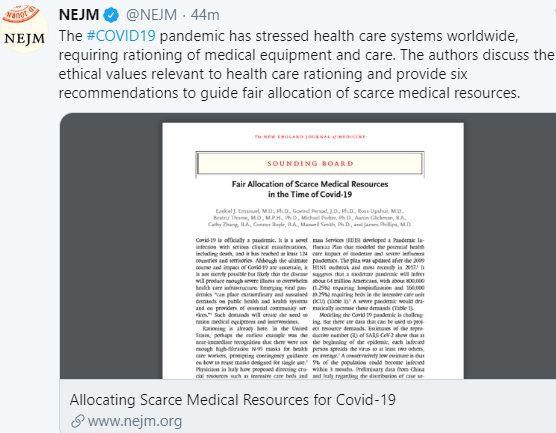
A recent commentary (RN Salas. NEJM 2020; 382: 589-91) details the myriad ways that the climate crisis will affect clinical practice.

The climate crisis is a threat multiplier;  key points:

  • climate sensitive waterborne and foodborne illness
  • worsening mental health
  • heat strokes/heat-related hospitalizations
  • rising pollen levels
  • decreasing nutritional value of food
  • vector borne disease
  • trouble with medication storage (need to be stored at appropriate temperatures)
  • treatment disruptions by climate events
  • supply-chain disruptions by climate catastrophes
  • hospital power outages
  • rising temperatures could increase bacterial resistance to antibiotics

My take (borrowed from commentary): “Despite the irony, I often describe our current knowledge of the health effects of climate crisis as an iceberg.  Though we see a peak above the water’s surface, there is much to fear from the larger mass beneath –the effects that we haven’t yet identified.”

Related blog posts:

Garden at UNC Chapel Hill Campus

“The Truth About Allergies and Food Sensitivity Tests”

This is a link to a 20 minute video regarding “The Truth About Allergies and Food Sensitivity Tests” with Dr. Dave Stutkus and Dr. Mike Varshavski. (If trouble with link, then can find with quick search on YouTube.)

A couple of clarifications:

The video (~at the 3 minute mark) does not provide much nuance on “non-celiac gluten sensitivity” (see related blog posts below)

Some other points:

  • Don’t perform Food IgG testing -this is a memory antibody and does not reflect food allergy or sensitivity
  • So-called food sensitivity IgG tests do not have standardized normal values
  • Don’t perform broad-based IgE testing; there are many false-positives and false negative

Dr. Stutkus decided to undergone ‘food sensitivity’ tests and was reportedly sensitive to nearly 80 foods.

Related blog posts:

Disclaimer: This blog, gutsandgrowth, assumes no responsibility for any use or operation of any method, product, instruction, concept or idea contained in the material herein or for any injury or damage to persons or property (whether products liability, negligence or otherwise) resulting from such use or operation. These blog posts are for educational purposes only. Specific dosing of medications (along with potential adverse effects) should be confirmed by prescribing physician.  Because of rapid advances in the medical sciences, the gutsandgrowth blog cautions that independent verification should be made of diagnosis and drug dosages. The reader is solely responsible for the conduct of any suggested test or procedure.  This content is not a substitute for medical advice, diagnosis or treatment provided by a qualified healthcare provider. Always seek the advice of your physician or other qualified health provider with any questions you may have regarding a condition

Have Nonprofit Hospitals Lost Their Mission?

NY Times: Nonprofit Hospitals Are Too Profitable

An excerpt:

Seven of the 10 most profitable hospitals in America are nonprofit hospitals

It’s time to rethink the concept of nonprofit hospitals. Tax exemption is a gift provided by the community and should be treated as such. Hospitals’ community benefit should be defined more explicitly in terms of tangible medical benefits for local residents…

The average chief executive’s package at nonprofit hospitals is worth $3.5 million annually. (According to I.R.S. regulations, “No part of their net earnings is allowed to inure to the benefit of any private shareholder or individual.”) From 2005 to 2015, average chief executive compensation in nonprofit hospitals increased by 93 percent. Over that same period, pediatricians saw a 15 percent salary increase. Nurses got 3 percent…

Additionally, hospitals should not be allowed to declare Medicaid “losses” as a community benefit. While it’s true that Medicaid typically pays less than private insurance companies, Medicaid plays a crucial role for private insurance markets by acting as a high-risk pool for patients with severe illness and disability…These large medical centers also enthusiastically accept taxpayer money for research…

Particularly in communities with a shortage of health care resources, tax exemption can make sense. In medically saturated areas, where profits and executive compensation approach Wall Street levels, tax exemption should raise eyebrows.

My take: This opinion piece makes a strong argument that many nonprofit hospitals do not deserve to be exempt from taxes. At a minimum, more transparency regarding tangible benefits is needed to assure that hospitals earn this exemption.

AJC: Georgia hospital disclosures show disparities, seven-figure salaries  According to the AJC, the Children’s Healthcare of Atlanta’s CEO made 1.9 million last year. By comparison, the Northside CEO made 4.9 million. Other tidbits: Piedmont’s chief philanthropy officer was compensated 1.2 million.

Related blog posts:

“The problem with internet quotes is that you can’t always depend on their accuracy” ~Abraham Lincoln, 1864.

Newsworthy Tweets: Climate Change, Sugary Beverage Laws, Increasingly Uninsured Children, and Flu Vaccine Effectiveness

Climate change:

Related blog posts:

Sugary beverage Law:

Related blog posts –Sugary Beverages/Diet:

Related blog posts –Health Insurance:

What Are The Limits of (Preterm) Viability?

A retrospective recent study (PL Watkins et al. J Pediatr 2020; 217: 52-8) provides data that suggests that preterm infants at 22-23 weeks gestation can have good outcomes.

Cohort:

  • n=70 for 22-23 weeks (22 weeks, n=20, 23 weeks, n=50)
  • n=178 for 24-25 weeks (24 weeks, n=79, 25 weeks, n=99)

Key findings:

  • Survival to hospital discharge: 78% for 22-23 week cohort, 89% for 24-25 week cohort
  • No or mild neurodevelopmental impairment 64% or 22-23 week cohort, 76% for 24-25 week cohort. This was based on prospectively collected data at 18-22 months with Bayley Scales (BSID-III) (≥85) and being free from vision and hearing impairment

These survival and neurodevelopmental outcomes far exceed previous reports.  The study and the associated editorial (pg 9) identify several treatment characteristics that could have helped optimize outcomes: antenatal steroids, high-frequency ventilation, and a specialized environment.  Also, the authors did not include infants who were outborn, stillborn or died in the delivery room.

My take: This article’s data needs to be replicated elsewhere; in the meanwhile, it is going to challenge the notion of nihilism for infants born at 22-23 weeks gestation.

Related article: AH Jobe. J Pediatr 2020; 217: 184-8.  This commentary discusses the potential lifetime consequences of antenatal steroids, which may affect neurodevelopment and cardiovascular outcomes. “Antenatal corticosteroids are frequently used to disrupt normal development in rodent models”

Related blog posts:

St Thomas Harbor

Electronic Health Record: 16 minutes Per Patient

Related blog posts:

How Allergy Testing Can Lead to More Allergies

Dr. Dave Stutkus shared some slides (on twitter) recently based on a lecture at Nationwide Children’s.  Since I see children everyday who are undergoing poorly-conceived allergy testing, I wanted to share some of them.

  • Excluding foods from diet based on allergy testing without concurrent symptoms can lead to allergies rather than tolerance:

  • Newer antihistamines are safer

  • Most individuals with penicillin allergy are not truly penicillin allergic.  Also, there is a low rate of cross-reactivity with most cephalosporins.

  • Proper allergy testing relies on the basic understanding that sensitization is not equivalent to being allergic.  In addition, allergy testing has a high rate of false positives; therefore, testing needs to be limited (avoid broad panels).

Also, link to AAP guidelines on breastfeeding & eczema and introduction of foods to minimize development of allergies: The Effects of Early Nutritional Interventions on the Development of Atopic Disease in Infants and Children: The Role of Maternal Dietary
Restriction, Breastfeeding, Hydrolyzed Formulas, and Timing of Introduction of Allergenic Complementary Foods

Related blog posts:

Disclaimer: This blog, gutsandgrowth, assumes no responsibility for any use or operation of any method, product, instruction, concept or idea contained in the material herein or for any injury or damage to persons or property (whether products liability, negligence or otherwise) resulting from such use or operation. These blog posts are for educational purposes only. Specific dosing of medications (along with potential adverse effects) should be confirmed by prescribing physician.  Because of rapid advances in the medical sciences, the gutsandgrowth blog cautions that independent verification should be made of diagnosis and drug dosages. The reader is solely responsible for the conduct of any suggested test or procedure.  This content is not a substitute for medical advice, diagnosis or treatment provided by a qualified healthcare provider. Always seek the advice of your physician or other qualified health provider with any questions you may have regarding a condition

Legislative Agenda for Drug Pricing

There have been some recent terrific advances in pharmacology –a few that come to mind:

The one common feature is that these are all very expensive; there are many other expensive medications with less benefit.  Given the rise in costs of these medications, there is a need to do a better job in getting good value in our drug costs.  A potential path forward is outlined in a recent commentaries (SB Dusetzina, J Oberlander. NEJM 2019; 381: 2081-4; PB Bach. NEJM 2019; 381: 2084-6).

In the first commentary, the authors review the Elijah E Cummings Lower Drug Costs Now Act of 2019 (HR 3).

  • In essence, this act establishes a drug-price negotiation process and limits price increases on existing products.  “Companies whose products are selected for ‘negotiation’ will in reality face price regulation and a severe penalty for noncompliance.”
  • The act would examine U.S. prices compared to prices paid in other countries.  “There would also be a legislatively set maximum price that could not exceed 120% of the average net price paid for the same drug in designated countries.”
  • The bill also would cap Medicare Part D out-of-pocket spending at $2000 per year.

In the second commentary, Dr. Bach notes that drugs that have too little evidence to support full approval and those that are ‘too late in their life cycle’ both should have their pricing negotiated by the government.  This would side step some of the arguments about undermining the incentive for new drug development.

“Too little”

  • The FDA grants approval of some drugs on the market conditionally on the basis of data indicating that they improve a surrogate marker of patient benefit. “Despite the conditional nature of the approval, …the pharmaceutical firms currently charge the same high prices that fully approved drugs capture.”
  • Required studies frequently show that these conditionally-approved medications are ineffective.  Of the 198 indications granted accelerated approval since 1992, only 115 have garnered full approval.  Also, conditional approval may result in less incentive to complete the needed trials in a timely fashion.

“Too late”

  • In this category, the author notes that some medications have found many ways to extend their monopolies, which are intended as a time-limited reward for the effort of developing a new medication.  These include overlapping patents, refusing to provide samples to competitors, and paying other companies to delay bringing generic or biosimilar products to market
  • Most of the potential for savings are in this category rather than the ‘too little’ category
  • Negotiating prices of the top 10 too little and 10 too late medications with reference to 120% of UK pricing would have provided about nearly 27 billion in savings in 2019

My take: While current partisanship makes reaching agreement difficult, targeting soaring pharmaceutical costs is one area in which I predict common ground can be found.  While many are going to benefit from the therapeutic advances listed above, there are other medications which are overpriced and should be negotiated like in other high-income countries.

Related blog posts:

Bathroom mural for bicycle enthusiasts (at a stop on the Petit Train du Nord Linear Park)