What is Going On With Pouchitis? & No More Handshakes

A prospective study (V Dubinsky et al. Gastroenterol 2020; 158: 610-24) followed 49 patients who had undergone pouch surgery for ulcerative colitis or for familial adenomatous polyposis (FAP).

The authors followed multiple parameters including calprotectin, metagenomes/bacterial diversity, antibiotic resistance testing, and virulence factors/toxins. 33 patients received antibiotics for a median of 425 days.  Most patients were treated with a combination of ciprofloxacin and metronidazole.

Full text link: Predominantly Antibiotic-resistant Intestinal Microbiome Persists in Patients With Pouchitis Who Respond to Antibiotic Therapy

Key findings:

  • Pouch phenotype: normal from UC (n=10), recurrent acute pouchitis (n=6), chronic pouchitis and Crohn’s-like disease of the pouch (n=27), and normal from FAP (n=6)
  • 79% of antibiotic-treated patients had a clinical response to each course of antibiotics
  • 89% of those who completed a 4-week course relapsed within 3 months
  • Median calprotectin values decreased by 40% in response to antibiotics
  • Antibiotic treatment reduced disease-associated bacteria including Clostridium perfringens, Ruminococcus gnavus, and Klebsiella pnneumoniae. However, F prausnitzii, a putative anti-inflammatory species, also decreased during antibiotic treatment
  • While antibiotic resistance was noted, these strains had a tendency toward lower potential for virulence and “did not induce secretion of inflammatory cytokines by epithelial cells”

Why do patients become antibiotic-dependent?

“We observed a drastic shift in microbiome composition on antibiotics cessation, characterized by blooms of nonintestinal bacteria, especially those originating from the oral cavity, as well as of opportunistic pathogens. Intestinal colonization by oral bacteria has been associated with UC and Crohn’s disease, and shown to trigger severe intestinal inflammation in germ-free mice…[this] drug-resistant microbiome may be fragile and unable to prevent colonization by exogenous bacteria that are ecologically fitter once antibiotics are discontinued.”

My take: This study provides insight into how antibiotics improve pouchitis; namely, they reduce disease-associated bacteria and promote an antibiotic-resistant microbiome with lower inflammatory potential.

Related blog posts:

Figure 1:

Link:  34 AAP Publications regarding COVID-19 and children

NY Times: How Will We Know When to Reopen the Country? & Timely Tweets

A good read from Aaron Carroll/NY Times: How Will We Know When to Reopen the Country?

Here is an excerpt:

Everyone wants to know when we are going to be able to leave our homes and reopen the United States. That’s the wrong way to frame it.

The better question is: “How will we know when to reopen the country?”…

 A recent report by Scott Gottlieb, Caitlin Rivers, Mark B. McClellan, Lauren Silvis and Crystal Watson staked out some goal posts.

  • Hospitals in the state must be able to safely treat all patients requiring hospitalization, without resorting to crisis standards of care.
  • A state needs to be able to test at least everyone who has symptoms.
  • The state is able to conduct monitoring of confirmed cases and contacts.
  • There must be a sustained reduction in cases for at least 14 days…

These four criteria are a baseline…Until we get a vaccine or effective drug treatments, focusing on these major criteria, and directing efforts toward them, should help us determine how we are progressing locally, and how we might achieve each goal.

Related blog posts/links:


COVID-19 Posts

My wife has been receiving a lot of compliments for her daily jokes which she decided to post for all of the neighborhood walkers. “A lot of people cry when they cut an onion. The trick is not to form an emotional bond.”

This coronavirus disease has caused incredible upheaval & misery throughout the world.  In addition, it has created an “infodemic.”  This blog post is intended to collate my previous related posts/& many of the referenced links into one location, to provide GI society guidelines for PPE/endoscopy as well as to place a good image at the bottom:

Aslo, recommendations from GI societies -AGA, ACG, ASGE and AASLD

  1. Use of Personal Protective Equipment in GI Endoscopy
  2. Endoscopic Procedure Guidance

JOINT GASTROENTEROLOGY SOCIETY MESSAGE: COVID-19
Use of Personal Protective Equipment in GI Endoscopy
RECOMMENDATIONS:
  1. General measures of physical distancing and adequate hand hygiene are of critical importance and need to be practiced diligently, independent of other protective measures.
  2. All elective, non-urgent procedures should be postponed until ample supplies of PPE, hospital beds and other resources are available after the COVID-19 surge.
  3. All members of the endoscopy team should wear a full set of PPE, predicated on resource availabilities.
  4. The correct sequence of putting on and taking off PPE (“donning” and “doffing”) is critical and needs to be understood and practiced [17].
  5. All members of the endoscopy team should wear N95 respirators (or devices with equivalent or higher filtration rates) for all GI procedures performed on patients with known SARS-CoV-2 infection and those with high risk of exposure. Given the high rate of infection transmission from pre-symptomatic individuals, all patients undergoing GI endoscopy in an area of community spread need to be considered ‘high risk’.
  6. All healthcare workers should have their N95 respirators fitted by an occupational health specialist prior to the first usage.
  7. Staffing of endoscopy rooms should be reduced to the minimum number of individuals necessary, in order to conserve PPE and other resources.
  8. In some cases, shortages may require extended and limited reuse of N95 respirators. Guidance is available on how to wear, remove and store respirators to minimize contamination [18]. Decontamination of N95 respirators with hydrogen peroxide vapor has been approved by the FDA as a means of reuse in times of limited supply [19].
GASTROENTEROLOGY PROFESSIONAL SOCIETY
GUIDANCE ON ENDOSCOPIC PROCEDURES
DURING THE COVID-19 PANDEMIC
Below is guidance regarding how to manage the clinical procedural needs of patients during the COVID-19 pandemic. Any decisions should be informed by the local situation and available resources. There may be state, local and institutional rules in place that must be considered as well. This guidance is offered until more definitive data-driven information becomes available.
For those patients for whom a procedure or appointment is not deemed immediately necessary, each practice should implement mechanisms to assure appropriate follow-up once the immediate impact of the COVID-19 pandemic has eased or passed.
All Elective Procedures Should Be Delayed
  1. Screening and surveillance colonoscopy in asymptomatic patients ​
  2. Screening and surveillance for upper GI diseases in asymptomatic patients​, including surveillance for esophageal varices in patients with cirrhosis
  3. For patients needing interval endoscopy for obliteration of esophageal varices post-acute bleeding, the individual circumstances of the patient need to be taken into account to determine safety of delay (i.e., size of varices, red wale markings, CTP status of the patient, acute bleed characteristics).
  4. Evaluation of non-urgent symptoms or disease states where procedure results will not imminently (within 4-6 weeks) change clinical management (e.g., EGD for non-alarm symptoms, EUS for intermediate risk pancreatic cysts) ​
  5. Motility procedures – esophageal manometry, ambulatory pH testing, wireless motility capsule testing and anorectal manometry
Urgent/Emergent Procedures Should Not Be Delayed ​
  1. Upper and lower GI bleeding​ or suspected bleeding leading to symptoms
  2. Dysphagia significantly impacting oral intake (including EGD for intolerance of secretions due to foreign body impaction or malignancy (stent placement))
  3. Cholangitis or impeding cholangitis (perform ERCP)​
  4. Symptomatic pancreaticobiliary disease ​(perform EUS drainage procedure if necessary for necrotizing pancreatitis and non-surgical cholecystitis, if patient fails antibiotics)
  5. Palliation of GI obstruction [UGI, LGI (including stent placement for large bowel obstruction) and pancreaticobiliary] ​
  6. Patients with a time-sensitive diagnosis (evaluation/surveillance/treatment of premalignant or malignant conditions, staging malignancy prior to chemotherapy or surgery) ​
  7. Cases where endoscopic procedure will urgently change management (e.g., IBD)
  8. Exceptional cases will require evaluation and approval by local leadership on a case by case basis
Q. Should all emergent EGD patients be intubated?
A. Absent other reasons that present a threat to the airway, intubation is not indicated for all EGDs. Proper use of PPE, including N95 masks is paramount.
Q. Should procedures be performed on patients with intermediate level cases such as Iron Deficiency Anemia (IDA) or mild dysphagia?
A. Decisions regarding cases such as these will need to be made on a case by case basis, taking into account resource availability, level of community infectivity and risk to the patient.


Bill Gates: What We Need to Do Now for COVID-19, False-negative testing & Article Describing 3 Stages of Infection

A recent commentary in Washington Post by Bill Gates states clearly what we need to do now to improve the outcome of this pandemic. Link (may be behind paywall) : Bill Gates: Here’s how to make up for lost time on covid-19

  1. Nationwide stay-at-home.  Given mobility in country, having some states policies lessens the effectiveness of individual state mandates. “Because people can travel freely across state lines, so can the virus. The country’s leaders need to be clear: Shutdown anywhere means shutdown everywhere. Until the case numbers start to go down across America — which could take 10 weeks or more — no one can continue business as usual or relax the shutdown. Any confusion about this point will only extend the economic pain, raise the odds that the virus will return, and cause more deaths.”
  2. Much more testing and quicker turnaround.  This would allow more effective isolation policies and help determine if/when we are truly making progress.
  3. Nationwide coordination for ventilators/supplies.  Competition between states is counterproductive
  4. Preparation for making billions of doses of vaccine (when available)

—————————-

From NY TimesIf You Have Coronavirus Symptoms, Assume You Have the Illness, Even if You Test Negative

An excerpt:

Current coronavirus tests may have a particularly high rate of missing infections. The good news is that the tests appear to be highly specific: If your test comes back positive, it is almost certain you have the infection… From a technical standpoint, under ideal conditions, these tests can detect small amounts of viral RNA.  In the real world, though, the experience can be quite different, and the virus can be missed.

———————–

Thanks to Ben Gold for the following article: COVD-19 Illness in Native and Immunosuppressed States: A Clinical-Therapeutic Staging Proposal (HK Siddiqi, MR Mehra. J Heart Lung Transplantation) available at jhltonline.org

This article describes three stages of COVID-19 and associated laboratory/clinical findings.

  1. I -Early stage.  “In patients who can keep the virus limited to this stage of COVID-19, prognosis and recovery is excellent”
  2. II-Pulmonary involvement (IIa) without and (IIlb) with hypoxia
  3. III-Systemic Hyperinflattion

And a reason to wary of hydroxychloroquine in its use for COVID-19:


COVID-19: Veneto vs. Lombary & Georgia’s Part of the Pandemic

Harvard Business Review: Lessons from Italy’s Response to Coronavirus

An excerpt:

While Lombardy and Veneto applied similar approaches to social distancing and retail closures, Veneto took a much more proactive tack towards the containment of the virus…

  • Extensive testing of symptomatic and asymptomatic cases early on.
  • Proactive tracing of potential positives. If someone tested positive, everyone in that patient’s home as well as their neighbors were tested. If testing kits were unavailable, they were self-quarantined.
  • A strong emphasis on home diagnosis and care. Whenever possible, samples were collected directly from a patient’s home and then processed in regional and local university labs.
  • Specific efforts to monitor and protect health care and other essential workers.

“The virus is faster than our bureaucracy.” ..Together, the need for immediate action and for massive mobilization imply that an effective response to this crisis will require a decision-making approach that is far from business as usual. If policymakers want to win the war against Covid-19, it is essential to adopt one that is systemic, prioritizes learning, and is able to quickly scale successful experiments and identify and shut down the ineffective ones. Yes, this a tall order — especially in the midst of such an enormous crisis


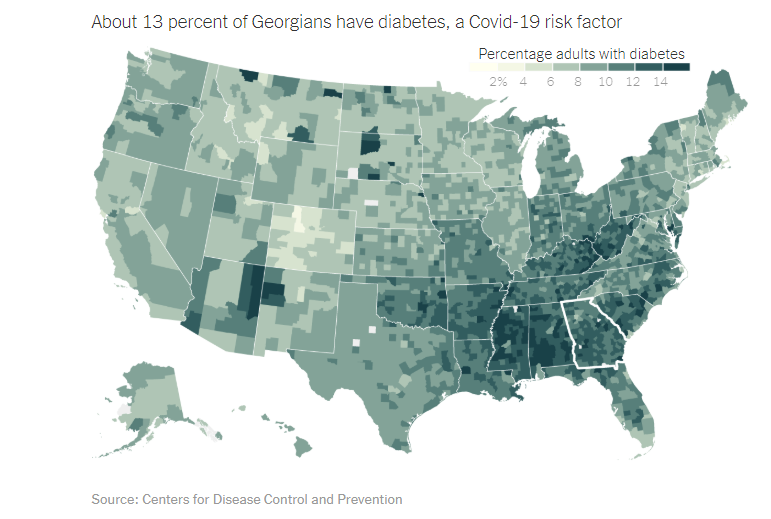
For those who live in Georgia, here’s a link to the official COVID-19 numbers from DPH:

  • Georgia DPH: COVID-19 Daily Status Report
  • It is worth noting that Georgia has a very high postive test rate (22%) compared to many states which likely indicates inadequate testing and a large number of undetected cases.

Allocating Scarce Resources During COVID-19 Pandemic

Here’s a link to CDC website and COVID-19 symptom self-checker (advice for families):

CDC Link: Testing for COVID-19

———

Full Link NEJM 2020 (Ezekial J Emmanuel et al): Fair Allocation of Scarce Medical Resources in the Time of Covid-19

This article spells out an ethical approach to the likely need to ration care in the midst of this pandemic.

Here’s an excerpt:

Recommendation 1: In the context of a pandemic, the value of maximizing benefits is most important…Saving more lives and more years of life is a consensus value across expert reports… Because young, severely ill patients will often comprise many of those who are sick but could recover with treatment, this operationalization also has the effect of giving priority to those who are worst off in the sense of being at risk of dying young and not having a full life….Because maximizing benefits is paramount in a pandemic, we believe that removing a patient from a ventilator or an ICU bed to provide it to others in need is also justifiable and that patients should be made aware of this possibility at admission..Undoubtedly, withdrawing ventilators or ICU support from patients who arrived earlier to save those with better prognosis will be extremely psychologically traumatic for clinicians — and some clinicians might refuse to do so. However, many guidelines agree that the decision to withdraw a scarce resource to save others is not an act of killing and does not require the patient’s consent

Recommendation 2: Critical Covid-19 interventions — testing, PPE, ICU beds, ventilators, therapeutics, and vaccines — should go first to front-line health care workers and others who care for ill patients and who keep critical infrastructure operating, particularly workers who face a high risk of infection and whose training makes them difficult to replace…Priority for critical workers must not be abused by prioritizing wealthy or famous persons or the politically powerful above first responders and medical staff — as has already happened for testing. Such abuses will undermine trust in the allocation framework.

Recommendation 3: For patients with similar prognoses, equality should be invoked and operationalized through random allocation, such as a lottery, rather than a first-come, first-served allocation process

Recommendation 4: Prioritization guidelines should differ by intervention and should respond to changing scientific evidence. For instance, younger patients should not be prioritized for Covid-19 vaccines

Recommendation 5: People who participate in research to prove the safety and effectiveness of vaccines and therapeutics should receive some priority for Covid-19 interventions

Recommendation 6: There should be no difference in allocating scarce resources between patients with Covid-19 and those with other medical conditions.

Placing such burdens on individual physicians could exact an acute and life-long emotional toll… To help clinicians navigate these challenges, institutions may employ triage officers, physicians in roles outside direct patient care, or committees of experienced physicians and ethicists,

My take: Reading this article is so sad.  It is heart-breaking just contemplating the need for these well-considered recommendations.  Also, see below -ACG shared data indicating significant fallibility with testing for Sars-Cov2/COVID-19.

How to Protect Healthcare Workers from COVID-19: Lessons from Hong Kong and Singapore

Atul Gawande has a very pertinent article in the New Yorker:  Keeping the Coronavirus from Infecting Health-Care Workers

An excerpt:

There are lessons to be learned from two places that saw the new coronavirus before we did and that have had success in controlling its spread. Hong Kong and Singapore…

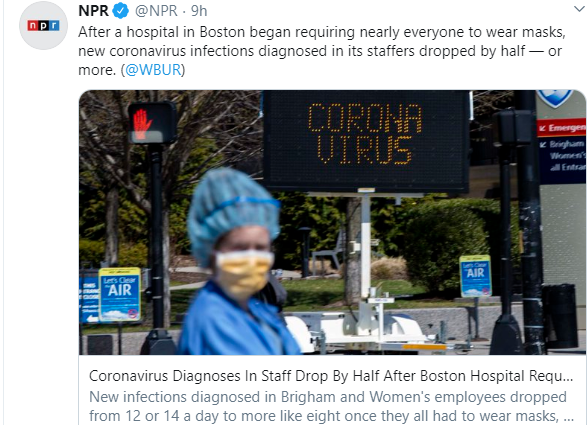
 All health-care workers are expected to wear regular surgical masks for all patient interactions, to use gloves and proper hand hygiene, and to disinfect all surfaces in between patient consults. Patients with suspicious symptoms (a low-grade fever coupled with a cough, respiratory complaints, fatigue, or muscle aches) or exposures (travel to places with viral spread or contact with someone who tested positive) are separated from the rest of the patient population, and treated—wherever possible—in separate respiratory wards and clinics, in separate locations, with separate teams. Social distancing is practiced within clinics and hospitals: waiting-room chairs are placed six feet apart; direct interactions among staff members are conducted at a distance; doctors and patients stay six feet apart except during examinations.

What’s equally interesting is what they don’t do. The use of N95 masks, face-protectors, goggles, and gowns are reserved for procedures where respiratory secretions can be aerosolized. Their quarantine policies are more nuanced, too. What happens when someone unexpectedly tests positive—say, a hospital co-worker or a patient in a primary-care office or an emergency room? In Hong Kong and Singapore, they don’t shut the place down or put everyone under home quarantine. They do their best to trace every contact and then quarantine only those who had close contact with the infected person. In Hong Kong, “close contact” means fifteen minutes at a distance of less than six feet and without the use of a surgical mask; in Singapore, thirty minutes. If the exposure is shorter than the prescribed limit but within six feet for more than two minutes, workers can stay on the job if they wear a surgical mask and have twice-daily temperature checks. People who have had brief, incidental contact are just asked to monitor themselves for symptoms…

Transmission seems to occur primarily through sustained exposure in the absence of basic protection or through the lack of hand hygiene after contact with secretions…

Singapore so far appears not to have had a single recorded health-care-related transmission of the coronavirus, despite the hundreds of cases that its medical system has had to deal with…

For those who cannot stay home, the lesson is that it is feasible to work and stay coronavirus-free, despite the risks….a greater likelihood of staff picking up infections at home than at work. 

Today’s Children in Crisis: YOYO

Predictive Modeling on COVID19 in U.S. from NYTimes: How Much Worse the Coronavirus Could Get, in Charts

Modeling comments from Nate Silver: It’s important to keep in mind that many of these models describe projections *without* changes in behavior. This is mentioned in the article (good for NYT, a lot of articles omit this context). So behavioral changes and testing are key. I slightly worry that some of the headlines contribute to a sense of fatalism, when the real message is more like “this is probably gonna be bad, but it could be considerably less bad if we get our act together and much worse if we don’t.”

———-

Besides the current outbreak, what else has been happening to children:

So, is it surprising at all that there is no interest in limiting products shown to be dangerous for children?  Today’s children are being told: ‘you’re on your own’ (YOYO)

An ongoing concern for pediatric gastroenterologists, magnet ingestions, was highlighted in a Politco report -thanks to Ben Gold for sharing this report: Toddlers eat shiny objects….

Here are a few excerpts:

Once ingested, high-powered magnets find each other inside the body and shred any tissue, such as bowel, trapped in between….

In early 2012, this coalition [led by NASPGHAN] approached the Consumer Product Safety Commission with one simple ask: eliminate these high-powered magnet sets from the market…the agency ultimately recalled high-powered magnet sets …

One company, Zen Magnets, remained unconvinced, and sued the CPSC, fighting… the recall on existing magnets…

The rule [ban] set was struck down by two judges on the 10th Circuit Court of Appeals with the deciding vote cast by now-Supreme Court Justice Neil Gorsuch. These judges ignored the expertise of the CPSC epidemiologists and economists; ignored the compelling medical testimony, overwhelming expert evidence and dire safety consequences and substituted their own opinion in favor of promoting “government restraint” on regulating industry…

The nation’s poison control centers recorded six times more magnet ingestions―totaling nearly 1,600 cases in 2019 alone—after the 10th circuit court decision allowed magnets back on the market…

The article details how the CPSC’s change in regulation has also led to deaths related to delays in recalling faulty infant inclined sleeps, with defective RZR All Terrain Vehicles, and the mismanaged recall of IKEA’s Malm dressers.

A related article was published in USA Today this week by Dr. Bryan Rudolph: Children can easily swallow high-powered magnets, it’s time to ban them for good

My take: What’s next up for our children? Outlawing lifeguards for pools? Repealing seat belt laws?  Perhaps it won’t matter –there are so many bigger threats that are not even on the radar.  YOYO.

Related blog posts:

Image from Politico