Is It Time To Start Testing HBsAg Levels in Hep B Patients?

Two recent studies show that HBsAg levels may help determine therapeutic decisions:

  • WP Brower et al. Clin Gastroenterol Hepatol 2016; 14: 1481-89
  • Y-C Hsu et al. Clin Gastroenterol Hepatol 2016; 14: 1490-98.

The first study was a retrospective study of 292 HBeAg-negative patients with chronic hepatitis B virus (HBV) infection.  This cohort had normal ALT values and HBV DNA <20,000 IU/mL.  Patients were considered to be carriers of inactive HBV if their HBV DNA was <2000 IU/mL and serum levels of ALT remained normal.

Key findings with regard to likelihood of having inactive HBV at following year:

  • “odds were 97% for initial level of HBsAg <100 IU/mL”
  • “odds were 85% for patients with initial levels 100-1000 IU/mL and 76% for patients with initial levels >1000 IU/mL”

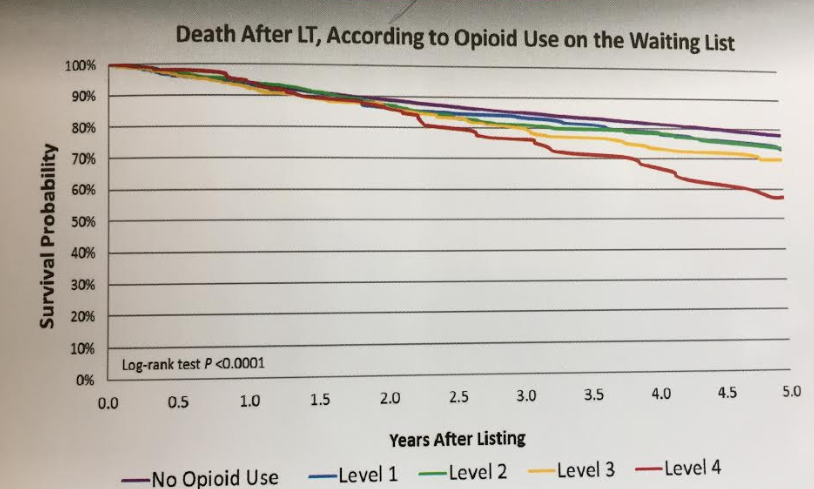
Also, “patients with HBV activity who had levels of HBV DNA <5000 IU/mL and decreases in HBsAg of 0.5 log IU/mL or more for 1 year had a high probability of becoming carriers of inactive HBV in the next year.” Figure 2 in an easy graphic form shows cumulative probabilities of becoming inactive or active HBV over the three-year period.

In the second study, Hsu et al performed a prospective study of 161 consecutive patients with undetectable HBV DNA following 3 or more years of entecavir.  After stopping therapy, patients were monitored for relapse.

Key findings;

  • 49.2% of patients had a clinical relapse (defined by elevation of both HBV DNA >2000 IU/mL and by elevated ALT >2-fold ULN)
  • 81.7% had virological relapse (HBV DNA >2000 IU/mL).
  • All patients with HBeAg-positivity had clinical relapse and were retreated.
  • For HBeAg negative patients at end of treatment, 39.2% had a clinical relapse & 77.4% had a virological relapse.
  • Serum HBsAg level predicted relapse among HBeAg-negative patients: 11 patients with HBsAg <10 IU/mL did not relapse. The lower the serum level of HBsAg at the end of treatment, the lower the rate of clinical relapse (see Figure 1).  Of those with HBsAg 100-1000, there was ~25% clinical relapse at 30 months f/u and more than 50% virological relapse.

My take: HBsAg level is becoming important in truly determining who has inactive HBV and reflects the likely natural history.  It is expected that using HBsAg levels will be increasingly used to determine management of HBeAg-negative HBV.

Related blog posts:

cligastroocthbv

Need Liver, Will Travel

A recent commentary (G Cholankeril et al. Gastroenterol 2016; 151: 382-86) provides a succinct summary regarding the trends in liver transplantation multiple listing and its implications on notions of utility and justice.

Key points:

  • UNOS was established based on Congressional act in 1984: 42 U.S.C. § 274.  The principles of “justice” and “utility” were to be key in governing an equitable  allocation system.
  • Due to allocation inequities, however, some prospective liver transplant candidates seek multiple listings. From 2010 to 2015, 1082 of 70,080 (2%) liver transplant candidates on the waitlist had multiple listings. During that same time frame, 862 (multiply-listed) of 32,431(total transplants) (3%) underwent liver transplantation.
  • Candidates who migrated had “shorter waiting time before liver transplantation and higher probability of receiving an organ (multiple listings 80% versus primary listing 46%; P<.001)”
  • Multiple listing candidates had lower severity of illness and lower MELD score at time of liver transplantation (multiple listings 25 versus primary listing 28; P<.001)

Regional distribution:

  • 46% of the 862 multiply-listed patients who underwent liver transplantation received their organ in UNOS region 3 (Alabama, Arkansas, Florida, Georgia, Louisiana, Mississippi, Puerto Rico)
  • 67% of those 862 emigrated away from Regions 2, 5, and 9 -which have the longest waiting times. Figure 1 shows the 11 Regions.  Region 2 & 9 include New York, New Jersey, Delaware, West Virginia, Maryland, and Pennsylvania.  Region 9 includes California, Nevada, Arizona, New Mexico, and Utah.

My take: Under the current system, liver transplant candidates capable of travelling/multiple listing, are rewarded with earlier liver transplantation & higher likelihood of receiving a liver transplant.  Thus, until inequities in organ distribution are better addressed, patient’s may need to consider telling their transplant team: ‘Need Liver, Will Travel’

Related blog posts:

Public Art, New Orleans

Public Art, New Orleans

Obeticholic Acid in Primary Biliary Cholangitis

While Primary Biliary Cholangitis (PBC) (previously called primary biliary cirrhosis) is seen mainly in adult hepatology practices, a new treatment may be emerging and this same medication is likely to be considered for several liver conditions.

Reference: F Nevens et al. NEJM 2016; 375: 631-43.

This 12 month, double-blind, placebo-controlled phase 3 “POISE” trial with 217 patients examined the use of obeticholic acid with or without ursodeoxycholic acid.  Surrogate markers of PBC were followed & the treatment groups improved compared to placebo.  However, adverse effects, particularly itching, were more common in the obeticholic acid groups; serious adverse effects were 11-16% in the treatment groups compared with 4% in the placebo group.

Results below:

PBC Rx

My take: It will be nice when important clinical endpoints can be assessed for this therapy like progression to cirrhosis.  For now, the cost of this treatment is ~$70,000 yearly.

Related blog post:

Breakthrough for Fatty Liver Disease? | gutsandgrowth

Optimistic Results for Hepatitis C plus Hepatology Update

The August issue of Hepatology had several articles on Hepatitis C confirming the efficacy of newer agents:

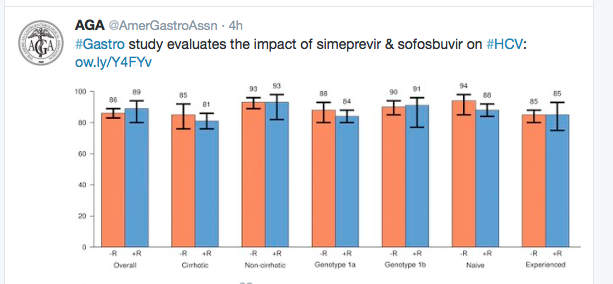
  • LI Backus et al Hepatology 2016; 64: 405-14.  This “real-world” observational study from the VA Clinical registry with 4,365 genotype 1 treatment-naive patients who received ledipasvir/sofosbuvir showed SVR rates of 91.3% (w/o ribavirin) and 92% (w ribavirin).
  • P Kwo et al. Hepatology 2016; 64: 370-80 (OPTIMIST-1) This study showed that 12 weeks of simeprevir+sofusbuvir for 12 weeks was highly effective (97% SVR) and that 8 weeks of this therapy was inferior (83% SVR).  N=310 with genotype 1 (w/o cirrhosis).  No patients stopped therapy due to adverse effects.
  • E Lawitz et al. Hepatology 2016; 64: 360-69 (OPTIMIST-2) This study showed that simeprevir+sofusbuvir for 12 weeks was effective in genotype 1 patients (n=103) with cirrhosis.  For treatment-naive, the SVR was 88% and for treatment-experienced patients, the SVR was 79%.

Also in Hepatology:

  • S Heibani et al Hepatology 2016; 64: 549-55. This study looked at 1-week versus 2-week intervals for endoscopic ligation.  While 1-week ligation eradicated varices more quickly, neither approach was associated with differences in number of endoscopies, complications (including rebleeding) or other clinical outcomes.
From earlier study of "real-world" treatment of Genotype 1. Gastroenterol 2016; 150: 419-29.

From earlier study of “real-world” treatment of Genotype 1. Gastroenterol 2016; 150: 419-29. (Full text link)


Dubin-Johnson Syndrome

From NEJM:

A 48-year-old woman scheduled to receive a laparoscopic cholecystectomy underwent a preoperative evaluation that disclosed conjugated hyperbilirubinemia…

A biopsy specimen revealed coarse, deep-brown, pigmented granules on periodic acid–Schiff staining (Panel B), primarily at the canalicular pole of the hepatocytes and especially in the pericentral zones, with otherwise well-preserved lobular architecture. Expression of the multidrug-resistance–associated protein 2 (MRP2) was absent on anti–MRP2 immunohistochemical analysis (Panel C; see also comparison with control specimen [inset]). A diagnosis of the Dubin–Johnson syndrome was confirmed. This syndrome is an autosomal recessive disorder that is caused by a mutation in MRP2 that results in deficient canalicular expression of MRP2 and impaired secretion of conjugated bilirubin into the bile. Such mutations cause an isolated increase in serum levels of conjugated bilirubin and the appearance of a black liver, without associated sequelae.

Dubin-Johnson

Do You Know When Hepatitis C Virus Transmission Peaked?

According to a recent study (AC Spaulding, LS Miller. Lancet Infect Dis. 2016 Mar 30. doi: 10.1016/S1473-3099[16 …), peak transmission of hepatitis C virus (HCV) peaked about 1950, likely due to reuse of metal and glass syringes.

This study counters the idea that HCV transmission was “primarily due to injection drug use, unsafe tattooing, high-risk sex, and travel to high endemic areas during youth,” according to the researchers. Here’s the link: Apportioning blame in the North American Hepatitis C virus epidemic

My take: Will this take away some of the stigma of HCV infection? Probably not.  But, hopefully as the costs for treatment reduce, more individuals can be infection-free and avoid complications related to infections.

HCV Infections

Vedolizumab for Primary Sclerosing Cholangitis (with IBD)?

“The monoclonal antibody vedolizumab may reduce biliary inflammation in patients with primary sclerosing cholangitis and comorbid inflammatory bowel disease, according to early, open-label study findings reported at the meeting sponsored by the European Association for the Study of the Liver”  –according to GIHepNews: Biliary inflammation reduced by IBD drug

“Vedolizumab given to 27 patients with primary sclerosing cholangitis (PSC) and inflammatory bowel disease (IBD) resulted in a 50% reduction or normalization of serum alkaline phosphatase levels in 17 cases (63%).”

This was an open-label, proof-of-concept study involving 27 patients aged 25-30 years with PSC and comorbid IBD.

My take: This is interesting but needs a lot more study.

Atlanta Zoo 2016

Atlanta Zoo 2016

Elafibranor Study & “My compliments to the photographer”

A while back, I remember seeing a cartoon with a dissatisfied patron leaving a restaurant and saying “my compliments to the photographer.”

Sometimes reading journal titles has the same feel.  The title does not always indicate what you are really going to get.  A recent study (V Ratziu et al. Gastroenterol 2016; 150: 1147-59) has the following title: “Elafibranor, an Agonist of the Peroxisome Proliferator –Activated Receptor –α and –β, Induces Resolution of Nonalcoholic Steatohepatitis Without Fibrosis Worsening.”  Sounds great –a new effective treatment for NASH, right?

Here’s are the results:

  • “In intention-to-treat analysis, there was no significant difference between elafibranor and placebo groups in the protocol-defined primary outcome.”
  • However, based on a post-hoc analysis with a modified definition, the treatment group had  a 19% NASH resolution compared with 12% of the placebo group.

This study examined 276 patients in a randomized double-blind placebo-controlled trial.

To me these results are not impressive.  The associated editorial (pg 1073) expresses more optimism and indicates that there have been evolving outcome measures in NASH studies to look for the combination of NASH resolution without worsening fibrosis.  Thus, prior studies that used only NASH resolution, such as pioglitazone (47%), vitamin E (36%) and obeticholic acid (22%) cannot be compared to his current study.

My take: Pretty picture or not, what this really means -is that we need more studies, including the outcome of phase III studies of this medication.

Georgia Terrace

The Georgian Terrace

Bring Out the Big Guns: Treating Infections with Cirrhosis

A recent study (M Merli et al. Hepatology 2016; 1632-39) indicates that health-care associated infections (HCA) in the setting of cirrhosis respond more favorably to broad-spectrum antibiotics.  In this prospective study of 96 randomized patients, in-hospital mortality was improved in the broad-spectrum group (6%) compared to the standard group (25%).  There was a similar multidrug-resistnace rate (50% broad spectrum compared with 60% in standard group).

Table 1 lists the antibiotic selection.  In the broad spectrum treatment, this almost always included imipenem/cilastin (I/C); with spontaneous bacterial peritonitis (SBP), I/C was combined with vancomycin, and with pneumonia it was combined with both vancomycin and azithromycin.  In contrast, the standard group’s main medication was augmentin (with added azithromycin for pneumonia) or cefotaxime for SBP.

My take: Does this study show that infections in the setting of cirrhosis are becoming more difficult to treat? Probably. How much these findings can be extended to the pediatric population remains uncertain.

Somewhat related topic: Primary prophylaxis of Variceal Bleeding in Children –Summary of the Baveno VI Pediatric Satellite Symposium.  BL Shneider et al. Hepatology 2016; 63: 1368-80. Key point: “there are few pediatric data…therefore, no recommendations for primary prophylaxis with endoscopic variceal ligation, sclerotherapy, or nonspecific beta-blockade in children was proposed.”

Silver Comet Trail

Silver Comet Trail

Interesting Fatty Liver Articles -Spring 2016

J Bousier et al. Hepatology 2016; 63: 764-75.  This study showed an association between the severity of nonalcoholic fatty liver disease and gut dysbiosis/shift in gut microbiome in 57 patients.  Specifically, Bacteroides was independently associated with NASH and Ruminococcus with significant fibrosis.

V WS Wong et al. Hepatology 2016; 63: 754-63. This study showed that NAFLD (identified by ultrasonography screening) was frequent (58.2%) among 612 consecutive patients who were undergoing coronary angiogram. During a followup (3679 patient-years), NAFLD patients had a lower adjusted HR of death (0.36).  Older age and diabetes were indepenently associated with cardiovascular events.  In addition, during f/u NAFLD patients in their cohort rarely developed liver cancer or cirrhotic complications.  Thus, NAFLD is common among patients with coronary artery disease but did not predict a worsened outcome.

F Piscaglia et al. Hepatology 2016; 63: 827-38. This report was a study of 756 patients with liver cancer (HCC) due to either NAFLD (145) or HCV (611). HCC in NAFLD patients had a larger volume, was more infiltrative, and was detected outside surveillance.  NAFLD-HCC was associated with a lower survival (25.5 months compared with 33.7 months for HCV-HCC). The authors note that after patient matching for tumor stage, the survival rate was similar. The difference in survival does not account for lead-time bias (What’s More Important: Improving Mortality Rate or Survival …).  Overall, the study indicates that without surveillance, HCC is detected later.  Due to the frequency of NAFLD, it is unclear which patients would benefit from surveillance and what type of surveillance should be recommended.

Related blog posts:

Farjado, Puerto Rico

Farjado, Puerto Rico