What happens with 98,500 IU/day of Vitamin A


An interesting case report (LA Beste et al. NEJM 2016; 374: 73-8) reviews the presentation of a previously healthy 54 year old with ascites.  He initially indicated that he was taking 100 IU per day of vitamin A (his current dose), but later on directed questioning admitted that he had averaged 98,500 IU/day for prior 6 months.

The clinical-problem solving case reviews useful pointers about portal hypertension and in particularly noncirrhotic portal hypertension.  Vitamin A is a rare cause of noncirrhotic portal hypertension.

Other causes of noncirrhotic portal hypertension:

  • Prehepatic level: portal vein or splenic vein thrombosis, splanchnic arteriovenous malformation
  • Intrahepatic level: hepatic vasculitis, HIV infection, infiltrative disease, and medications
  • Posthepatic: Budd-Chiari syndrome, IVC obstruction, restrictive cardiac disease.
  • Worldwide, schistosomiasis is the most common reason.
  • When other causes have been excluded, idiopathic noncirrhotic portal hypertension may be diagnosed, “especially in patients with chronic infection, thrombophilia, and immunologic conditions such as SLE.”  In one series of 69 patients, the diagnosis of idiopathic noncirrhotic portal hypertension was delayed for more than a year in 25% of cases and 7% received an erroneous diagnosis of cryptogenic cirrhosis.

Other points:

  • When ascites is due to cirrhosis, other signs of liver disease are typically present, including jaundice and laboratory findings (low albumin, coagulopathy, hyperbilirubinemia) as well as absence of cirrhosis on biopsy.
  • Serum retinol levels poorly reflect total body stores of vitamin A (& was normal in this patient)
  • Vitamin A supplementation in appropriate doses can prevent blindness in areas where food stores are not secure.  But, consuming excessive doses can lead to being a case report.

Related blog posts:

Mural, Old town San Juan
Mural, Old town San Juan

Guidelines: Microscopic Colitis & Vascular Diseases of the Liver

In brief:

AGA Microscopic Colitis Guideline: GC Nguyen et al. Gastroenterol 2016; 150: 242-6. Technical review DS Pardi et al. Gastroenterol 2016; 150: 247-74. Patient guide: pg 275.

EASL Clinical Practice Guidelines: Vascular diseases of the liver. J Hepatology 2016; 64: 179-202.  Topics covered include Budd-Chiari, Portal vein obstruction, Heriditary hemorrhagic telangiectasia, veno-occlusive disease of the liver, management of anticoagulation in liver disease

Predicting a Bad End in Drug-Induced Liver Injury

A recent study (VL Re et al. Clin Gastroenterol Hepatol 2015; 13: 2360-68) examined a retrospective cohort of 15,353 patients with presumed drug-induced liver injury (DILI) to formulate a more sensitive model for predicting liver failure.

The authors note that Hy’s Law has good specificity but poor sensitivity.  In their population, Hy’s Law had a specificity of 0.92, negative predictive value of 0.99, sensitivity of 0.68, and a positive predictive value of 0.02.

  • Hy’s law (named for Hyman Zimmerman): AST or ALT > 3 ULN and total bilirubin ≥2 ULN indicate serious hepatotoxicity with >10% mortality rate.

By incorporating data from platelet count and total bilirubin, the authors devised a Drug-Induced Liver Toxicity ALF Score which had a high sensitivity of 0.91 but a lower specificity of 0.76.

  • DrILTox ALF Score = -0.00691292*platelet count + 0.19091500*total bilirubin (per mg/dL)
  • Example: platelet count of 145 & total bilirubin of 3.0 yields a valued of -0.4296 which is above cut off of -1.081 indicating an increased risk of ALF.

Thus, low platelet counts and high bilirubins are strong predictors of acute liver failure (ALF) in the setting of DILI.

My take: Overall, the incidence of ALF due to drugs remains fairly low and determining that a specific drug induced liver injury remains problematic.  This study shows that ALF can occur in those who do not meet Hy’s Law criteria and that more sensitive predictors are needed.

Related blog posts:

Burden of GI Diseases in U.S.

A useful article (AF Peery et al. Gastroenterol 2015; 149: 1731-41) provides data on the huge impact that GI & Liver diseases have.

Here are some key findings:

Leading GI symptoms (Ambulatory visits) in 2010 (Table 1):

  • Abdominal pain 27.1 million
  • Diarrhea 5.6 million
  • Vomiting 5.5 million
  • Nausea 4.7 million
  • Bleeding 3.6 million

Most Common Diagnosis from Hospital Admissions in 2012 (Table 5):

  • GI hemorrhage 507,440 admissions
  • Cholelithiasis with cholecystitis 389,180 admissions
  • Acute pancreatitis 275,170 admissions
  • Intestinal obstruction 256,775 admissions
  • Appendicitis 248,080 admissions
  • Chronic liver disease/viral hepatitis 243,170 admissions

Causes of Death in U.S. in 2012 (Table 7):

  • Colorectal cancer 51,139
  • Pancreatic cancer 38,797
  • Liver/bile duct cancer 22,973
  • Cirrhosis 17,495
  • Alcoholic liver disease 17,419
Gastroenterology Cover

Gastroenterology Cover

Hepatitis C Cure: Too Late for Many

Before the recent vast improvements in hepatitis C virus (HCV) treatment, there had been a number of studies predicting a huge increase in HCV-related mortality due to hepatocellular carcinoma (HCC) and cirrhosis.

Despite the optimism that have come with the new treatments, the most recent data (LA Beste, et al. Gastroenterol 2015; 149: 1471-82) continue to predict a huge and increasing burden of chronic liver disease due to HCV.

The authors used a national retrospective cohort of Veteran Affairs (VA) patients with cirrhosis (n=129,998) or HCC (n=21,326) from 2001-13.  They identified an increasing proportion of cirrhosis and HCC during that timeframe.

Key findings:

  • From 2001 to 2013, cirrhosis prevalence nearly doubled (664 –>1058 per 100,000 enrollees) driven by HCV and nonalcoholic fatty liver disease; deaths due to cirrhosis also increased from 83 to 126 per 100,000 patient years
  • From 2001 to 2013, HCC incidence increased 2.5-fold from 17 to 45 per 100,000 patient-years and HCC mortality tripled from 13 to 37 per 100,000 patient-years.  HCC incidence was driven overwhelmingly by HCV.
  • Based on current trends, cirrhosis prevalence will peak in 2021 according to the authors, though they acknowledge that patients from the VA may not be representative of the population at large and that the study has inherent weaknesses due to computerized data collection in this retrospective study.

My take: Despite dramatic improvements in HCV treatment, sadly, it is still going to get a lot worse with regard to disease burden & mortality from HCV before it will improve.

Briefly noted: F Negro. Gastroenterol 2015; 149: 1345-60.  “Extrahepatic morbidity and mortality of chronic hepatitis C”  This review article discusses diabetes, cardiovascular manifestations of HCV, fatigue, cognitive impairment, mixed cryoglobulinemia, and non-hodgkin lymphoma.

Related blog posts:

Chattanooga Aquarium

Chattanooga Aquarium

Journals Supplanting Textbooks: Managing Liver Disease

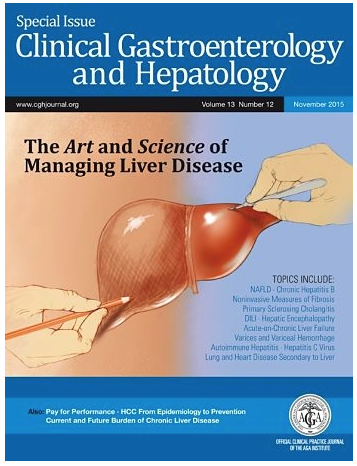
Between Journals and online resources, textbooks are increasingly less useful.  Case in point -this past month, Clinical Gastroenterology and Hepatology published a special issue: The Art and Science of Managing Liver Disease.  Some of the articles are excellent reviews.

Screen Shot 2015-11-21 at 5.35.44 PM

With autoimmune hepatitis (AIH), the authors make a number of useful points and concisely summarized diagnosis and management.  A few points:

  • Anti-soluble liver antigen/liver-pancreas (SLA/LP) and Asialoglycoprotein receptor (ASGPR) useful in diagnosis of AIH type 1 or 2 and is prognostic for severe disease.
  • In U.S. current guidelines suggest an azathioprine dose of 50 mg (for adults) whereas in Europe the dose is typically 1-2 mg/kg/day.  The authors suggest that the U.S. guidelines could lead to undertreatment, particularly with increasing rates of obesity.
  • The authors state that routine “testing for TPMT deficiency before AZA treatment of AIH is unnecessary, because severe TPMT deficiency occurs in 0.3%-0.5% of the general population and does not invariably cause AZA-induced bone marrow toxicity.” [I will probably continue to check TPMT activity.] They do recommend TPMT testing in cirrhotic patients and those with cytopenias.
  • The authors note that successful long-term withdrawal can occur in 19-40% but recommend biochemical remission (>12-24 months) and histologic remission.  They caution against withdrawal in patients after a relapse due to increased risks of progression to cirrhosis and/or death.
  • When discussing alternative therapies, the authors note that mycophenolate mofetil (MMF) is typically effective for patients intolerant to AZA but not likely to work in AZA nonresponders.
  • Alternative agents reviewed included tacrolimus, cyclosporine, sirolimus/everolimus, rituximab, and infliximab.

Other topics in this issue included NAFLD, HCC, Varices, Hepatic encephalpathy, HBV, HCV, Acute-on-Chronic Liver Failure, PSC and Malignancy, DILI, and noninvasive imaging for liver fibrosis.

Hepatitis C Prevalence Underestimated

A recent study (BR Edlin et al. Hepatology 2015; 62: 1353-63) provides data suggesting that Hepatitis C virus (HCV) infection has been underestimated.

The number most commonly used is derived from the 2003-2010 National Health and Nutrition Examination Survey (NHANES) which showed 3.6 million in the U.S. with antibodies to HCV and 2.7 million currently infected.

The authors performed a systemic review and note that ~1 million people were excluded from this survey including a large number at high risk for HCV: ~500,000 incarcerated people, and 220,000 homeless people.

Based on their analysis, they conclude that “the number of US residents who have been infected with hepatitis C is unknown but is probably at least 4.6 million…and of these, at least 3.5 million… are currently infected.”

Related blog posts:

HCV Guidelines

The AASLD-IDSA Recommendations for Hepatitis C Virus have been published (Hepatology 2015; 62: 932-954).  The entire report is accessible from hcvguidelines.org and from the link: HCV Guidance 2015. While having a hard copy is easy to work with, the HCVguidelines website is likely to remain more up-to-date.

A few recommendations to highlight:

  • #6. “Antiviral treatment is recommended for all patients with chronic HCV infection, except those with limited life expectancy due to nonhepatic causes (I-A)
  • #7. “If resources limit the ability to treat all infected patients immediately as recommended, then it is most appropriate to treat those at greatest risk of disease complications” (see Tables 3 and 4)
  • #8. “Use of noninvasive testing or liver biopsy is recommended in order to assess the degree of hepatic fibrosis and, hence, the urgency of immediate treatment. (I-A)”

Other Hepatology studies of interest, briefly noted:

Hepatology 2015; 62: 684-93.  Nucleos(t)ide analog “treatment does not increase the risk of renal and bone events in general.  Nucleotide analogs may increase the risk of hip fractures, but the overall event rate is low.”  This study examined 46,454 untreated chronic hepatitis B patients in comparison to 7,046 treated patients.

Hepatology 2015; 62: 715-25. This study looked at the safety of simeprevir and sofosbuvir in hepatitis C-infected patients.  “Adverse safety outcomes were similar to matched untreated controls, suggesting that safety events reflect the natural history of cirrhosis and are not related to treatment.”

Hepatology 2015; 62: 773-83. This study found that “NAFLD is independently associated with subclinical myocardial remodeling and dysfunction.”

Bruce Munro, Atlanta Botanical Gardens

Bruce Munro, Atlanta Botanical Gardens

Changing Narrative on Affordability of HCV Treatments

A recent commentary (J Chhatwal et al. Clin Gastroenterol 2015; 13: 1711-13) makes the point that HCV treatment is looking a lot better lately with regard to cost.

Key points:

  • “Sofosbuvir-based treatment in 2015, on average, costs 54% of the wholesale acquisition cost”
  • When considering the recent discounts, “the cost of treatment decreased to $56,000…and the cost per SVR decreased to $58,000.”  The cost of an SVR with the first generation protease inhibitors, boceprevir and teleprevir, has been estimated to have been $213,000.
  • “The discounted cost of treating 1 person with HIV in the United States is $315,000 in 2014 US dollars.” Thus, curing HCV which is more deadly, at 18% of the cost, looks more favorable.
  • More discounts and more competition are expected.

Bottomline: Based on these cost considerations, the authors state that HCV treatment should be used broadly and not solely in those with advanced fibrosis.

Related blog posts:

Atlanta Botanical Gardens

Atlanta Botanical Gardens