Nutrition Symposium Georgia AAP (Part 3)

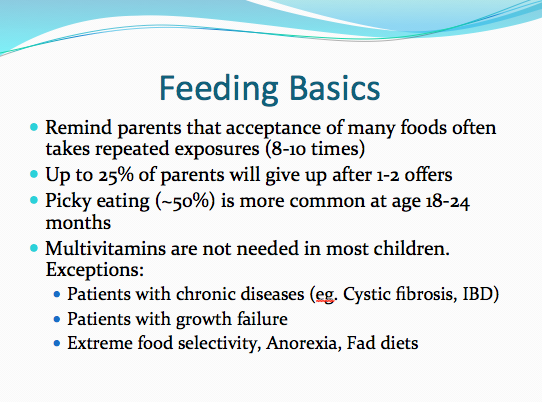
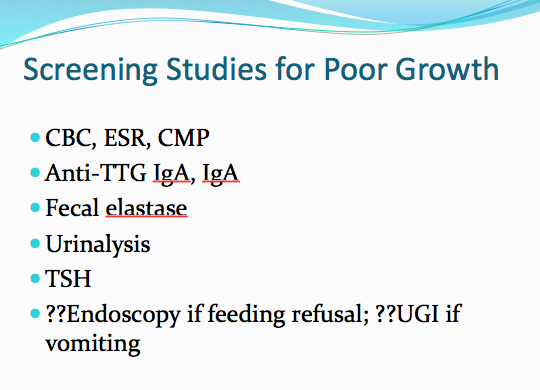
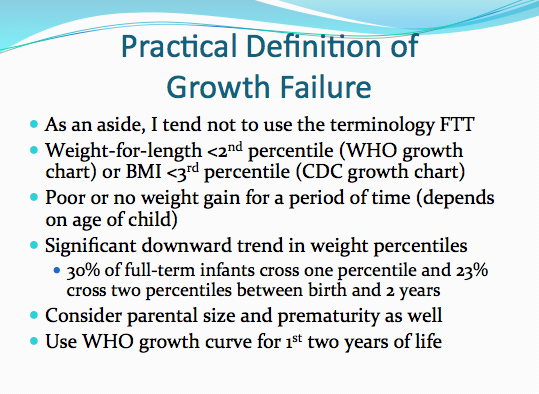
Along with Kylia Crane, I presented the final lecture at this year’s Georgia AAP Nutrition Symposium: Optimizing Nutrition and Formula Selection in Toddler’s and Children.  Kylia is a nutritionist and dietician at the Georgia AAP who works on a multitude of projects to enhance nutrition for pediatric patients across the state.  This lecture was intended as a practical review of feeding problems and poor growth.

After a brief discussion of some basic feeding principles, the lecture focused on specific case presentations and then reviewed formula selection.  At the end, I quickly mentioned some of the big nutrition stories for 2015. The entire talk will be available at the Nutrition4Kids website.

Here are some of the slides:

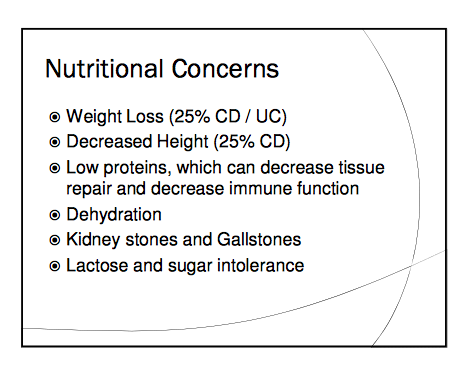
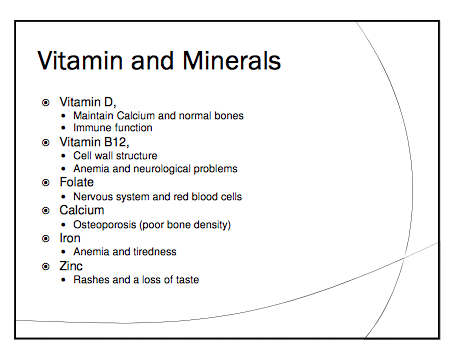
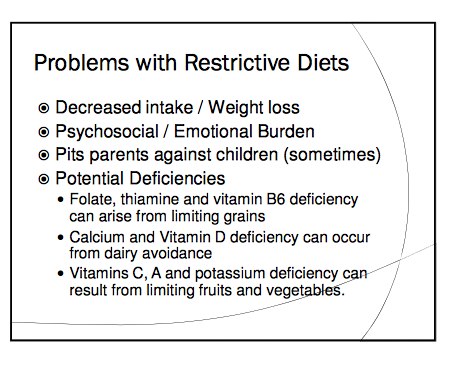
Screen Shot 2015-11-08 at 1.22.52 PM

Screen Shot 2015-11-08 at 1.20.16 PM

Screen Shot 2015-11-08 at 1.20.38 PM

Screen Shot 2015-11-08 at 1.21.13 PM

Screen Shot 2015-11-08 at 1.21.31 PM

Screen Shot 2015-11-08 at 1.21.47 PM

Screen Shot 2015-11-08 at 1.22.17 PM

Additional resources that I discussed:

FeedingTubeAwareness.com

—Ellyn Satter:

  • —“Child of Mine”
  • —“The Secrets of Feeding a Healthy Family”

—Laura Jana/Jennifer Shu:

  • —“Food Fights”

In the lecture, I credited some of the material to Dr. Praveen Goday who shared his slides from a previous lecture.  In addition, I am grateful to Dr. Seth Marcus who provided input into the lecture content.

Related blog posts:


Nutrition Symposium Georgia AAP (Part 2)

Last week I summarized an excellent talk by Ronald Kleinman.  For me, I had never heard such a concise and definitive rebuttal of the claims of those fearful of food biotechnology.  There were three other lectures at the symposium.  These three lectures covered areas that are well-known to pediatric gastroenterologists but less familiar to general pediatricians.  The full set of slides are available at the Georgia AAP Symposium Website.

Jeff Lewis had an excellent lecture that tied together gluten and our microbiome: Gluten – Eat not, suffer not and Microbiome 101: Waste Not, Want Not

After reviewing celiac disease and other wheat-related disorders (eg. wheat intolerance syndrome, and wheat allergy), he summarized a great deal of information regarding the human microbiome and which factors influence this. In addition, he had the opportunity to briefly present data from his research on fecal microbiota transplantation (for C diff) and its influence on the microbiome over time. Here are a couple of slides from his talk:


Screen Shot 2015-11-13 at 5.51.40 PM

Screen Shot 2015-11-13 at 5.50.12 PM

Screen Shot 2015-11-13 at 5.49.18 PM

Key points:

  • “It is hard to communicate science to families. It is a huge challenge for us.”
  • Dermatitis herpetiformis (rare in kids), a rash associated with celiac disease, can be treated with Dapsone. This rash has caused such severe itching that there are cases of suicide that have been reported.
  • For celiac disease, Dr. Lewis recommends testing of 1st degree relatives but this needs to be after gluten exposure and before gluten-free diet.
  • Wheat allergy reviewed. Skin test positivity does not prove that you are allergic to food. IgG based testing is worthless –it means you have been exposed to a food, but is not an indication of food allergy.
  • Nonceliac gluten sensitivity (aka. wheat intolerance syndrome): need to test for celiac first. No tests/biomarker that can confirm this diagnostic. This appears to be a true disease; there is a small subset of patients who develop symptoms with a double-blind challenge.
  • Microbiome –more bacterial DNA in us than human DNA. New organisms –archaea kingdom.  Now a specimen of a person’s microbiome can be run for <$50.
  • Microbiome terms: Richness, Diversity, and Dysbiosis. Many diseases are associated with dysbiosis (obesity, IBD), but there is a ‘chicken and the egg’ problem. Is dysbiosis a causal factor or a secondary factor?
  • Xyloglucans (in lettuce) –not broken down by humans and affected by gut bacteria.
  • Mice given stool from fat mice or fat person become heavy.

Nutrition Symposium Georgia AAP (Part 1)

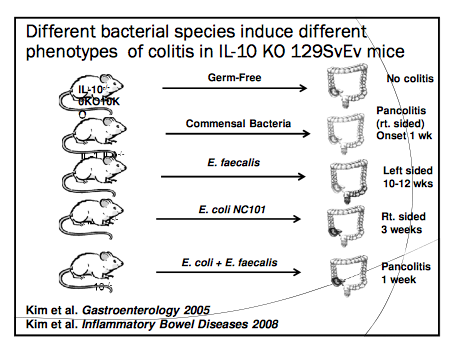
At this year’s nutrition symposium, Dr. Stan Cohen presented the latest information on nutrition and inflammatory bowel disease.  His entire presentation will be on the Nutrition4Kids website.  While I took a few pictures, my notes from his presentation were minimal, mainly because I had to give a talk afterwards.  He reviewed how the microbiome can be influenced by diet and that this in turn can result in phenotypic changes.  Specific complications from poor diet/nutrient deficiencies were discussed.  In addition, data from exclusive enteral nutrition and the specific carbohydrate diet were presented. Here are some slides from his lecture (also available at Georgia AAP Symposium Website):

Screen Shot 2015-11-13 at 5.55.55 PM

Screen Shot 2015-11-13 at 5.57.12 PM

Screen Shot 2015-11-13 at 5.57.27 PM

Screen Shot 2015-11-13 at 6.01.10 PM

Related blog posts:


Understanding Your Food and Biotechnology (Part 3)

This is the last of my blog posts on the topic of biotechnology and foods from Ronald Kleinman’s lecture: Biotechnology, Nutrition, and Agriculture: A Perspective and Implications for Child Health. The posts over the past 4 days describe in detail why the hysteria over genetically modified foods/genetically modified organisms (GMOs) is detrimental.  Unfortunately, the lack of understanding has led to widespread adoption of “GMO-free” labeling by food manufacturers which perpetuates the misplaced idea that these foods may not be safe.  The slides and lecture will be available at the Nutrition4Kids website.

Screen Shot 2015-11-11 at 5.47.17 PM


This mother’s blog: “I don’t feed them organic food and I’m not a bad Mom.” It is a sad commentary that someone needs to write this.

Screen Shot 2015-11-11 at 5.46.45 PM

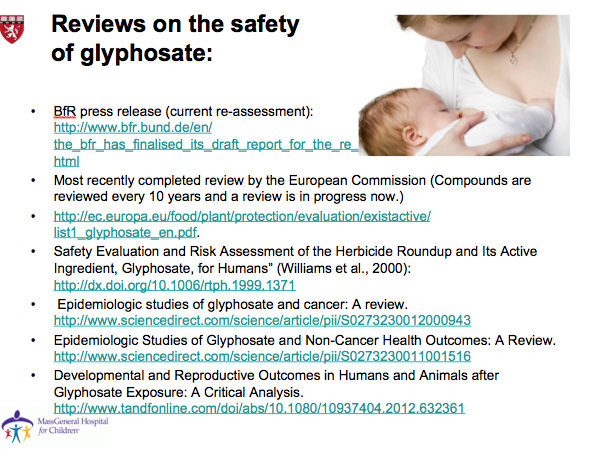
Humans, unlike plants, do not have the enzyme that Roundup (glyposate) targets –so it is safe. By targeting this enzyme, genetic engineering can allow the crop to be herbicide resistant, making it fairly easy to kill off weeds without hurting crop.  With biotechnology, we can kill weeds without killing plants. Thus, no till farming is needed. Current herbicides are much safer than prior agents.  Roundup (glyphosate) is water-soluble; it is not stored in fat. There is a 30 yr hx/o safe use.  There is no data indicating cancer risk in humans or fertility risk.

Screen Shot 2015-11-11 at 5.48.35 PM

Screen Shot 2015-11-11 at 5.48.03 PM

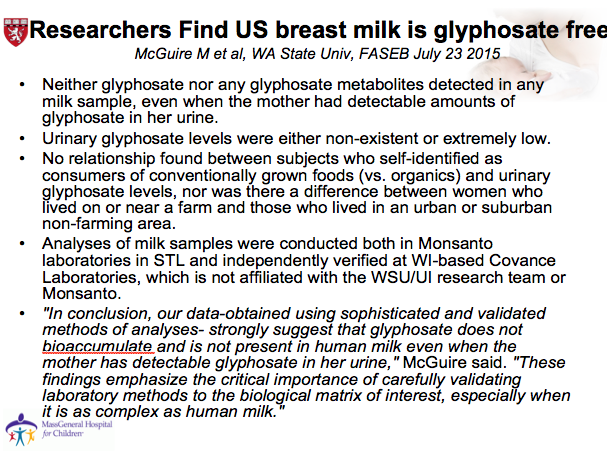
In the past, testing breastmilk for roundup used a flawed methodology. F/u study by McGuire M (sponsored by US govt) showed no Roundup (glyphosate) in breastmilk.

Drought-resistant crops are becoming increasingly important. Meeting global food production will require more ‘crop per drop’ due to increasing population and less lands available for farming. Not just 3rd World –look at California. There are low crop yields in areas without biotech (Subsaharan Africa) and higher mortality.

Key points:

  1. Genetically Modified Foods/Genetically modified organisms (GMO). These foods are safer and better than foods that are not genetically modified.
  2. Roundup is not dangerous for humans.
  3. Attacks on GMOs are part of a larger “War on Science.” As with vaccinations, there is a great deal of misleading and exaggerated information.
  4. Biotechnology can help solve food crisis, improve the lives of small farmers, and reduce malnutrition.  Genetically modified food reduces the needs for chemicals and can improve health.

Understanding Your Food and Biotechnology (Part 2)

This blog continues on the issue of genetic engineering and how it affects your food.  The information was presented in a lecture by Ronald Kleinman (see the posts from the last two days):  Biotechnology, Nutrition, and Agriculture: A Perspective and Implications for Child Health.  The slides and lecture will be posted on Nutrition4Kids website.

Biotechnology/genetic engineering is more precise in selecting desirable crop traits

Biotechnology/genetic engineering is more precise in selecting desirable crop traits

Why Newer Techniques (Genetic Engineering) Are Safer

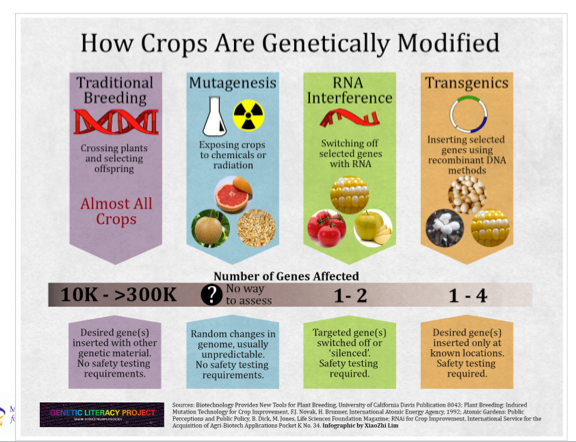
Why Newer Techniques (Genetic Engineering) Are Safer: Fewer Genes Affected Than Traditional Breeding and Mutagenesis along with Required Safety Testing

In the slide above, the first column shows traditional breeding of crops and how this can introduce thousands of changes into the crop.  The second column illustrates the use of chemicals and radiation (mutagenesis) to change crops; this type of crop engineering preceded genetic engineering and has not required the rigorous testing of the final two columns which depict modern biotechnology with either RNA interference of transgenetics.  Both of the later two methods are precise and undergo ~6-10 years of testing before introduction.

3

The above slide is one example of the safety of genetically modified tomatoes.

BT Corn (insect resistant) is Safer with Less Liver Cancer and Fewer Birth Defects

BT Corn (insect resistant) is Safer with Less Liver Cancer and Fewer Birth Defects

Key points:

  1. Genetic change in foods is as old as agriculture. Lots of vegetables/crops were not found in nature, including corn and wheat.
  2. Why is it false to talk about genetic modification as a special category? It’s all DNA which is undergoing constant change. Traditional breeding allows selection of random multiple genes and then selecting plant we like. Biotechnology is more precise and safer (eg. only the gene for sweetness for corn is transferred).
  3. 240 Agencies from across the globe have confirmed that biotechnology is safe because of the extensive testing that show these agents are at least as safe as ‘natural’ products. 2500 studies of GMO products from across the globe (not just Monsanto!) have proven the safety of these products.
  4. Other examples of beneficial biotechnology: a) BT Corn — safer, less liver cancer, less birth defects (myelomeningocele) b) Golden Rice –can solve iron & vitamin A deficiency.  Vitamin A deficiency contributes >1 million deaths/yr due to increased susceptibility to infections. Golden Rice in normal quantities provides RDA of Vit A. This is a lot more effective and less expensive than a supplement.

More tomorrow…

Understanding Your Food and Biotechnology (Part 1)

Yesterday’s blog post summarized a recent talk by Ronald Kleinman, MD:  Biotechnology, Nutrition, and Agriculture: A Perspective and Implications for Child Health.  Given the prevalence of misinformation on this topic, I am spending the next few days elaborating on this lecture.  The full lecture (video and slides) will be available on the Nutrition4Kids website.

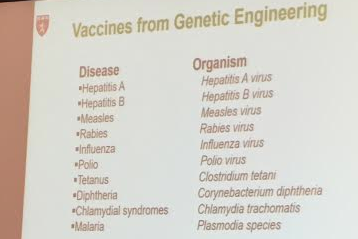
Genetic Engineering Has Allowed Development of Vaccines

Genetic Engineering Has Allowed Development of Vaccines

Biotechnology in Our Foods is Ubiquitous

Biotechnology in Our Foods is Ubiquitous

Biotechnology Has Reduced Mortality Dramatically

Biotechnology Has Reduced Mortality Dramatically

Genetic Change in Crops is as Old as Agriculture

Genetic Change in Crops is as Old as Agriculture. There would not be corn as we know it without crop breeding.

Key points:

  1. Genetic engineering has not only improved our food supply but has been essential in innovations like vaccines and insulin.
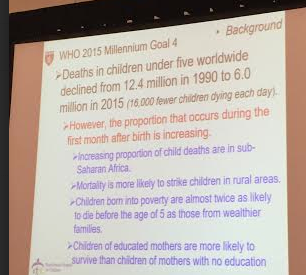
  2. Biotechnology is ubiquitous. It’s not just crops, but cheese, wine, etc. Biotechnology has led 16,000 fewer children dying each day compared to 1995; this is largely due to biotechnology. Improved food security and less malnutrition results in fewer secondary complications (eg pneumonia, diarrhea).
  3. Genetic change in foods is as old as agriculture. Lots of vegetables/crops were not found in nature, including corn and wheat. Cross-breeding allowed development of modern corn and wheat.

More tomorrow…

War on Science and Genetically-Modified Food

In the battlefield of ideas, science is losing badly.  The problem with science is that many concepts are complex and sometimes difficult to communicate.  For anyone interested in the science of food, and not the hysteria, a great lecture on this topic was presented by Ronald Kleinman, MD:  Biotechnology, Nutrition, and Agriculture: A Perspective and Implications for Child Health

Group Shot

Stanley Cohen, Jeff Lewis, Evelyn Johnson (Georgia AAP President), Ronald Kleinman, and Jay Hochman at the Georgia AAP Nutrition Symposium.

I had the opportunity to participate and moderate a nutrition symposium at the Georgia American Academy of Pediatrics (AAP) pediatric meeting. This symposium was sponsored by Nutrition4Kids and funded by an educational grant from Nutricia.  The first lecture was given by Dr. Kleinman. He is Chief of the Department of Pediatrics at Massachusetts General Hospital and Physician-in-Chief at MassGeneral Hospital for Children (MGHfC) and Partners Pediatrics.  This was a fabulous talk and will be available at the Nutrition4Kids website.  This blog post is a summary of the talk.  Over the next few days, a couple of these ideas will be discussed further. Key points:

  1. Genetically Modified Foods/Genetically modified organisms (GMO). These foods are safer and better than foods that are not genetically modified.
  2. Roundup is not dangerous for humans.  With biotechnology, we can kill weeds without killing plants. Thus no till farming is needed. Current herbicides are much safer than prior agents. Humans, unlike plants, do not have the enzyme that roundup targets –so it is safe. Roundup is water-soluble; it is not stored in fat. There is a 30 yr hx/o safe use.  There is no data indicating cancer risk in humans or fertility risk. In the past, testing breastmilk for roundup used a flawed methodology. F/u study by McGuire M (sponsored by US govt) showed no roundup in breastmilk.
  3. GMOs are part of a larger “War on Science.” As with vaccinations, there is a great deal of misleading and exaggerated information.
  4. Genetic engineering has not only improved our food supply but has been essential in innovations like vaccines and insulin.
  5. Biotechnology is ubiquitous. It’s not just crops, but cheese, wine, etc. Biotechnology has led 16,000 fewer children dying each day compared to 1990; this is largely due to biotechnology. Improved food security and less malnutrition results in fewer secondary complications (eg pneumonia, diarrhea).
  6. Genetic change in foods is as old as agriculture. Lots of vegetables/crops were not found in nature, including corn and wheat. Cross-breeding allowed development of modern corn and wheat.
  7. Why is it false to talk about genetic modification as a special category? It’s all DNA which is undergoing constant change. Traditional breeding allows selection of random multiple genes and then selecting plant we like. Biotechnology is more precise and safer (eg. only the gene for sweetness for corn is transferred, so can be more safe).
  8. 240 Agencies have confirmed that biotechnology is safe because of the testing that shows these agents are at least as safe as ‘natural’ products. 2500 studies of GMO products from across the globe (not just Monsanto!) have proven the safety of these products.
  9. Most of GMO-farming occurs with small farmers (90% in developing world) who are not rich; these products result in income gains of greater than 30%.
  10. Why is there such widespread adoption of GMO products by farmers? They are better: insect resistance, herbicide resistance, viral resistance, and drought/salt resistance
  11. Other examples of beneficial biotechnology: a) BT Corn — safer, less liver cancer, less birth defects (eg. myelomeningocele) b) Golden Rice –can solve iron & vitamin A deficiency.  Vitamin A deficiency contributes >1 million deaths/yr due to increased susceptibility to infections. Golden Rice in normal quantities provides RDA of Vit A. This is a lot more effective and less expensive than a supplement. These products are not commercially available even though nonprofits willing to give seeds for free –due to hysteria, politics. Greenpeace has actually burned Golden Rice rice fields.
  12. Drought-resistant crops are becoming increasingly important. Meeting global food production will require more ‘crop per drop’ due to increasing population and less lands available for farming. Not just 3rd World –look at California. There are low crop yields in areas without biotech (Subsaharan Africa) and higher mortality.

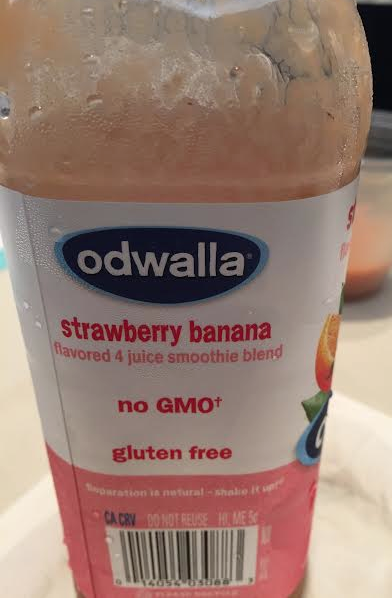
Unfortunately, shortly after hearing this lecture explain in great detail why GMO-containing products should be praised and not shunned, I picked up a drink.  Here’s the label: GMO free drink

Bottomline: The science is sound.  Biotechnology and GMOs/genetically modified foods are making are food better, safer and reducing mortality. If only we could communicate this fact effectively.

Related blog posts:

Hyperoxaluria due to Excessive Almond Milk

A recent report (Ellis D, Lieb J. J Pediatr 2015; 167:1155-8) highlights the high content of oxalate in almond milk products which led to hyperoxaluria and hematuria in three children.

Key points:

  •  “A tendency to low fluid intake and a hereditary predisposition to calcium-based nephrolithiasis may have been contributing factors.”
  • “Mammals lack oxalic decarboxylase and other enzymes that can degrade oxalic acid…oxalate homeostasis depends on” ..1) dietary intake, 2) endogenous synthesis of oxalate, 3) GI flora degradation and limiting of absorption,  and 4) renal processing/excretion of oxalate

My take: In patients with oxalate kidney stones or microscopic hematuria, limiting almond milk and increasing fluid intake would be beneficial.

Gabi

Gabi

Down Syndrome -Updated Growth Curves

Full link to Pediatrics article (www.pediatrics.org/cgi/doi/10.1542/peds.2015-1652 DOI: 10.1542/peds.2015-1652): Growth Charts for Children with Down Syndrome in U.S. (Reference from Kipp Ellsworth)

Excerpt:

New DSGS growth charts were developed by using 1520 measurements on
637 participants. DSGS growth charts for children ,36 months of age showed marked improvements in weight compared with older US charts. DSGS charts for 2- to 20-year-olds showed that contemporary males are taller than previous charts showed. Generally, the DSGS growth charts are similar to the UK charts.


NY Times: Cutting Sugar Improves Children’s Health in Just 10 Days

Perhaps this is not the best day of the year for this topic….

A recent small study of 43 children is summarized by the NY Times: Cutting Sugar Improves Children’s Health in Just 10 Days

An excerpt:

Obese children who cut back on their sugar intake see improvements in their blood pressure, cholesterol readings and other markers of health after just 10 days, a rigorous new study found.

The new research may help shed light on a question scientists have long debated: Is sugar itself harming health, or is the weight gain that comes from consuming sugary drinks and foods mainly what contributes to illness over the long term?

In the new study, which was financed by the National Institutes of Health and published Tuesday in the journal Obesity, scientists designed a clinical experiment to attempt to answer this question. They removed foods with added sugar from a group of children’s diets and replaced them with other types of carbohydrates so that the subjects’ weight and overall calorie intake remained roughly the same.

After 10 days, the children showed dramatic improvements, despite losing little or no weight. The findings add to the argument that all calories are not created equal, and they suggest that those from sugar are especially likely to contribute to Type 2 diabetes and other metabolic diseases, which are on the rise in children, said the study’s lead author, Dr. Robert Lustig, a pediatric endocrinologist at the Benioff Children’s Hospital of the University of California, San Francisco.

My take:  For a long time, I have been telling patients that if they make only one change, I would start by eliminating sugar-sweetened beverages. While this is a small study, it reinforces the view that sugar intake needs to be limited.

This post included last year’s pumpkin (Halloween 2014):  NASPGHAN Postgraduate Course 2014 -Liver Module – gutsandgrow

This year’s pumpkin:

Screen Shot 2015-10-30 at 7.22.05 PM