Hyperoxaluria due to Excessive Almond Milk

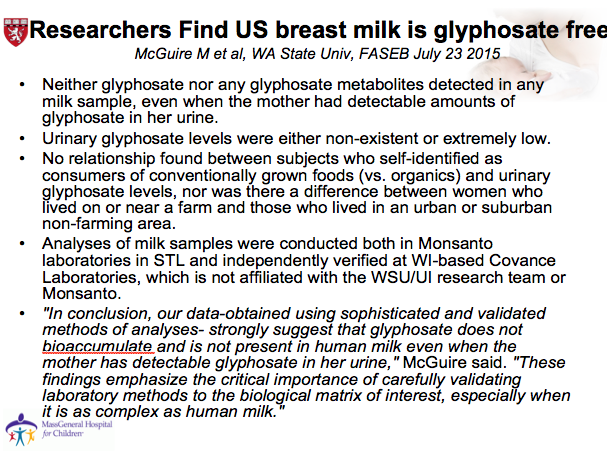
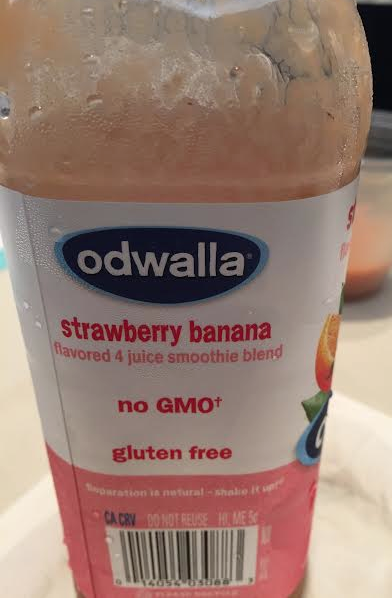
A recent report (Ellis D, Lieb J. J Pediatr 2015; 167:1155-8) highlights the high content of oxalate in almond milk products which led to hyperoxaluria and hematuria in three children.

Key points:

  •  “A tendency to low fluid intake and a hereditary predisposition to calcium-based nephrolithiasis may have been contributing factors.”
  • “Mammals lack oxalic decarboxylase and other enzymes that can degrade oxalic acid…oxalate homeostasis depends on” ..1) dietary intake, 2) endogenous synthesis of oxalate, 3) GI flora degradation and limiting of absorption,  and 4) renal processing/excretion of oxalate

My take: In patients with oxalate kidney stones or microscopic hematuria, limiting almond milk and increasing fluid intake would be beneficial.

Gabi

Gabi

Down Syndrome -Updated Growth Curves

Full link to Pediatrics article (www.pediatrics.org/cgi/doi/10.1542/peds.2015-1652 DOI: 10.1542/peds.2015-1652): Growth Charts for Children with Down Syndrome in U.S. (Reference from Kipp Ellsworth)

Excerpt:

New DSGS growth charts were developed by using 1520 measurements on
637 participants. DSGS growth charts for children ,36 months of age showed marked improvements in weight compared with older US charts. DSGS charts for 2- to 20-year-olds showed that contemporary males are taller than previous charts showed. Generally, the DSGS growth charts are similar to the UK charts.


NY Times: Cutting Sugar Improves Children’s Health in Just 10 Days

Perhaps this is not the best day of the year for this topic….

A recent small study of 43 children is summarized by the NY Times: Cutting Sugar Improves Children’s Health in Just 10 Days

An excerpt:

Obese children who cut back on their sugar intake see improvements in their blood pressure, cholesterol readings and other markers of health after just 10 days, a rigorous new study found.

The new research may help shed light on a question scientists have long debated: Is sugar itself harming health, or is the weight gain that comes from consuming sugary drinks and foods mainly what contributes to illness over the long term?

In the new study, which was financed by the National Institutes of Health and published Tuesday in the journal Obesity, scientists designed a clinical experiment to attempt to answer this question. They removed foods with added sugar from a group of children’s diets and replaced them with other types of carbohydrates so that the subjects’ weight and overall calorie intake remained roughly the same.

After 10 days, the children showed dramatic improvements, despite losing little or no weight. The findings add to the argument that all calories are not created equal, and they suggest that those from sugar are especially likely to contribute to Type 2 diabetes and other metabolic diseases, which are on the rise in children, said the study’s lead author, Dr. Robert Lustig, a pediatric endocrinologist at the Benioff Children’s Hospital of the University of California, San Francisco.

My take:  For a long time, I have been telling patients that if they make only one change, I would start by eliminating sugar-sweetened beverages. While this is a small study, it reinforces the view that sugar intake needs to be limited.

This post included last year’s pumpkin (Halloween 2014):  NASPGHAN Postgraduate Course 2014 -Liver Module – gutsandgrow

This year’s pumpkin:

Screen Shot 2015-10-30 at 7.22.05 PM

Single High-Dose Oral Vitamin D Therapy (Stoss) for Children with Inflammatory Bowel Disease

A retrospective study (D Shepherd et al. JPGN 2015; 61: 411-14) shows that a single high-dose oral vitamin D3 therapy can be effective for 6 months.  This study involved treatment of 76 children between 2006-2010.

Stoss vitamin D dosing used in this study:

  • < 3 yrs 200,000 IU
  • 3-12 yrs 400,000 IU
  • >12 800,000 IU

Followup levels of Vitamin D (25-OH) and calcium were checked at 1 week, 4 weeks, 3 months and 6 months..

Key finding:

  • 25-OHD >50 nmol/L (=20 ng/mL) was seen in 96.6% at 3 months and 76.4% at 6 months.  63% had a level >75 nmol/L (=30 ng/mL) at 1 month.

Bottomline: Authors noted: “Stoss therapy safely and effectively achieved and maintained a level of 25OHD > 50 nmol/L during 6 months in these children with IBD.”

Related blog posts:

Atlanta Botanical Gardens

Atlanta Botanical Gardens

NY Times: Frequent Antibiotics May Make Children Fatter

The topic of antibiotics and obesity has been discussed several times on this blog (see links below).  More information on this topic has been published and is summarized by the NY Times: Frequent Antibiotics May Make Children Fatter

Children who regularly use antibiotics gain weight faster than those who have never taken the drugs, according to new research that suggests childhood antibiotics may have a lasting effect on body weight well into adulthood.

The study, published in the International Journal of Obesity, examined the electronic medical records of 163,820 children ages 3 to 18, counting antibiotic prescriptions, body weight and height. The records, which covered pediatric exams from 2001 through 2012, showed that one in five — over 30,000 children — had been prescribed antibiotics seven or more times. By the time those children reached age 15, they weighed, on average, about 3 pounds more than children who had received no antibiotics.

While earlier studies have suggested a link between antibiotics and childhood weight gain, they typically have relied on a mother’s memories of her child’s antibiotic use. The new research is significant because it’s based on documented use of antibiotics in a child’s medical record.

This story was covered by Time:  Too many antibiotics may make children heavier

My Take: More evidence that antibiotics could contribute to obesity.  Perhaps this will help with antimicrobial stewardship.

Related blog posts:

  1. Could antibiotics make you fat? | gutsandgrowth
  2. Could Obesity Be Cured/Created at Birth with Manipulation of …
  3. Missing Bacteria in Refractory Malnutrition | gutsandgrowth
  4. Preterm Neonatal Microbiota and Effect of Perinatal …
  5. Early Antibiotics and Obesity | gutsandgrowth

What Functional MRI Finds with Anorexia

In yesterday’s post, functional MRI showed how rapidly anti-TNF agents can improve pain response in patients with Crohn’s disease.  A more complete description of this study is available from the AGA Blog: This is Your Brain on Anti-TNF Therapy. This link also includes access to a video abstract discussion with the author.

Another intriguing use of this technology provides insight into why Anorexia is difficult to treat.  The study was summarized in the NY Times:

Anorexia May Be Habit, Not Willpower  Here’s an excerpt:

The study’s findings may help explain why the eating disorder, which has the highest mortality rate of any mental illness, is so stubbornly difficult to treat. But they also add to increasing evidence that the brain circuits involved in habitual behavior play a role in disorders where people persist in making self-destructive choices no matter the consequences, like cocaine addiction or compulsive gambling

The researchers used a brain scanning technique to look at brain activity in 21 women with anorexia and 21 healthy women while they made decisions about what foods to eat…

As expected, both the anorexic and the healthy women showed activation in an area known as the ventral striatum, part of the brain’s reward center. But the anorexic women showed more activity in the dorsal striatum, an area involved with habitual behavior, suggesting that rather than weighing the pros and cons of the foods in question, they were acting automatically based on past learning…

My take: This study shows an association between food selection and differences in brain activity between women with anorexia and in controls.  These changes do not prove a causal association but provide an important piece of information about what might be going wrong.

Atlanta Botanical Garden, Bruce Munro Exhibit

Atlanta Botanical Garden, Bruce Munro Exhibit

Nutrition Support for Intestinal Failure

A recent blog post by Kipp Ellsworth (The Pediatric Nutritionist) highlights a recent lecture by Conrad Cole that provides several useful points.  The post includes a link (embedded talk) to 76 slides. Here are a few:

  • Iodine deficiency: Dr. Cole “typically orders a TSH level every six months, also ordering a spot urine iodine if a significant TSH uptrend emerges.”
  • Lipids: “Dr. Cole reviewed evidence revealing the restriction of soy-based lipids to 0.5 gm/kg/day as nearly efficacious as the use of fish-oil infusion (Omegaven) in preventing PNALD.” Daily use of 0.5-1 gm/kg/day is less error-prone than using lipids 3-4 times/week.
  • Formula: “breastmilk constitutes the touchstone of enteral nutrition choices for the intestinal rehab patient, conferring a host of benefits beyond those associated with formula alone… the medium-chain triglyceride component of many oligomeric and monomeric formulas constitutes a therapeutically valuable source of nutrition, increasing the proportion of calories absorbed.”
  • Formula for toddlers: “Dr. Cole continues transitioning his patients to oligomeric and monomeric formulas such as Elecare Junior, Pediasure Peptide, and Peptamen Junior upon reaching toddlerhood.”
  • Fiber: “Dr. Cole recommended the use of a sc-FOS product such as NutraFloraas optimal for the short bowel syndrome population.  Dr. Cole initially doses soluble fiber at 1 gm/100 mL of formula and advances as tolerated to a maximum of 2 gm/100 mL formula.  He typically does not use supplemental fiber to control ostomy output in patients without a colon in continuity”
  • Enteral fish oil: “Dr. Cole remains unconvinced of the therapeutic value of enteral fish oil supplementation pending further research studies on the subject.”

Funding for his talk was provided by Abbott Nutrition.

Related blog posts:


Medical Progress for Intestinal Failure Associated Liver Disease

A recent review (WS Lee, RJ Sokol. J Pediatr 2015; 167: 519-26) provides a good explanation of the role of various intralipids and intestinal microbial dysbiosis in the setting of intestinal failure-associated lipid disease (IFALD).

The review discusses criteria for IFALD (e.g. conjugated bilirubin ≥2 mg/dL & parenteral nutrition ≥14 days), the epidemiology, and the pathogenesis. Potential risk factors and level of evidence for these risk factors is noted in Table 1.

Table 2 describes the evidence supporting suggested strategies for the prevention of IFALD. The effectiveness and recommendation levels for these strategies are generally very low and weak based on reviews by ASPEN and the American Pediatric Surgical Association.  Among the strategies, reduction of lipid emulsion to ≤ 1 g/kg/day has some of the strongest support in this table but is still regarded as level III evidence and described as “probably effective.” Other strategies reviewed included ethanol locks, multidisciplinary team management, use of ursodeoxycholic acid/bile acid supplementation, cycling of parenteral nutrition, use of prokinetics, removal of manganese and copper from parenteral nutrition, and antibiotic use to prevent bacterial overgrowth.

With regard to alternative intravenous lipids (eg. fish oil, or SMOF mixture):

  • “Although a properly powered randomized controlled trial has not been conducted, current evidence suggests that the use of FO-ILE [fish oil -intravenous lipid emulsion] is effective in reversing the established cholestasis associated with IFALD, but there is insufficient evidence for a preventative effect in neonates.”
  • “Most studies have been retrospective, used a historical comparison group, used different doses of lipid, and were conducted in patients with quite advanced IFALD.”
  • Use of FO-ILE improves biochemical parameters, but has not been shown to “improve other important long-term clinical outcomes, such as severity of hepatic fibrosis.”
  • In addition, reduced ILE and FO-ILE may result in other sequelae such as cognitive developmental delay. “Recently, lower brain weight and alterations of brain PUFA content were demonstrated in newborn piglets receiving total PN with reduced dose SO-ILE or FO-ILE compared with normal dose SO-ILE.”

My take: This review underscores how little is known about the approaches often recommended for management of IFALD.

Related blog posts:

Disclaimer: These blog posts are for educational purposes only. Specific dosing of medications/diets (along with potential adverse effects) should be confirmed by prescribing physician/nutritionist.  This content is not a substitute for medical advice, diagnosis or treatment provided by a qualified healthcare provider. Always seek the advice of your physician or other qualified health provider with any questions you may have regarding a condition.

Empty Road

Why We Should Not Worry That Much About Water Intake

A recent article in the NY Times rebuts the claim that so many kids are dehydrated: No, You Don’t Have to Drink 8 Glasses of Water a Day

An excerpt:

Prospective studies fail to find benefits in kidney function or all-cause mortality when healthy people increase their fluid intake. Randomized controlled trials fail to find benefits as well, with the exception of specific cases — for example, preventing the recurrence of some kinds of kidney stones. Real dehydration, when your body has lost a significant amount of water because of illness, excessive exercise or sweating, or an inability to drink, is a serious issue. But people with clinical dehydration almost always have symptoms of some sort….

This summer’s rash of stories was inspired by a recent study in the American Journal of Public Health. Researchers used data from the National Health and Nutrition Examination Survey from 2009 to 2012 to examine 4,134 children ages 6 to 19. Specifically, they calculated their mean urine osmolality, which is a measure of urine concentration. The higher the value, the more concentrated the urine…

But as people in this country live longer than ever before, and have arguably freer access to beverages than at almost any time in human history, it’s just not true that we’re all dehydrated.

Some of the key points:

  • Much of the research suggesting that there is an epidemic of under hydration is being funded by companies with a financial interest
  • Water is contained in both foods and other beverages
  • The research standard of urine osmalality >800 mOsm is not used clinically
  • There are no documented health advantages that have been identified in individuals who drink more fluid (except in those with documented history of kidney stones)

Related blog posts:


Spice It Up? Curcumin for Ulcerative Colitis

This past week I’ve been on call and had not finished a few articles.  One article that was on the to do list: A Lang et al. Clinical Gastroenter Hepatol 2015; 13: 1444-9.

I’ve read it now.  However, even before finishing the article, I read a few good summaries of this article, including one from my colleague Stan Cohen/Nutrition4Kids: Curcumin Helps (A Lot) in Ulcerative Colitis

Here’s an excerpt:

The cover of a prestigious medical journal shows a pile of curcumin and over it, the announcement reads: Curcumin Helps Induce Remission in Mild-to-Moderate Ulcerative Colitis.  That’s big news for a lot of reasons: first, this Indian spice (derived from tumeric) is inexpensive and well-tolerated; second, in a well-designed scientific study, curcumin showed that it was more effective than some medicines; and third, it showed, again, that careful trials of long-used herbs can be done with important results being shown.  Again, because an earlier study (H Hanai, Clinical Gastroenterology 2006, pages 1502-6) had previously shown that curcumin can help keep ulcerative colitis (UC) patients from flaring for up to 12 months. 

This new study (A Lang, Clinical Gastroenterology 2015, pages 1444-9) compared curcumin to a placebo in patients who were not doing well on the standard therapy (mesalamine) for mild to moderate UC.  With a single daily dose of 3 grams of curcumin in capsule form, 65% responded (compared to 12% with a placebo) and 54% actually went into remission, having essentially no symptoms.  Perhaps even, more importantly, 38% of those taking the curcumin showed improvement in the intestinal tissue when a colonoscopy was performed.  That’s comparable or better than some of the medications that are being used.

A few other details: The researchers used a product called Cur-Cure from Bara Herbs Inc (Yokneam, Israel).  Also, the associated commentary in the same journal by CN Bernstein (pages 1450-52) suggests that the study may have targeted mild ulcerative colitis (rather than moderate ulcerative colitis). He comments that the increasing rates of ulcerative colitis among Indian immigrants could be related to including less curcumin in their now more westernized diets.  He also notes, as did Dr. Cohen, that there were previous promising studies dating back to 2006.  Why has it taken nine years for this report?

My Take: This is probably an article worth reading.  Although curcumin appears promising, I worry that a lack of financial incentive may hamper research efforts to better define its place as an agent for treatment of ulcerative colitis.

Related blog posts:

Curcumin

This has been a sad week in our office.  Here are links to two poems that come to mind: