Medical Imaging of Children/Adolescents and Risk of Cancer (2025)

R Smith-Bindman et al. NEJM 2025; 393: 1269-1278. Medical Imaging and Pediatric and
Adolescent Hematologic Cancer Risk

Methods: This was a retrospective cohort of 3,724,623 children born between 1996 and
2016 in six U.S. health care systems and Ontario, Canada, until the earliest of cancer
or benign-tumor diagnosis, death, end of health care coverage, an age of 21 years, or December 31, 2017.

Key findings:

  • During 35,715,325 person-years of follow-up (mean, 10.1 years per person), 2961 hematologic cancers were diagnosed, primarily lymphoid cancers (2349 [79.3%]), myeloid cancers or acute leukemia (460 [15.5%]), and histiocytic- or dendritic-cell cancers
    (129 [4.4%]).
  • The excess cumulative incidence of hematologic cancers by 21 years of age among children exposed to at least 30 mGy (mean, 57 mGy) was 25.6 per 10,000
  • The authors estimated that 10.1% of hematologic cancers may have been attributable to radiation exposure from medical imaging, with higher risks from the higher-dose medical-imaging tests such as CT
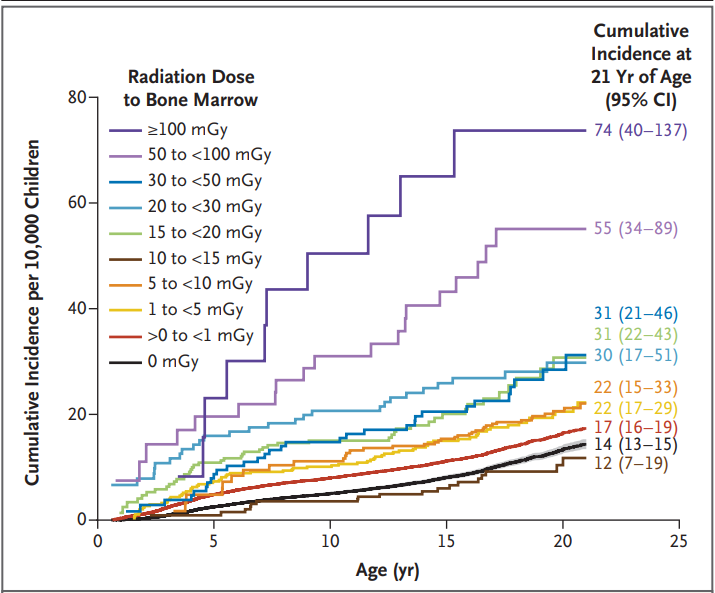
Cumulative Incidence of Hematologic Cancer According to Attained Age and
Radiation Dose to Bone Marrow among Children without Down’s Syndrome

Discussion Points:

  • “A 15-to-30-mGy exposure equivalent to one to two CT scans of the head was associated with an increased risk by a factor of 1.8”
  • “Although CT and other radiation-based imaging techniques may be lifesaving, our
    findings underscore the importance of carefully considering and minimizing radiation exposure during pediatric imaging to protect children’s long-term health”
  • “Research on Japanese atomic-bombing survivors showed that leukemia rates peaked 6 to 8 years after exposure, with excess risk lasting for more than five decades, particularly for acute myeloid leukemia”
  • This study tried to avoid concerns about reverse causation — in which imaging is performed because of existing cancer symptoms –by lagged exposures by 6 and 24 months
  • “The increasing use of low-value imaging in children and excessive radiation doses in CT are well documented…In many cases, reducing the imaging dose or substituting magnetic resonance imaging or ultrasonography may be more feasible than avoiding imaging altogether”

While the risks in aggregate appear quite substantial, the editorial (L Morton. NEJM 2025; 393; 1337-1339.Studying Cancer Risks Associated with Diagnostic Procedures –Interpret Wisely) makes the point that the risks for the individual are very small. “Fewer than 1% of youths in this study accumulated doses of 30 mGy or more from medical imaging and even at this exposure level, the excess cumulative incidence of hematologic cancers was low (25.6 per 10,000)…we need to ensure that all involved in medical imaging…wisely interpret the results…to understand the balance of the very small risks and the notable benefits of necessary imaging examinations to provide optimal patient care.”

My take: This study is a reminder to carefully evaluate the benefits, risks and alternatives when using ionizing radiation studies.

Related blog posts:

Dr. John Barnard: Trends in Pediatric Workforce — A Growing Concern

John Barnard MD gave a great talk today as part of the yearly Donald Schaffner lecture. This lecture also honored Larry Saripkin (see blog post: Thank You Larry) as a master clinician. My notes below may contain errors in transcription and in omission. Along with my notes, I have included many of his slides.

Key Points:

  • Since 2015, there is less interest in U.S.-trained physicians to pursue a career in pediatrics.
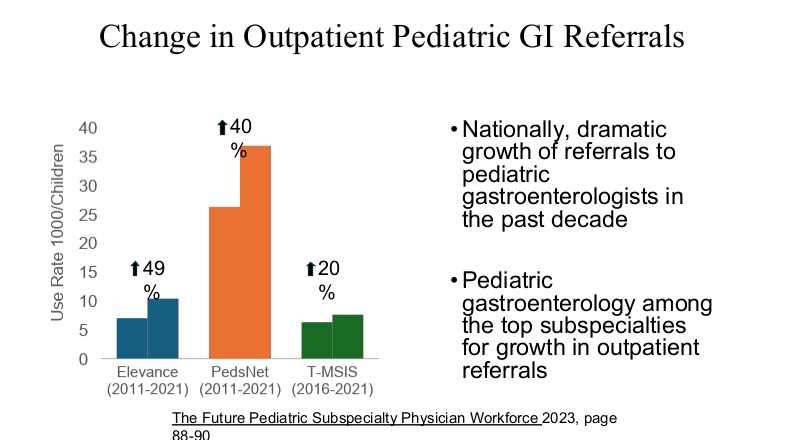
  • The pediatric gastroenterology workforce continues to grow. Other pediatric subspecialties are understaffed and not attracting enough younger pediatric trainees
  • The percentage of women and international medical graduates has been increasing; currently 67% of board-certified pediatricians are women and 22% are non-US international medical graduates
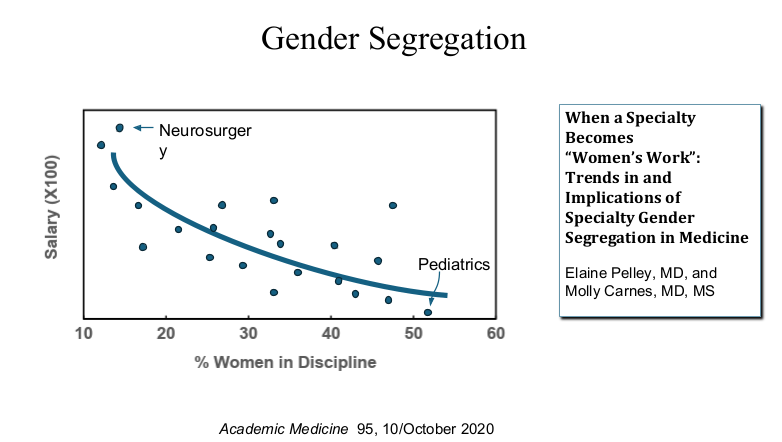
  • Women through all medical fields and even in pediatrics segregate to less well-paying positions. For example, pediatric cardiology has a lower percentage of women and has a higher median income compared to many other pediatric subspecialty areas
  • While relatively lower pay is thought to be a driving force in choosing a career in pediatrics/pediatric subspecialty, several surveys of medical students indicate that this is not the only factor; other factors may be more important
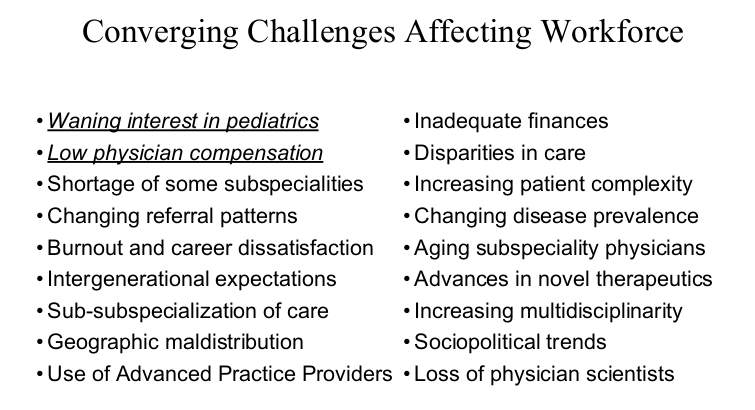
When workforce changes are noted in the mainstream press, there is often a clear worrisome trend
This slide does not include pediatricians who are not board-certified (~10% of workforce)
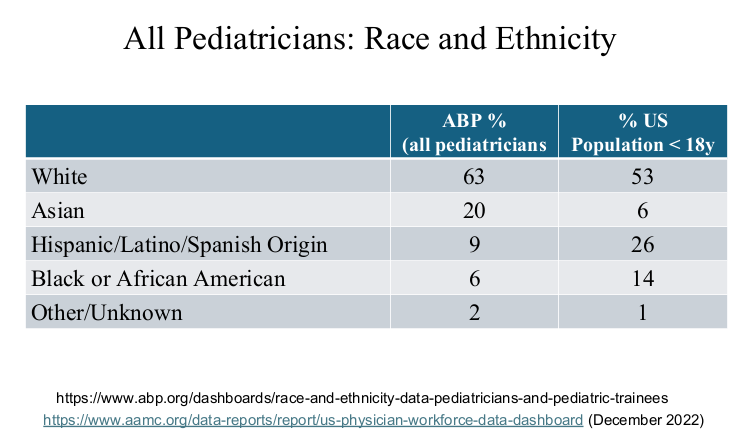
Pediatric physicians’ race/ethnicity is varied but does not match general population
There are a lot of counties without any board-certified pediatricians
68 counties in Georgia without a board-certified pediatrician
Driving distance to see a pediatric gastroenterologist
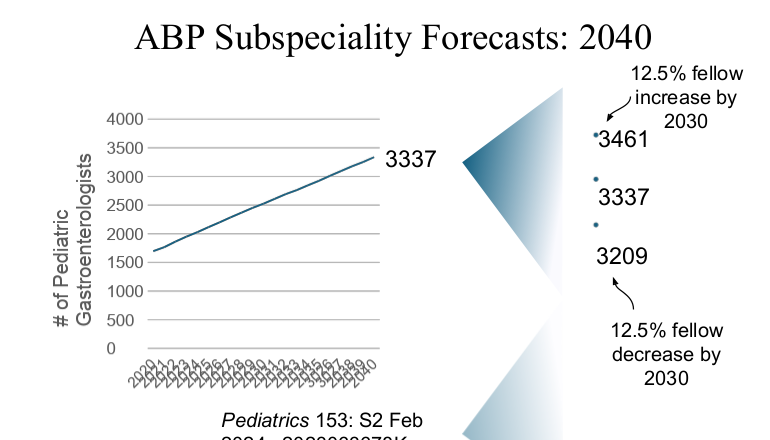
There is expected to be a substantial increase in pediatric GIs by 2040 (about 1700 now). Even with some adjusting of the number of trainees, this will not make a big change in the projections
In contrast to pediatric GI, the general pediatric workforce is likely to decline modestly.
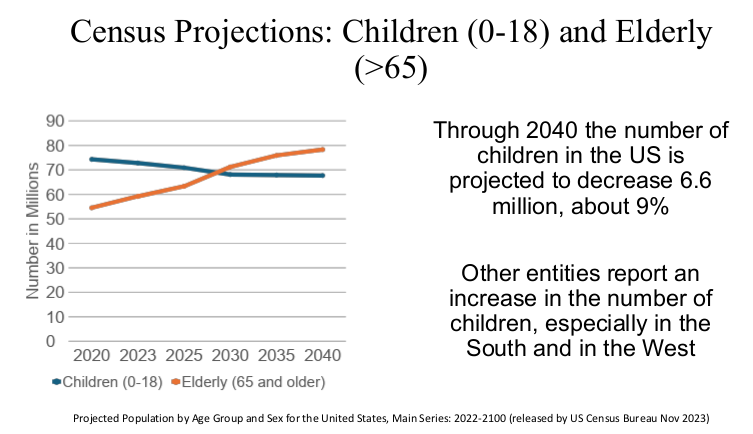
There is an expected/projected drop in the pediatric population of 6.6 million by 2040
Since 2015, there has been a lower interest (7.9% of U.S. medical students) in U.S. pediatric match positions. From 1990–2015, it had been stable around 10%.
2024 is the first year with an absolute drop in the number of trainees as the number of residency positions have been increasing and open positions after the match can be filled with DO and non-US international medical graduates.
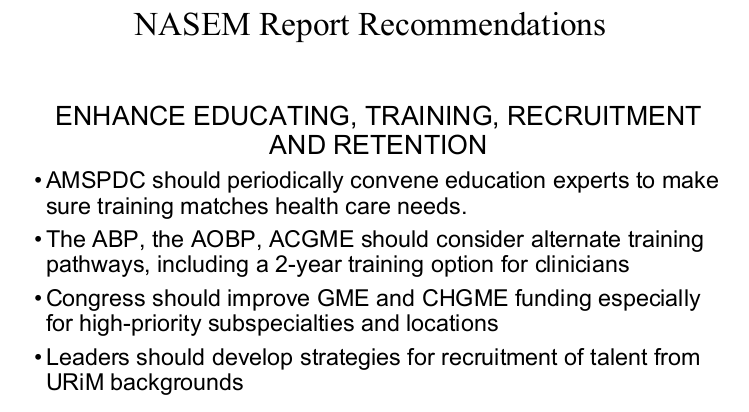
Medical students cite other non-monetary factors as important in their career choices

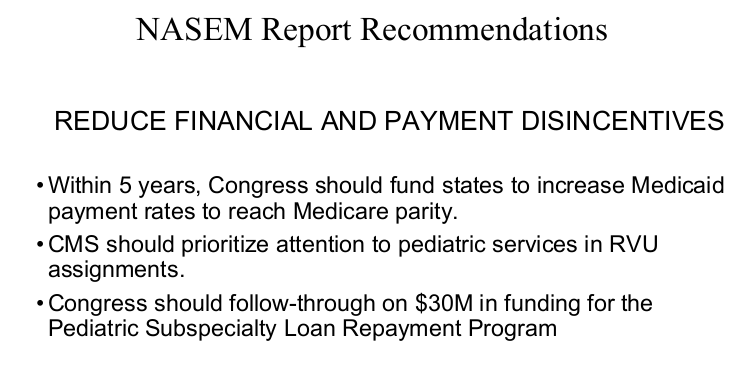
Physicians are in the top 5% of compensation, though pediatric physicians receive less
compensation than their peers. According to 2024 Doximity survey
(https://press.doximity.com/reports/doximity-physician-compensation-report-2023.pdf)
average physician salary exceeds $350,000 in most metro areas.

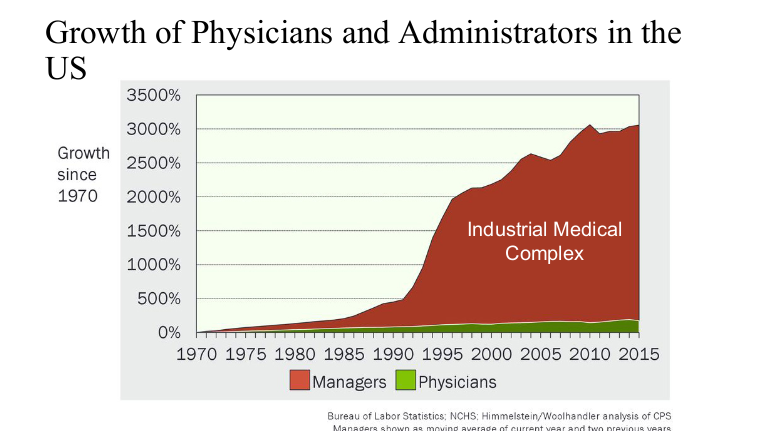
The growth of the medical-industrial complex/management may
be a factor affecting physician job satisfaction
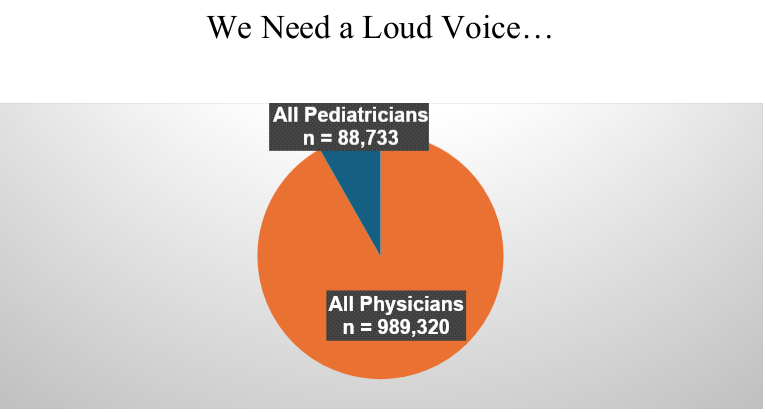
Pediatricians are a small fraction of all U.S. physicians.
We need to make sure that our interests and the interests of children are heard.

My take: Dr. Barnard noted that “medicine has never been more exciting than it is today.” Yet, the decreased interest of medical students for a career in pediatrics/pediatric subspecialties needs to be addressed.

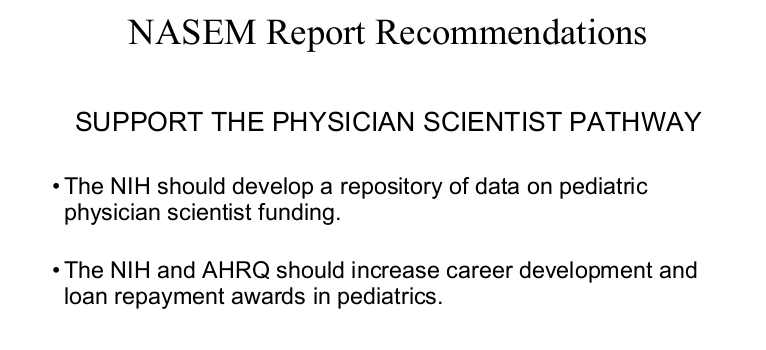
Dr. Barnard modified the material and presented the William Balistreri lecture at this year’s NASPGHAN meeting. Here are some additional slides from this talk which focused more on Pediatric Gastroenterology:

Distribution of Pediatric Gastroenterologists

Related blog post: “Why It’s So Hard to Find a Pediatrician These Days”

GLP-1 Obesity Medication for 6-11 Year Olds

  • CK Fox et al. NEJM 2024; https://www.nejm.org/doi/full/10.1056/NEJMoa2407379. Liraglutide for Children 6 to <12 Years of Age with Obesity — A Randomized Trial
  • T Barrett et al. NEJM 2024 (editorial);/doi/full/10.1056/NEJMe2410560. Childhood Obesity and GLP-1 Receptor Agonists — A Coming of Age?

Background: The glucagon-like peptide-1 (GLP-1) analogues liraglutide and semaglutide are approved by the Food and Drug Administration and the European Medicines Agency for long-term weight management in adolescents 12 years of age or older with obesity, as adjunct treatments to lifestyle interventions.14-19 These medications act centrally to increase satiety signaling, reduce appetite and energy intake, and decrease food reward; these medications also increase postprandial insulin levels, reduce glucagon secretion, and delay gastric emptying.

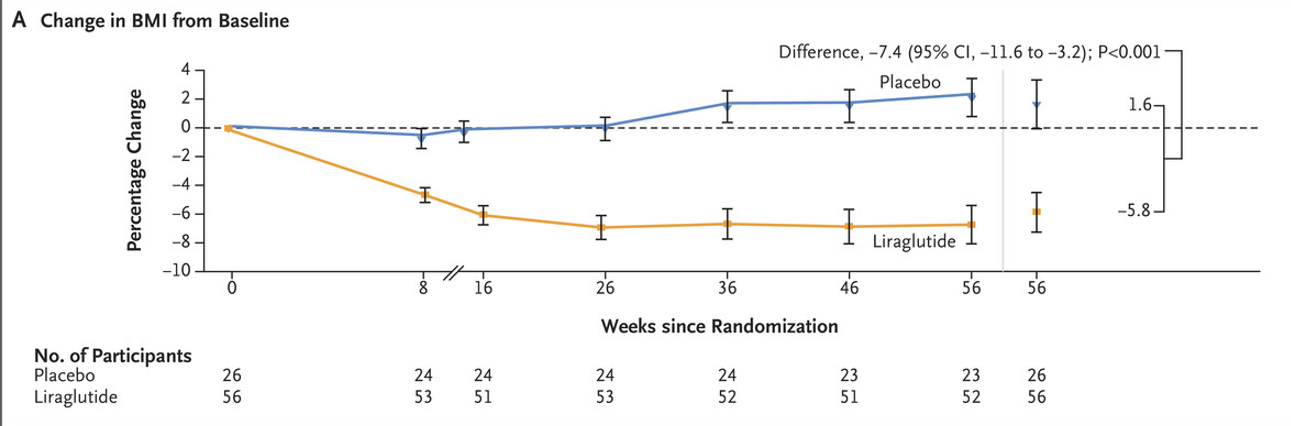
Methods: this phase 3a (SCALE kids) trial, which consisted of a 56-week treatment period and a 26-week follow-up period, we randomly assigned children (n=82) (6 to <12 years of age) with obesity, in a 2:1 ratio, to receive either once-daily subcutaneous liraglutide at a dose of 3.0 mg (or the maximum tolerated dose) or placebo, plus lifestyle interventions.

Key findings:

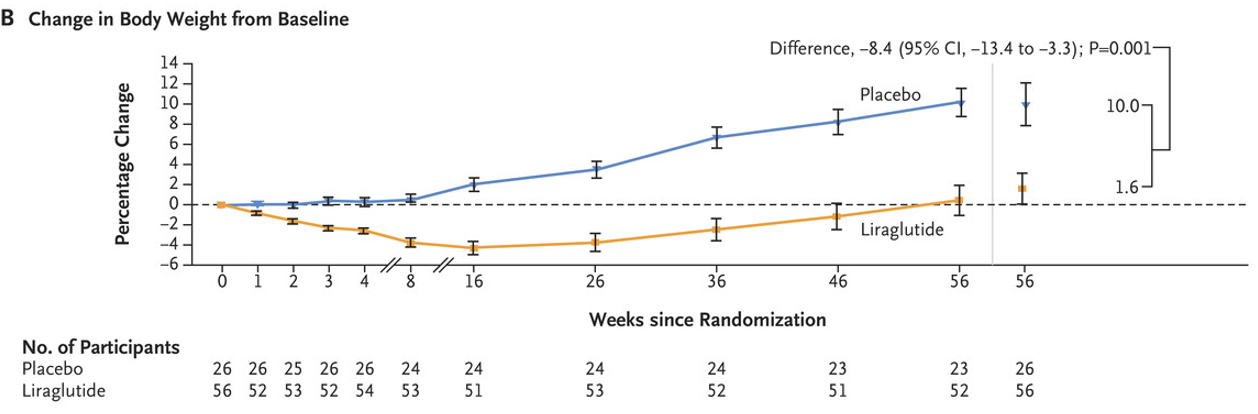
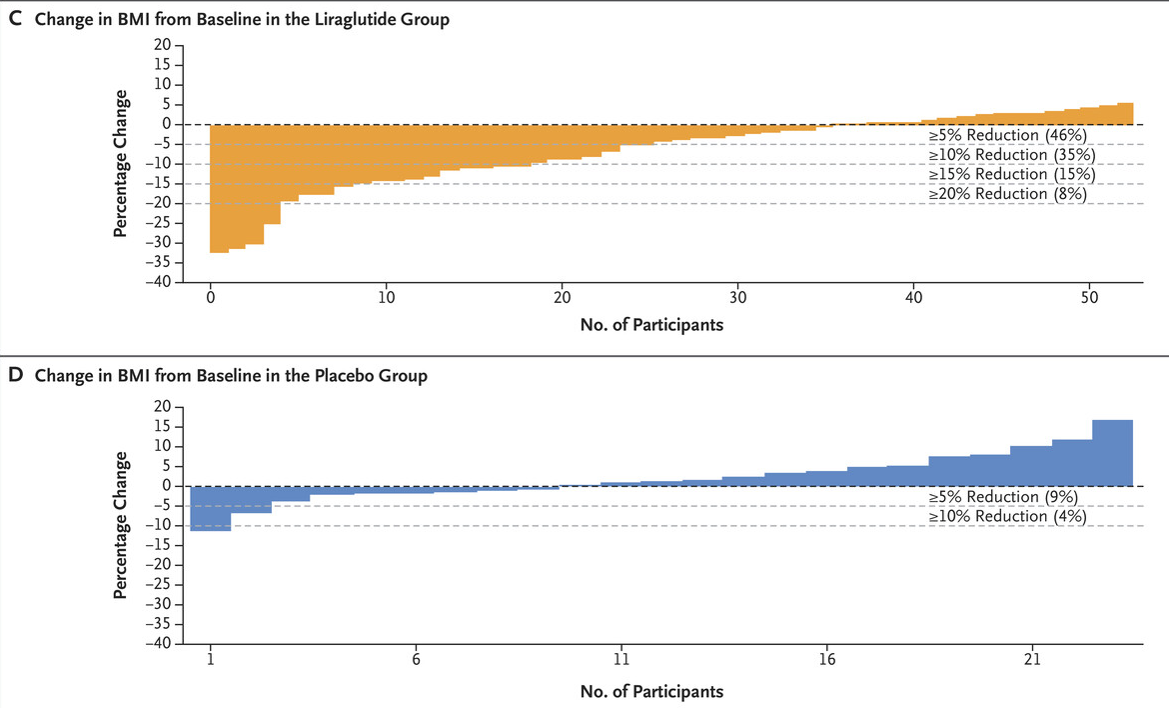
  • At week 56, the mean percentage change from baseline in BMI was −5.8% with liraglutide and 1.6% with placebo
  • A reduction in BMI of at least 5% occurred in 46% of participants in the liraglutide group and in 9% of participants in the placebo group (adjusted odds ratio, 6.3)
  • The most common adverse events were gastrointestinal disorders, which were reported in 45 of 56 participants (80%) in the liraglutide group and in 14 of 26 participants (54%) in the placebo group. Three cases of vomiting in the liraglutide group were considered by investigators to be serious (each required emergency care); however, none of the events required hospitalization and all resolved without sequelae.
  • In the treated group, improvements were also observed in diastolic blood pressure and the glycated hemoglobin level
  • The editorial: “Fox et al. provide much-needed evidence for the effects of a GLP-1 receptor agonist in young children with obesity, offering a therapeutic option in prepubertal children with severe obesity as an adjunct to healthy lifestyle interventions.”

My take: It is good that there are now effective therapeutic pharmaceutical options for obesity, especially for those developing complications. Long term studies are needed as the effects of these medications on weight are not sustained in those who stop them. Given the need for indefinite therapy, other public health measures are needed to try to reverse the high prevalence of obesity.

Related blog posts:

Nipocalimab for (Alloimmune) Severe Hemolytic Disease of Newborn -Will It Work for Other Alloimmune Diseases?

KJ Moise et al. NEJM 2024; 391: 526: 526-537. Nipocalimab in Early-Onset Severe Hemolytic Disease of the Fetus and Newborn

Background: In early-onset severe hemolytic disease of the fetus and newborn (HDFN), transplacental transfer of maternal anti-erythrocyte IgG alloantibodies causes fetal anemia that leads to the use of high-risk intrauterine transfusions in order to avoid fetal hydrops and fetal death. Nipocalimab, an anti–neonatal Fc receptor (FcRn) blocker, inhibits transplacental IgG transfer and lowers maternal IgG levels.

Nipocalimab is under development for the treatment of multiple IgG autoantibody- or alloantibody-driven diseases. FcRn is the sole placental IgG transporter and salvage receptor that maintains circulating maternal serum IgG concentrations. FcRn blockade aims to inhibit alloantibody transfer to the fetus and to lower maternal IgG alloantibody titers

Methods: Phase II, open label study with weekly intravenous infusions of nipocalimab were administered to the maternal participants from baseline (~14 weeks gestation) until the planned last dose at 35 weeks’ gestation. 

Key findings:

  • Live birth at 32 weeks’ gestation or later without intrauterine transfusions occurred in 7 of 13 pregnancies (54%) in the study. No cases of fetal hydrops occurred, and 6 participants (46%) did not receive any antenatal or neonatal transfusions
  • Live birth occurred in 12 pregnancies. The median gestational age at delivery was 36 weeks and 4 days

Discussion: “IVIG is used in some cases of early-onset severe HDFN on the basis, in part, of its competitive FcRn inhibition, which is similar to nipocalimab, but intrauterine transfusions are still used in the large majority of cases, despite the use of IVIG. The favorable outcomes that we observed with nipocalimab therapy are probably due to its FcRn-binding affinity, which is more than 1000 times that of IVIG and thus potentially affords greater inhibition of transplacental alloantibody transfer and lowering of the maternal alloantibody titer. The decrease in the maternal alloantibody titer of 4 to 32 times that was observed with nipocalimab, as compared with the decrease of 35 to 43% that was reported with IVIG.”

In the associated editorial (Maisonneuve et al. pg 563-567), the authors note that nipocalimab will “probably reduce the passive immunity of newborns…should follow surviving children. Nipocalimab treatment may also be useful for other fetal complications caused by transplacental transfer of maternal IgG, such as antiplatelet alloantibodies or for maternal autoimmune conditions caused by autoantibodies that cross the placenta and cause transitory autoimmune disease in the newborn, including …systemic lupus erythematosus with anti-SSA antibodies.”

My take: This therapy may also be an option in preventing subsequent cases of gestational alloimmune liver disease in at-risk mothers.

Related blog posts:

Walnut Street Bridge at Sunrise. Tennessee River. Chattanooga. (Picture from JMH)

Firearms -Still the Leading Cause of Childhood Death in U.S.

Related blog posts:

“Golden Half Hour in Chronic Pain”

A recent editorial (NL Schecter et al. JAMA Pediatr. 2021;175(1):7–8. doi:10.1001/jamapediatrics.2020.1798. Full text: The Golden Half Hour in Chronic Pediatric Pain—Feedback as the First Intervention -thanks to Ben Gold for this reference) notes that with pain we need to take a more holistic approach: ” Commonly, patients with chronic pain are evaluated by multiple clinicians, including pediatricians and specialists, each of whom may have addressed only one of the child’s persistent symptoms (ie, headache, abdominal pain, dizziness, nausea, or fatigue). When each symptom is addressed in isolation, it seldom provides comprehensive relief. Moreover, this process can foster a family’s belief that each symptom represents a distinct illness.”

Key points:

  • Brief feedback discussion following an assessment for pediatric chronic pain may be akin to the “golden hour” in trauma or neonatal care.  During this critical time, there is an opportunity to connect with a family, clarify misconceptions, move toward a shared biopsychosocial understanding of pain, and engage families in a comprehensive plan for recovery.”
  • Tips for mastering the golden hour:
    • Elicit Parent and Child Expectations at the Outset “This facilitates a thorough understanding of a family’s main concerns, reduces anxiety, and improves satisfaction. For example, if a parent reports that they expect their child to undergo additional diagnostic testing, this needs to be appreciated and addressed during the feedback.”
    • Validate Symptoms  “Explicitly stating that you do not believe the child is “faking” or that the problem is merely due to psychological stress is critical”
    • Offer a Positive Diagnosis “Although you are special, your symptoms are not unique or mysterious…. If the focus is on what has been ruled out, there are always additional diagnoses that you, the patient, or the internet can introduce.”
    • Provide Education “it can be helpful to explain that chronic pain is like a fire alarm that keeps ringing although there is no fire. “
    • Emphasize a Multidisciplinary Intervention Plan plan for medical intervention, psychological support, and physical activity
    • Stay Connected “Plan follow-up visits (every 4-6 weeks)”
    • Offer an Optimistic Appraisal  “optimistic appraisals are most effective when a clinician has first validated a child’s pain, provided a positive diagnosis and education, and outlined an evidence-based, multidisciplinary approach to care”

My take: This article offers helpful advice. However, whether there is a “golden hour” of opportunity is not clear. Having better outcomes with early intervention could easily be related, at least in part, to selection bias.

Related blog posts:

From Ashish Jha Twitter Feed 2/1/21:

Choosing the Right IV Fluids

As noted in previous posts, I tend to favor isotonic IV fluids due to risk of hyponatremia with hypotonic fluids. A new study (below) indicates that some isotonic fluids are associated with an increased risk of electrolyte disturbances. Thanks to Ben Gold for this reference.

In this unblinded, randomized clinical trial with 614 children, participants were randomized to receive commercially available plasmalike isotonic fluid therapy (140 mmol/L of sodium and 5 mmol/L potassium in 5% dextrose) or moderately hypotonic fluid therapy (80 mmol/L sodium and 20 mmol/L potassium in 5% dextrose).

Key findings:

  • Clinically significant electrolyte disorder was more common in children receiving plasmalike isotonic fluid therapy:
    • Hypokalemia developed in 57 patients (19%) and hypernatremia developed in 4 patients (1.3%) receiving isotonic fluids; in total, this group had 61 of 308 patients [20%]) with electrolyte disturbance, compared with 9 of 306 patients [2.9%] of those receiving hypotonic fluid therapy (P < .001)
    • “Severe” hypokalemia (<3.0 mmol/L) was significantly more common in patients receiving isotonic fluid therapy 8 of 308 patients (2.6%) compared with 1 of 306 patients ( 0.3%) patients receiving hypotonic fluid therapy

My take: In the U.S., this suggests that fluids like lactated ringer’s which also has a low amount of potassium should not be routinely used. When choosing an isotonic fluid in children, D5 Normal Saline (0.9%) with added potassium may be more suitable..

Related blog posts:

Disclaimer: This blog, gutsandgrowth, assumes no responsibility for any use or operation of any method, product, instruction, concept or idea contained in the material herein or for any injury or damage to persons or property (whether products liability, negligence or otherwise) resulting from such use or operation. These blog posts are for educational purposes only. Specific dosing of medications (along with potential adverse effects) should be confirmed by prescribing physician.  Because of rapid advances in the medical sciences, the gutsandgrowth blog cautions that independent verification should be made of diagnosis and drug dosages. The reader is solely responsible for the conduct of any suggested test or procedure.  This content is not a substitute for medical advice, diagnosis or treatment provided by a qualified healthcare provider. Always seek the advice of your physician or other qualified health provider with any questions you may have regarding a condition

Poorly-Conceived Allergy Testing Can Lead to Unnecessary Diet Restrictions and Complications

As noted in previous blog posts (see below), allergy testing can lead to unnecessary food restrictions which can in turn lead to numerous subsequent problems. Case in point: YV Virkud et al (NEJM 2020; 383: 2462-2470) report on A 29-Month-Old Boy with Seizure and Hypocalcemia

This boy presented with severe hypocalcemia, rickets, and seizures one year after allergy testing led to additional dietary restrictions. Also, his mother was a vegetarian. At time of allergy testing, IgE testing suggested allergies to milk, cashews, pistachios, egg whites, almonds, soybeans, chickpeas, green peas, lentils, peanuts, and sesame seeds. Many of these foods caused no symptoms with food challenges.

Besides working through the potential reasons for hypocalcemia, the authors make several key points:

  • Nutritional rickets is NOT a historical relic. Vitamin D deficiency appears to be increasing in high-income countries despite food-fortification strategies.
  • There are frequent misdiagnosis of food allergies. “Clinical and laboratory testing is severely limited by poor specificity…approximately 20 to 25% of children have positive IgE blood tests to specific food allergens, even though the true prevalence of IgE-mediated food allergy is likely closer to 6 to 8%.”
  • Avoid indiscriminate use of IgE blood testing. Allergen panels are “particularly problematic, because they often uncover false positives and lead to unnecessary food avoidance.” Individual IgE testing can be used to help confirm a diagnosis after an allergic reaction to a food trigger.
  • The most accurate diagnostic tool is an oral food challenge.
  • In children with food allergies, supplements are often needed to avoid micronutrient deficiencies and a low threshold is needed for involvement of dieticians.
  • Early introduction of foods can reduce incidence of allergies and periodic reassessment is needed to determine if a child has outgrown an allergy.
Xrays show generalized demineralization. The metaphyses show flaring (dashed arrow) and cupping (arrowbead). The physes are radiolucent and widened (asterisks).

Related blog posts:

Disclaimer: This blog, gutsandgrowth, assumes no responsibility for any use or operation of any method, product, instruction, concept or idea contained in the material herein or for any injury or damage to persons or property (whether products liability, negligence or otherwise) resulting from such use or operation. These blog posts are for educational purposes only. Specific dosing of medications (along with potential adverse effects) should be confirmed by prescribing physician.  Because of rapid advances in the medical sciences, the gutsandgrowth blog cautions that independent verification should be made of diagnosis and drug dosages. The reader is solely responsible for the conduct of any suggested test or procedure.  This content is not a substitute for medical advice, diagnosis or treatment provided by a qualified healthcare provider. Always seek the advice of your physician or other qualified health provider with any questions you may have regarding a condition

Best Studies from Pediatrics

Pediatrics has provided free full publication access to what they consider their best 10 articles and 5 influential COVID-19 publications: Pediatrics2020 Best Articles Link
Here are direct links to 3 of the articles:

O Nafiu et al. Race, Postoperative Complications, and Death in Apparently Healthy Children (Video Abstact available on link) Key finding:

  • Among 172 549 apparently healthy children from a retrospective database, the incidence of 30-day mortality, postoperative complications, and serious adverse events were 0.02%, 13.9%, and 5.7%, respectively. Compared with their white peers, AA children had 3.43 times the odds of dying within 30 days after surgery (odds ratio: 3.43; 95% CI: 1.73–6.79)

K Lycett et al. Body Mass Index From Early to Late Childhood and Cardiometabolic Measurements at 11 to 12 Years. The authors followed 5107 infants from birth. Key findings:

  • At age 6 to 7 years, compared with those with a healthy weight, children with overweight had higher metabolic syndrome risk scores by 0.23 SD units (95% confidence interval 0.05 to 0.41) and with obesity by 0.76 SD units (0.51–1.01), with associations almost doubling by age 10 to 11 years. Thus, overweight and obesity from early childhood onward were strongly associated with higher cardiometabolic risk at 11 to 12 years of age.
  • In addition, obesity but not overweight had slightly higher outcome carotid intima-media thickness (0.20–0.30 SD units) at all ages

A Kempe et al. Parental Hesitancy About Routine Childhood and Influenza Vaccinations: A National Survey Key finding:

  • Hesitancy prevalence was 6.1% for routine childhood and 25.8% for influenza vaccines in this online sample of 2176 parents

Colchicine and Leukopenia

A recent study (E Sag et al. J Pediatr 2020; 224: 166-70) provided some useful information about the development of leukopenia in children receiving colchicine.

This study included 213 patients receiving colchicine at doses between 0.5 mg adn 2 mg/day.  Routine labs were obtained 2 weeks after starting treatment, at 3 months, and then every 6 months.  If leukopenia was identified, f/u labs were obtained 1 week later. Colchicine doses were decreased in patients with persistent leukopenia.

Key findings:

  • 23 (10.8%) developed reversible leukopenia.  No cases of leukopenia were severe and there was not an increased rate of infections.

Related blog posts: