Menetrier’s Disease in a Pediatric Patient Plus Measles and Influenza Updates

X Wang et al. N Engl J Med 2025;392:1334. Ménétrier’s Disease

  • History: 16-year-old girl was admitted to the hospital with a 2-month history of leg swelling and hypoalbuminemia. She had no gastrointestinal symptoms.
  • Treatment: She was placed on a high-protein diet and medications to eradicate a concurrent infection with Helicobacter pylori. At a 3-month follow-up visit, the patient’s edema and hypoalbuminemia had resolved.

Related blog posts:


Measles as of Friday May 2nd (per Caitlin Rivers): “According to CDC, a total of 935 confirmed measles cases have been reported by 30 jurisdictions. The previous high was 1,274 in 2019. So far this year, 121 cases (13%) have been hospitalized.”


AP News May 2nd: CDC reports 216 child deaths this flu season, the most in 15 years

“More U.S. children have died this flu season than at any time since the swine flu pandemic 15 years ago, according to a federal report released Friday…It’s a startlingly high number, given that the flu season is still going on. The final pediatric death tally for the 2023-2024 flu season wasn’t counted until autumn…There are likely several contributors to this season’s severity, but a big one is that fewer children are getting flu shots, added O’Leary, a University of Colorado pediatric infectious diseases specialist. The flu vaccination rate for U.S. children has plummeted from about 64% five years ago to 49% this season. Flu vaccinations may not prevent people from coming down with symptoms, but research shows they are highly effective at preventing hospitalizations and deaths, O’Leary said.”

Long-Acting GLP-2 Analogue Glepaglutide Reduces Parenteral Support

PB Jeppesen et al. Gastroenterol 2025; 168: 701-713. Open Access! Glepaglutide, a Long-Acting Glucagon-like Peptide-2 Analogue, Reduces Parenteral Support in Patients With Short Bowel Syndrome: A Phase 3 Randomized Controlled Trial

Background:GLP-2 is a specific, endogenous, intestinal, pro-adaptive factor that plays a key role in enhancing intestinal mucosal morphology, function, and integrity under normal and pathophysiological conditions. The introduction of GLP-2 analogue treatment has been a paradigm shift in the treatment of SBS, targeting the pathophysiology of SBS by aiming to reinforce the structural and functional integrity of the remaining intestine. Exogenous GLP-2 induces significant hyperplasia of the small intestinal mucosal epithelium via stimulation of stem cell proliferation in the crypts and via inhibition of apoptosis in the villi…

The short half-life of 5–7 minutes for circulating native GLP-232 is a significant practical limitation for its use in a therapeutic setting. This is improved for the currently marketed GLP-2 analogue teduglutide, which has a half-life in circulation of approximately 2 hours.33 However, treatment is time-consuming due to the requirement for daily drug product reconstitution and dosing…

Glepaglutide is a novel, long-acting GLP-2 analogue in a stable, aqueous formulation for subcutaneous administration to treat patients with SBS. The stability in aqueous solution allows for dosing of glepaglutide as a ready-to-use liquid formulation. The mean effective half-life is 88 hours,34 which enables extension of the dosing interval beyond daily dosing.”

Methods: In this placebo-controlled, randomized, parallel-group, double-blind, phase 3 trial, adult patients (n=106) with SBS with intestinal failure requiring PS ≥3 d/wk were randomized 1:1:1 to 24 weeks of glepaglutide 10 mg twice weekly or once weekly or placebo

Key findings:

  • Glepaglutide twice weekly significantly reduced weekly PS volumes from baseline to week 24 vs placebo (mean change, −5.13 vs −2.85 L/wk; P = .0039; primary end point).
  • The improvement with glepaglutide was more prominent in those without a colon in continuity.
  • Mean concentrations of citrulline (a biomarker for enterocyte mass) increase 47% and 19% from baseline in the TW and OW treatment groups vs 5% in the placebo group
  • Serious adverse events were more common in both glepaglutide groups (28.6% and 11.4% for TW and OW respectively) compared to 5.6% for placebo. Specific risks of the active treatment included injection site reactions (common). Stoma complications (swelling of stoma nipple) along with GI events (nausea, vomiting and pain) were reported in more than 10% of patients. One patient developed cholecystitis and one developed a generalized rash in the active treatment group.
  • 61 of 70 patients (87%) treated with glepaglutide developed anti-drug antibodies. However, the authors found no apparent association with glepaglutide pharmacokinetics.
The improvement in parenteral support was more notable in those without the colon in continuity
Difference compared to placebo: 14.1% more of patients receiving twice weekly dosing and 11.2% more of patients receiving once weekly dosing of glepaglutide achieved enteral autonomy.

My take: This study shows that glepaglutide, like its GLP-2 analogue predecessor teduglutide, reduces the volume of parenteral support for patients with SBS. Due to its longer half-life, less frequent dosing is an added benefit compared to teduglutide.

Drawbacks for this group of medications include the potential for long-term adverse effects, endoscopic monitoring (possibly both upper endoscopy and colonoscopy), substantial costs, and reversion of intestinal failure severity when the medications are stopped.

Related blog posts:

Elevated Fecal Calprotectin Levels in Pediatric Patients with H pylori Infection

P Villalba-Davila et al. J Pediatr Gastroenterol Nutr. 2025;80:617–622 Helicobacter pylori infection is associated with significant elevations to fecal calprotectin, systemic inflammatory markers

In this retrospective study from a high immigrant density community, patients aged 6–18 years old who had an fecal calprotectin (FC) level within 6 months prior to EGD and who were tested for HP infection were included in the study. 

Key findings:

  • Of 129 patients, 37 (28.7%) tested positive for HP infection.
  • The mean FC level was significantly elevated in HP-positive patients (241.2) as compared with HP-negative patients (88.1) (p < 0.001)
  • HP-positive patients were also found to have small but notably higher elevations of CRP and ESR levels

My take: This study confirms what I have seen in my own practice. Patients with H pylori frequently have elevated calprotectin levels. Checking stool for H pylori may help avoid some colonoscopies. H pylori infection, however, can be present in patients with inflammatory bowel disease as well.

Related blog posts:

Phang Nga Bay, Thailand

Celiac Disease: Lower TTG-IgA Titers Associated with Isolated Duodenal Bulb Presentation

QY Wang et al. JPGN 2025; 80:678–685. Open Access! Low TTG-IgA associated with isolated bulb pathology in pediatric celiac disease: Implications in a no-biopsy approach era

Methods: There were 405 cases included in this retrospective study (mean age = 9.6 years). TTG-IgA values were considered negative if <4 U/mL, equivocal between 4 and 10 U/mL inclusively, and positive if >10 U/mL. At the authors’ institution, TTG‐IgA ≥10× ULN corresponds to ≥100 U/mL.

Key findings:

  • Bulb-restricted CD was present in 7.4% of cases
  • TTG-IgA was negative or equivocal in 60.0% of bulb-restricted CD, compared to 5.3% of distal duodenal CD (odds ratio [OR] = 26.6
  • No bulb-restricted CD cases attained TTG-IgA ≥10× ULN, compared to 48.5% of distal duodenal CD

My take: This study confirms and quantitates what most clinicians have experienced. Isolated duodenal bulb pathology is associated with lower celiac titer abnormalities.

Related blog posts:

Gorgeous stained glass by Margaret Vetter at Piedmont Arts Festival

Bowel Obstruction in Newborn

A Le-Nguyen. N Engl J Med 2025;392:1215. Meconium Ileus

An abdominal radiograph had shown dilated loops of small intestine (Panel A). Owing to concern for intestinal malrotation with midgut volvulus, an urgent laparotomy was performed. Considerable distention of the small bowel by thick meconium — rather than midgut volvulus — was identified. An enterotomy for evacuation of meconium was performed (Panel B). On postoperative genetic testing, the baby was found to be homozygous for a mutation in CFTR, the gene encoding cystic fibrosis transmembrane conductance regulator… The condition is associated with a very high risk of cystic fibrosis, so genetic testing is warranted in all cases. Uncomplicated cases are typically managed with serial enemas

Related blog posts:

Shingles Vaccine Linked to Lower Dementia Risk

L Carroll. NBC News, 4/2/25: Shingles vaccine may protect against dementia, new study suggests

An excerpt:

It’s been shown that reactivation of the chickenpox virus can lead to the accumulation of aberrant proteins associated with Alzheimer’s…

The new research, published Wednesday in Nature, analyzed data from more than 280,000 older adults in Wales and found that people who received the original shingles live virus vaccine were 20% less likely to develop dementia of any type than those who were not vaccinated...

The new study was possible because of an unusual public health policy in Wales that provided a “natural experiment” to explore the potential impact of the vaccine on dementia risk. With the rollout of the vaccine on Sept. 1, 2013, in Wales, shots were offered to people who were 79 on that date but not given to people who had turned 80. That allowed the German and Stanford University researchers to compare two groups of people with similar health characteristics who differed only by one week in age...

Bolstering the case for the shingles vaccine protecting against dementia were the findings from a study published in Nature Medicine in 2024 that analyzed medical records from more than 100,000 patients. That analysis suggested the newer shingles vaccine was associated with even better protection against dementia.

Actual study:Eyting, M., Xie, M., Michalik, F. et al. . Nature (2025). https://doi.org/10.1038/s41586-025-08800-x Open Access! A natural experiment on the effect of herpes zoster vaccination on dementia

My take: Avoiding shingles is a great reason to get the vaccine. Lowering the risk of Alzheimer’s may convince more to take the shot.

For those wanting a deeper dive on this topic: Eric Topol, The Shingles Vaccine and Reduction of Dementia

Related blog posts:

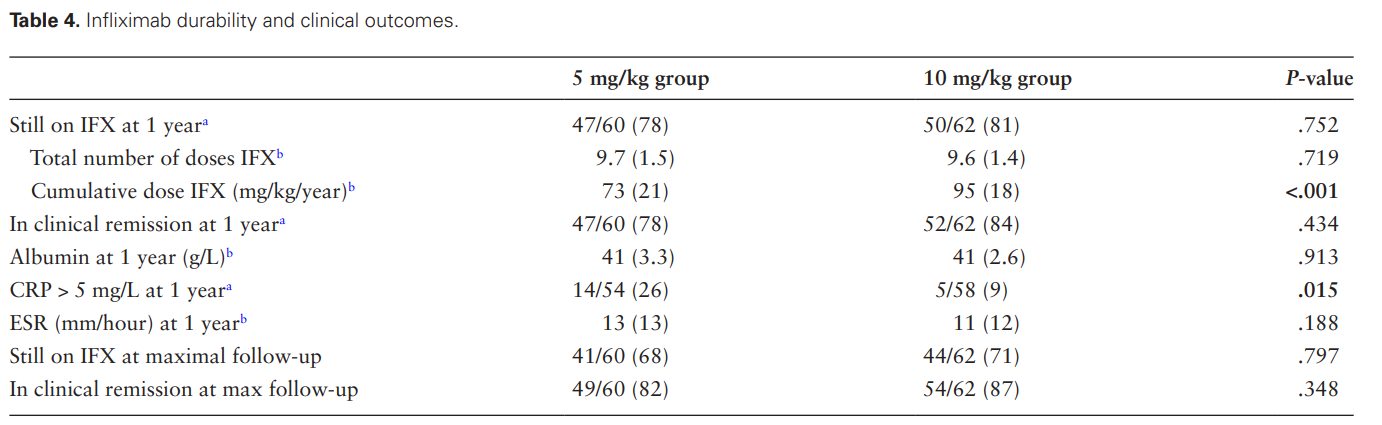
Ustekinumab in Pediatric Crohn’s Disease: Efficacy and Safety

EB Mitchell et al. JPGN 2025;80:653–663. Ustekinumab is safe and effective in pediatric patients with Crohn’s disease

This was a retrospective longitudinal cohort study of 101 children with CD treated with ustekinumab from two large centers between 2015 and 2020. The median follow-up time on ustekinumab was 16.6 months. 

Key findings:

  • Fifty-nine patients were in steroid-free clinical remission at 1 year.
  • Higher baseline disease activity (odds ratio [OR]: 0.91 (p = 0.01) and stricturing/penetrating disease phenotype (OR: 0.14 p = 0.02) were associated with decreased likelihood of steroid-free clinical remission at 1-year
  • Ustekinumab drug escalation occurred in 70% of patients, and after escalation, 50 (70%) achieved clinical remission, and 49 (69%) achieved steroid-free remission at the last follow-up
  • Adverse events were rare and did not require therapy discontinuation

My take: More pediatric data showing efficacy for ustekinumab is important. My sense, though, is that newer IL-23 specific agents are going to eclipse ustekinumab in pediatrics as they are doing in adults.

Related blog posts:

Genetic Advances in Congenital Diarrhea and Enteropathies (CODEs)

Z Gaibee et al. N Engl J Med 2025;392:1297-1309. The Genetic Architecture of Congenital Diarrhea and Enteropathy

Background:”Congenital diarrhea and enteropathies (CODEs) are a group of rare disorders that primarily affect the function of intestinal epithelial cells, leading to infantile-onset diarrhea and poor growth. Molecular defects in CODEs can be classified into six categories: epithelial trafficking and polarity, immune-cell-regulation, nutrient and electrolyte transport, enteroendocrine-cell development, nutrient metabolism, and other. CODEs are associated with substantial morbidity and mortality. Patients often receive lifelong fluid and nutritional management. Genetic causes include pathogenic variants in MYO5B (microvillus inclusion disease), EPCAM (tufting enteropathy), NEUROG3 (enteric anendocrinosis), DGAT1 (protein-losing enteropathy), and SLC9A3 (congenital sodium diarrhea). Treatment options are currently limited. However, an understanding of some of the genetic causes of CODEs has led to targeted therapies such as dietary treatments and the development of preclinical pharmacologic treatments.”

Methods: In this case series with 129 infants, the authors  analyzed the exomes or genomes of infants with suspected monogenic congenital diarrheal disorders. Using cell and zebrafish models, we tested the effects of variants in newly implicated genes.

Key findings:

  • Causal genetic variants were identified in 62 infants (48%). This included a new founder NEUROG3 variant
  • Using cell and zebrafish models, the authors uncovered and functionally characterized three novel genes associated with CODEs: GRWD1MYO1A, and MON1A

My take: Exome sequencing is an important part of the evaluation of infants with CODEs

Related blog posts:

Craig Friesen: Understanding Food Allergies and Food Intolerance in DGBIs

Dr. Craig Friesen gave our group an excellent update on food allergy and disorders of brain-gut interaction (DGBIs).  His main disclosure was that he is not an allergist. My notes below may contain errors in transcription and in omission. Along with my notes, I have included many of his slides.

Key points:

  • Food allergies are common affecting 6-10% of the population. In infants, milk and egg are common allergens. Nut allergies are more frequently seen in children
  • There are likely hundreds of genes that can predispose towards allergies
  • Food exposures, especially in the 4-6 month range, have been associated with a lower risk of food allergies
  • Food trigger symptoms are present in most patients with DGBIs; however, the lines between immune mechanisms and non-immune mechanisms are often blurry
  • Food allergy testing (skin prick testing, IgE-based blood tests) is not recommended in the absence of systemic symptoms due to poor specificity (perhaps ~10%). Obtaining a careful history is a very important part of determining allergies. Double-blind challenges, which are rarely done, are still considered “gold standard” for diagnosis
  • Mucosal endoscopic provocation (research tool) often discloses localized immune reaction; it does not correlate with skin prick testing or IgE-based blood tests
  • After prior sensitization/food allergies, stressful conditions may create similar symptoms as allergic exposures. This can be mediated by histamine and tryptase/mast cells
  • It is rare for food allergen restriction to “fix” a DGBI. Occasionally, food allergies may be part of the problem. Dietary restrictions may lead to weight loss and contribute to ARFID
  • IgG-based allergy testing (widely available) is not recommended; IgG antibodies are usually indicative of tolerance
  • Environmental pollen counts are associated with increased DGBI symptoms, increased mucosal eosinophils, and less sleep
  • Environmental allergen testing can sometimes be helpful in identifying cross-reacting foods
  • Alpha-gal syndrome. Consider testing in those with symptoms triggered by meat ingestion, and those with refractory symptoms. In pediatric patients, often no rash is identified and many will ‘outgrow’ allergy
  • Oral immunotherapy can be effective in improving tolerance for allergic foods; however, up to 70% will redevelop intolerance
  • When mucosal eosinophilia is identified, there are a number of potential treatments including dietary restrictions, mast cell stabilizers, antihistamines, and steroids

Related blog posts:

Disclaimer: This blog, gutsandgrowth, assumes no responsibility for any use or operation of any method, product, instruction, concept or idea contained in the material herein or for any injury or damage to persons or property (whether products liability, negligence or otherwise) resulting from such use or operation. These blog posts are for educational purposes only. Specific dosing of medications (along with potential adverse effects) should be confirmed by prescribing physician.  Because of rapid advances in the medical sciences, the gutsandgrowth blog cautions that independent verification should be made of diagnosis and drug dosages. The reader is solely responsible for the conduct of any suggested test or procedure.  This content is not a substitute for medical advice, diagnosis or treatment provided by a qualified healthcare provider. Always seek the advice of your physician or other qualified health provider with any questions you may have regarding a condition.

CT Imaging and Projected Cancer Risks: 2025 Analysis

Smith-Bindman R, Chu PW, Azman Firdaus H, et al.  JAMA Intern Med. Published online April 14, 2025. doi:10.1001/jamainternmed.2025.0505. Open Access! Projected Lifetime Cancer Risks From Current Computed Tomography Imaging

Methods: Lifetime radiation-induced cancer incidence and 90% uncertainty limits (UL) were estimated by age, sex, and CT category using National Cancer Institute software based on the National Research Council’s Biological Effects of Ionizing Radiation VII (BEIR VII) models and projected to the US population using scaled examination counts.

Key findings:

  • Ninety-three million CT examinations were performed in 61 510 000 patients in the United States in 2023, including an estimated 3,069,000 CTs (3.3%) in 2,570,000 children (4.2%) and 89,931,000 CTs (96.7%) in 58,940,000 adults (95.8%) 
  • In this risk model, the 93 million CT examinations performed in 62 million patients in 2023 were projected to result in approximately 103,000 future cancers
  • Estimated radiation-induced cancer risks were higher in children and adolescents, yet higher CT utilization in adults accounted for most (93,000) radiation-induced cancers
  • “If current practices persist, CT-associated cancer could eventually account for 5% of all new cancer diagnoses annually”

Discussion: “The projected number of radiation-induced cancers in this analysis is 3 to 4 times higher than the earlier assessment of CT exposure for several reasons”

  • CT use is 30% higher today than in 2007
  • Dose modeling in this study accounted for multiphase scanning
  • Substantially higher organ doses in this study were reconstructed using newer dosimetry methods
  • More granular CT categories reflecting imaging indications that have important dose differences
  • “Many of the model assumptions were conservative” and could underestimate the risk

My take (borrowed from authors): “Even very small cancer risks will lead to a significant number of future cancers given the tremendous volume of CT use in the United States…CT could be responsible for approximately 5% of cancers diagnosed each year. This would place CT on par with other significant risk factors, such as alcohol consumption (5.4%) and excess body weight (7.6%)”

Related blog posts:

Kiawah Beach, SC