




NC Chang et al. Clin Gastroentol Hepatol 2022; 20: 1701-1708. Open Access! A Gap in Care Leads to Progression of Fibrosis in Eosinophilic Esophagitis Patients
In this retrospective review with 701 patients, 95 (14%) had a gap in care (mean time without care, 4.8 ± 2.3 years). Key findings:
DA Carlson et al. Clin Gastroenterol Hepatol 2022; 20: 1719-1728. Esophageal Dysmotility Is Associated With Disease Severity in Eosinophilic Esophagitis
Consecutive adult patients with EoE (n=199) completed a 16-cm functional luminal imaging probe (FLIP) during endoscopy were evaluated in a cross-sectional study. Key findings:
Thus, abnormal esophageal CRs were related to EoE disease severity, especially features of fibrostenosis. This study suggests that esophageal wall remodeling, rather than eosinophilic inflammatory intensity, was associated with esophageal dysmotility in EoE.
My take: Despite my satirical title, I think these articles are helpful by documenting that ongoing EoE results in worsening esophageal dysfunction/dysmotility (especially if not treated). In addition, they provide insight into the natural history/pathophysiology of EoE.
Related blog posts:

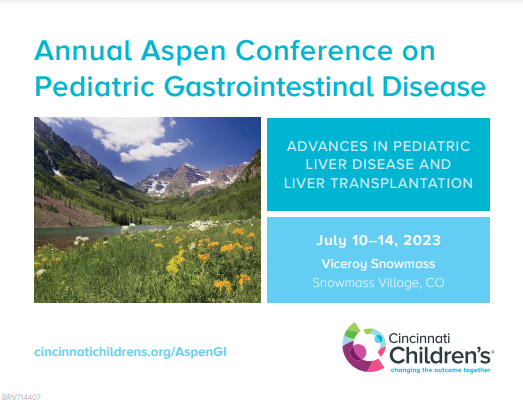
Heads up! Next year’s Aspen Pediatric GI Meeting will be July 10-14 -terrific learning experience and opportunity to mingle with some exceptional leaders in our field:
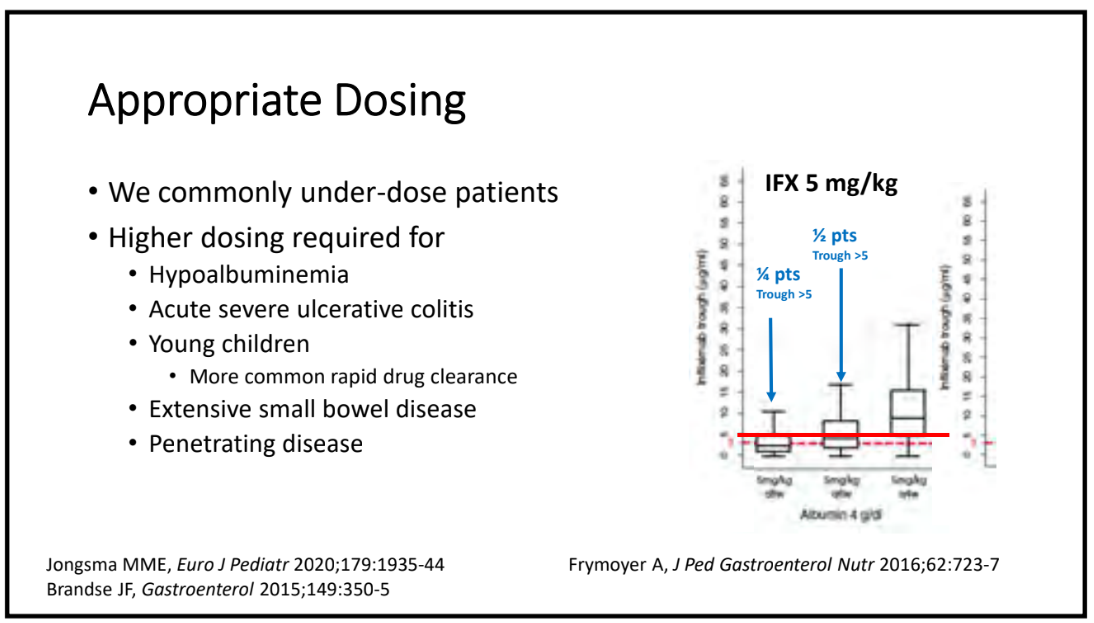
MC Dubinsky et al. Inflamm Bowel Dis 2022; 28: 1375-1385. Dashboard-Driven Accelerated Infliximab Induction Dosing Increases Infliximab Durability and Reduces Immunogenicity
In this prospective ‘real-world’ study (adults and children), “cumulative data from each infusion (INF), weight, albumin, C-reactive protein, IFX dose, IFX trough level, and antidrug antibody presence were used to inform subsequent INF dosing.” Key findings:
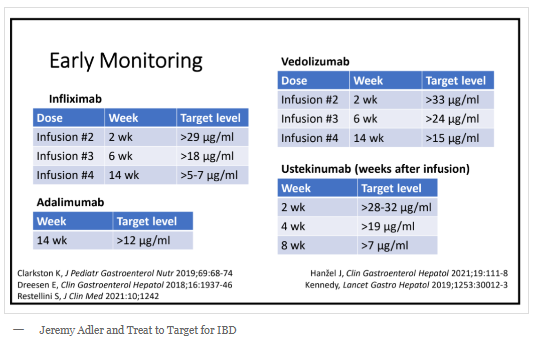
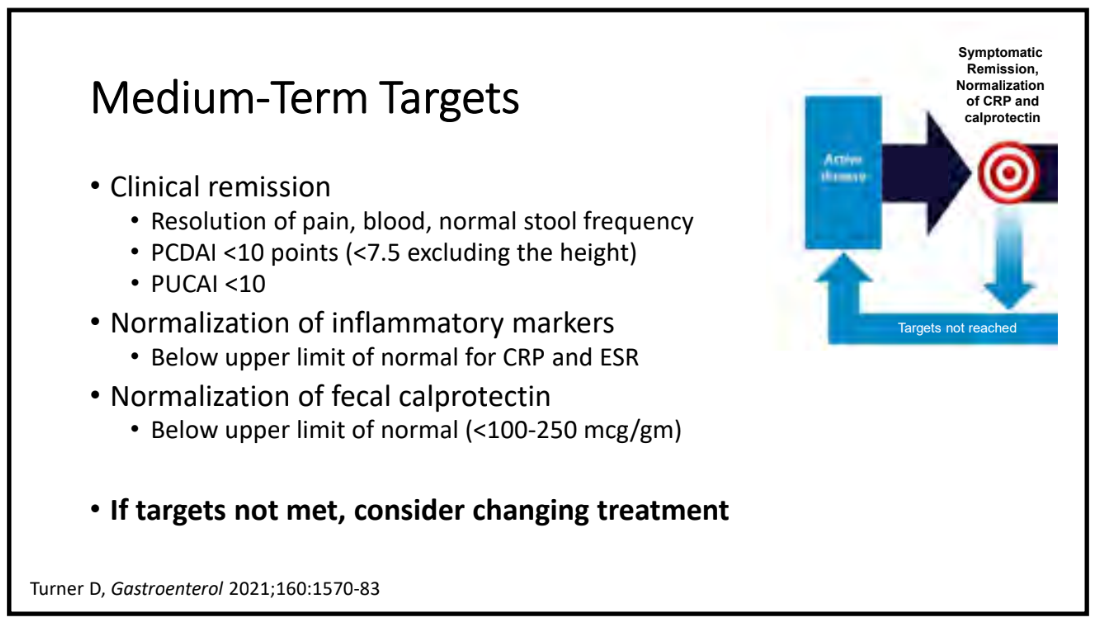
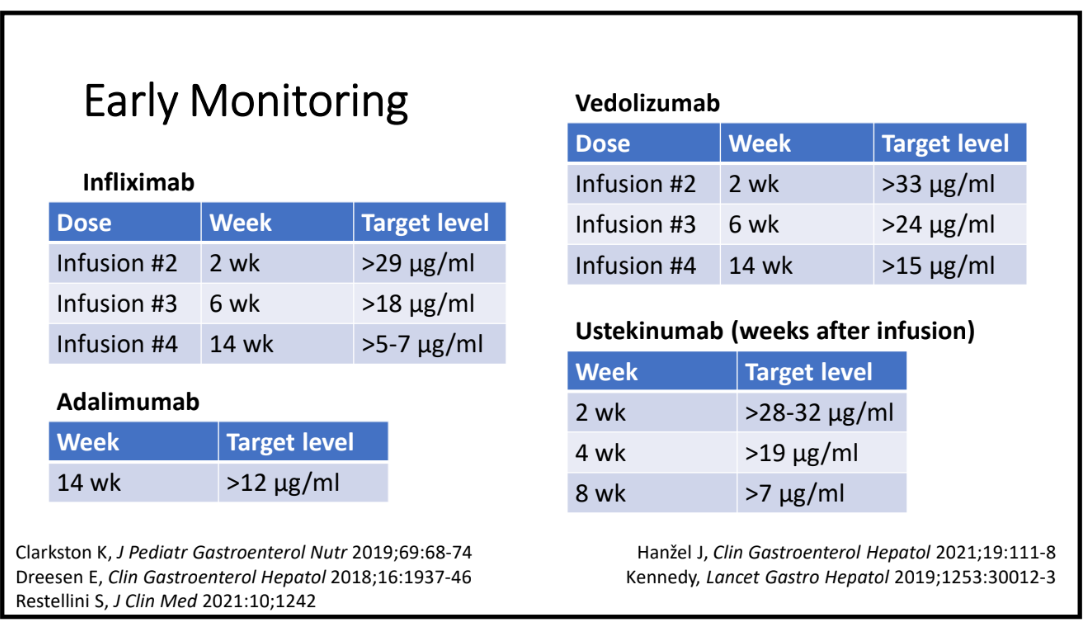
My take: The 8-week interval between induction dose (3rd) and maintenance dose (4th) is too long for many pediatric patients. For those using proactive therapeutic monitoring, checking a level prior to 3rd dose should be considered. Using an automated dosing system (like “iDose”) is likely to be helpful in optimizing response. Current target levels for TDM noted in recent post: Selected Slides from NASPGHAN 2022 Postgraduate Course (part 2) & copied below.
E Cowherd et al. Inflamm Bowel Dis 2022; 28: 1332-1337. The Cumulative Incidence of Pouchitis in Pediatric Patients With Ulcerative Colitis
Methods: Within the IQVIA Legacy PharMetrics Adjudicated Claims Database, the authors identified pediatric patients (n=68) with UC who underwent proctocolectomy with IPAA between January 1, 2007, and June 30, 2015. Key finding: In the first 2 years following IPAA, the cumulative incidence of pouchitis was 54%. My take: Most patients continue to experience significant problems after “curative” surgery.
The 6th International Symposium on Peadiatric Inflammatory Bowel Disease (PIBD) was held on September 7-10, 2022, in Edinburgh, Scotland. Highlights of several featured presentations (including video presentation on exposome) regarding the latest updates on nutrition and diet are included at this link (courtesy of Nutritional Therapy for IBD website): PIBD Symposium 2022 Nutritional Highlights


Disclaimer: This blog, gutsandgrowth, assumes no responsibility for any use or operation of any method, product, instruction, concept or idea contained in the material herein or for any injury or damage to persons or property (whether products liability, negligence or otherwise) resulting from such use or operation. These blog posts are for educational purposes only. Specific dosing of medications (along with potential adverse effects) should be confirmed by prescribing physician. Because of rapid advances in the medical sciences, the gutsandgrowth blog cautions that independent verification should be made of diagnosis and drug dosages. The reader is solely responsible for the conduct of any suggested test or procedure. This content is not a substitute for medical advice, diagnosis or treatment provided by a qualified healthcare provider. Always seek the advice of your physician or other qualified health provider with any questions you may have regarding a condition.
See previous post for lecturers




Disclaimer: This blog, gutsandgrowth, assumes no responsibility for any use or operation of any method, product, instruction, concept or idea contained in the material herein or for any injury or damage to persons or property (whether products liability, negligence or otherwise) resulting from such use or operation. These blog posts are for educational purposes only. Specific dosing of medications (along with potential adverse effects) should be confirmed by prescribing physician. Because of rapid advances in the medical sciences, the gutsandgrowth blog cautions that independent verification should be made of diagnosis and drug dosages. The reader is solely responsible for the conduct of any suggested test or procedure. This content is not a substitute for medical advice, diagnosis or treatment provided by a qualified healthcare provider. Always seek the advice of your physician or other qualified health provider with any questions you may have regarding a condition.
JB Wechsler et al. Clin Gastroenterol Hepatol 2022; 20: 1971-1976. Defining the Patchy Landscape of Esophageal Eosinophilia in Children With Eosinophilic Esophagitis
Design: The authors prospectively obtained 3-site esophageal biopsies based on rigorous endoscopic measurements of the proximal, mid, and distal esophagus and gastroesophageal junction. Biopsies were reviewed by a pathologist, and those with at least 15 eosinophils per high-power field were considered active EoE.
Key findings:
Based on this study, the authors recommend “3-site biopsies for optimal disease assessment of active EoE in children.”
My take: I think recommendations to add more and more biopsies is premature until we have evidence that identifying “focal” inflammation in the mid-esophagus has some clinical usefulness/improves outcomes. To me, a 2% increase in sensitivity over 2-site biopsies is negligible & in all likelihood, a 4-site biopsy protocol would increase the yield even further.
Related blog posts:

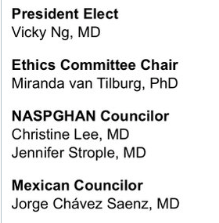
Congratulations to NASPGHAN Elected Leaders and especially to Vicky Ng (who I met while completing my fellowship in Cincinnati).
Briefly noted:
RS Choung et al. Clin Gastroenterol Hepatol 2022; 20(9):1977-1985. Collagenous Gastritis: Characteristics and Response to Topical Budesonide
This was an open-label, retrospective study with 64 patients with collagenous gastritis (CG) (50 adults, 14 children). Budesonide was administered in 2 formulations: open-capsule budesonide or compounded immediate-release budesonide capsule. Key finding: Of the patients treated with topically targeted budesonide (TTB), 89% had a clinical response (42% complete, 46% partial), and 88% had a histologic response (53% complete, 33% partial).
Related blog posts:

A recent letter to the editor: J Rauh et al. Stool Quality for Intestinal Rehabilitation Therapy (SQUIRT) Score, JPS 2022. doi: https://doi.org/10.1016/j.jpedsurg.2022.08.025
The authors have devised a SQUIRT score for short bowel syndrome. The higher score indicates better enteral tolerance with a highest score of 13 and a lowest score is 3. It is a composite score based on composition, frequency and volume/blowouts. The authors define a blow-out to be a stool loose enough and large enough for the child to require a change of clothes.
How to Score:
Consistency (choose best stool of the day)
Playdough, Formed 5
Peanut Butter, Pasty 4
Pudding, Seedy 3
Pea Soup, Loose 2
Water 1
Occurrences (over 24 hours)
1 to 3 4
4 to 6 3
7 to 9 2
Greater Than 10 1
Ostomy Present 0
Volume
With Ostomy Without Ostomy
(mL/kg) (# of blowouts)
The authors state that this scoring system has been used in their institution. “This tool can provide objective information to guide clinical decision making. Even patients with ostomies, for whom we can measure stool volume, benefit from SQUIRT scores because including the variable of stool consistency provides a more nuanced assessment than relying on volume.”
My take:This type of scoring system would be useful, primarily in patients in which the volume of stool is difficult to measure. It would benefit from trials to validate its utility.
Related blog posts for Short Bowel Syndrome:



J Adler et al. Inflamm Bowel Dis 2022; Open Access! Validating the Simplified Endoscopic Mucosal Assessment for Crohn’s Disease: A Novel Method for Assessing Disease Activity
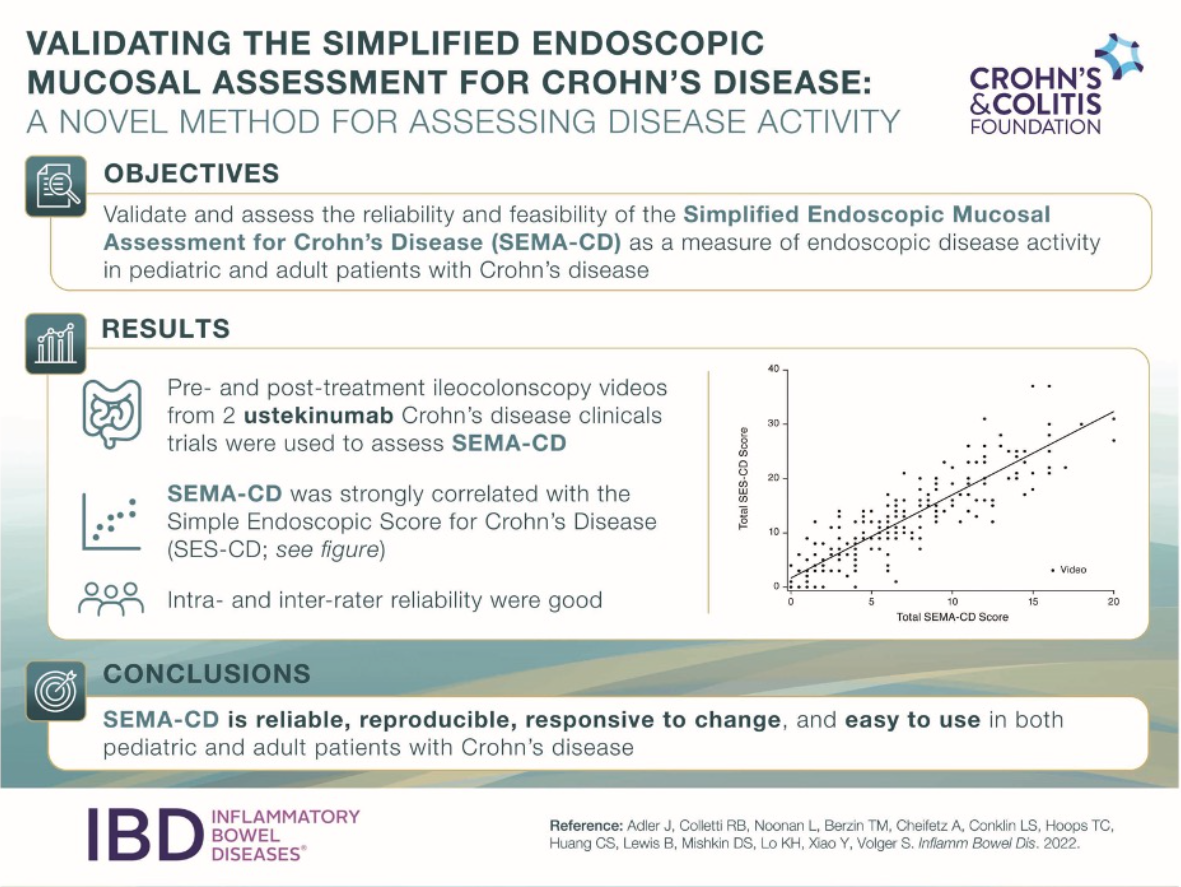
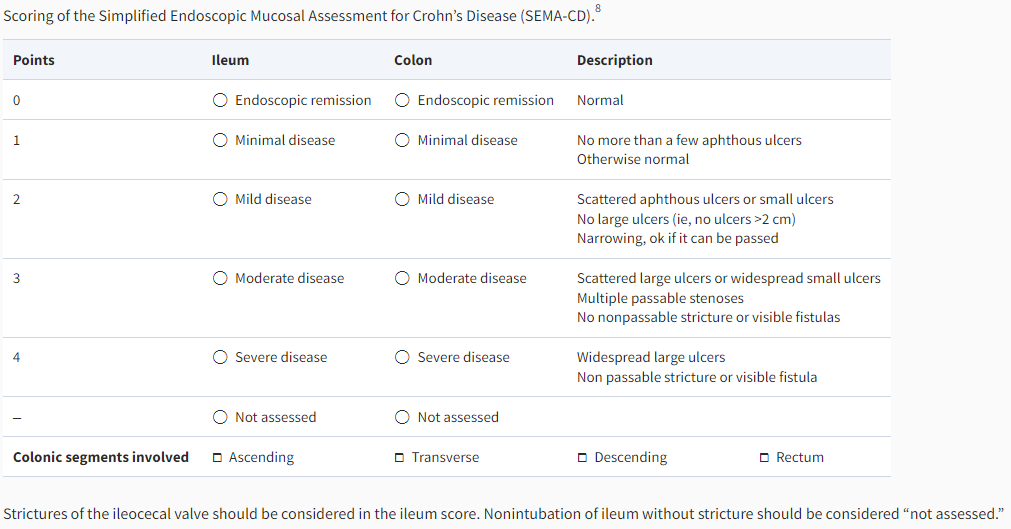
“The SEMA-CD is scored by assigning a numerical value ranging from 0 (endoscopic remission) to 4 (severe disease) for each bowel region (ileum and colon). The overall colon is scored as a whole based on the most severe colonic segment. The number of colonic segments with any degree of active disease is recorded, regardless of the severity of individual segments. The overall colon score is then multiplied by the number of involved colonic segments, and the result is added to the ileum score.”
Related blog post: The Really Simplified Endoscopy Scoring
Pharmacy Times (5/4/22): FDA Approves Pair of Vonoprazan Treatments for Helicobacter Pylori Infection
“The (FDA) has approved 2 vonoprazan-based medications for the treatment of Helicobacter pylori (H. pylori) infection.
Phathom Pharmaceuticals announced the approvals of both the Voquezna Triple Pak (vonoprazan, amoxicillin, clarithromycin) and Voquezna Dual Pak (vonoprazan, amoxicillin) based on positive safety and efficacy data from the phase 3 PHALCON-HP trial.”
WD Chey et al. Gastroenterol 2022; 163: 608-619. Open Access! Vonoprazan Triple and Dual Therapy for Helicobacter pylori Infection in the United States and Europe: Randomized Clinical Trial
Key findings from this randomized, controlled trial with treatment-naive 1046 adults:

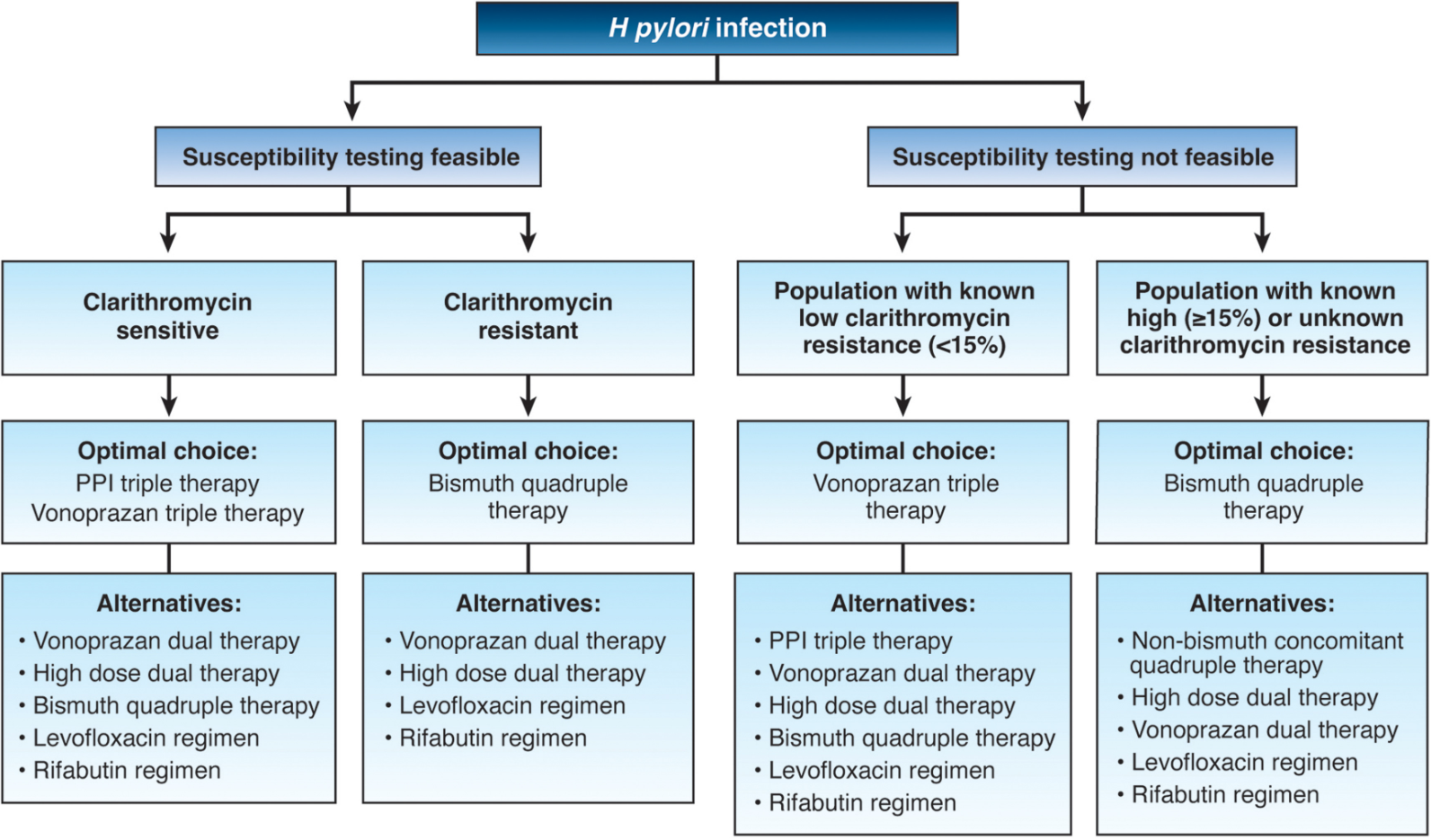
The associated editorial: CA Fallone (Open Access!) The Current Role of Vonoprazan in Helicobacter pylori Treatment
Based on this new information, the author proposes the treatment algorithm below and notes that “the role of increased acid suppression by PPI substitution with vonoprazan should be examined in other H pylori regimens.” The author favors bismuth quadruple therapy in those with clarithromycin resistance as non-bismuth quadruple therapy utilizes an unnecessary antibiotic (clarithromycin).
Other points:
My take: With the more widespread availability of susceptiblity testing (beyond clarithromycin), I anticipate more targeted treatments. At the same time, vonoprazan-based treatments are likely to be important in increasing eradication rates.
Related blog posts:
Disclaimer: This blog, gutsandgrowth, assumes no responsibility for any use or operation of any method, product, instruction, concept or idea contained in the material herein or for any injury or damage to persons or property (whether products liability, negligence or otherwise) resulting from such use or operation. These blog posts are for educational purposes only. Specific dosing of medications (along with potential adverse effects) should be confirmed by prescribing physician. Because of rapid advances in the medical sciences, the gutsandgrowth blog cautions that independent verification should be made of diagnosis and drug dosages. The reader is solely responsible for the conduct of any suggested test or procedure. This content is not a substitute for medical advice, diagnosis or treatment provided by a qualified healthcare provider. Always seek the advice of your physician or other qualified health provider with any questions you may have regarding a condition.
On Tuesday, this blog asked: Who is Going to do POEM (Peroral Endoscopic Myotomy) in Children? In the U.S., Boston Children’s offers this treatment option: Peroral Endoscopic Myotomy (POEM). This link explains the procedure and includes a video (also on YouTube) with Peter Ngo .
—————–
In 2018, Belcher pharmaceuticals managed to get the FDA to designate Ethanol as an orphan drug with a subsequent increase in cost to ~$10,000 for a 10-vial pack (10-day supply) (Related post: FDA ‘Safety Initiative’ Now Means an Ounce of Ethanol Costs $30,000). As such, many (?most) children with intestinal failure (IF) no longer have access to this therapy which prevents life-threatening infections to their central lines.
A recent retrospective study (R Josyabhata et al. JPGN 2022; 75: 304-307. Sodium Bicarbonate Locks May Be a Safe and Effective Alternative in Pediatric Intestinal Failure: A Pilot Study) examined the use of sodium bicarbonate lock therapy (SBLT) as an alternative to ethanol in four children. This study was prompted by a clinical trial in hemodialysis patients which demonstrated a reduction in catheter-related bloodstream infections (CRBSI). None of the four patients had a CRBSI.
My take: A much larger multi-center study will be needed to determine if SBLT is worthwhile.
Related blog posts:
Related articles:
A Guz-Mark et al. JPGN 2022; 75: 293-298. The Variable Response to Teduglutide in Pediatric Short Bowel Syndrome: A Single Country Real-Life Experience. The effectiveness of teduglutide, which likely costs more than $400,000 per year in most patients, was examined in a real-life retrospective study from Israel with 13 patients. Response to treatment (>20% reduction in parenteral nutrition) was observed in 8 patients (62%) and 2 patients were able to stop parenteral nutrition.
K Culbreath et al. JPGN 2022; 75: 345-350. Antibiotic Therapy for Culture-Proven Bacterial Overgrowth in Children With Intestinal Failure Results in Improved Symptoms and Growth This article describes outcomes of 104 children with intestinal failure who underwent endoscopy and had duodenal cultures sent to identify bacterial overgrowth/susceptibility/targeted antibiotics. This information was associated with fewer symptoms and better growth. The methods section provides detailed information on collection and handling of specimens (which could be helpful for those trying to implement this strategy). However, there is not a standardized protocol for duodenal cultures to detect bacterial overgrowth.